Trending in Physics
 2603.29936
Do Papers with Titles Ending in a Question Mark Usually Have the Answer "No"?
Yes.................
2603.29936
Mar 2026Instrumentation and Methods for Astrophysics
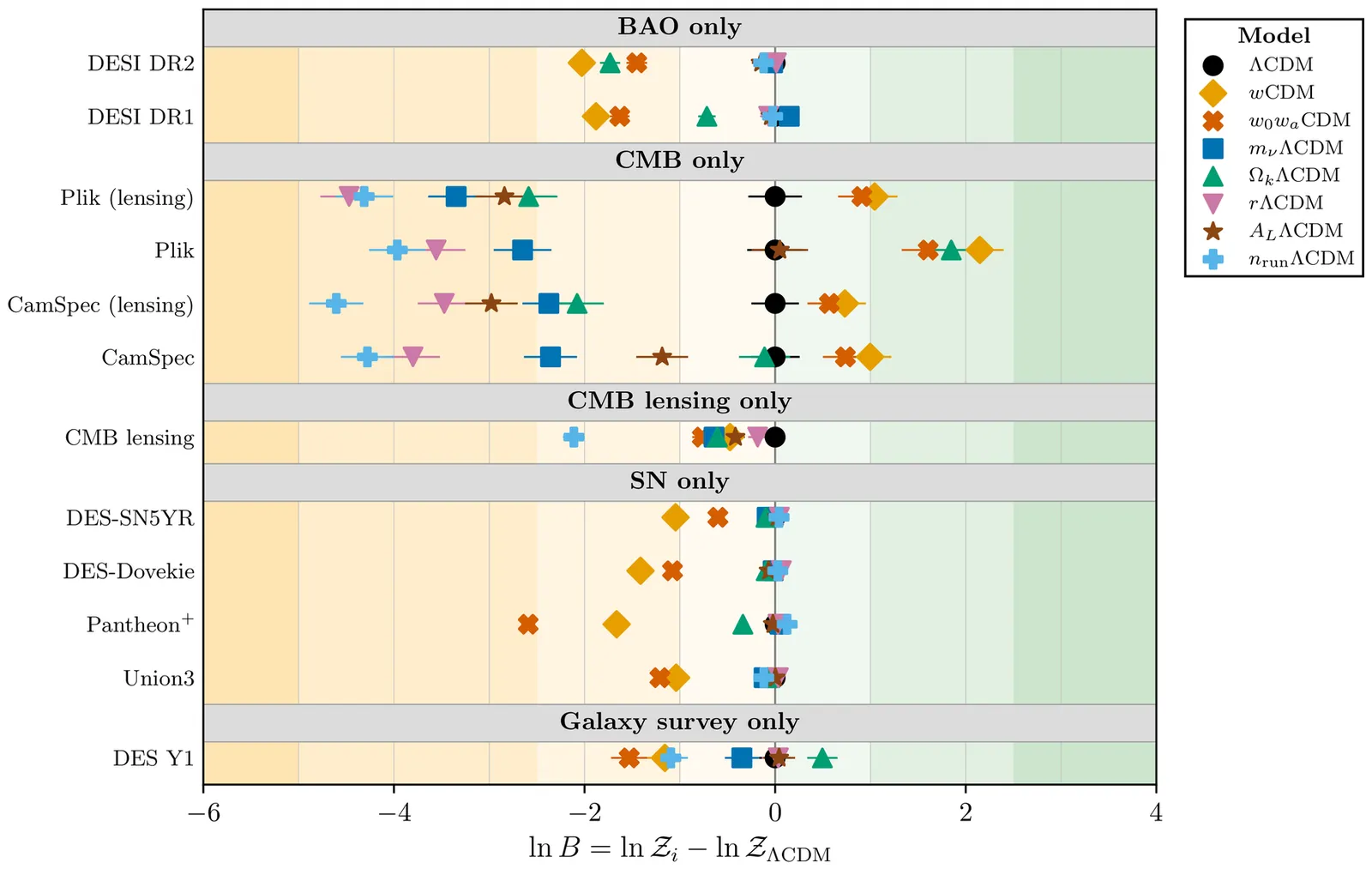
The Bayesian view of DESI DR2: Evidence and tension in a combined analysis with CMB and supernovae across cosmological models
We apply the unimpeded framework to perform a fully Bayesian reanalysis of the DESI DR2 data, using nested sampling with PolyChord to compute evidences for $Λ$CDM and seven extensions across combinations of DESI DR1/DR2, Planck CMB, supernovae (Pantheon+, Union3, DES-SN5YR, DES-Dovekie), and DES-Y1 weak lensing. The Bayesian Ockham's razor penalises extended models, yielding weaker or opposite preferences compared to $Δχ^2$-based analyses. For DESI DR2 BAO combined with Planck CMB alone, the DESI collaboration's $3.1σ$ frequentist preference for $w_0w_a$CDM is eliminated entirely: we obtain ${\ln B = -0.57{\scriptstyle\pm0.26}}$, modestly favouring $Λ$CDM. Adding the corrected DES-Dovekie supernova calibration maintains this concordance (${\ln B = -0.01{\scriptstyle\pm0.27}}$). However, when the original DES-SN5YR calibration is included instead, the DESI collaboration's $4.2σ$ result survives the Bayesian Ockham penalty as a $3.07{\scriptstyle\pm0.10}\,σ$ preference (${\ln B = +3.32{\scriptstyle\pm0.27}}$). That this signal persists despite the Ockham penalty makes the role of tension quantification essential: our analysis traced the preference to the DES-SN5YR calibration error, which introduced a $2.95{\scriptstyle\pm 0.04}\,σ$ conflict with DESI DR2 within $Λ$CDM -- a tension that stands out from the grid -- reduced to $1.96{\scriptstyle\pm 0.04}\,σ$ once the calibration was corrected. With the calibration corrected, the Bayesian evidence for dynamical dark energy vanishes.
2603.05472
Mar 2026Cosmology and Nongalactic Astrophysics
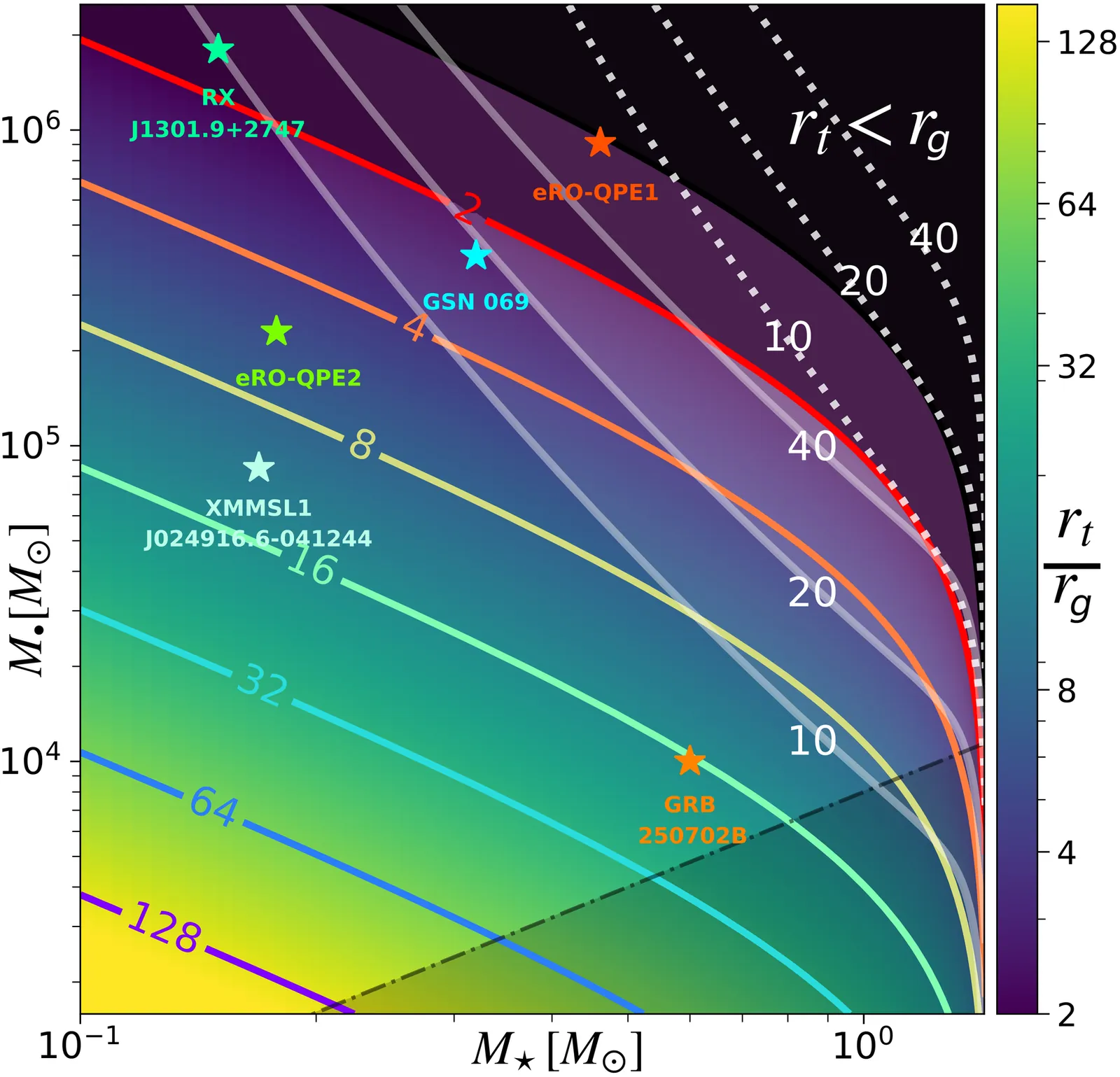
Relativistic Tidal Dissipation and the Gravitational-wave Signal of a White Dwarf Orbiting an Intermediate-Mass Black Hole
Finding intermediate-mass black holes (IMBHs) and measuring their masses and spins are key to understanding massive black hole formation. White dwarf (WD)-IMBH binaries provide a unique probe because they emit both electromagnetic radiation and gravitational waves (GWs), thereby conveying richer information. However, such multi-messenger sources often enter the regime of strong gravity, where existing models fail to capture their relativistic dynamics. Here, we develop a fully relativistic model for the tidal response of a WD close to an IMBH and use it to study the secular orbital evolution as well as the GW signal. We find that for IMBHs more massive than 10^5 solar masses, tidal interaction becomes relativistic and sensitive to IMBH spin. The interaction generally dissipates binary orbital energy and angular momentum, but due to relativistic frame rotation, which reduces phase coherence across pericenter passages, the orbit-averaged tidal dissipation rate can be suppressed by up to about 50% relative to Newtonian predictions. Including tidal dissipation leads to more rapid damping of the orbital eccentricity, to the extent that the pericenter distance may even increase over time, potentially explaining quasi-periodic eruptions and secular orbital period growth. Such tidal effects accumulate into measurable phase and amplitude deviations in the GW signal. For typical space-based observations, the GW waveform mismatch can reach values of order 0.1 within 6 months. Our results indicate that relativistic tidal dissipation is both dynamically important and observationally essential for reliably predicting the multi-messenger signals of WD-IMBH systems.
2602.22688
Feb 2026High Energy Astrophysical Phenomena
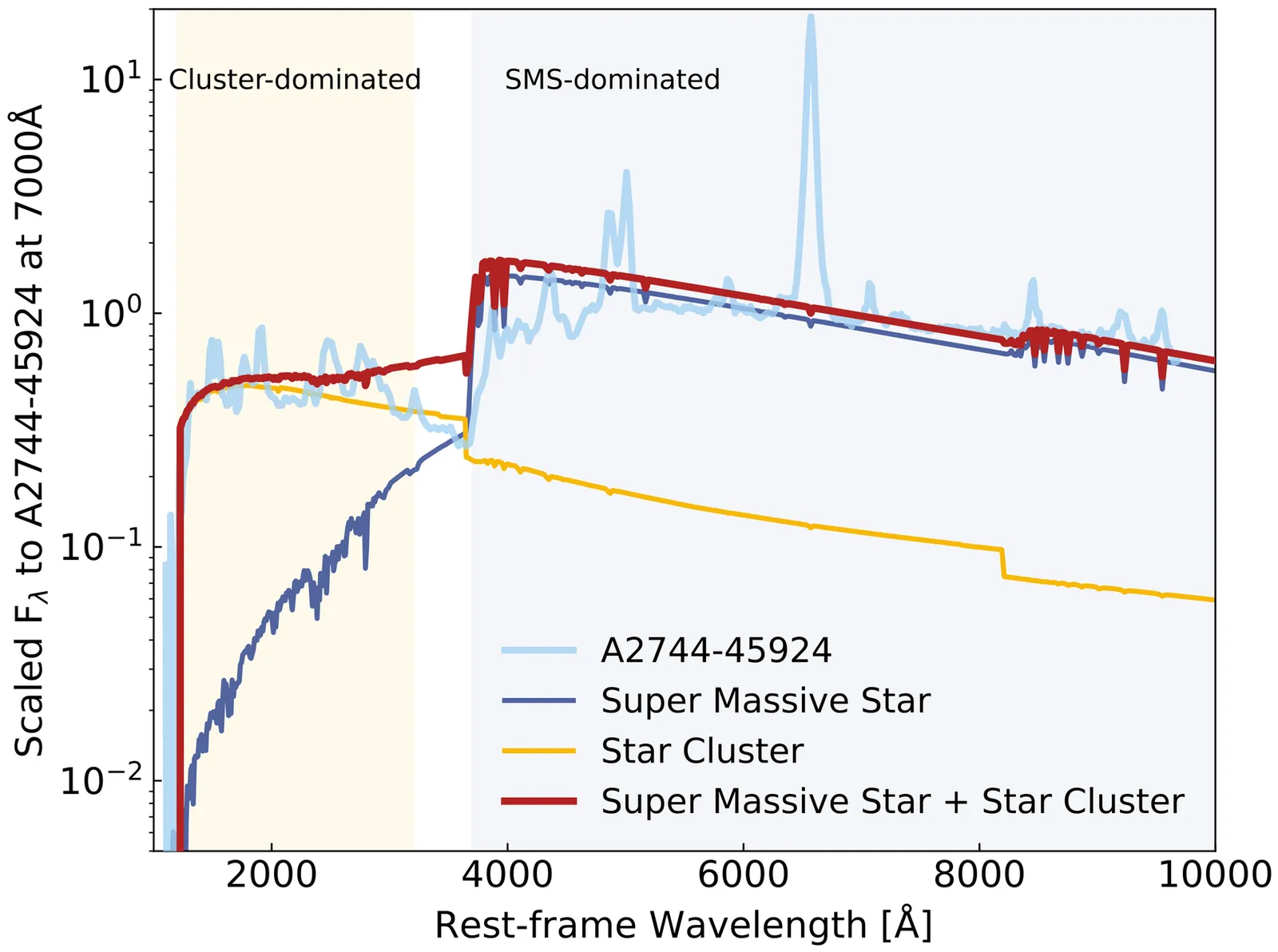
Little Red Dots as Globular Clusters in Formation
Little Red Dots (LRDs), among the most enigmatic high-redshift discoveries by JWST, are commonly believed to be powered by accreting supermassive black holes. Here, we explore the possibility that these sources are globular clusters in formation, with rest-frame UV arising from a very young stellar population and rest-frame optical from a short-lived supermassive ($>10^4$ M$_\odot$) star. The spectral profiles of LRDs are broadly consistent with this scenario, though the observed temperatures and bolometric luminosities favor emission reprocessed by optically thick, continuum-driven winds not fully captured by current models. The LRD $z\sim5-7$ UV luminosity function naturally evolves, under standard evolutionary and mass-loss prescriptions, into a present-day mass function with a turnover at $\log_{10}(M_\ast$/$M_\odot)=5.3$ and an exponential cutoff at high masses, consistent with local globular-cluster populations. We estimate the total present-day number density of LRDs formed across all redshifts to be $\approx0.3$ Mpc$^{-3}$, similar to local globular clusters. The observed LRD redshift range matches the age distribution of metal-poor globular clusters, without current LRD counterparts to the metal-rich population. If LRDs are globular clusters in formation, we predict chemical abundance patterns characteristic of multiple stellar populations, including enhanced He and N, and potential Na-O and Al-Mg anti-correlations. These results offer a local perspective to explore this surprisingly abundant population of distant sources, and a potential new window into extreme stellar astrophysics in the early Universe.
2602.15935
Feb 2026Astrophysics of Galaxies
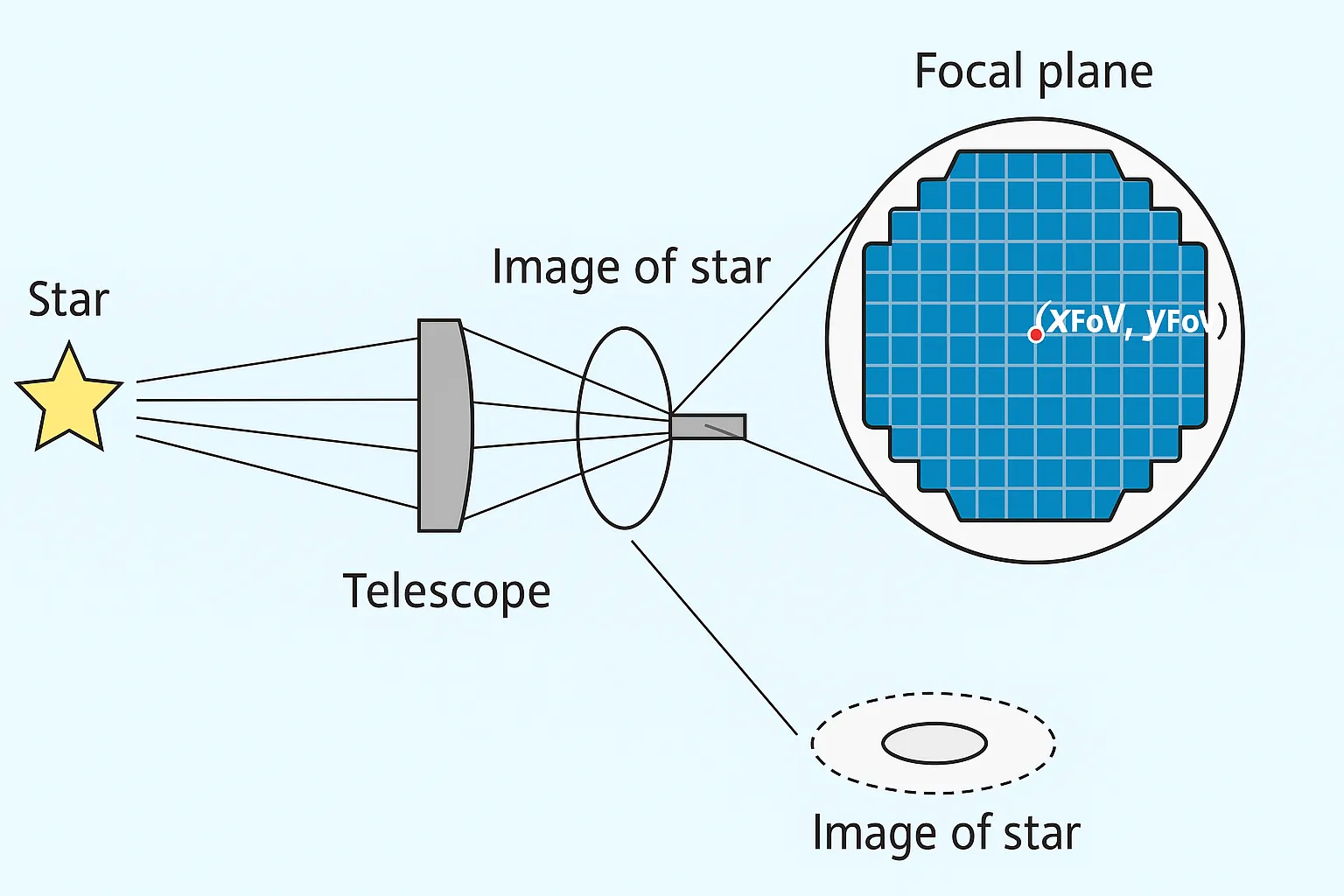
Deep Learning for Point Spread Function Modeling in Cosmology
We present the development of a data-driven, AI-based model of the Point Spread Function (PSF) that achieves higher accuracy than the current state-of-the-art approach, "PSF in the Full Field-of-View'' (PIFF). PIFF is widely used in leading weak-lensing surveys, including the Dark Energy Survey (DES), the Hyper Suprime-Cam (HSC) Survey, and the Vera C. Rubin Observatory Legacy Survey of Space and Time (LSST). The PSF characterizes how a point source, such as a star, is imaged after its light traverses the atmosphere and telescope optics, effectively representing the "blurred fingerprint'' of the entire imaging system. Accurate PSF modeling is essential for weak gravitational lensing analyses, as biases in its estimation propagate directly into cosmic shear measurements -- one of the primary cosmological probes of the expansion history of the Universe and the growth of large-scale structure for dark energy studies. To address the limitations of PIFF, which constructs PSF models independently for each CCD and therefore loses spatial coherence across the focal plane, we introduce a deep-learning-based framework for PSF reconstruction. In this approach, an autoencoder is trained on stellar images obtained with the Hyper Suprime-Cam (HSC) of the Subaru Telescope and combined with a Gaussian process to interpolate the PSF across the telescope's full field of view. This hybrid model captures systematic variations across the focal plane and achieves a reconstruction error of $3.4 \times 10^{-6}$ compared to PIFF's $3.7 \times 10^{-6}$, laying the foundation for integration into the LSST Science Pipelines.
2602.15780
Feb 2026Instrumentation and Methods for Astrophysics
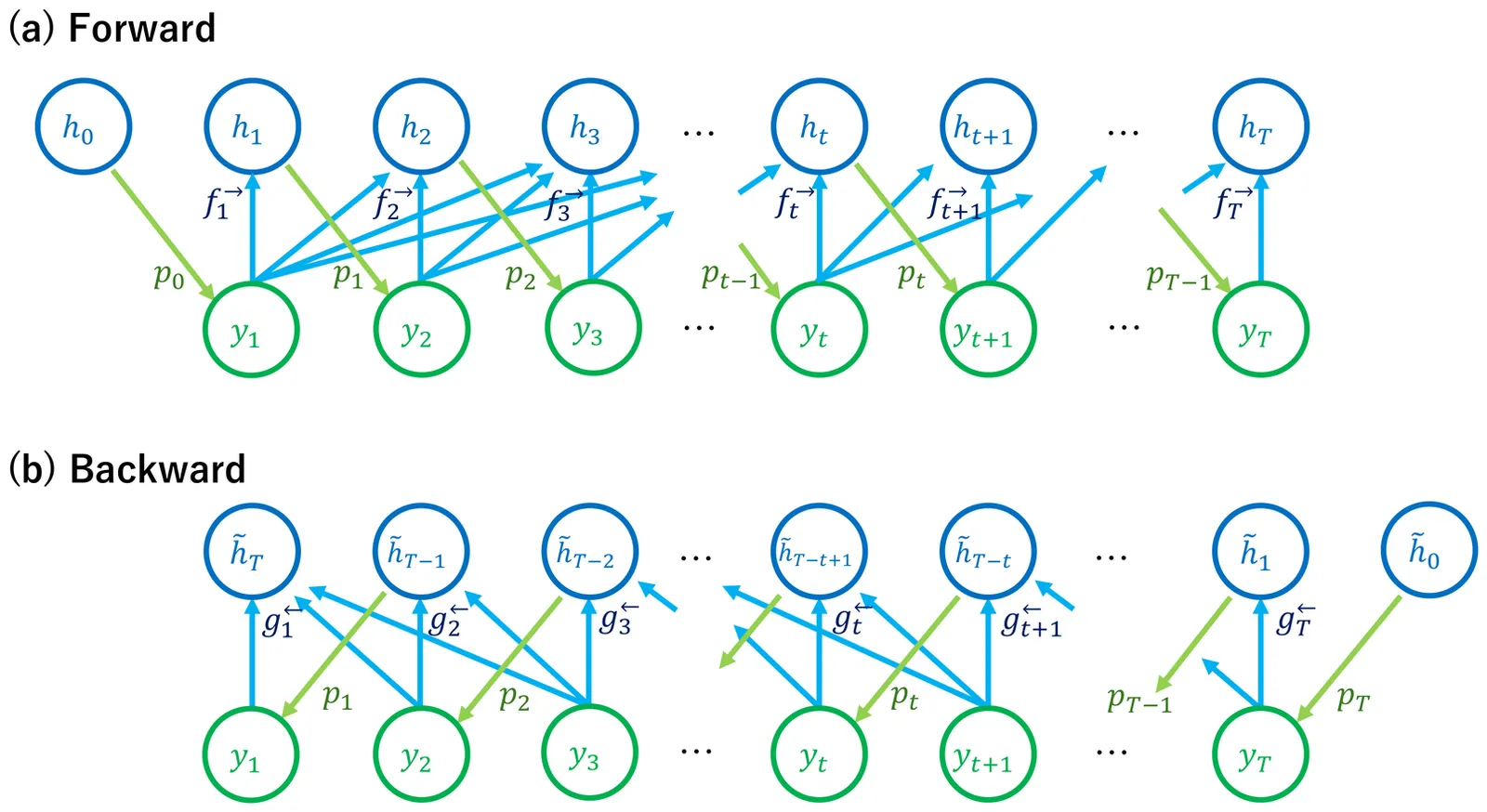
Stochastic Thermodynamics for Autoregressive Generative Models: A Non-Markovian Perspective
Autoregressive generative models -- including Transformers, recurrent neural networks, classical Kalman filters, state space models, and Mamba -- all generate sequences by sampling each output from a deterministic summary of the past, producing genuinely non-Markovian observed processes. We develop a general theoretical framework based on stochastic thermodynamics for this class of architectures and introduce the entropy production, which can be efficiently estimated from sampled trajectories without exponential sampling cost despite the non-Markovian nature of the observed dynamics. As a proof-of-concept experiment for a large language model (LLM), we evaluate the token-level and sentence-level entropy production for a pre-trained Transformer-based model, GPT-2. We also demonstrate the framework in the linear Gaussian case, where the model reduces to the Kalman innovation representation and the entropy production admits an analytical expression. We further show that the entropy production decomposes exactly into non-negative per-step contributions in terms of retrospective inference, and each of those terms further splits into information-theoretically meaningful terms: a compression loss and a model mismatch. Our results establish a bridge between stochastic thermodynamics and modern generative models, and provide a starting point for quantifying irreversibility in a broad class of highly non-Markovian processes such as LLMs.
2604.07867
Apr 2026Statistical Mechanics
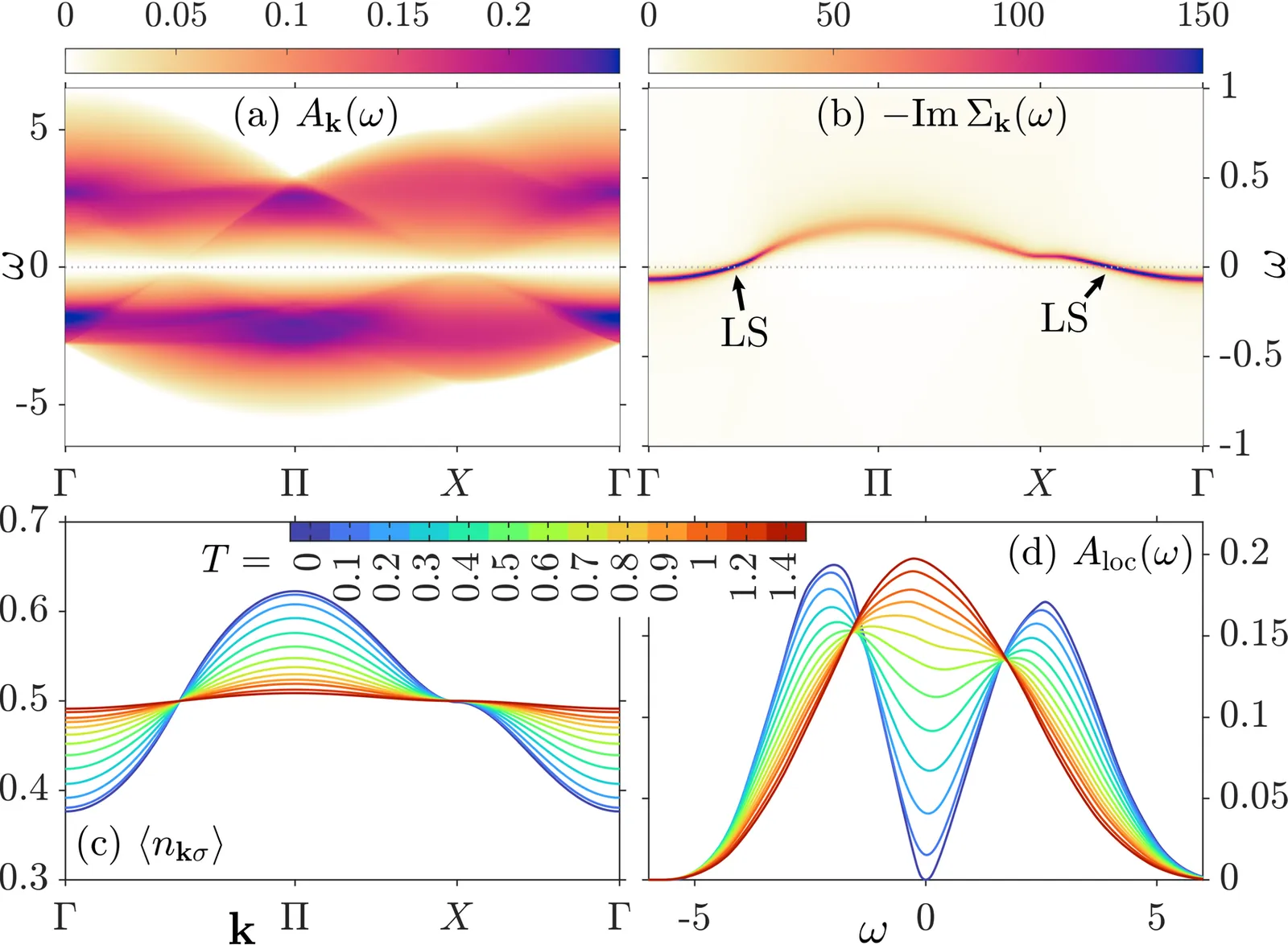
Pseudogapped Fermi liquids from emergent quasiparticles
We propose an interacting model that is exactly solvable in any spatial dimension and gives rise to a Fermi liquid (FL) featuring a pseudogapped (PG) single-particle spectral function and a vanishing quasiparticle (QP) weight at half-filling, without invoking Mott physics. The PG originates from a purely fermionic mechanism through emergent QPs arising from a correlated hopping interaction. By employing an appropriate coherent-state basis, we derive a Gaussian path-integral representation of the partition function, which enables systematic treatments of deviations from the Gaussian limit using standard many-body techniques, such as diagrammatic perturbation theory or mean-field theory. We explicitly demonstrate and discuss several properties of the exactly solvable limit on the square lattice, including the mechanism for temperature-dependent PG opening, the singular behavior of the self-energy, the violation of the Luttinger sum rule, and the role of Luttinger and Fermi surfaces. Finally, we explore quantum phase transitions between PG-FLs and Landau FLs.
2603.15560
Mar 2026Strongly Correlated Electrons
2603.15361Motivic GUT Part I: Grand Unified Theory of Topological Order
In the series of papers Motivic GUT Part I: Grand Unified Theory of Topological Order, Motivic GUT Part II: Grand Unified Theory of Symmetry-Protected Topological Order, and Motivic GUT Part III: Grand Unified Theory of Symmetry-Enriched Topological Order, we propose a unified framework for gapped topological phases based on the Grothendieck-Kitaev-Lurie motivic yoga. In the spirit of Grothendieck's rising sea, we argue that the classification problem can only be properly addressed after identifying the correct higher-categorical ambient space in which its full richness appears. In this first part, we propose a unified definition of gapped topological order in spatial dimension $d$ in terms of unitary fusion $(\infty,d)$-categorical data, considered up to Morita equivalence. For $d=2$, this framework recovers unitary modular tensor categories. For $d>2$, it naturally leads to genuinely higher-categorical structures. This suggests a Copernican turn in the theory of topological phases: many existing classification schemes should be reinterpreted as lower-categorical shadow realizations of intrinsically $\infty$-categorical objects.
2603.15361
Mar 2026Strongly Correlated Electrons
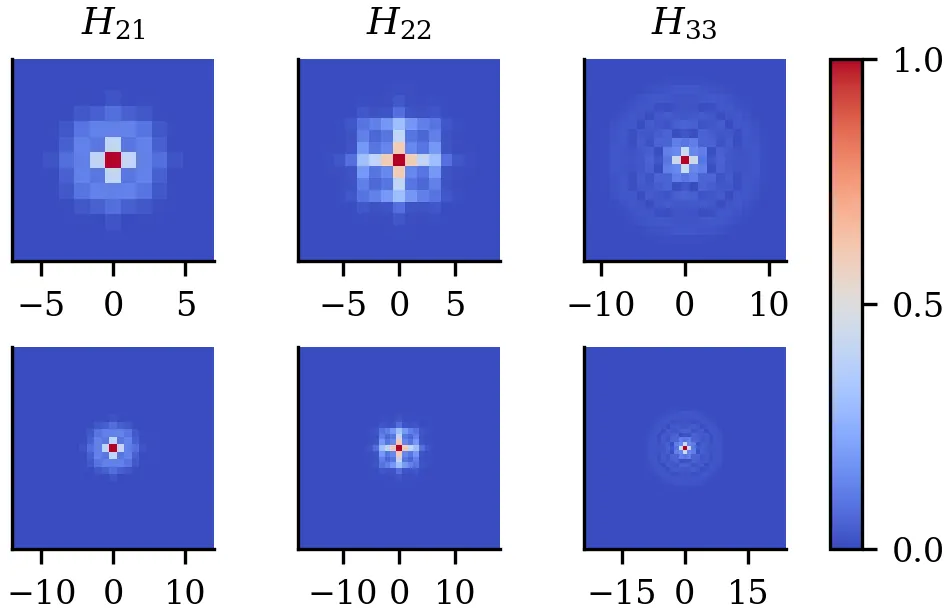
Non-Abelian fractional Chern insulators from an exactly solvable two-body model
We construct a class of lattice Hamiltonians whose single-particle spectrum consists of an arbitrary number of exactly degenerate flat bands that reproduce the analytic structure of the first $p$ Landau levels restricted to the lattice. When combined with local bosonic contact interactions, these models become exactly solvable frustration-free parent Hamiltonians for FCIs that realize both Abelian and non-Abelian parton quantum Hall states. Using exact diagonalization, we confirm the expected zero-mode counting for variants of the model stabilizing the bosonic Jain-21 state as well as the non-Abelian 22- and 33-states, which are expected to support Ising- and Fibonacci-type anyons, respectively. Our construction provides an exactly solvable lattice realization of multi Landau-level physics and offers a new framework for studying FCIs with Chern number $C > 1$. More broadly, it supplies a family of idealized lattice models that capture the analytic structure of continuum Landau levels while remaining compatible with exponentially local hopping.
2603.14722
Mar 2026Strongly Correlated Electrons
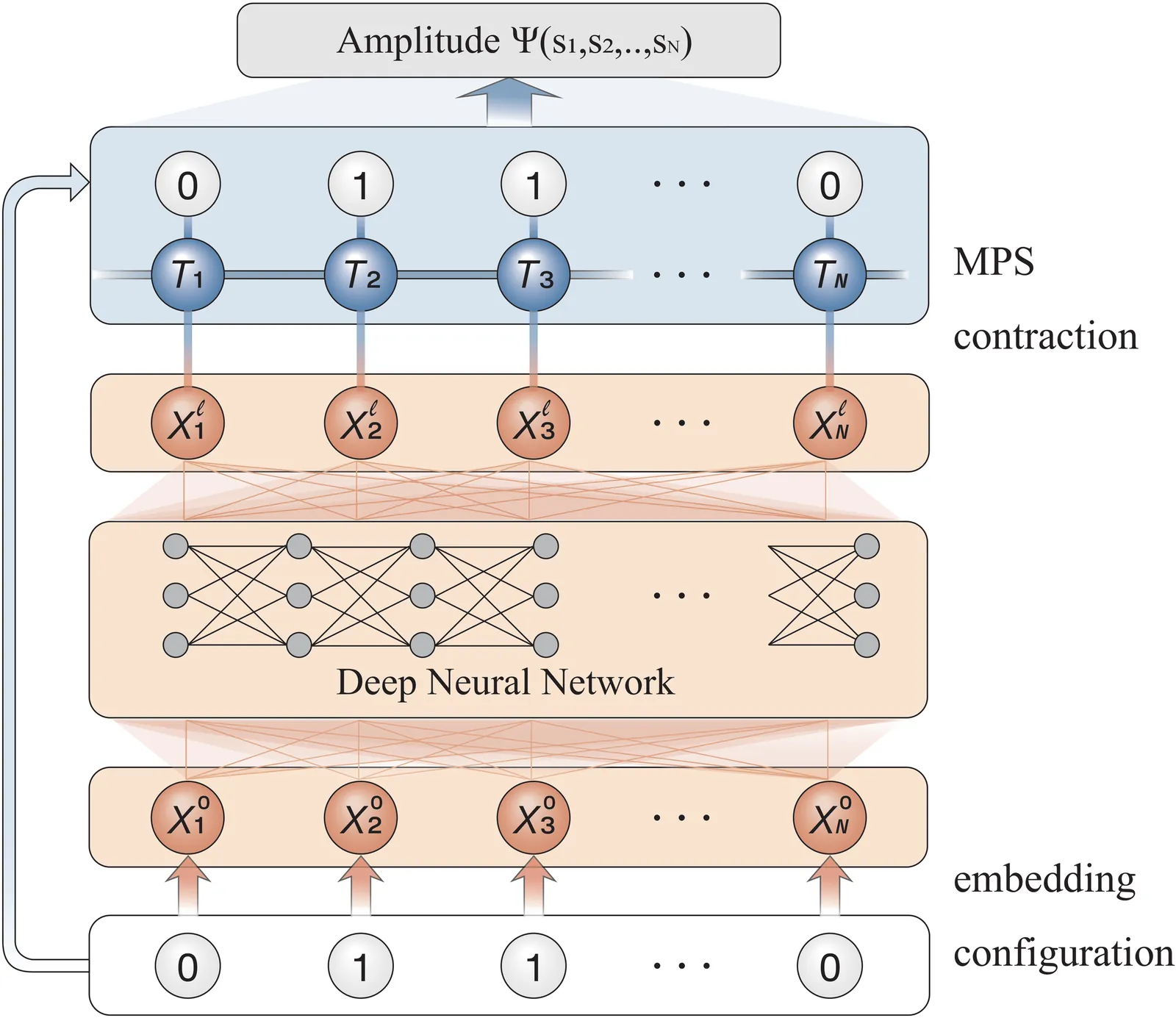
Disentangling Tensor Network States with Deep Neural Network
We introduce Neural Tensor Network States ($ν$TNS), a variational many-body wave-function ansatz that integrates deep neural networks with tensor-network architectures. In the $ν$TNS framework, a neural network serves as a disentangler of the wave-function, transforming the physical degrees of freedom into renormalized variables with much less entanglement. The renormalized state is then efficiently encoded by a back-flow tensor network. This construction yields a compact yet highly expressive representation of strongly correlated quantum states. Using convolutional neural networks combined with matrix product states as a concrete implementation, we obtain state-of-the-art variational energies for the spin-$1/2$ $J_1$-$J_2$ Heisenberg model on the square lattice at the highly frustrated point $J_2/J_1=0.5$, for systems up to $20\times 20$ with periodic boundary conditions. Finite-size scaling of spin, dimer, and plaquette correlations exhibits power-law decay without magnetic or valence-bond long-range order, consistent with a gapless quantum spin-liquid ground state at that point.This $ν$TNS framework is flexible and naturally extensible to other neural and tensor-network structures, offering a general platform for investigating strongly correlated quantum many-body systems.
2603.14425
Mar 2026Strongly Correlated Electrons
Minimum lifetime of a black hole
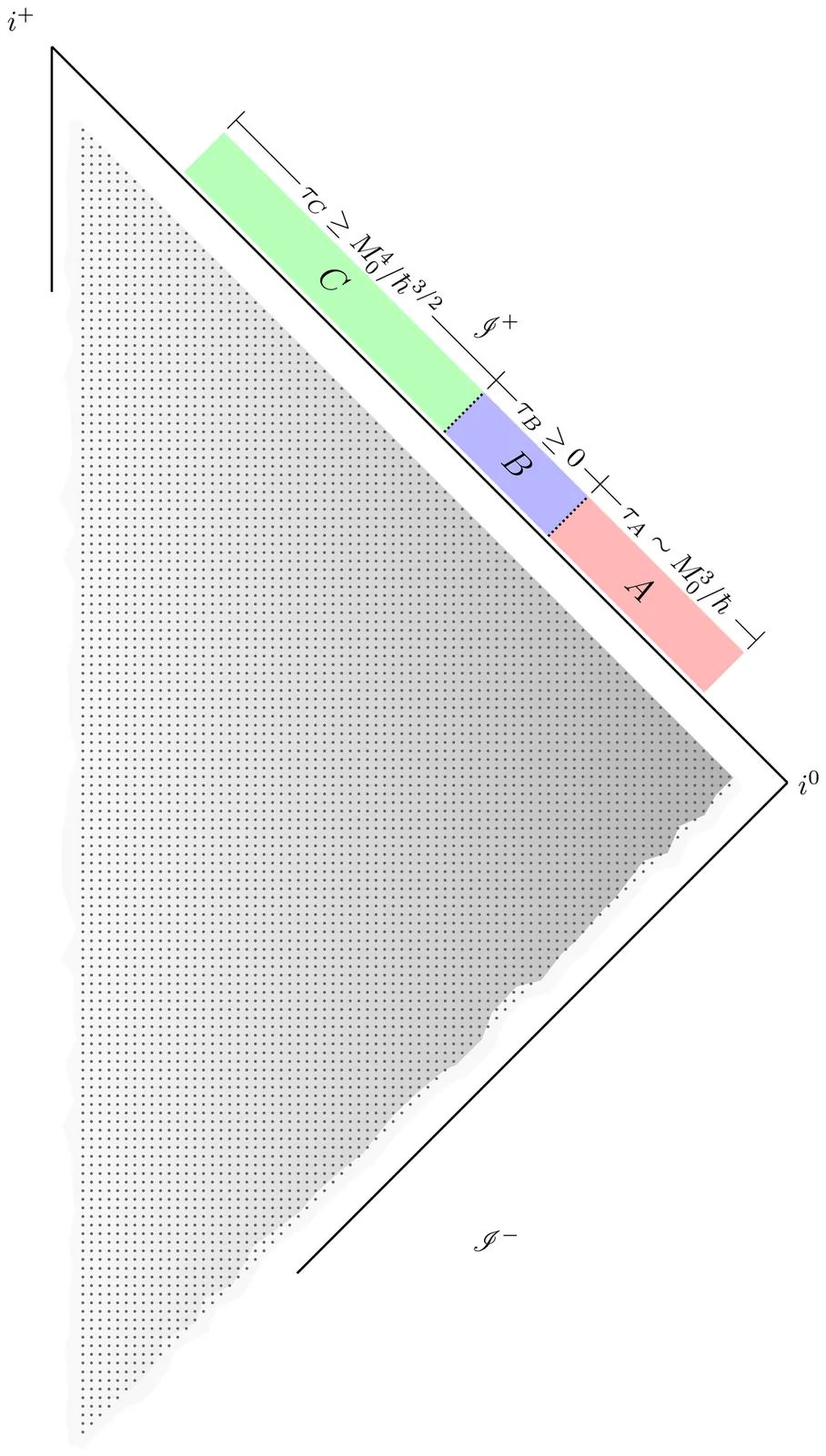
We derive bounds on the lifetime of an evaporating black hole. The bound follows from energy conservation and purification, within the framework of `asymptotically semiclassical spacetimes'. We use the recently derived expression for the Bondi flux of Hawking radiation, together with the expression for the entanglement entropy of Hawking radiation at null infinity, to investigate the purification phase after the last semiclassical ray. We discuss the energy-cost of entanglement purification and we find a lower bound on the purification time of the black hole, which scales as $M_0^4/\hbar^{3/2}$, where $M_0$ is the initial black hole mass. Additionally, motivated by quantum gravity considerations, we include the additional assumption that a Planck mass black hole is metastable. With this assumption, we find that the the purification time is extended to be exponential in the square of the initial black hole mass, i.e. in its initial area. We find that the redshift exponent is negative in this purification phase, which indicates the existence of a white-hole remnant which releases information slowly. We comment on phenomenological implications for primordial black hole remnants.
2605.03922
May 2026General Relativity and Quantum Cosmology
Ringdown Analysis of GW250114 with Orthonormal Modes
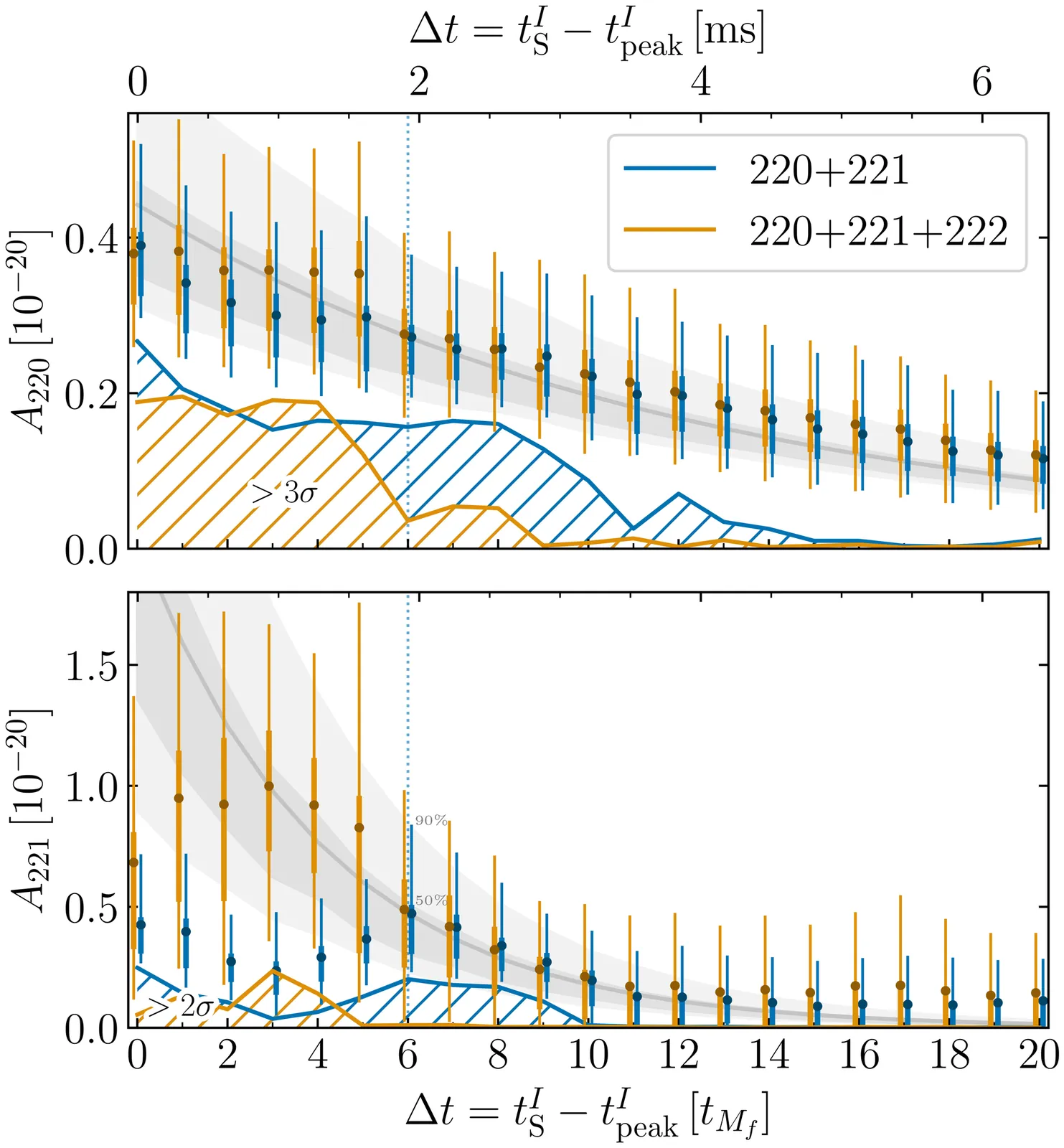
GW250114 is the loudest gravitational-wave event to date observed by the LIGO-Virgo-KAGRA Collaboration. Owing to its high signal-to-noise ratio (SNR), previous analyses based on quasinormal mode (QNM) superpositions have suggested evidence of the fundamental and the first overtone of the $\ell=m=2$ mode in this event. However, QNMs are not orthogonal and the inclusion of multiple QNMs induces correlations among them, which can hinder the robust identification of subdominant QNMs. To address this challenge, we apply an analysis based on orthonormalized QNMs [arXiv:2507.12376] to GW250114. We find that, in the model including three $\ell=m=2$ QNMs up to the second overtone, the first overtone of the $\ell=m=2$ mode is more strongly supported than in previous nonorthogonal analyses, with the inferred significance increasing from $82.5\%$ to $99.9\%$. Furthermore, we estimate deviations from the Kerr prediction using the orthonormal QNM framework and find no significant deviation, consistent with previous analyses. These results demonstrate that the orthonormal QNM framework provides a more robust way to identify subdominant modes in high-SNR ringdown signals, highlighting its potential for future gravitational-wave observations.
2605.03576
May 2026General Relativity and Quantum Cosmology
Spherically Symmetric Gravity on a Graph I: Theoretical Foundations
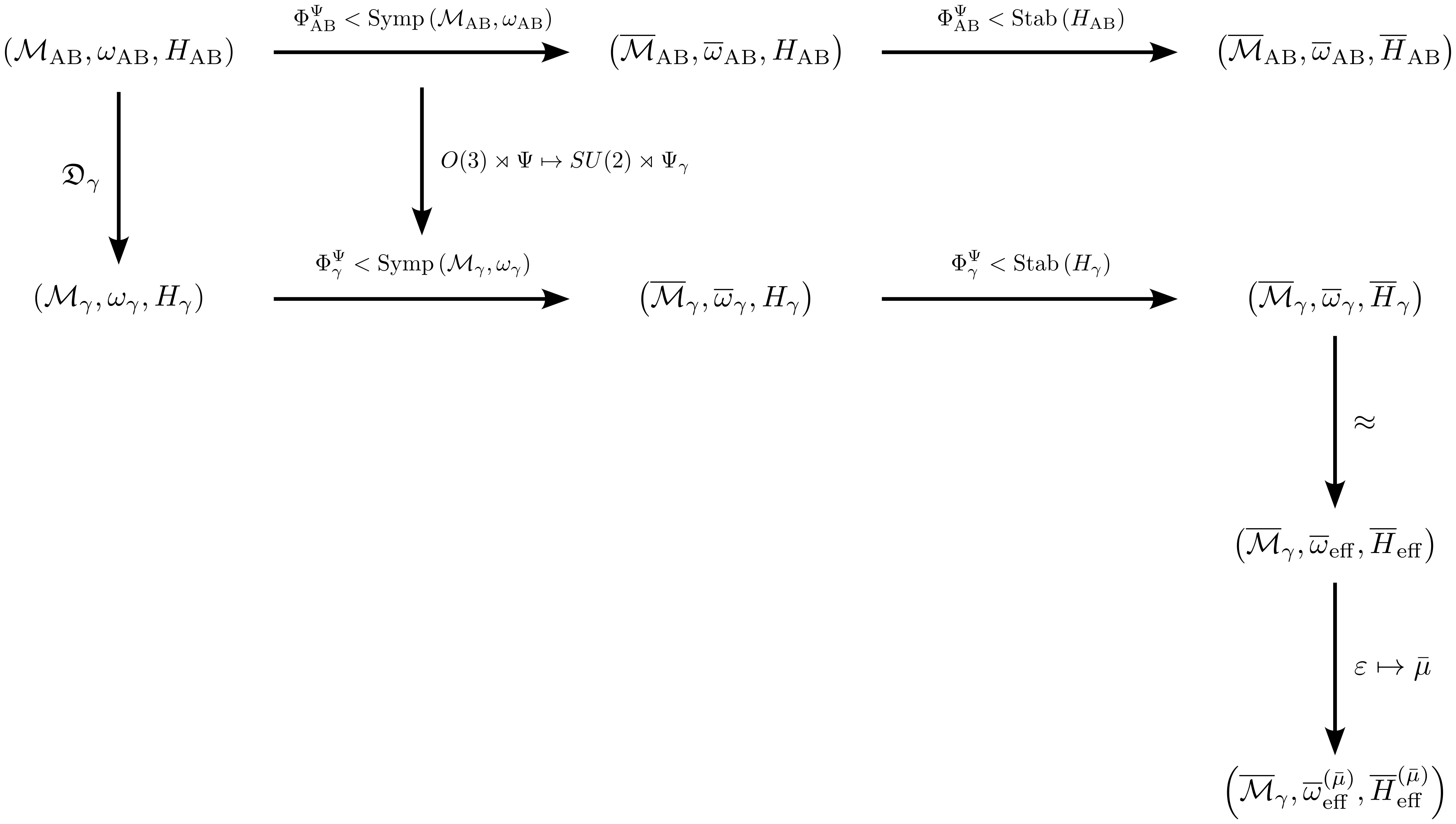
This manuscript is the first in a series of instalments that investigate spherically symmetric solutions within the effective dynamics program of Loop Quantum Gravity. The choice of lattice is adapted such that it remains invariant under a set of symmetry transformations maximally mapping spherical symmetry to the discrete setting. The conditions for symmetry restriction of the dynamics are investigated and a subspace is identified to make computations feasible. Afterwards symplectic structure and scalar constraint are explicitly computed on this subspace. This lays the groundwork to target several particular solutions, such $k=1$ cosmology and black holes, which will serve as the subjects of forthcoming follow-up papers.
2602.23308
Feb 2026General Relativity and Quantum Cosmology
2602.16076The most general four-derivative Unitary String Effective Action with Torsion and Stringy-Running-Vacuum-Model Inflation: Old ideas from a modern perspective
The string-inspired running vacuum model (StRVM) of inflation is based on a Chern-Simons (CS) gravity effective action, in which the only four-spacetime-derivative-order term is a gravitational anomalous CS Pontryagin density coupled to an axion. In this work, we revisit curvature-squared string-inspired effective actions, from the point of view of appropriate local field redefinitions, leaving the perturbative string scattering matrices invariant. We require simultaneously unitarity and torsion interpretation of the field strength of the Kalb-Ramond antisymmetric tensor, features characterising the (3+1)-dimensional StRVM Cosmology. Unlike the higher dimensional case, the above feature is possible in the context of (3+1)-dimensional spacetimes, obtained after string compactification. We demonstrate that the unitarity and torsion-interpretation requirements lead to a single-type of extra four-derivative terms in the effective gravitational action, not discussed in the previous literature of StRVM, which however is shown to be subleading by many orders of magnitude, compared to the terms of the StRVM framework. Hence, its presence has no practical implications for the relevant inflationary (and, hence, postinflationary) physics of the StRVM. This demonstrates the phenomenological completeness of the StRVM cosmological scenario, which is thus fully embeddable in the UV complete (quantum-gravity compatible) string theory framework.
2602.16076
Feb 2026General Relativity and Quantum Cosmology
2601.10428Analyzing intermittent stochastic gravitational wave background I:Effect of detector response
With the growing number of gravitational-wave detections, particularly from binary black hole mergers, there is increasing anticipation that an astrophysical background, formed by an ensemble of faint, high-redshift events, will be observed in the near future by the ground-based detector network. This background is anticipated to exhibit non-Gaussian statistical properties. To develop a robust method for detecting such a non-Gaussian gravitational-wave background, we revisit optimal detection strategies based on the Gaussian-mixture likelihood model. In this work, we demonstrate that properly accounting for the detector antenna pattern is essential. Current approaches typically rely on the overlap reduction function averaged over the sky. Through simulations, we show that using such an averaged response introduces significant biases in parameter estimation. In addition, we propose a computationally feasible method that incorporates second-order corrections as an approximation of the full integral over the source distribution. Our results indicate that this approach effectively eliminates these biases. We also show that our method remains robust even when considering anisotropic backgrounds.
2601.10428
Jan 2026General Relativity and Quantum Cosmology
2605.03474Toward a Community Roadmap for High Energy Physics and Artificial Intelligence in China and Beyond
Artificial Intelligence (AI) is rapidly transforming scientific research and has become central to many data-intensive disciplines. High Energy Physics (HEP), with its vast data volumes, complex theoretical structures, and precision-driven methodologies, lies at a particularly fertile intersection with modern AI. In this document, we present a community-informed overview of AI+HEP development in China and beyond, motivated in part by discussions at the 2025 Quantum Computing and Machine Learning Workshop in Qingdao, Shandong Province. We briefly review current AI activities across experimental, phenomenological, and theoretical HEP, along with key aspects of the research ecosystem. This work does not aim to represent the entire community, but rather reflects a partial and evolving snapshot informed by discussions and perspectives gathered from members of the broader AI+HEP community. We hope it serves as an initial roadmap to inform future coordinated efforts and to lay the groundwork for a more comprehensive community white paper.
2605.03474
May 2026High Energy Physics - Phenomenology
The Fate of Nucleated Black Holes in de Sitter Quantum Gravity
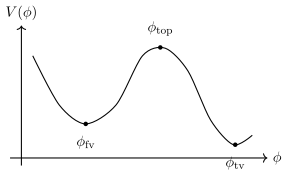
The Euclidean Nariai geometry has long been proposed as the instanton describing the nucleation of maximal-mass black holes in de Sitter space. We place this interpretation on firmer footing by showing that, once an observer is included, the gravitational path integral produces the imaginary phase required for a transition rate. As a warmup, we revisit the Hawking-Moss instanton and, as a byproduct, find that scalar fields can enhance black-hole nucleation, suggesting a quantum-gravity bound on scalar potentials with de Sitter solutions. We then study the subsequent semiclassical evolution of the nucleated black hole. We show that the previously claimed "anti-evaporation" channel is unphysical, arising from a quantum state with singular horizons. In a smooth state, the black hole instead undergoes standard thermal Hawking evaporation. We verify explicit agreement with the no-boundary state and argue that this evaporation is not subject to large quantum-gravity corrections. The nucleated black hole thus evaporates completely back to the maximally-entropic empty de Sitter vacuum, making the full process a Boltzmann fluctuation.
2605.03015
May 2026High Energy Physics - Theory
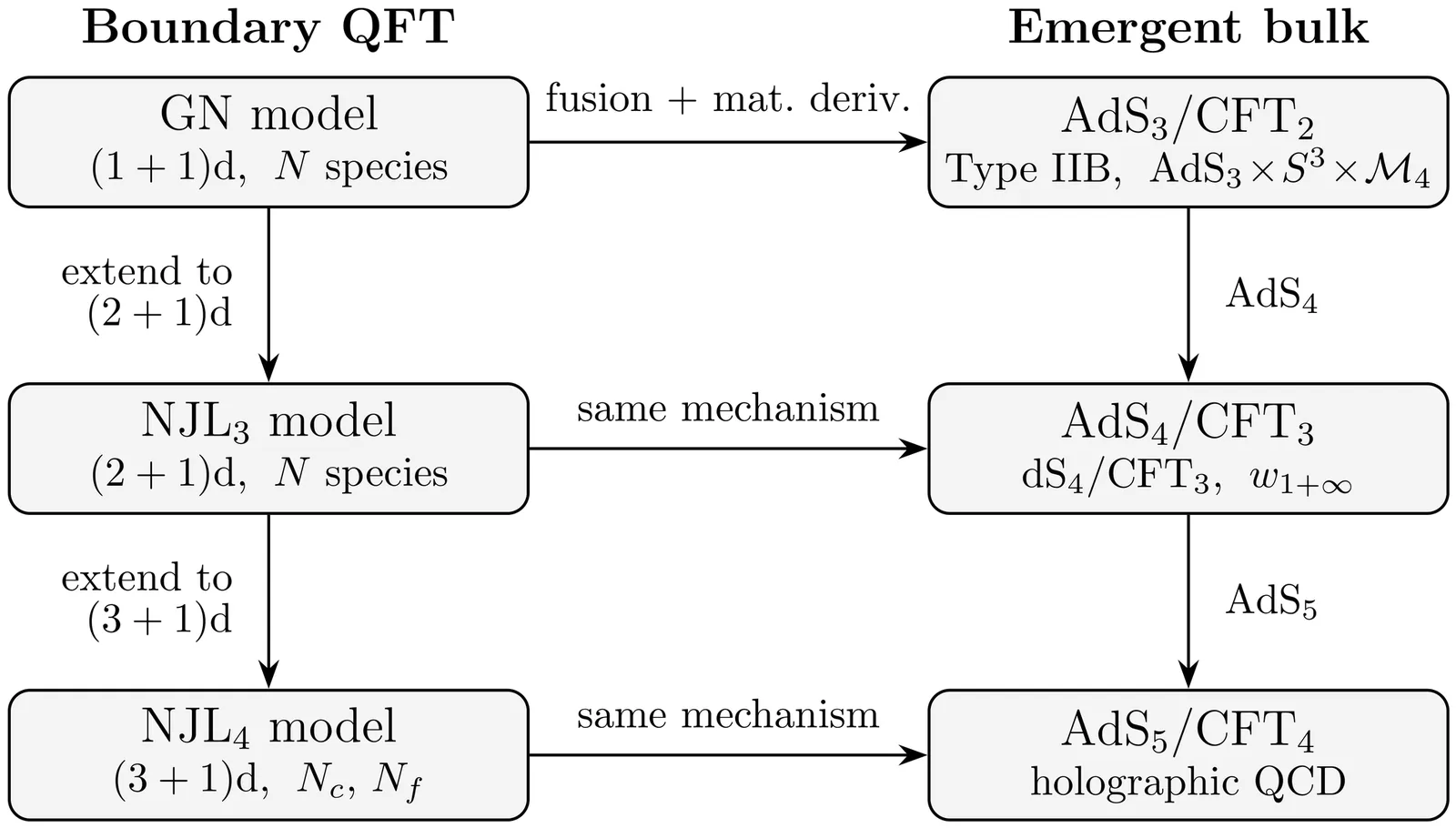
Emergent strings, holography, and cosmology from four-fermion interactions: a bottom-up derivation of AdS/CFT, dS/CFT, and $w_{1+\infty}$
We derive holographic duality from first principles starting from the $(1+1)$-dimensional Gross-Neveu (GN) model with $N$ fermion species and a local quartic interaction, without assuming any string or geometric input. Using a Bargmann-Wigner scheme, the competition between chiral condensation $Δ_0=\langle\barψψ\rangle$ and spin-1 pairing $Δ_1=\langle\barΦ_1Φ_1\rangle$ defines an emergent radial coordinate $z=m^{-1}(Δ_1/Δ_0^2-1)^{1/2}$; local fluctuations of this ratio, tracked by a comoving derivative, generate the AdS$_3$ line element via the enhanced large-$N$ species dispersion; the condensate competition \emph{is} the extra dimension. From this single mechanism the complete AdS$_3$/CFT$_2$ correspondence emerges: Newton's constant, the Virasoro algebra ($c=2N^2$), D1-branes with open strings, open/closed T-duality, the Hagedorn/BKT transition, and the BTZ black hole whose horizon circumference is quantised in Planck units by individual vortex nucleation events. Analytic continuation $z\to iζ$ across the chiral critical point realises the Strominger dS/CFT conjecture microscopically. Six constraints identify the emergent string as Type IIB on AdS$_3\times S^3\times\mathcal{M}_4$, with emergent worldsheet $\mathcal{N}=(1,1)$ supersymmetry, NS/R spectral flow, and GSO projection. Extension to the $(2+1)$d NJL model yields AdS$_4$/CFT$_3$, a dS$_4$/CFT$_3$ realisation, and a structural identification of the $w_{1+\infty}$ celestial algebra. Extension to the $(3+1)$d NJL model yields AdS$_5$/CFT$_4$ and holographic QCD with chiral symmetry breaking and linear Regge trajectories $M_s^2=4(s+1)Λ_\mathrm{QCD}^2$, capturing the correct QCD infrared physics from a four-fermion interaction.
2603.27824
Mar 2026High Energy Physics - Theory
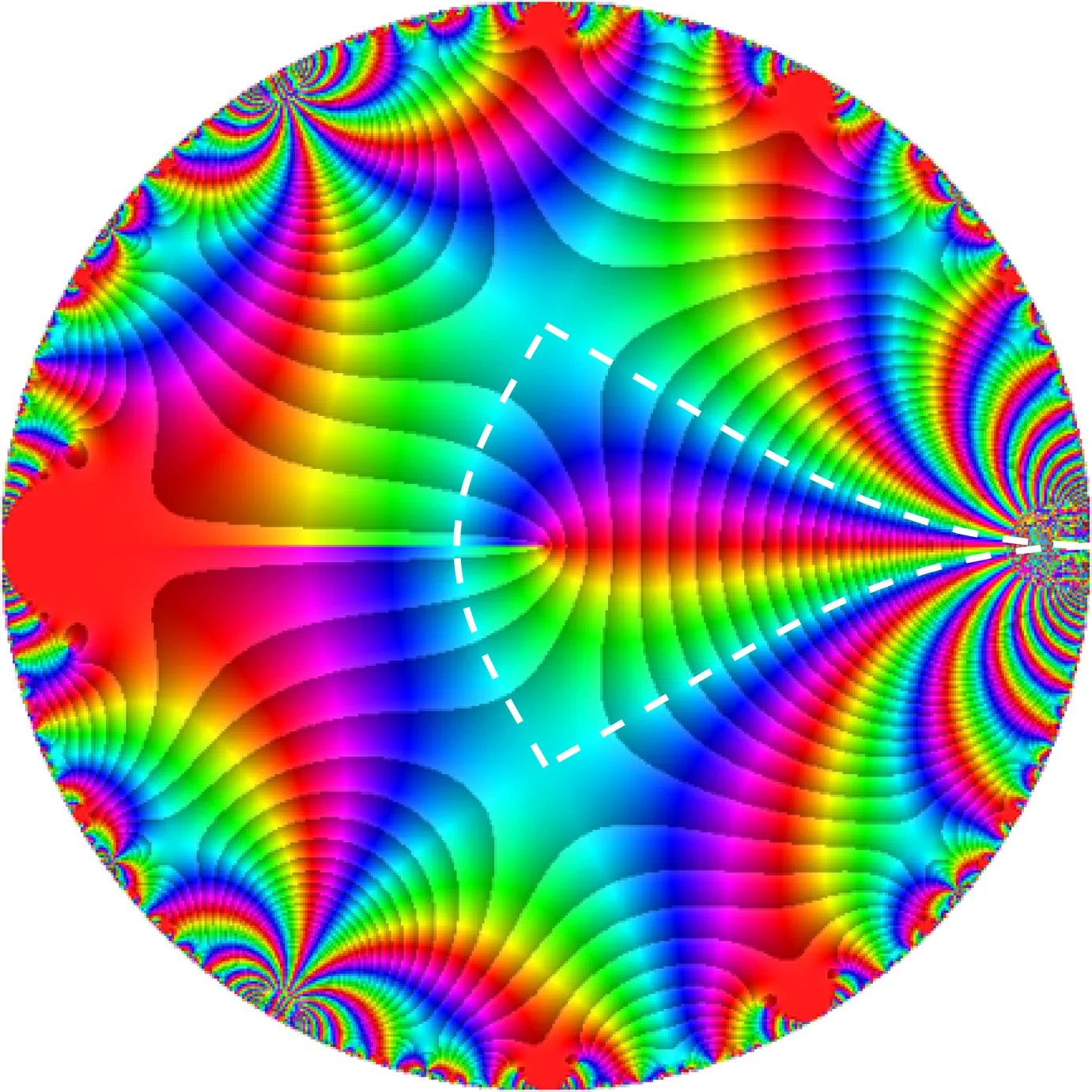
The elliptic three-loop integrals of hadronic vacuum polarization in chiral perturbation theory
This work presents a detailed account of the Feynman integrals required for the three-loop hadronic vacuum polarization calculation performed in arXiv:2510.12885. We explain how to compute each of the three-loop integrals, and outline the mathematical framework underlying their evaluation. This culminates in a practical numerical implementation that enables fast and accurate evaluation of these integrals for arbitrary complex values of the photon virtuality.
2603.15252
Mar 2026High Energy Physics - Phenomenology
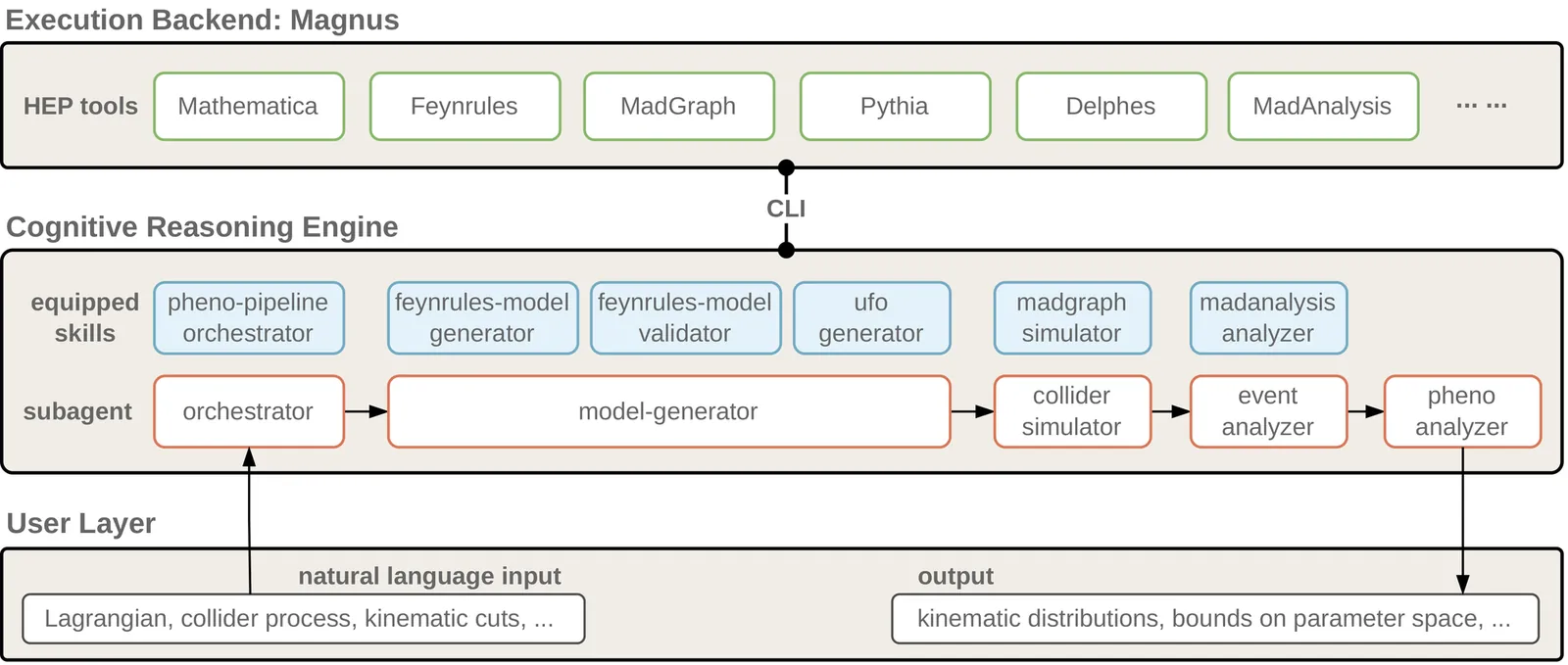
An End-to-end Architecture for Collider Physics and Beyond
We present, to our knowledge, the first language-driven agent system capable of executing end-to-end collider phenomenology tasks, instantiated within a decoupled, domain-agnostic architecture for autonomous High-Energy Physics phenomenology. Guided only by natural-language prompts supplemented with standard physics notation, ColliderAgent carries out workflows from a theoretical Lagrangian to final phenomenological outputs without relying on package-specific code. In this framework, a hierarchical multi-agent reasoning layer is coupled to Magnus, a unified execution backend for phenomenological calculations and simulation toolchains. We validate the system on representative literature reproductions spanning leptoquark and axion-like-particle scenarios, higher-dimensional effective operators, parton-level and detector-level analyses, and large-scale parameter scans leading to exclusion limits. These results point to a route toward more automated, scalable, and reproducible research in collider physics, cosmology, and physics more broadly.
2603.14553
Mar 2026High Energy Physics - Phenomenology