2,302 papers
Adapting ILC detector concepts to other facilities
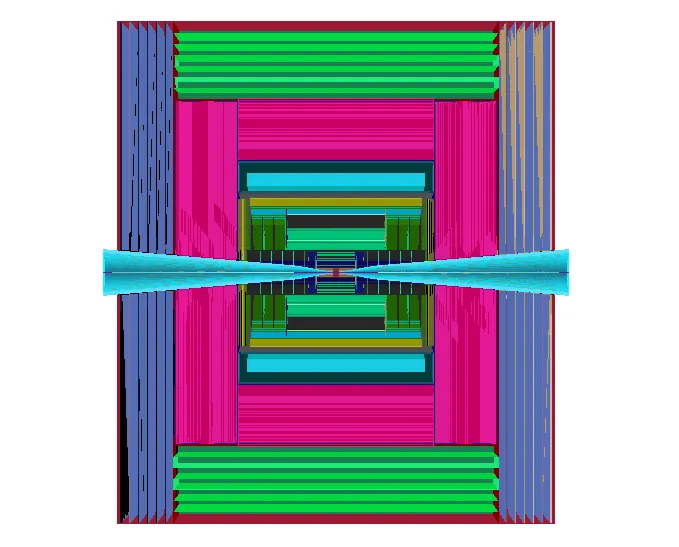
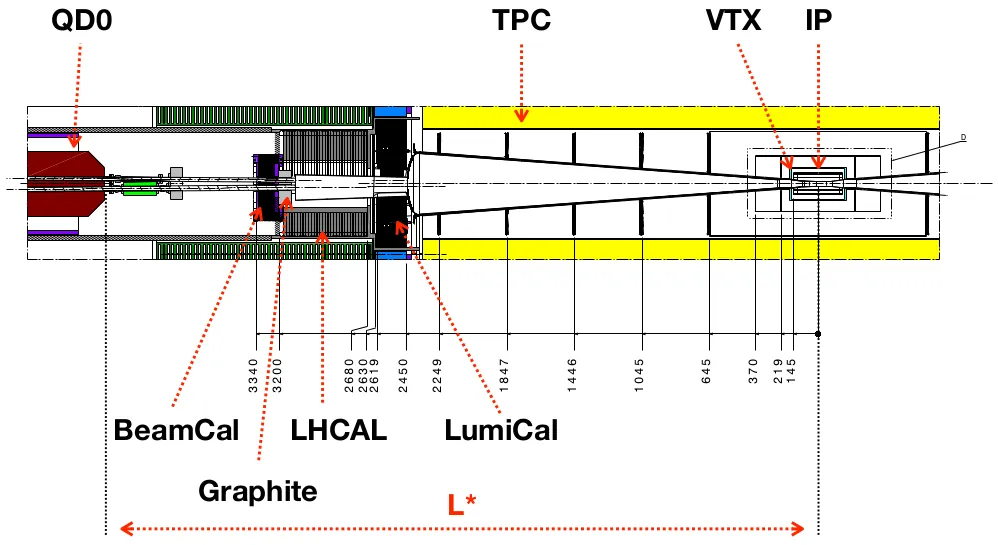
Detectors designed for the International Linear Collider have been studied over many years, and a good understanding of the relevant requirements and constraints has been developed. With the prospect of future Higgs Factory projects with different properties (for example, the FCC-ee), the adaptations required for use at such facilities are being investigated. We outline our current understanding in this note.
2604.04512Apr 2026
View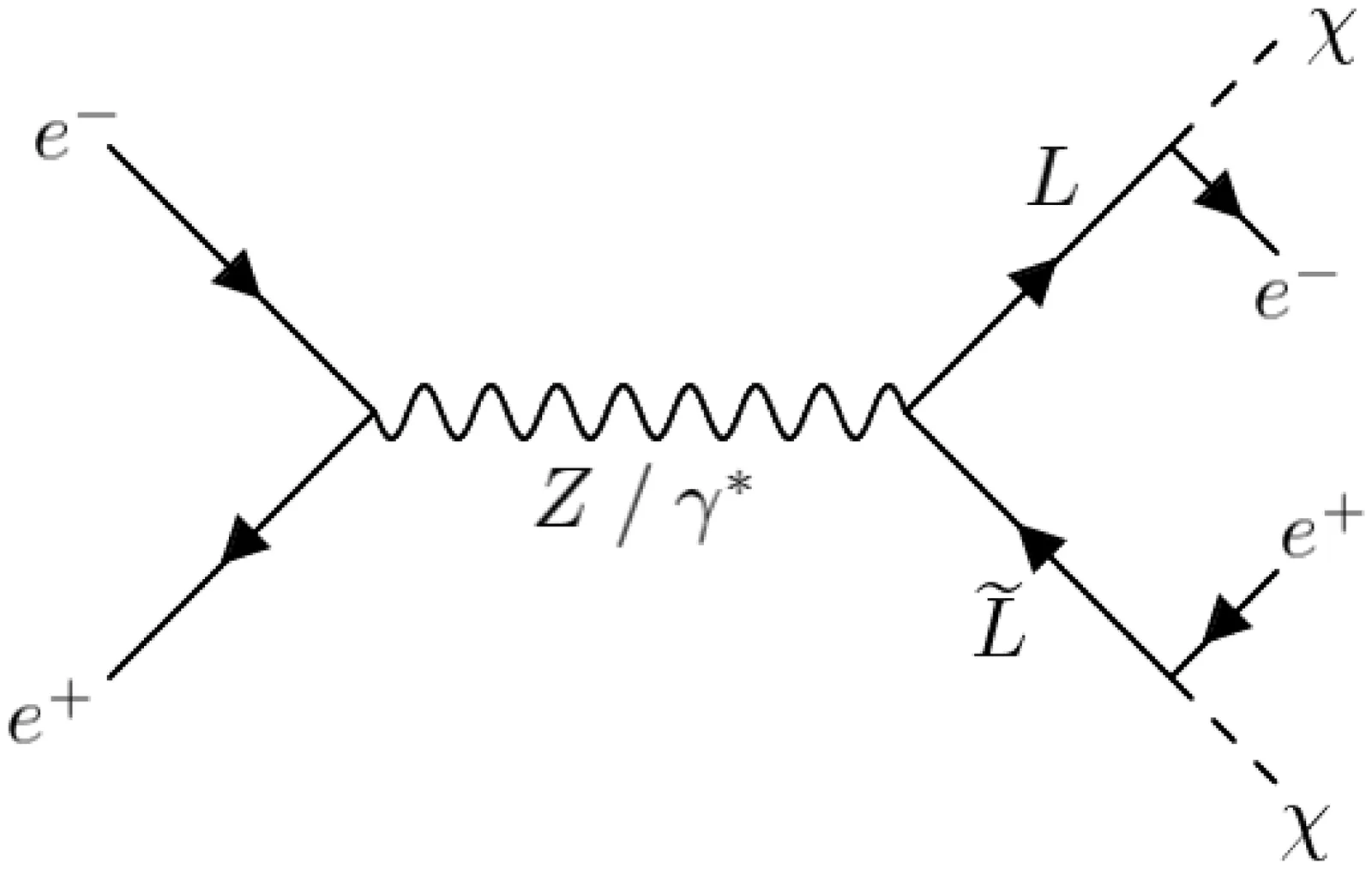
Searching for vector-like leptons decaying into an electron and missing transverse energy in e$^{+}$e$^{-}$ collisions with $\sqrt{s} = 240$ GeV at the FCC-ee
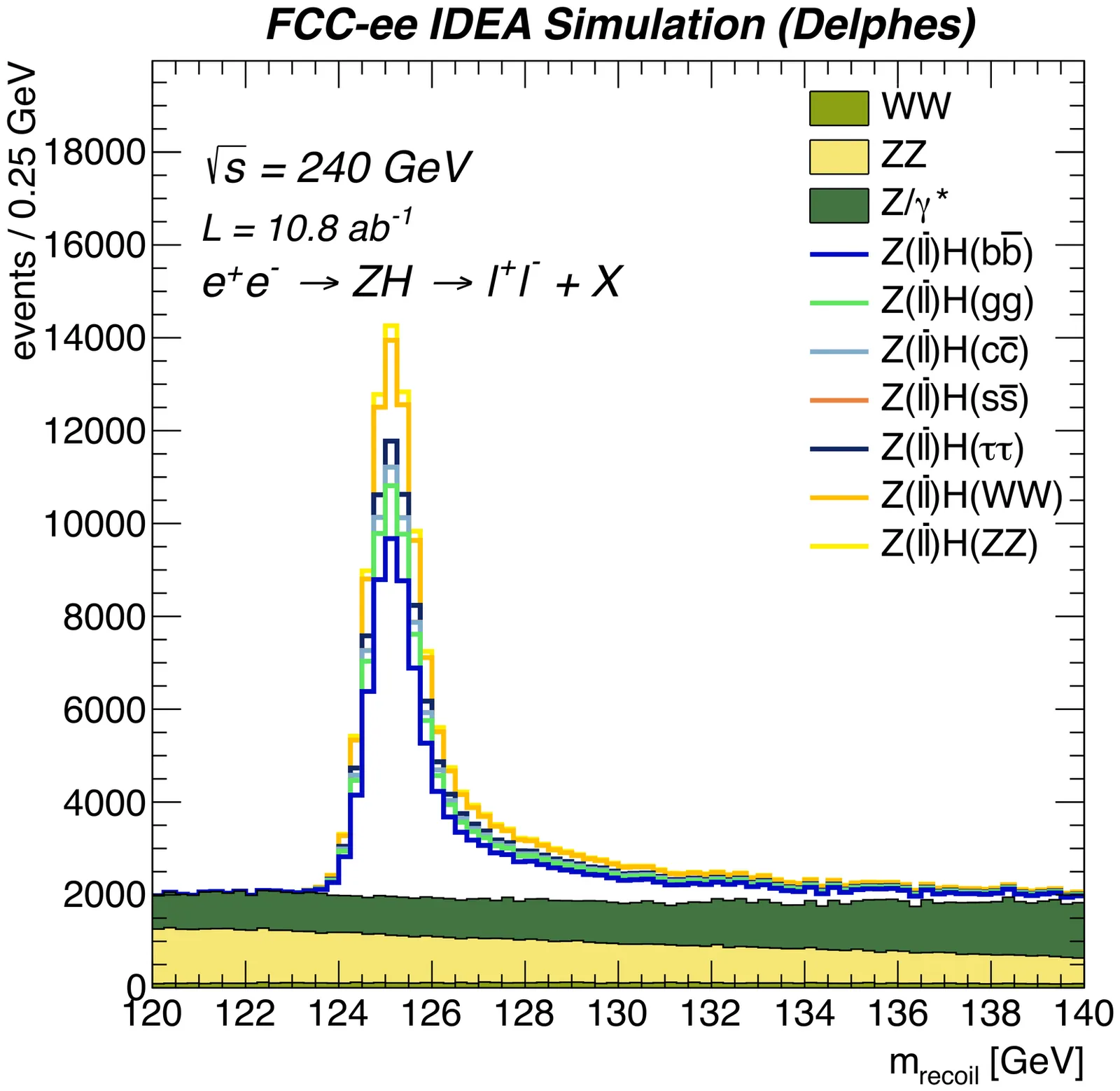
This analysis delves into the lepton portal dark matter by utilizing Monte Carlo simulated samples from electron-positron collisions at the Future Circular Collider (FCC-ee), operating at a center of mass energy of 240 GeV and an integrated luminosity of 10.8 ab$^{-1}$. The study explores a specific benchmark scenario in which dark matter is represented as a scalar particle produced as a byproduct of a vector-like lepton. The key signal signature features missing transverse energy alongside dilepton events. Should new physics not be detected, this study establishes 95\% confidence level exclusion limits on the mass of the vector-like leptons and the Yukawa coupling.
2604.04023Apr 2026
View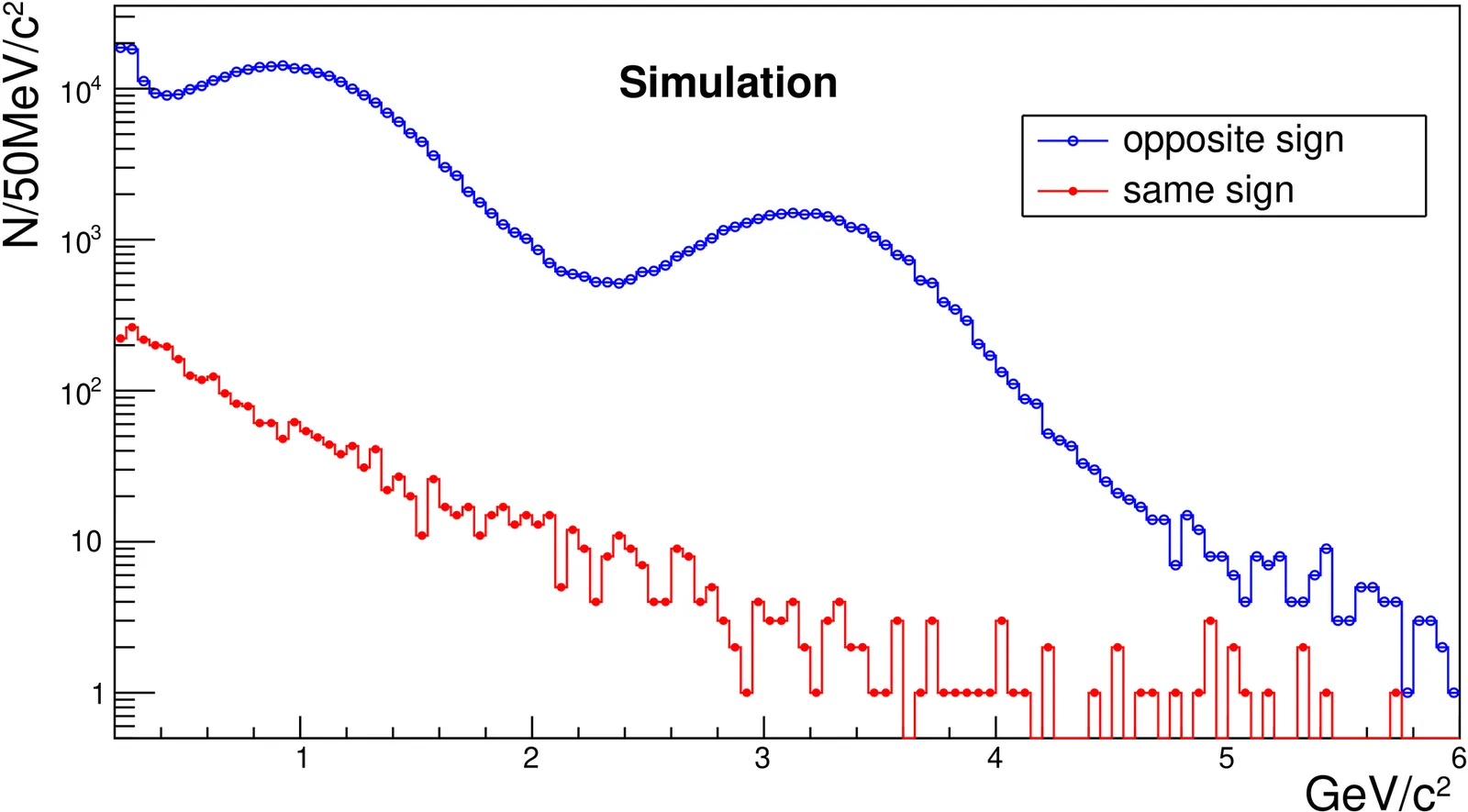
Measurement of di-muons from 400 GeV/c protons interacting in a thick molybdenum/tungsten target
Di-muon events emanating from a replica of the SHiP target at the CERN SPS contain a clear signal of $J/ψ$~production. The production rate is in reasonable agreement with Monte Carlo simulations based on Pythia v8. For the interval in rapidity defined in the center of mass, $y_{cm}$, with the largest overlap with the NA50 measurement, $0.3 < y_{cm} < 0.6$, we obtain the production cross-section per nucleon $σ(J/ψ)/A$ including the branching ratios of $J/ψ$ decays into muons, $B_{μμ}$: $B_{μμ}σ(J/ψ)/A=(1.18~\pm~0.04~\pm~0.10)~\rm{nb}$/nucleon. This is to be compared to the NA50 extrapolated result (using a much thinner target): $B_{μμ}σ(J/ψ)/A=(0.99~\pm~0.04)~\rm{nb}$/nucleon. Within the systematic errors, no significant enhancement due to secondary production of $J/ψ$ inside the target is observed. An upper limit of possible contributions from cascade collisions of $<32\%$ is obtained.
2604.03661Apr 2026
View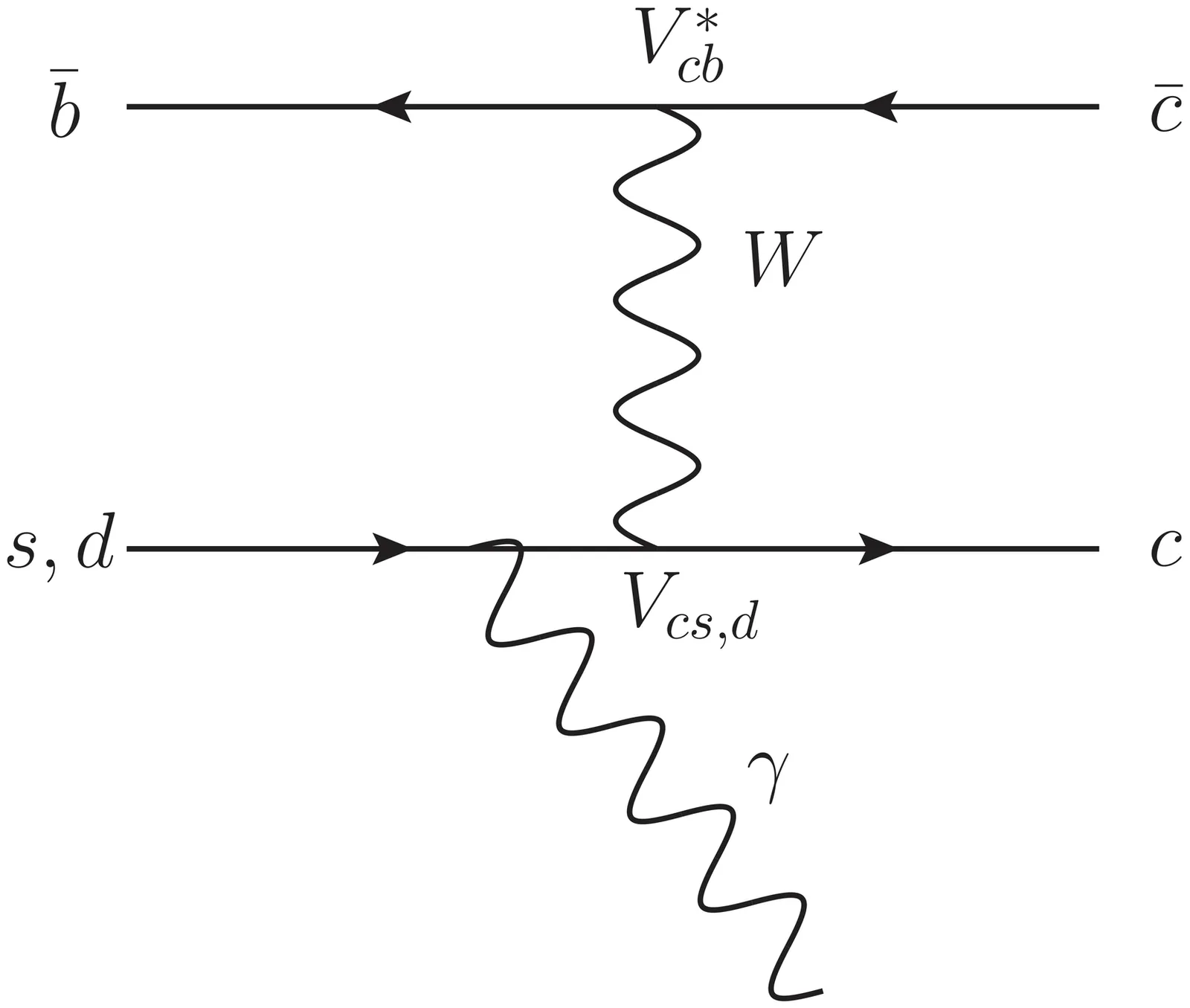
Search for the decays $B_{(s)}^0\to J/ψγ$ at LHCb
A search for the rare decays $B_{(s)}^0\to J/ψγ$ is performed with proton-proton collision data collected by the LHCb experiment, corresponding to integrated luminosities of $3~\rm{fb}^{-1}$ at centre-of-mass energies of 7 and 8 TeV, and $6~\rm{fb}^{-1}$ at 13 TeV. Assuming no contribution from $B^0\to J/ψγ$ decay, an upper limit is set on the branching fraction $\mathcal{B}(B_{s}^0\to J/ψγ)<2.9\times10^{-6}$ at the 90% confidence level. If instead no contribution from $B_{s}^0\to J/ψγ$ decay is assumed, the limit is $\mathcal{B}(B^0\to J/ψγ)<2.5\times10^{-6}$ at the 90% confidence level. These results supersede the previous LHCb results, with the limit for $B_{s}^0\to J/ψγ$ improved by a factor of 2.5.
2604.02933Apr 2026
View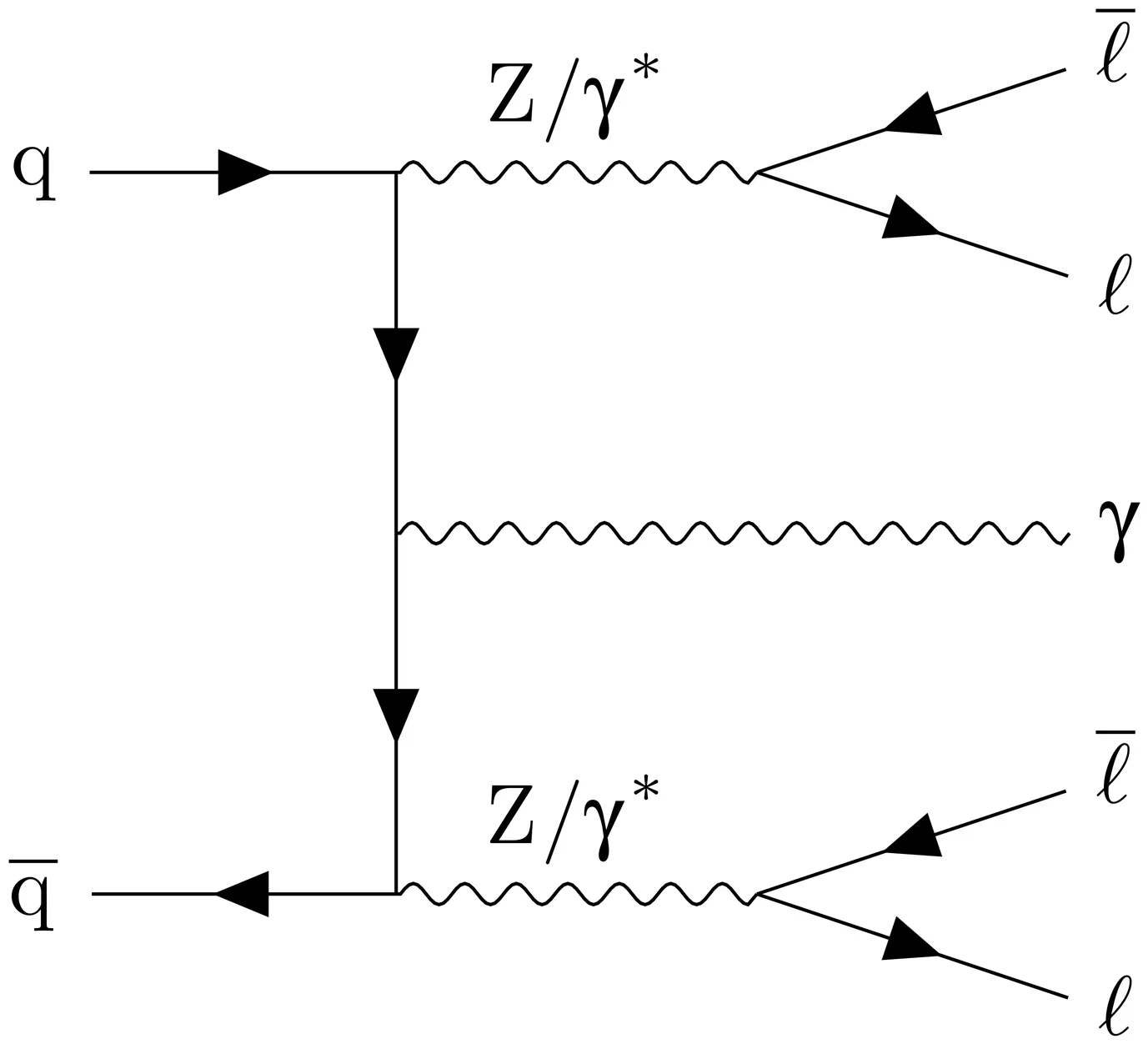
Evidence of ZZ$γ$ production and observation of $4\ellγ$ in proton-proton collisions at $\sqrt{s}$ = 13 TeV
Evidence of the production of two Z bosons and a photon in proton-proton collisions is reported for the first time in CMS. The analysis uses data collected by the CMS experiment between 2016 and 2018 at a center-of-mass energy of 13 TeV, corresponding to an integrated luminosity of 138 fb$^{-1}$. The first evidence for the process pp $\to$ ZZ$γ$ $\to$ 4$\ellγ$ ($\ell$ = e, $μ$), with an observed (expected) significance of 3.7 (3.1) standard deviations in a fiducial region defined by $p_\mathrm{T}^γ$ $\gt$ 20 GeV, $\lvertη^γ\rvert$ $\lt$ 2.4, $ΔR(\ell,γ)$ $\gt$ 0.5, $m_\text{Z}$ between 60 and 120 GeV, and the invariant mass of either of the two Z bosons combined with the photon ($m_{\text{Z}γ}$) larger than 100 GeV, is reported. The measured (predicted) fiducial cross section is 60$^{+27}_{-22}$ ab (47.56 $\pm$ 0.04 ab). Additionally, the inclusive production of pp $\to$ 4$\ellγ$ is studied by removing the $m_{\text{Z}γ}$ requirement to include final state radiation where one Z boson decays to 2$\ellγ$, yielding an observed (expected) significance of 5.0 (4.2) standard deviations and a measured (predicted) fiducial cross section of 156$^{+39}_{-35}$ ab (99.97 $\pm$ 0.09 ab).
2604.02594Apr 2026
View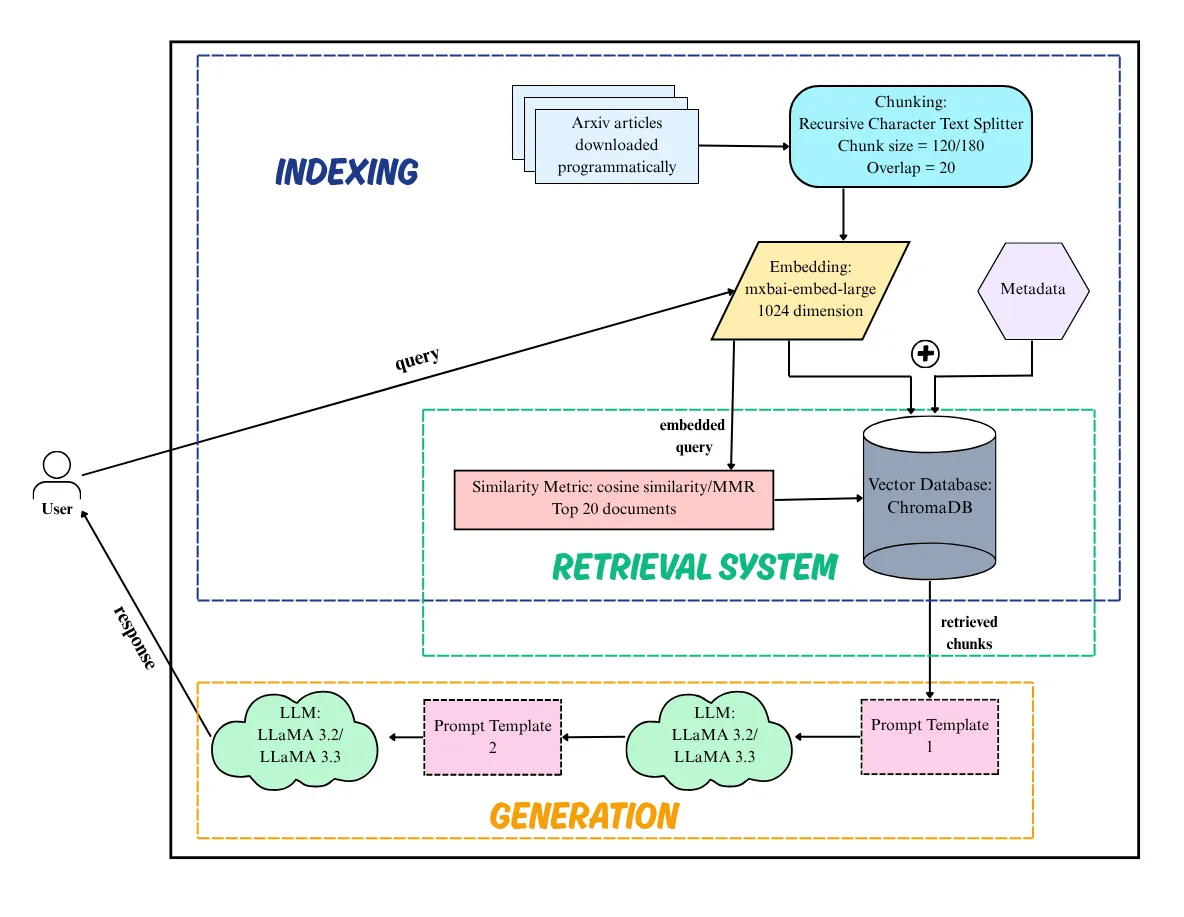
Retrieval-Augmented Question Answering over Scientific Literature for the Electron-Ion Collider
To harness the power of Language Models in answering domain specific specialized technical questions, Retrieval Augmented Generation (RAG) is been used widely. In this work, we have developed a Q\&A application inspired by the Retrieval Augmented Generation (RAG), which is comprised of an in-house database indexed on the arXiv articles related to the Electron-Ion Collider (EIC) experiment - one of the largest international scientific collaboration and incorporated an open-source LLaMA model for answer generation. This is an extension to it's proceeding application built on proprietary model and Cloud-hosted external knowledge-base for the EIC experiment. This locally-deployed RAG-system offers a cost-effective, resource-constraint alternative solution to build a RAG-assisted Q\&A application on answering domain-specific queries in the field of experimental nuclear physics. This set-up facilitates data-privacy, avoids sending any pre-publication scientific data and information to public domain. Future improvement will expand the knowledge base to encompass heterogeneous EIC-related publications and reports and upgrade the application pipeline orchestration to the LangGraph framework.
2604.02259Apr 2026
View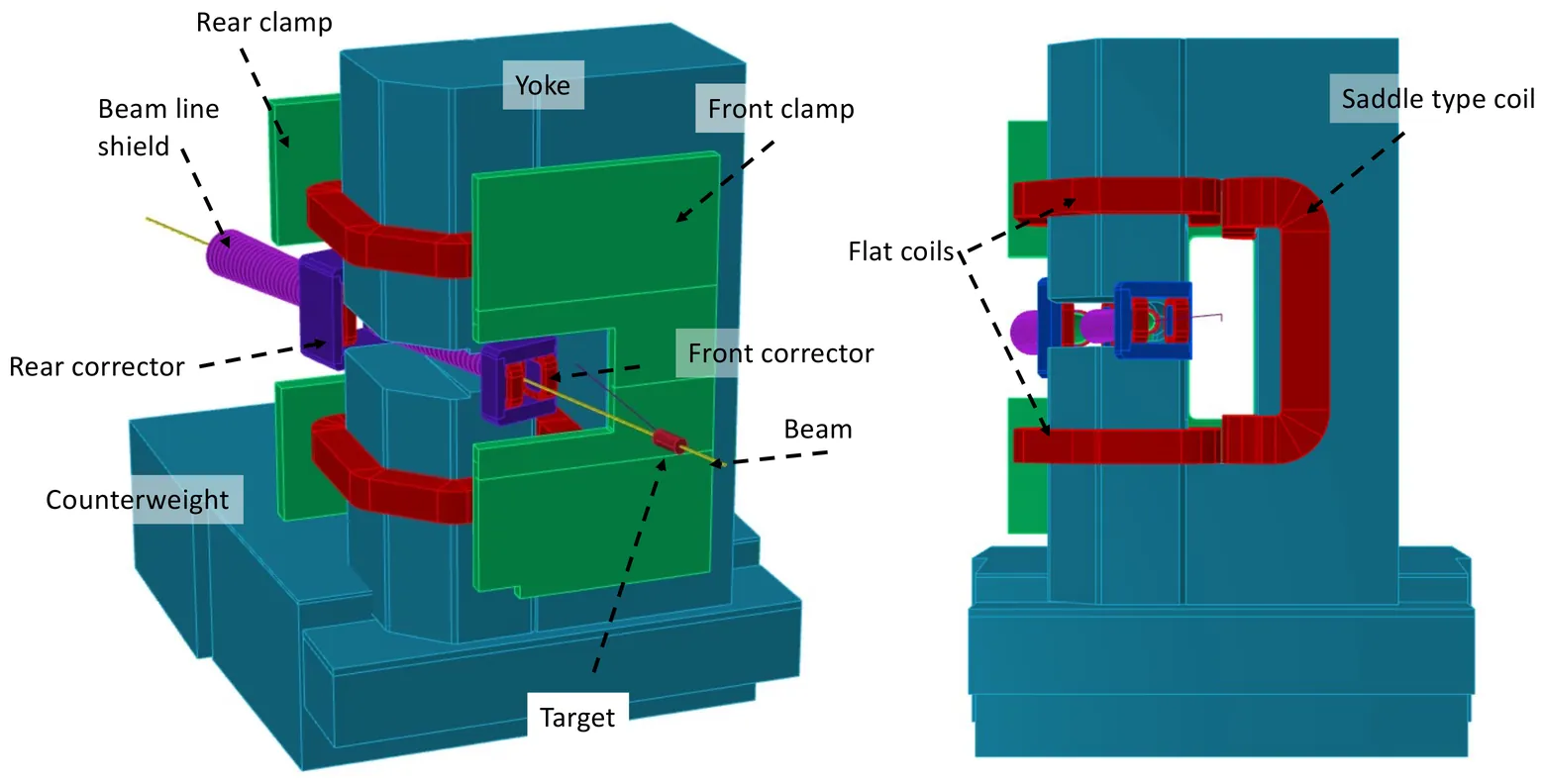
A forward-angle large-acceptance magnetic spectrometer
A large solid angle magnetic spectrometer for high luminosity and forward scattering angles was constructed at the Thomas Jefferson National Accelerator Facility. A number of physics experiments have used this spectrometer, and a significant physics program of future experiments has already been approved. A key feature of the spectrometer concept is a horizontal slit opening that allows the beamline to pass through the yoke of the spectrometer magnet. This design enables a short distance between the target and spectrometer, resulting in a 70~msr solid angle acceptance. The residual magnetic-field on the beamline inside the slit is reduced by a two-layer magnetic shielding system, with the external layer comprising a set of iron rings. Two correcting magnets, before and after the dipole, were used to compensate for the transverse component of the fringe field outside of the dipole yoke. The mechanical stability of the tall dipole magnet in close proximity to the target was provided by means of a heavy counterweight.
2604.02136Apr 2026
View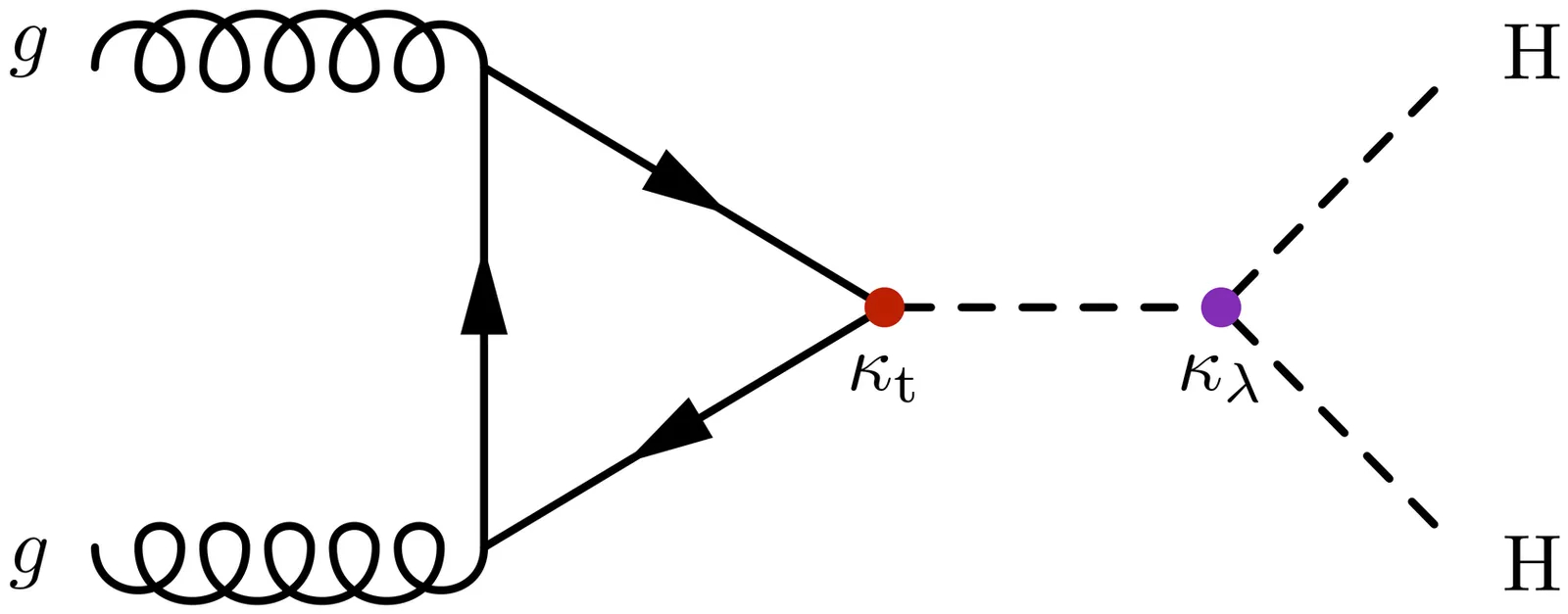
Search for Higgs boson pair production in the $\mathrm{b\bar{b}WW}$ decay channel with two leptons in the final state using proton-proton collision data at $\sqrt{s}$ = 13.6 TeV
A search for Higgs boson pair production is presented, targeting final states where one Higgs boson decays to a pair of bottom quarks and the other Higgs boson decays to two W bosons, both of which decay leptonically, to an electron or a muon, and a neutrino. For the first time, the search is conducted with proton-proton collision data from the LHC at $\sqrt{s}$ = 13.6 TeV, recorded with the CMS detector in 2022 and 2023 and corresponding to an integrated luminosity of 62 fb$^{-1}$. The results are consistent with the standard model predictions. An upper limit of 12.0 times the standard model prediction at 95% confidence level is set on the Higgs boson pair production cross section, with an expected limit of 18.5. The results are also used to constrain the strength of the trilinear self-coupling of the Higgs boson, as well as of the quartic coupling between two Higgs bosons and two vector bosons.
2604.02127Apr 2026
View 2604.01984
ATLAS and CMS measurements of the $t\bar{t}$ cross section, including off-shell and near threshold
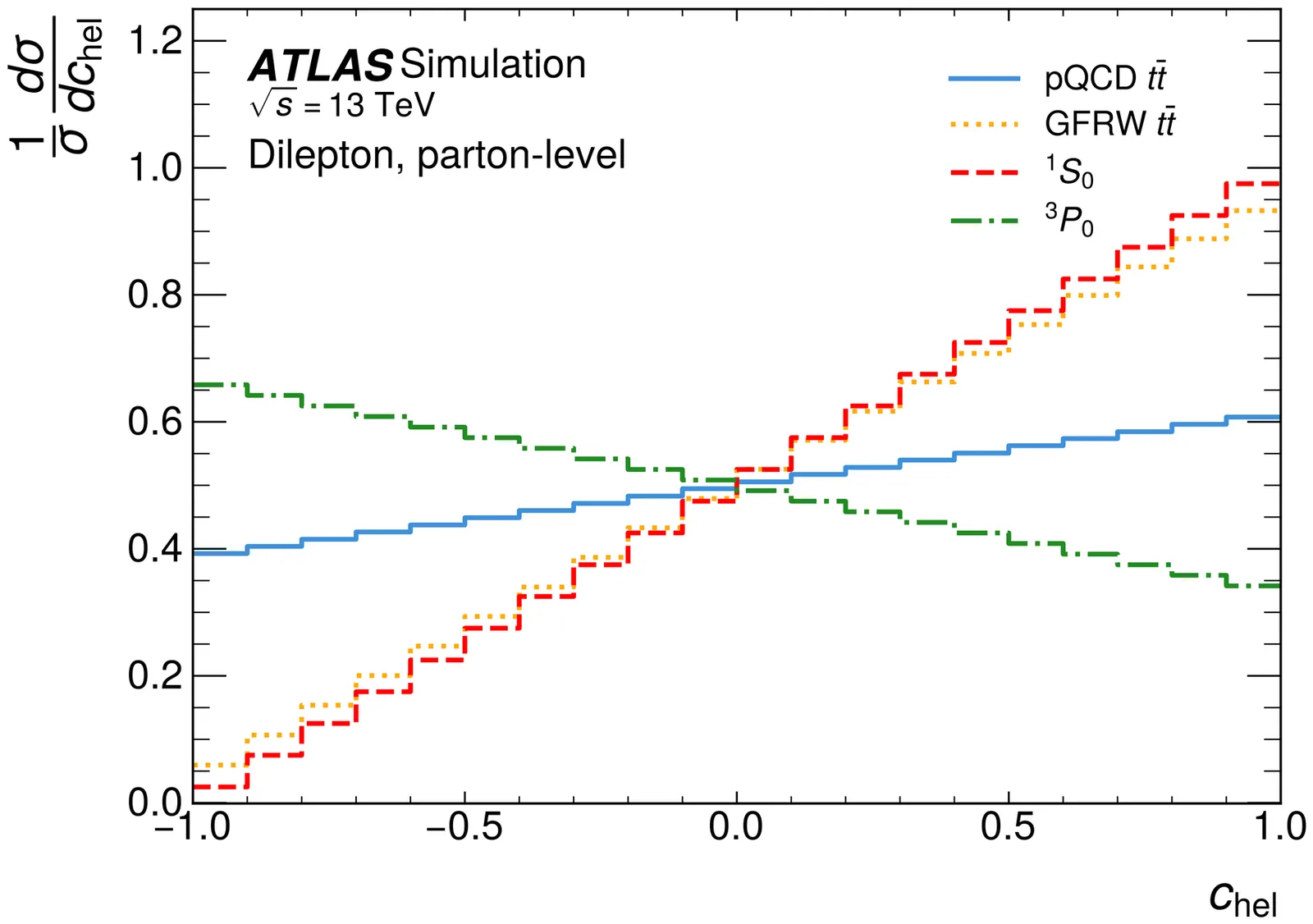
Recent measurements of the $t\bar{t}$ cross section, performed both inclusively and differentially by the ATLAS and CMS Collaborations, are reported. In particular, off-shell effects are probed in the $pp\to W^+bW^-\bar{b}$ and $pp\to e^\pmμ^\mp +b\bar{b}$ processes, and modelling aspects of the POWHEG bb4$\ell$ Monte Carlo generator are discussed. Cross section and properties measurements are also performed at the threshold: we review an indirect extraction of the top quark Yukawa coupling, as well as the recent observations by both experiments of an excess of events near the top pair production threshold that is consistent with the formation of quasi-bound states.
2604.01984Apr 2026
View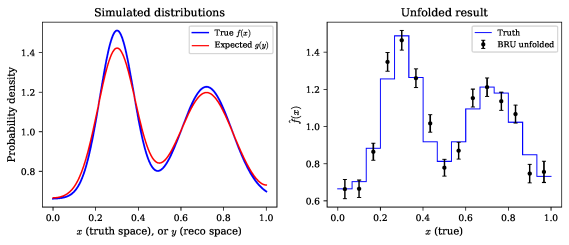
Blobel's Regularized Unfolding: Eigenmode Decomposition and Automatic Smoothing for Inverse Problems in Particle Physics
This document presents a self-contained treatment of regularized unfolding based on cubic B-spline representations and eigenmode filtering, following the original formulation by Blobel and direct translation of the original implementation in Fortran into a modern format. The method, which has been called by several names under its various historical representations, is named here as Blobel's Regularised Unfolding (BRU). This method differs from conventional histogram-based unfolding approaches in that the true distribution is represented as a smooth function parametrised by spline coefficients, and the regularization operates through an eigenmode decomposition of the curvature penalty relative to the statistical precision. This document describes the mathematical structure of the method, the mechanism by which the regularisation strength is determined automatically from the data, and provides a detailed comparison with standard methods including Tikhonov regularisation based methods, Richardson-Lucy iteration, and naive matrix inversion.
2604.01069Apr 2026
View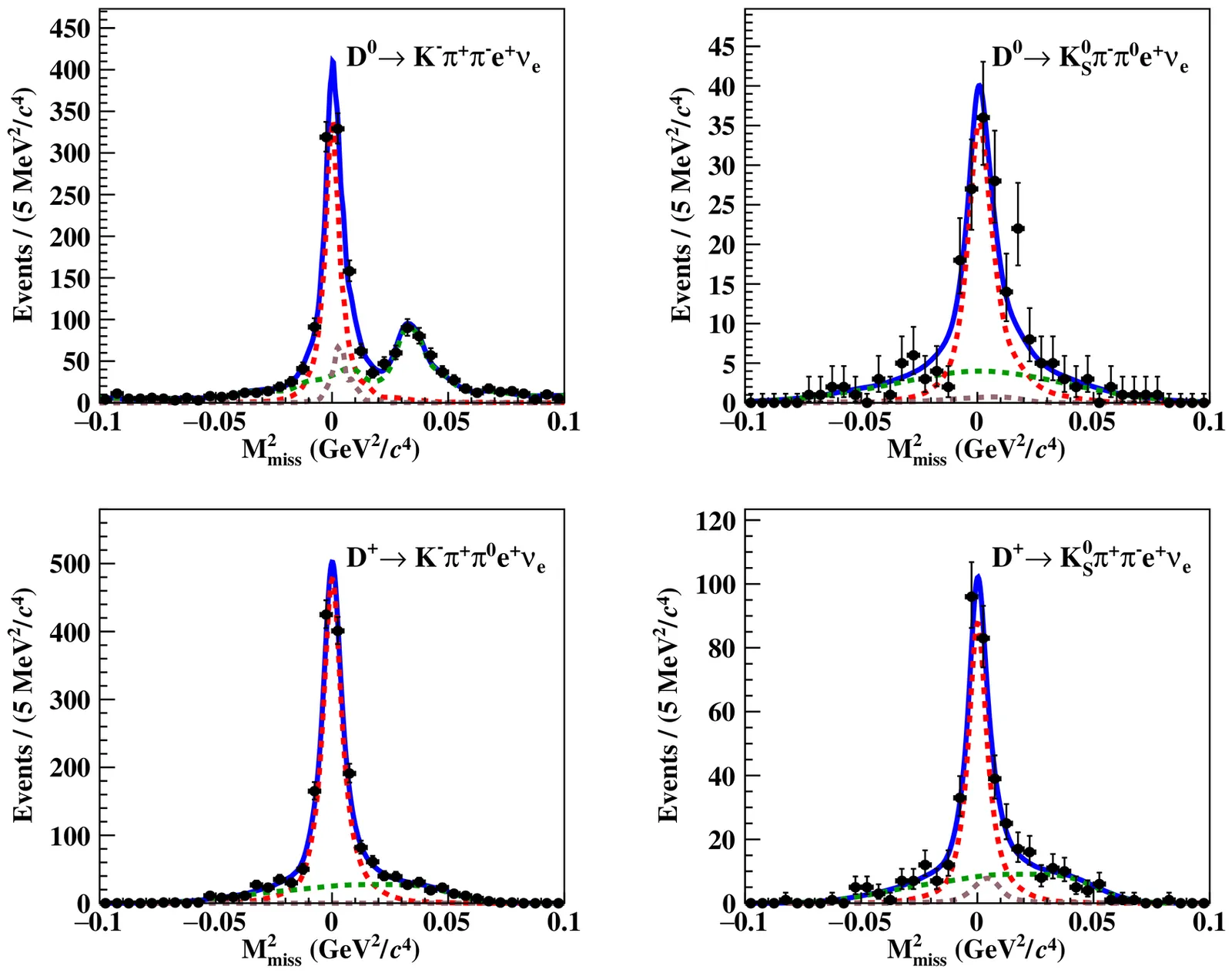
Sensitivity study of $\bar{K}_1(1270)$ decay dynamics using four $D\to \bar{K}_1(1270)(\to \bar Kππ)e^+ν$ decay channels
A sensitivity study for the measurement of $\bar{K}_1(1270)$ decay modes is performed using semileptonic $D$-meson decays. The BESIII experiment is taken as a case study, where a simultaneous analysis of $\bar{K}_1(1270)$ decays to the four thee-body final states $K^-π^+π^-$, $K^-π^+π^0$, $K_S^0π^+π^-$, and $K_S^0π^-π^0$ is presented and a model-independent determination of \mbox{$\mathcal{B}(\bar{K}_1(1270)\to \bar Kππ)$}, without requiring detailed knowledge of intermediate resonant contributions, is proposed.
2604.00859Apr 2026
View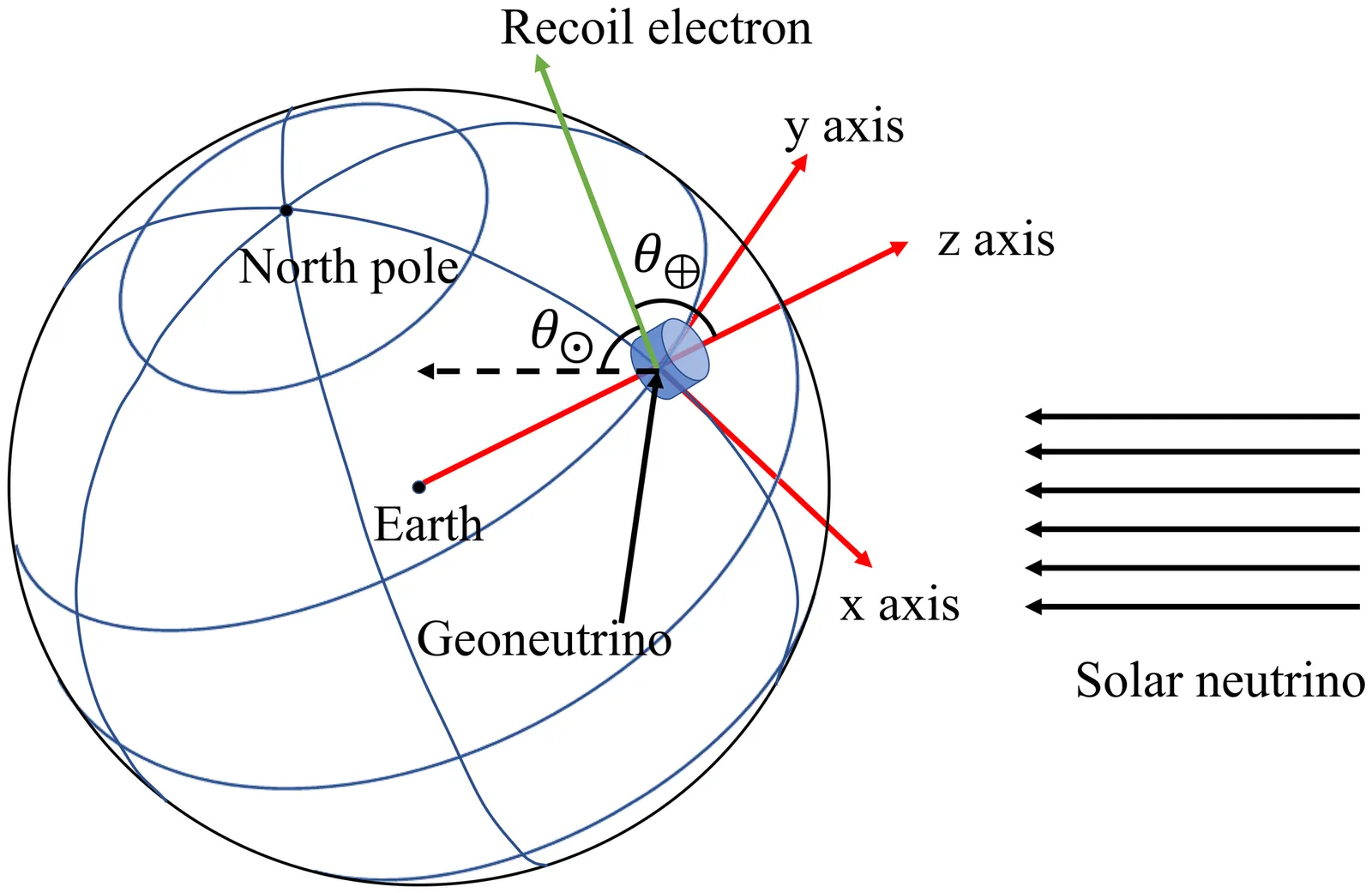
Potassium-40 geoneutrinos detection and the Earth's large-scale structures imaging by directional geoneutrino detection
Geoneutrinos, the electron (anti)neutrinos generated in decays or decay chains of the radioactive elements within the Earth, primarily K-40, U-238, and Th-232, serve as a unique probe for the inner chemical composition of the Earth. A directional geoneutrino detection method with a Cherenkov liquid scintillator is investigated in this work. The neutrino-electron elastic scattering in the scintillator is employed to detect geoneutrinos. The direction reconstruction resolution for neutrinos is studied based on previous measurements and simulations. The intrinsic neutrino background from the Sun is suppressed with an optimized solar angle cut. The 3 sigma sensitivity to discover the potassium neutrinos is 2.8 kiloton-years. The potential to reach a non-uniform geoneutrino image with the Earth's large-scale structures is also studied. The required exposure is 10.6 kiloton-years to reject a uniform geoneutrino distribution by 3 sigma.
2604.00808Apr 2026
View2604.00735Joint LHCb--Belle II Prospects to Constrain New Physics in $B\to D^{(*)}τν$
Semileptonic $b\to cτ\barν_τ$ decays are powerful probes of non-Standard-Model effects within an effective-field-theory (EFT) framework, but fully exploiting them in current and future data demands combinations that maximise sensitivity while controlling biases from Standard-Model-based modelling and from theory inputs that are shared, and therefore correlated, across analyses in different experiments. We present a first sensitivity study of a combined extraction of Wilson coefficients in $\bar{B}\to D^{(*)}τ\barν_τ$ decays using LHCb- and Belle~II-like analysis configurations. Detector simulations for signal and backgrounds are typically generated under Standard Model assumptions; if non-SM contributions are present, this can bias the fitted Wilson coefficients. In addition, hadronic inputs such as form-factor parameters of signal and background components are common across analyses, requiring a consistent treatment of fully correlated effects in combinations. To avoid repeating large-scale detector simulation for each EFT hypothesis, we use event-by-event reweighting to map simulated samples to arbitrary combinations of Wilson coefficients. We then compare a simultaneous fit across multiple $\bar{B}\to D^{(*)}τ\barν_τ$ channels and datasets with a combination based on post-fit averages. Sharing Wilson coefficients and common form-factor parameters in the simultaneous fit reduces model-induced biases and improves sensitivity relative to independent fits, providing a robust and scalable strategy for precision EFT constraints in $b\to cτ\barν_τ$ transitions using forthcoming LHCb and Belle~II datasets.
2604.00735Apr 2026
View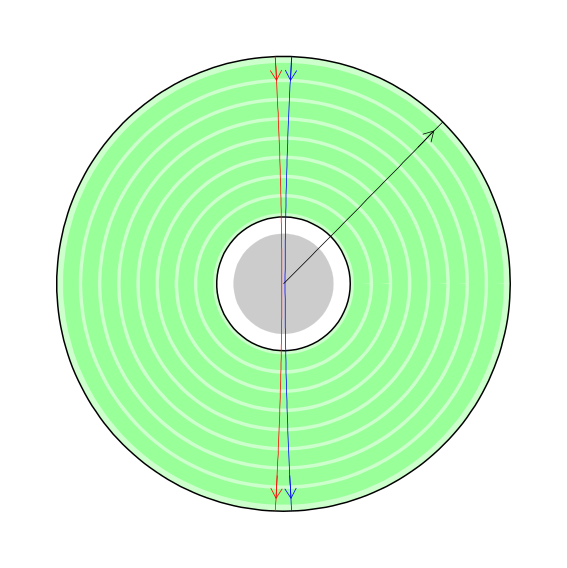
Model for the curvature response of the CDF II drift chamber
The CDF II experiment at the Fermilab Tevatron used a drift chamber to measure the momenta of charged particles. We present a model for the response of the drift chamber to the curvature of a charged particle's trajectory. Constraints on the model parameters are obtained from cosmic-ray data and from information published by CDF in the context of the W boson mass measurement. Implications for the calibration of the drift chamber measurement of momentum are discussed. The robustness of the CDF calibration procedure is demonstrated. The model provides a framework for the analysis of precision magnetic trackers of high-momentum particles.
2604.00318Mar 2026
View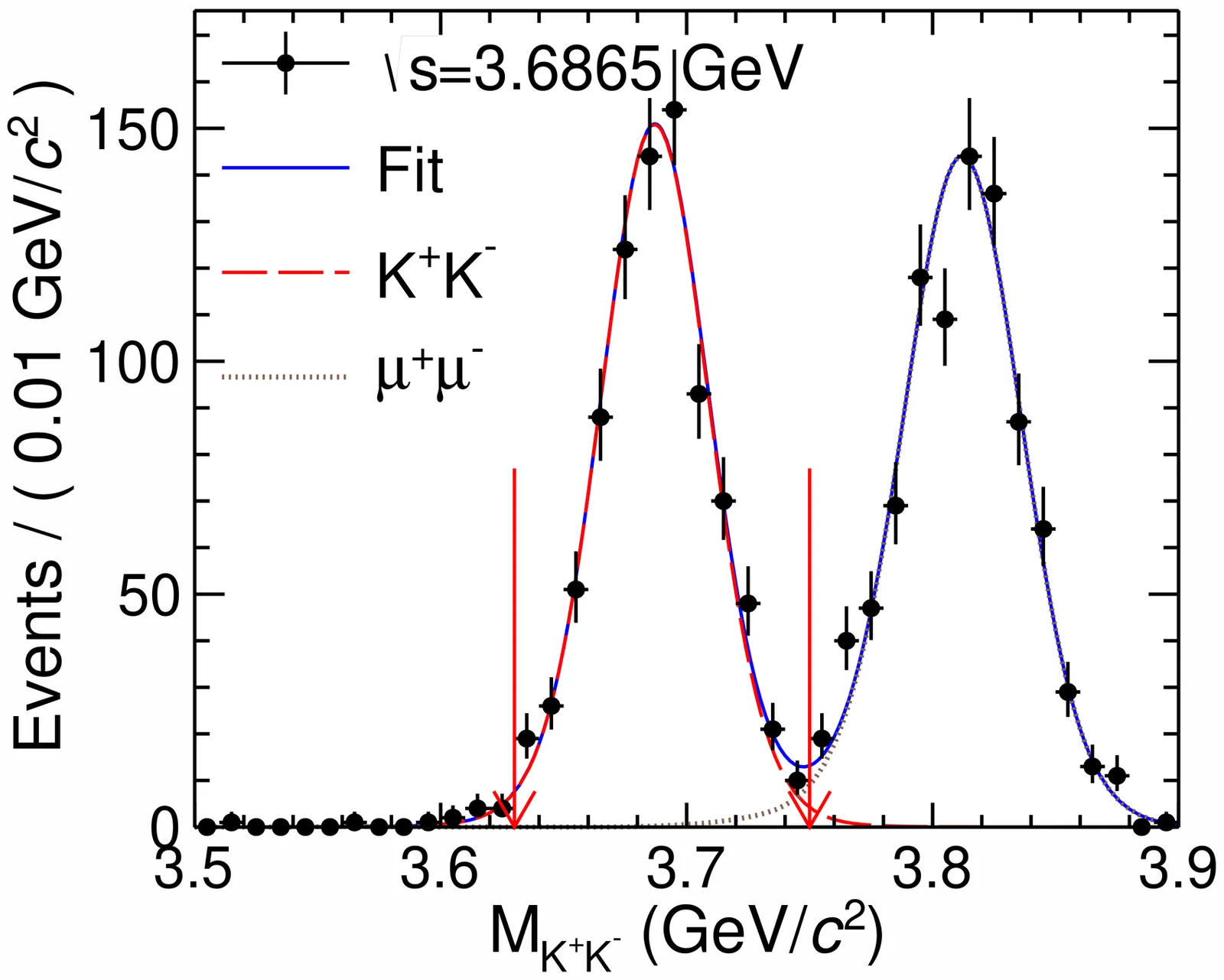
First energy scan measurement of $e^{+}e^{-}\to K^{+}K^{-}$ around the $ψ(2S)$ resonance
We report the first measurement of the $e^{+}e^{-}\to K^{+}K^{-}$ cross sections around the $ψ(2S)$ resonance using the energy scan method. The analysis is based on $e^{+}e^{-}$ collision data corresponding to an integrated luminosity of 495~pb$^{-1}$ collected with the BESIII detector at BEPCII. By analyzing the cross section line-shape, we extract the relative phase $Φ$ between the strong and electromagnetic amplitudes of the $ψ(2S)$ resonance, a fundamental parameter in charmonium physics, based on the assumption that the relative phase between the electromagnetic amplitude of the $ψ(2S)$ resonance and the continuum is zero. Two distinct solutions for the branching fraction $\mathcal{B}$ of $ψ(2S)\to K^{+}K^{-}$ are observed: a constructive interference solution with $\mathcal{B}=(7.49\pm0.41)\times10^{-5}$ and $Φ=(110.1 \pm6.7)^\circ$, and a destructive interference solution with $\mathcal{B}=(10.94\pm0.48)\times10^{-5}$ and $Φ=(-106.8\pm5.7)^\circ$. A significant correlation between $Φ$ and $\mathcal{B}$ is established, demonstrating that interference effects must be taken into account in the $ψ(2S)$ branching fraction measurements. Additionally, the first results for both the $ψ(2S)$ strong form factor, which characterizes the strong coupling between $ψ(2S)$ and $K^{+}K^{-}$, and the energy-dependent electromagnetic form factor of the charged kaon in this energy region are here reported.
2603.29854Mar 2026
View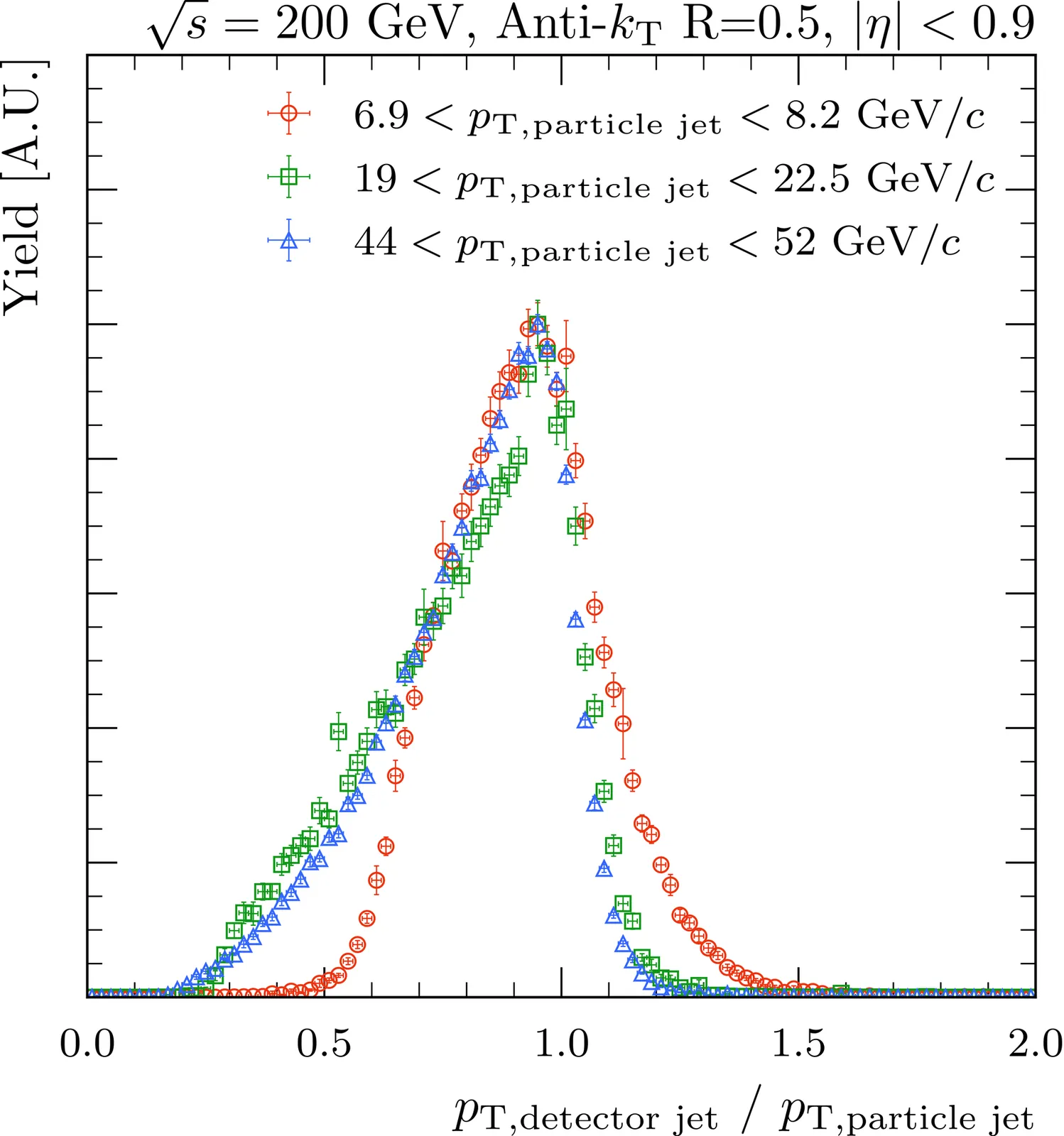
Inclusive jet cross section in $pp$ collisions at $\sqrt{s} = 200$ and $510$ GeV
Jets are collimated clusters of particles formed by the hadronization of partons following a hard interaction. In proton-proton ($pp$) collisions at the Relativistic Heavy Ion Collider (RHIC), jet production is dominated by $gg$ and $qg$ partonic processes, allowing us to directly probe the gluon parton distribution function (PDF) in the proton in a way complementary to deep inelastic scattering. In this paper, we report the double-differential inclusive-jet cross sections as a function of jet transverse momentum, $p_{\rm T}$, and pseudorapidity, $η$, at center-of-mass energies $\sqrt{s} = 200$ and $510$~GeV, from $pp$ collisions studied with the STAR detector. The jet $p_{\rm T}$ is corrected for underlying event contributions by applying an off-axis cone method. At mid-pseudorapidity, $|η| < 0.9$, the kinematic coverage of our data extends to $0.07 < x_{\rm T} \text{ (}= 2p_{\rm T}{} / \sqrt{s} \text{)} < 0.5$ and $0.03 < x_{\rm T} < 0.31$ at $\sqrt{s} = 200$~and 510 GeV, respectively, where the gluon PDF is poorly constrained by the TeV-scale $pp$~($p\bar{p}$) colliders. The inclusive jet cross sections are compared to the next-to-next-to-leading order perturbative quantum chromodynamics calculations using several recent PDF sets as inputs. These results will further constrain the gluon PDF, help tune Monte Carlo generators, and provide critical reference data needed to study the quark-gluon plasma.
2603.28695Mar 2026
View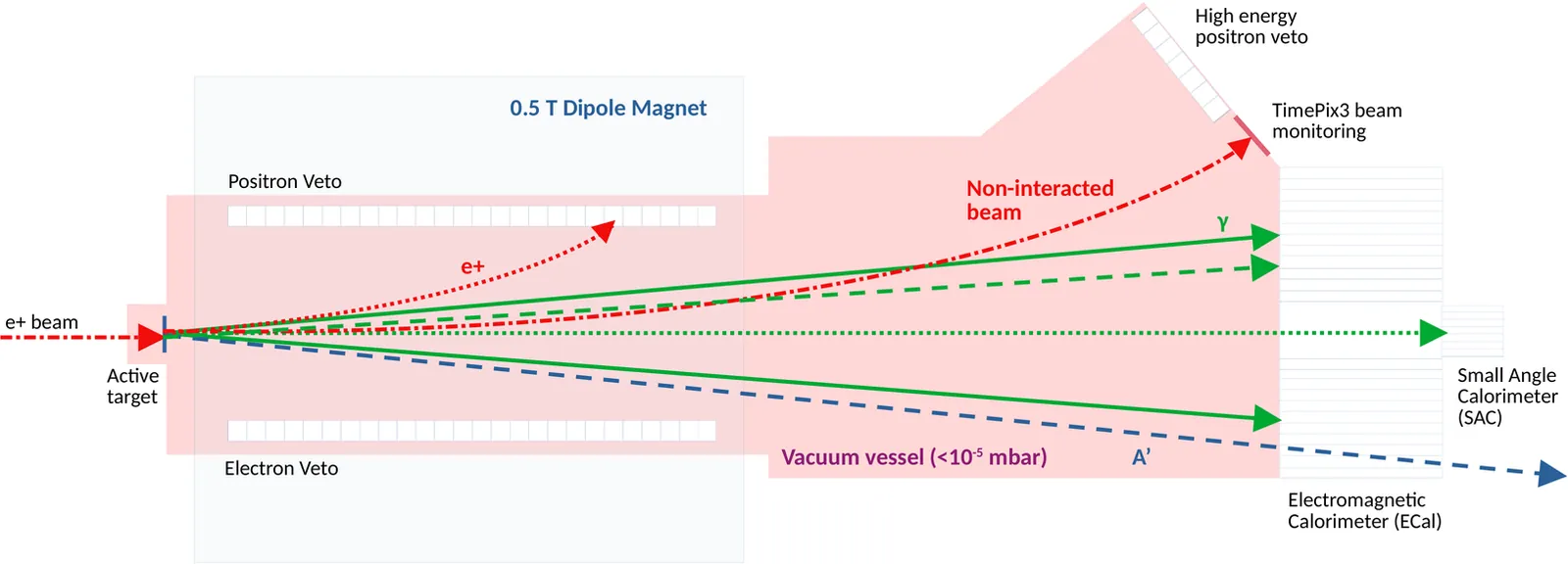
Searching for the Dark Photon with PADME
The PADME Experiment at Laboratori Nationali di Frascati is designed to search for the Dark Photon, a hypothetical gauge boson responsible for the interaction between the visible and the hidden sector. PADME explores the process of annihilation of beam positrons with the electrons in a fixed target, employing the missing mass technique: in case the annihilation results in the associate production of one visible and one Dark photon, the first can be registered by the experiment's electromagnetic calorimeter and the Dark Photon mass can be reconstructed knowing the beam energy. This paper presents the analysis techniques that are being employed for the PADME data, as well as the background composition and rejection procedure.
2603.28685Mar 2026
View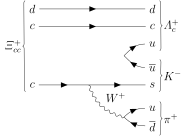
Observation of the doubly charmed baryon $\itΞ_{cc}^+$ with the LHCb Run 3 detector
The first observation of the doubly charmed baryon $\itΞ_{cc}^+$ is reported through its decay to the $\itΛ_c^+ K^-π^+$ final state, with a statistical significance exceeding seven standard deviations. The observation is made using proton-proton collision data collected in 2024 with the LHCb Run 3 detector at a center-of-mass energy of 13.6 TeV, corresponding to a total integrated luminosity of $6.9\,\mathrm{fb}^{-1}$. The $\itΞ_{cc}^+$ mass is measured to be $3619.97 \pm 0.83 \pm 0.26 \,^{+1.90}_{-1.30}\,\mathrm{MeV}/c^2$, where the first uncertainty is statistical, the second is systematic, and the third is due to the unknown $\itΞ_{cc}^+$ lifetime, which is assumed to lie in the range 15-160 fs with a baseline value of 45 fs. The difference between the masses of the $\itΞ_{cc}^+$ and $\itΞ_{cc}^{++}$ baryons is determined to be $-1.77 \pm 0.84 \pm 0.15 \,^{+1.90}_{-1.30}\,\mathrm{MeV}/c^2$. This is the first observation of a new particle made with the LHCb Run 3 detector.
2603.28456Mar 2026
View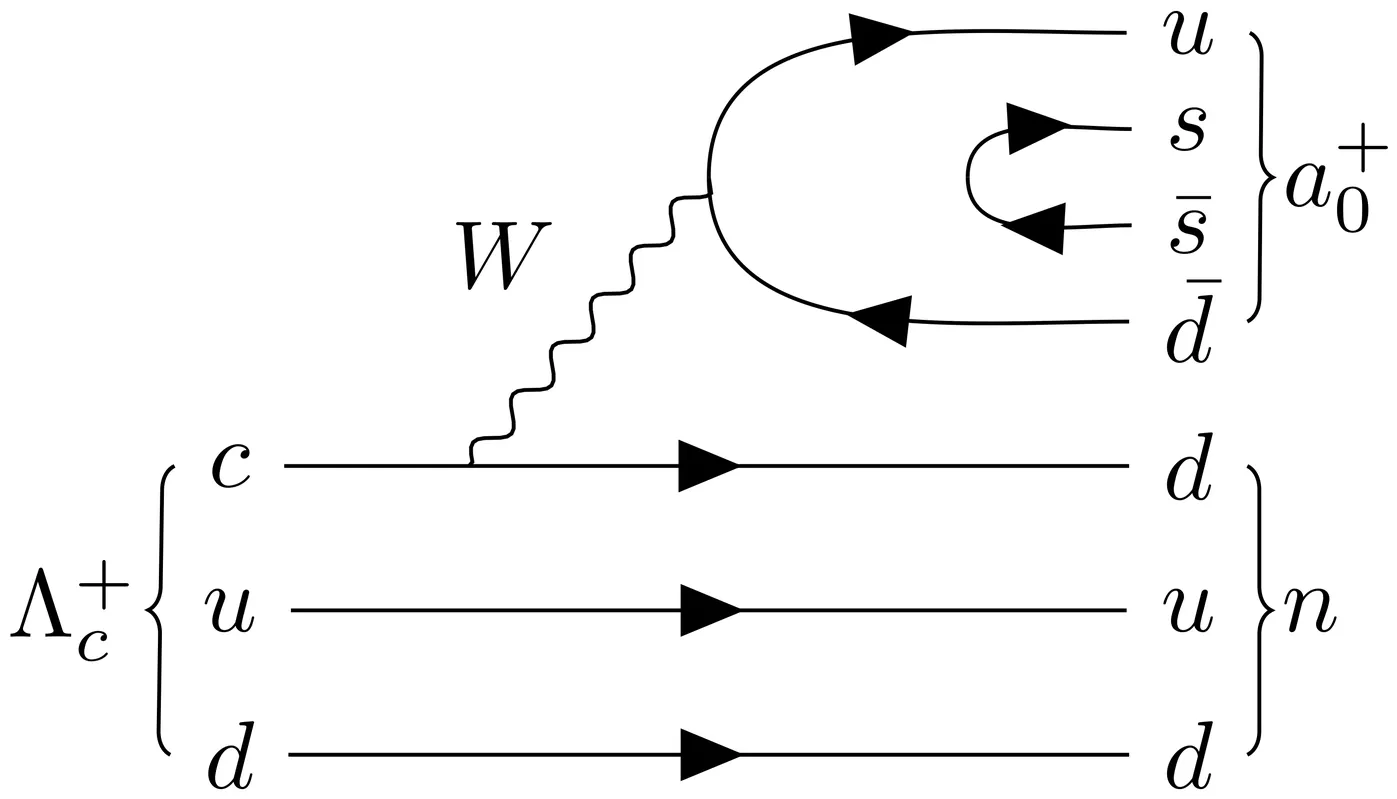
Observation of $Λ^+_c\to nπ^+η$ and search for $Λ^+_c\to na_0(980)^+$
By analysing 6.1 ${\rm fb}^{-1}$ of data collected at center-of-mass energies between $\sqrt{s}=4.600$ and 4.843 $\rm GeV$ with the BESIII detector at the BEPCII collider, we observe the decay $Λ_c^+\to nπ^+η$ for the first time with a statistical significance of $9.5σ$. The ratio of branching fractions $\mathcal{B}(Λ_c^+\to nπ^+η)/\mathcal{B}(Λ_c^+\to Λπ^+η)$ is measured to be $0.155\pm0.031_{\rm stat.}\pm0.012_{\rm syst.}$ Taking the world average of $\mathcal{B}(Λ_c^+\to Λπ^+η)$ as reference, the absolute branching fraction is calculated to be $\mathcal{B}(Λ_c^+\to nπ^+η)=(2.94\pm0.59_{\rm stat.}\pm0.23_{\rm syst.}\pm0.13_{\rm ref.})\times10^{-3}$. The intermediate process $Λ_c^+\to na_0(980)^+$ is also searched for in the $π^+η$ invariant mass spectrum. Since no significant signal is found, the upper limit on $\mathcal{B}(Λ_c^+\to na_0(980)^+)\times\mathcal{B}(a_0(980)^+\toπ^+η)$ is set to $8.4\times10^{-4}$ at 90\% confidence level. A sophisticated deep learning approach using a Transformer-based architecture is employed to distinguish signals from prevalent hadronic backgrounds, complemented by thorough validation and systematic uncertainty quantification.
2603.28232Mar 2026
View
Measurement of CP asymmetries in $\kern 0.18em\overline{\kern -0.18em B}^0 \to D_s^- D^+$ and $\kern 0.18em\overline{\kern -0.18em B}_s^0 \to D_s^+ D^-$ decays
Measurements of the combined CP asymmetries in $\kern 0.18em\overline{\kern -0.18em B}^0 \to D_s^- D^+$ and $\kern 0.18em\overline{\kern -0.18em B}_s^0 \to D_s^+ D^-$ decays are made using proton-proton collision data collected by the LHCb experiment, corresponding to an integrated luminosity of 9fb$^{-1}$. The measurements are found to be \begin{aligned} A_{CP}(\kern 0.18em\overline{\kern -0.18em B}^0 \to D_s^- D^+) &= 0.0009 \pm 0.0053 \pm 0.0040, \\ A_{CP}(\kern 0.18em\overline{\kern -0.18em B}_s^0 \to D_s^+ D^-) &= 0.103\phantom{0} \pm 0.053\phantom{0} \pm 0.010, \end{aligned} where the first and second uncertainties are statistical and systematic, respectively. This is the first measurement of this asymmetry in $\kern 0.18em\overline{\kern -0.18em B}_s^0$ decays, and the most precise measurement to date for $\kern 0.18em\overline{\kern -0.18em B}^0$ decays. Both measurements are found to be consistent with CP symmetry.
2603.28132Mar 2026
ViewPage 1 of 116