Lattice field theory methods and applications, including algorithms and numerical techniques.
Looking for a broader view? This category is part of:
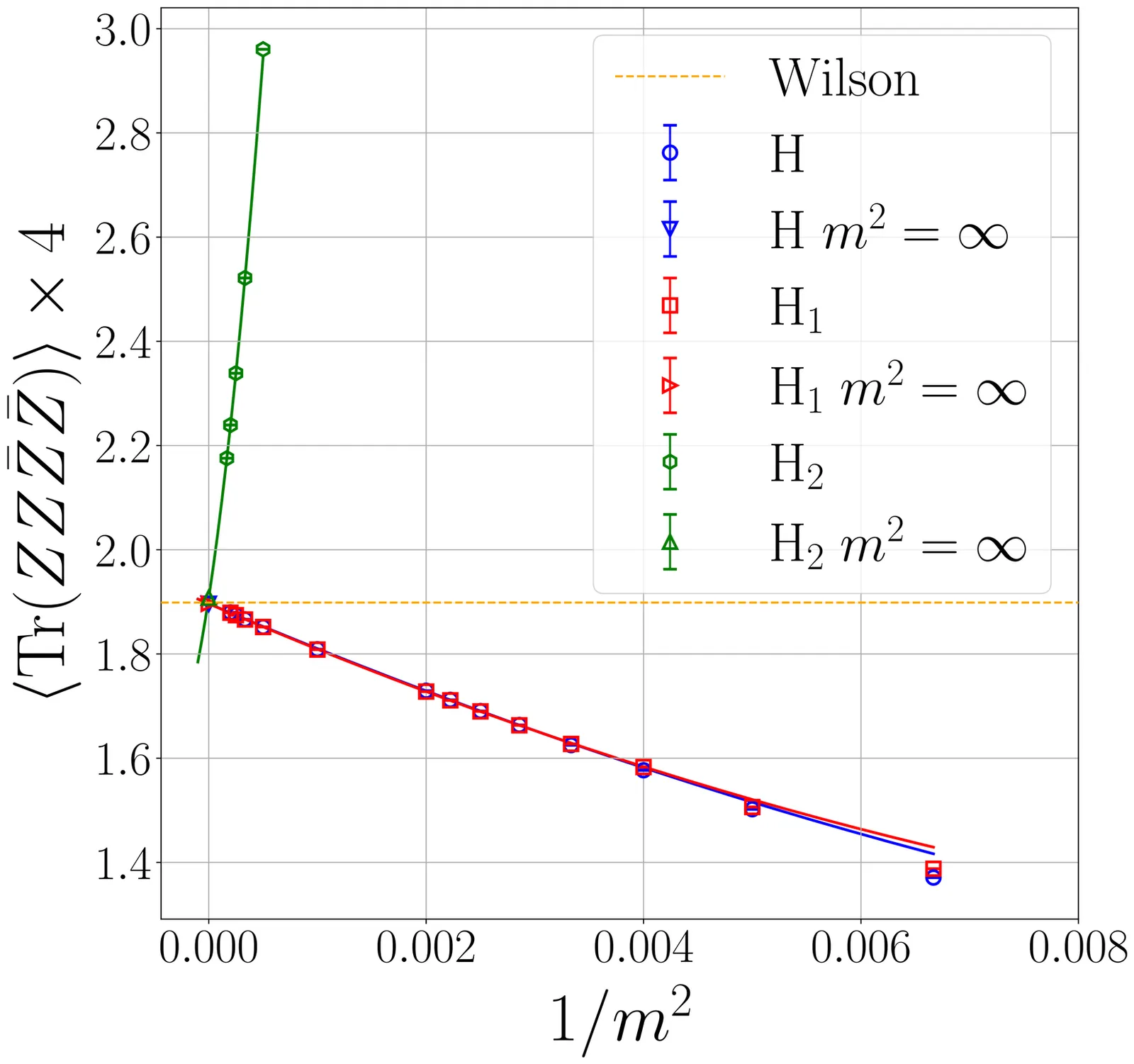
Simulating lattice gauge theories on quantum computers presents unique challenges that drive the development of novel theoretical frameworks. The orbifold lattice approach offers a scalable method for simulating SU($N$) gauge theories in arbitrary dimensions. In this work, we present three improvements: (i) two new simplified Hamiltonians, (ii) an encoding of the SU(2) theory with smaller number of qubits, and (iii) a reduction in the requirement for large scalar masses to reach the Kogut-Susskind limit, achieved via the inclusion of an additional term in the Hamiltonian. These advancements significantly reduce circuit depth and qubit requirements for quantum simulations. We benchmarked these improvements using Monte Carlo simulations of SU(2) in (2+1) dimensions. Preliminary results demonstrate the effectiveness of these developments and further validate the use of noncompact variables as a promising framework for scalable quantum simulations of gauge theories.
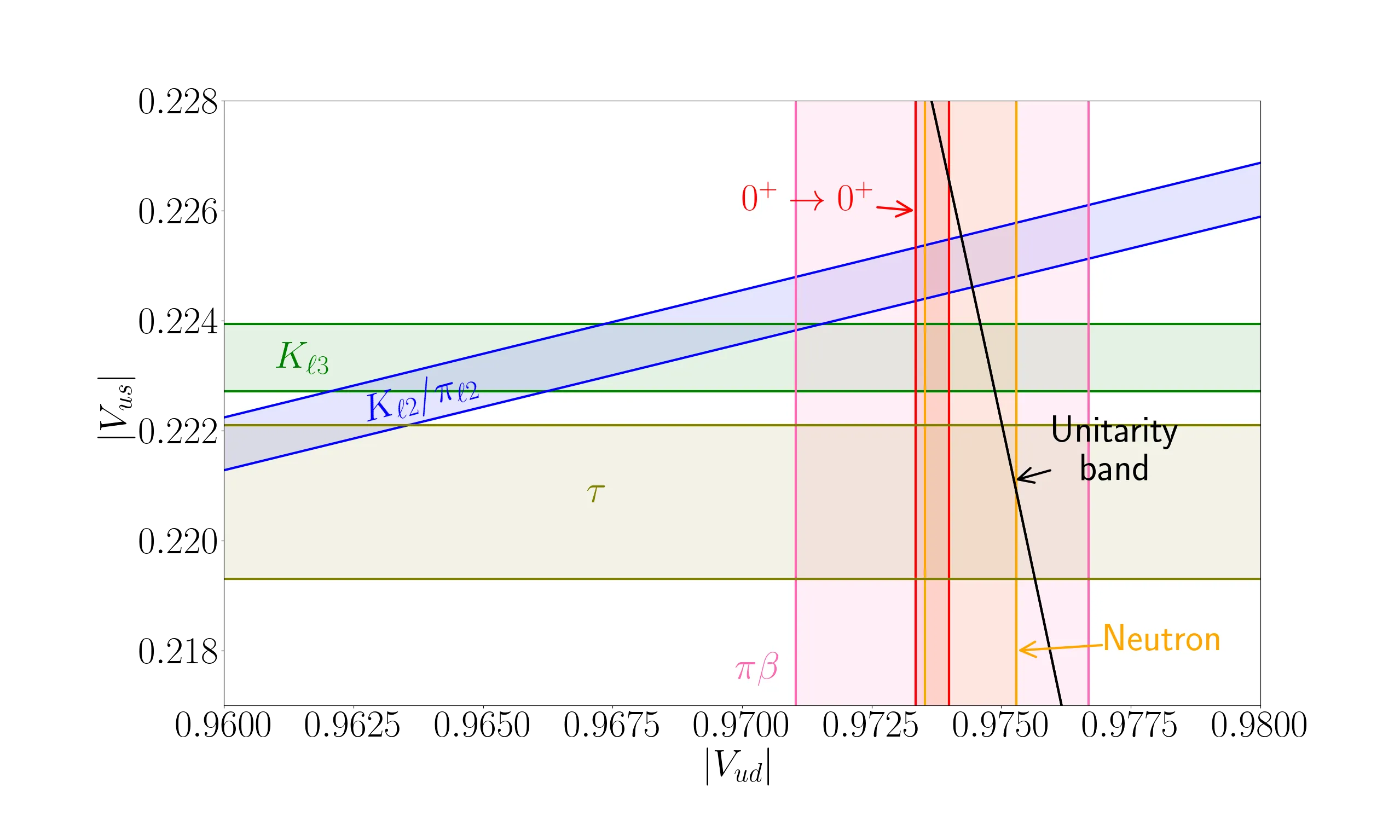
High-precision determinations of Cabibbo-Kobayashi-Maskawa (CKM) matrix elements are essential probes of physics Beyond the Standard Model (BSM). Current precision tests show a deficit in the first row unitarity relation. At the current level of precision, the only relevant CKM matrix elements that contribute to this test are $|V_{ud}|$ and $|V_{us}|$. Without resorting to nuclear inputs, they can be extracted from the combination of the experimental decay width of kaon and pion leptonic decays, along with the theoretical calculation of their decay constants; combined with the decay width of semileptonic kaon decays, with the computation of the corresponding form factor at zero momentum transfer. We review current efforts by the Fermilab Lattice and MILC collaborations towards a correlated analysis of the lattice inputs needed for this test using Highly Improved Staggered Quarks (HISQ) on the $N_f=2+1+1$ MILC configurations along with Staggered Chiral Perturbation Theory (SChPT) as a functional form for the chiral-continuum limit.
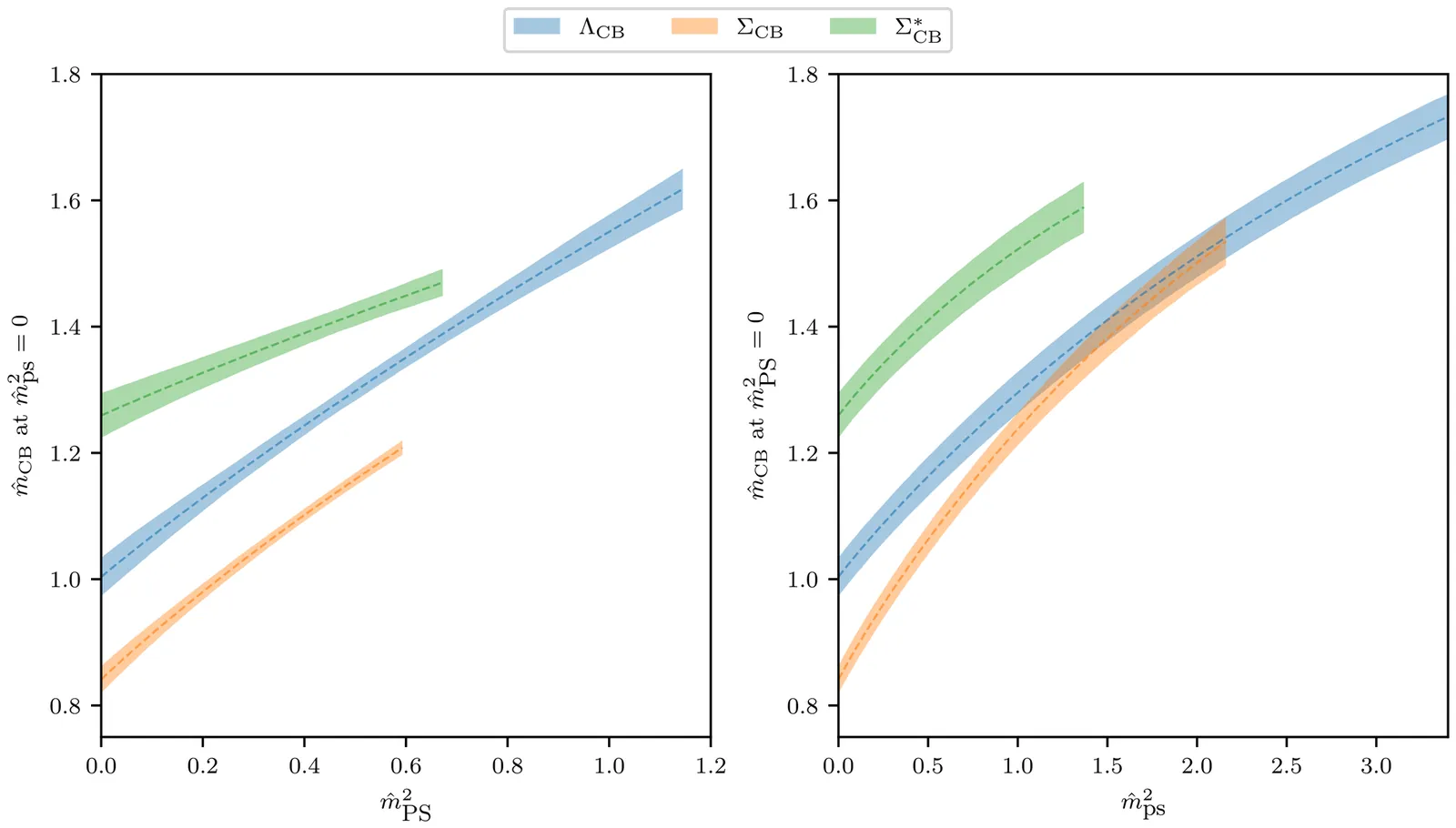
We study chimera baryons, fermion bound states composed of two (hyper)quarks transforming in the fundamental and one in the antisymmetric representation of a non-Abelian gauge group. While in QCD they coincide with ordinary baryons, in composite Higgs models (CHMs) with top partial compositeness, spin-1/2 chimera baryons serve as partners of the top quark and are responsible for its large mass. We perform non-perturbative lattice calculations of the low-lying spectrum of the chimera baryons, in a specific realization of CHMs based on a Sp(4) gauge theory. In the quenched approximation, we present the numerical results in the continuum and massless limits. Then, for dynamical fermions, we measure the spectrum and matrix elements by employing a newly developed spectral density analysis for several choices of the lattice parameters.
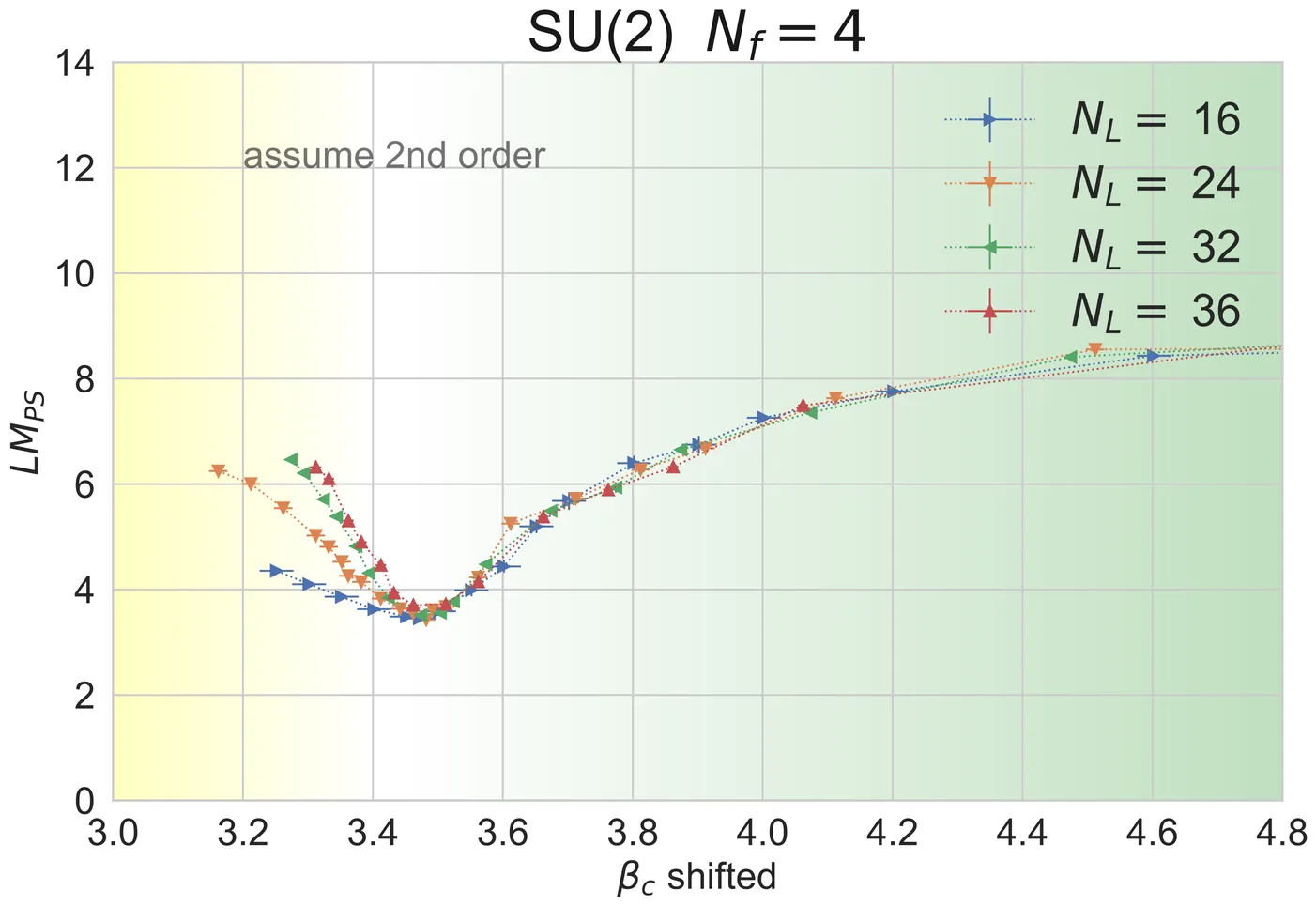
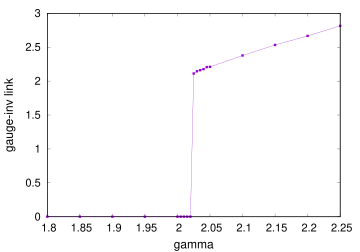
Signatures of symmetric mass generation (SMG) have recently been reported in lattice QCD calculations employing staggered fermions. We discuss the general criteria for SMG, and demonstrate that these conditions are indeed met by the staggered fermion action, in particular by the continuum action derived by Lee and Sharpe. We propose possible RG flow around the SMG transition, guided by the numerical results. We also point out that the Goldstone tetraquark meson states provide a phenomenological signature of the "type-II" SMG phase.
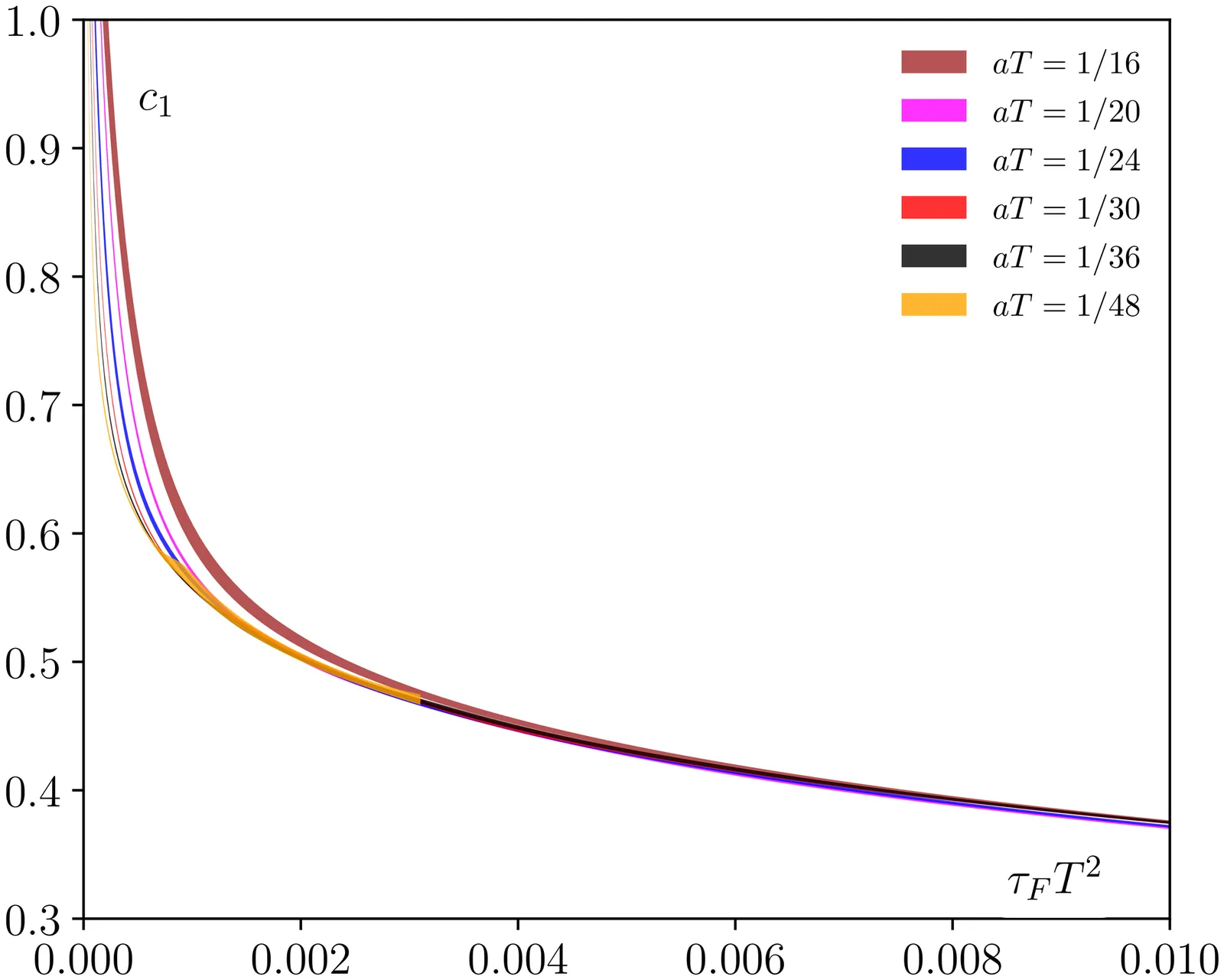
The energy-momentum tensor (EMT) is the conserved current corresponding to space-time translation symmetry. Its applications are remarkably diverse, ranging from the thermodynamics to the calculation of transport coefficients. While the EMT is well-defined in the continuum up to a total derivative, with its coefficients fixed by Ward identities, its extension to lattice QCD is not straightforward. The primary challenge arises from the breaking of continuous space-time symmetries by the discrete lattice regulator. Although the EMT can be constructed on the lattice in a way that yields the correct continuum limit, the operators are not uniquely defined. In this proceeding, we construct the EMT for both pure-gauge theory and full QCD, discussing its renormalization in the specific context of determining the coefficients required for shear viscosity. In this context, we present a comparative analysis of the trace anomaly, number density, pressure, energy density and enthalpy density with imaginary chemical potential for multiple $β$ values at approximately the same temperature, aimed for the continuum limit.
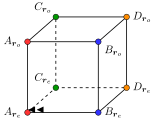
We investigate the symmetry structure of the $3+1$ D staggered fermion Hamiltonian and its implications for anomalies. Since the spin and flavor degrees of freedom of Dirac fermions are distributed over the lattice, in addition to the standard on-site mass term, the staggered fermion system also admits one-, two-, and three-link bilinear terms within a unit cube as local, charge conserving mass terms with different spin and flavor dependence. We identify the spin flavor structures of all those bilinear mass terms and determine the symmetries preserved by each of them. Among them, one of the one-link mass terms preserves a larger residual symmetry associated with conserved charges that generate the Onsager algebra. Motivated by this structure, we consider a kink profile of the one-link mass and analyze the resulting domain-wall system. In the low-energy limit, the $3+1$ D bulk becomes gapped, while two-flavor massless Dirac fermions appear as localized modes on the $2+1$ D domain wall. We show that the bulk conserved charges act on the wall as generators of a flavor $\mathrm{SU}(2)$ symmetry, and that no symmetric mass gap is allowed for the boundary theory when this $\mathrm{SU}(2)$ symmetry and space reflection symmetry are both imposed. This realizes the parity anomaly of the boundary theory and shows that the boundary flavor symmetry and anomaly descend from the ultraviolet staggered-fermion Hamiltonian rather than emerging only in the infrared.
In this kick-off presentation for the "Recent developments in QCD" session at Baryons 2025 I will tie together the recent progress made on the extraction of parton distribution functions (PDFs) in lattice QCD and the long standing efforts in solving the inverse problem in the form of spectral function reconstruction.
In theories with topological sectors, such as lattice QCD and four-dimensional SU(N) gauge theories with periodic boundary conditions, conventional update algorithms suffer from topological freezing due to large action barriers separating distinct sectors. With appropriately constructed bias potentials, Metadynamics and related enhanced sampling techniques can mitigate this problem and significantly reduce the integrated autocorrelation times of the topological charge and associated observables. We test strategies to accelerate the buildup of bias potentials and the possibility of extrapolating potentials from small to large volumes. We also investigate the effectiveness of orthogonal algorithmic improvements, such as longer HMC trajectories and HMC variants, which may benefit conventional simulations as well.
We consider a quenched SU(2)$\times$U(1) gauge Higgs theory on the lattice, coupled to a static vector-like fermion which, in this case, is in the same gauge group representation as the Higgs field. Physical (i.e. locally gauge invariant) electrically charged and electrically neutral states of matter particles in the electroweak theory were described decades ago, but those constructions do not exhaust all the possibilities, and new types of electrically charged/neutral states, orthogonal to former constructions, are described here. The difference has to do with how the static source, which by itself does not create a physical state, is dressed by dynamical fields. We find that, unsurprisingly, the neutral static fermion is much lighter than any of the charged fermion states. But a lattice study of the propagation of the charged fermion states indicates the existence of (at least) two particle states with different masses in charged particle spectrum.
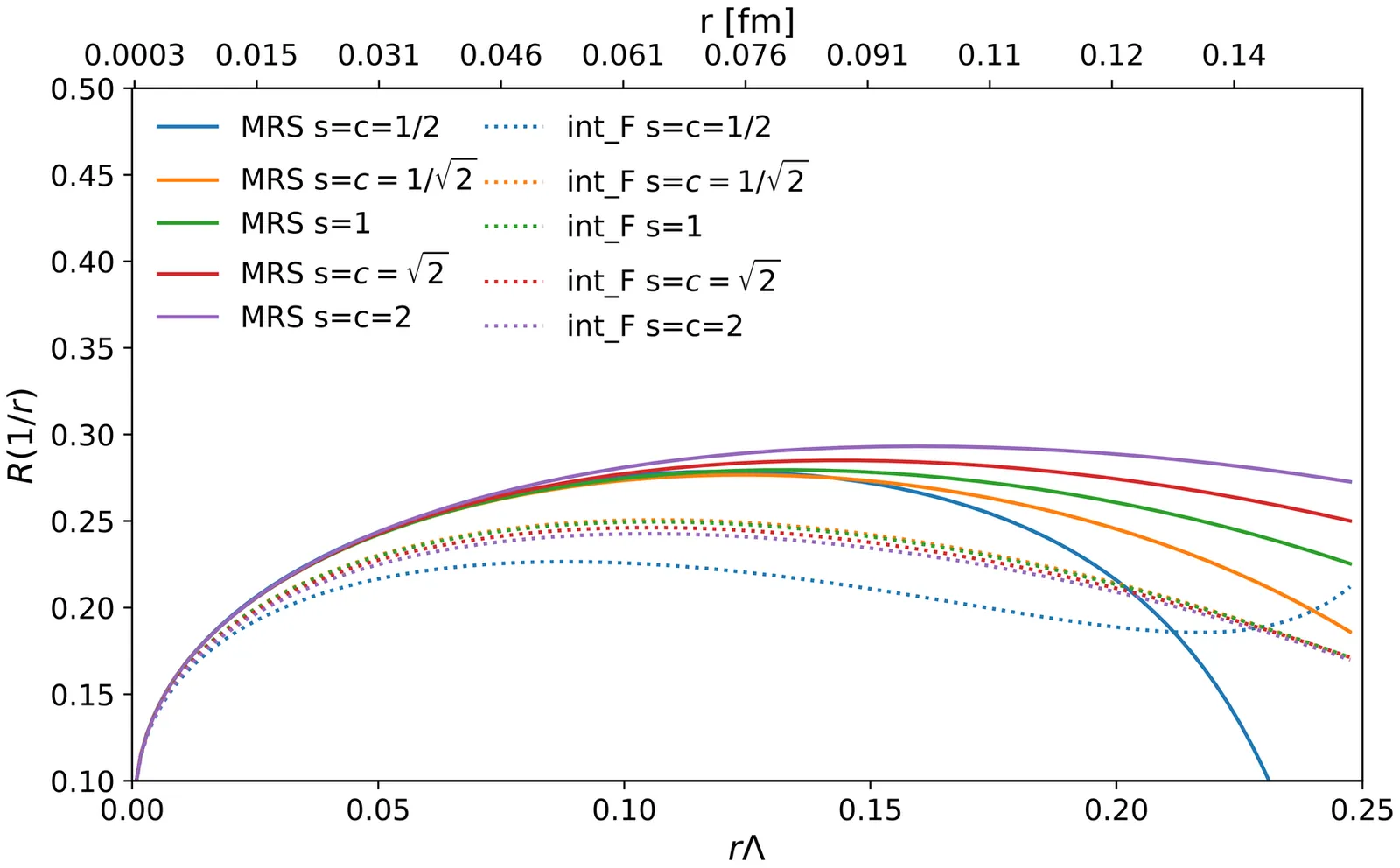
The static energy is an excellent observable for extracting the strong coupling $α_s$ on the lattice. For short distances, the static energy can be calculated both on the lattice using Wilson line correlators, and with perturbation theory up to three loop accuracy with leading ultrasoft log resummation. Comparing the perturbative expression and lattice data allows for precise determination of $α_s$. We present early results for 1-loop lattice perturbation theory improvement of the Wilson loop and show how it improves the $α_s$ extraction. We present a preliminary reanalysis of the TUMQCD (2+1)-flavor QCD data.
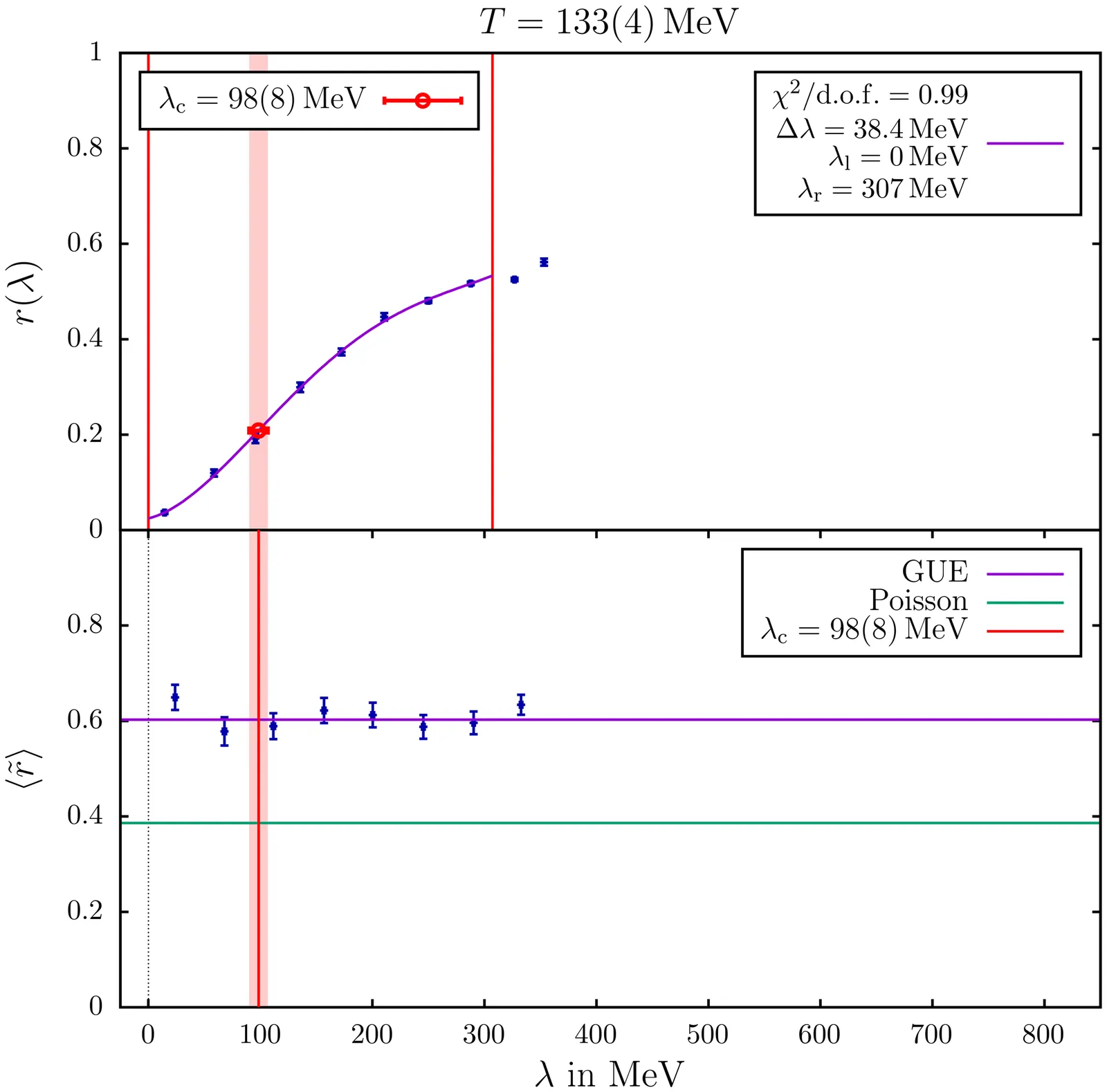
The QCD Anderson transition is believed to be connected to both deconfinement and chiral crossovers. These crossovers are substantially affected when external magnetic fields ($B$) are present, most prominently, e.g., via magnetic catalysis and inverse magnetic catalysis. In this work, we use lattice QCD to investigate the Anderson transition in two different setups: (1) at $B=0$ by studying the low-lying eigenmodes of the overlap operator using gauge configurations with $2+1+1$ quark flavors of twisted-mass Wilson fermions. We estimate the mobility edge below which eigenmodes are localized via the inflection point of the so-called relative volume. Previous work has shown that, contrary to expectations, this estimate does not vanish at the temperature of the chiral phase transition. A possible scenario for this apparent contradiction was discussed, and in this work, we present an alternative observable for measuring localization that supports this scenario. And (2) by studying the localization properties of the staggered Dirac operator at $B\neq0$ on configurations with $2+1$ dynamical staggered fermions and 2 stout-smearing steps. Our preliminary results on two lattice spacings ($24^3\times 6$ and $24^3\times 8$) indicate a non-monotonic behavior of the mobility edge with the magnetic field across different temperatures, which hints at a reduction in the Anderson transition temperature in the presence of an external magnetic field.
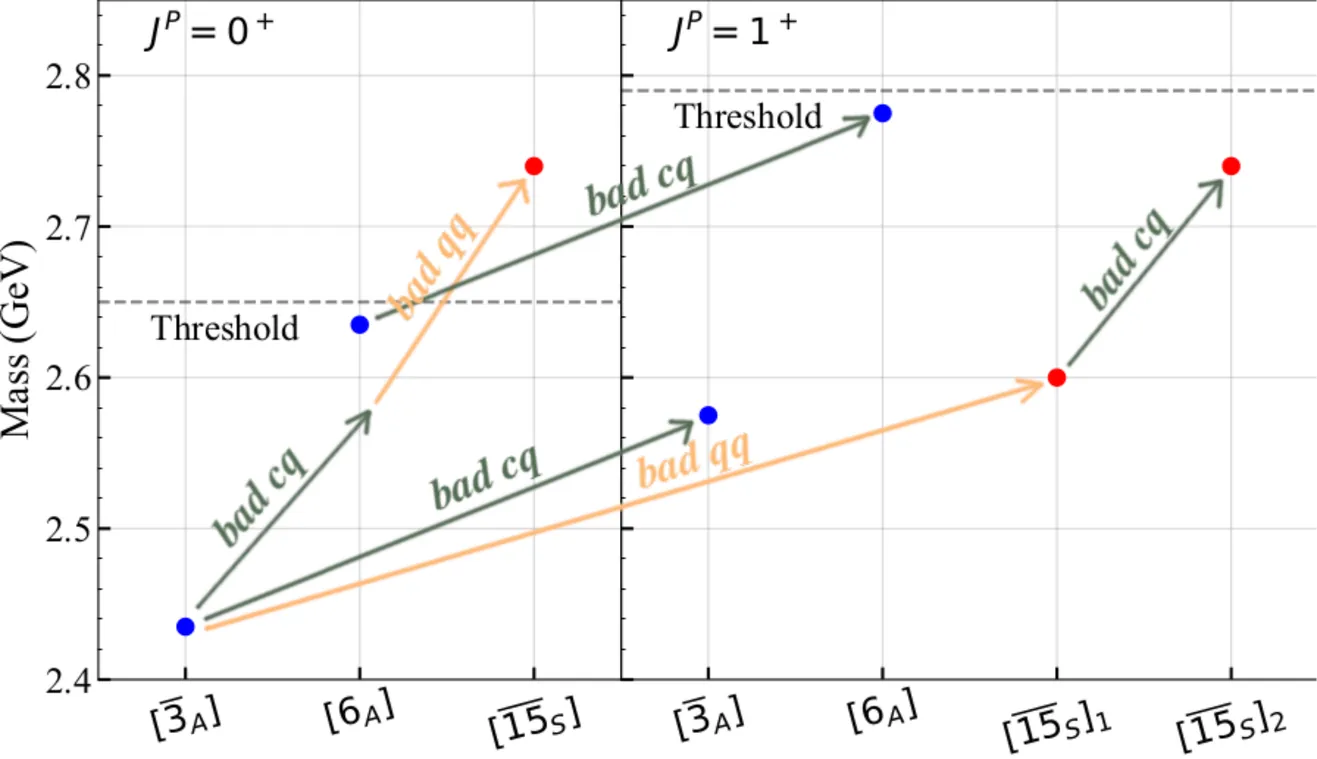
The nature of low-lying scalar and axial-vector charmed mesons has long been debated, specifically whether they are best explained as hadronic molecules or compact tetraquark systems. These two scenarios exhibit quite different features for the accessible $SU(3)$ multiplets in the scalar and axial-vector sectors. To resolve this debate, we performed $N_f=3+1$ lattice simulations and calculated the energy levels of the $SU(3)$ $[6]$ and $[\overline{15}]$ multiplets for both the scalar and axial-vector mesons in an $SU(3)$ flavor-symmetric setting. In both sectors we find attractive states for the [6] and repulsive interactions for the $[\overline{15}]$. This is consistent with the hadronic molecule picture, but not the compact tetraquark picture which predicts a low-lying $[\overline{15}]$ states in the axial-vector sector but not in the scalar sector.
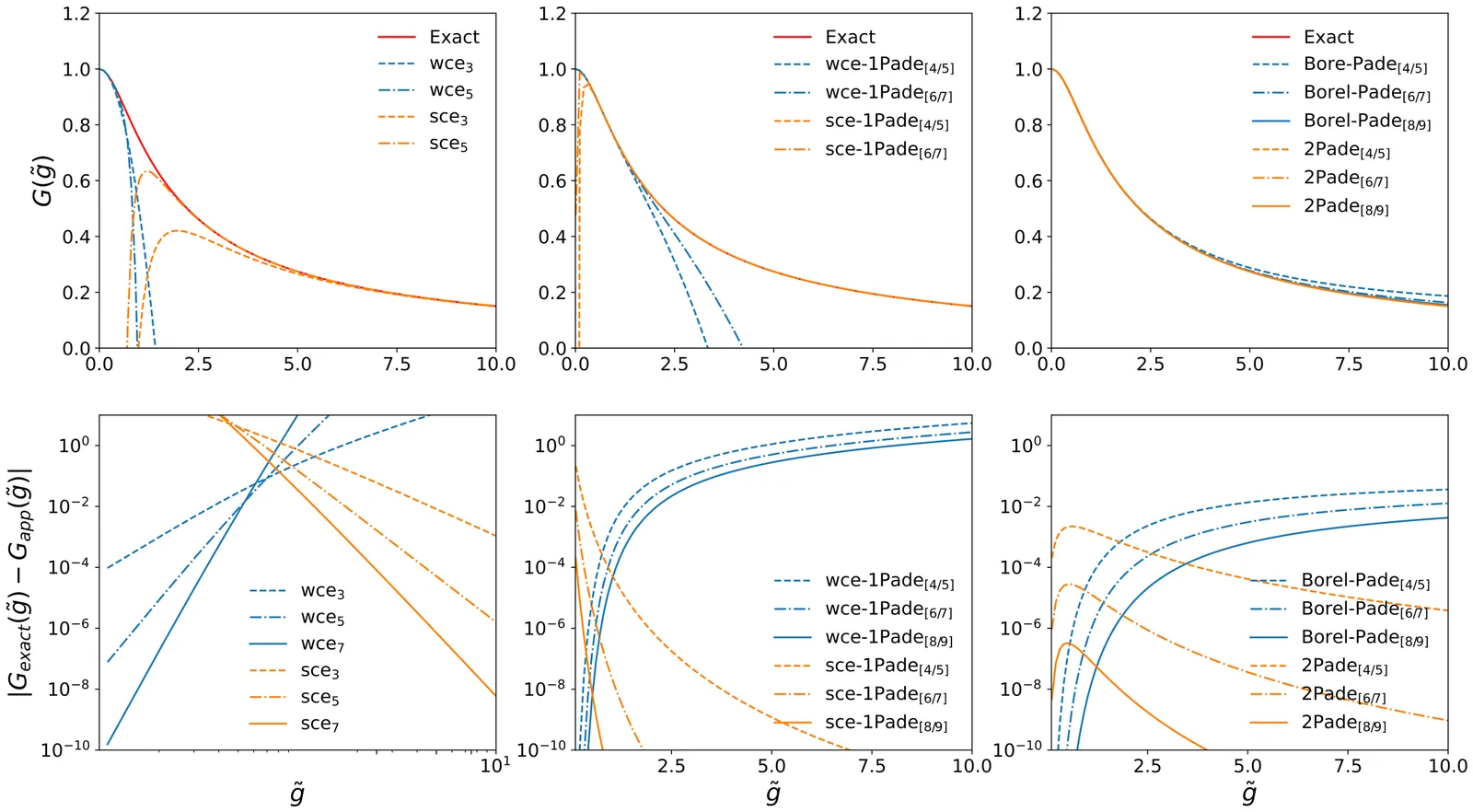
Reliable approximations for correlation functions at intermediate and strong coupling remain hard to obtain for general quantum field theories. Perturbative expansions are often asymptotic or have a finite radius of convergence, which limits their applicability beyond weak coupling. Here we combine weak- and strong-coupling expansions and propose to use two-point Padé schemes to construct approximants. For lattice $φ^4$ theory, we show that this two-point interpolation strategy yields accurate global approximations to the two-point correlation function across broad coupling regimes and compares favorably with standard one-point resummation methods. We also provide heuristic explanations for the observed convergence behavior and discuss the practical range of validity of the approach.
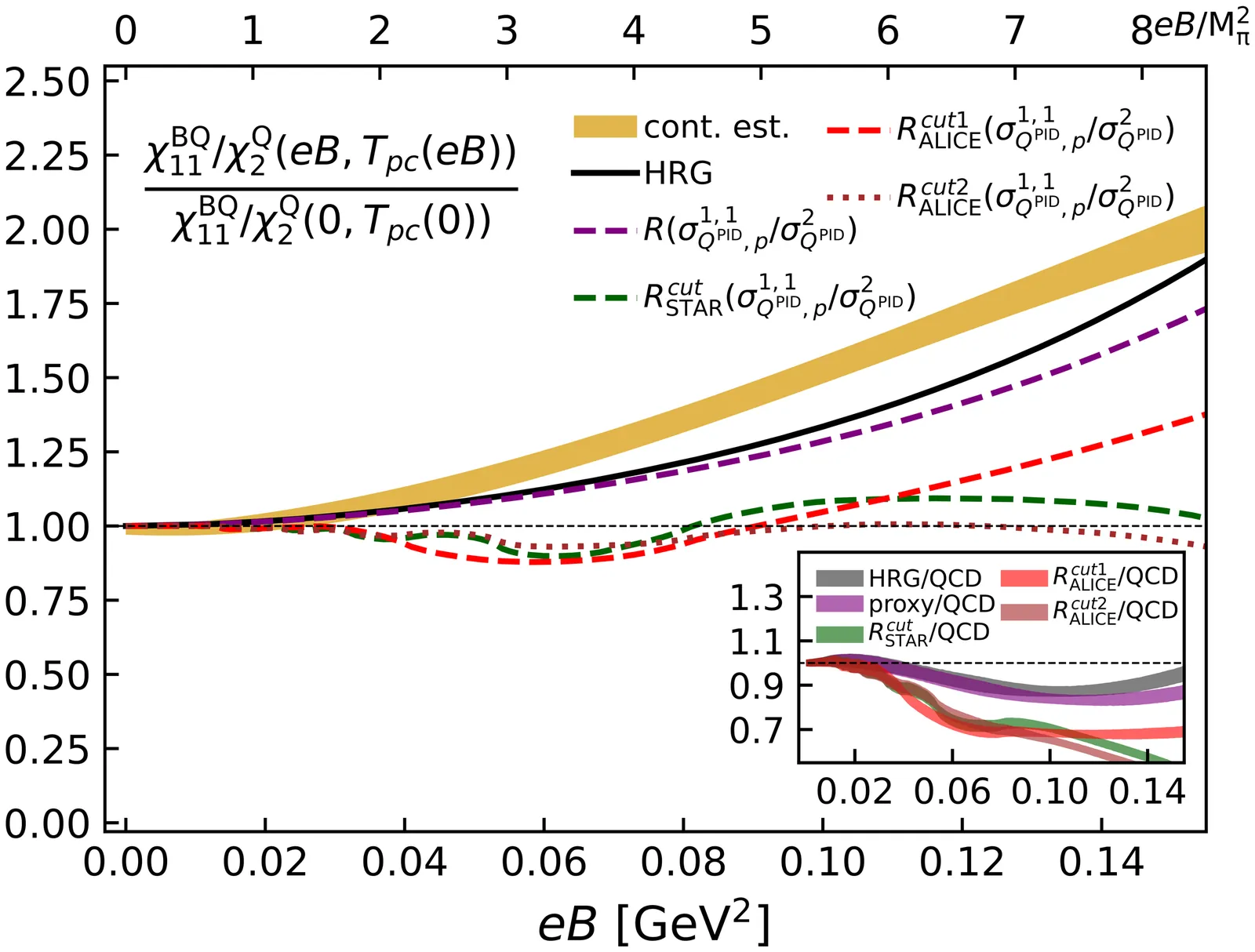
We present continuum-estimated (2+1)-flavor lattice QCD results for second-order fluctuations of conserved charges and the leading-order equation of state in the presence of strong magnetic fields at nonzero baryon chemical potential, using the HISQ action at the physical pion mass. The baryon-electric charge correlation $χ^{\rm BQ}_{11}$ exhibits striking sensitivity to the magnetic field: $R_{cp}$-like double ratios $χ^{\rm BQ}_{11}/χ^{\rm Q}_{2}$ and $χ^{\rm BQ}_{11}/χ^{\rm QS}_{11}$ reach enhancements of $\sim2$ and $\sim2.25$ at $eB \simeq 8M_π^2$ along the transition line, establishing $χ^{\rm BQ}_{11}$ as a magnetometer of QCD. To bridge theoretical predictions and experimental observations, we construct HRG-based proxy observables and apply systematic kinematic cuts emulating STAR and ALICE detector acceptances, which retain $\sim80\%$ of the lattice QCD magnetic sensitivity. Extending to the QCD equation of state under strangeness neutrality and isospin asymmetry, we determine the chemical potential ratio $q_1\equiv(μ_{\rm Q}/μ_{\rm B})_{\rm LO}$ and the pressure coefficient $P_2$ for magnetic field strengths up to $eB \simeq 0.8~{\rm GeV}^2 \sim 45 M_π^2$. The results reveal temperature-band crossings, hierarchy reversals, and non-monotonic structures driven by the nontrivial interplay between thermal and magnetic effects.
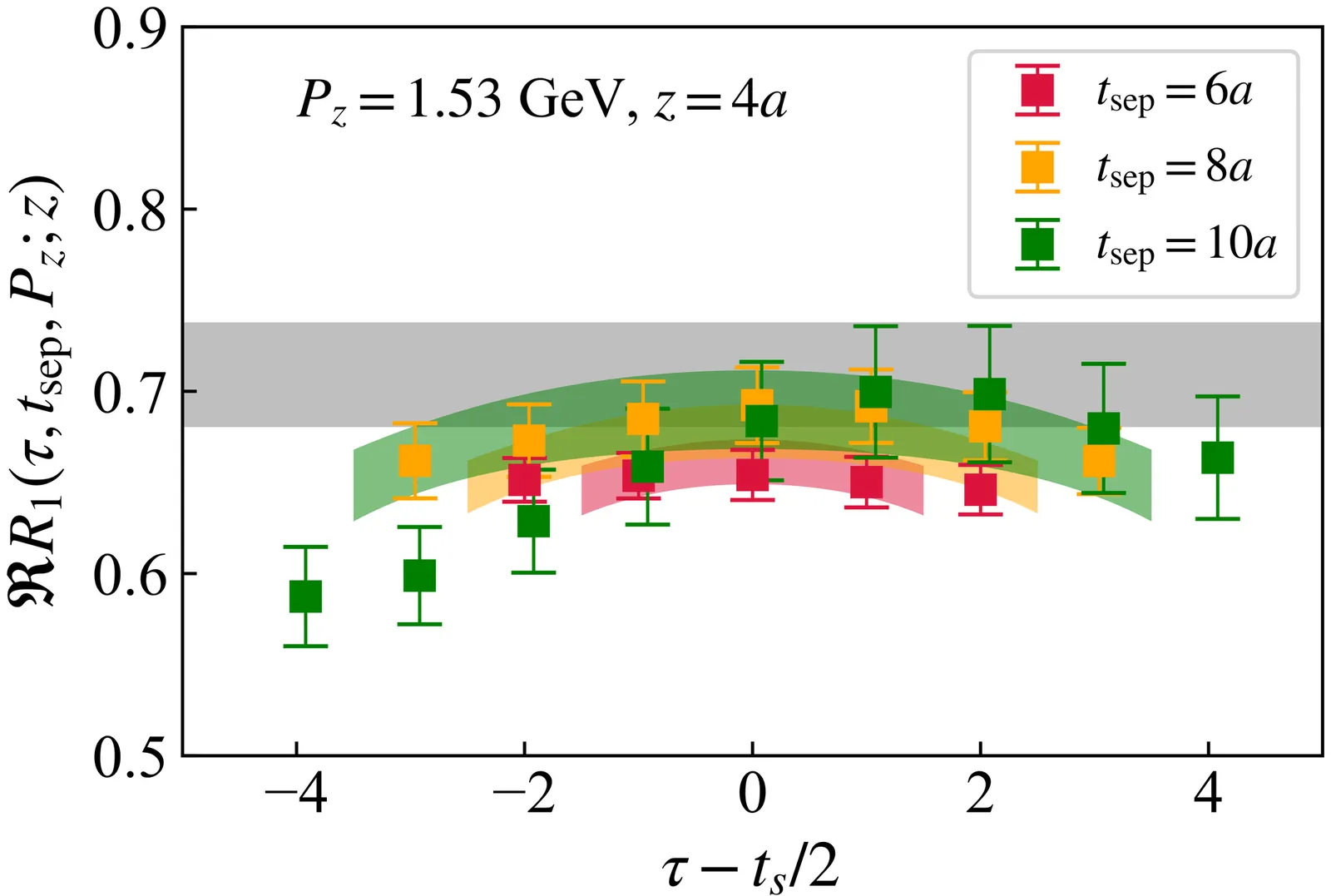
We present a lattice quantum chromodynamics calculation of the $x$-dependent isovector quark helicity parton distribution function (PDF) of the proton in the large momentum effective theory (LaMET) framework. Through operator product expansion (OPE) we also extract the $\tilde{d}_2$ moment of the twist-3 PDF $g_T(x)$ for the first time in the $\overline{\rm MS}$ scheme, which is proportional to the average color Lorentz force experienced by the quark in the proton. This calculation is performed on a lattice of spacing $a$ = 0.076 fm at physical quark masses. The quasi-PDF matrix elements are measured in proton states boosted to momenta $P_z=\{0, 0.25, 1.02, 1.53\}$ GeV. We first extract the lowest few helicity PDF moments from the renormalization-group (RG) invariant ratios of the matrix elements with OPE. Combined with the matrix elements relevant for $g_T(x)$, we obtain $\tilde{d}_2^{u-d}(2\ {\rm GeV})=0.0024(46)$ at next-to-leading order in $\overline{\rm MS}$. Then, the helicity quasi-PDF matrix elements are renormalized in the hybrid scheme with linear renormalon resummation and Fourier transformed to the $x$-space after an asymptotic extrapolation. The quasi-PDF is perturbatively matched to the $\overline{\rm MS}$ PDF with RG and threshold resummations at next-to-leading power and next-to-next-to-leading logarithmic accuracies. After resummations, we determine the PDF in the region $x\in[0.25,0.75]$ with controlled systematic uncertainties. The end-point regions are then parameterized, combined with the LaMET prediction at moderate $x$, and fitted to the short-distance matrix elements in coordinate space.
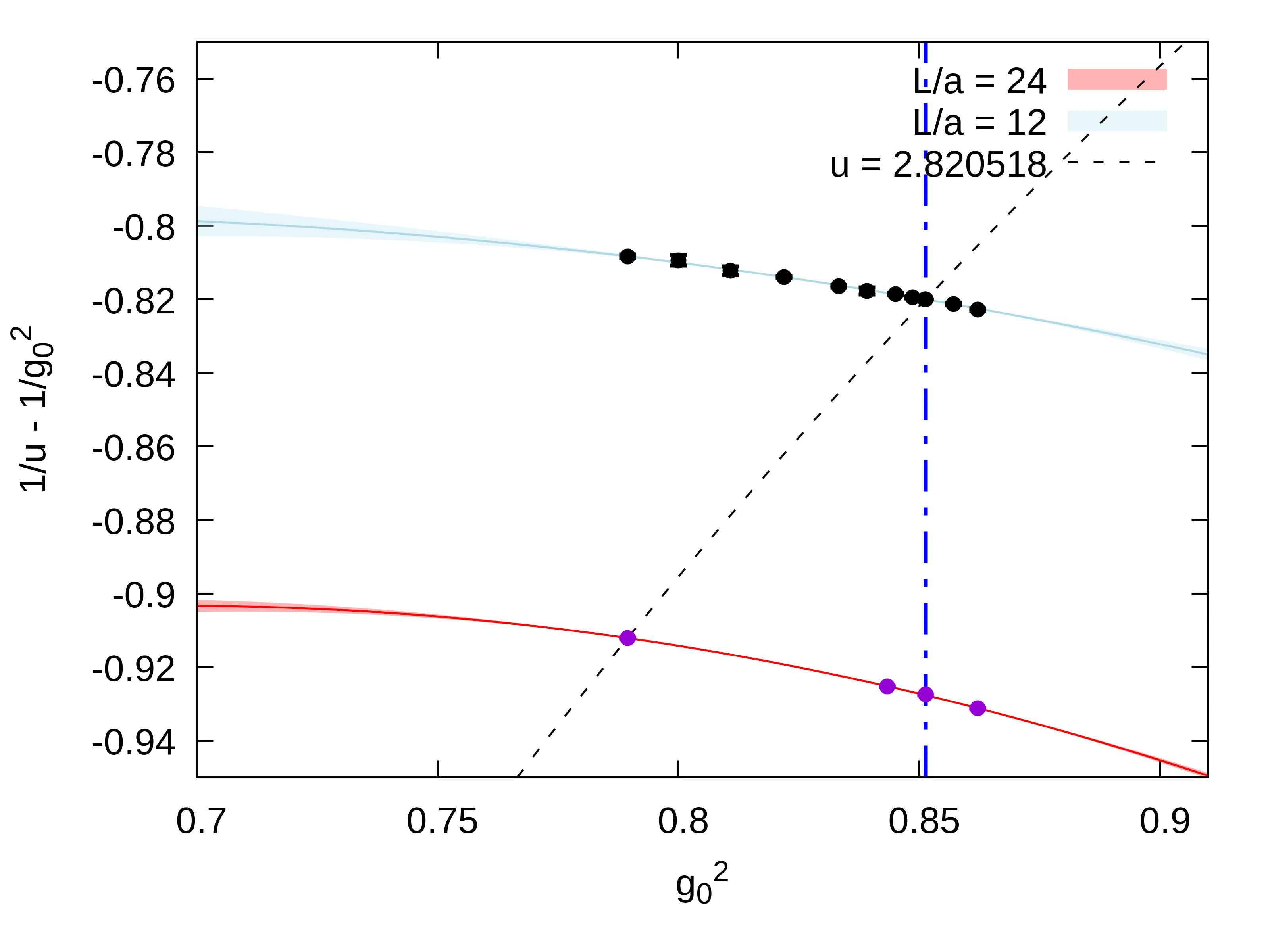
The decoupling strategy allows one to obtain the value of the strong coupling in QCD from the running in pure gauge. Here we present our strategy to determine the running in the $SU(3)$ Yang-Mills theory. We use a finite-volume scheme with twisted boundary conditions and a step-scaling approach based on a gradient-flow coupling. We show preliminary results for the continuum extrapolation of the step-scaling function. Compared with other finite-volume approaches, we expect a reduced statistical error and absence of linear cutoff effects due to the translational invariance of the boundary conditions.
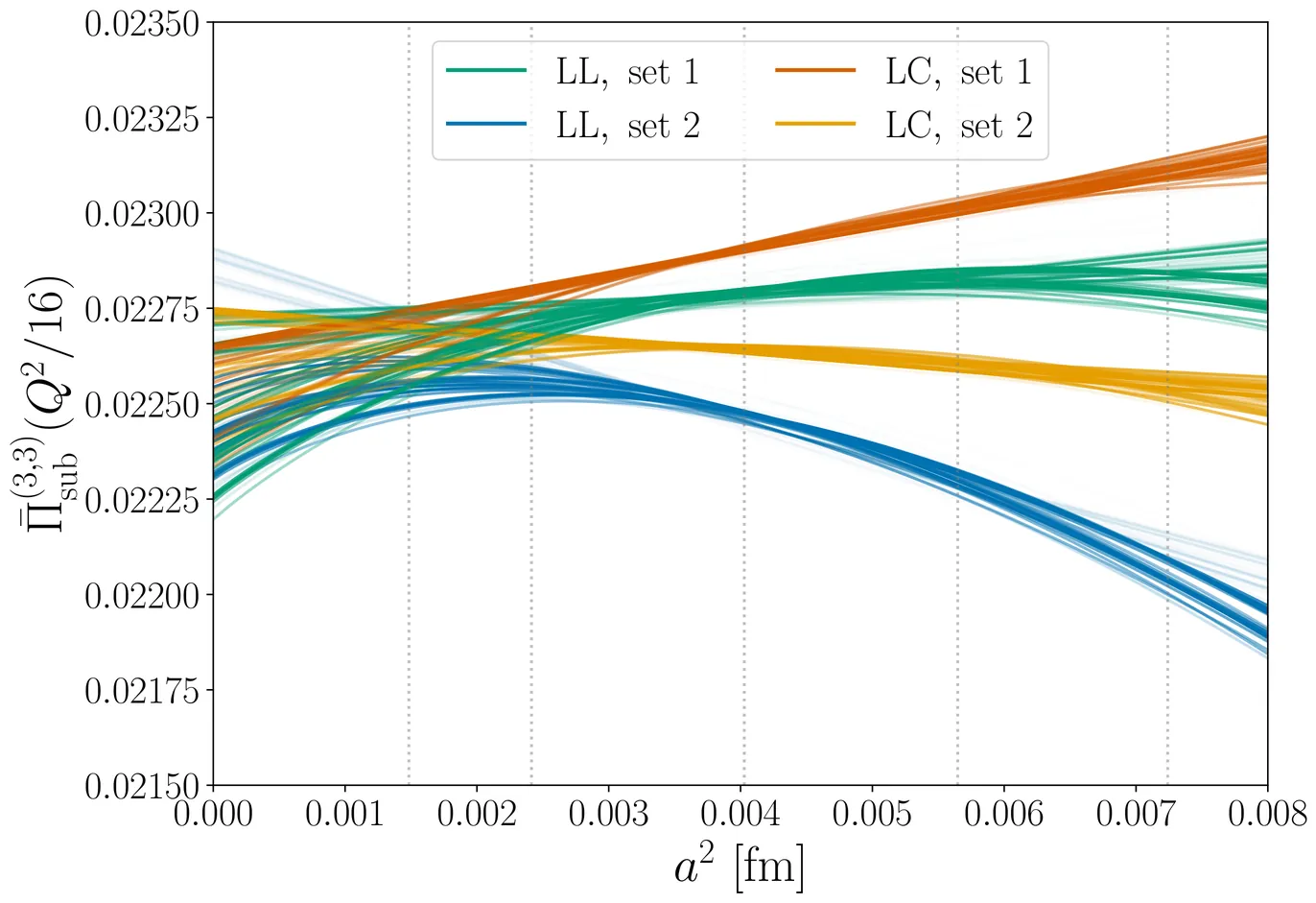
We present an updated determination of the hadronic vacuum polarization contribution to the running of the electromagnetic coupling $Δα_{\mathrm{had}}^{(5)}(-Q^2)$, and of the electroweak mixing angle in the space-like momentum range up to $12 \ \mathrm{GeV}^2$. Using $N_f=2+1$ CLS ensembles at five values of the lattice spacing and several pion masses, including the physical point, we achieve a significantly enhanced precision over our previous result. A refined analysis strategy based on telescopic series and a new family of kernel functions enables a clean separation of distinct Euclidean regions, disentangling strong cutoff effects at short distances from the pronounced chiral dependence at larger ones. Employing the Euclidean split technique, we convert our lattice results into an ab initio estimate of $Δα_{\mathrm{had}}^{(5)}(M_Z^2)$. A comparison with results from other lattice calculations and phenomenology is performed. We also analyze improvement scenarios required to match the projected precision of future electroweak measurements at next-generation colliders.
We study the thermal static potential for (2+1)-flavor QCD at nonzero density through a Taylor expansion around vanishing chemical potentials. From Taylor expanded Wilson line correlators, we extract the $\hatμ^2$ coefficient of the real and imaginary part of the potential in light and strange flavor channels and in the baryon number and electric charge channels. We observe an enhancement of in-medium screening at intermediate and large separations. The effect is visible in both the real and imaginary parts to the extracted $\hatμ^2$ contribution of the static potentials and provides a first step toward constraining in-medium heavy-quark interactions relevant for the Beam Energy Scan program at RHIC and future FAIR experiments.
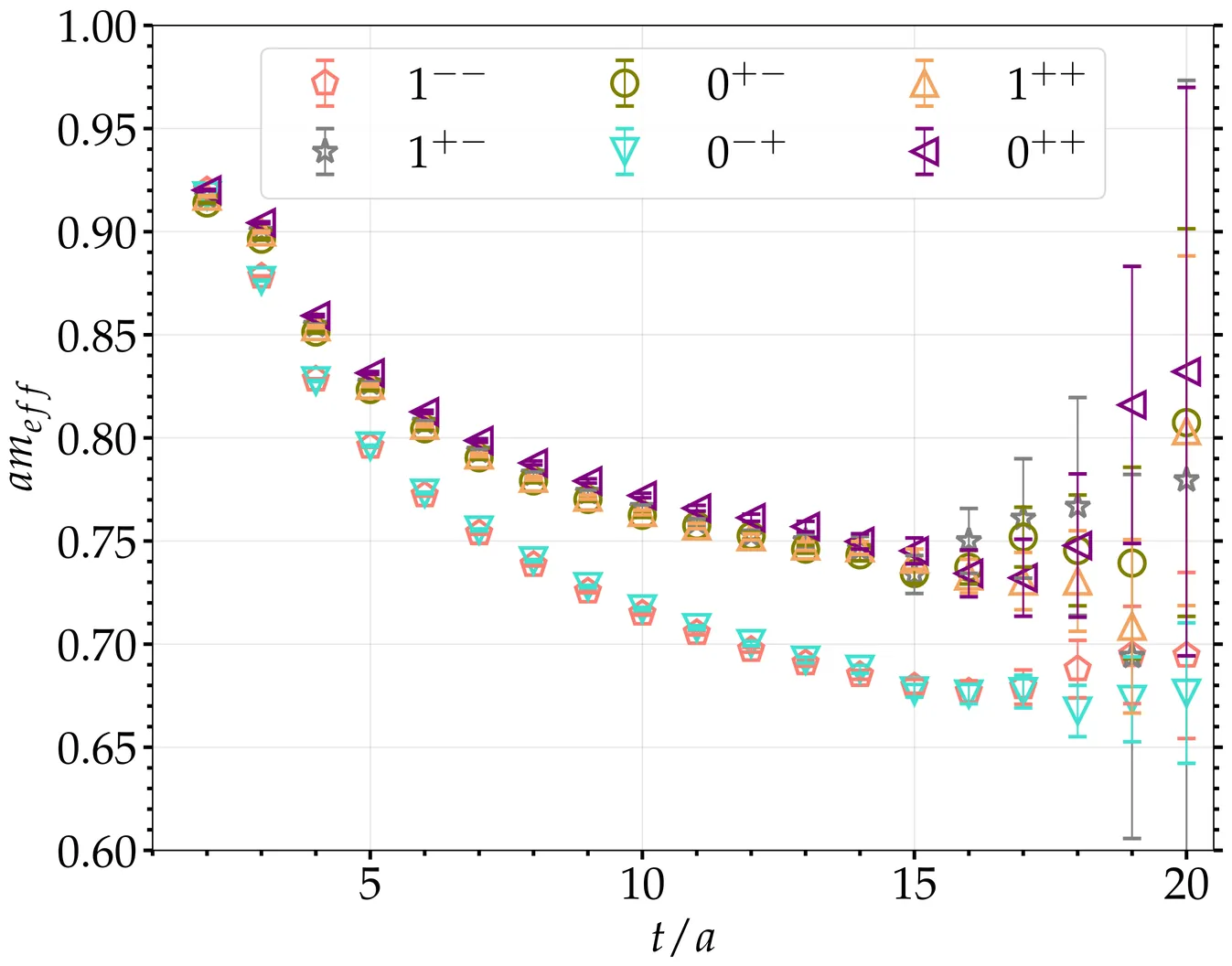
We aim to clarify the experimentally observed near-degeneracy and decay patterns of the isospin, $I=1$, hidden-bottom tetraquarks $Z_b(10610)$ and $Z_b(10650)$ with quantum numbers $J^{P}=1^{+}$.We refer to them as $Z_b$ and $Z_b^{'}$, respectively. In particular, we find first evidence that the suppression of the decay of $Z_b^{'}$ to $B\bar{B^*}$ can be understood in the context of the Born-Oppenheimer Effective Field Theory (BOEFT). BOEFT enables writing both $Z_b$ and $Z_b^{'}$ as superpositions of $Z_1$ and $Z_2$ tetraquark configurations. This decomposition naturally relates the decay patterns of $Z_b$ and $Z_b^{'}$ to the degeneracy of the light degrees of freedom associated with $Z_1$ and $Z_2$ tetraquarks, {\it i.e.,} $1^{--}$and $0^{-+}$ adjoint mesons, respectively. By calculating the adjoint meson correlators within the framework of lattice QCD, we get good indications that these adjoint mesons are degenerate.
Motivated by ongoing interest in the universal behaviour of the Hubbard model of spinning electrons on honeycomb and $π$-flux lattices at the semi-metal -- Mott insulator phase transition, we formulate the \threeD~chiral Heisenberg model, a theory of relativistic fermions in three spacetime dimensions, as a lattice field theory using domain wall fermions. The contact interaction term preserves an SU(2) global symmetry. We perform numerical simulations using the Rational Hybrid Monte Carlo algorithm on system sizes $L^3\times L_s$ with $L\in\{8,\ldots,24\}$ and domain wall separation $L_s\in\{8,16,24\}$. We locate the phase transition corresponding to spontaneous SU(2)$\to$U(1) breaking, yielding critical exponent estimates $ν^{-1}=0.63(3)$, $η_Φ=1.42(8)$. These values are considerably removed from estimates obtained from simulations performed in (2+1)D, ie. with the time and spatial directions treated differently, but align more closely with analytic estimates obtained using 3D covariant field theory. We also present first results for the fermion correlator, ultimately needed for the determination of the exponent $η_Ψ$, highlighting the need to rotate the fermion source to a common reference direction in isospace in order to obtain a signal.