Trending in High Energy Physics - Theory
The Fate of Nucleated Black Holes in de Sitter Quantum Gravity
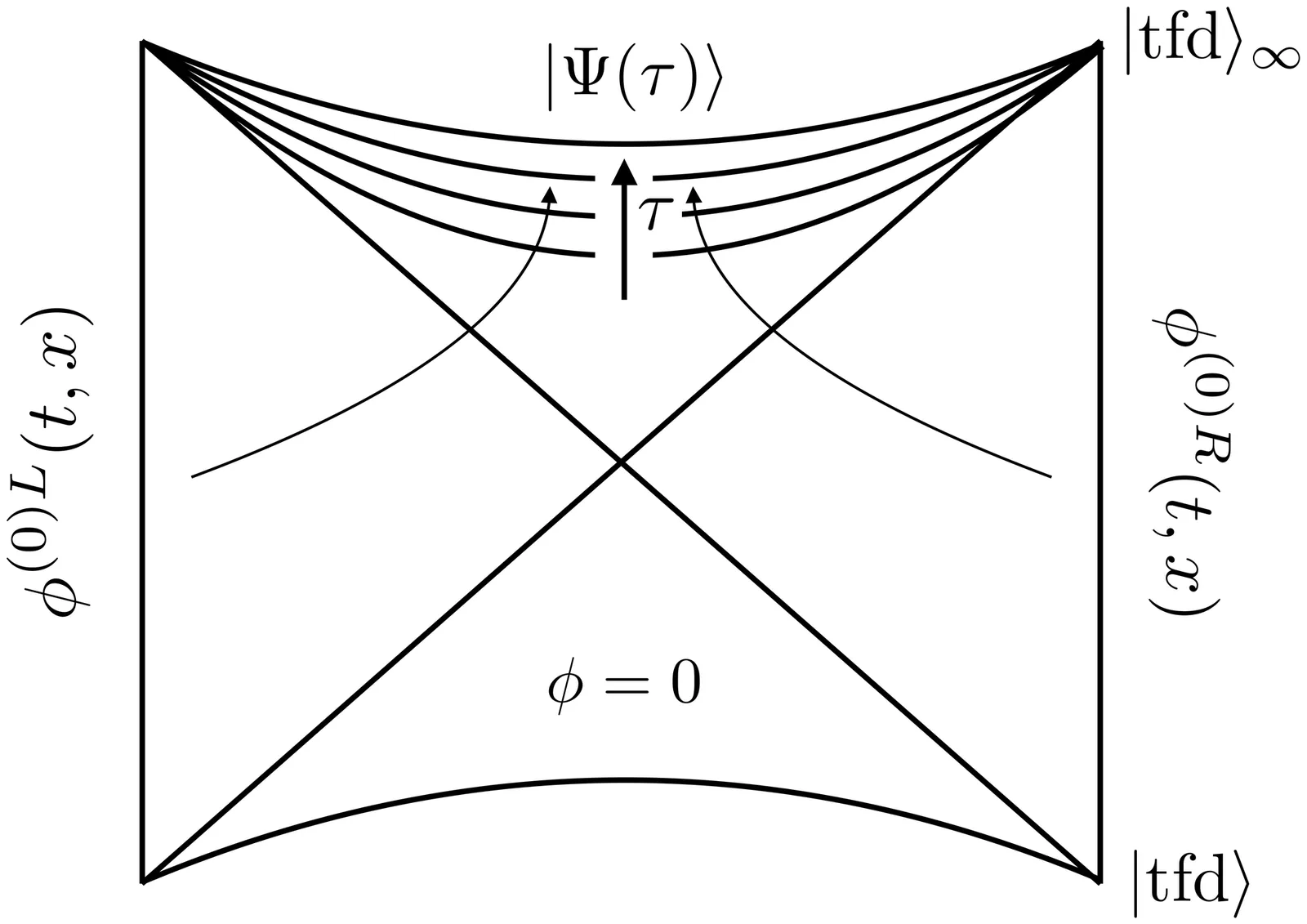
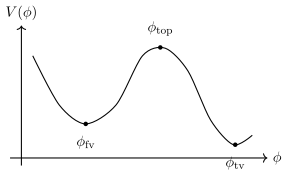
The Euclidean Nariai geometry has long been proposed as the instanton describing the nucleation of maximal-mass black holes in de Sitter space. We place this interpretation on firmer footing by showing that, once an observer is included, the gravitational path integral produces the imaginary phase required for a transition rate. As a warmup, we revisit the Hawking-Moss instanton and, as a byproduct, find that scalar fields can enhance black-hole nucleation, suggesting a quantum-gravity bound on scalar potentials with de Sitter solutions. We then study the subsequent semiclassical evolution of the nucleated black hole. We show that the previously claimed "anti-evaporation" channel is unphysical, arising from a quantum state with singular horizons. In a smooth state, the black hole instead undergoes standard thermal Hawking evaporation. We verify explicit agreement with the no-boundary state and argue that this evaporation is not subject to large quantum-gravity corrections. The nucleated black hole thus evaporates completely back to the maximally-entropic empty de Sitter vacuum, making the full process a Boltzmann fluctuation.
2605.03015
May 2026High Energy Physics - Theory
Emergent strings, holography, and cosmology from four-fermion interactions: a bottom-up derivation of AdS/CFT, dS/CFT, and $w_{1+\infty}$
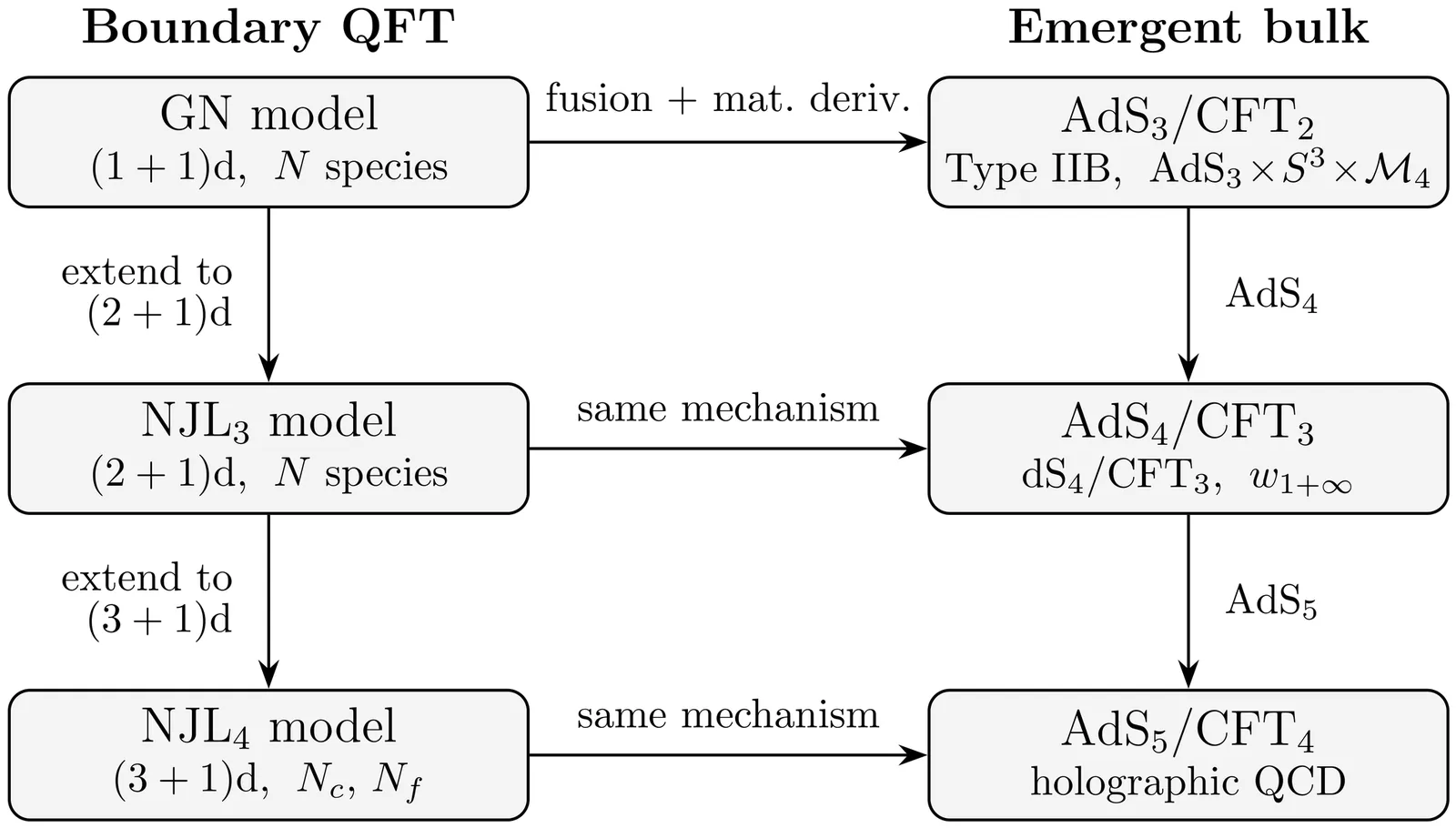
We derive holographic duality from first principles starting from the $(1+1)$-dimensional Gross-Neveu (GN) model with $N$ fermion species and a local quartic interaction, without assuming any string or geometric input. Using a Bargmann-Wigner scheme, the competition between chiral condensation $Δ_0=\langle\barψψ\rangle$ and spin-1 pairing $Δ_1=\langle\barΦ_1Φ_1\rangle$ defines an emergent radial coordinate $z=m^{-1}(Δ_1/Δ_0^2-1)^{1/2}$; local fluctuations of this ratio, tracked by a comoving derivative, generate the AdS$_3$ line element via the enhanced large-$N$ species dispersion; the condensate competition \emph{is} the extra dimension. From this single mechanism the complete AdS$_3$/CFT$_2$ correspondence emerges: Newton's constant, the Virasoro algebra ($c=2N^2$), D1-branes with open strings, open/closed T-duality, the Hagedorn/BKT transition, and the BTZ black hole whose horizon circumference is quantised in Planck units by individual vortex nucleation events. Analytic continuation $z\to iζ$ across the chiral critical point realises the Strominger dS/CFT conjecture microscopically. Six constraints identify the emergent string as Type IIB on AdS$_3\times S^3\times\mathcal{M}_4$, with emergent worldsheet $\mathcal{N}=(1,1)$ supersymmetry, NS/R spectral flow, and GSO projection. Extension to the $(2+1)$d NJL model yields AdS$_4$/CFT$_3$, a dS$_4$/CFT$_3$ realisation, and a structural identification of the $w_{1+\infty}$ celestial algebra. Extension to the $(3+1)$d NJL model yields AdS$_5$/CFT$_4$ and holographic QCD with chiral symmetry breaking and linear Regge trajectories $M_s^2=4(s+1)Λ_\mathrm{QCD}^2$, capturing the correct QCD infrared physics from a four-fermion interaction.
2603.27824
Mar 2026High Energy Physics - Theory
Introduction to Generalized Symmetries
These notes were prepared for a series of intensive lectures delivered at Hokkaido University, Nagoya University, Kyoto University, and Kyushu University. We begin with a brief review of higher-form symmetries, anomalies, and discrete gauge theories, before introducing non-invertible symmetries in $(1+1)$-dimensional systems. The basic structure of fusion categories is then discussed, including a discussion of categorical analogs of discrete gauging and representation theory. We subsequently turn to $(3+1)$-dimensional theories, where several physical applications of non-invertible symmetries are discussed. These notes are intended to be largely self-contained, and require no prior familiarity with subjects such as conformal field theory or lattice models.
2603.08798
Mar 2026High Energy Physics - Theory
Introduction to holography
These are course notes for the 'Introduction to holography' Master level course at University of Cologne. The goal of the course is to give a pedogogical introduction to holography. Holography is a popular approach to quantum gravity, in which a theory of gravity can be described by a lower-dimensional boundary theory that itself has no gravity. The most concrete known example of a holographic model is the AdS/CFT correspondence, where the gravitational theory has a negative cosmological constant (the universe is asymptotically Anti-de Sitter) and the boundary theory is a conformal field theory. Symmetry plays a very important role in this duality. We therefore start the course with a review of Poincaré symmetry in quantum field theory, before moving on in the second chapter to conformal symmetry in conformally invariant quantum field theories or CFT's. Then we move to the basics of AdS physics in chapters 3 and 4, which will already reveal hints to the existence of a duality with CFT. After gathering the basic ingredients (CFT and AdS), in the second half of the course we are ready to formulate the AdS/CFT correspondence (chapter 5), including finite temperature AdS/CFT (chapter 6), which involves black holes and their thermodynamics in the gravitational theory (chapter 7). We end the course with an introduction to entanglement in AdS/CFT and the origin of statements that 'gravity emerges from entanglement' in holography.
2603.05186
Mar 2026High Energy Physics - Theory
Where Multipartite Entanglement Localizes: The Junction Law for Genuine Multi-Entropy
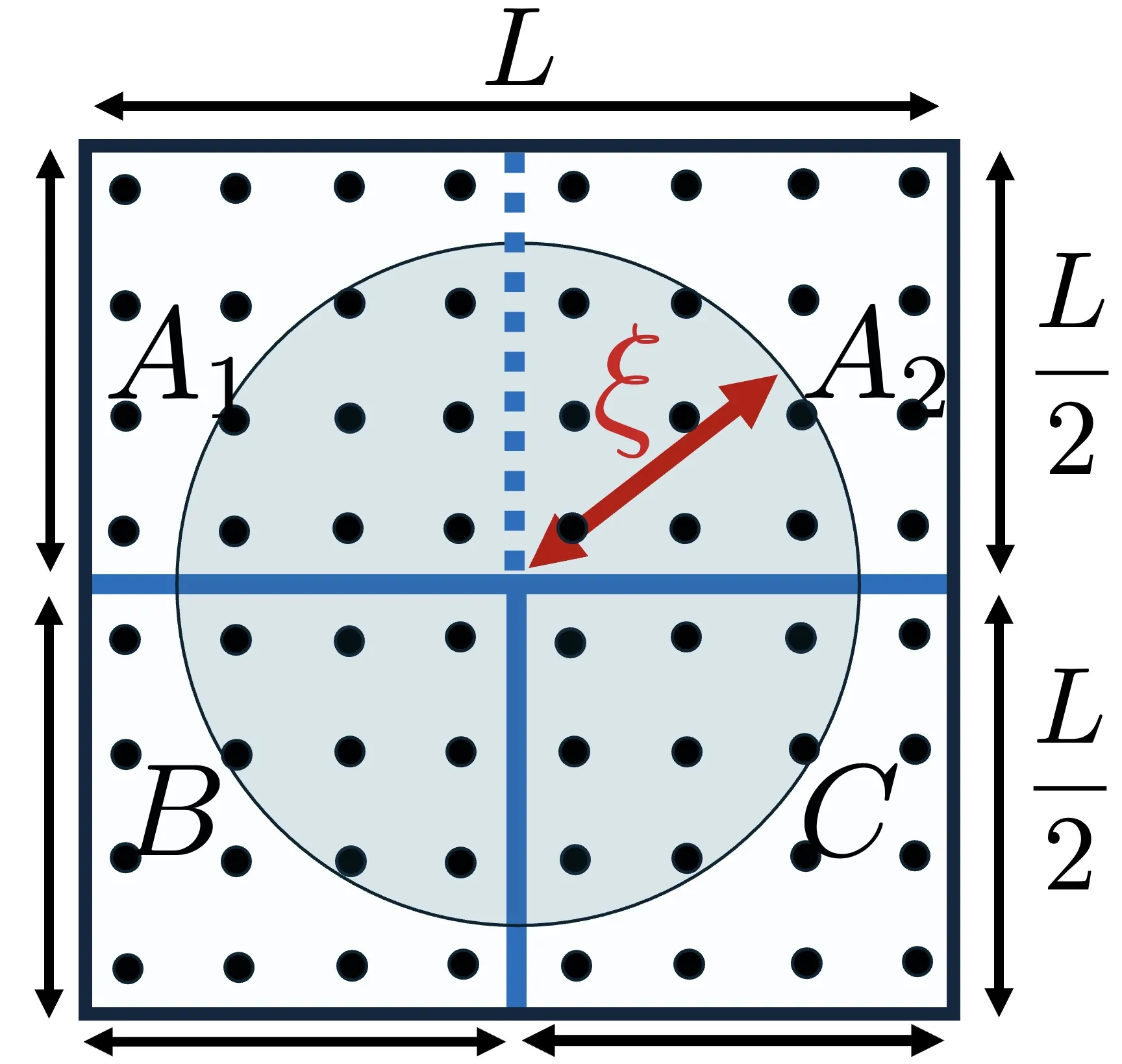
We uncover a "junction law" for genuine multipartite entanglement, suggesting that in gapped local systems multipartite entanglement is controlled and effectively localized near junctions where subsystem boundaries meet. Using the Rényi-2 genuine multi-entropy $\mathrm{GM}^{(\mathtt{q})}_2$ as a diagnostic of genuine $\mathtt{q}$-partite entanglement, we establish this behavior in $(2+1)$-dimensional gapped free-fermion lattices with correlation length $ξ$. For partitions with a single junction, $\mathrm{GM}^{(\mathtt{q})}_2$ exhibits a universal scaling crossover in $L/ξ$, growing for $L\llξ$ and saturating to a $ξ$-dependent constant for $L\ggξ$, up to $\mathcal{O}(e^{-L/ξ})$ corrections. In sharp contrast, for partitions without a junction, $\mathrm{GM}^{(\mathtt{q})}_2$ is exponentially suppressed in $L/ξ$ and drops below numerical resolution once $L\ggξ$. We observe the same pattern for $\mathtt{q}=3$ (tripartite) and $\mathtt{q}=4$ (quadripartite) cases, and further corroborate this localization by translating the junction at fixed system size. We also provide a geometric explanation of the junction law in holography. Altogether, these results show that in this gapped free-fermion setting genuine multipartite entanglement is localized within a correlation-length neighborhood of junctions.
2602.16331
Feb 2026High Energy Physics - Theory
Toward a mathematically consistent theory of semiclassical gravity or, How to have your wormholes and factorize, too
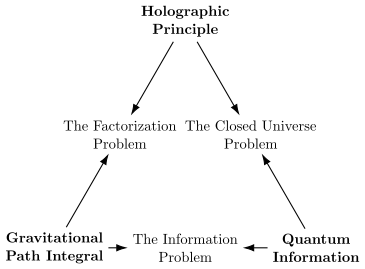
We review three well known inconsistencies in the standard mathematical formulation of semiclassical gravity: the factorization problem, the information problem, and the closed universe problem. Building upon recent work, we explore how modifying the holographic dictionary may provide the necessary freedom to resolve these three problems in a unified manner while maintaining more well established aspects of the standard correspondence. Using the modified holographic dictionary as a scaffolding, we propose a program for constructing an `extended' semiclassical gravitational path integral which (i) is manifestly factorizing, (ii) computes a von Neumann entropy which satisfies the Page curve, and (iii) incorporates new operators that create closed baby universe states. Our construction may be interpreted as imposing a semiclassical version of background independence/a no global symmetry condition, defining a modified large N limit, preparing an ensemble of dual theories, or enforcing observer rules using gravitational degrees of freedom.
2602.15120
Feb 2026High Energy Physics - Theory
 2602.12176
Single-minus gluon tree amplitudes are nonzero
Single-minus tree-level $n$-gluon scattering amplitudes are reconsidered. Often presumed to vanish, they are shown here to be nonvanishing for certain "half-collinear" configurations existing in Klein space or for complexified momenta. We derive a piecewise-constant closed-form expression for the decay of a single minus-helicity gluon into $n-1$ plus-helicity gluons as a function of their momenta. This formula nontrivially satisfies multiple consistency conditions including Weinberg's soft theorem.
2602.12176
Feb 2026High Energy Physics - Theory
2602.11254Quantum Gravity on AdS$_3\times$S$^3$ from CFT: Bootstrapping $n=21$
We consider the simplest four-point scattering amplitude of $SO(n)$ tensor multiplets in six-dimensional (2,0) supergravity on AdS$_3\times$S$^3$. Using crossing symmetry and the consistency of the operator product expansion in the dual CFT, we explicitly construct the one-loop contribution to the correlator at order $1/c^2$, both in position space and in Mellin space. We show that a strong form of the bootstrap equations imposes constraints on the value of $n$. Remarkably, we find that our bootstrap approach uniquely determines $n=21$, which corresponds to the spectrum of IIB string theory compactified on K3. This stands in sharp contrast to the tree-level correlator for which $n$ is unconstrained. We also analyse the spectrum of unprotected double-trace operators and solve the mixing problem in the first case that involves both tensor and graviton correlators. When $n=21$, the anomalous dimensions rationalise and one of them vanishes. Lastly, we study the flat-space limit of the correlator and find perfect agreement with the one-loop amplitude recently obtained in [arXiv:2510.24558].
2602.11254
Feb 2026High Energy Physics - Theory
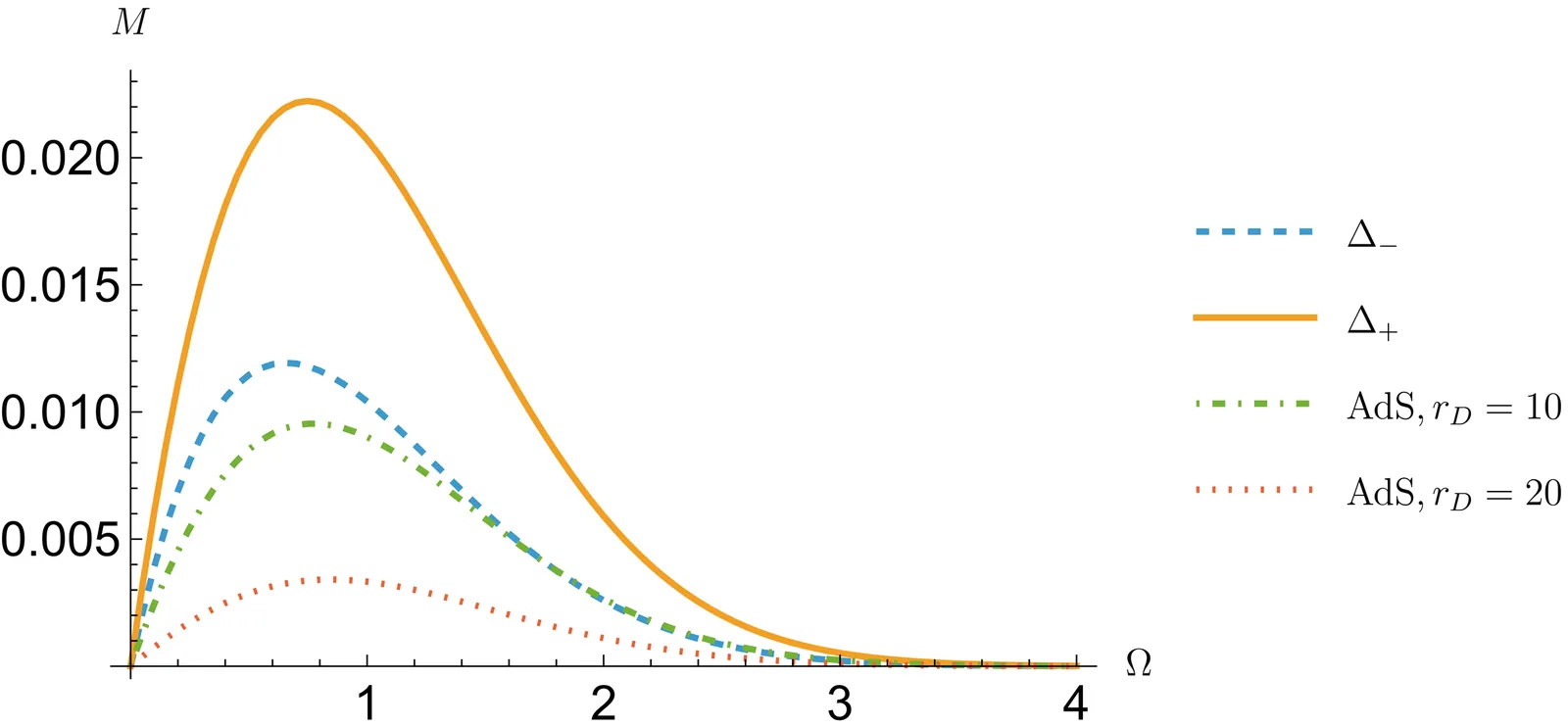
Probing holographic conformal field theories
We introduce an operational, boundary-first framework that embeds relativistic quantum-information protocols into anti-de Sitter/Conformal Field Theory (AdS/CFT) by coupling an Unruh--DeWitt detector directly to a local scalar primary operator of a holographic CFT. Using the universal CFT Wightman function, we compute the detector's reduced density operator perturbatively, retaining both excitation probabilities and coherences. As a concrete resource-theoretic application, we implement magic resource (mana) harvesting with a qutrit probe. For a CFT dual to global AdS, we show that the harvested mana sharply distinguishes the two admissible scalar quantizations in the Breitenlohner--Freedman window, with the standard quantization yielding systematically larger mana than the alternate one. Our results provide a viable way of testing holography principle through quantum information resource.
2602.07895
Feb 2026High Energy Physics - Theory
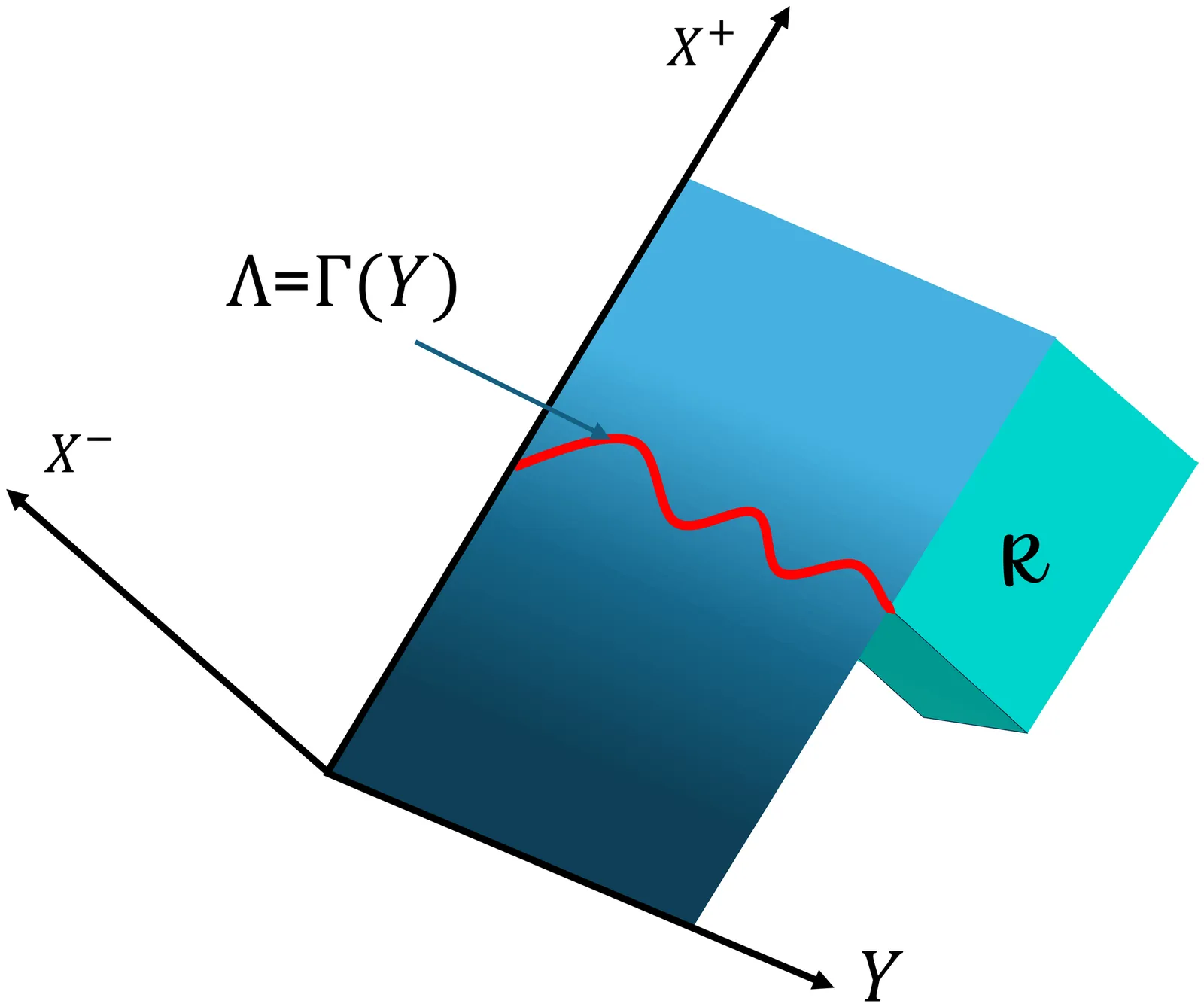
Towards a Proof of the Improved Quantum Null Energy Condition
The Improved Quantum Null Energy Condition (INEC) was recently derived from the (restricted) quantum focusing conjecture (QFC), and is a statement about the energy-momentum tensor (EMT) of field theories in Minkowski space-time. It is a stronger condition than the quantum null energy condition (QNEC), and includes the possibility of expanding or contracting geodesics. Using the properties of relative entropy and modular Hamiltonian associated with null deformation of the sphere, we show the INEC holds under an additional assumption relating the EMT to the relative entropy. Furthermore, using the QNEC and INEC as a basis, we briefly speculate about a possible modified Quantum Focusing Conjecture.
2601.18860
Jan 2026High Energy Physics - Theory
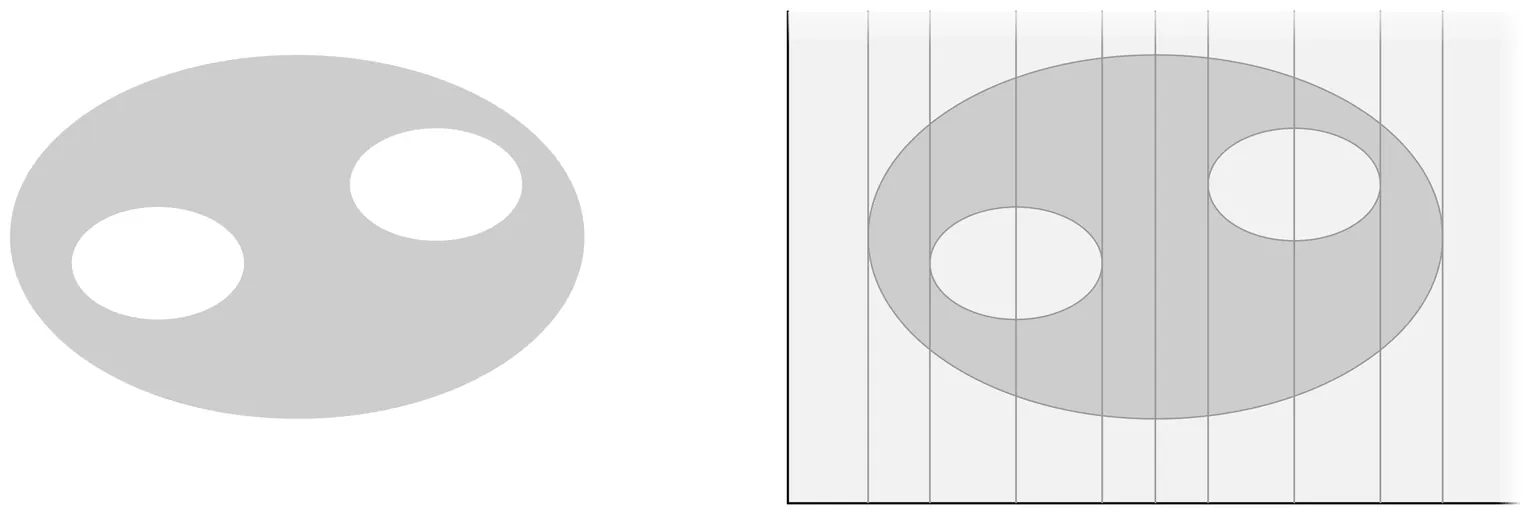
Tame Complexity of Effective Field Theories in the Quantum Gravity Landscape
Effective field theories consistent with quantum gravity obey surprising finiteness constraints, appearing in several distinct but interconnected forms. In this work we develop a framework that unifies these observations by proposing that the defining data of such theories, as well as the landscape of effective field theories that are valid at least up to a fixed cutoff, admit descriptions with a uniform bound on complexity. To make this precise, we use tame geometry and work in sharply o-minimal structures, in which tame sets and functions come with two integer parameters that quantify their information content; we call this pair their tame complexity. Our Finite Complexity Conjectures are supported by controlled examples in which an infinite Wilsonian expansion nevertheless admits an equivalent finite-complexity description, typically through hidden rigidity conditions such as differential or recursion relations. We further assemble evidence from string compactifications, highlighting the constraining role of moduli space geometry and the importance of dualities. This perspective also yields mathematically well-defined notions of counting and volume measures on the space of effective theories, formulated in terms of effective field theory domains and coverings, whose finiteness is naturally enforced by the conjectures.
2601.18863
Jan 2026High Energy Physics - Theory
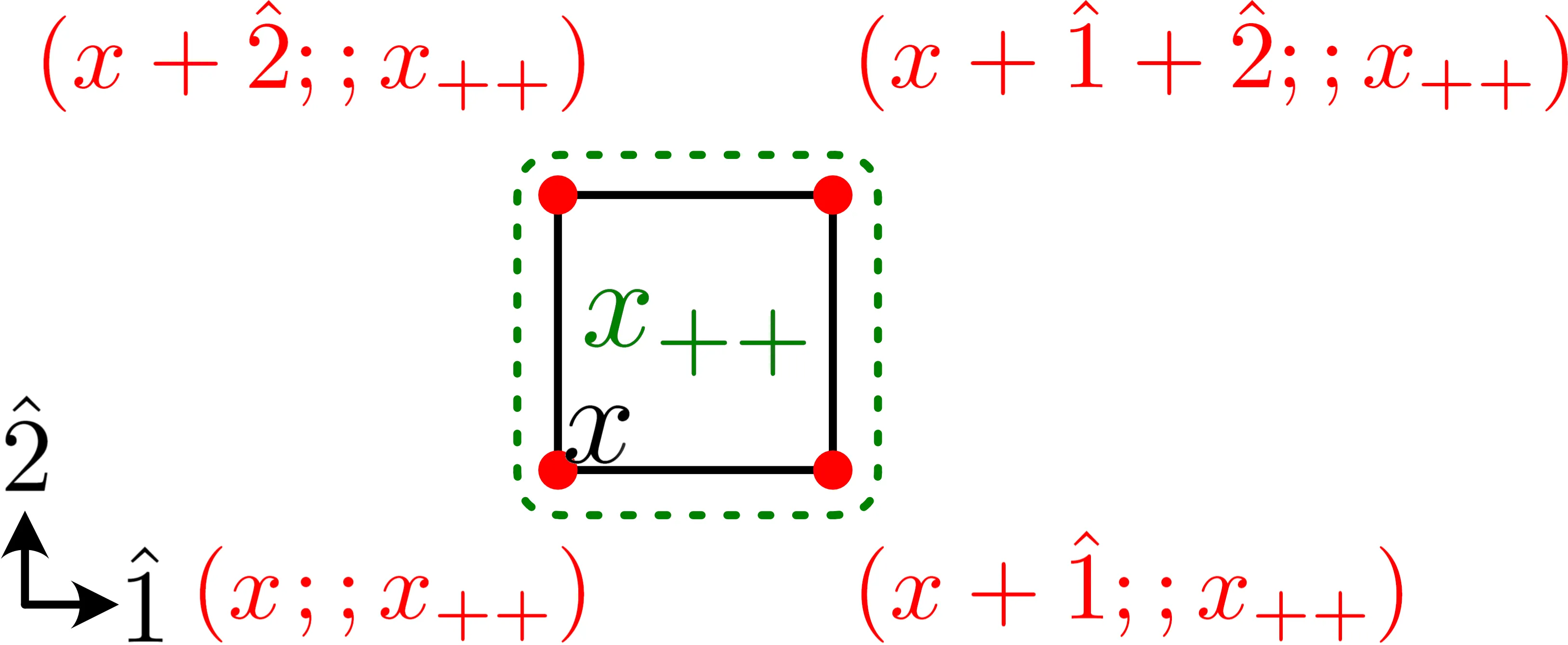
A Lattice U(1) Chern-Simons Theory via Lattice Deligne-Beilinson Cohomology
We define Deligne-Beilinson (DB) cohomology on a cubic lattice and use it to formulate and analyze lattice $U(1)$ Chern-Simons theory at even levels. The continuum DB cohomology provides a refined mathematical framework for continuum $U(1)$ connections constructed in a patchwise manner. The lattice DB cohomology we construct retains many essential properties of the continuum DB cohomology and naturally incorporates a notion of self-linking number. The lattice $U(1)$ Chern-Simons action formulated using the lattice DB cohomology is expressed as a simple quadratic form via the star product, which naturally exhibits level quantization. Framed Wilson lines respecting staggered symmetry are defined in a gauge-invariant manner, and their expectation values are shown to be given by the self-linking number, as follows from completing the square. Using the lattice Hodge decomposition, we explicitly characterize the DB cohomology on a three-dimensional cubic toroidal lattice and present a gauge-fixed, rigorous path integral for the lattice Chern-Simons theory. To regulate divergences in the lattice Chern-Simons path integral arising from staggered symmetry, we introduce a small Maxwell term. The resulting error is controlled by the linear order in the small Maxwell coupling.
2601.15939
Jan 2026High Energy Physics - Theory
Resumming Scattering Amplitudes for Waveforms
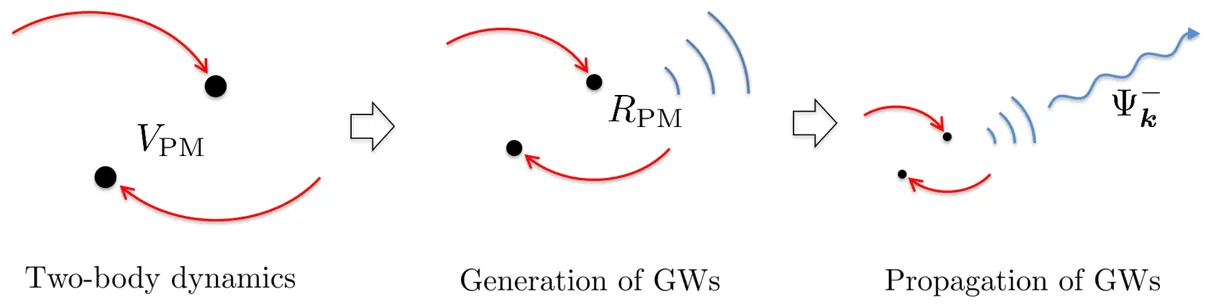
We develop a formalism to compute non-perturbative 5-point scattering amplitudes and apply it to gravitational waveforms in the two-body problem for arbitrary trajectories. Drawing inspiration from Feshbach's projector formalism in nuclear physics, we introduce effective potentials governing graviton emission and relate them to perturbative scattering amplitudes at arbitrary order in the gravitational coupling and mass ratio. Once these potentials are determined, the corresponding non-perturbative amplitudes in the classical limit are obtained by iterative insertions and subsequently translated into gravitational waveforms using the KMOC formalism. As an application, we compute the gravitational waveform emitted by a two-body system moving along a generic, potentially highly bent, trajectory. Importantly, our formalism extends effective field theory matching of the gravitational two-body potential to radiative phenomena, enabling the extraction of gravitational-wave source terms directly from perturbative on-shell scattering amplitudes.
2601.08252
Jan 2026High Energy Physics - Theory
2601.07906A universal sum over topologies in 3d gravity
We explore the sum over topologies in AdS$_3$ quantum gravity and its relationship with the statistical interpretation of the boundary theory. We formulate a statistical version of the conformal bootstrap that systematizes the universal statistical properties of high-energy CFT$_2$ data. We identify a series of surgery moves on bulk manifolds that precisely reflect the requirements of typicality and crossing symmetry of the boundary ensemble. These surgery moves generate a large number of bulk manifolds that have to be included in any reasonable definition of the gravitational path integral. We show that this procedure generates only on-shell (hyperbolic) manifolds, although it does not produce all of them. These proofs rely on structure theorems of 3-manifolds, which non-trivially interact with the requirements of the statistical boundary ensemble. We illustrate the application of this procedure with many examples, such as Euclidean wormholes, twisted $I$-bundles and handlebody-knots. Our findings reveal a large space of possible choices of which manifolds can be included in the gravitational path integral, reflecting a wide range of possible statistical ensembles consistent with crossing symmetry and typicality.
2601.079061
Jan 2026High Energy Physics - Theory
A melonic quantum mechanical model without disorder
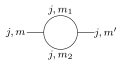
We consider a quantum mechanical model involving interacting fermions without disorder that has the same low energy physics as the supersymmetric SYK model. The model is $SU(2)$ invariant, and the supercharge involves the $ SU(2) $ 3j symbol. We analyze various solvable corners, conceptually explain why it has a melonic expansion, and perform an exact diagonalization for small values of $N$. Expanded around the states with maximal angular momentum, the model is approximated by a two dimensional CFT. The BPS states have a simple description in that regime.
2601.08908
Jan 2026High Energy Physics - Theory

Extended Heun Hierarchy in Quantum Seiberg-Witten Geometry
We investigate the quantum geometry of the Seiberg-Witten curve for $\mathcal{N}=2$, $\mathrm{SU(2)}^n$ linear quiver gauge theories. By applying the Weyl quantization prescription to the algebraic curve, we derive the corresponding second-order differential equation and demonstrate that it is isomorphic to the Extended Heun Equation with $n+3$ regular singular points. The physical parameters of the gauge theory are linked to the canonical coefficients of the Heun equation via a polynomial representation of the Seiberg-Witten curve. This framework provides the necessary mathematical foundation to apply non-perturbative gauge-theoretic techniques, such as instanton counting, to spectral problems in gravitational physics, most notably for higher-dimensional black holes.
2601.05204
Jan 2026High Energy Physics - Theory
Integrable Systems
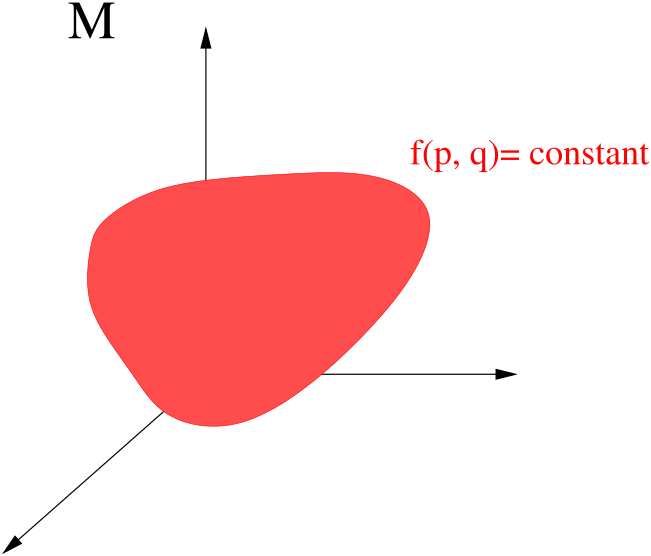
These notes are based on lecture courses I gave to third year mathematics students at Cambridge. They could form a basis of an elementary one--term lecture course on integrable systems covering the Arnold-Liouville theorem, inverse scattering transform, Hamiltonian methods in soliton theory and Lie point symmetries. No knowledge beyond basic calculus and ordinary differential equation is assumed.
2601.04077
Jan 2026High Energy Physics - Theory