Trending in Quantum Physics
Fast, accurate, high-resolution simulation of large-scale Fermi-Hubbard models on a digital quantum processor
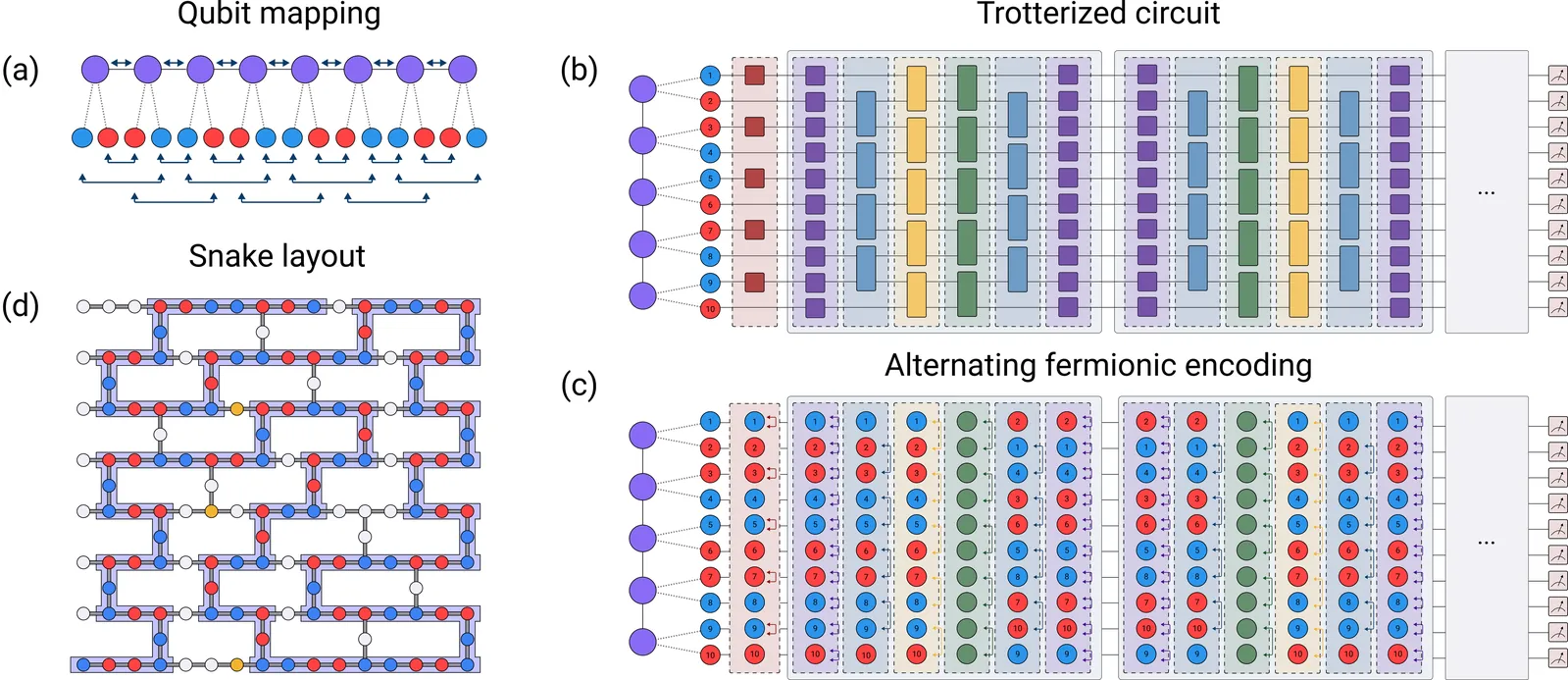
We report experimental digital quantum simulation of the one-dimensional Fermi-Hubbard model on a superconducting quantum processor at a scale beyond the reach of exact statevector simulation and challenging for state-of-the-art tensor-network methods. We encode this problem using up to 120 qubits through an efficient mapping that reduces circuit complexity, and we improve accuracy through error suppression to simulate dynamical evolution using up to 90 Trotter steps. From a vacancy defect introduced in the middle of an $L=31$-site (62-qubit) Néel initial state, we directly observe spin-charge separation to $t=9$ in natural units using up to 90 Trotter steps, and quantitatively extract velocity ratios $v_c/v_s$ which match classical simulations across a range of model parameters. We then extend experiments to $L=60$ (120 qubits) and long evolution times to $t=6$ using 30 Trotter steps; Quantum-processor outputs agree quantitatively with approximate classical simulations performed using a time-dependent variational principle (TDVP) solver; increasing the TDVP bond dimension through $χ= 4096$ expands the range of evolution times within which agreement has RMSE $\sim 1\%$ before the approaches diverge. Owing to the large scale of the simulation and the use of efficient overhead-free error-suppression techniques, for simulated evolution times at the limit of quantum/classical agreement ($t\gtrsim 5$ in natural hopping units), the wall-clock runtime of the quantum processor is up to $3000\times$ faster than an optimized TDVP simulation using $χ= 4096$. These results establish contemporary digital quantum processors as a versatile, quantitatively accurate, and competitive platform for the study of fermionic many-body dynamics in regimes where leading classical methods can become prohibitively expensive.
2605.04025
May 2026Quantum Physics
Exponential quantum advantage in processing massive classical data
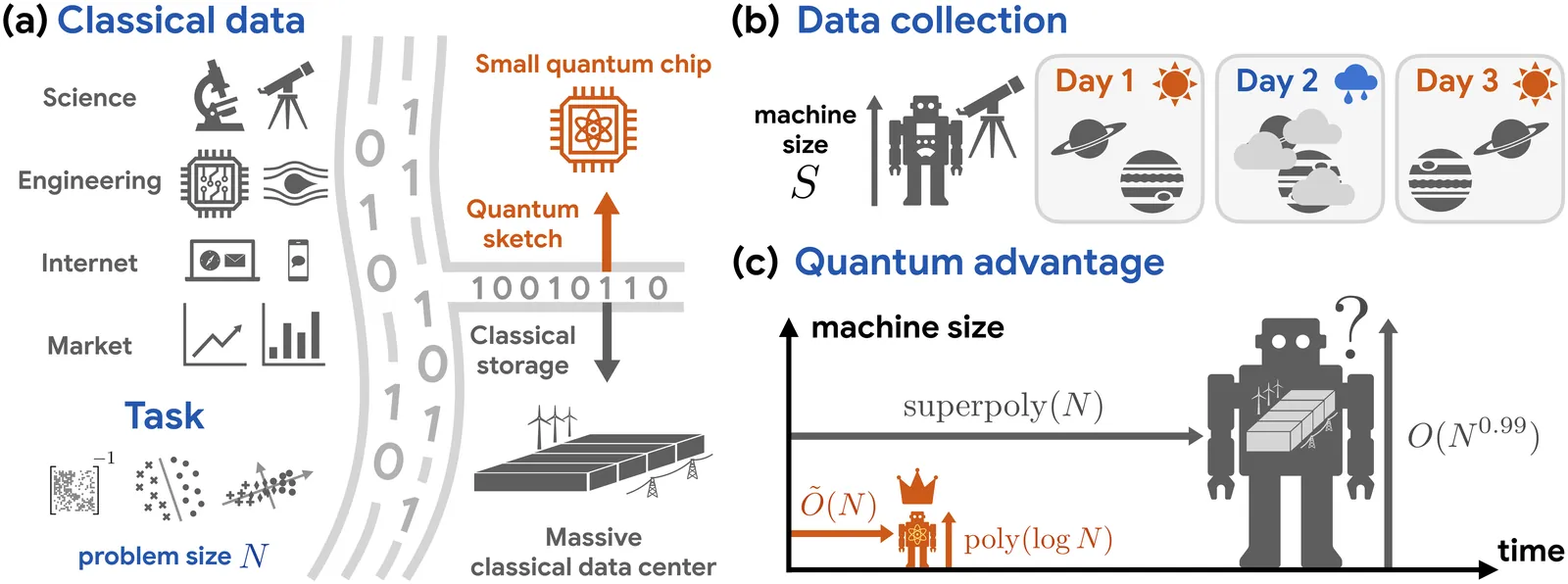
Broadly applicable quantum advantage, particularly in classical data processing and machine learning, has been a fundamental open problem. In this work, we prove that a small quantum computer of polylogarithmic size can perform large-scale classification and dimension reduction on massive classical data by processing samples on the fly, whereas any classical machine achieving the same prediction performance requires exponentially larger size. Furthermore, classical machines that are exponentially larger yet below the required size need superpolynomially more samples and time. We validate these quantum advantages in real-world applications, including single-cell RNA sequencing and movie review sentiment analysis, demonstrating four to six orders of magnitude reduction in size with fewer than 60 logical qubits. These quantum advantages are enabled by quantum oracle sketching, an algorithm for accessing the classical world in quantum superposition using only random classical data samples. Combined with classical shadows, our algorithm circumvents the data loading and readout bottleneck to construct succinct classical models from massive classical data, a task provably impossible for any classical machine that is not exponentially larger than the quantum machine. These quantum advantages persist even when classical machines are granted unlimited time or if BPP=BQP, and rely only on the correctness of quantum mechanics. Together, our results establish machine learning on classical data as a broad and natural domain of quantum advantage and a fundamental test of quantum mechanics at the complexity frontier.
2604.07639
Apr 2026Quantum Physics
Scalable Neural Decoders for Practical Fault-Tolerant Quantum Computation
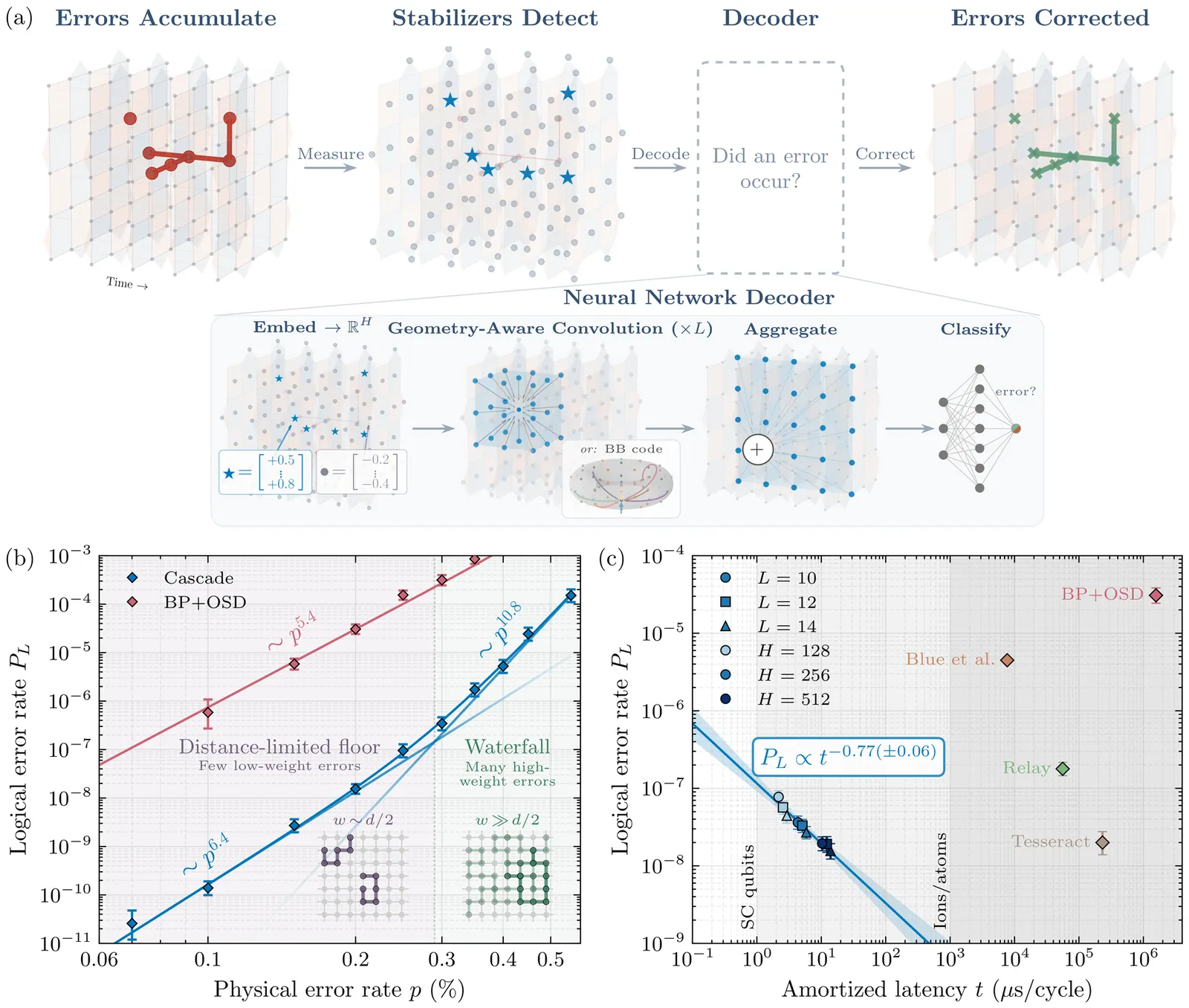
Quantum error correction (QEC) is essential for scalable quantum computing. However, it requires classical decoders that are fast and accurate enough to keep pace with quantum hardware. While quantum low-density parity-check codes have recently emerged as a promising route to efficient fault tolerance, current decoding algorithms do not allow one to realize the full potential of these codes in practical settings. Here, we introduce a convolutional neural network decoder that exploits the geometric structure of QEC codes, and use it to probe a novel "waterfall" regime of error suppression, demonstrating that the logical error rates required for large-scale fault-tolerant algorithms are attainable with modest code sizes at current physical error rates, and with latencies within the real-time budgets of several leading hardware platforms. For example, for the $[144, 12, 12]$ Gross code, the decoder achieves logical error rates up to $\sim 17$x below existing decoders - reaching logical error rates $\sim 10^{-10}$ at physical error $p=0.1\%$ - with 3-5 orders of magnitude higher throughput. This decoder also produces well-calibrated confidence estimates that can significantly reduce the time overhead of repeat-until-success protocols. Taken together, these results suggest that the space-time costs associated with fault-tolerant quantum computation may be significantly lower than previously anticipated.
2604.08358
Apr 2026Quantum Physics
Shor's algorithm is possible with as few as 10,000 reconfigurable atomic qubits
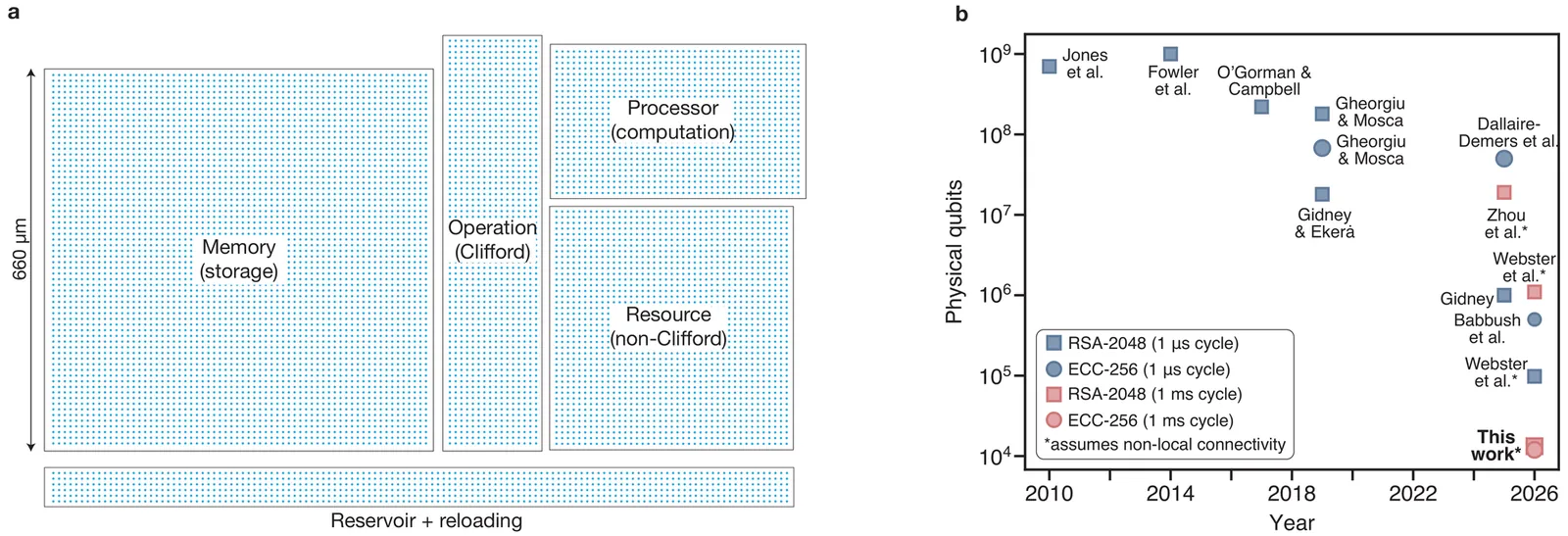
Quantum computers have the potential to perform computational tasks beyond the reach of classical machines. A prominent example is Shor's algorithm for integer factorization and discrete logarithms, which is of both fundamental importance and practical relevance to cryptography. However, due to the high overhead of quantum error correction, optimized resource estimates for cryptographically relevant instances of Shor's algorithm require millions of physical qubits. Here, by leveraging advances in high-rate quantum error-correcting codes, efficient logical instruction sets, and circuit design, we show that Shor's algorithm can be executed at cryptographically relevant scales with as few as 10,000 reconfigurable atomic qubits. Increasing the number of physical qubits improves time efficiency by enabling greater parallelism; under plausible assumptions, the runtime for discrete logarithms on the P-256 elliptic curve could be just a few days for a system with 26,000 physical qubits, while the runtime for factoring RSA-2048 integers is one to two orders of magnitude longer. Recent neutral-atom experiments have demonstrated universal fault-tolerant operations below the error-correction threshold, computation on arrays of hundreds of qubits, and trapping arrays with more than 6,000 highly coherent qubits. Although substantial engineering challenges remain, our theoretical analysis indicates that an appropriately designed neutral-atom architecture could support quantum computation at cryptographically relevant scales. More broadly, these results highlight the capability of neutral atoms for fault-tolerant quantum computing with wide-ranging scientific and technological applications.
2603.28627
Mar 2026Quantum Physics
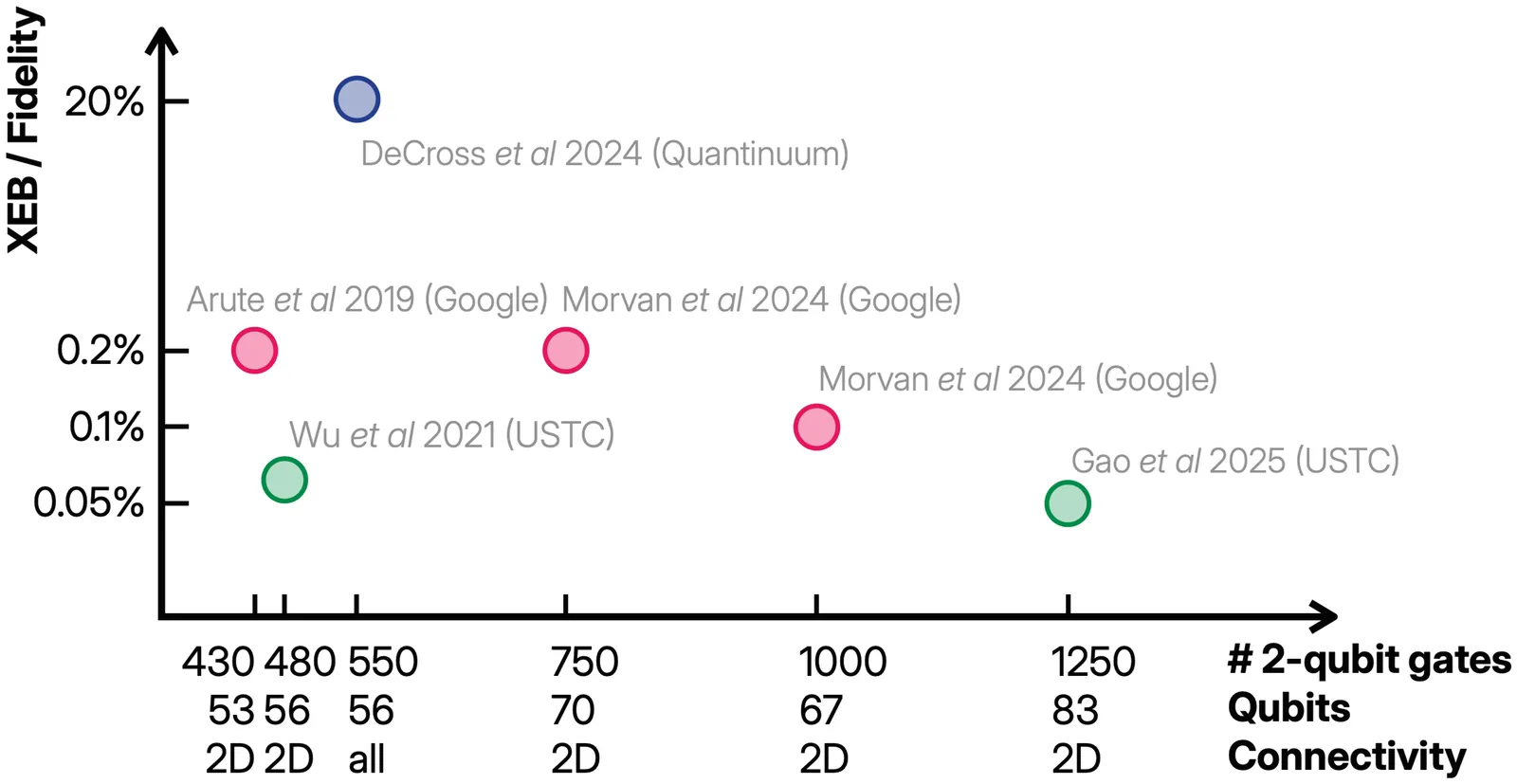
Has quantum advantage been achieved?
Quantum computational advantage was claimed for the first time in 2019 and several experiments since then have reinforced the claim. And yet, there is no consensus whether or not quantum advantage has actually been achieved. In this article, I address this question and argue that, in fact, it has. I also outline next steps for theory and experiments in quantum advantage.
2603.09901
Mar 2026Quantum Physics
The unbearable hardness of deciding about magic
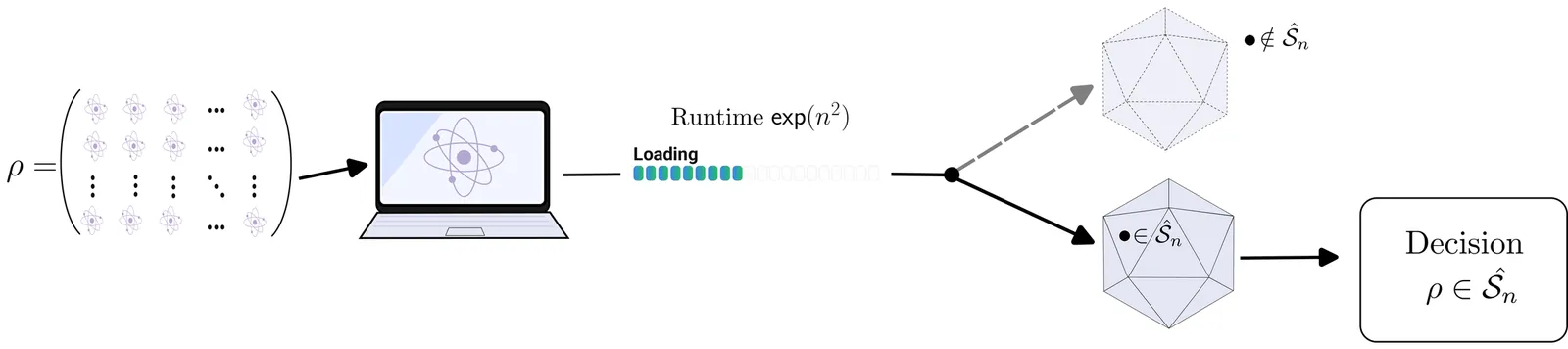
Identifying the boundary between classical and quantum computation is a central challenge in quantum information. In multi-qubit systems, entanglement and magic are the key resources underlying genuinely quantum behaviour. While entanglement is well understood, magic -- essential for universal quantum computation -- remains relatively poorly characterised. Here we show that determining membership in the stabilizer polytope, which defines the free states of magic-state resource theory, requires super-exponential time $\exp( n^2)$ in the number of qubits $n$, even approximately. We reduce the problem to solving a $3$-SAT instance on $n^2$ variables and, by invoking the exponential time hypothesis, the result follows. As a consequence, both quantifying and certifying magic are fundamentally intractable: any magic monotone for general states must be super-exponentially hard to compute, and deciding whether an operator is a valid magic witness is equally difficult. As a corollary, we establish the robustness of magic as computationally optimal among monotones. This barrier extends even to classically simulable regimes: deciding whether a state lies in the convex hull of states generated by a logarithmic number of non-Clifford gates is also super-exponentially hard. Together, these results reveal intrinsic computational limits on assessing classical simulability, distilling pathological magic states, and ultimately probing and exploiting magic as a quantum resource.
2602.22330
Feb 2026Quantum Physics
Thermodynamic Uncertainty Relation with Quantum Feedback
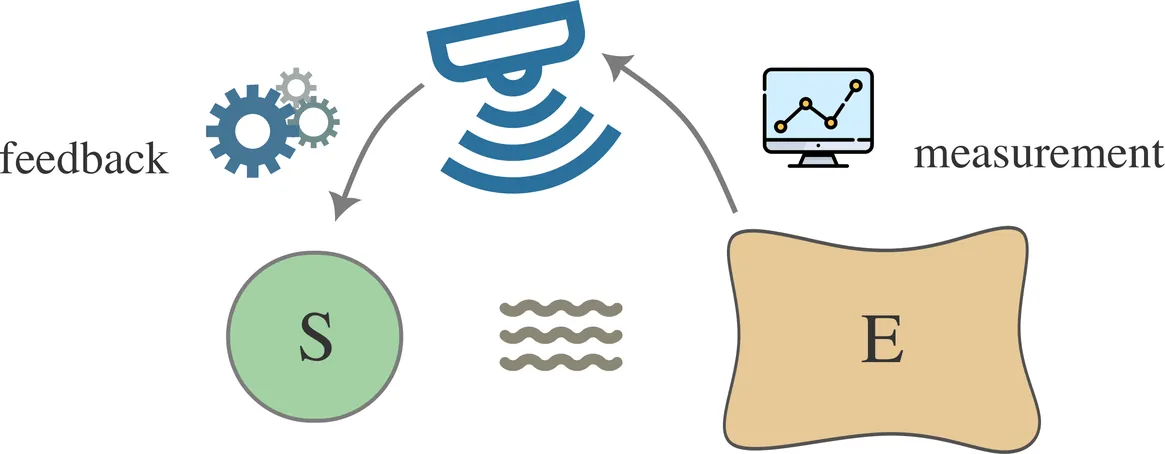
Fluctuations are intrinsic to microscopic systems and impose fundamental limits on nonequilibrium precision, as captured by the thermodynamic uncertainty relation (TUR), which links current fluctuations to entropy production. While feedback control is expected to further suppress fluctuations, its role within the TUR framework has remained unclear, particularly in quantum systems where control is inherently information-driven. In this Letter, we consider open quantum systems weakly coupled to a thermal environment, in which quantum jumps are continuously monitored, and Markovian feedback is applied. Using quantum mutual information to quantify the information contribution induced by feedback, we derive a finite-time TUR for arbitrary time-integrated currents in terms of entropy production and mutual information. Our results uncover how feedback control suppresses fluctuations together with thermodynamic cost and establishes a fundamental precision bound imposed by information-based control. As an application, we analyze a quantum clock model and demonstrate that the clock precision can be enhanced by feedback control in the presence of a single thermal reservoir.
2602.226511
Feb 2026Quantum Physics
Computing with many encoded logical qubits beyond break-even
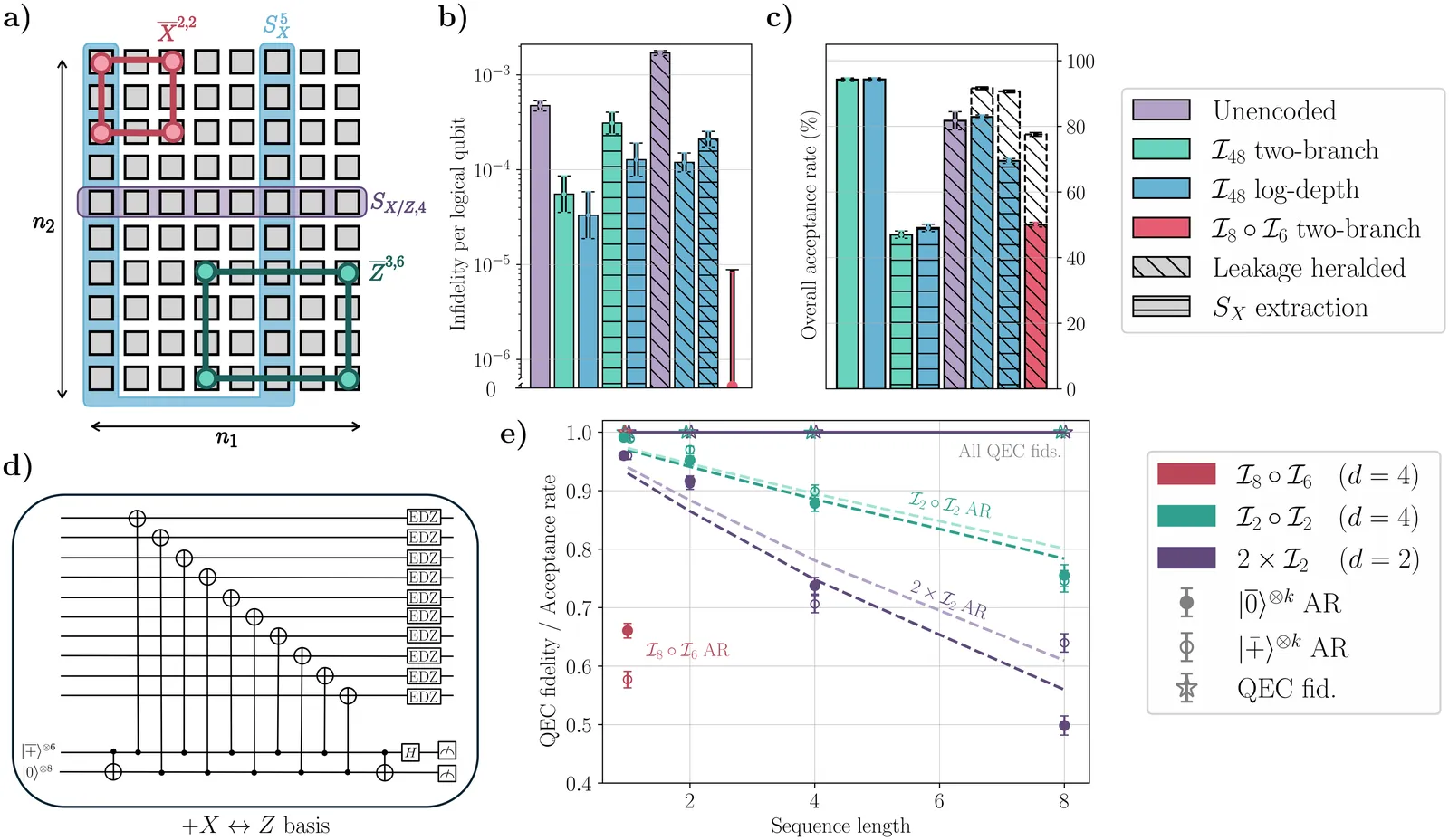
High-rate quantum error correcting (QEC) codes encode many logical qubits in a given number of physical qubits, making them promising candidates for quantum computation. Implementing high-rate codes at a scale that both frustrates classical computing and improves performance by encoding requires both high fidelity gates and long-range qubit connectivity -- both of which are offered by trapped-ion quantum computers. Here, we demonstrate computations that outperform their unencoded counterparts in the high-rate $[[ k+2,\, k,\, 2 ]]$ iceberg quantum error detecting (QED) and $[[ (k_2 + 2)(k_1 + 2),\, k_2k_1,\, 4 ]]$ two-level concatenated iceberg QEC codes, using the 98-qubit Quantinuum Helios trapped-ion quantum processor. Utilizing new gadgets for encoded operations, we realize this "beyond break-even" performance with reasonable postselection rates across a range of fault-tolerant (FT) and partially-fault-tolerant (pFT) component and application benchmarks with between $48$ and $94$ logical qubits. These benchmarks include FT state preparation and measurement, QEC cycle benchmarking, logical gate benchmarking, GHZ state preparation, and a pFT quantum simulation of the three-dimensional $XY$ model of quantum magnetism. Additionally, we illustrate that postselection rates can be suppressed by increasing the code distance via concatenation. Our results represent state-of-the-art logical component and state fidelities and provide evidence that high-rate QED/QEC codes are viable on contemporary quantum computers for near-term beyond-classical-scale computation.
2602.22211
Feb 2026Quantum Physics
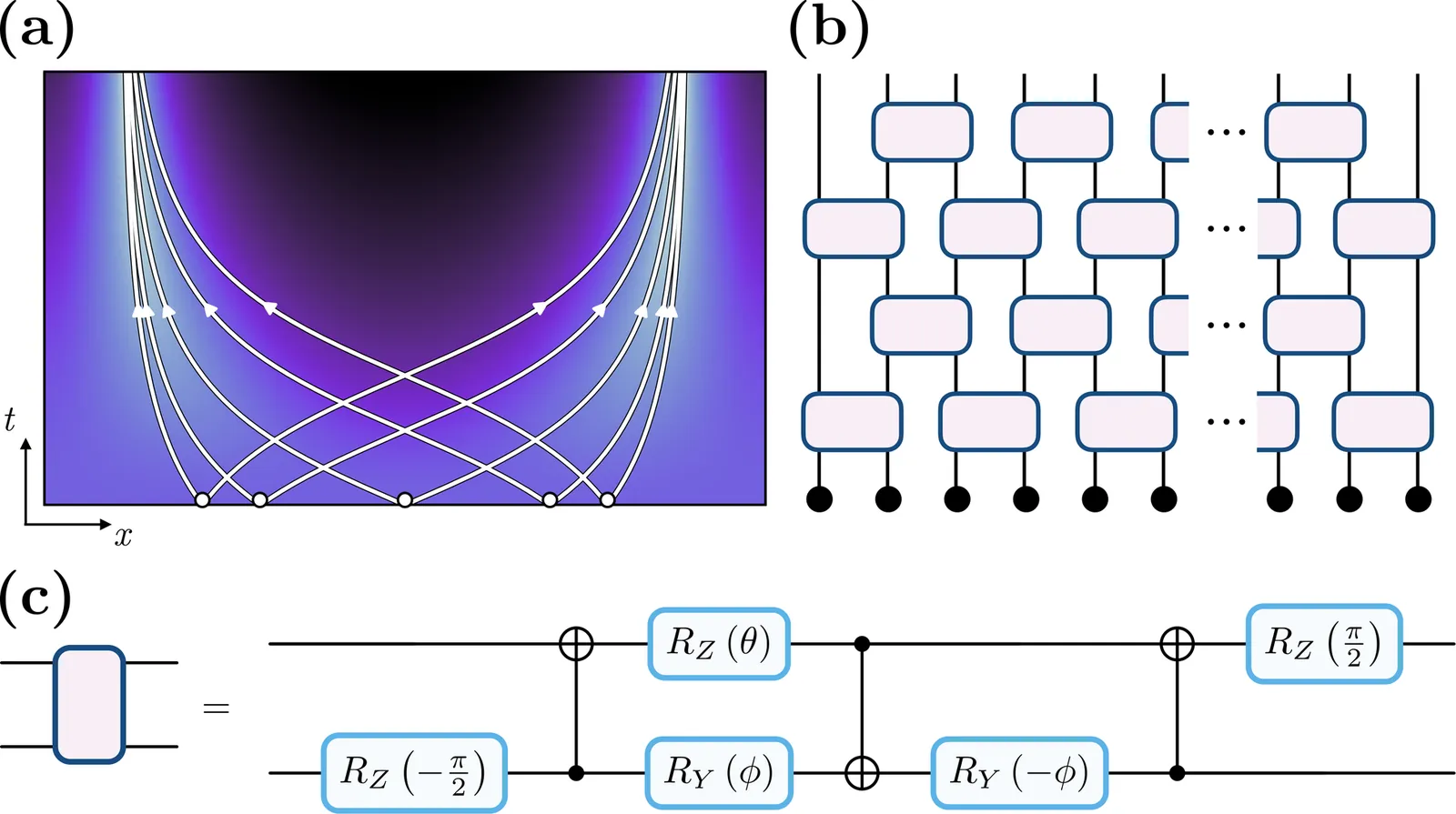
Observing quantum many-body dynamics in emergent curved spacetime using programmable quantum processors
We digitally simulate quantum many-body dynamics in emergent curved backgrounds using 80 superconducting qubits on IBM Heron processors. By engineering spatially varying couplings in the spin-$\frac12$ XXZ chain, consistent with the low-energy description of the model in terms of an inhomogeneous Tomonaga-Luttinger liquid, we realize excitations that follow geodesics of an effective metric inherited from the underlying spatial deformation. Following quenches from Néel and few-spin-flip states, we observe curved light-cone propagation, horizon-induced freezing in the local magnetization, and position-dependent oscillation frequencies set by the engineered spatial deformation. Despite strong spatial inhomogeneity, unequal-time correlators reveal ballistic quasiparticle propagation in the spin chain. These results establish large-scale digital quantum processors as a flexible platform for detailed and controlled exploration of many-body dynamics in tunable and synthetic curved spacetimes.
2602.15524
Feb 2026Quantum Physics
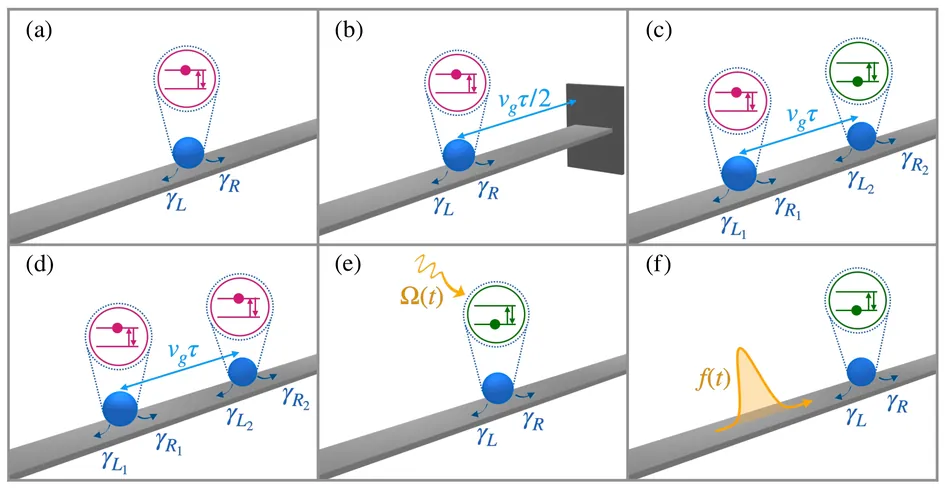
QwaveMPS: An efficient open-source Python package for simulating non-Markovian waveguide-QED using matrix product states
QwaveMPS is an open-source Python library for simulating one-dimensional quantum many-body waveguide systems using matrix product states (MPS). It provides a user-friendly interface for constructing, evolving, and analyzing quantum states and operators, facilitating studies in quantum physics and quantum information with waveguide QED systems. This approach enables efficient, scalable simulations by focusing computational resources on the most relevant parts of the quantum system. Thus, one can study a wide range of complex dynamical interactions, including time-delayed feedback effects in the non-Markovian regime and deeply non-linear systems, at a highly reduced computational cost compared to full Hilbert space approaches, making it both practical and convenient to model a variety of open waveguide-QED systems (in Markovian and non-Markovian regimes), treating quantized atoms and quantized photons on an equal footing.
2602.15826
Feb 2026Quantum Physics
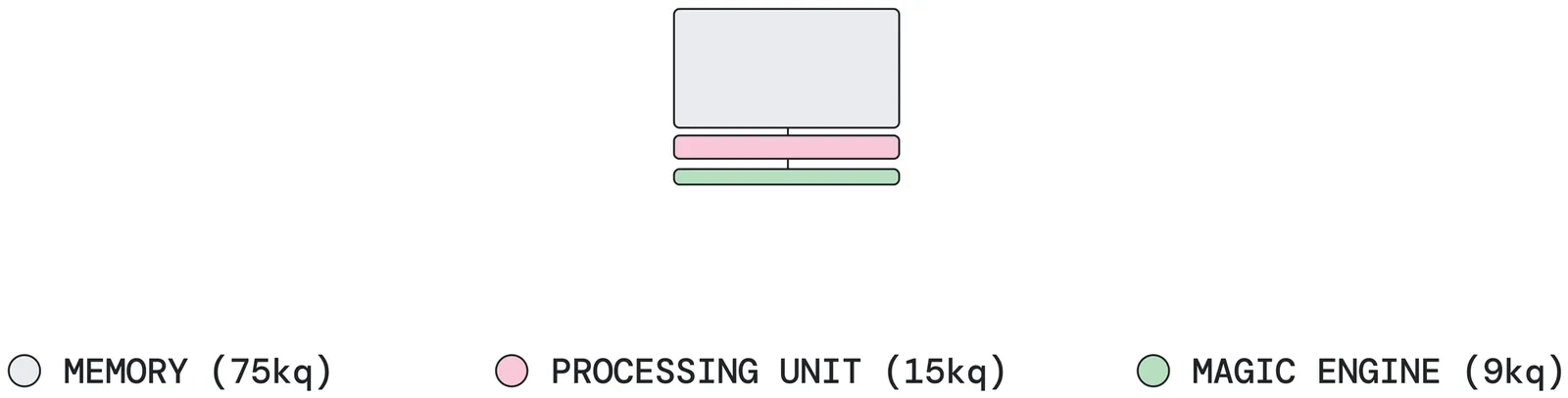
The Pinnacle Architecture: Reducing the cost of breaking RSA-2048 to 100 000 physical qubits using quantum LDPC codes
The realisation of utility-scale quantum computing inextricably depends on the design of practical, low-overhead fault-tolerant architectures. We introduce the \textit{Pinnacle Architecture}, which uses quantum low-density parity check (QLDPC) codes to allow for universal, fault-tolerant quantum computation with a spacetime overhead significantly smaller than that of any competing architecture. With this architecture, we show that 2048-bit RSA integers can be factored with less than one hundred thousand physical qubits, given a physical error rate of $10^{-3}$, code cycle time of $1$ \textmu s and a reaction time of $10$ \textmu s. We thereby demonstrate the feasibility of utility-scale quantum computing with an order of magnitude fewer physical qubits than has previously been believed necessary.
2602.11457
Feb 2026Quantum Physics
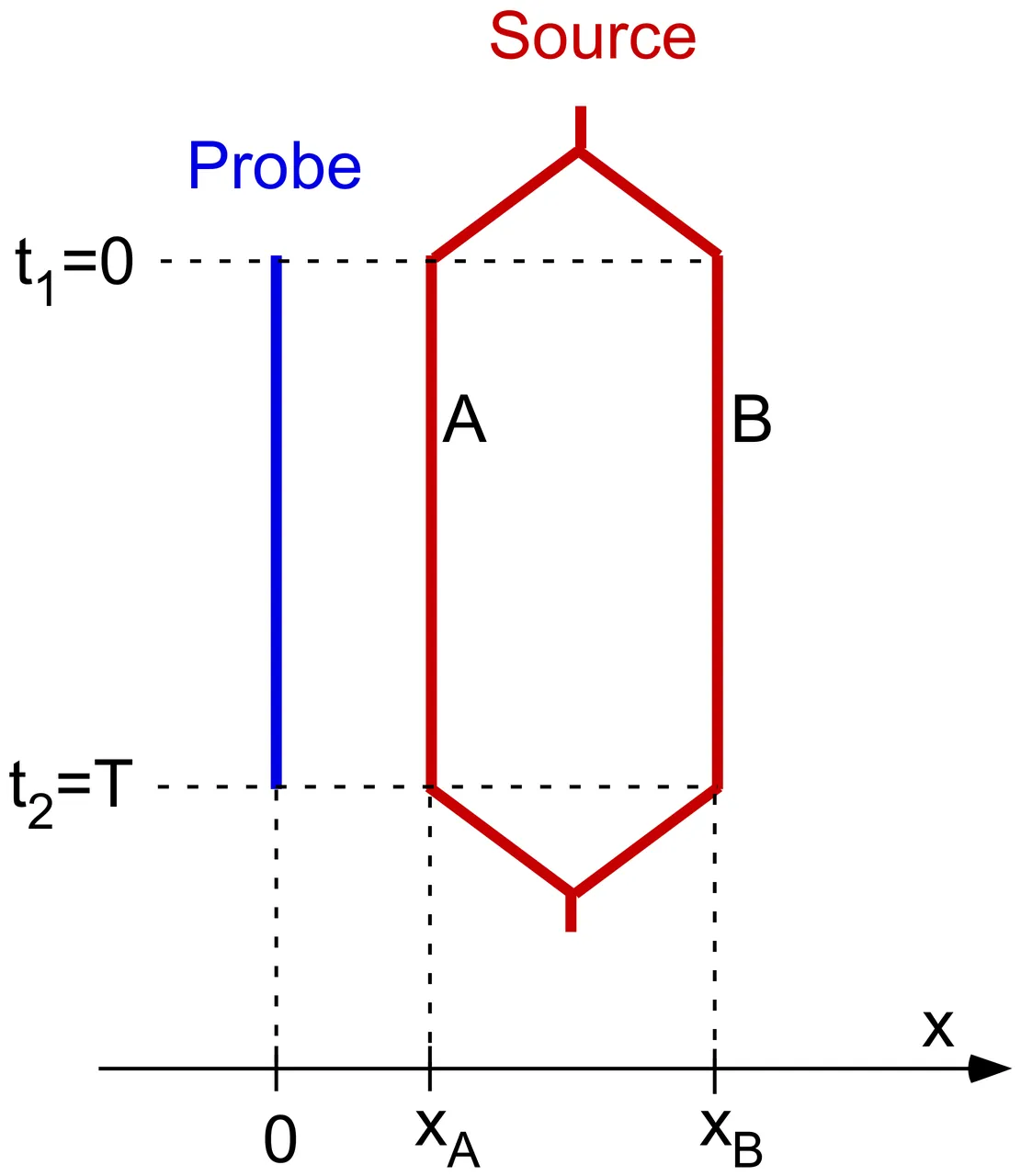
Repulsive Gravitational Force as a Witness of the Quantum Nature of Gravity
We show that a single spatially superposed 'source' mass acting on a 'probe' matter wavepacket can reveal the quantum nature of the gravitational field. For this we use a specific state preparation and measurement of the superposed source mass, including a postselection, which altogether results in a repulsive gravitational force on the probe particle. A classical gravitational field can never lead to repulsion, as the effect requires quantum interference of two distinct states of gravity. We also present a calculation in the Heisenberg picture under the formalism of weak values that illustrates how repulsion is achieved. Finally, we estimate the range of parameters (masses and the spatio-temporal extent of interference) for which the experiment is feasible.
2602.12266
Feb 2026Quantum Physics
 2602.07110
Beyond Wigner: Non-Invertible Symmetries Preserve Probabilities
In recent years, the traditional notion of symmetry in quantum theory was expanded to so-called generalised or categorical symmetries, which, unlike ordinary group symmetries, may be non-invertible. This appears to be at odds with Wigner's theorem, which requires quantum symmetries to be implemented by (anti)unitary -- and hence invertible -- operators in order to preserve probabilities. We resolve this puzzle for (higher) fusion category symmetries $\mathcal{C}$ by proposing that, instead of acting by unitary operators on a fixed Hilbert space, symmetry defects in $\mathcal{C}$ act as isometries between distinct Hilbert spaces constructed from twisted sectors. As a result, we find that non-invertible symmetries naturally act as trace-preserving quantum channels. Crucially, our construction relies on the symmetry category $\mathcal{C}$ being unitary. We illustrate our proposal through several examples that include Tambara-Yamagami, Fibonacci, and Yang-Lee as well as higher categorical symmetries.
2602.07110
Feb 2026Quantum Physics
Non-Hermitian Renormalization Group from a Few-Body Perspective
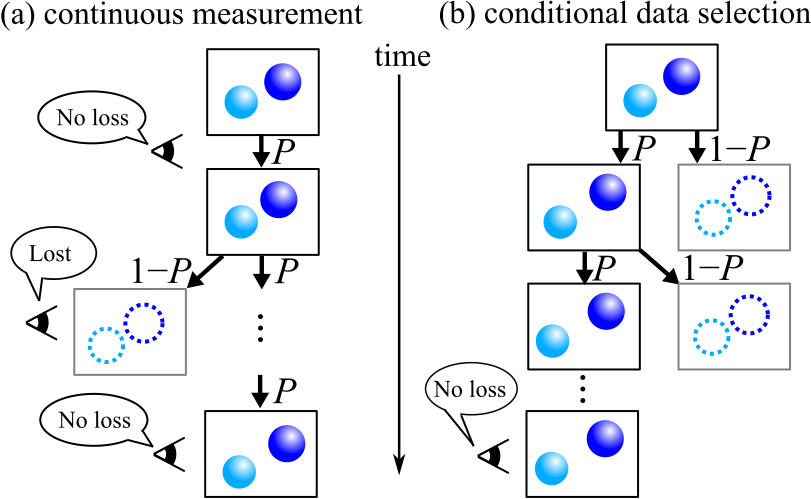
Non-Hermiticity plays a fundamental role in open quantum systems and describes a wide variety of effects of interactions with environments, including quantum measurement. However, understanding its consequences in strongly interacting systems is still elusive due to the interplay between non-perturbative strong correlations and non-Hermiticity. While the Wilsonian renormalization group (RG) method has been applied to tackle this problem, its foundation, based on the existence of the partition function, is ill-defined. In this paper, we establish a microscopic foundation of the non-Hermitian RG method from a few-body perspective. We show that the invariance of the scattering amplitude under RG transformations enables us to rigorously derive the non-Hermitian RG equation, giving a physically transparent interpretation of RG flows. We discuss a detailed structure of such RG flows in a non-relativistic two-body system with inelastic two-body loss, and show its relation to a non-Hermitian quantum scale anomaly. Our analysis suggests that non-Hermitian complex potentials often used in high-energy physics can be interpreted as being caused by quantum measurement, where the detection of elastically scattered particles updates the observer's knowledge, resulting in a nonunitary state change of the system. We apply our formalism to nuclear physics, find the emergence of a critical semicircle, and show that several nuclei are located near the critical semicircle in the coherent neutron-nucleus scattering. We also propose that the localized dineutron in two-neutron halo nuclei can be interpreted as the quantum measurement effect on the imaginary potential associated with absorption into the core nucleus. Our result bridges different contexts of non-Hermitian systems in high-energy and atomic, molecular, and optical physics, opening an interdisciplinary playground of non-Hermitian few-body physics.
2602.08705
Feb 2026Quantum Physics
Instance-optimal high-precision shadow tomography with few-copy measurements: A metrological approach
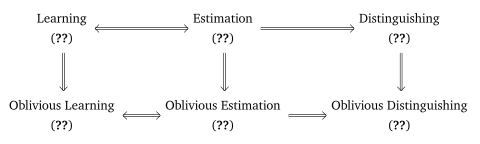
We study the sample complexity of shadow tomography in the high-precision regime under realistic measurement constraints. Given an unknown $d$-dimensional quantum state $ρ$ and a known set of observables $\{O_i\}_{i=1}^m$, the goal is to estimate expectation values $\{\mathrm{tr}(O_iρ)\}_{i=1}^m$ to accuracy $ε$ in $L_p$-norm, using possibly adaptive measurements that act on $O(\mathrm{polylog}(d))$ number of copies of $ρ$ at a time. We focus on the regime where $ε$ is below an instance-dependent threshold. Our main contribution is an instance-optimal characterization of the sample complexity as $\tildeΘ(Γ_p/ε^2)$, where $Γ_p$ is a function of $\{O_i\}_{i=1}^m$ defined via an optimization formula involving the inverse Fisher information matrix. Previously, tight bounds were known only in special cases, e.g. Pauli shadow tomography with $L_\infty$-norm error. Concretely, we first analyze a simpler oblivious variant where the goal is to estimate an observable of the form $\sum_{i=1}^m α_i O_i$ with $\|α\|_q = 1$ (where $q$ is dual to $p$) revealed after the measurement. For single-copy measurements, we obtain a sample complexity of $Θ(Γ^{\mathrm{ob}}_p/ε^2)$. We then show $\tildeΘ(Γ_p/ε^2)$ is necessary and sufficient for the original problem, with the lower bound applying to unbiased, bounded estimators. Our upper bounds rely on a two-step algorithm combining coarse tomography with local estimation. Notably, $Γ^{\mathrm{ob}}_\infty = Γ_\infty$. In both cases, allowing $c$-copy measurements improves the sample complexity by at most $Ω(1/c)$. Our results establish a quantitative correspondence between quantum learning and metrology, unifying asymptotic metrological limits with finite-sample learning guarantees.
2602.04952
Feb 2026Quantum Physics
Matchgate synthesis via Clifford matchgates and $T$ gates
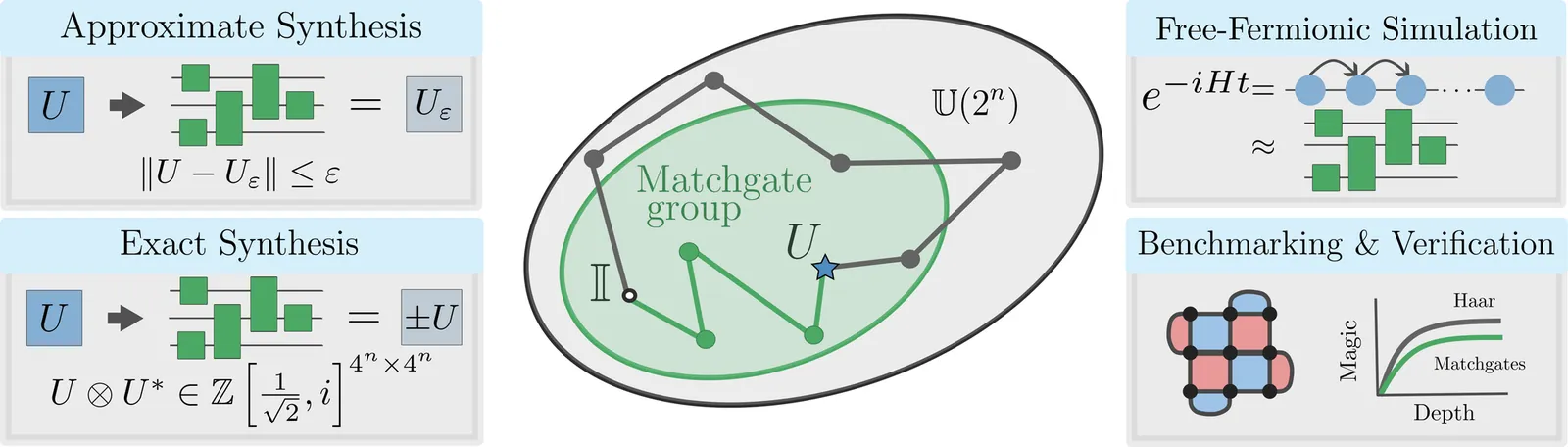
Matchgate unitaries are ubiquitous in quantum computation due to their relation to non-interacting fermions and because they can be used to benchmark quantum computers. Implementing such unitaries on fault-tolerant devices requires first compiling them into a discrete universal gate set, typically Clifford$+T$. Here, we propose a different approach for their synthesis: compile matchgate unitaries using only matchgate gates. To this end, we first show that the matchgate-Clifford group (the intersection of the matchgate and Clifford groups) plus the $\overline{T}$ gate (a $T$ unitary up to a phase) is universal for the matchgate group. Our approach leverages the connection between $n$-qubit matchgate circuits and the standard representation of $\mathbb{SO}(2n)$, which reduces the compilation from $2^n\times 2^n$ unitaries to $2n\times2n$ ones, thus reducing exponentially the size of the target matrix. Moreover, we rigorously show that this scheme is efficient, as an approximation error $\varepsilon_{\mathbb{SO}(2n)}$ incurred in this smaller-dimensional representation translates at most into an $O(n \,\varepsilon_{\mathbb{SO}(2n)})$ error in the exponentially large unitary. In addition, we study the exact version of the matchgate synthesis problem, and we prove that all matchgate unitaries $U$ such that $U\otimes U^*$ has entries in the ring $\mathbb{Z}\big[1/\sqrt 2,i\big]$ can be exactly synthesized by a finite sequence of gates from the matchgate-Clifford$+\overline{T}$ set, without ancillas. We then use this insight to map optimal exact matchgate synthesis to Boolean satisfiability, and compile the circuits that diagonalize the free-fermionic $XX$ Hamiltonian on $n=4,\,8$ qubits.
2602.054251
Feb 2026Quantum Physics
2601.19111Introduction to Quantum Entanglement Geometry
This article is an expository account aimed at viewing entanglement in finite-dimensional quantum many-body systems as a phenomenon of global geometry. While the mathematics of general quantum states has been studied extensively, this article focuses specifically on their entanglement. When a quantum system varies over a classical parameter space, each fiber may look like the same Hilbert space, yet there may be no global identification because of twisting in the gluing data. Describing this situation by an Azumaya algebra, one always obtains the family of pure-state spaces as a Severi-Brauer scheme. The main focus is to characterize the condition under which the subsystem decomposition required to define entanglement exists globally and compatibly, by a reduction to the stabilizer subgroup of the Segre variety, and to explain that the obstruction appears in the Brauer class. As a consequence, quantum states yield a natural filtration dictated by entanglement on the Severi-Brauer scheme. Using a spin system on a torus as an example, we show concretely that the holonomy of the gluing can produce an entangling quantum gate, and can appear as an obstruction class distinct from the usual Berry numbers or Chern numbers. For instance, even for quantum systems that have traditionally been regarded as having no topological band structure, the entanglement of their eigenstates can be related to global geometric universal quantities, reflecting the background geometry.
2601.19111
Jan 2026Quantum Physics
Spectral Codes: A Geometric Formalism for Quantum Error Correction
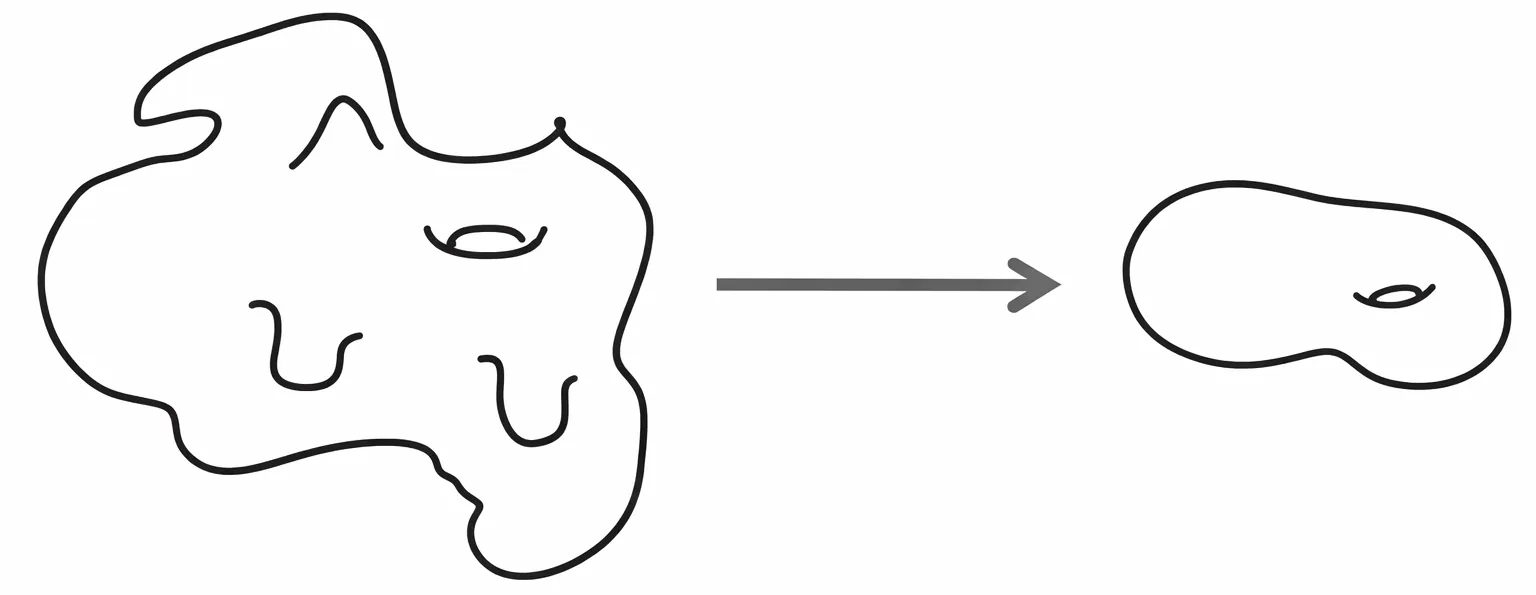
We present a new geometric perspective on quantum error correction based on spectral triples in noncommutative geometry. In this approach, quantum error correcting codes are reformulated as low energy spectral projections of Dirac type operators that separate global logical degrees of freedom from local, correctable errors. Locality, code distance, and the Knill Laflamme condition acquire a unified spectral and geometric interpretation in terms of the induced metric and spectrum of the Dirac operator. Within this framework, a wide range of known error correcting codes including classical linear codes, stabilizer codes, GKP type codes, and topological codes are recovered from a single construction. This demonstrates that classical and quantum codes can be organized within a common geometric language. A central advantage of the spectral triple perspective is that the performance of error correction can be directly related to spectral properties. We show that leakage out of the code space is controlled by the spectral gap of the Dirac operator, and that code preserving internal perturbations can systematically increase this gap without altering the encoded logical subspace. This yields a geometric mechanism for enhancing error correction thresholds, which we illustrate explicitly for a stabilizer code. We further interpret Berezin Toeplitz quantization as a mixed spectral code and briefly discuss implications for holographic quantum error correction. Overall, our results suggest that quantum error correction can be viewed as a universal low energy phenomenon governed by spectral geometry.
2601.19765
Jan 2026Quantum Physics
Multivariate Rényi divergences characterise betting games with multiple lotteries
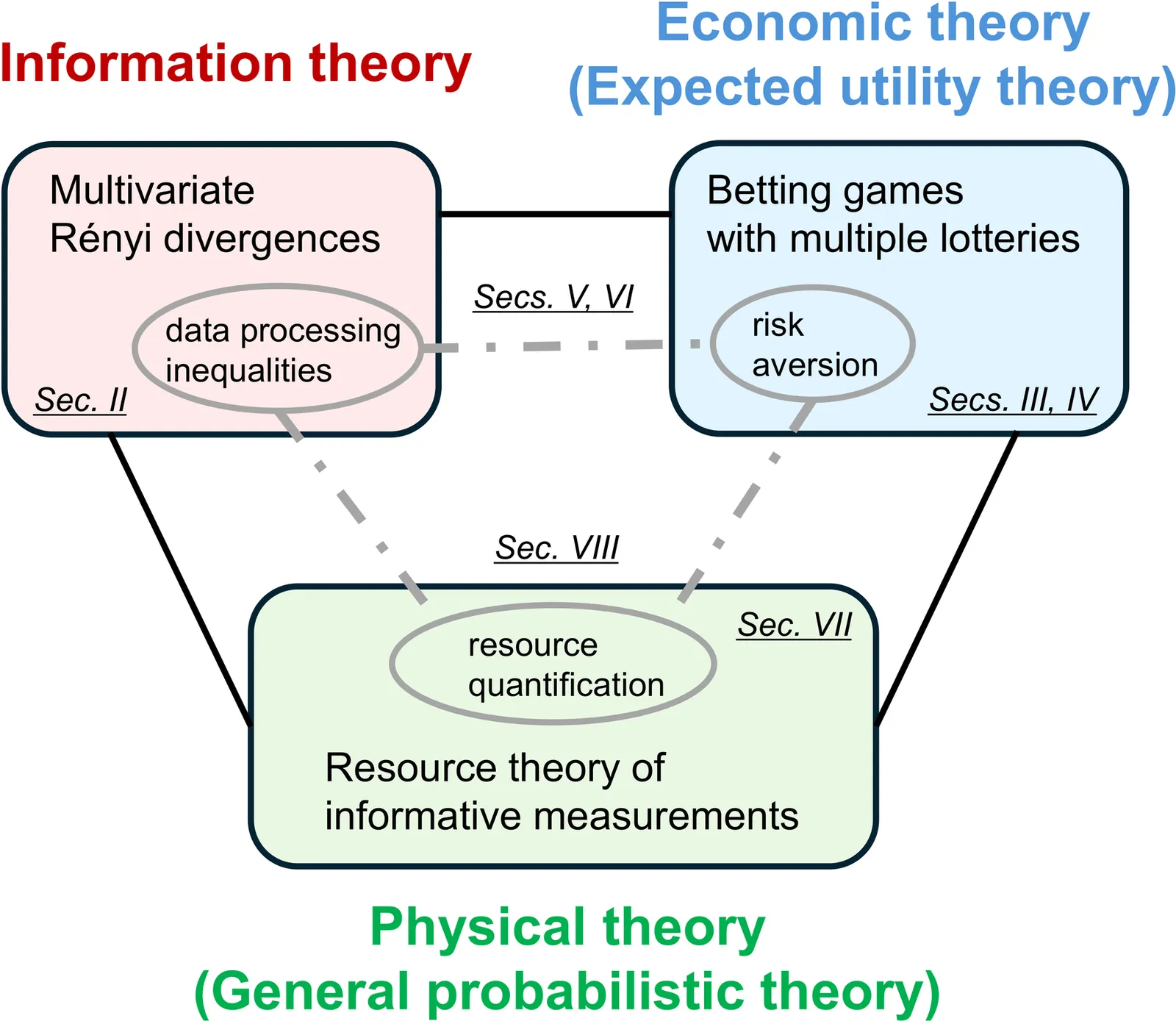
We provide an operational interpretation of the multivariate Rényi divergence in terms of economic-theoretic tasks based on betting, risk aversion, and multiple lotteries. We show that the multivariate Rényi divergence $D_{\underlineα}(\vec{P}_X)$ of probability distributions $\vec{P}_X =(p^{(0)}_X,\dots,p^{(d)}_X)$ and real-valued orders $\underlineα = (α_0, \dots, α_d)$ quantifies the economic-theoretic value that a rational agent assigns to $d$ lotteries with odds $o^{(k)}_X \propto (p_X^{(k)})^{-1}$ ($k=1,\dots,d$) on a random event described by $p^{(0)}_X$. In particular, when the odds are fair and the rational agent maximises over all betting strategies, the economic-theoretic value (the isoelastic certainty equivalent) that the agent assigns to the lotteries is exactly given by $w^{\mathrm{ICE}}_{\underline{R}}=\exp[D_{\underlineα}(\vec{P}_X)]$, where $\underline{R}=(R_1,\dots,R_d)$ is a risk-aversion vector with $R_k = 1+α_k/α_0$ being the risk-aversion parameter for lottery $k$. Furthermore, we introduce a new conditional multivariate Rényi divergence that characterises a generalised scenario where the agent uses side information. We prove that this new quantity satisfies a data processing inequality which can be interpreted as the increment in the economic-theoretic value provided by side information; crucially, such a data processing inequality is a consequence of the agent's economic-theoretically consistent risk-averse attitude towards every lottery and vice versa. Finally, we apply these results to the resource theory of informative measurements in general probabilistic theories (GPTs). By establishing quantitative connections between information theory, physics, and economics, our framework provides a novel operational foundation for quantum state betting games with multiple lotteries in the realm of quantum resource theories.
2601.17850
Jan 2026Quantum Physics
Against probability: A quantum state is more than a list of probability distributions
The state $ρ$ of a quantum system can be represented by a vector $\mathbf{P}_{\mathcal{M}}(ρ)$ of outcome probabilities for a set of measurements $\mathcal{M}$. Such representations appear throughout physics, for example, in quantum field theory via correlation functions and in quantum foundations within generalized probabilistic frameworks. In this work, we identify an unavoidable tension: to enable operationally meaningful statements, the map ${ρ\mapsto \mathbf{P}_{\mathcal{M}}(ρ)}$ must be topologically robust $\unicode{x2013}$ preserving the notion of closeness between states. Yet, a probability representation that is topologically robust cannot simultaneously retain other essential structure, such as the subsystem structure.
2601.18872
Jan 2026Quantum Physics