Mesoscale and Nanoscale Physics
Quantum transport in nanostructures, quantum dots, molecular electronics, graphene and 2D materials.
Looking for a broader view? This category is part of:
Quantum transport in nanostructures, quantum dots, molecular electronics, graphene and 2D materials.
Looking for a broader view? This category is part of:
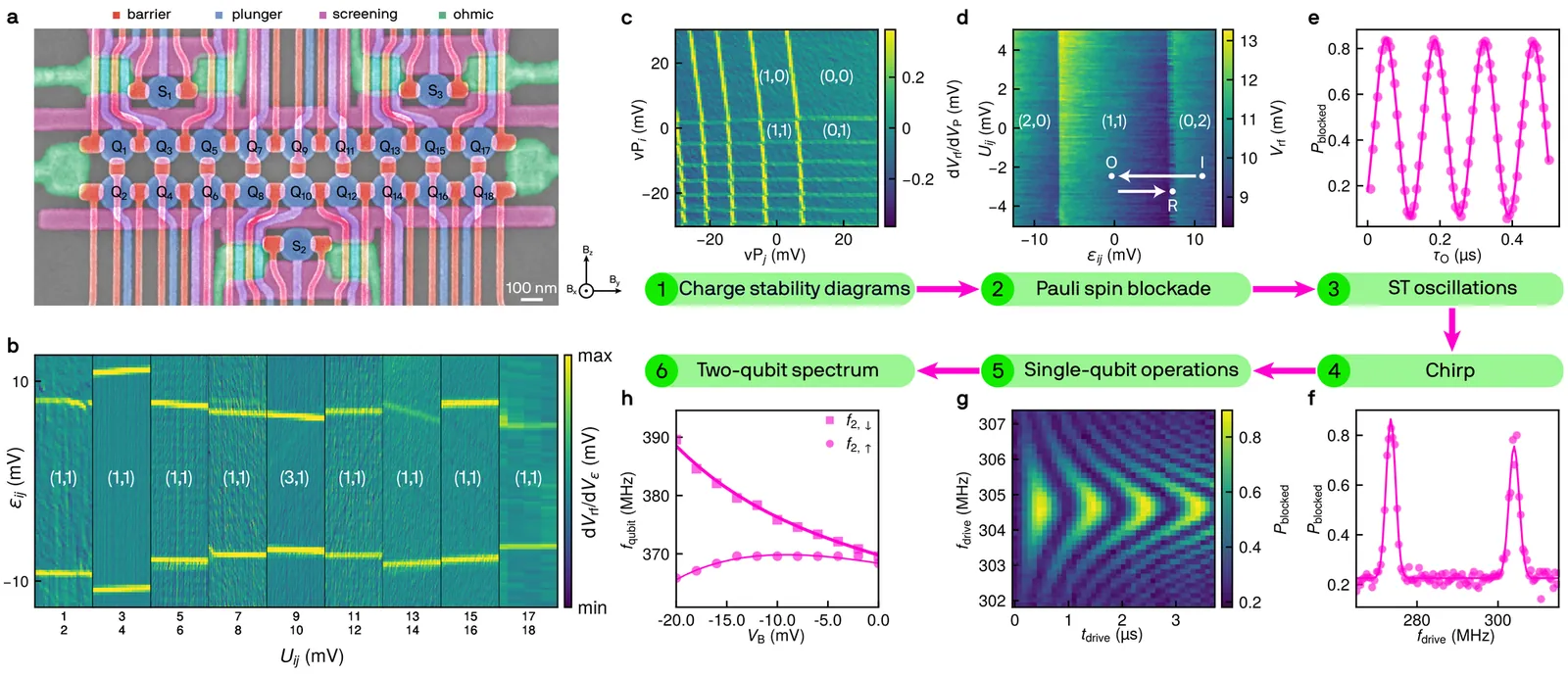
Conveyor-mode shuttling in gated Si/SiGe devices enables adiabatic transfer of single electrons, electron patterns and spin qubits confined in quantum dots across several microns with a scalable number of signal lines. To realize their full potential, linear shuttle lanes must connect into a two-dimensional grid with controllable routing. We introduce a T-junction device linking two independently driven shuttle lanes. Electron routing across the junction requires no extra control lines beyond the four channels per conveyor belt. We measure an inter-lane charge transfer fidelity of $F = 100.0000000^{+0}_{-9\times 10^{-7}}\,\%$ at an instantaneous electron velocity of $270\,\mathrm{mm}\,\mathrm{s}^{-1}$. The filling of 54 quantum dots is controlled by simple atomic pulses, allowing us to swap electron patterns, laying the groundwork for a native spin-qubit SWAP gate. This T-junction establishes a path towards scalable, two-dimensional quantum computing architectures with flexible spin qubit routing for quantum error correction.
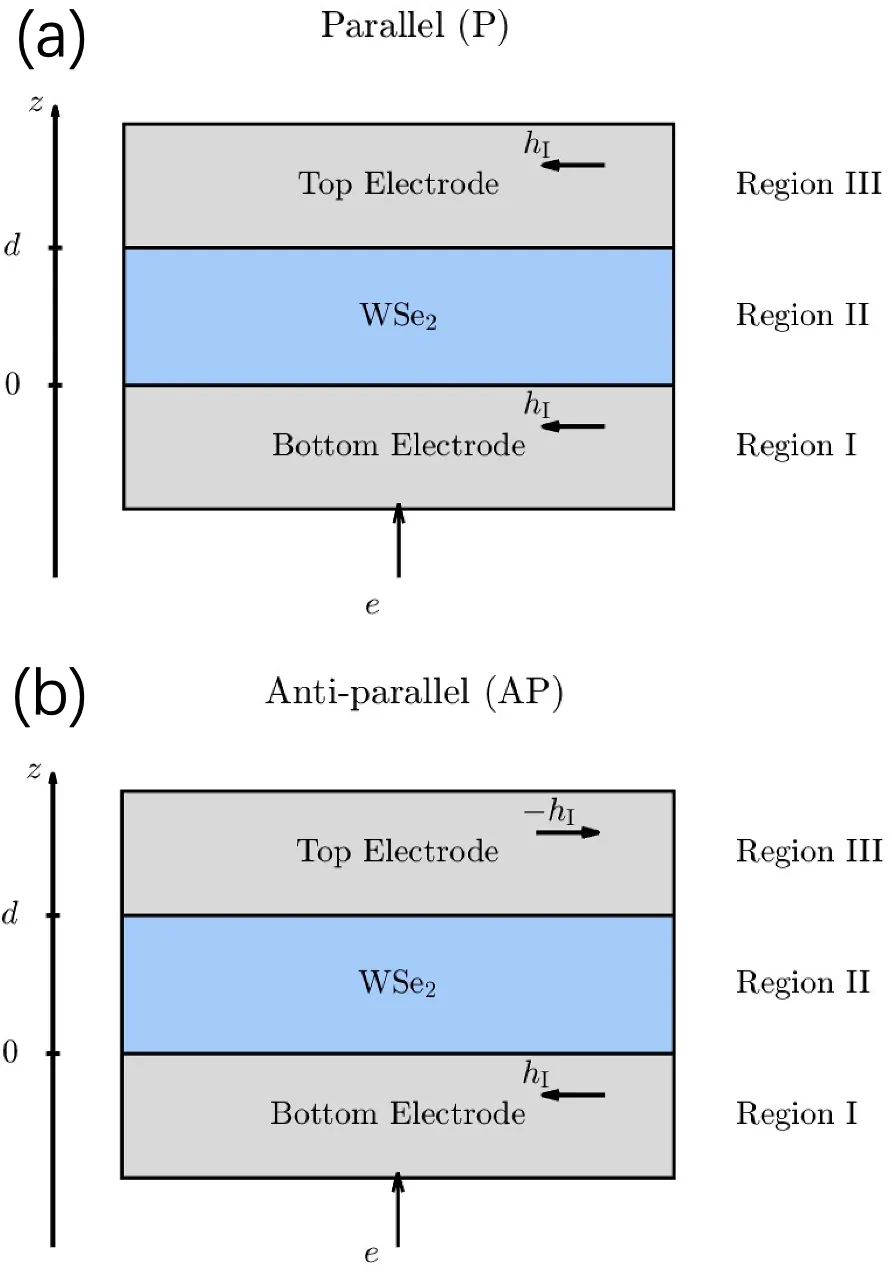
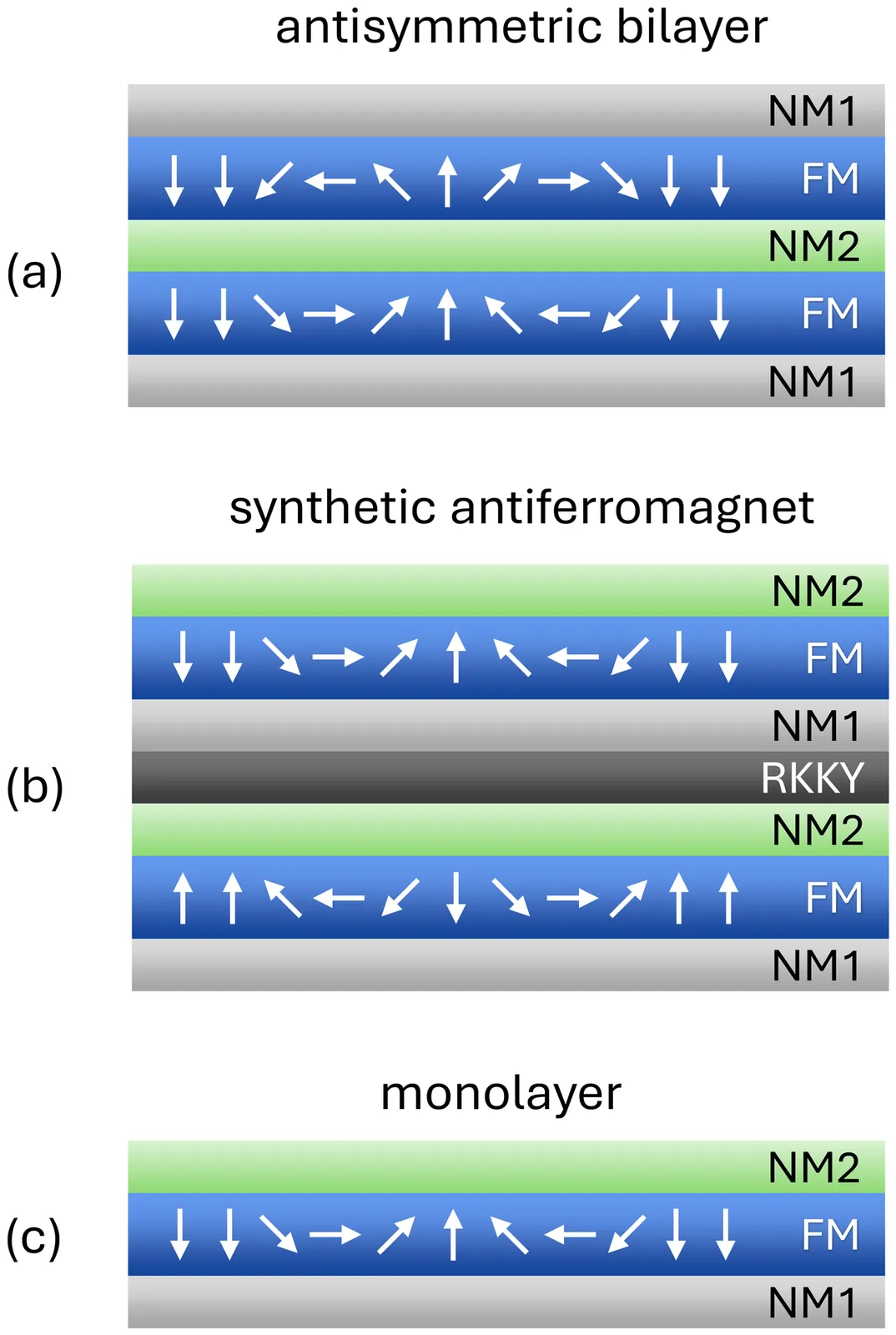
In this work, we propose a scheme to realize the layer Hall effect in the ferromagnetic topological insulator Bi$_2$Se$_3$ via proximity to $d$-wave altermagnets. We show that an altermagnet and an in-plane magnetic field applied near one surface gap the corresponding Dirac cone, yielding an altermagnet-induced half-quantized Hall effect. When altermagnets with antiparallel Néel vectors are placed near the top and bottom surfaces, giving rise to the layer Hall effect with vanishing net Hall conductance, i.e., the altermagnet-induced layer Hall effect. In contrast, altermagnets with parallel Néel vectors lead to a quantized Chern insulating state, i.e., the altermagnet-induced anomalous Hall effect. We further analyze the dependence of the Hall conductance on the orientation of the in-plane magnetic field and demonstrate that the layer Hall effect becomes observable under a perpendicular electric field. Our results establish a route to engineer altermagnet-induced topological phases in ferromagnetic topological insulators.
Although the measurement of current is now defined with respect to the electronic charge, producing a current standard based on a single-electron source remains challenging. The error rate of a source must be below 0.01 ppm, and many such sources must be operated in parallel to provide practically useful values of current in the nanoampere range. Achieving a single electron source using an industrial grade 300 mm wafer silicon metal oxide semiconductor (MOS) process could offer a powerful route for scaling, combined with the ability for integration with control and measurement electronics. Here, we present measurements of such a single-electron source indicating an error rate of 0.008 ppm, below the error threshold to satisfy the SI Ampere, and one of the lowest error rates reported, implemented using a gate-defined quantum dot device fabricated on an industry-grade silicon MOS process. Further evidence supporting the accuracy of the device is obtained by comparing the device performance to established models of quantum tunnelling, which reveal the mechanism of operation of our source at the single particle level. The low error rate observed in this device motivates the development of scaled arrays of parallel sources utilising Si MOS devices to realise a new generation of metrologically accurate current standards.
We study the performance of Kitaev-Heisenberg (KH) clusters as working media realizing a quantum Otto engine (QOE). An external Zeeman field with linear time dependency is used as the driving mechanism. The efficiency strongly depends on Kitaev ($κ$) and Heisenberg ($J$) exchange interaction. Interestingly, efficiency is comparable when the relative magnitude of $κ$ and $J$ is the same but of opposite signs. The above results are explained due to a subtle interplay of frustration, quantum fluctuation, and duality of eigen-spectra for the KH system when both the signs of $κ$ and $J$ are reversed. The maximum efficiency is shown to be dynamically related to eigen-spectra forming discrete narrow bands, where total spin angular momentum becomes a good quantum number. We relate this optimum efficiency to the realization of weakly interacting magnons, where the system reduces to an approximate eigen-system of the external drive. Finally, we extend our study to the large spin Kitaev model and find a quantum advantage in efficiency for $S=1/2$. The results could be of practical interest for materials with KH interactions as a platform for QOE.
Non-Hermitian skin effects are conventionally manifested as boundary localization of eigenstates in linear systems. In nonlinear settings, however, where eigenstates are no longer well defined, it becomes unclear how skin effects should be faithfully characterized. Here, we propose a Koopman-based characterization of nonlinear skin effects, in which localization is defined in terms of Koopman eigenfunctions in a lifted observable space, rather than physical states. Using a minimal nonlinear extension of the Hatano-Nelson model, we show that dominant Koopman eigenfunctions localize sharply on higher-order observables, in stark contrast to linear skin effects confined to linear observables. This lifted-space localization governs the sensitivity to boundary amplitude perturbations, providing a distinct dynamical signature of the nonlinear skin effect. Our results establish the Koopman framework as a natural setting in which skin effects unique to nonlinear non-Hermitian systems can be identified.
2601.03583We examine the formulas commonly used to estimate current-induced spin-orbit torques from harmonic Hall voltage measurements. In particular, we focus on the factor of two discrepancy among expressions employed to fit harmonic Hall signals measured under an in-plane rotating magnetic field. By explicitly deriving the relevant relations, we clarify the origin of this discrepancy and present the correct form of the fitting formula. We further discuss the determination of the sign of the field-like torque from harmonic Hall voltage measurements, which depends on the assumed form of the current-induced torques.
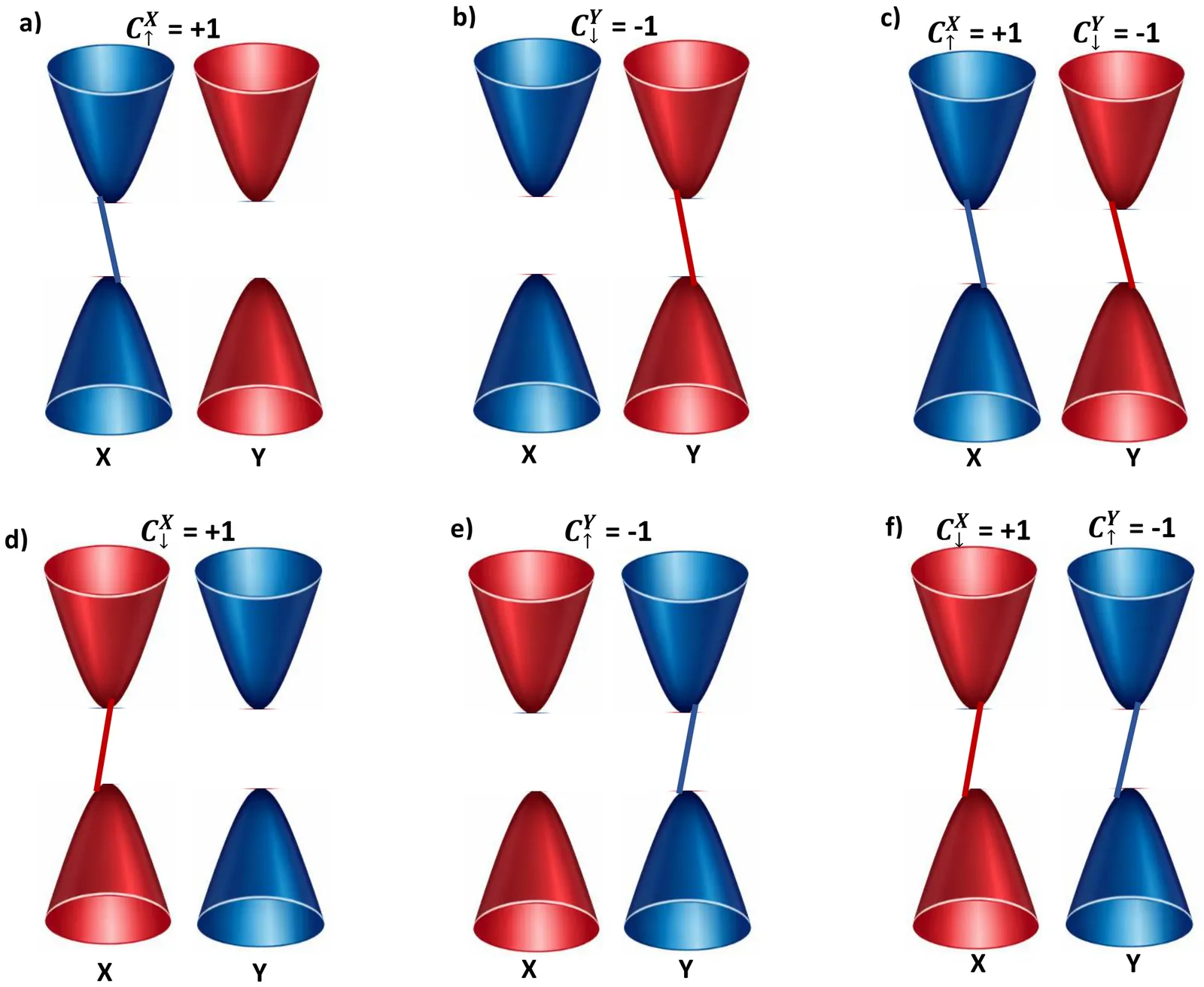
In two-dimensional lattice systems, massless Dirac fermions undergo doubling, leading to the cancellation of net chirality. We demonstrate that the recently discovered altermagnetism can induce a unique mass term, the altermagnetic mass term, which gaps out Dirac cones with one chirality while maintaining the other gapless, leading to the emergence of net chirality. The surviving gapless Dirac cones retain identical winding numbers and exhibit the quantum anomalous Hall effect in the presence of the trivial constant mass term. When subjected to an external magnetic field, the altermagnetic mass induces Landau level asymmetry in Dirac fermions, resulting in fully valley-polarized quantum Hall edge states. Our findings reveal that Dirac fermions with the altermagnetic mass harbor rich physical phenomena warranting further exploration.
Critically analyzing recent STM and transport experiments [Z. Ge, et al, arXiv:2510.12009] on 2D electron systems in the presence of random quenched impurities, we argue that the resulting low-density putative "solid" phase reported experimentally is better described as an Anderson solid with the carriers randomly spatially localized by impurities than as a Wigner solid where the carriers form a crystal due to an interaction-induced spontaneous breaking of the translational symmetry. In strongly disordered systems, the resulting solid is amorphous, which is adiabatically connected to the infinite disorder Anderson fixed point rather than the zero disorder Wigner crystal fixed point.
Compensated magnetic orders that can split the spin-degeneracy of electronic bands have become a very active field of research. As opposed to spin-orbit coupling, the splitting resulting from these "altermagnets" is not a small relativistic correction and, in contrast to ferromagnets, not accompanied by a net magnetization and large stray fields. In particular, the theoretical analysis of the interplay of altermagnetism and superconductivity has taken center stage, while experimental investigations of their coexistence remain in their infancy. We here study heterostructures consisting of Nb thins films interfaced with the $T_1$ and $T_2$ phases of Mn$_3$Pt. These non-collinear magnetic states can be thought of as descendants from the same altermagnetic order in the absence of spin-orbit coupling. We demonstrate the non-trivial impact on the superconducting state of Nb, which exhibits a zero-field superconducting diode effect, despite the compensated ($T_2$) and nearly-compensated ($T_1$) magnetic order; the diode efficiencies can reach large values (up to 50$\%$). The diode effect is found to be highly sensitive to the form of the magnetic order, illustrating its potential as a symmetry probe. The complex magnetic field and temperature dependence hint at a rich interplay of multiple contributing mechanisms. Our results define a new materials paradigm for dissipationless spintronics and magnetization-free diode functionality, while motivating further exploration of non-collinear altermagnetic superconductors.
Altermagnets have recently emerged as a distinct class of magnetic systems that exhibit spin splitting of electronic bands while retaining zero net magnetization. This unique combination makes them a promising platform for time-reversal symmetry-breaking superconducting phenomena, although identifying concrete material platforms remains an important open challenge. Here, we develop a theory for the superconducting diode effect observed experimentally in a Mn$_3$Pt-superconductor heterostructure. Using both a symmetry analysis and model calculations on the breathing kagome lattice, we show how the altermagnetic spin textures in Mn$_3$Pt generate a spin splitting of the electronic bands that remains magnetization-free even in the presence of spin-orbit coupling and, upon taking into account the proximity coupling across the interface, produces a superconducting diode effect. We also demonstrate that the angular dependence of the critical current provides a probe of the magnetic order. We hope that our work will contribute to the understanding and further discovery of candidate materials for novel altermagnet-superconductor hybrid devices.
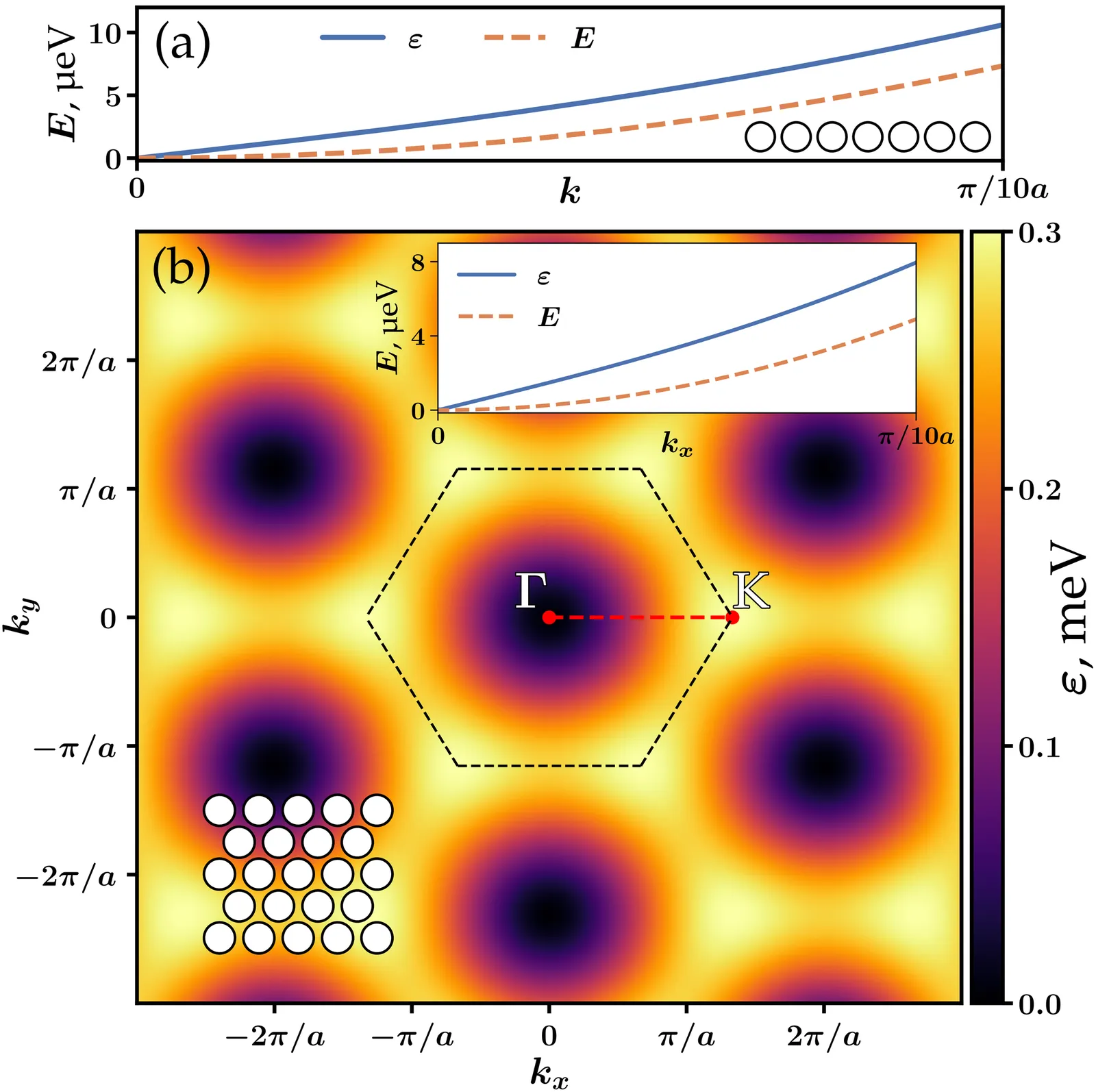
Spin waves (magnons) in 2D materials have received increasing interest due to their unique states and potential for tunability. However, many interesting features of these systems, including Dirac points and topological states, occur at high frequencies, where experimental probes are limited. Here, we study a crystal formed by patterning a hexagonal array of holes in a perpendicularly magnetized thin film. Through simulation, we find that the magnonic band structure imitates that of graphene, but additionally has some kagome-like character and includes a few flat bands. Surprisingly, its nature can be understood using a 9-band tight-binding Hamiltonian. This clear analogy to 2D materials enables band-gap engineering in 2D, topological magnons along 1D phase boundaries, and spectrally isolated modes at 0D point defects. Interestingly, the 1D phase boundaries allow access to the valley degree of freedom through a magnonic analog of the quantum valley-Hall insulator. These approaches can be extended to other magnonic systems, but are potentially more general due to the simplicity of the model, which resembles existing results from electron, phonon, photon, and cold atom systems. This finding brings the physics of spin waves in 2D materials to more experimentally accessible scales, augments it, and outlines a few principles for controlling magnonic states.
AlYN and AlScN have recently emerged as promising nitride materials that can be integrated with GaN to form two-dimensional electron gases (2DEGs) at heterojunctions. Electron transport properties in these heterostructures have been enhanced through careful design and optimization of epitaxial growth conditions. In this work, we report for the first time Shubnikov-de Haas (SdH) oscillations of 2DEGs in AlYN/GaN and AlScN/GaN heterostructures, grown by metal-organic chemical vapor deposition. SdH oscillations provide direct access to key 2DEG parameters at the Fermi level: (1) carrier density, (2) electron effective mass (m* ~ 0.24 me for AlYN/GaN and m* ~ 0.25 me for AlScN/GaN), and (3) quantum scattering time (~ 68 fs for AlYN/GaN and ~ 70 fs for AlScN/GaN). These measurements of fundamental transport properties provide critical insights for advancing emerging nitride semiconductors for future high-frequency and power electronics.
We investigate an intrinsic step-jamming phenomenon at the nanometer scale on Kardar-Parisi-Zhang (KPZ)-like kinetically roughened crystal surfaces that arises during interface-limited steady crystal growth or retreat. Monte Carlo simulations using the Metropolis algorithm on a restricted solid-on-solid (RSOS) lattice model demonstrate that intrinsic step jamming persists on surfaces below 20 nm. In the present model, transport processes such as surface and volume diffusion are excluded, as are elastic interactions, step-step repulsion or attraction, and stoichiometric effects. We show that intrinsic step jamming arises from asymmetric fluctuations in atomic attachment and detachment driven by biased transition probabilities under the SOS restriction, leading to collective step congestion. Asymmetric fluctuations also determine whether adatom or hole clusters grow or recede. This mechanism bears close similarity to jamming phenomena in the asymmetric simple exclusion process (ASEP), including multi-lane variants. In contrast, symmetric thermal fluctuations generate adatom or hole clusters on terraces, thereby suppressing intrinsic step jamming. Possible routes to suppress intrinsic step jamming, including experimentally accessible strategies, are also discussed.
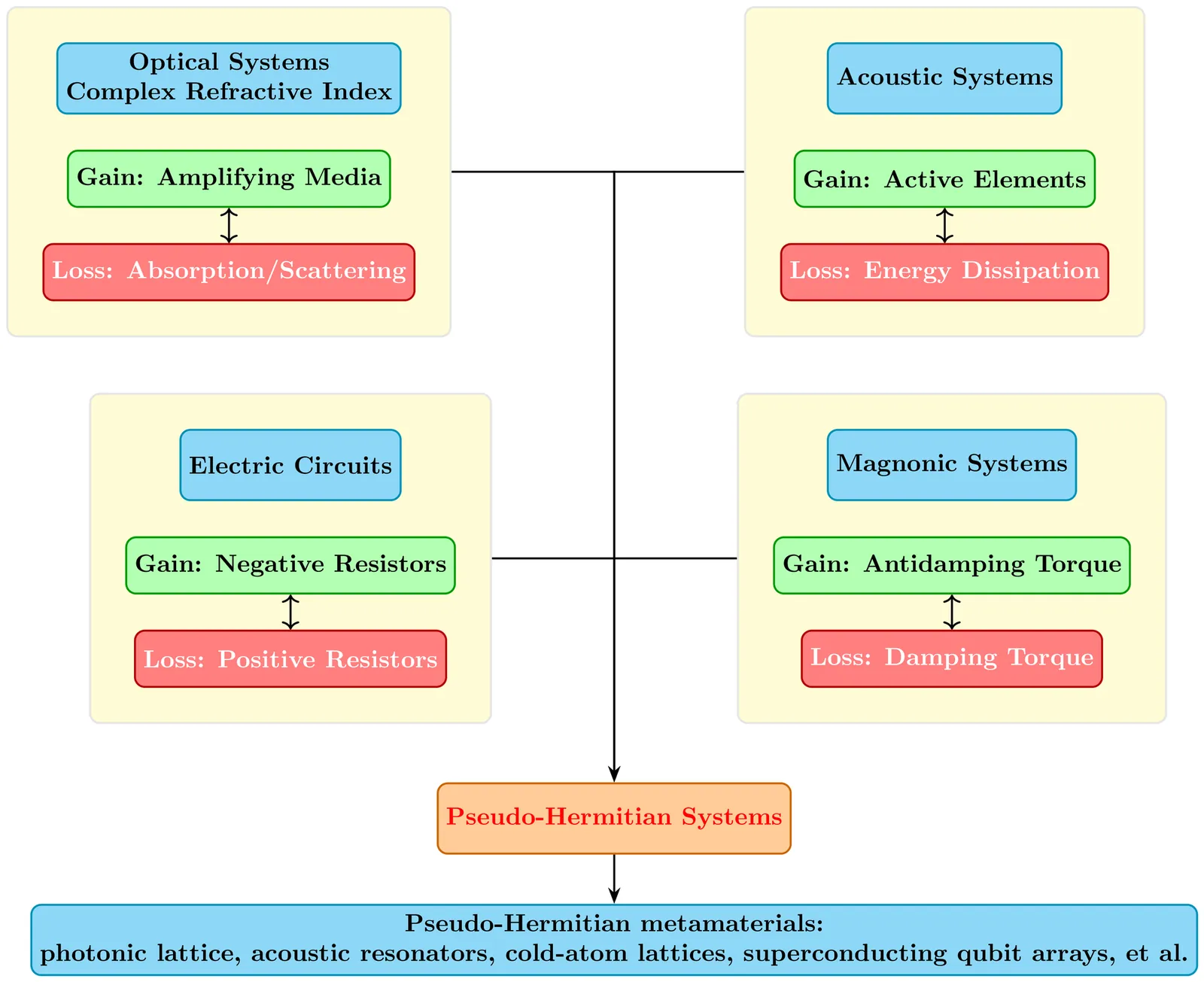
Two-dimensional topological insulators protected by nonlocal symmetries or with fragile topology usually do not admit robust in-gap edge modes due to the incompatibility between the symmetry and the boundary. Here, we show that in a parity-time (PT) symmetric system robust in-gap topological edge modes can be stably induced by non-Hermitian couplings that spontaneously break the PT symmetry of the eigenstates. The topological edge modes traverse the imaginary spectral gap between a pair of fragile topological bands, which is opened by the presence of the non-Hermitian perturbation. We demonstrate that the net number of resulting in-gap modes is protected by an operator version of anomaly cancellation that extends beyond the Hermitian limit. The results imply that loss and gain can in principle drive fragile topological phenomena to stable topological phenomena.
Quantum valley Hall-based topological phases have been attracting attention across diverse fields as a robust platform for wave guidance due to their high compatibility with engineering frameworks. Combining three representative boundary types enables topological waveguides with flexible designability and enhanced functionality. However, one of the three, namely the armchair boundary, has long been limited by inter-valley scattering, resulting in weak topological protection and severely restricting its use in practical devices. This long-standing constraint is a major barrier to realizing broadly applicable topological waveguide systems. Here, to address this challenge toward a broadly applicable design framework for topological waveguides, we experimentally demonstrate that topological adiabatic geometry implemented in a micro electromechanical system suppresses valley mixing. We found that the adiabaticity enhances immunity to defects and increases the transmission efficiency of the armchair boundary. As the adiabaticity increases, topological protection is recovered over an increasingly broad portion of the bulk band gap, extending from low to high frequencies. Furthermore, we show that the recovery of protection in the adiabatic armchair boundary enables waves to propagate through 90^° and 150^°-bent waveguides by coupling with other interface geometries. Suppressing valley mixing via adiabaticity paves the way for a universal design framework for topological waveguides and for restoring robust topological characteristics across a wide range of wave phenomena.
We investigate the inverse Edelstein effect in a non-homogeneous system consisting of a ferromagnetic layer coupled to a Rashba two-dimensional electron gas. Within a semiclassical Boltzmann framework, we derive analytical expressions for the charge and spin currents and analyze their dependence on key parameters such as the chemical potential and the Rashba coupling strength. We show how interfacial exchange and spin-orbit interactions jointly control the efficiency of spin-to-charge conversion, leading to distinct regimes characterized by qualitatively different transport responses. A central outcome of our work is the availability of closed-form analytical results, which provide direct physical insight and enable a transparent and quantitative benchmarking with experiments on complex oxide interfaces, such as LaAlO$_3$/SrTiO$_3$.
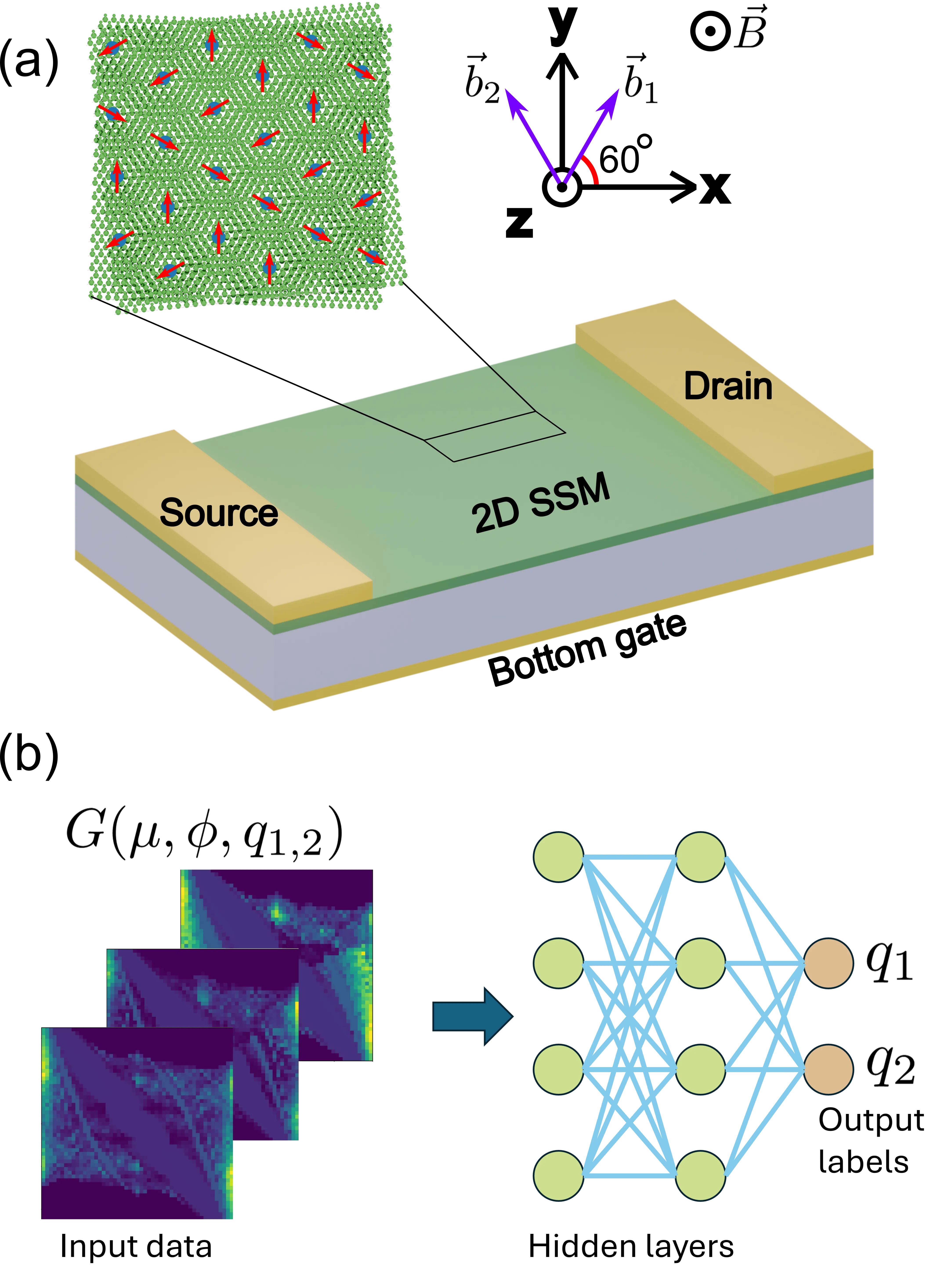
We propose a neural network-based model capable of learning the broad landscape of working regimes in quantum dot simulators, and using this knowledge to autotune these devices - based on transport measurements - toward obtaining Majorana modes in the structure. The model is trained in an unsupervised manner on synthetic data in the form of conductance maps, using a physics-informed loss that incorporates key properties of Majorana zero modes. We show that, with appropriate training, a deep vision-transformer network can efficiently memorize relation between Hamiltonian parameters and structures on conductance maps and use it to propose parameters update for a quantum dot chain that drive the system toward topological phase. Starting from a broad range of initial detunings in parameter space, a single update step is sufficient to generate nontrivial zero modes. Moreover, by enabling an iterative tuning procedure - where the system acquires updated conductance maps at each step - we demonstrate that the method can address a much larger region of the parameter space.
We present a device-level design for a two-qubit module based on phonon-coupled germanium (Ge) hole-spin qubits operating at $1$-$4~\mathrm{K}$. Building on prior work on phonon-engineered Ge qubits and phononic-crystal (PnC) cavities, we specify a lithography-ready layout that integrates two gate-defined hole-spin qubits in a strained Ge quantum well with a GHz PnC defect mode that mediates a coherent phonon-based interaction. We detail the SiGe/Ge heterostructure, PnC cavity design, and a compatible nanofabrication process flow, including the gate stack, membrane patterning and release, and RF/DC wiring. We further develop a readout architecture combining spin-to-charge conversion with RF reflectometry on a proximal charge sensor, supported by a cryogenic RF chain optimized for operation at $1$-$4~\mathrm{K}$. Finally, we outline the cryogenic measurement environment, tuning procedures, and a stepwise benchmarking program targeting single-qubit control, phonon-bandgap suppression of relaxation channels, and resolvable phonon-mediated two-qubit coupling. The resulting module provides a scalable template for medium-range coupling of Ge hole-spin qubits and connects materials and phonon engineering with circuit-level readout, enabling future experimental demonstrations of entangling gates, Bell-state generation, and phonon-enabled quantum sensing.
We investigate the non-Hermitian Kitaev chain with non-reciprocal hopping amplitudes and asymmetric superconducting pairing. We work out the symmetry structure of the model and show that particle-hole symmetry (PHS) is preserved throughout the entire parameter regime. As a consequence of PHS, the topological phase transition point of a finite open chain coincides with that of the periodic (infinite) system. By explicitly constructing the zero-energy wave functions (Majorana modes), we show that Majorana modes necessarily occur as reciprocal localization pairs accumulating on opposite boundaries, whose combined probability density exhibits an exact cancellation of the non-Hermitian skin effect for the zero energy modes. Excited states, by contrast, generically display skin-effect localization, with particle and hole components accumulating at opposite ends of the system. At the level of bulk topology, we further construct a $\mathbb{Z}_2$ topological invariant in restricted parameter regimes that correctly distinguishes the topological and trivial phases. Finally, we present the topological phase diagram of the non-Hermitian Kitaev chain across a broad range of complex parameters and delineate the associated phase boundaries.
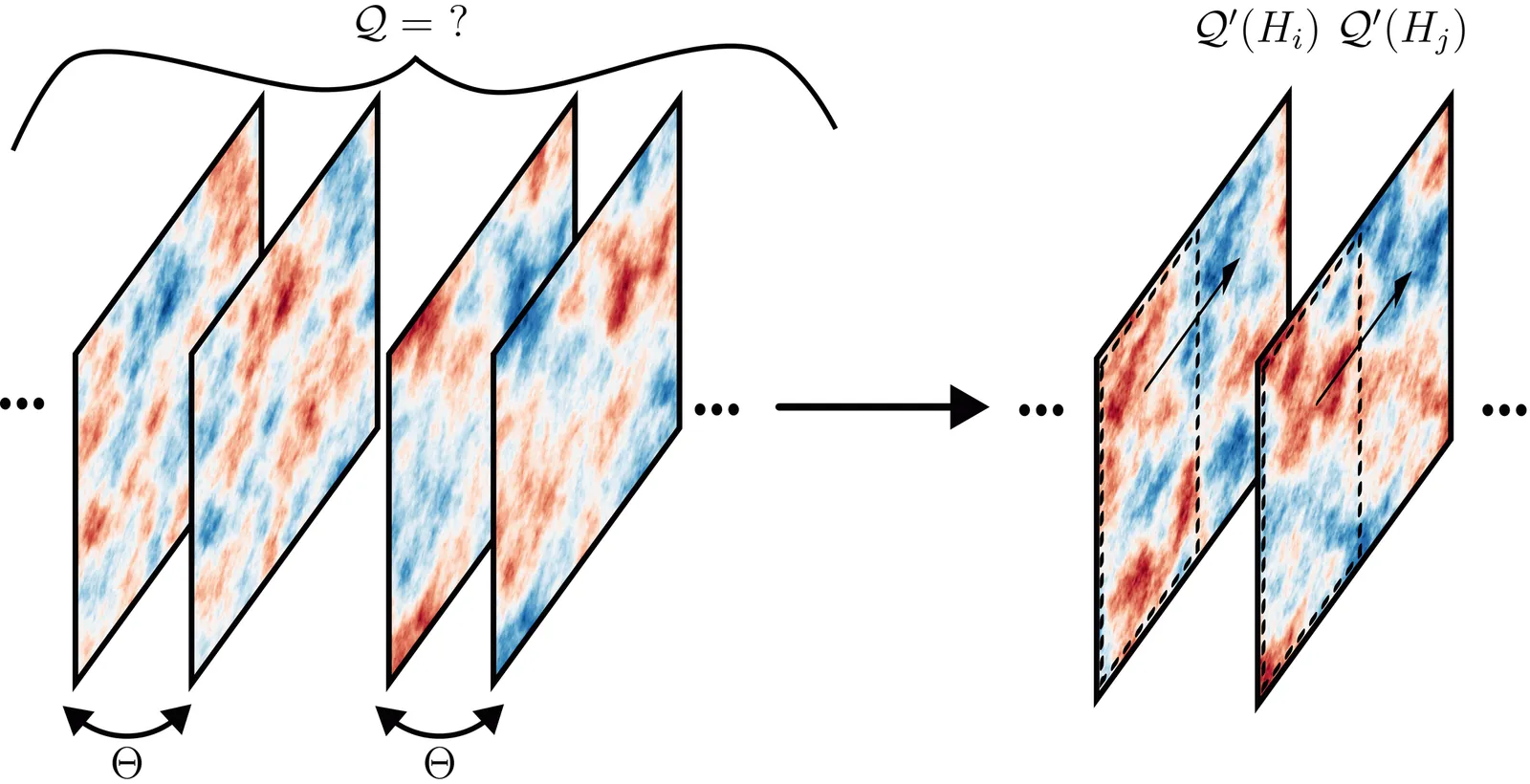
The standard approach to characterizing topological matter, computing topological invariants, fails when the symmetry protecting the topological phase is preserved only on average in a disordered system. Because topological invariants rely on enforcing the symmetry exactly, they can overcount phases by incorrectly identifying certain non-robust features as robust. Moreover, in intrinsic statistical topological insulators, enforcing the symmetry exactly is guaranteed to destroy the topological phase. We define a mapping that addresses both issues and provides a unified framework for describing disordered topological matter.