Trending in Condensed Matter
Stochastic Thermodynamics for Autoregressive Generative Models: A Non-Markovian Perspective
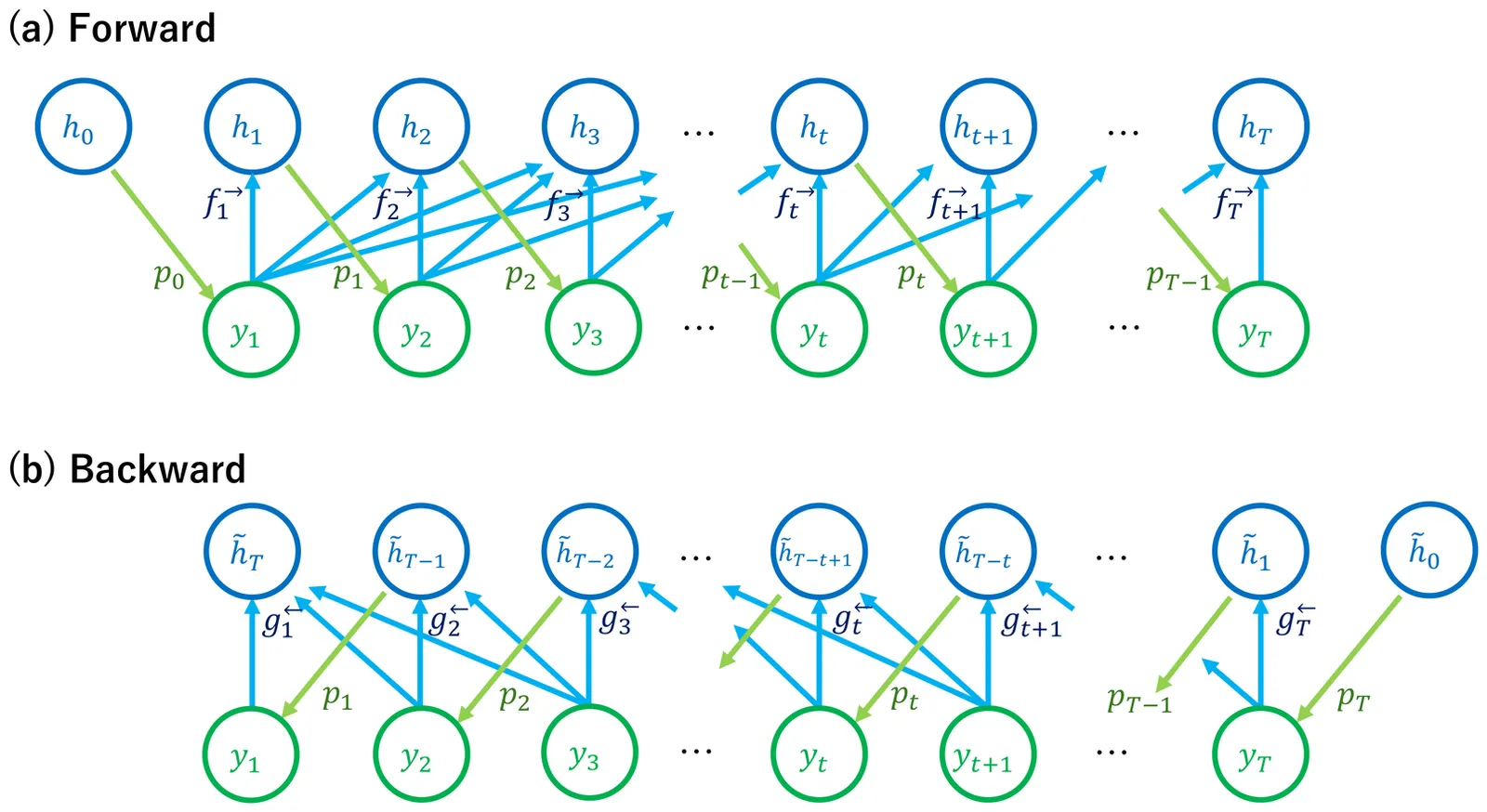
Autoregressive generative models -- including Transformers, recurrent neural networks, classical Kalman filters, state space models, and Mamba -- all generate sequences by sampling each output from a deterministic summary of the past, producing genuinely non-Markovian observed processes. We develop a general theoretical framework based on stochastic thermodynamics for this class of architectures and introduce the entropy production, which can be efficiently estimated from sampled trajectories without exponential sampling cost despite the non-Markovian nature of the observed dynamics. As a proof-of-concept experiment for a large language model (LLM), we evaluate the token-level and sentence-level entropy production for a pre-trained Transformer-based model, GPT-2. We also demonstrate the framework in the linear Gaussian case, where the model reduces to the Kalman innovation representation and the entropy production admits an analytical expression. We further show that the entropy production decomposes exactly into non-negative per-step contributions in terms of retrospective inference, and each of those terms further splits into information-theoretically meaningful terms: a compression loss and a model mismatch. Our results establish a bridge between stochastic thermodynamics and modern generative models, and provide a starting point for quantifying irreversibility in a broad class of highly non-Markovian processes such as LLMs.
2604.07867
Apr 2026Statistical Mechanics
Pseudogapped Fermi liquids from emergent quasiparticles
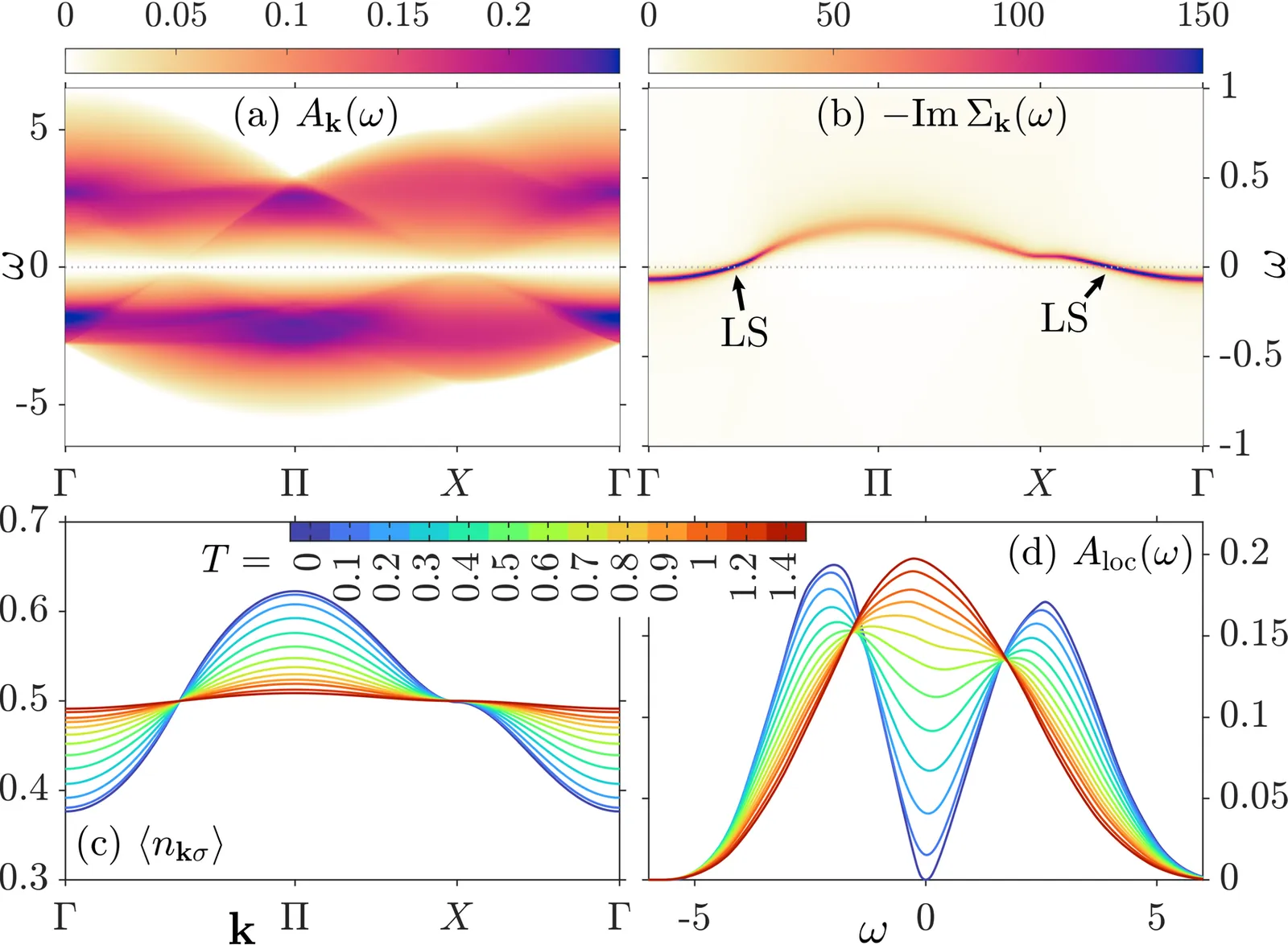
We propose an interacting model that is exactly solvable in any spatial dimension and gives rise to a Fermi liquid (FL) featuring a pseudogapped (PG) single-particle spectral function and a vanishing quasiparticle (QP) weight at half-filling, without invoking Mott physics. The PG originates from a purely fermionic mechanism through emergent QPs arising from a correlated hopping interaction. By employing an appropriate coherent-state basis, we derive a Gaussian path-integral representation of the partition function, which enables systematic treatments of deviations from the Gaussian limit using standard many-body techniques, such as diagrammatic perturbation theory or mean-field theory. We explicitly demonstrate and discuss several properties of the exactly solvable limit on the square lattice, including the mechanism for temperature-dependent PG opening, the singular behavior of the self-energy, the violation of the Luttinger sum rule, and the role of Luttinger and Fermi surfaces. Finally, we explore quantum phase transitions between PG-FLs and Landau FLs.
2603.15560
Mar 2026Strongly Correlated Electrons
 2603.15361
Motivic GUT Part I: Grand Unified Theory of Topological Order
In the series of papers Motivic GUT Part I: Grand Unified Theory of Topological Order, Motivic GUT Part II: Grand Unified Theory of Symmetry-Protected Topological Order, and Motivic GUT Part III: Grand Unified Theory of Symmetry-Enriched Topological Order, we propose a unified framework for gapped topological phases based on the Grothendieck-Kitaev-Lurie motivic yoga. In the spirit of Grothendieck's rising sea, we argue that the classification problem can only be properly addressed after identifying the correct higher-categorical ambient space in which its full richness appears. In this first part, we propose a unified definition of gapped topological order in spatial dimension $d$ in terms of unitary fusion $(\infty,d)$-categorical data, considered up to Morita equivalence. For $d=2$, this framework recovers unitary modular tensor categories. For $d>2$, it naturally leads to genuinely higher-categorical structures. This suggests a Copernican turn in the theory of topological phases: many existing classification schemes should be reinterpreted as lower-categorical shadow realizations of intrinsically $\infty$-categorical objects.
2603.15361
Mar 2026Strongly Correlated Electrons
Non-Abelian fractional Chern insulators from an exactly solvable two-body model
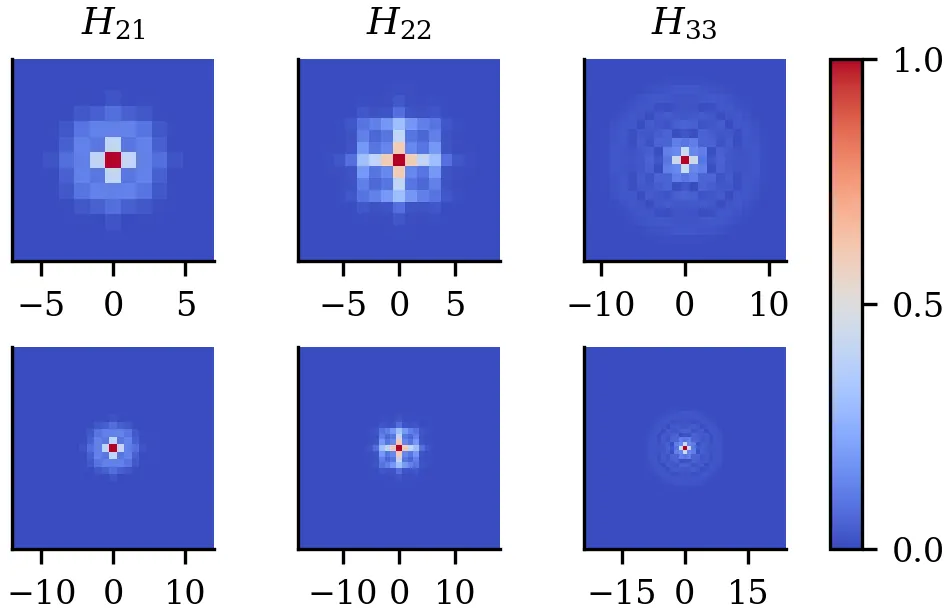
We construct a class of lattice Hamiltonians whose single-particle spectrum consists of an arbitrary number of exactly degenerate flat bands that reproduce the analytic structure of the first $p$ Landau levels restricted to the lattice. When combined with local bosonic contact interactions, these models become exactly solvable frustration-free parent Hamiltonians for FCIs that realize both Abelian and non-Abelian parton quantum Hall states. Using exact diagonalization, we confirm the expected zero-mode counting for variants of the model stabilizing the bosonic Jain-21 state as well as the non-Abelian 22- and 33-states, which are expected to support Ising- and Fibonacci-type anyons, respectively. Our construction provides an exactly solvable lattice realization of multi Landau-level physics and offers a new framework for studying FCIs with Chern number $C > 1$. More broadly, it supplies a family of idealized lattice models that capture the analytic structure of continuum Landau levels while remaining compatible with exponentially local hopping.
2603.14722
Mar 2026Strongly Correlated Electrons
Disentangling Tensor Network States with Deep Neural Network
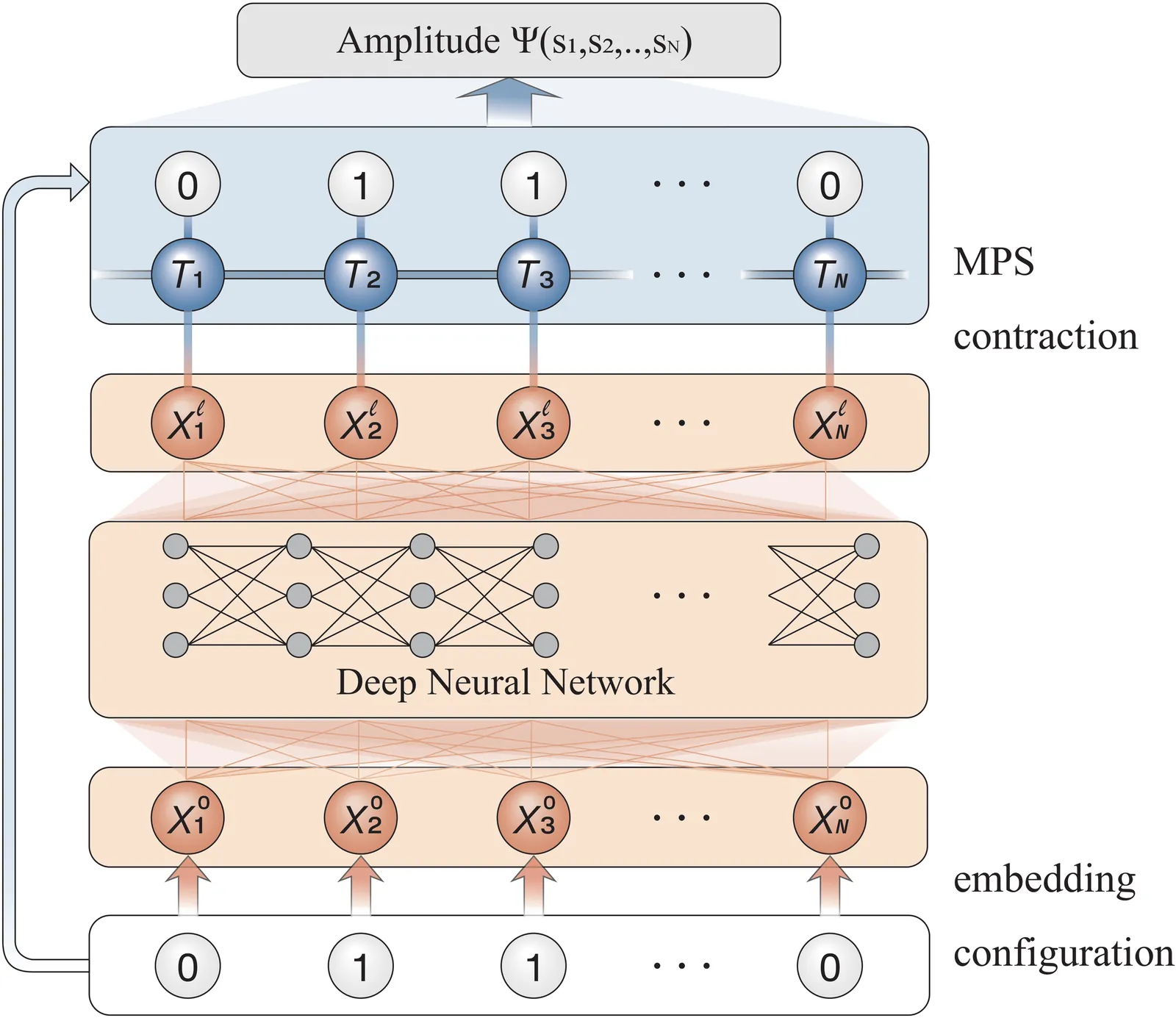
We introduce Neural Tensor Network States ($ν$TNS), a variational many-body wave-function ansatz that integrates deep neural networks with tensor-network architectures. In the $ν$TNS framework, a neural network serves as a disentangler of the wave-function, transforming the physical degrees of freedom into renormalized variables with much less entanglement. The renormalized state is then efficiently encoded by a back-flow tensor network. This construction yields a compact yet highly expressive representation of strongly correlated quantum states. Using convolutional neural networks combined with matrix product states as a concrete implementation, we obtain state-of-the-art variational energies for the spin-$1/2$ $J_1$-$J_2$ Heisenberg model on the square lattice at the highly frustrated point $J_2/J_1=0.5$, for systems up to $20\times 20$ with periodic boundary conditions. Finite-size scaling of spin, dimer, and plaquette correlations exhibits power-law decay without magnetic or valence-bond long-range order, consistent with a gapless quantum spin-liquid ground state at that point.This $ν$TNS framework is flexible and naturally extensible to other neural and tensor-network structures, offering a general platform for investigating strongly correlated quantum many-body systems.
2603.14425
Mar 2026Strongly Correlated Electrons
Entanglement Measure Response to Modular Flow and Chiral Topological Phases
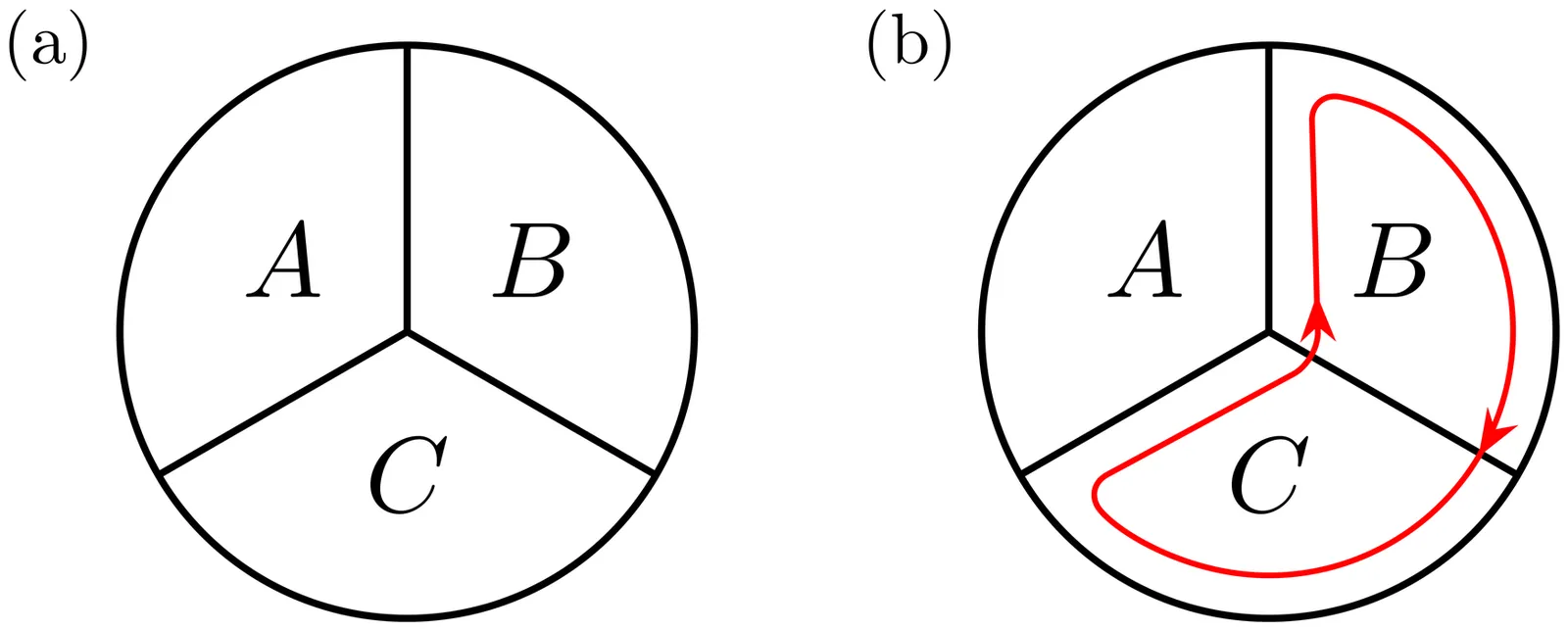
Recent years have witnessed significant progress in the entanglement-based characterization of quantum phases of matter. The primary objects of interest are the reduced density matrix and its associated entanglement Hamiltonian. As intrinsic properties of a quantum state, these quantities theoretically determine all experimentally accessible local observables. In this work, we investigate the response of two entanglement measures to the real-time dynamics driven by the entanglement Hamiltonian--a process known as modular flow. We demonstrate that our results can be unified into a single generating function, $\langleρ_{AB}^α\mathrm{e}^{λ{Q}_{AB}}\mathrm{e}^{μ{Q}_{BC}}ρ_{BC}^β\rangle$. This function is of independent interest as it represents a generalization of the recently proposed Rényi modular commutator. In appropriate limits, this function yields the response of Rényi entropy and its charged version, which we find to be uniquely determined by chiral topological invariants, specifically the chiral central charge and the Hall conductance. Our analytical findings are validated through two independent approaches: (i) free fermion systems using the real-space Chern number formula, and (ii) an effective field theory treatment that regularizes the entanglement cut via chiral conformal field theory. Both methods yield consistent results.
2603.09717
Mar 2026Strongly Correlated Electrons

Non-equilibrium bosonization of fractional quantum Hall edges
Edge transport serves as a powerful probe of remarkable low-energy properties of fractional quantum Hall states, including the anyonic character of their excitations. Here, we develop a theory of fractional quantum Hall edges driven out of equilibrium, which is based on the Keldysh action for the bosonized chiral Luttinger liquid. With this non-equilibrium FQH bosonization framework, we first consider a single-mode Laughlin edge and analyze the full counting statistics of charge, the quasiparticle Green's functions, and tunneling transport properties through a quantum point contact, allowing for generic edge excitations. We then extend the formalism to multi-mode edges with inter-mode interactions, and explore, with focus on the $ν=4/3$ and $ν=2/3$ edges as paradigmatic examples, how interaction-induced fractionalization of anyons modifies the edge dynamics and the associated transport observables. While the full counting statistics probes the fractionalized charge of the excitations, the Green's functions and tunneling transport are governed by mutual braiding phases of fractionalized excitations and tunneling quasiparticles. We emphasize in particular the effect of interaction-induced fractionalization on the Fano factor $F$ and the differential Fano factor $F_d$, observables that can be measured experimentally. Our formalism, which provides a unified framework for non-equilibrium transport in FQH edges and Luttinger liquids, permits extracting anyonic braiding information from non-equilibrium edge-transport experiments, and paves the way to various extensions, including more involved experimental geometries and edge structures.
2603.05088
Mar 2026Mesoscale and Nanoscale Physics
Tracking the Lithiation State of Li$_x$Si from Machine-Learned XPS Binding Energies
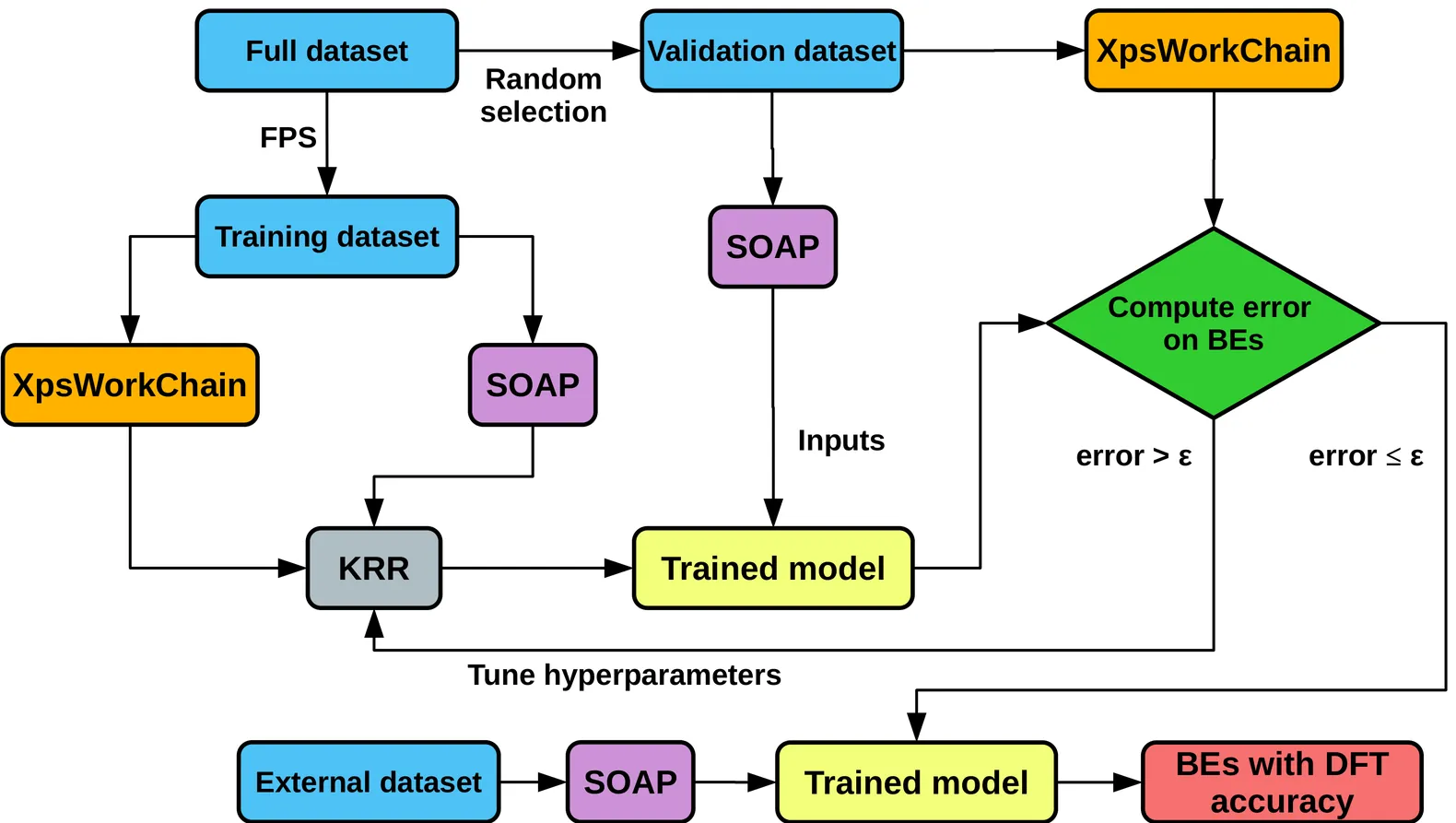
X-ray Photoelectron Spectroscopy (XPS) is a powerful technique to probe chemical states and interfacial processes in battery materials, but a quantitative interpretation is often hindered by the complex, heterogeneous microstructures that form during operation and dominate electrochemical cycling. Silicon based anodes represent a paradigmatic example in Li batteries, as (de)lithiation proceeds through the formation of strongly disordered Li$_x$Si phases and crystal-amorphous transformations that are hard to characterize. Here, we introduce a computational framework that combines machine-learning (ML) prediction of core-level binding energies to large-scale atomistic simulations -- Grand Canonical Monte Carlo (GCMC) complemented with molecular dynamics (MD), driven by a ML potential -- for a systematic sampling of lithiation states and local atomic environments. This approach yields stoichiometry maps that match the characteristic experimental trends observed in operando and ex situ XPS measurements, including the distinctive Si $2p$ spectroscopic signatures associated with the crystal-to-amorphous disordering driving early delithiation.
2602.23028
Feb 2026Materials Science
Dynamics of neural scaling laws in random feature regression with powerlaw-distributed kernel eigenvalues
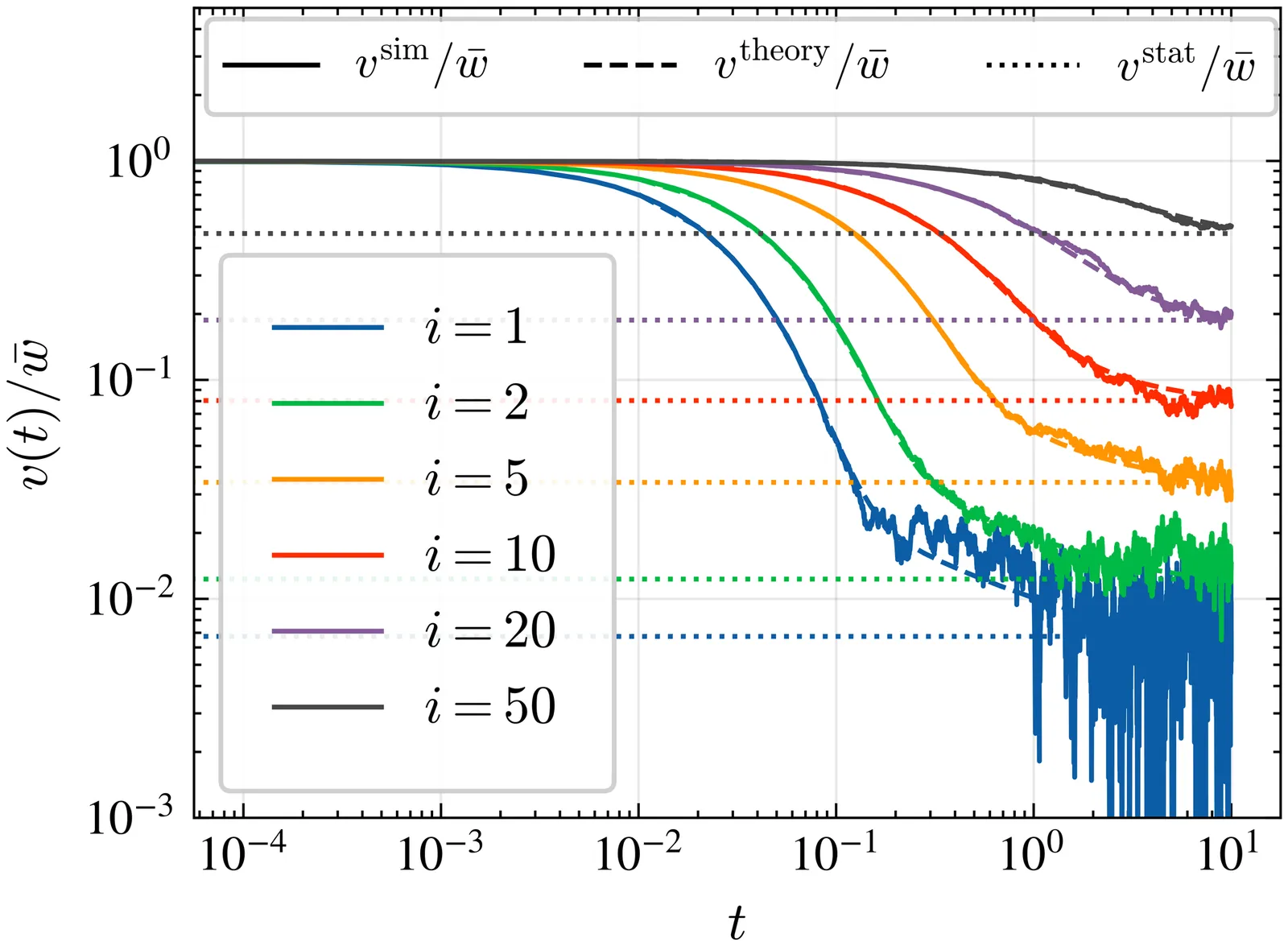
Training large neural networks exposes neural scaling laws for the generalization error, which points to a universal behavior across network architectures of learning in high dimensions. It was also shown that this effect persists in the limit of highly overparametrized networks as well as the Neural network Gaussian process limit. We here develop a principled understanding of the typical behavior of generalization in Neural Network Gaussian process regression dynamics. We derive a dynamical mean-field theory that captures the typical case learning dynamics: This allows us to unify multiple existing regimes of learning studied in the current literature, namely Bayesian inference on Gaussian processes, gradient flow with or without weight-decay, and stochastic Langevin training dynamics. Employing tools from statistical physics, the unified framework we derive in either of these cases yields an effective description of the high-dimensional microscopic behavior of networks dynamics in terms of lower dimensional order parameters. We show that collective training dynamics may be separated into the dynamics of N independent eigenmodes, those evolution equations are only coupled through collective response functions and a common statistics of an effective, independent noise. Our approach allows us to quantitatively explain the dynamics of the generalization error by linking spectral and dynamical properties of learning on data with power law spectra, including phenomena such as neural scaling laws and the effect of early stopping.
2602.23039
Feb 2026Disordered Systems and Neural Networks
Topological superconductivity with emergent vortex lattice in twisted semiconductors
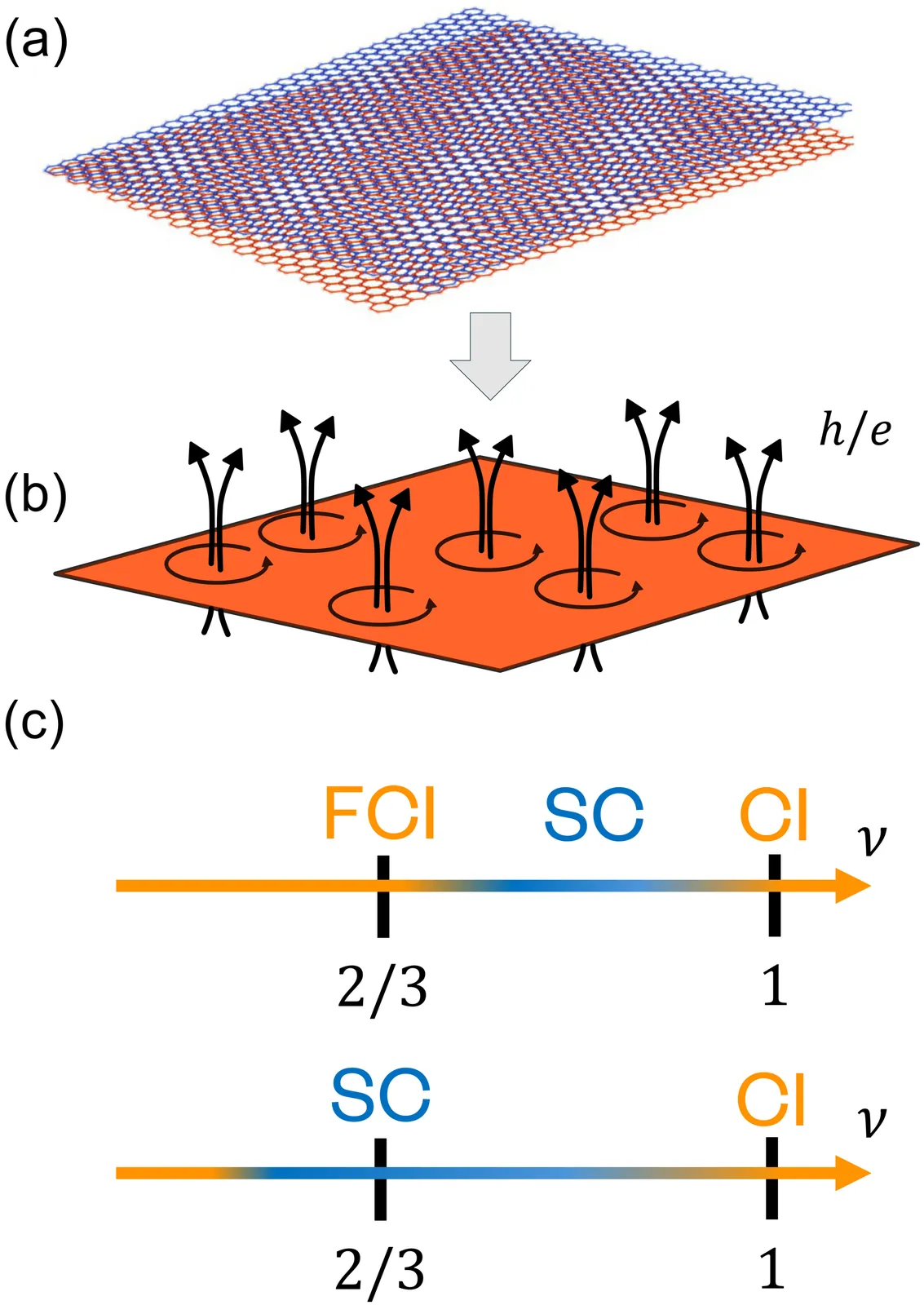
The coexistence of superconductivity and fractional quantum anomalous Hall (FQAH) effect has recently been observed in twisted MoTe$_2$ and theoretically demonstrated in a model of repulsively interacting electrons under an emergent magnetic field arising from the layer pseudospin texture in moiré superlattice. Here, we show that this superconducting state is a chiral $f$-wave superconductor hosting an array of $double$ vortices, which are induced by the emergent magnetic field with $h/e$ flux quanta per moiré unit cell. This superconducting vortex lattice state is topological and features Chern number $-1/2$, giving rise to a half-integer thermal Hall conductance. Our theory provides a common mechanism and unified understanding of FQAH and topological superconductivity, with a rich phase diagram controlled by the spatial modulation of the emergent magnetic field.
2602.15106
Feb 2026Superconductivity
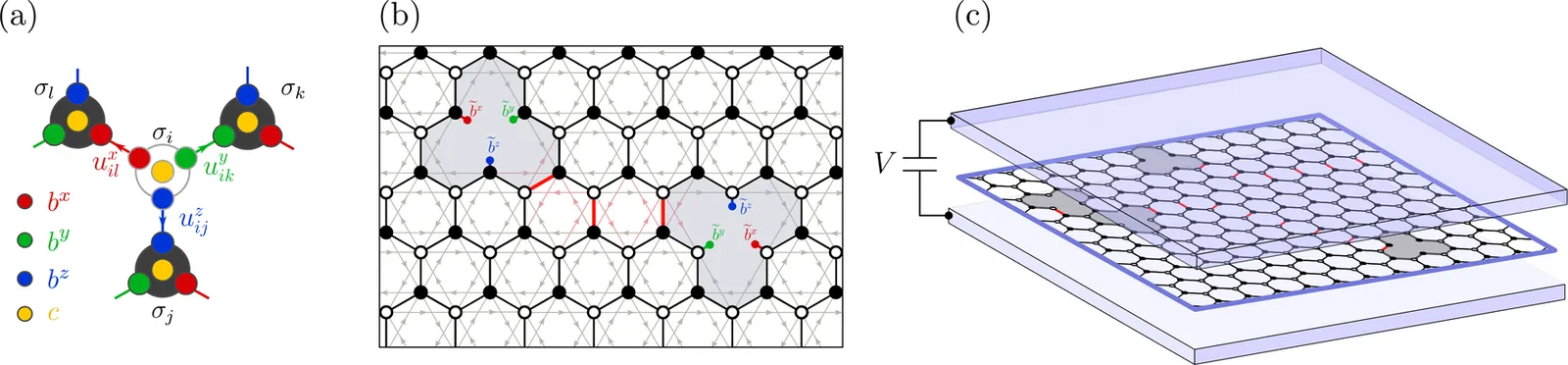
Majorana Signatures in Planar Tunneling through a Kitaev Spin Liquid
We propose a planar tunneling setup to probe vacancy-bound Majorana modes in the chiral Kitaev spin liquid. In this geometry, the inelastic tunneling conductance can be expressed directly in terms of real-space spin correlations, establishing a link between measurable spectra and the underlying fractionalized excitations. We show that spin vacancies host localized Majorana states that generate sharp near-zero-bias features, well separated from the continuum of bulk spin excitations. Compared to local STM measurements, the planar configuration naturally enhances the signal by coherently summing over multiple vacancies, reducing spatial resolution requirements. Our results demonstrate a realistic and scalable route to detect Majorana excitations in Kitaev materials.
2602.15020
Feb 2026Strongly Correlated Electrons
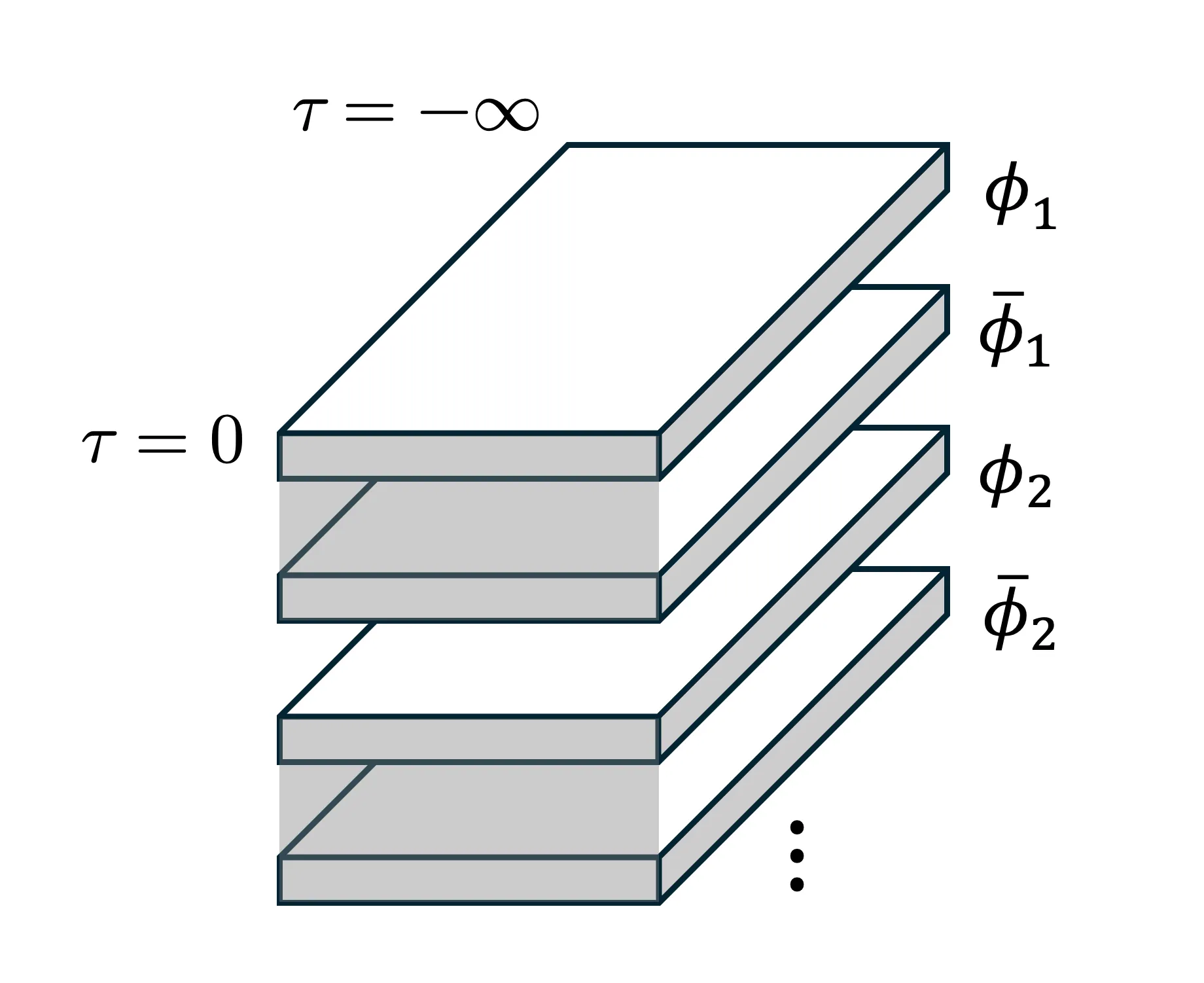
Entanglement negativity in decohered topological states
We investigate universal entanglement signatures of mixed-state phases obtained by decohering pure-state topological order (TO), focusing on topological corrections to logarithmic entanglement negativity and mutual information: topological entanglement negativity (TEN) and topological mutual information (TMI). For Abelian TOs under decoherence, we develop a replica field-theory framework based on a doubled-state construction that relates TEN and TMI to the quantum dimensions of domain-wall defects between decoherence-induced topological boundary conditions, yielding general expressions in the strong-decoherence regime. We further compute TEN and TMI exactly for decohered $G$-graded string-net states, including cases with non-Abelian anyons. We interpret the results within the strong one-form-symmetry framework for mixed-state TOs: TMI probes the total quantum dimension of the emergent premodular anyon theory, whereas TEN detects only its modular part.
2602.16597
Feb 2026Strongly Correlated Electrons
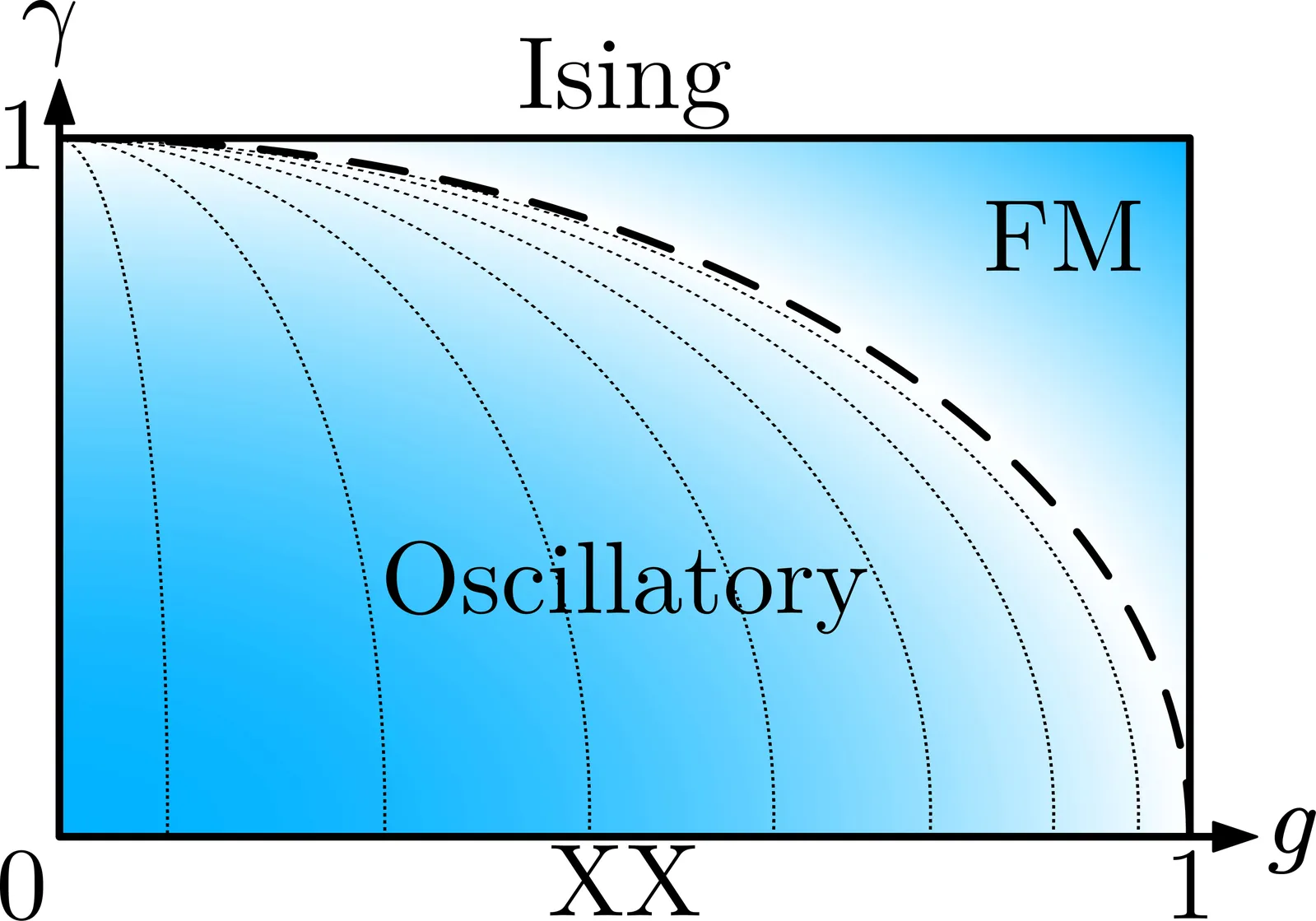
Giant bubbles of Fisher zeros in the quantum XY chain
We demonstrate an alternative approach based on complex-valued inverse temperature and partition function to probe quantum phases of matter with nontrivial spectra and dynamics. It leverages thermofield dynamics (TFD) to quantitatively characterize quantum and thermal fluctuations, and exploit the correspondence between low-energy excitations and Fisher zeros. Using the quantum XY chain in an external field as a testbed, we show that the oscillatory gap behavior manifests as oscillations in the long-time dynamics of the TFD spectral form factor. We also identify giant bubbles, i.e. large-scale closed lines, of Fisher-zeros near the gapless XX limit. They provide a characteristic energy scale that seems to contradict the predictions of the low energy theory of a featureless Luttinger liquid. We identify this energy scale and relate the motion of these giant bubbles with varying external field to the transfer of spectral weight from high to low energies. The deep connection between Fisher zeros, dynamics, and excitations opens up promising avenues for understanding the unconventional gap behaviors in strongly correlated many-body systems.
2602.05899
Feb 2026Strongly Correlated Electrons
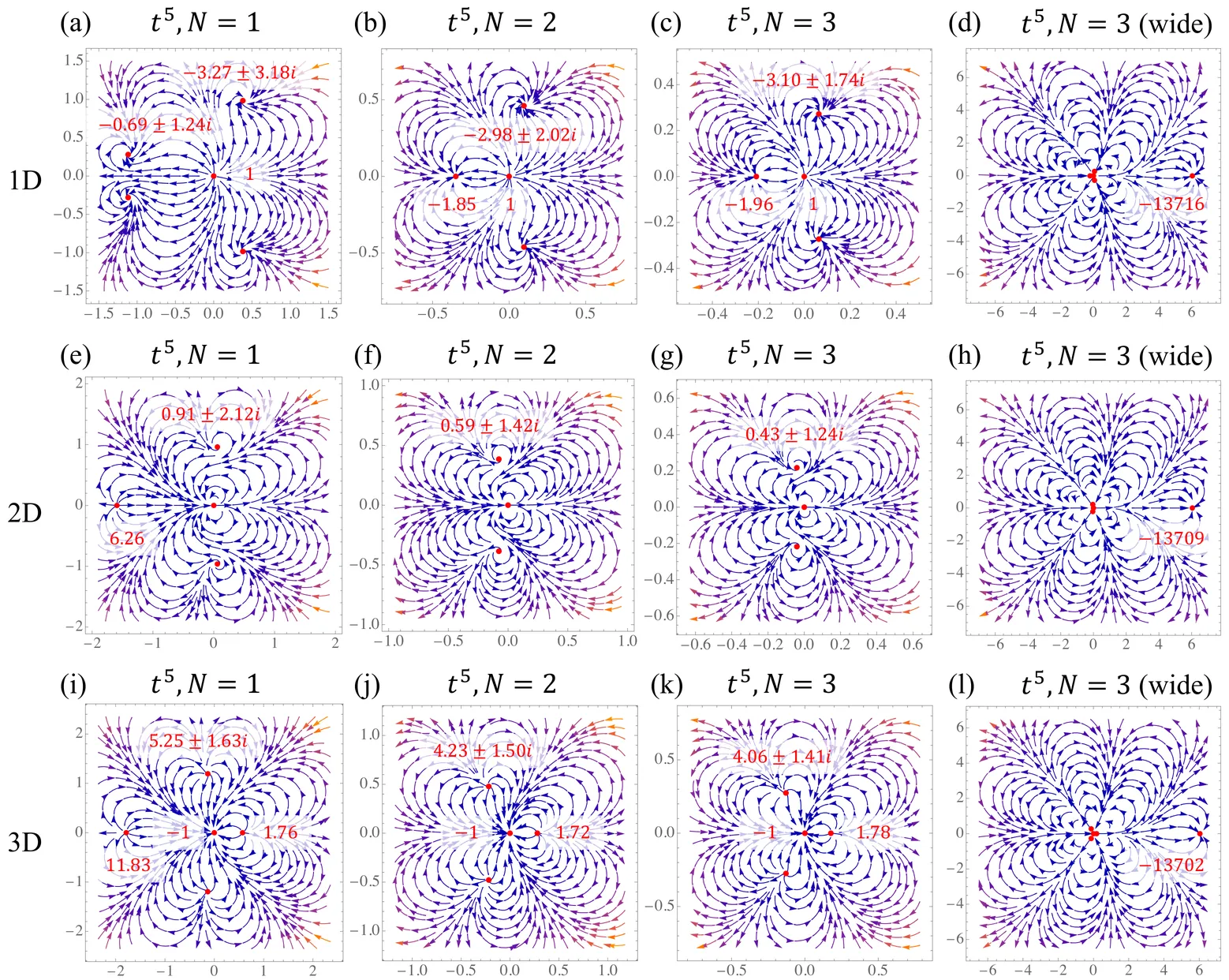
Complex nonlinear sigma model
Motivated by the recent interest in the criticality of open quantum many-body systems, we study nonlinear sigma models with complexified couplings as a general framework for nonunitary field theory. Applying the perturbative renormalization-group analysis to the tenfold symmetric spaces, we demonstrate that fixed points with complex scaling dimensions and critical exponents arise generically, without counterparts in conventional nonlinear sigma models with real couplings. We further clarify the global phase diagrams in the complex-coupling plane and identify both continuous and discontinuous phase transitions. Our work elucidates universal aspects of critical phenomena in complexified field theory.
2601.20166
Jan 2026Statistical Mechanics
Exactly solvable topological phase transition in a quantum dimer model
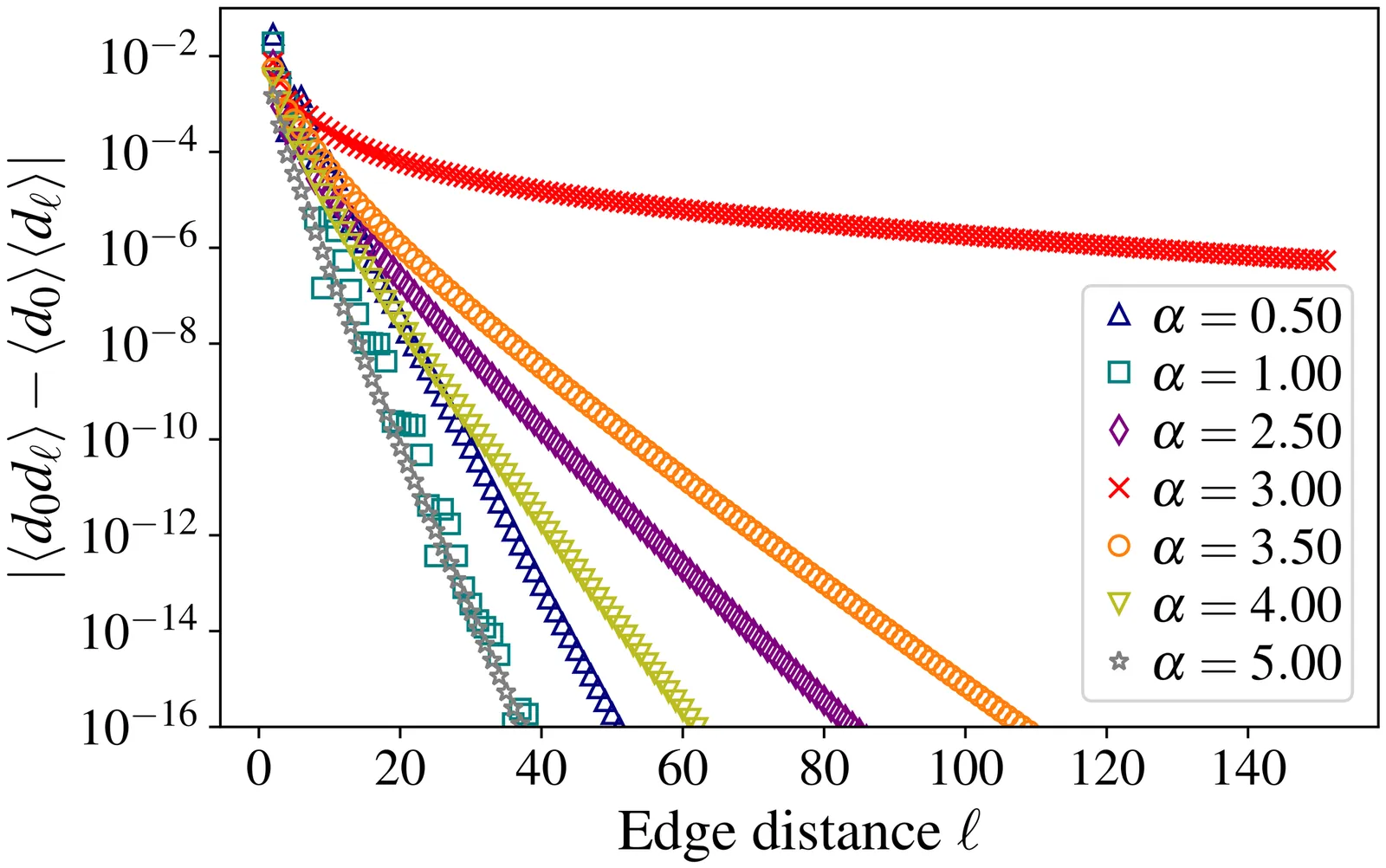
We introduce a family of generalized Rokhsar-Kivelson (RK) Hamiltonians, which are reverse-engineered to have an arbitrary edge-weighted superposition of dimer coverings as their exact ground state at the RK point. We then focus on a quantum dimer model on the triangular lattice, with doubly-periodic edge weights. For simplicity we consider a $2\times1$ periodic model in which all weights are set to one except for a tunable horizontal edge weight labeled $α$. We analytically show that the model exhibits a continuous quantum phase transition at $α=3$, changing from a topological $\mathbb{Z}_2$ quantum spin liquid ($α<3$) to a columnar ordered state ($α>3$). The dimer-dimer correlator decays exponentially on both sides of the transition with the correlation length $ξ\propto1/|α-3|$ and as a power-law at criticality. The vison correlator exhibits an exponential decay in the spin liquid phase, but becomes a constant in the ordered phase. We explain the constant vison correlator in terms of loops statistics of the double-dimer model. Using finite-size scaling of the vison correlator, we extract critical exponents consistent with the 2D Ising universality class.
2601.15377
Jan 2026Strongly Correlated Electrons
Resolution of Topology and Geometry from Momentum-Resolved Spectroscopies
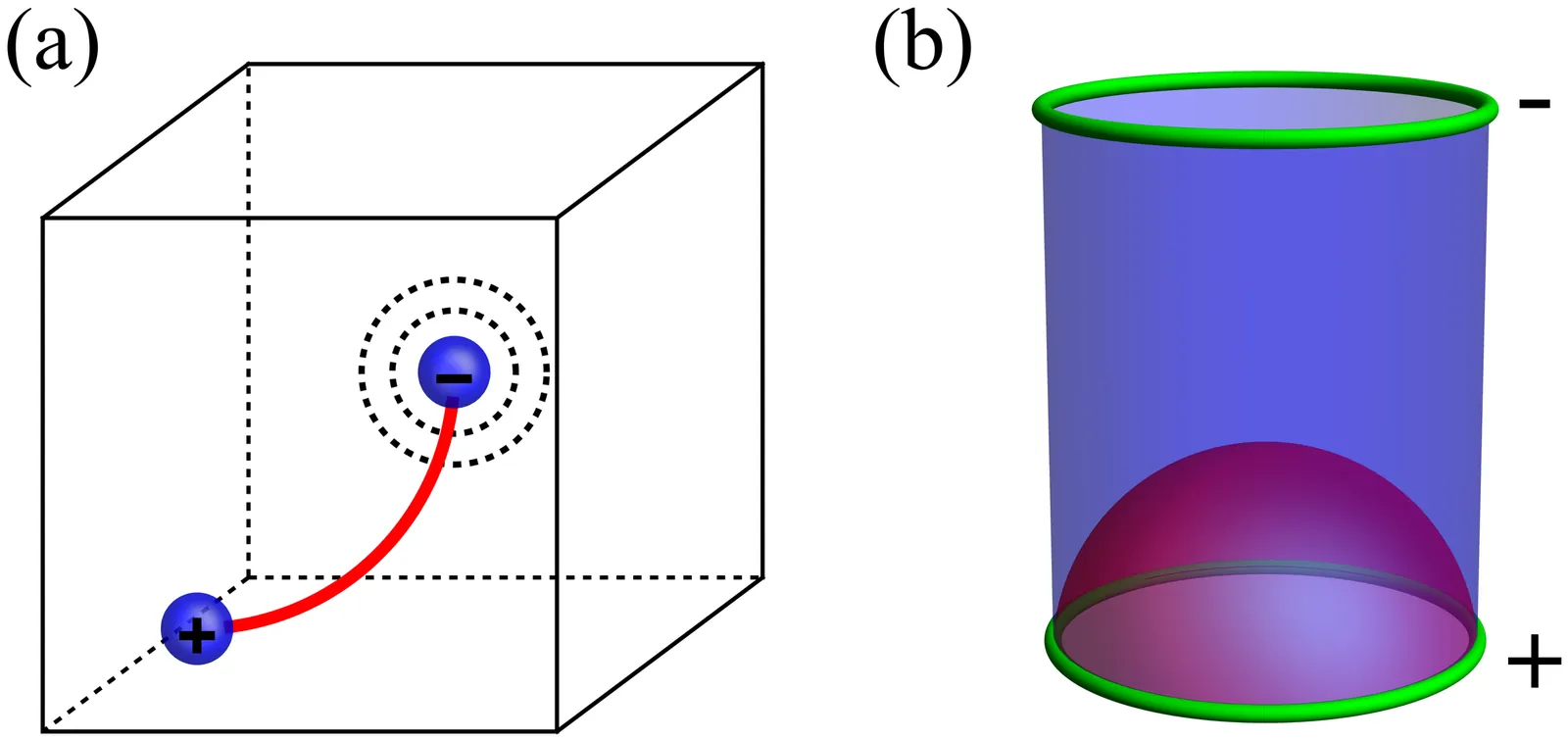
Extracting the complete quantum geometric and topological character of Bloch wavefunctions from experiments remains a challenge in condensed matter physics. Here, we resolve this by introducing the "wavefunction form factor" (WFF) matrix, a quantity directly constructible from intensities in momentum- and energy-resolved spectroscopies like ARPES and INS. We demonstrate that band topology is encoded in "spectral nodes" -- momentum-space points where the WFF determinant vanishes, providing a direct readout of topological invariants via a topological selection rule. Furthermore, when the number of independent probes exceeds the number of the target bands, our framework yields an effective band projector. This enables the determination of Wilson loop spectra and the extraction of an effective quantum geometric tensor, providing a model-independent measurement of the non-Abelian Berry curvature and quantum metric as resolved by the experimental probes.
2601.10677
Jan 2026Mesoscale and Nanoscale Physics
Learning About Learning: A Physics Path from Spin Glasses to Artificial Intelligence
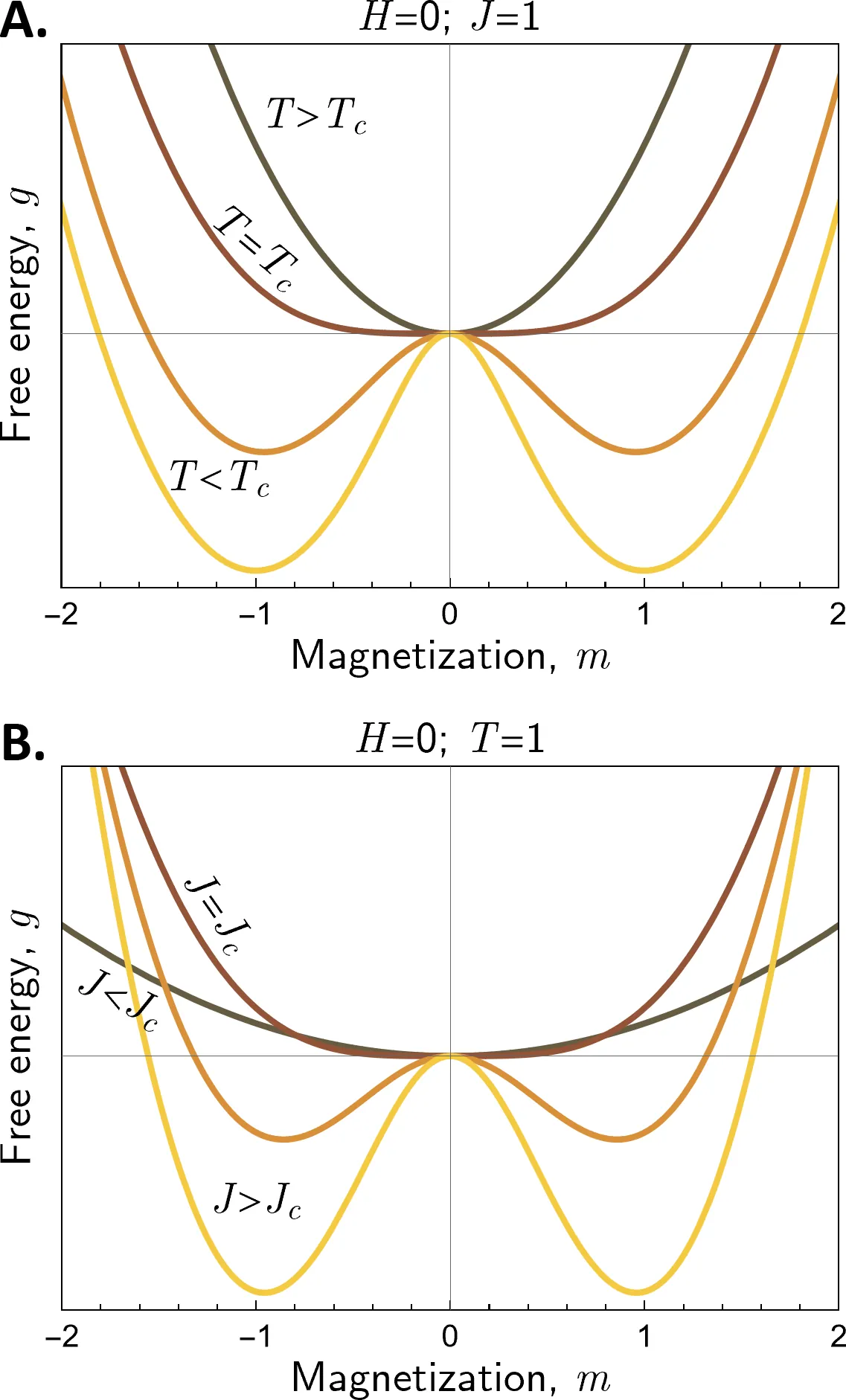
The Hopfield model, originally inspired by spin-glass physics, occupies a central place at the intersection of statistical mechanics, neural networks, and modern artificial intelligence. Despite its conceptual simplicity and broad applicability -- from associative memory to near-optimal solutions of combinatorial optimization problems -- it is rarely integrated into standard undergraduate physics curricula. In this paper, we present the Hopfield model as a pedagogically rich framework that naturally unifies core topics from undergraduate statistical physics, dynamical systems, linear algebra, and computational methods. We provide a concise and illustrated theoretical introduction grounded in familiar physics concepts, analyze the model's energy function, dynamics, and pattern stability, and discuss practical aspects of simulation, including a freely available simulation code. To support instruction, we conclude with classroom-ready example problems designed to mirror research practice. By explicitly connecting fundamental physics to contemporary AI applications, this work aims to help prepare physics students to understand, apply, and critically engage with the computational tools increasingly central to research, industry, and society.
2601.07635
Jan 2026Disordered Systems and Neural Networks
Large language models and the entropy of English
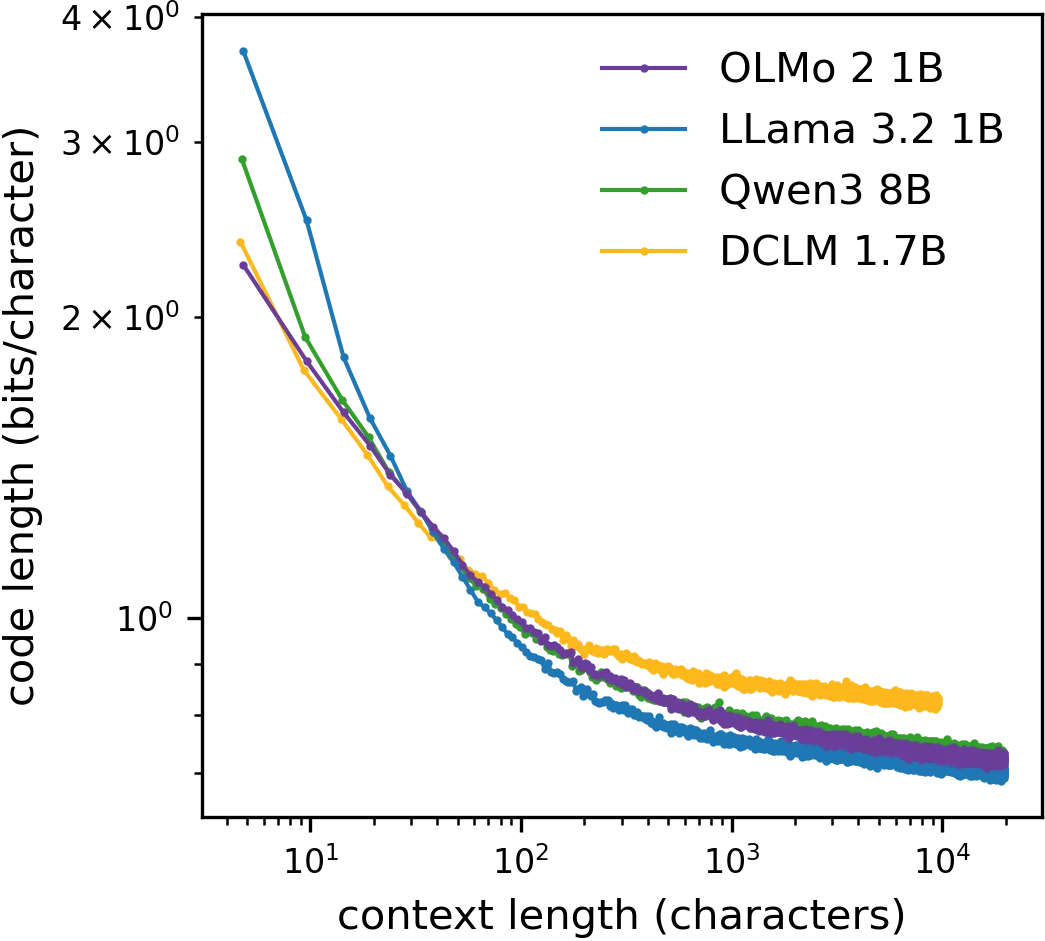
We use large language models (LLMs) to uncover long-ranged structure in English texts from a variety of sources. The conditional entropy or code length in many cases continues to decrease with context length at least to $N\sim 10^4$ characters, implying that there are direct dependencies or interactions across these distances. A corollary is that there are small but significant correlations between characters at these separations, as we show from the data independent of models. The distribution of code lengths reveals an emergent certainty about an increasing fraction of characters at large $N$. Over the course of model training, we observe different dynamics at long and short context lengths, suggesting that long-ranged structure is learned only gradually. Our results constrain efforts to build statistical physics models of LLMs or language itself.
2512.24969
Dec 2025Statistical Mechanics
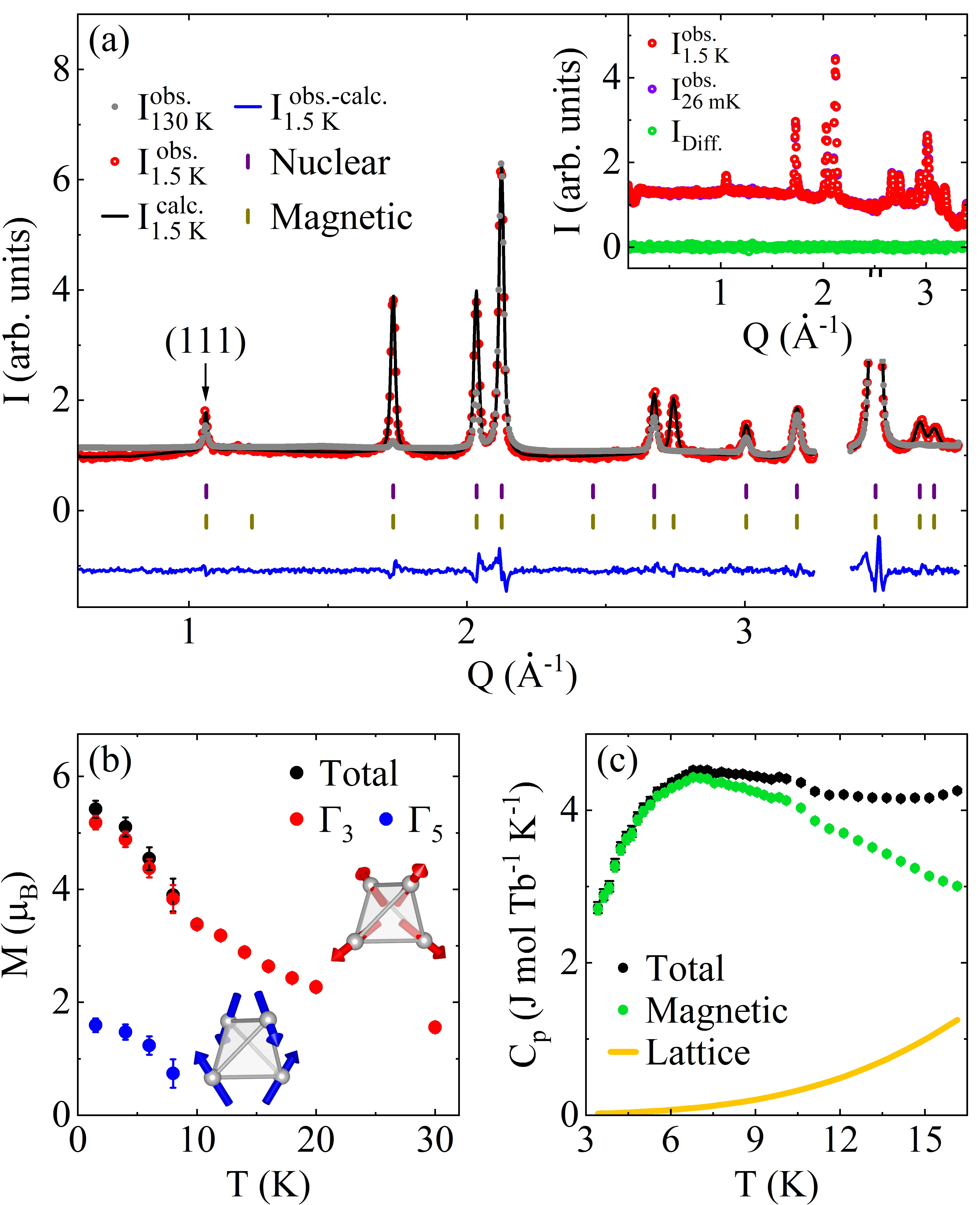
About the origin of the magnetic ground state of Tb$_{2}$Ir$_{2}$O$_{7}$
Magnetic-rare-earth pyrochlore iridates exhibit a rich variety of unconventional phases, driven by the complex interactions within and between the rare-earth and the iridium sublattices. In this study, we investigate the peculiar magnetic state of Tb$_{2}$Ir$_{2}$O$_{7}$, where a component of the Tb$^{3+}$ moment orders perpendicular to its local Ising anisotropy axis. By means of neutron diffraction and inelastic neutron scattering down to dilution temperatures, complemented by specific heat measurements, we show that this intriguing magnetic state is fully established at 1.5 K and we characterize its excitation spectrum across a broad range of energies. Our calculations reveal that bilinear interactions between Tb$^{3+}$ ions subjected to the Ir molecular field capture several key features of the experiments, but need to be supplemented to fully reproduce the observed behavior.
2601.00749
Jan 2026Strongly Correlated Electrons
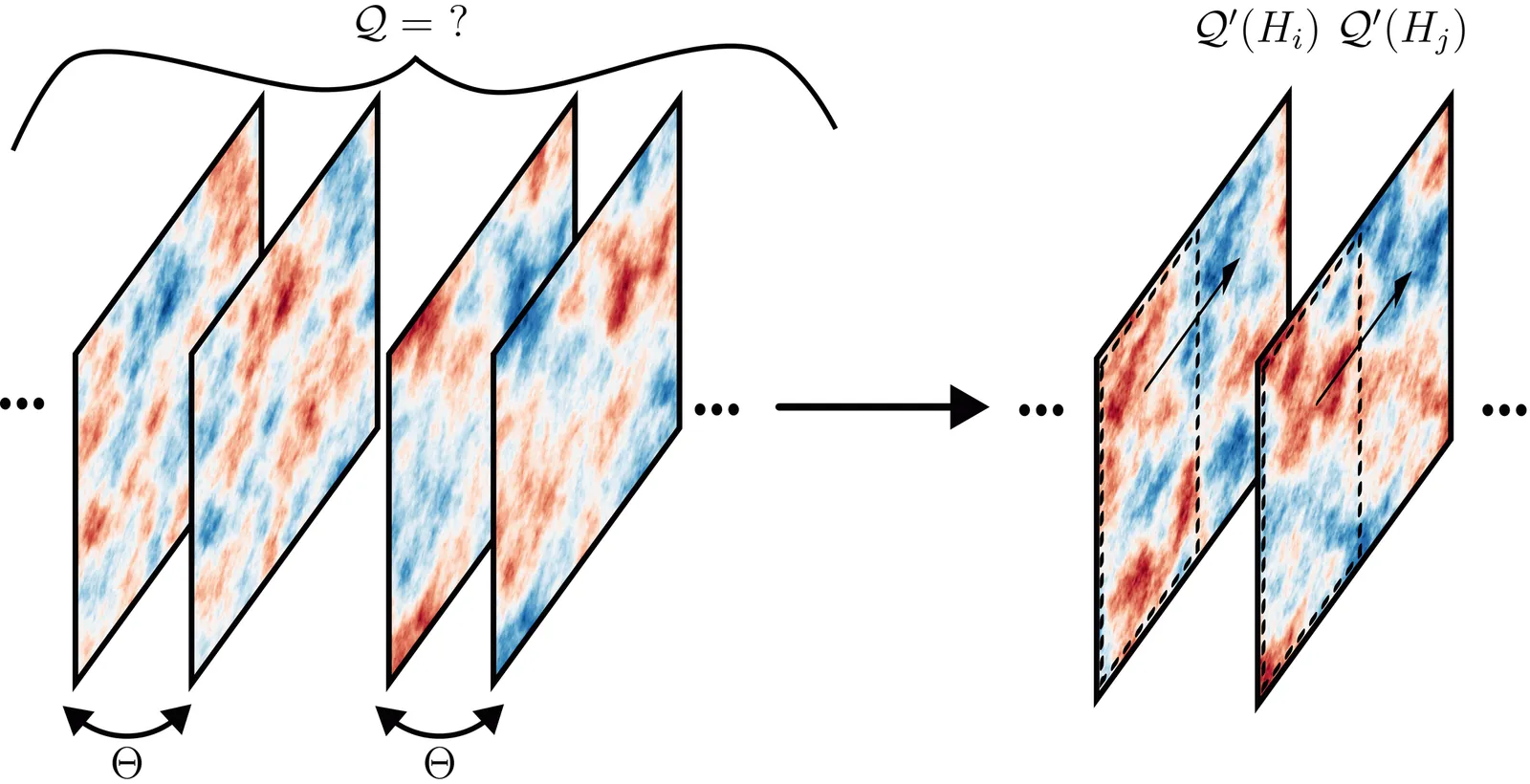
Symmetric approximant formalism for statistical topological matter
The standard approach to characterizing topological matter, computing topological invariants, fails when the symmetry protecting the topological phase is preserved only on average in a disordered system. Because topological invariants rely on enforcing the symmetry exactly, they can overcount phases by incorrectly identifying certain non-robust features as robust. Moreover, in intrinsic statistical topological insulators, enforcing the symmetry exactly is guaranteed to destroy the topological phase. We define a mapping that addresses both issues and provides a unified framework for describing disordered topological matter.
2601.00784
Jan 2026Mesoscale and Nanoscale Physics