725 papers
Determination of the ground state polarizability of $^{162}$Dy near 530 nm
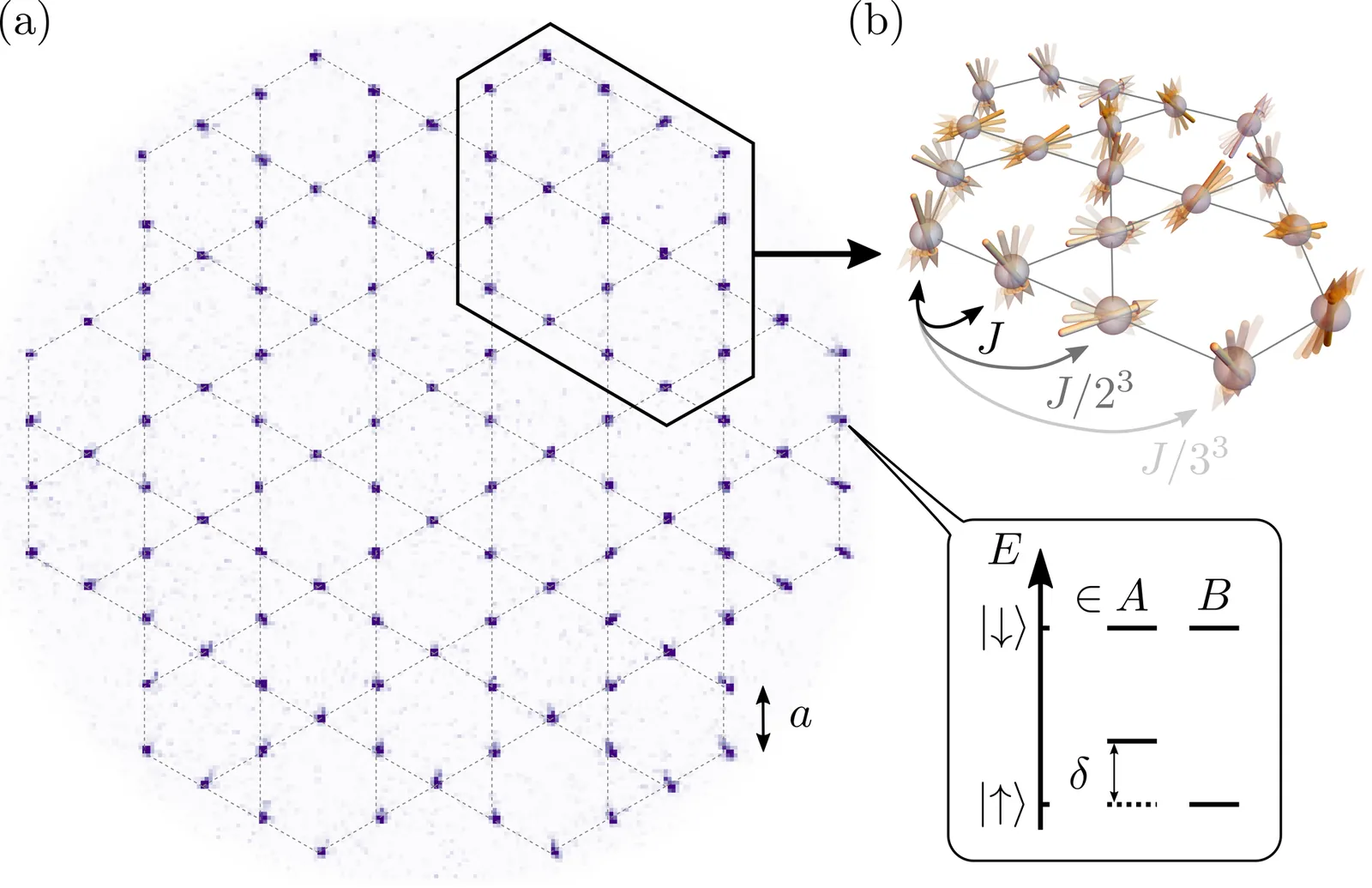
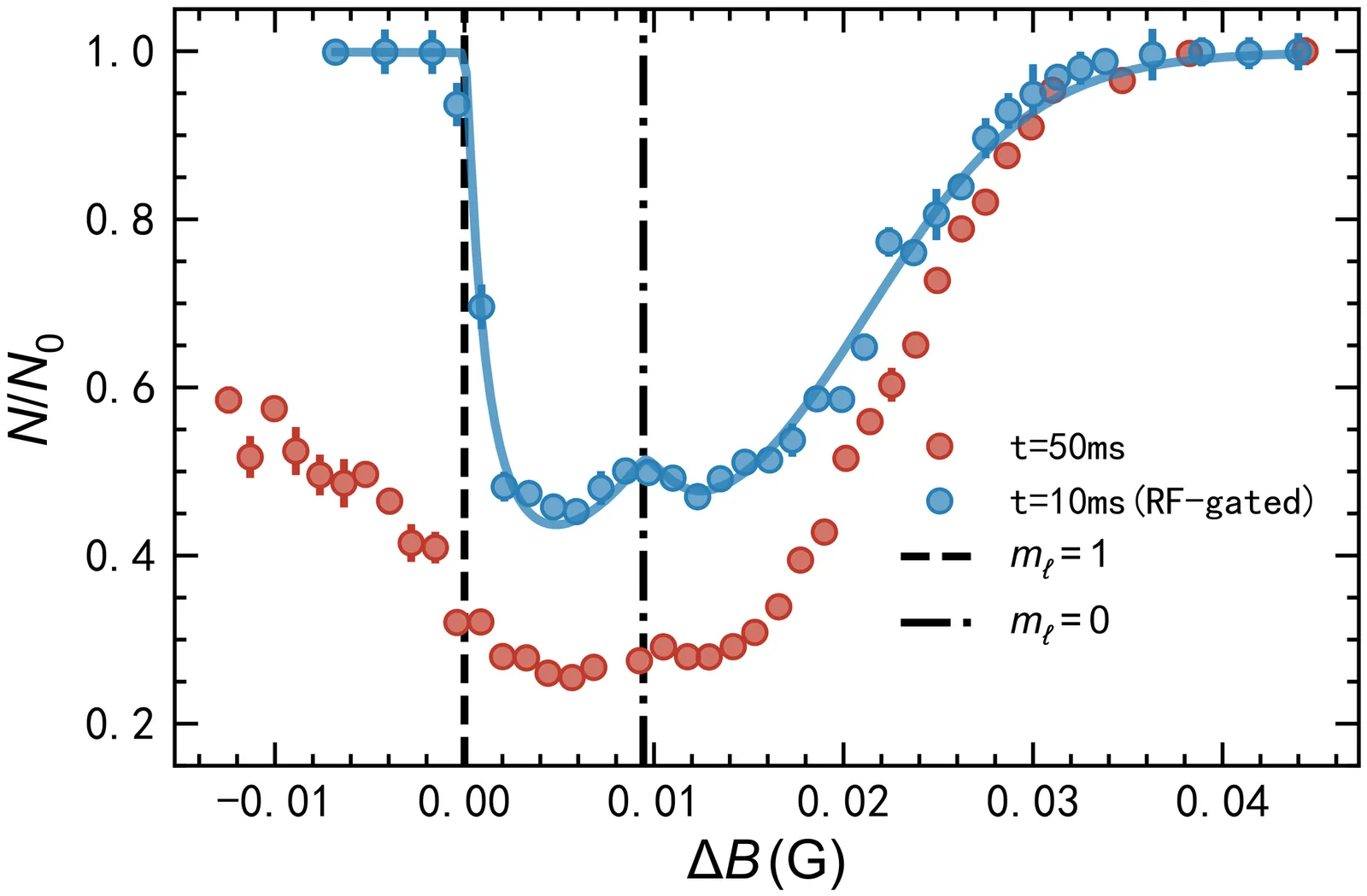
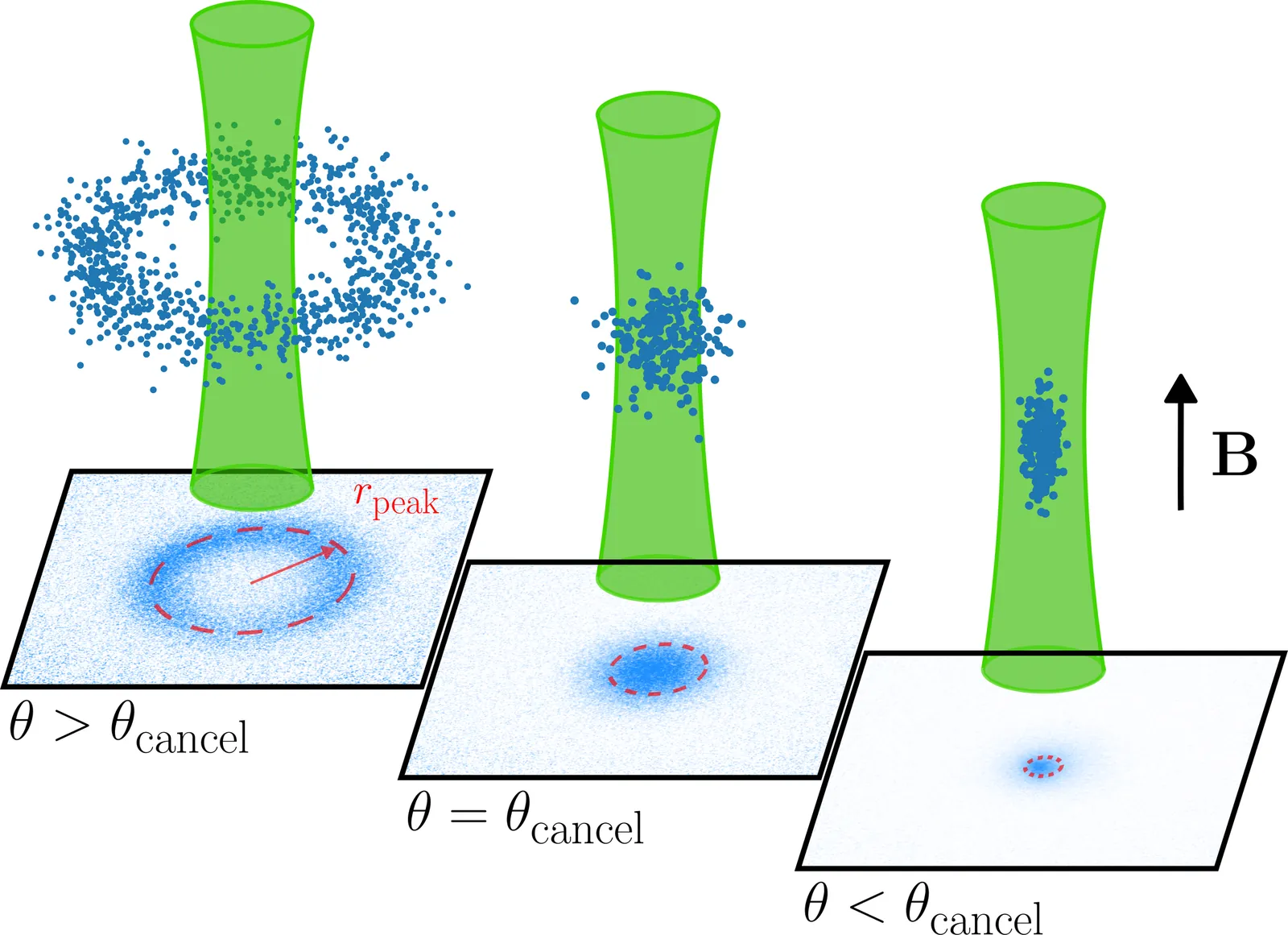
Open-shell lanthanide atoms, and dysprosium in particular, combine a large ground-state angular momentum with dense electronic spectra, making their dynamical polarizability strongly dependent on wavelength and internal state and therefore particularly challenging to characterize accurately. This issue has become especially relevant with the recent development of single-atom trapping of dysprosium in optical-tweezer arrays, where precise knowledge of the polarizability is needed to design optimized trapping architectures. Here, we exploit the strong spin-dependent light shift near the $J'=J-1$ intercombination line at 530.306 nm to determine the background scalar and vector polarizabilities of $^{162}$Dy in its ground state near this wavelength. Our measurements quantitatively agree with atomic-structure calculations and provide new insight into the contributions of nearby transitions in a spectral region relevant to emerging dysprosium tweezer platforms.
2604.03177Apr 2026
View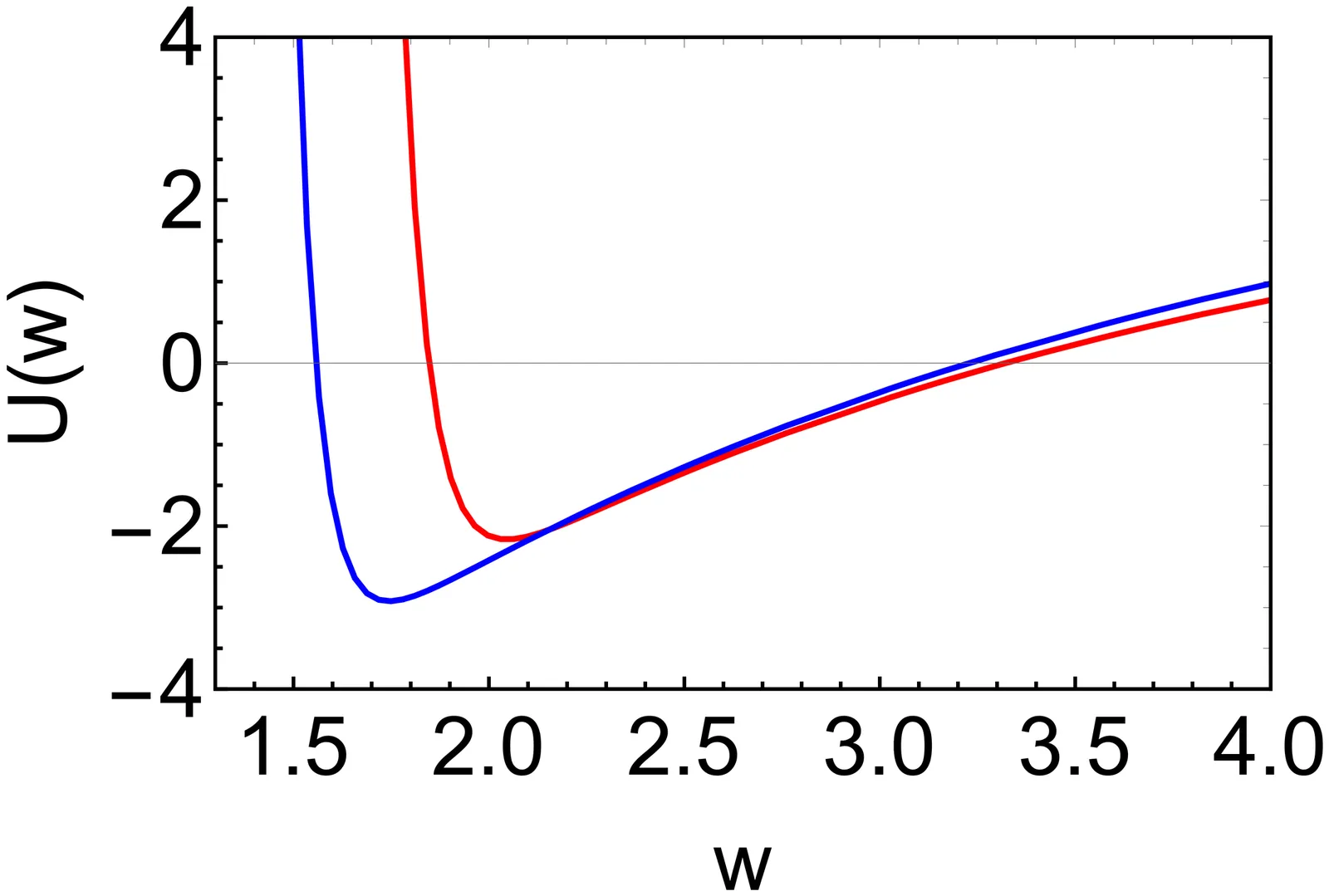
Quantum droplets in dipolar quasi-one-dimensional Bose-Einstein condensates in optical lattices
We consider quantum droplets in dipolar Bose-Einstein condensates (BECs) embedded in optical lattices within the framework of Gross-Pitaevskii equations. In dipolar BECs, the long-range and anistropic dipole-dipole interaction provides an additional mechanism for self-binding. We analyze the linear stability as well dynamics of quantum droplets. We find effective potential for the width and show that the optimum width for formation of quantum droplet increases as the dipole-dipole interaction increases. We study dynamics of the stable droplets and see that its width oscillates periodically, and the amplitude of oscillation increases with the increase of dipole-dipole interaction. In presence of optical lattices, width of a stable droplet changes quasi-periodically while the density profile oscillating periodically in space. The frequency of oscillation are found to depend sensitively on the lattice parameters.
2604.02163Apr 2026
View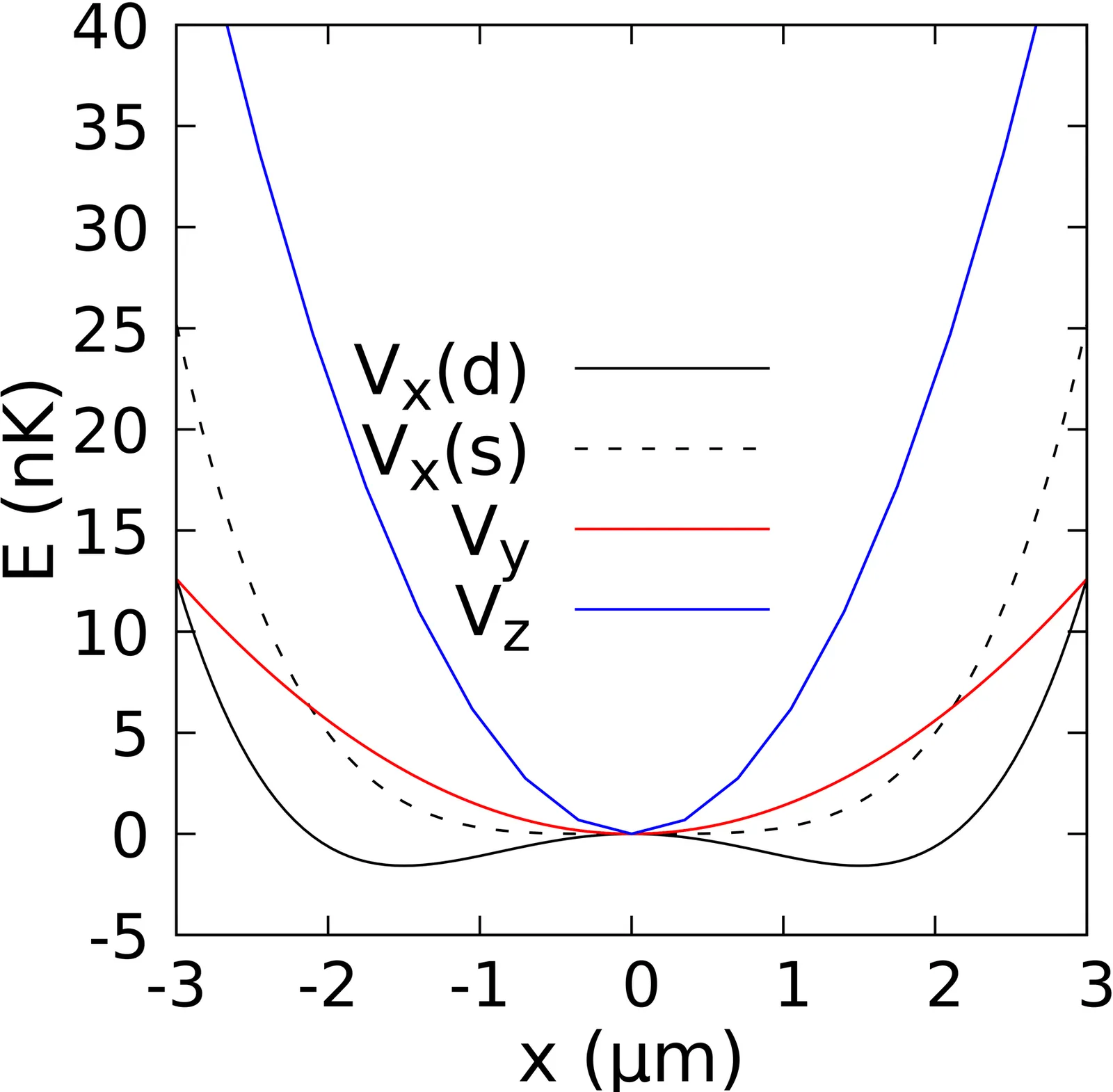
Merging and oscillations of dipolar Bose-Einstein condensate droplets
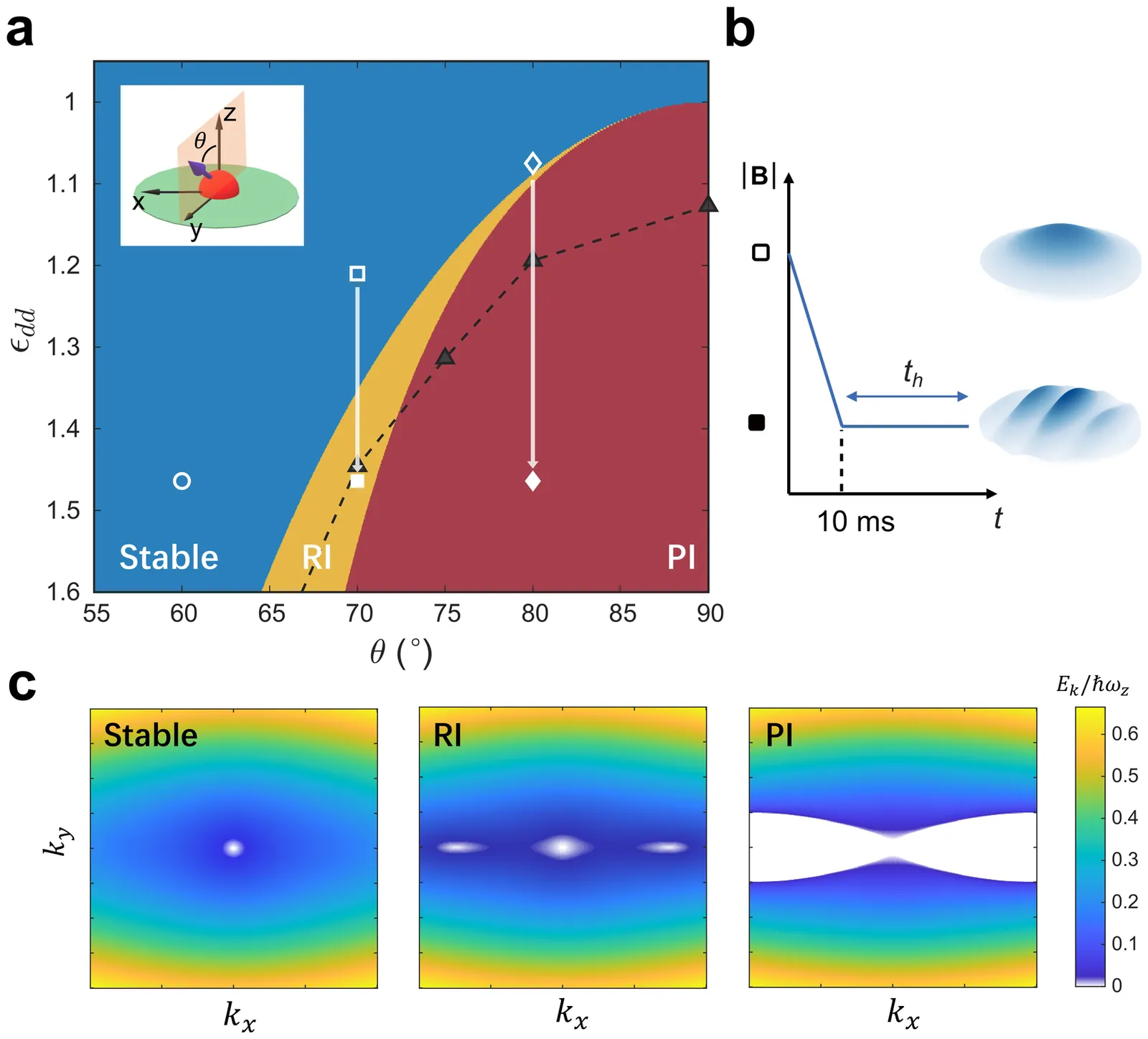
We investigate the dynamics of Bose-Einstein condensate droplets composed of $^{164}$Dy atoms formed in a double-well potential following removal of the interwell barrier. By solving the dipolar Gross-Pitaevskii equation, we determine phase diagrams of ground-state configurations as functions of the atom number confined in the double-well potential. For strong dipolar interactions, some of the lowest-energy configurations arise from spontaneous symmetry breaking of the droplet structure, which optimizes the interaction energy. We analyze the subsequent time evolution after removal of the central barrier, revealing both droplet oscillations and merger events leading to the formation of larger droplets. The oscillations are driven by the external potential and by the repulsive tails of the in-plane component of the dipolar interaction. Merger events occur when the initial excess energy is sufficient to overcome the interdroplet potential barrier. The oscillatory dynamics depend sensitively on the atom number, the strength of dipolar interactions, and the initial symmetry of the configuration. We find that both oscillations of individual droplets and atom leakage from the droplets, induced by close droplet-droplet encounters, contribute to the damping of the oscillations.
2604.02011Apr 2026
View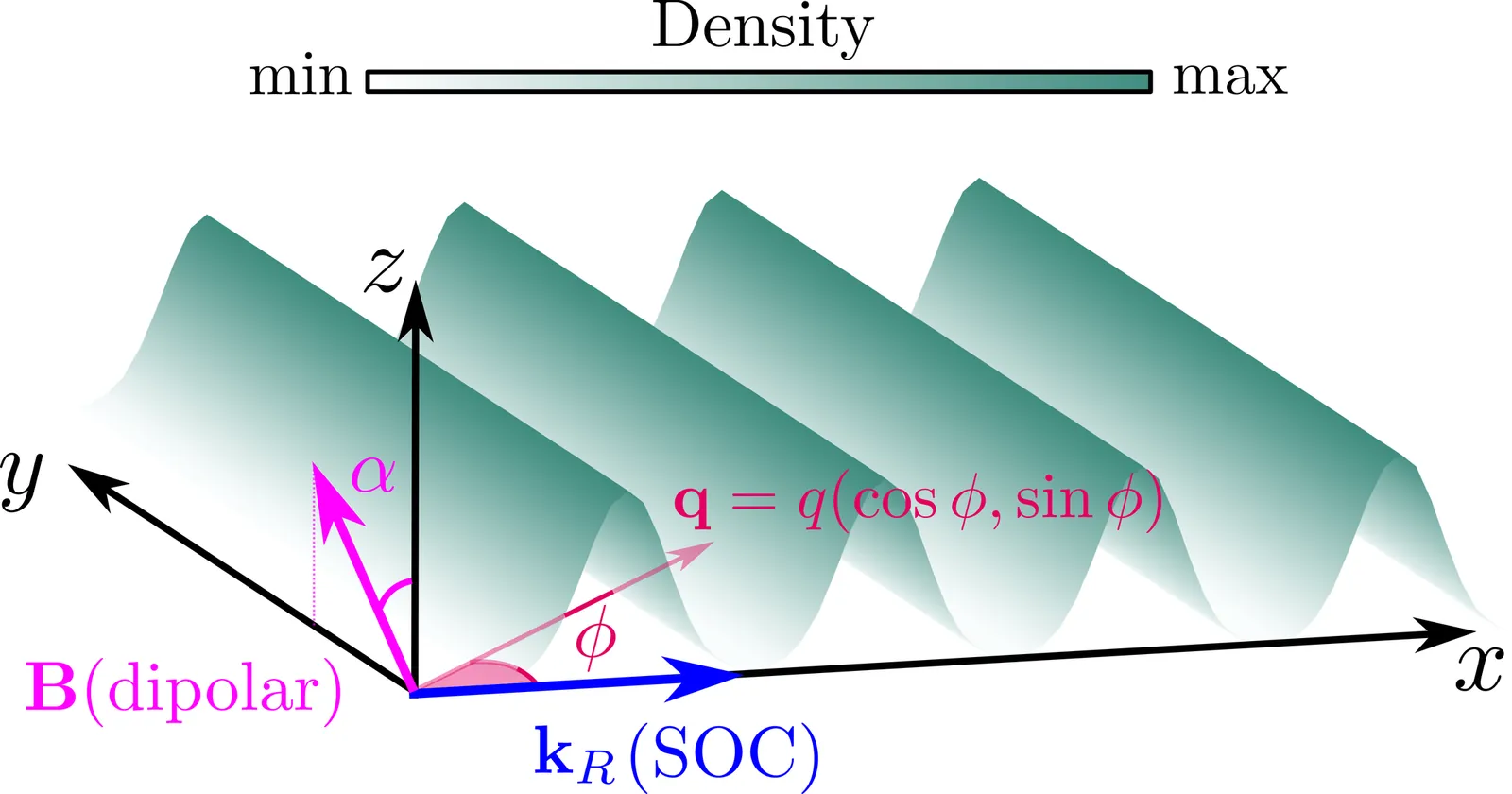
Sound propagation in striped supersolid cold gases at zero temperature
We present a unified hydrodynamic approach for the sound propagation in the stripe phases realized in ultracold dipolar gas and spin-orbit-coupled BEC platforms at zero temperature. Despite the deep difference of the two platforms at a microscopic level, a similar hydrodynamic description can be formulated at a macroscopic level. The main difference between the two platforms is the lack of Galilean invariance in the spin-orbit case, resulting in a different identification of the normal (nonsuperfluid) component of the density, which leads to new terms in the equation for the current. In both cases the spectrum comprises two sounds, reflecting the spontaneous breaking of the U(1) and translational symmetries. Both sounds exhibit an anisotropic behavior. A comparison with the first and second sounds of the smectic-A liquid crystal is also presented.
2604.01751Apr 2026
View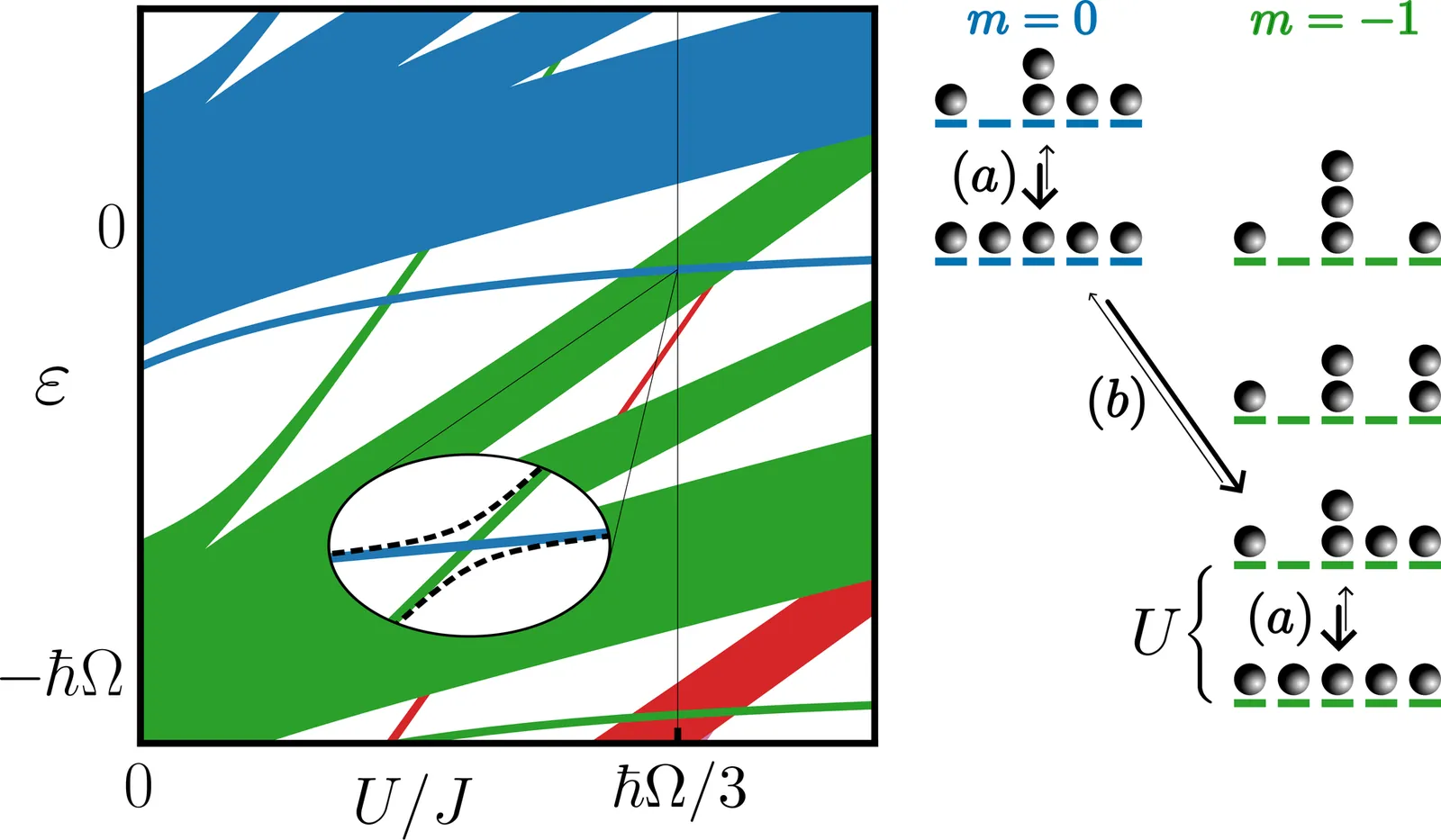
Dissipative Floquet engineering of gapped many-body phases using thermal baths
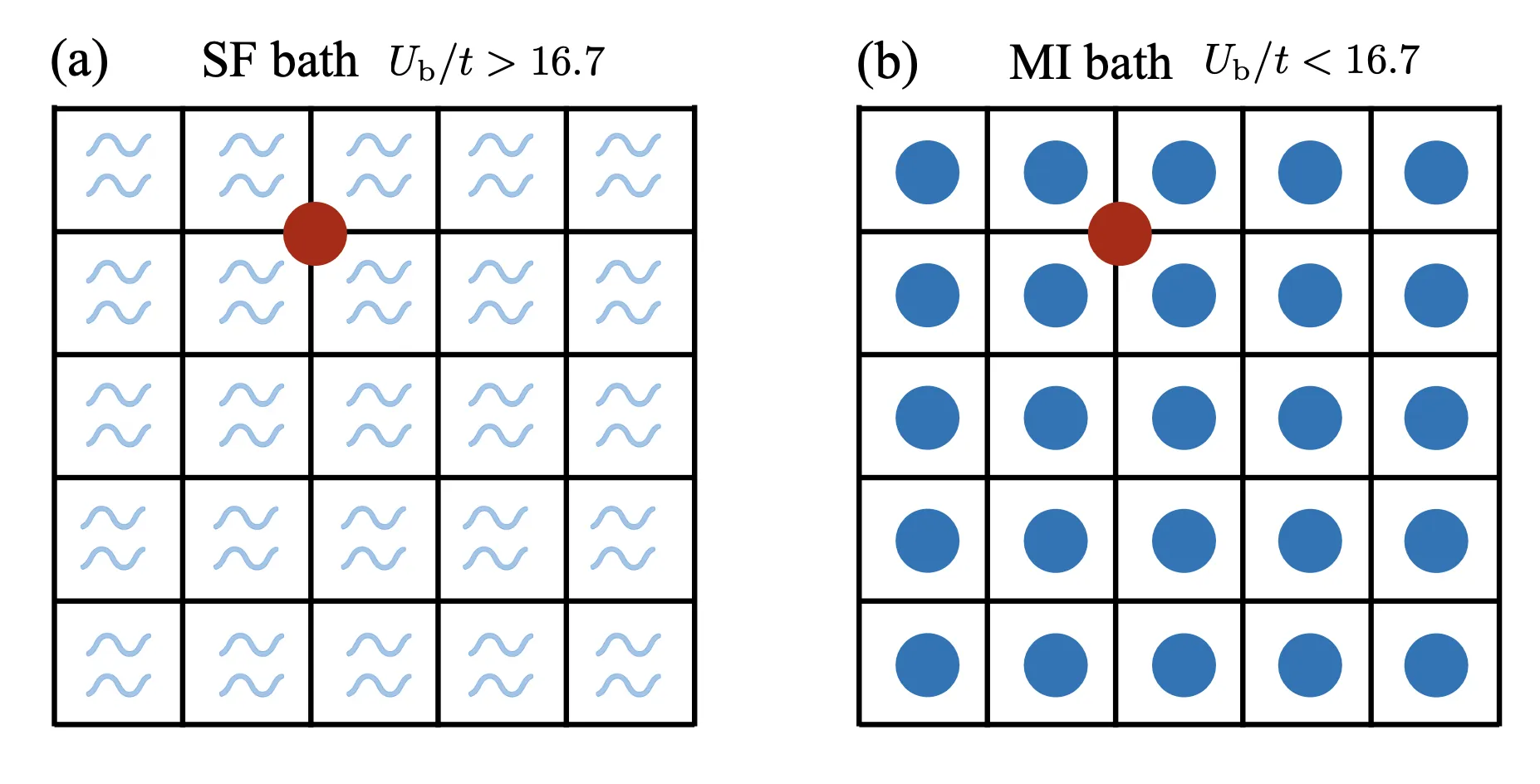
Floquet engineering, the control of a quantum system by means of time-periodic driving, allows to modify the properties of the system so that it becomes described by an approximate effective time-independent Hamiltonian. However, in the presence of interactions the stabilization of interesting many-body ground states of such effective Hamiltonians is possible only on a certain time scale, beyond which Floquet heating sets in, as it results from unwanted driving induced resonant excitation. Moreover, already the preparation of such states is challenged by excitations due to imperfect adiabatic dynamics, especially when a phase transition has to be passed. Here, we propose a general dissipative strategy for the preparation and stabilization of effective ground states that are protected by an energy gap. Our approach relies on coupling the driven system to a thermal bath, the properties of which are chosen so that it both suppresses Floquet heating and guides the system into a non-equilibrium steady state with a large occupation of the effective ground-state, but generally non-thermal occupations of excited states of the effective Hamiltonian. We use the Floquet-Born-Markov master equation to verify the proposed strategy for the example of a strongly driven Bose-Hubbard chain with an effective gapped Mott-insulator ground state.
2604.01291Apr 2026
View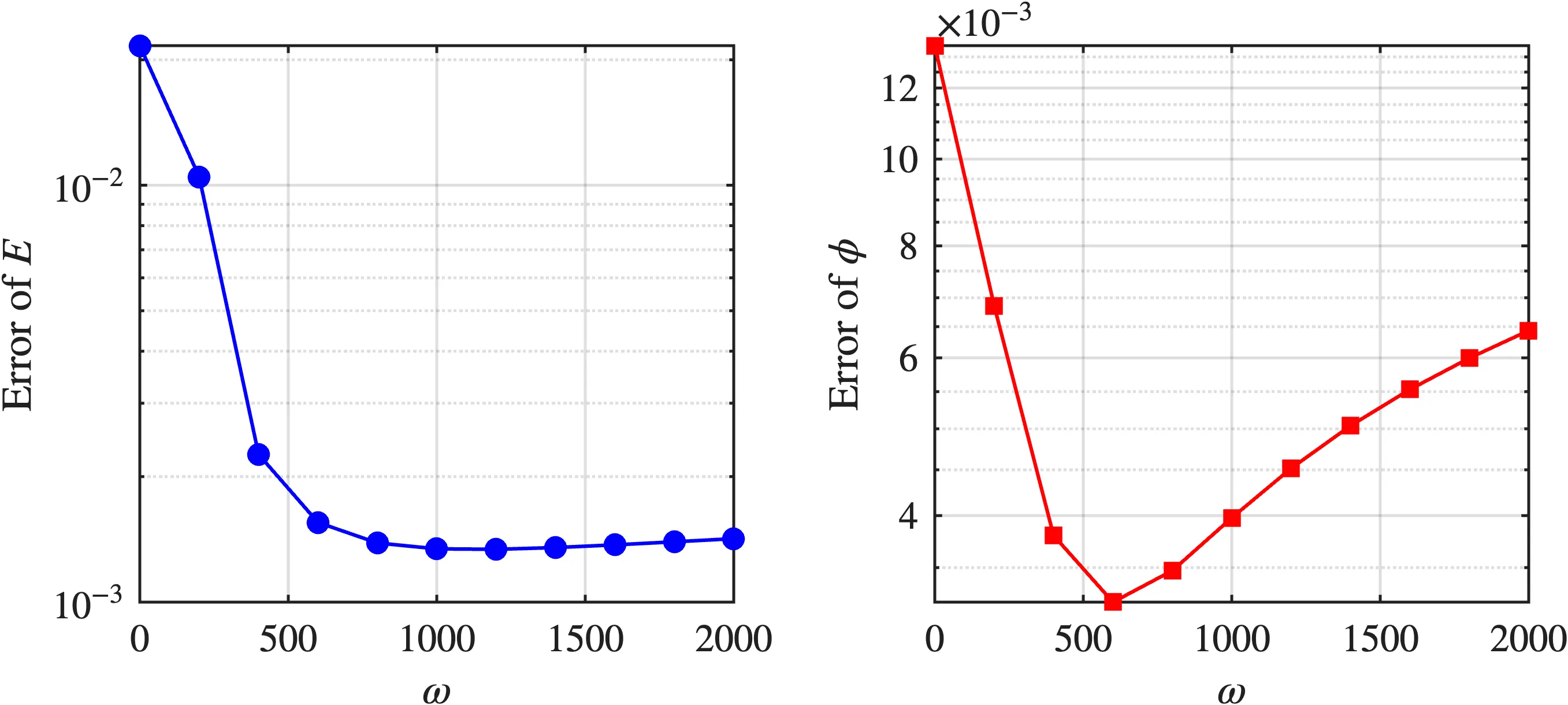
Ground-state solution of quantum droplets in Bose-Bose mixtures
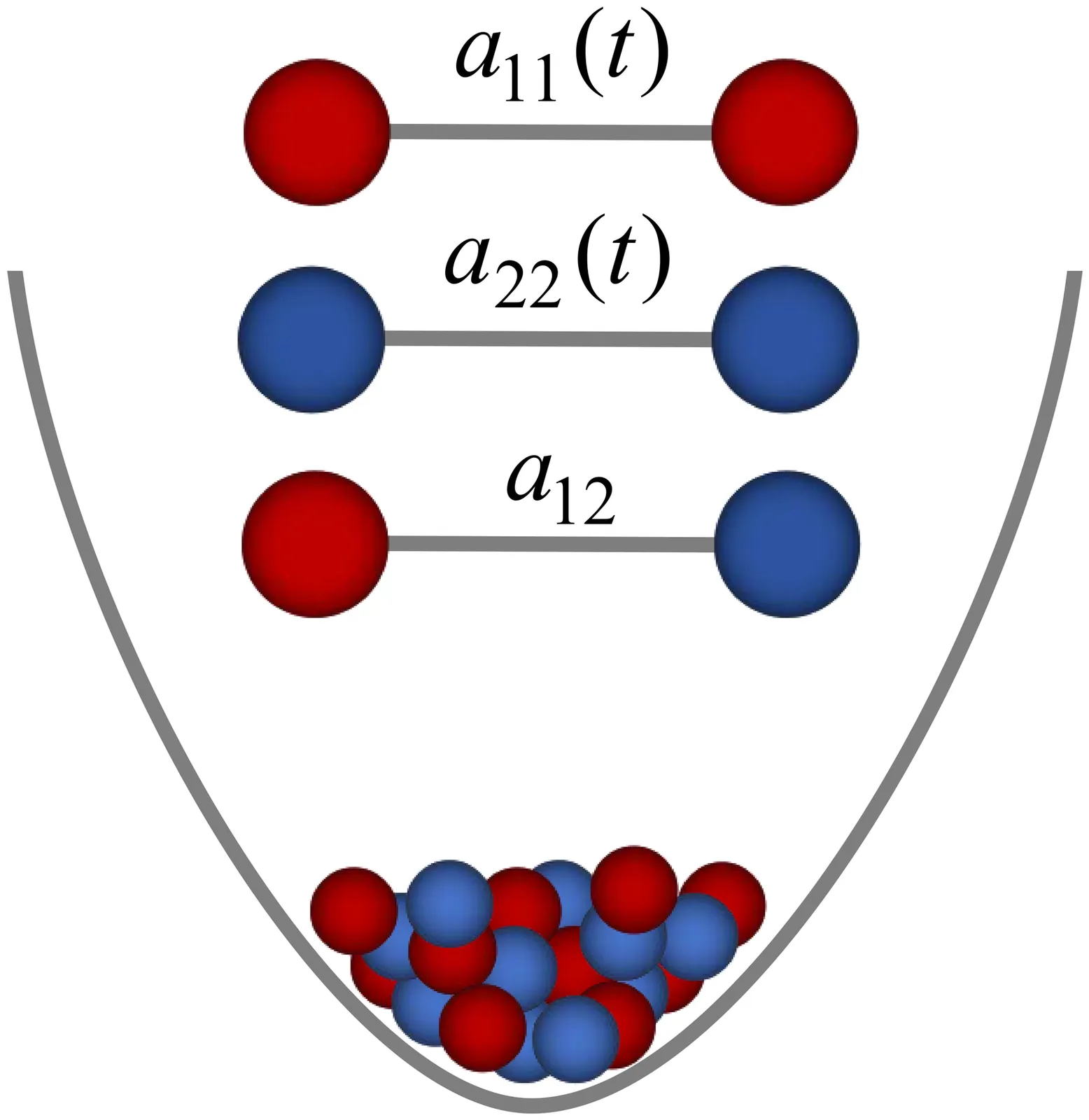
In this paper, we present a systematic study on the ground state computation of quantum droplets in homonuclear Bose-Bose mixtures, governed by the extended Gross-Pitaevskii equations (eGPEs) with Lee-Huang-Yang (LHY) corrections. This model captures the formation of self-bound droplets stabilized by the delicate balance between the attractive mean-field interaction and the repulsive quantum fluctuations. We formulate dimensionless energy functionals for both the general two-component system and the reduced single-component density-locked model. To compute the ground states efficiently, we adapt and benchmark various gradient flow discretization schemes, identifying a backward-forward sine-pseudospectral scheme based on the gradient flow with Lagrange multiplier method (GFLM-BFSP) as the robust solver for our simulations. Utilizing this method, we report three main numerical observations: (i) the density-locked model is quantitatively validated as a reliable approximation for ground state properties; (ii) the dimension-dependent convergence rates of the Thomas-Fermi approximation are established in the strong-coupling regime; and (iii) the critical particle number for self-binding in free space is numerically determined, providing a precise correction to the analytical prediction by Petrov [Phys. Rev. Lett. 115, 155302 (2015)].
2604.00889Apr 2026
View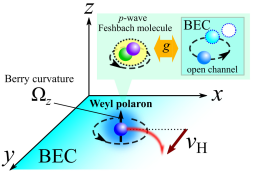
Emergent Weyl Nodes and Berry Curvature in Bose Polarons via $p$-Wave Feshbach Coupling
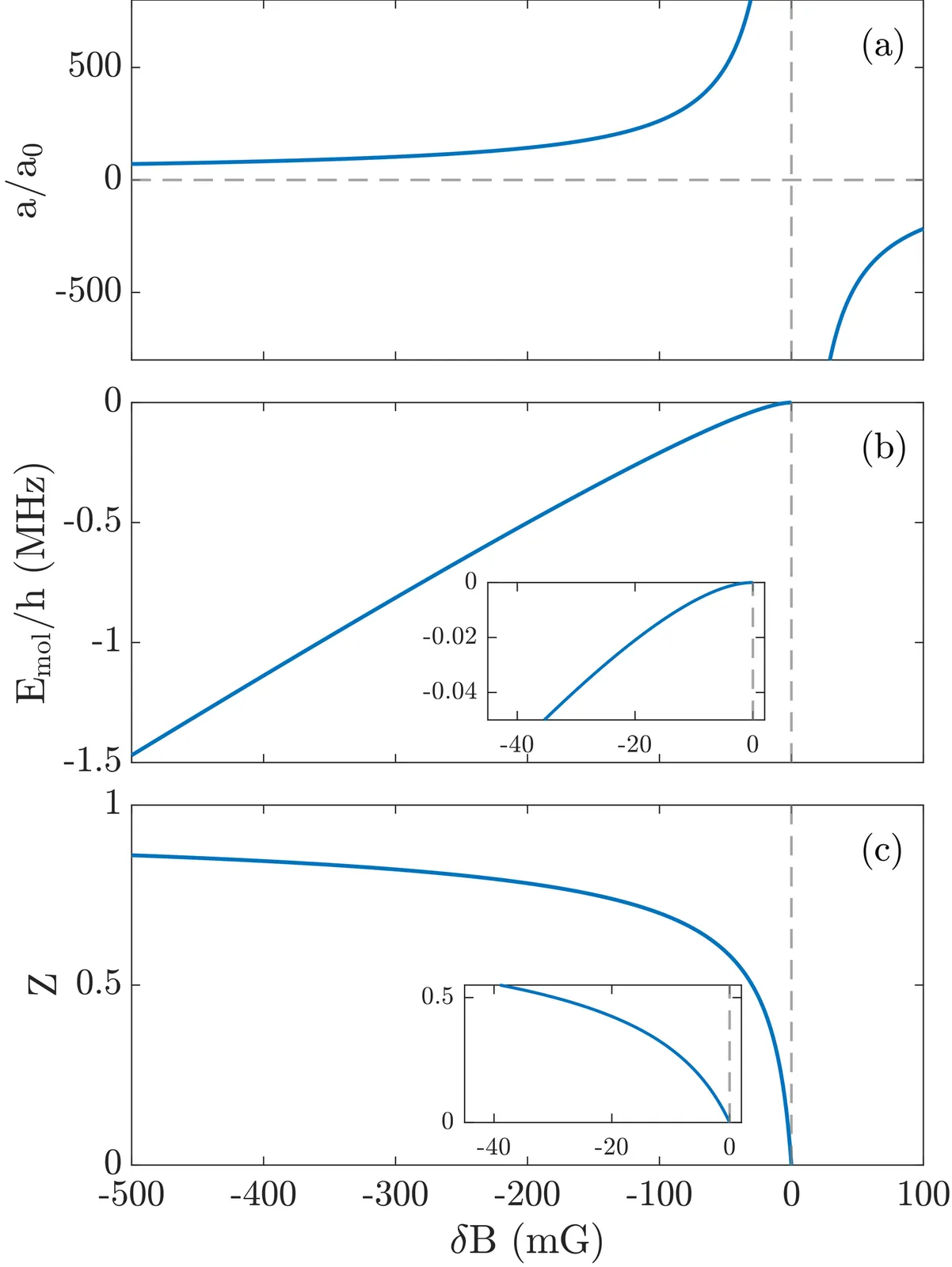
We show that an impurity quasiparticle immersed in a Bose-Einstein condensate, known as a Bose polaron, exhibits topological properties characterized by a nonzero Berry curvature, which is induced by Weyl nodes that emerge via interspecies $p$-wave Feshbach resonance. Such nodes occur even in the absence of spin degrees of freedom and spin-orbit coupling. For charged impurities, the corresponding $p$-wave polarons are shown to be accompanied by chiral anomaly. The above predictions can be tested in a cold atomic environment by observing the Hall transport of the atomic or ionic impurity cloud.
2604.00797Apr 2026
View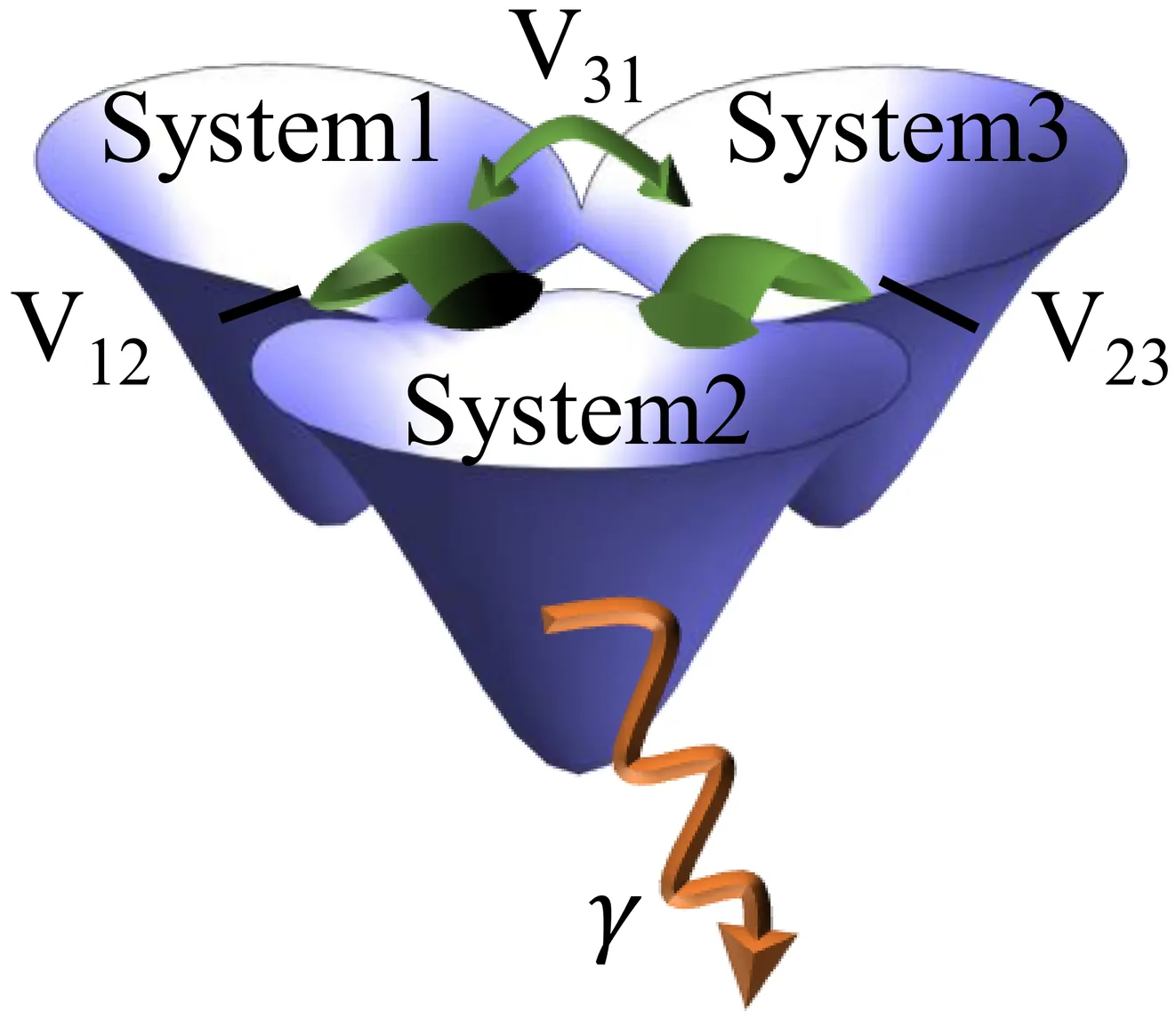
Nonequilibrium phase transition of dissipative fermionic superfluids: Case study of multi-terminal Josephson junctions
We investigate nonequilibrium dynamics of a triad of fermionic superfluids connected via Josephson junctions, following sudden switch-on of two-body loss in one of the three superfluids. By formulating the dissipative BCS theory for the Lindblad equation, we find that the superfluid order parameter exhibits a phase rotation, thereby giving rise to three types of dc Josephson currents corresponding to different junctions. We demonstrate that, when the tunneling amplitude $V_{31}$ between superfluids without two-body loss is weak, two-step nonequilibrium dynamical phase transition (NDPT) characterized by the vanishing dc Josephson currents occurs: dissipation first induces the NDPT by making one dc Josephson current finite, while further increasing dissipation makes this remaining dc Josephson current vanish. By contrast, when $V_{31}$ is strong, dissipation induces the NDPT in which all dc Josephson currents simultaneously vanish. An analytical study based on a simplified model further supports this observation.
2604.00574Apr 2026
View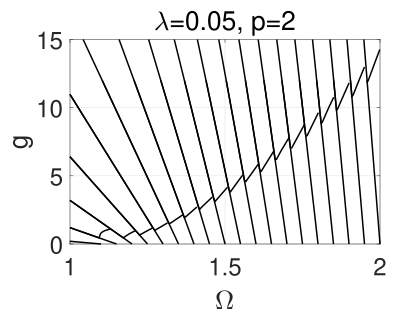
Phase diagram of rotating Bose-Einstein condensates trapped in power-law and hard-wall potentials
We investigate the rotational phase diagram of a quasi-two-dimensional, weakly-interacting Bose-Einstein condensate confined in power-law and in hard-wall trapping potentials. For weak interactions, the system undergoes discontinuous transitions between multiply-quantized vortex states as the rotation frequency of the trap increases. In contrast, stronger interactions induce continuous phase transitions toward mixed states involving both singly and multiply-quantized vortex states. A central result is the qualitative (and experimentally observable) difference between power-law and hard-wall confinement: In hard-wall traps, the leading instability always involves states with nonzero density at the trap center, whereas in power-law traps the density vanishes as the rotation frequency increases. The two different types of confinement give rise to scaling properties in the derived phase diagrams.
2603.29738Mar 2026
View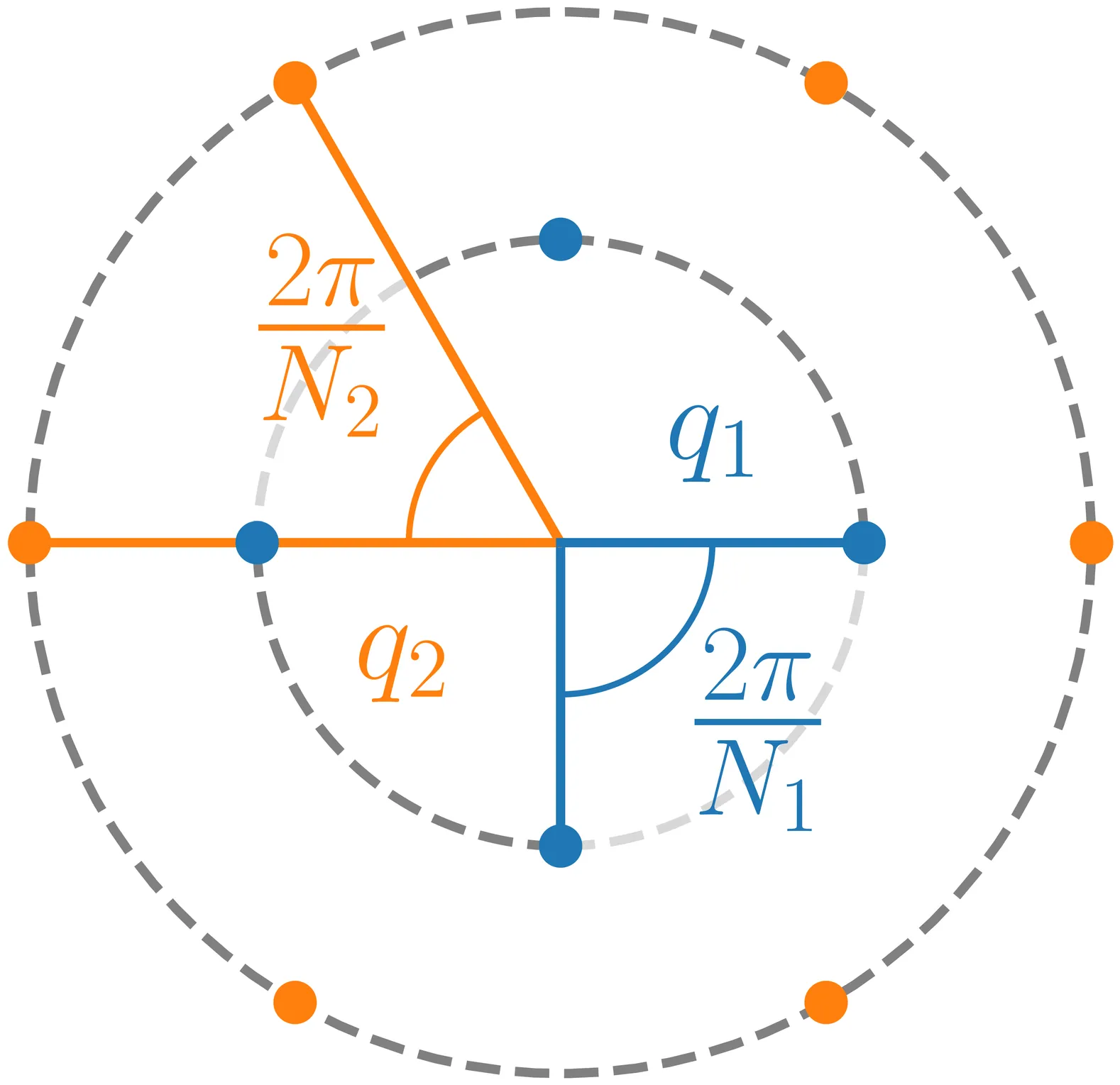
Superfluid response of bosonic fluids in composite optical potentials: angular dependence and Leggett's bounds
We study the superfluid response of a dilute bosonic fluid in the presence of two-dimensional composite potentials (such as triangular, Kagomé and quasiperiodic potentials, or superlattices), which may be obtained for example by superposing multiple laser beams. We first find a sufficient condition for the external potential to yield a fully isotropic superfluid response. Then, we derive analytical expressions for Leggett's upper and lower bounds to the superfluid fraction (valid in the perturbative regime) that allow us to find the optimal direction along which each bound should be measured. Finally, we solve the problem numerically, and we confirm our analytical findings.
2603.29603Mar 2026
View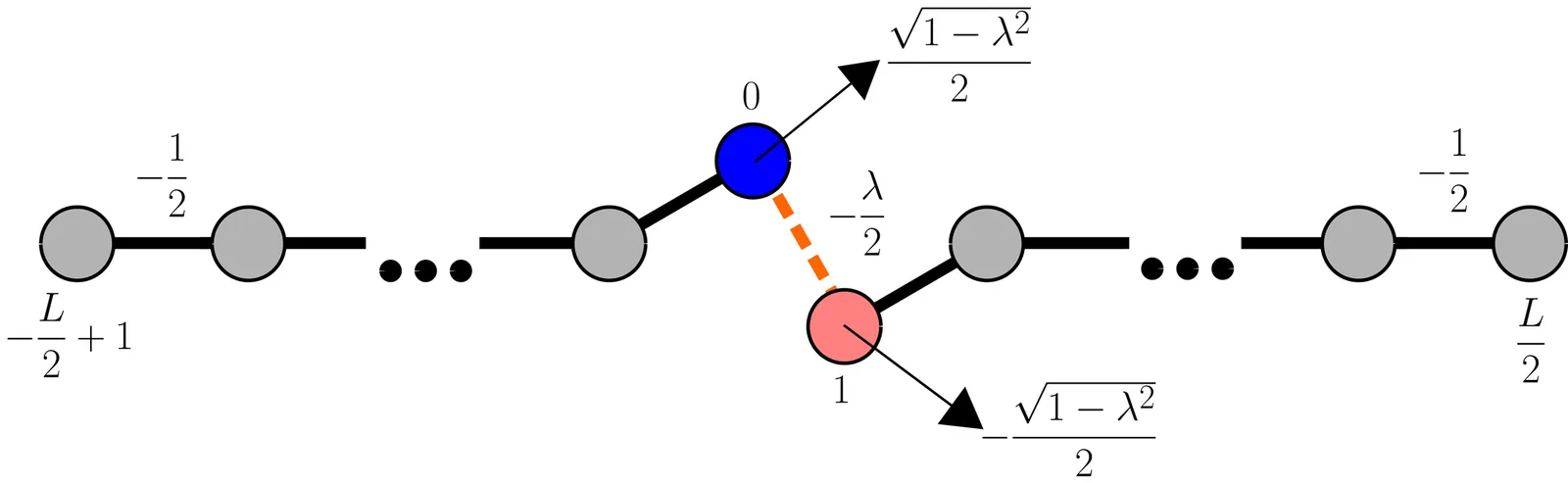
Double-weak-link interferometer of hard-core bosons in one dimension
We study the dynamics of a lattice hard-core boson gas released from a domain wall initial state in the presence of two weak links (defects). When the two defects are separated by a finite distance, the resulting density profile exhibits clear deviations from the standard Euler-scale hydrodynamic description of the gas, due to genuine quantum interference effects between the two defects. By analyzing the exact fermionic propagators, we show that repeated reflections at the defects give rise to interference fringes and coherent patterns that are beyond the reach of the (generalized) hydrodynamic description. We derive a closed analytic expression for the density profile during the expansion, explicitly highlighting the role played by these interference processes.
2603.29583Mar 2026
View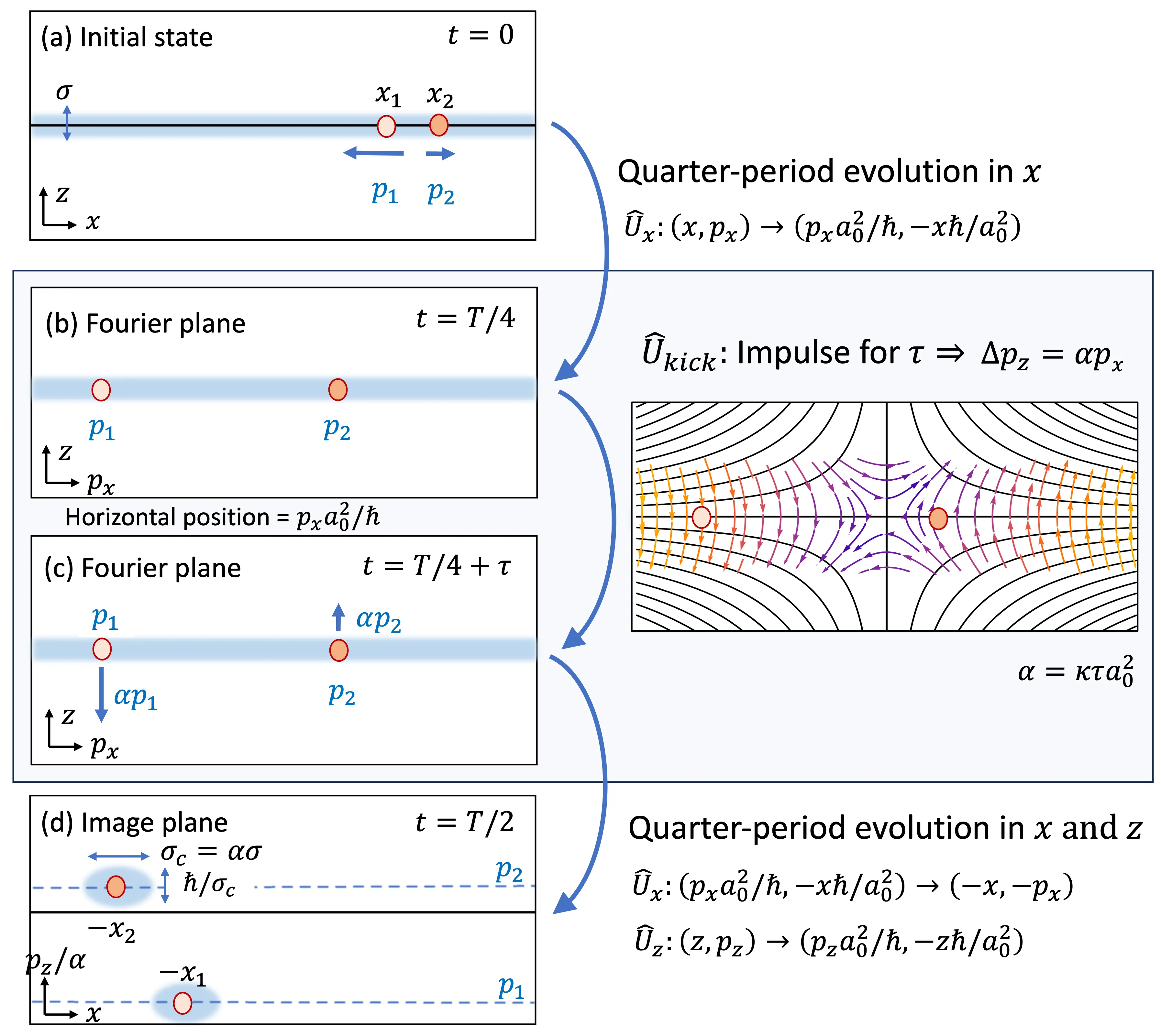
Phase-space microscopes for quantum gases: Measuring conjugate variables and momentum-weighted densities
Quantum gas microscopes offer unprecedented insights into quantum many-body states of cold atomic gases. Here we introduce concrete protocols for extending quantum gas microscopes to measure in phase space, by mapping momentum onto auxiliary degrees of freedom and using positive operator-valued measures. We distinguish between two distinct operational modes. In the Husimi-Q phase space microscope, position and momentum are jointly measured; in this mode the fundamental quantum noise appears in the position measurement. Conversely, the averaged-mode phase space microscope extracts the spatial dependence of averages of the momentum density (and its moments); these averages can be retrieved with arbitrary spatial resolution. We illustrate the utility of these techniques in diverse physical settings.
2603.29568Mar 2026
View
Generation of dipolar supersolids through a barrier sweep in droplet lattices
We propose a dynamical protocol to generate supersolids in dipolar quantum gases by sweeping a repulsive Gaussian barrier through an incoherent quasi-one-dimensional droplet array. Supersolidity is inferred by monitoring the ensuing dynamics of the density, momentum distribution, center-of-mass motion, and superfluid fraction within the framework of the extended Gross-Pitaevskii equation with quantum corrections. A persistent superfluid background arises, atop which the crystals oscillate in unison, indicating the establishment of phase coherence. This process is accompanied by energy redistribution and the gradual transfer of higher-lying momenta toward the zero momentum mode. The dependence of the superfluid fraction on the barrier velocity and height is also elucidated evincing the parametric regions which facilitate the rise of a superfluid background. Our results pave the way for engineering supersolid generation using experimentally accessible protocols.
2603.29203Mar 2026
View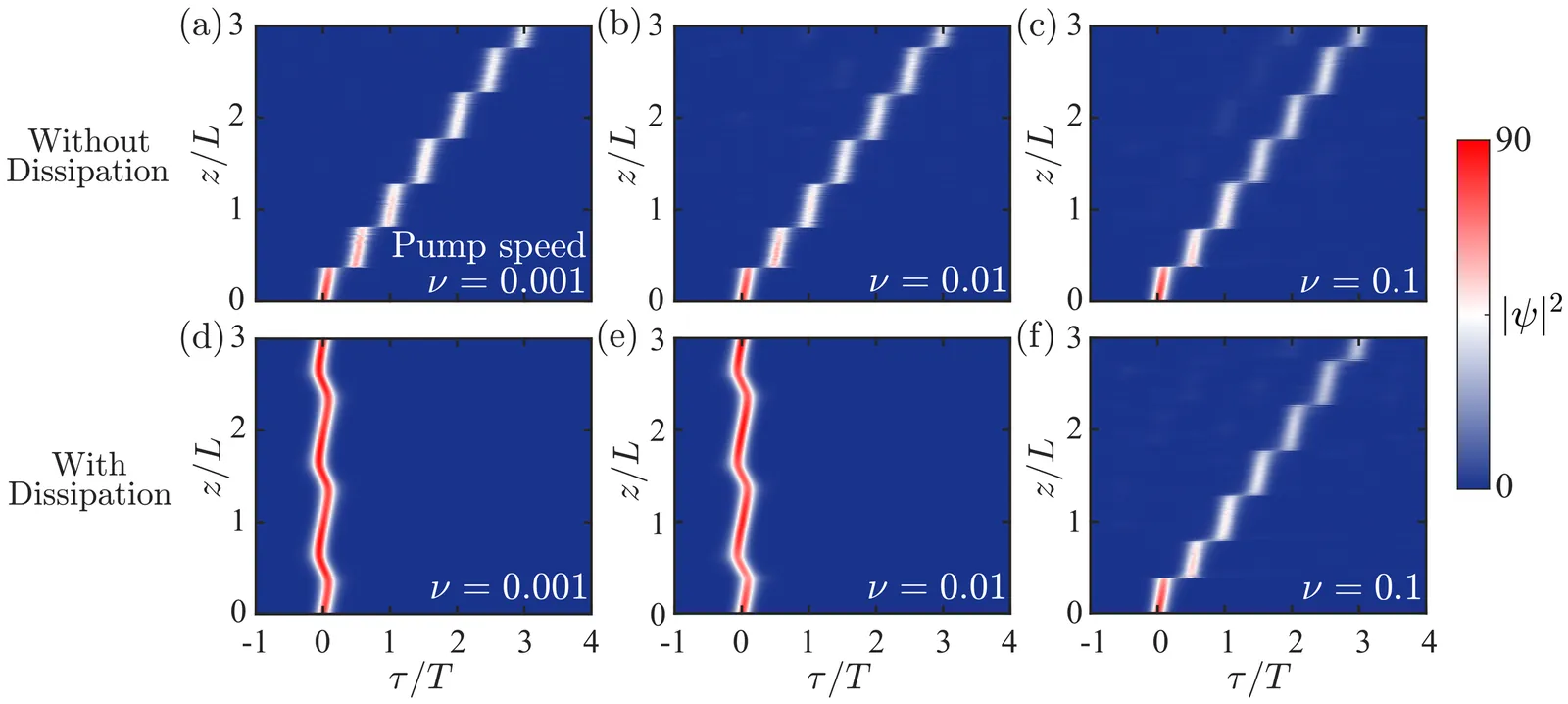
Dissipation-induced Nonlinear Topological Gear Switching
Nonlinear interaction enables topological phenomena impossible in linear systems. A paradigm is nonlinear Thouless pump, where the transport of solitons can be topologically quantized even when band occupation is nonuniform. Such nonlinear quantization traditionally requires a time-periodic Hamiltonian with static nonlinearity and, much as in the linear case, is inherently independent of pumping speed. Instead, we demonstrate a dissipation-induced topological gear switching, where quantized soliton transport can be switched on and off via the adiabatic pumping speed itself. This phenomenon has no counterpart in prior conservative nonlinear pumps, nor in linear non-Hermitian pumps. Crucially, quantization here no longer requires a time-periodic nonlinear Hamiltonian; it stems from a genuinely non-equilibrium mechanism captured by an effective conservative model whose \textit{nonlinearity varies aperiodically in time}. Remarkably, a quantized nonlinear transport can be induced even when this nonlinear aperiodic driving is such that the system is pumped from the linear to nonlinear regimes. Our results open a route toward nonequilibrium nonlinear topological matter, where topological effect is dynamically reconfigurable via time-varying nonlinearities, with experimental implications for photonic, atomic, or superconducting platforms and beyond.
2603.29160Mar 2026
View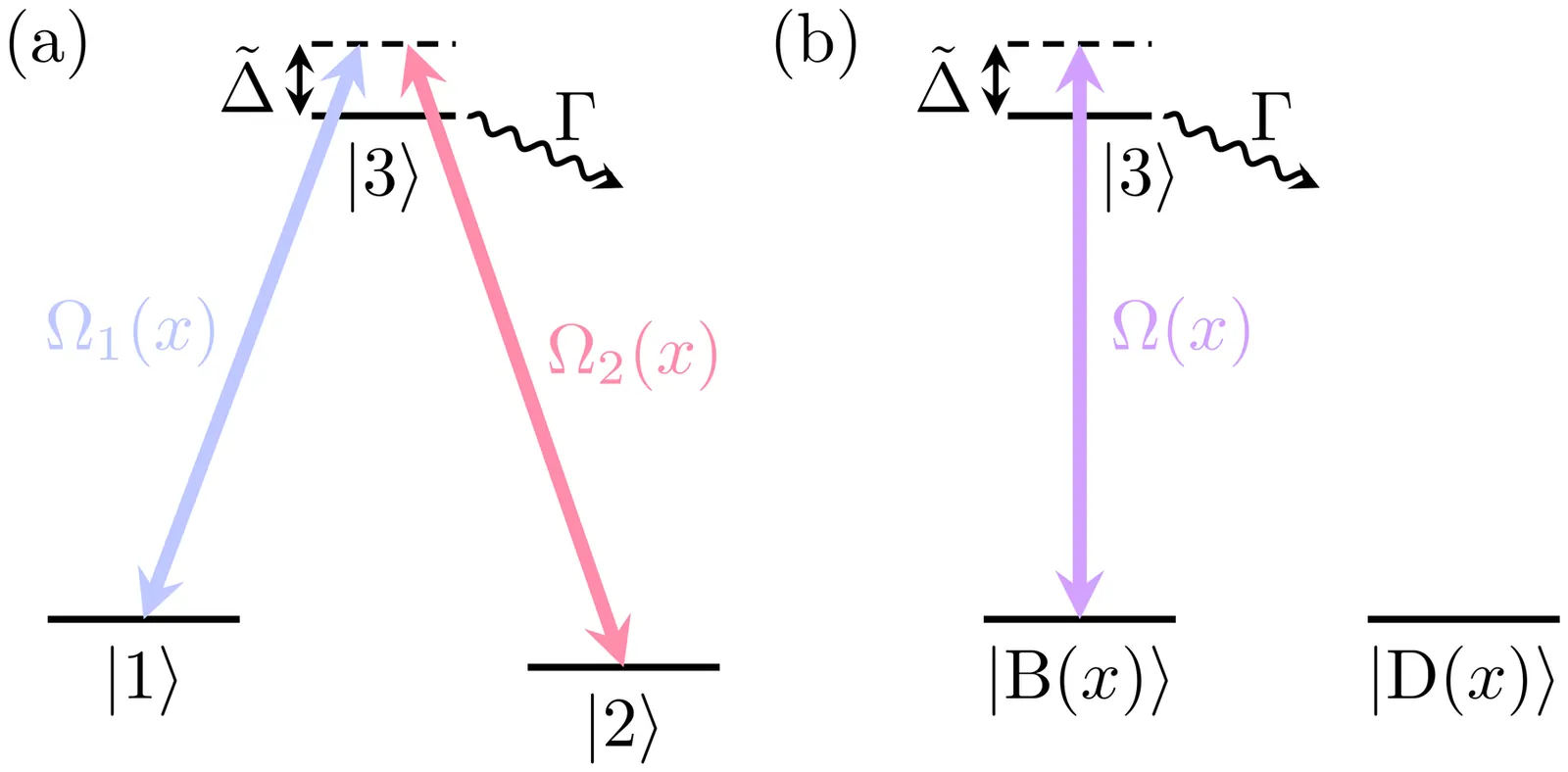
Optical creation of dark-bright soliton lattices in multicomponent Bose-Einstein condensates
We present a widely accessible and experimentally realizable technique for the controlled creation of dark-bright solitons and soliton lattices in atomic Bose-Einstein condensates. The method is based on preparing the condensate in a dark state of a $Λ$-coupled three-level system. Numerical simulations reveal that individual dark-bright solitons created through this scheme can survive over experimentally accessible timescales, even when the coupling laser fields are switched off. Meanwhile, the fate of soliton lattices upon the quench of the fields depends on the scattering lengths. When they are all equal, the lattice is found to persist on timescales comparable to the condensate lifetime, even though the analysis of dynamical stability reveals that they possess unstable modes. In this case the resulting destabilization is not found to be detrimental, as it leads to recurrent dynamics. On the other hand, for unequal scattering lengths the lattice structure gets destroyed once the instability sets in.
2603.28876Mar 2026
View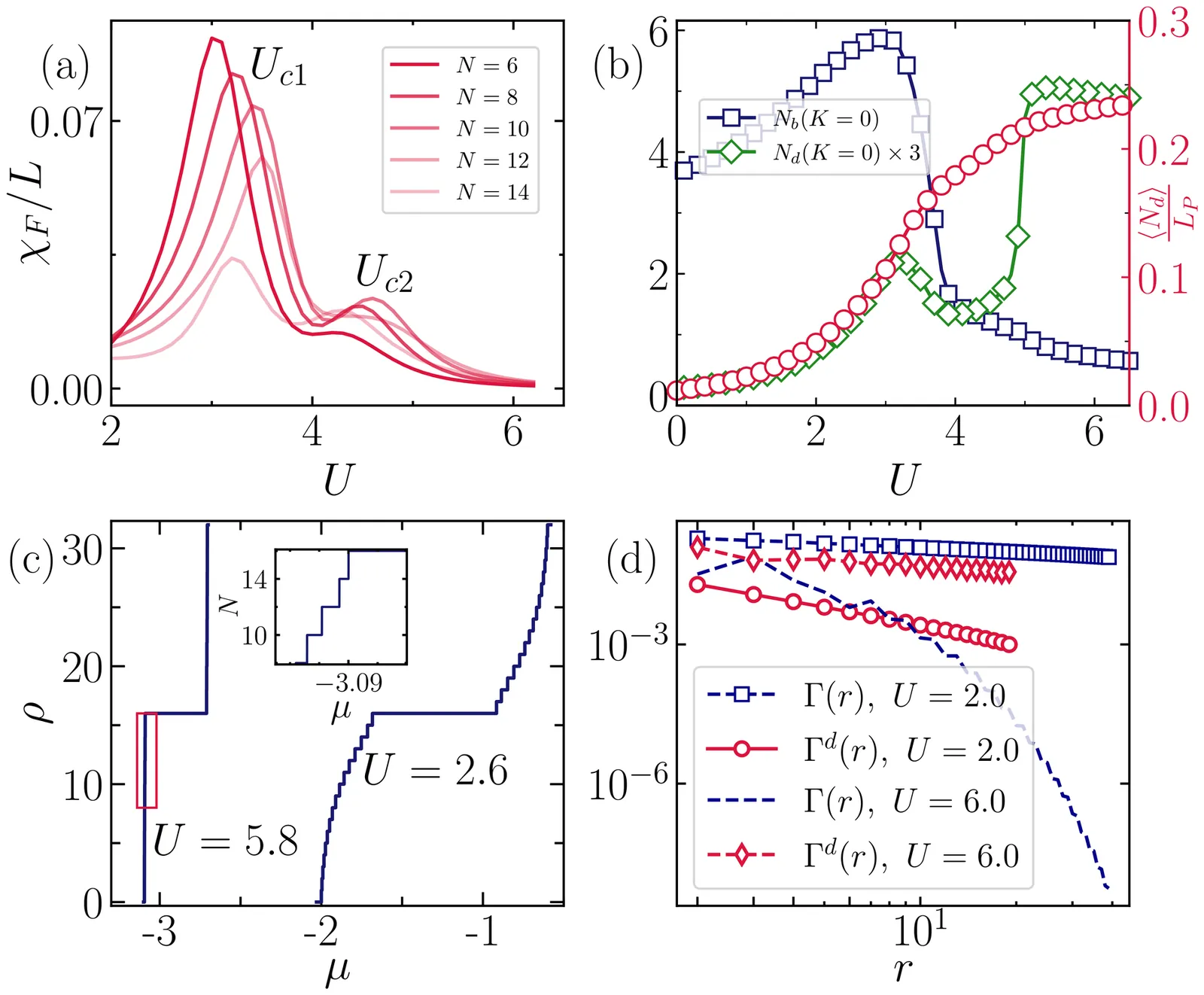
Emergence of a molecular quantum liquid in one dimension
We investigate the fate of a one-dimensional lattice superfluid formed by hard-core bosons, aka `atoms' (alternatively, a free spinless Fermi sea) subjected to nearest-neighbor attractive Hubbard-like interactions only in subgroups of two sites. The system, as expected, stabilizes a fluid of dimerized molecules at large attractive interactions. However, the composite molecules have an effective meek hopping scale and dominant repulsive interactions solely due to virtual quantum fluctuations. Interestingly, at an intermediate attractive potential, the system realizes a phase-separated region where the system is in an absorbing state. We show that this phase-separated region is due to an emergent attractive interaction between the dimers which leads to a local charge-density wave puddle where particles effectively cluster with local half-filling. Moreover the molecular superfluid gets spontaneously charge-ordered in the addition of an unpaired atom, reflecting the extreme sensitivity of the system to the existence of lone atoms. Using density-matrix renormalization group studies and effective low-energy Hamiltonians, we isolate the quantum processes to uncover the physics behind molecule formation in a strongly interacting one-dimensional system.
2603.28635Mar 2026
View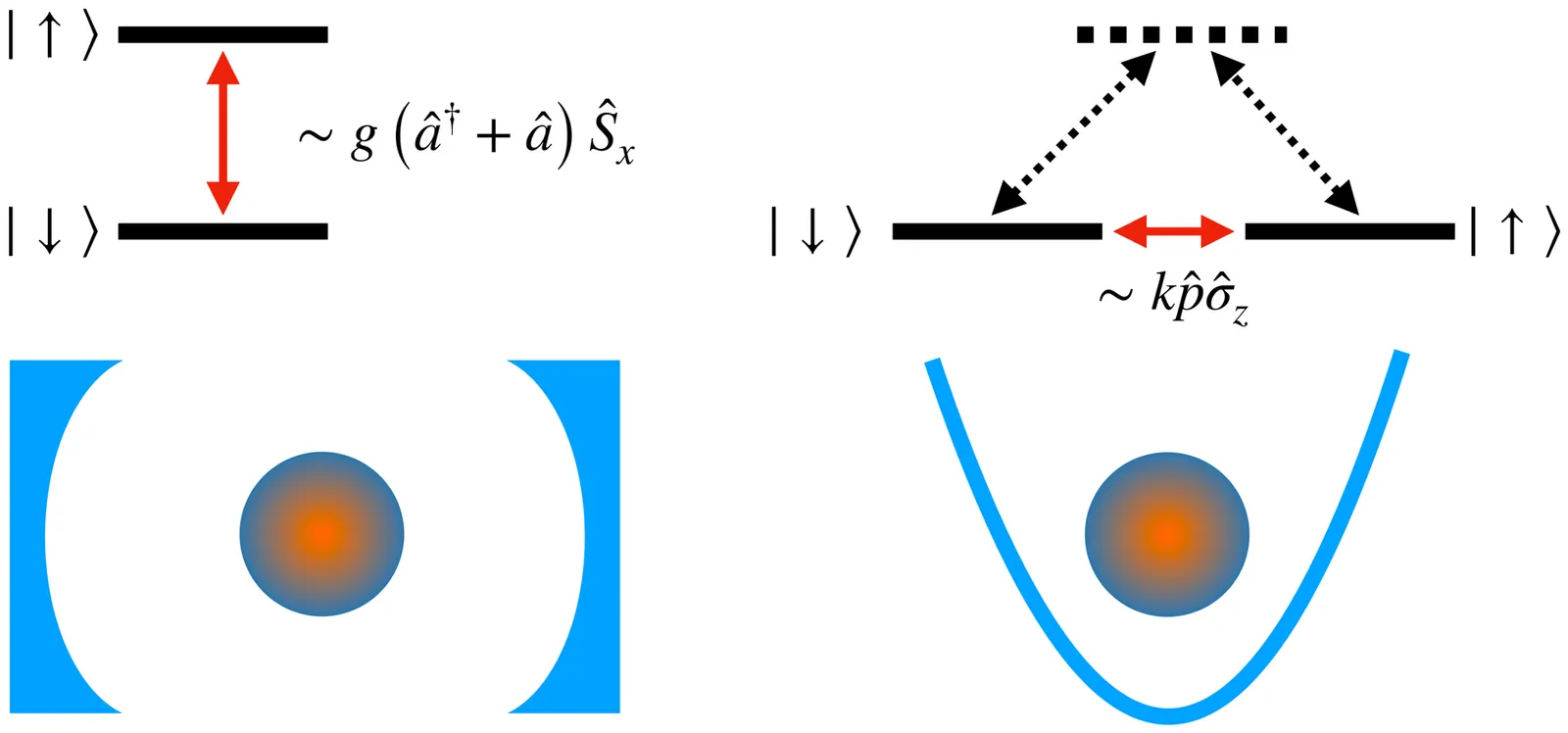
Simulating cavity QED with spin-orbit coupled Bose-Einstein condensates revisited
Simulating cavity quantum electrodynamics in synthetic platforms offers a promising route to exploring light-matter interactions without real photons, while enabling the transfer of cavity-based techniques to other systems. Among such platforms, Bose-Einstein condensates with synthetic spin-orbit coupling provide a controllable setting where internal and motional degrees of freedom become coupled, mimicking aspects of cavity quantum electrodynamics. In this work, we critically assess the extent to which spin-orbit coupled Bose-Einstein condensates can emulate cavity quantum electrodynamics phenomena, with a focus on squeezing and entanglement generation. We show that spin-orbit coupled Bose-Einstein condensates can faithfully reproduce the physics of a single atom coupled to a quantized field, realizing an analogue of the quantum Rabi model but inherently fail to capture genuine collective effects characteristic of the Dicke model, such as cavity-mediated many-body entanglement. Our results clarify both the potential and the fundamental limitations of spin-orbit coupled Bose-Einstein condensates as analogue quantum simulators of cavity quantum electrodynamics, offering guidance for future strategies to generate and control non-classical states of matter in photon-free, highly tunable platforms.
2603.28368Mar 2026
View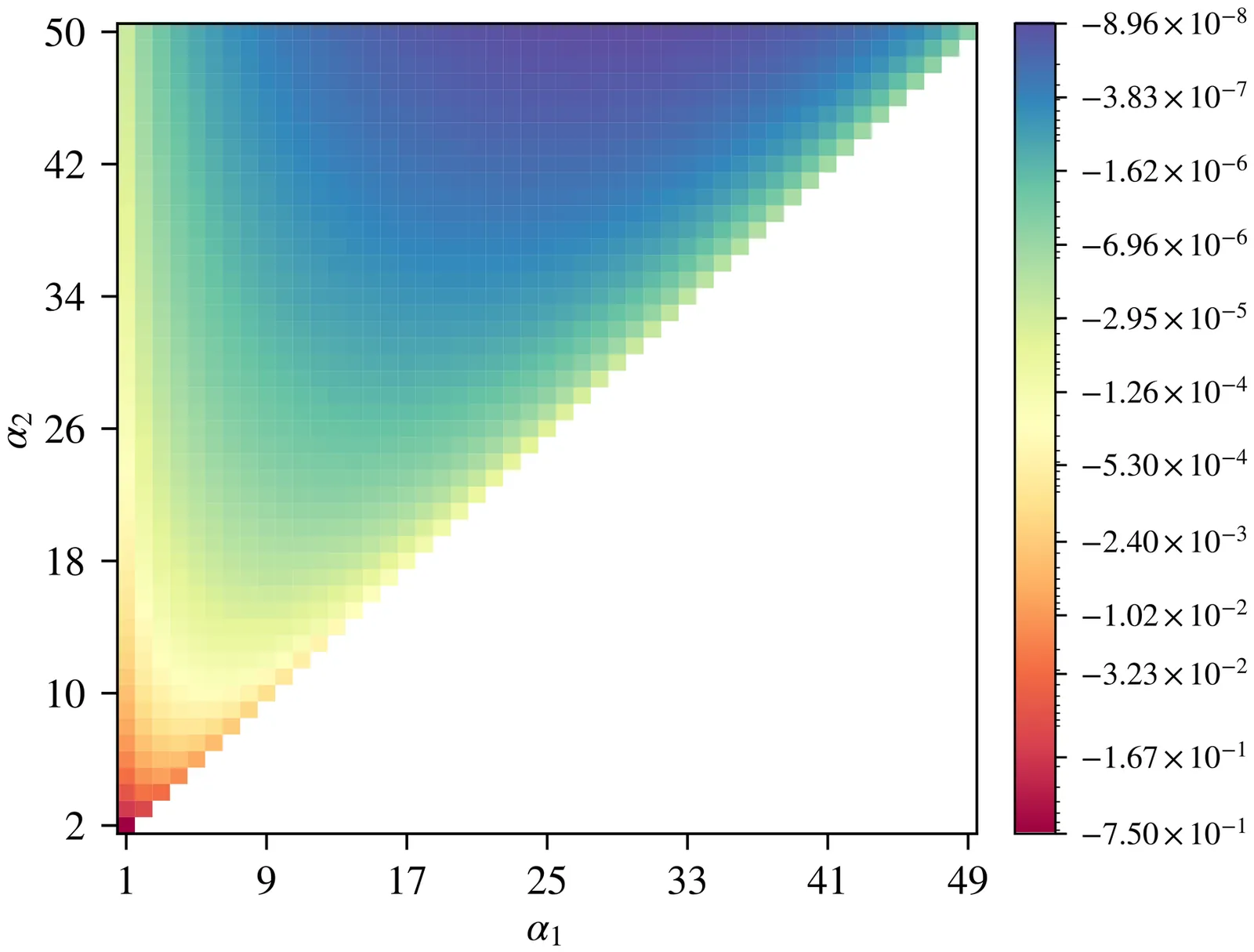
Resonant two-cluster scattering in a quasi-one-dimensional Bose gas
We investigate two-cluster scattering in a quasi-one-dimensional Bose gas. We focus on the effective three-body interaction induced by transverse confinement, which is the leading term for breaking integrability in the quasi-one-dimensional setting. Exploiting the Lüscher formula and the integrability of the Lieb-Liniger Bose gas, we find a finite and positive scattering length for elastic two-cluster scattering. The resulting scattering lengths indicate the emergence of a resonance.
2603.28250Mar 2026
View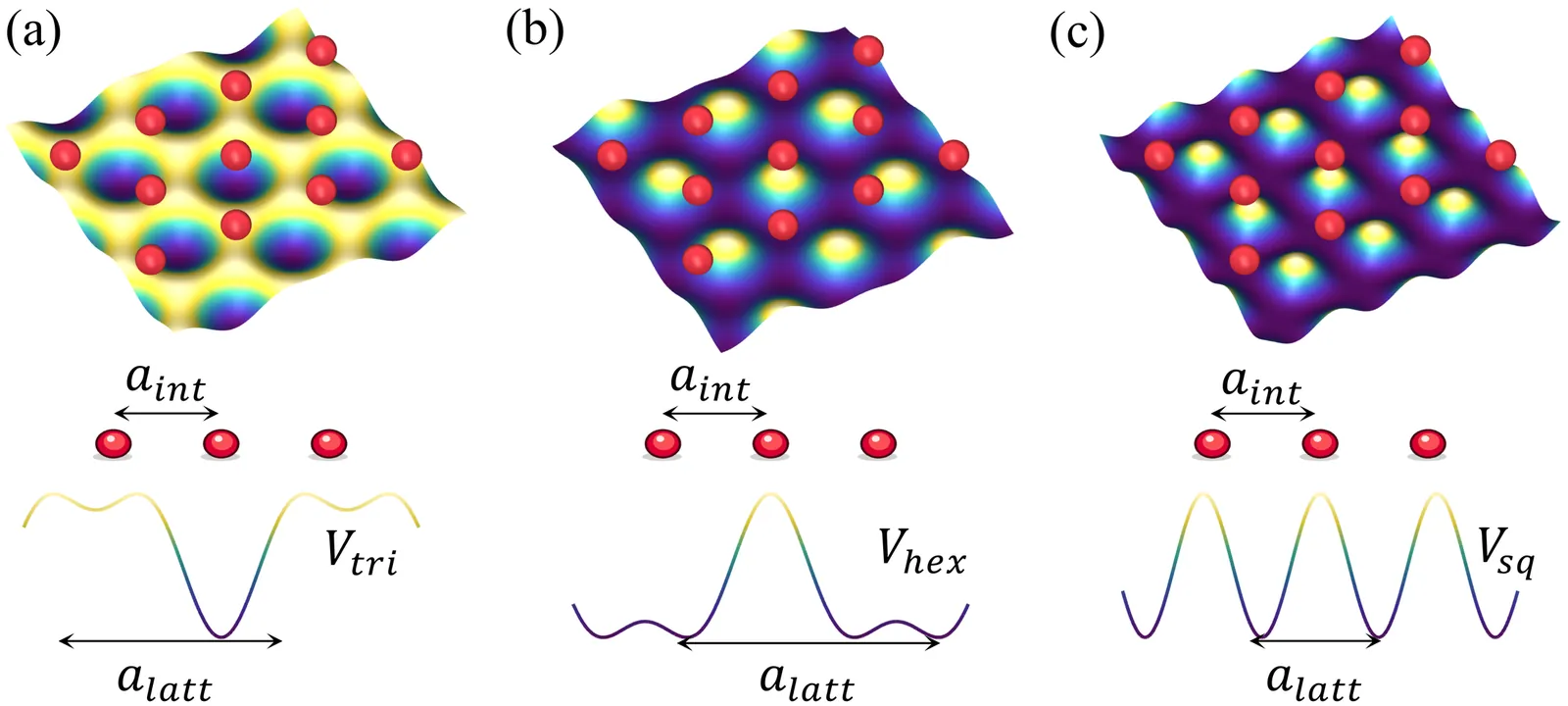
Moiré and frustration physics of dipolar supersolids under periodic confinement
We study the ground-state phases of a two-dimensional dipolar supersolid subjected to external periodic confinement by numerically solving the extended Gross--Pitaevskii equation. Focusing on a regime in which the unconfined system forms an intrinsic triangular droplet crystal, we consider triangular, honeycomb, and square optical lattices and classify them into isostructural and heterostructural settings relative to the spontaneous supersolid order. We map out the stationary states as functions of the lattice depth $V_0$ and the commensurability ratio between the intrinsic droplet spacing and the external lattice period. For triangular and honeycomb confinements, the competition between the soft self-organized supersolid lattice and the rigid external potential can generate long-wavelength moiré superstructures in the weak- to intermediate-lattice regime, together with a sequence of reconstructed states including ring-like clusters and stripe-segment configurations. By contrast, the square lattice introduces strong symmetry mismatch between the intrinsic $C_6$ order and the imposed $C_4$ geometry, leading to frustration-induced anisotropic states and symmetry-reduced cluster arrangements. Our results establish dipolar supersolids under periodic confinement as an unconventional route to exploring moiré physics, where moiré superstructures arise from the competition between a self-organized soft lattice and an externally imposed rigid one.
2603.27983Mar 2026
View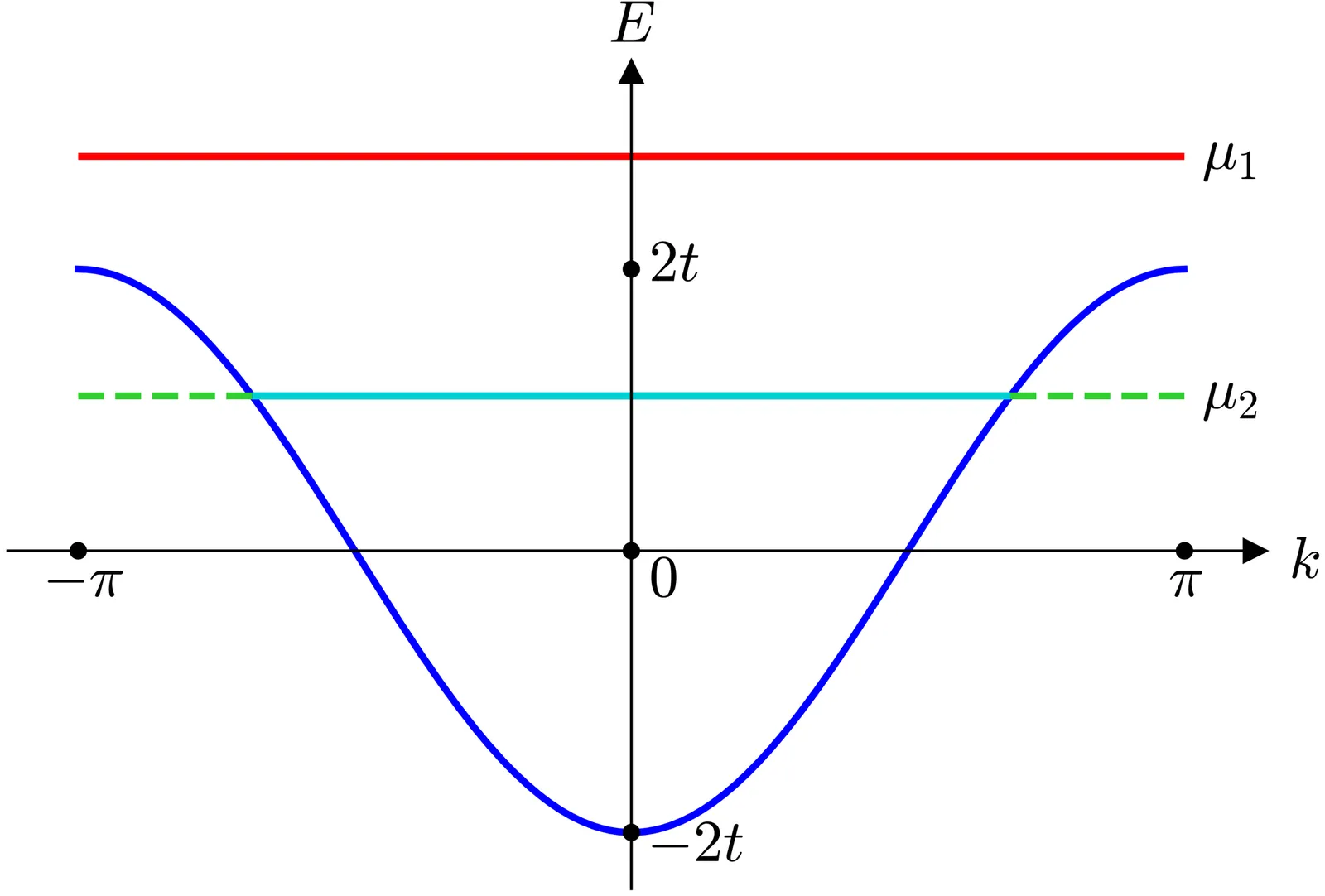
Analysis of the singular band structure occurring in one-dimensional topological normal and superfluid fermionic systems: A pedagogical description
Topological properties of solid-state materials arise when crossings occur in their band-structure eigenvalues, which give rise to discontinuities in the associated Bloch-function eigenvectors once these are mapped over the whole Brillouin zone. These nonanalytic properties have direct consequences on the spatial decay of the corresponding Wannier functions, leading to what is nowadays referred to as the "obstruction to finding symmetric Wannier functions" for a given set of bands, as well as on the need for shifting the Wannier functions to interstitial positions, related to what is nowadays known as the "bulk-boundary correspondence." The importance of nonanalytic points of Bloch eigenfunctions and their consequences for the spatial decay of Wannier functions were historically anticipated back in 1978 [G. Strinati, Phys. Rev. B 18, 4104-4119 (1978)], somewhat before the work of Berry on what came to be referred to as the "Berry phase" [M. V. Berry, Proc. R. Soc. London, Ser. A 392, 45 (1984)]. In particular, the former paper identified key precursors and physical insights that are now understood, in hindsight, to be closely related to the later developments mentioned above. Here, we recap the essential features of these key issues in a rather pedagogical way, by considering in full details two instructing examples for which the origin of the discontinuities in the eigenvectors can be readily traced and mapped out, and the rate of the spatial falloff of the associated Wannier functions can be fully determined. For this analysis to be as complete as possible, two cases, one for noninteracting and one for interacting fermions, are considered on equal footing.
2603.26490Mar 2026
ViewPage 1 of 37