Trending in Astrophysics
 2603.29936
Do Papers with Titles Ending in a Question Mark Usually Have the Answer "No"?
Yes.................
2603.29936
Mar 2026Instrumentation and Methods for Astrophysics
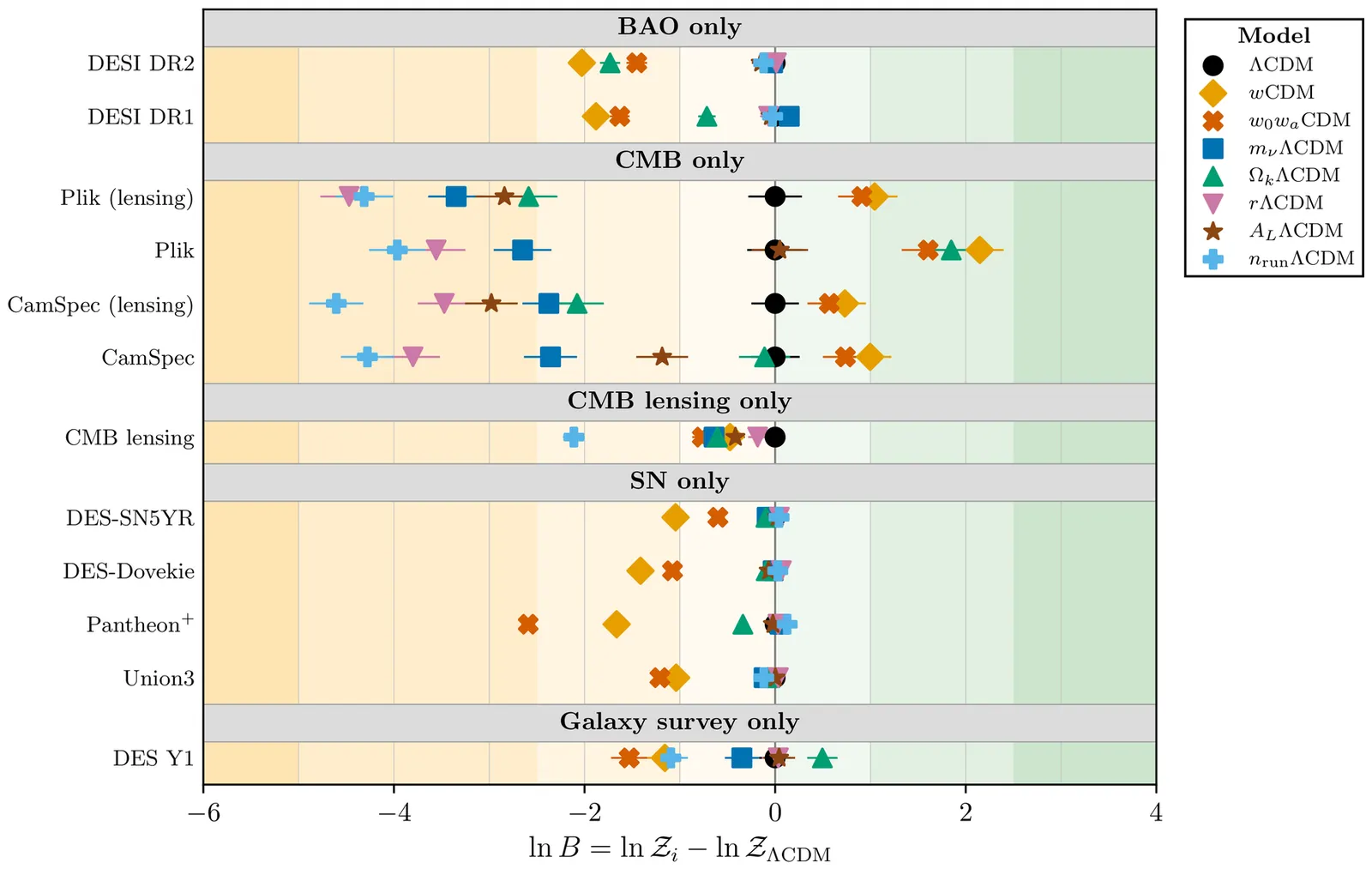
The Bayesian view of DESI DR2: Evidence and tension in a combined analysis with CMB and supernovae across cosmological models
We apply the unimpeded framework to perform a fully Bayesian reanalysis of the DESI DR2 data, using nested sampling with PolyChord to compute evidences for $Λ$CDM and seven extensions across combinations of DESI DR1/DR2, Planck CMB, supernovae (Pantheon+, Union3, DES-SN5YR, DES-Dovekie), and DES-Y1 weak lensing. The Bayesian Ockham's razor penalises extended models, yielding weaker or opposite preferences compared to $Δχ^2$-based analyses. For DESI DR2 BAO combined with Planck CMB alone, the DESI collaboration's $3.1σ$ frequentist preference for $w_0w_a$CDM is eliminated entirely: we obtain ${\ln B = -0.57{\scriptstyle\pm0.26}}$, modestly favouring $Λ$CDM. Adding the corrected DES-Dovekie supernova calibration maintains this concordance (${\ln B = -0.01{\scriptstyle\pm0.27}}$). However, when the original DES-SN5YR calibration is included instead, the DESI collaboration's $4.2σ$ result survives the Bayesian Ockham penalty as a $3.07{\scriptstyle\pm0.10}\,σ$ preference (${\ln B = +3.32{\scriptstyle\pm0.27}}$). That this signal persists despite the Ockham penalty makes the role of tension quantification essential: our analysis traced the preference to the DES-SN5YR calibration error, which introduced a $2.95{\scriptstyle\pm 0.04}\,σ$ conflict with DESI DR2 within $Λ$CDM -- a tension that stands out from the grid -- reduced to $1.96{\scriptstyle\pm 0.04}\,σ$ once the calibration was corrected. With the calibration corrected, the Bayesian evidence for dynamical dark energy vanishes.
2603.05472
Mar 2026Cosmology and Nongalactic Astrophysics
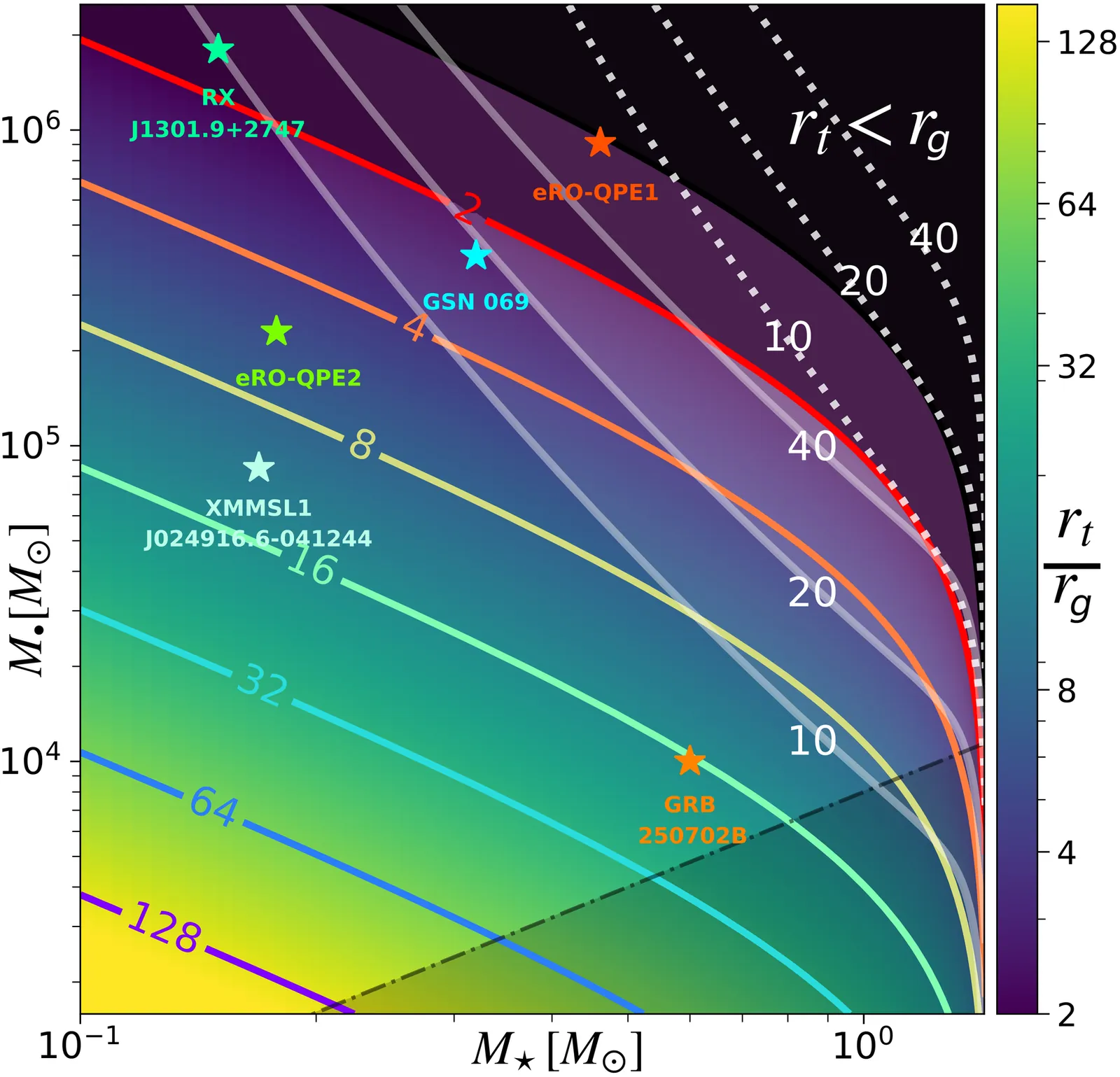
Relativistic Tidal Dissipation and the Gravitational-wave Signal of a White Dwarf Orbiting an Intermediate-Mass Black Hole
Finding intermediate-mass black holes (IMBHs) and measuring their masses and spins are key to understanding massive black hole formation. White dwarf (WD)-IMBH binaries provide a unique probe because they emit both electromagnetic radiation and gravitational waves (GWs), thereby conveying richer information. However, such multi-messenger sources often enter the regime of strong gravity, where existing models fail to capture their relativistic dynamics. Here, we develop a fully relativistic model for the tidal response of a WD close to an IMBH and use it to study the secular orbital evolution as well as the GW signal. We find that for IMBHs more massive than 10^5 solar masses, tidal interaction becomes relativistic and sensitive to IMBH spin. The interaction generally dissipates binary orbital energy and angular momentum, but due to relativistic frame rotation, which reduces phase coherence across pericenter passages, the orbit-averaged tidal dissipation rate can be suppressed by up to about 50% relative to Newtonian predictions. Including tidal dissipation leads to more rapid damping of the orbital eccentricity, to the extent that the pericenter distance may even increase over time, potentially explaining quasi-periodic eruptions and secular orbital period growth. Such tidal effects accumulate into measurable phase and amplitude deviations in the GW signal. For typical space-based observations, the GW waveform mismatch can reach values of order 0.1 within 6 months. Our results indicate that relativistic tidal dissipation is both dynamically important and observationally essential for reliably predicting the multi-messenger signals of WD-IMBH systems.
2602.22688
Feb 2026High Energy Astrophysical Phenomena
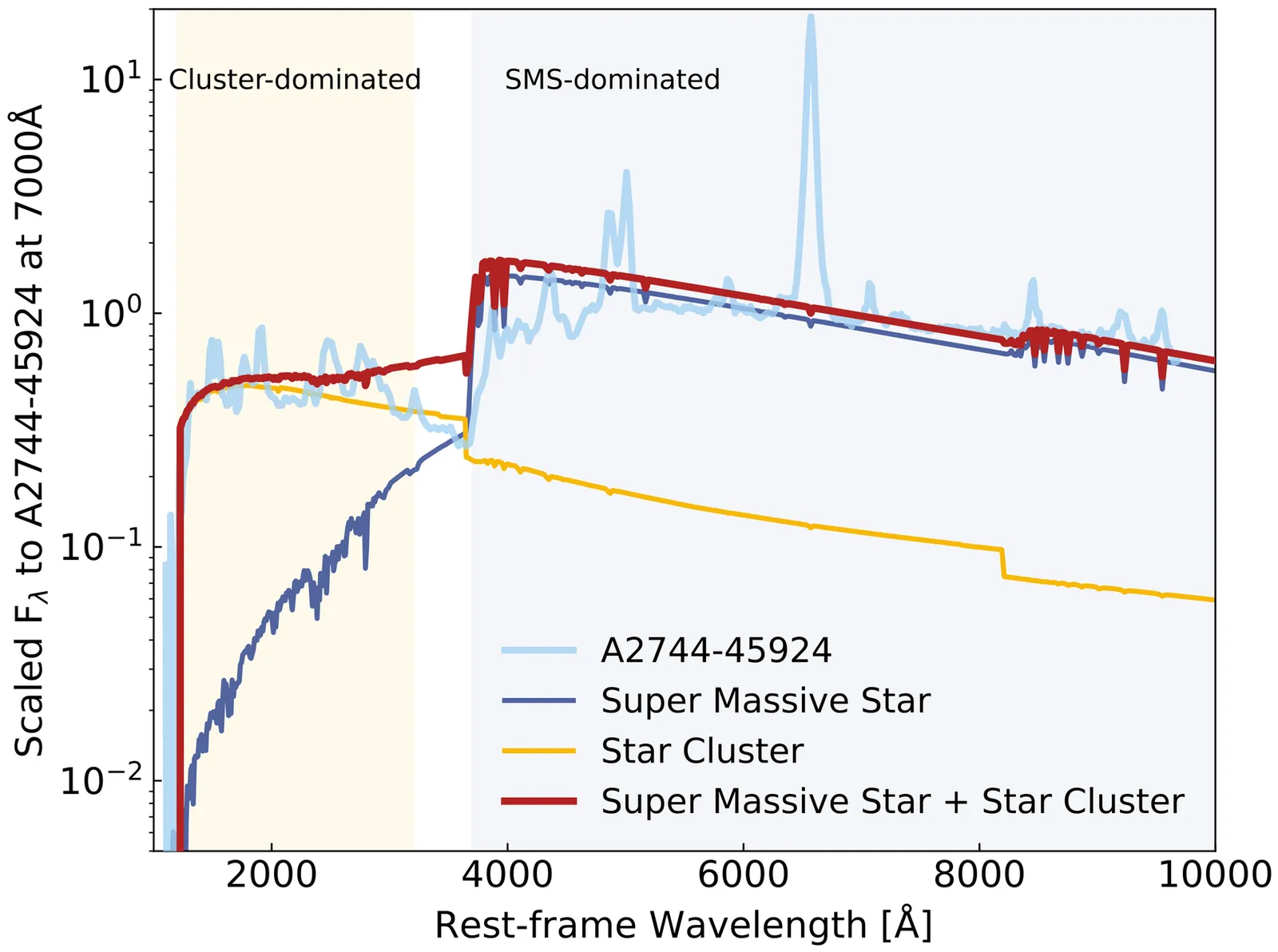
Little Red Dots as Globular Clusters in Formation
Little Red Dots (LRDs), among the most enigmatic high-redshift discoveries by JWST, are commonly believed to be powered by accreting supermassive black holes. Here, we explore the possibility that these sources are globular clusters in formation, with rest-frame UV arising from a very young stellar population and rest-frame optical from a short-lived supermassive ($>10^4$ M$_\odot$) star. The spectral profiles of LRDs are broadly consistent with this scenario, though the observed temperatures and bolometric luminosities favor emission reprocessed by optically thick, continuum-driven winds not fully captured by current models. The LRD $z\sim5-7$ UV luminosity function naturally evolves, under standard evolutionary and mass-loss prescriptions, into a present-day mass function with a turnover at $\log_{10}(M_\ast$/$M_\odot)=5.3$ and an exponential cutoff at high masses, consistent with local globular-cluster populations. We estimate the total present-day number density of LRDs formed across all redshifts to be $\approx0.3$ Mpc$^{-3}$, similar to local globular clusters. The observed LRD redshift range matches the age distribution of metal-poor globular clusters, without current LRD counterparts to the metal-rich population. If LRDs are globular clusters in formation, we predict chemical abundance patterns characteristic of multiple stellar populations, including enhanced He and N, and potential Na-O and Al-Mg anti-correlations. These results offer a local perspective to explore this surprisingly abundant population of distant sources, and a potential new window into extreme stellar astrophysics in the early Universe.
2602.15935
Feb 2026Astrophysics of Galaxies
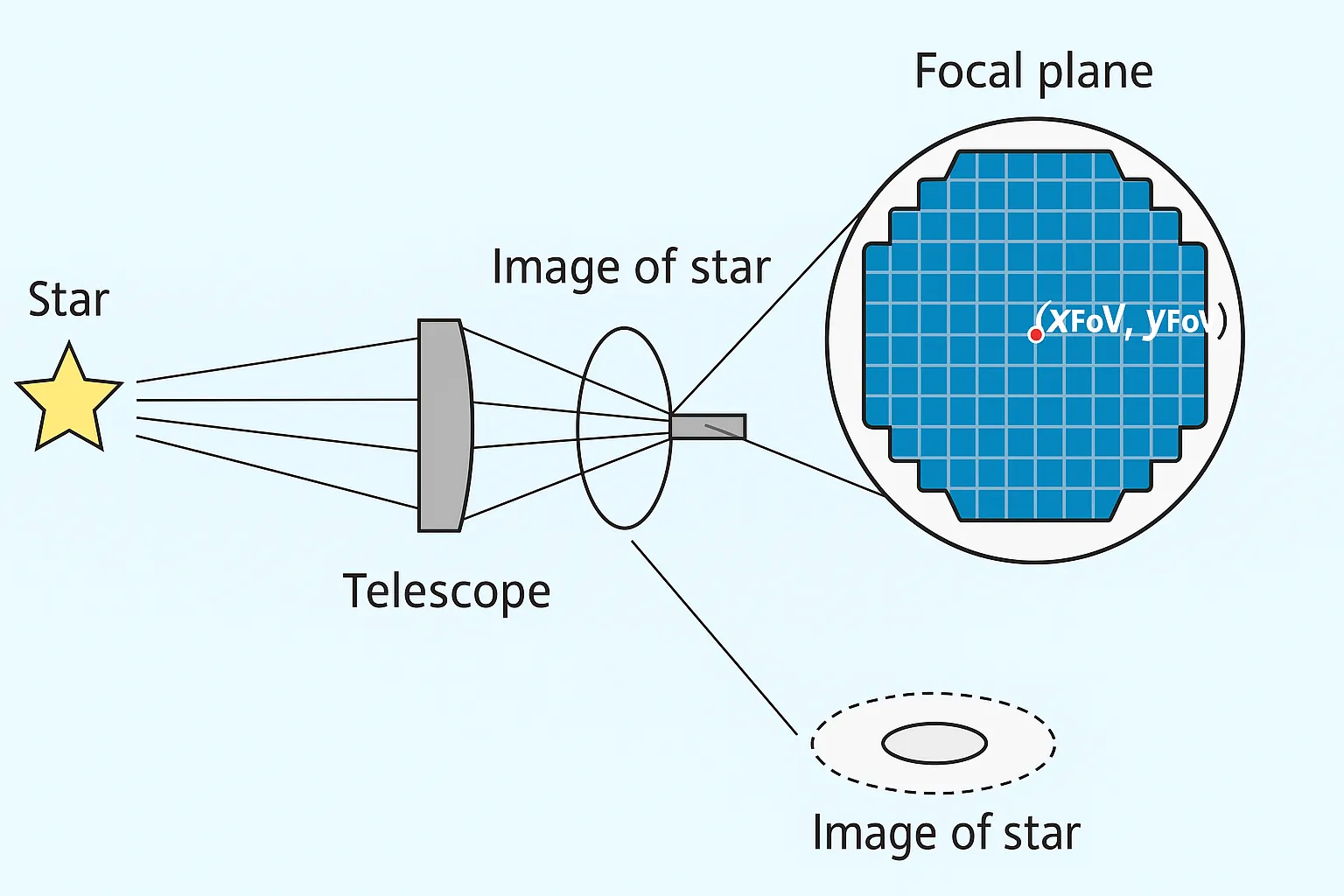
Deep Learning for Point Spread Function Modeling in Cosmology
We present the development of a data-driven, AI-based model of the Point Spread Function (PSF) that achieves higher accuracy than the current state-of-the-art approach, "PSF in the Full Field-of-View'' (PIFF). PIFF is widely used in leading weak-lensing surveys, including the Dark Energy Survey (DES), the Hyper Suprime-Cam (HSC) Survey, and the Vera C. Rubin Observatory Legacy Survey of Space and Time (LSST). The PSF characterizes how a point source, such as a star, is imaged after its light traverses the atmosphere and telescope optics, effectively representing the "blurred fingerprint'' of the entire imaging system. Accurate PSF modeling is essential for weak gravitational lensing analyses, as biases in its estimation propagate directly into cosmic shear measurements -- one of the primary cosmological probes of the expansion history of the Universe and the growth of large-scale structure for dark energy studies. To address the limitations of PIFF, which constructs PSF models independently for each CCD and therefore loses spatial coherence across the focal plane, we introduce a deep-learning-based framework for PSF reconstruction. In this approach, an autoencoder is trained on stellar images obtained with the Hyper Suprime-Cam (HSC) of the Subaru Telescope and combined with a Gaussian process to interpolate the PSF across the telescope's full field of view. This hybrid model captures systematic variations across the focal plane and achieves a reconstruction error of $3.4 \times 10^{-6}$ compared to PIFF's $3.7 \times 10^{-6}$, laying the foundation for integration into the LSST Science Pipelines.
2602.15780
Feb 2026Instrumentation and Methods for Astrophysics
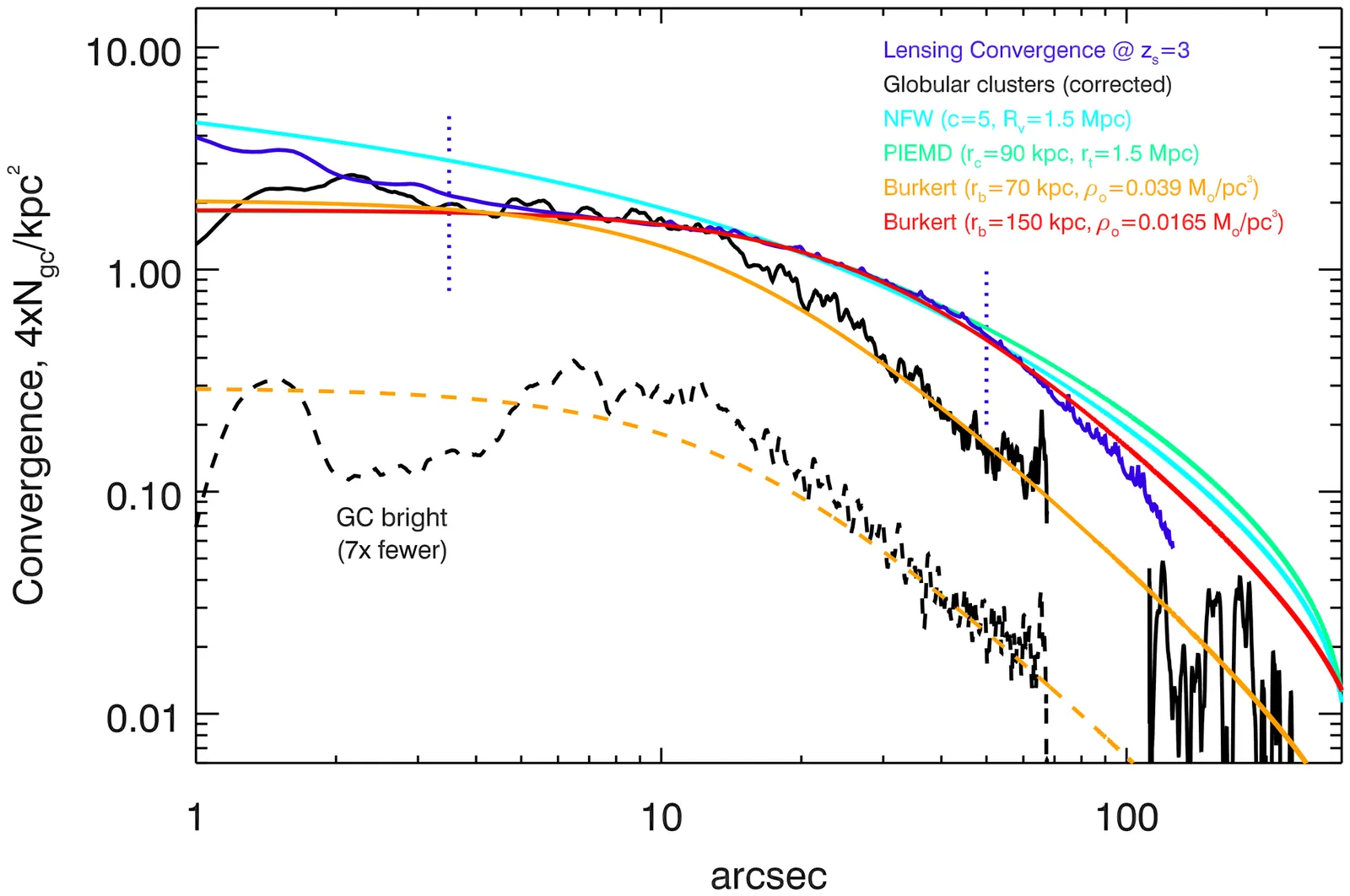
The large cores of dark matter and globular clusters in AS1063. Possible evidence of self-interacting dark matter. Or not
Deep JWST images of AS1063 reveals tens of thousands of globular clusters in the galaxy cluster AS1063. When compared with the lensing model based on the same JWST data, the distribution of globular clusters traces closely the distribution of lensing mass (mostly composed of dark matter). Interestingly, both the distributions of dark matter and globular clusters have large central cores. However the size of the core in the distribution of globular clusters is about half the size the core of the dark matter distribution. We argue that the standard cold dark matter and fuzzy dark matter models struggle to explain these large cores. Meanwhile, the self interacting dark matter with a velocity dependent cross section, combined with core stalling, offers a natural explanation to the existence of these cores if $σ_{\rm SI}\approx 0.3$ cm$^2$ g$^{-1}$ for galaxy cluster halos. But we also discuss how the lack of hydrodynamical N-body simulations capable of resolving globular clusters in galaxy cluster scale halos, hinders the possibility of ruling out the standard non-collisional dark matter scenario. Future high-resolution hydrodynamical simulations of galaxy clusters, with several trillion particles, and containing over a hundred thousand globular clusters, can provide the insight needed to transform the epistemic nature of dark matter into an ontological one
2602.15940
Feb 2026Astrophysics of Galaxies
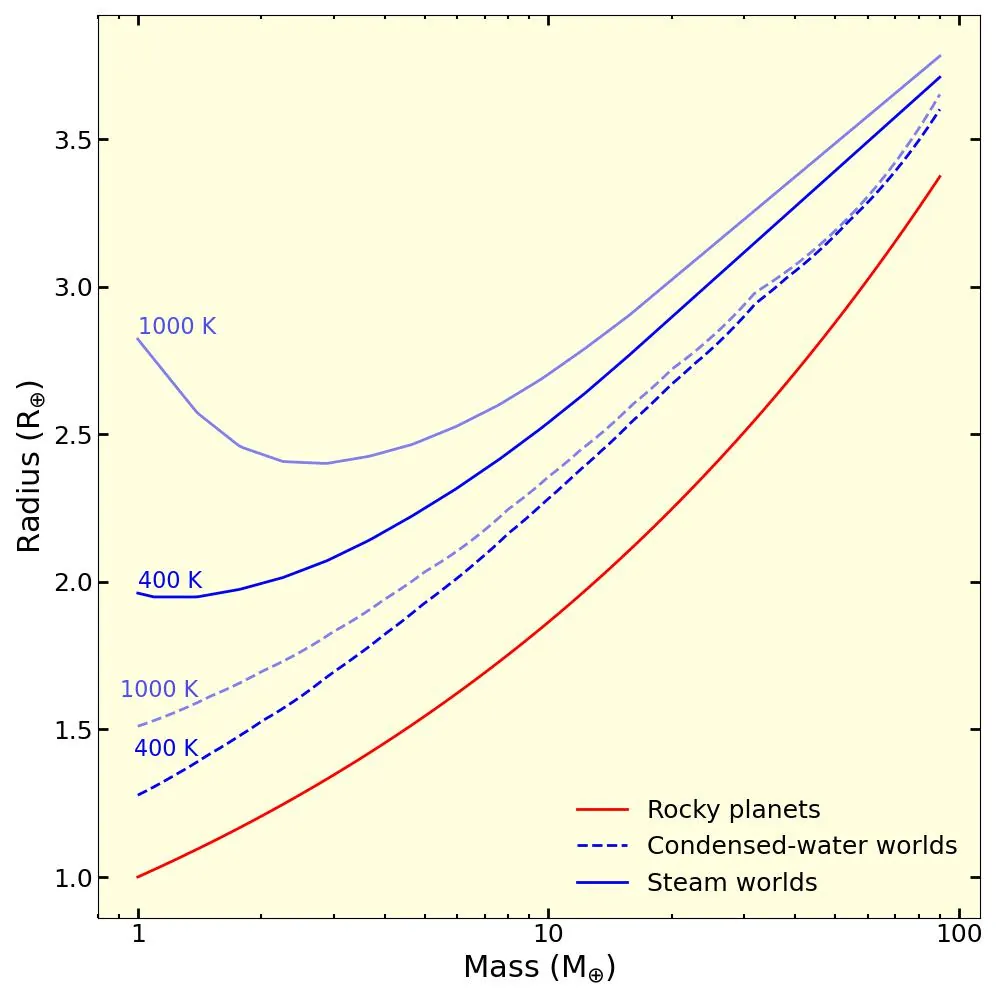
The Radius Cliff is a Waterfall: Explaining Sub-Neptune Exoplanets with Steam Worlds
The demographics of Kepler planets provide a key testbed for models of planet formation and evolution, particularly for explaining the radius valley separating super-Earths and sub-Neptunes. A primordial interpretation based on differences in bulk densities -- where rocky and water-rich planets form via migration pathways -- offers an alternative to atmospheric loss scenarios. Updated interior structure models of water worlds with adiabatic steam atmospheres reproduce the observed valley near $\sim2~R_\oplus$ more accurately. Furthermore, migration models from our Genesis library suggest that these formation pathways can also account for the distinct period distributions of super-Earths and sub-Neptunes, as well as the emergence of the hot Neptune desert. Motivated by this, we develop a Bayesian hierarchical mixture model for close-in Kepler planets ($P<100$ days), combining rocky planets and water worlds without H/He envelopes. The inferred mass distributions of rocky and water-rich planets peak at $\sim2.6~M_\oplus$ and $\sim7~M_\oplus$, respectively, with the water mass fraction of water worlds peaking at $\sim41\%$. Water worlds provide a good representation of the Kepler sub-Neptune population, with the radius cliff emerging as a ``waterfall" -- a sharp decline in their occurrence. However, our mass-radius analysis shows that water worlds alone cannot explain planets with $R \gtrsim 3~R_\oplus$, implying that at least $\sim20\%$ of sub-Neptunes in the sample are enriched in H/He gas.
2602.11923
Feb 2026Earth and Planetary Astrophysics
2602.05973Does Cosmology require Hermiticity in Quantum Mechanics?
We explore the consequences of allowing non-Hermitian structures in quantum cosmology by extending the Wheeler DeWitt framework beyond strictly Hermitian dynamics. Using a controlled semiclassical reduction, we show how anti Hermitian contributions propagate into both early universe primordial fluctuations and late-time structure growth as effective damping or gain terms. Confronting this framework with inflationary observables, growth of structure and the observed near flatness of the universe, we derive strong infrared constraints that suppress non Hermiticity across cosmic history. We demonstrate that these bounds are mutually consistent between early and late-time probes and can be partially relaxed in theories beyond General Relativity. Our results establish cosmology as a novel arena for testing foundational aspects of quantum mechanics and suggest that Hermiticity may emerge dynamically along the semiclassical branch describing our universe.
2602.05973
Feb 2026Cosmology and Nongalactic Astrophysics
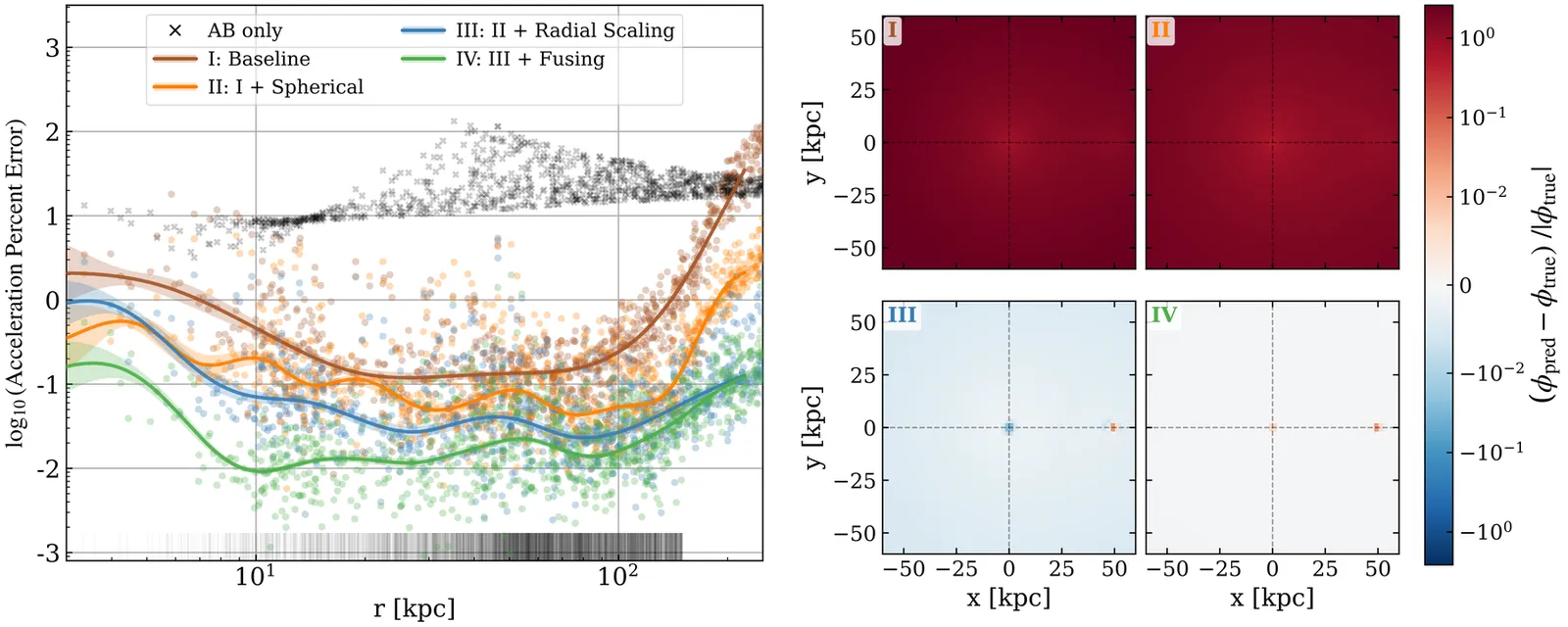
Physics-Informed Neural Networks for Modeling Galactic Gravitational Potentials
We introduce a physics-informed neural framework for modeling static and time-dependent galactic gravitational potentials. The method combines data-driven learning with embedded physical constraints to capture complex, small-scale features while preserving global physical consistency. We quantify predictive uncertainty through a Bayesian framework, and model time evolution using a neural ODE approach. Applied to mock systems of varying complexity, the model achieves reconstruction errors at the sub-percent level ($0.14\%$ mean acceleration error) and improves dynamical consistency compared to analytic baselines. This method complements existing analytic methods, enabling physics-informed baseline potentials to be combined with neural residual fields to achieve both interpretable and accurate potential models.
2602.01806
Feb 2026Astrophysics of Galaxies
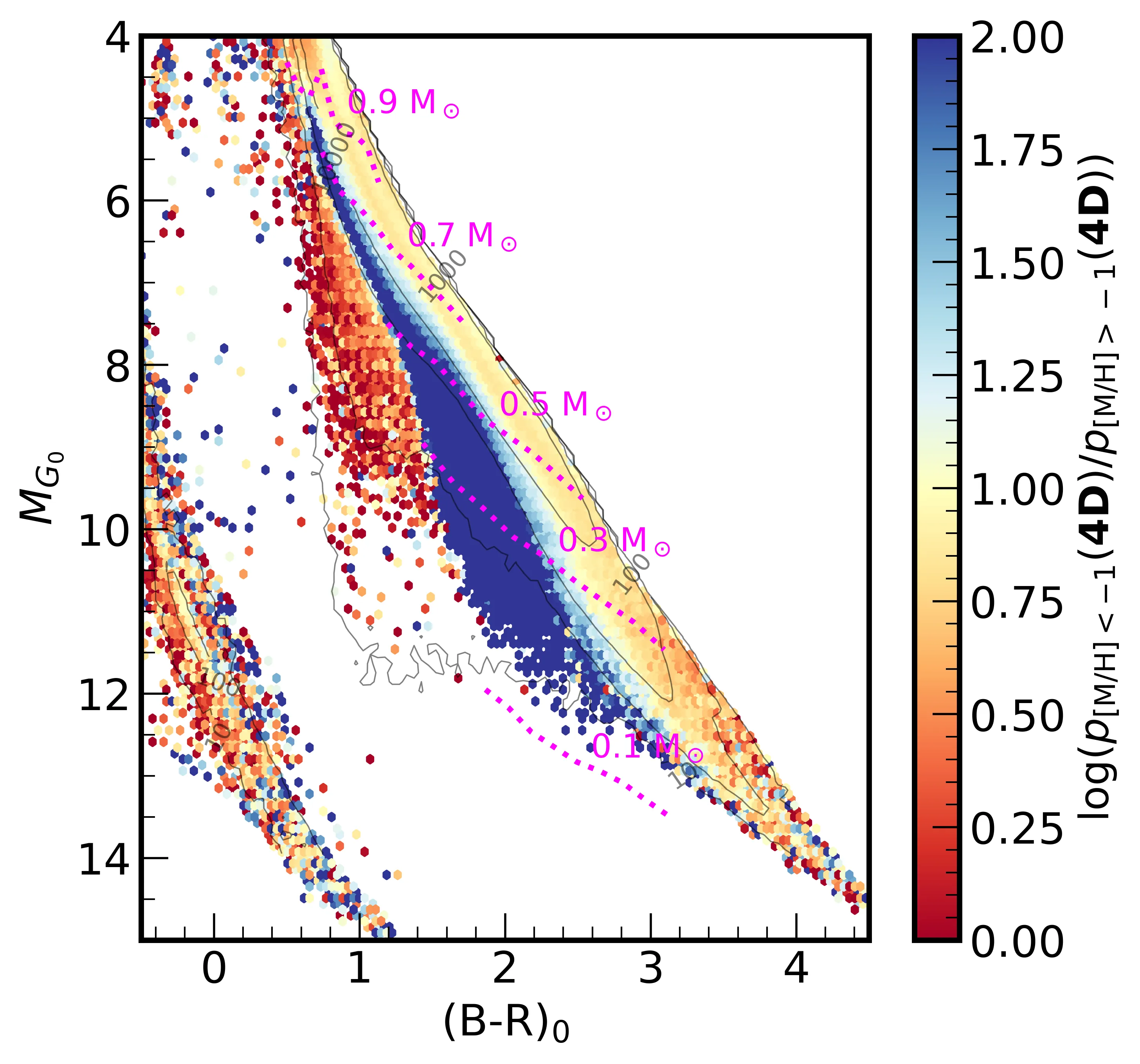
Variations in the Milky Way's Stellar Mass Function at [Fe/H] < -1
We present the first determination of the Galactic stellar mass function (MF) for low-mass stars (0.2-0.5 M_sun) at metallicities [Fe/H] < -1. A sample of ~53,000 stars was selected as metal-poor on the basis of both their halo-like orbits and their spectroscopic [Fe/H] from Gaia DR3 BP/RP (XP) spectra. These metallicity estimates for low-mass stars were enabled by calibrating Gaia XP spectra with stellar parameters from SDSS-V. For -1.5 < [Fe/H] < -1, we find that the MF below 0.5 M_sun exhibits a "bottom-heavy" power-law slope of alpha ~ -1.6. We tentatively find that at even lower metallicities, the MF becomes very bottom-light, with a near-flat power-law slope of alpha ~ 0 that implies a severe deficit of low-mass stars. This metallicity-dependent variation is insensitive to the adopted stellar evolution model. These results show that the Galactic low-mass MF is not universal, with variations in the metal-poor regime. A further calibration of XP metallicities in the regime of M < 0.5 M_sun and [Fe/H] < -1.5 will be essential to verify these tentative low-metallicity trends.
2601.19522
Jan 2026Astrophysics of Galaxies
On the rarity of rocket-driven Penrose extraction in Kerr spacetime
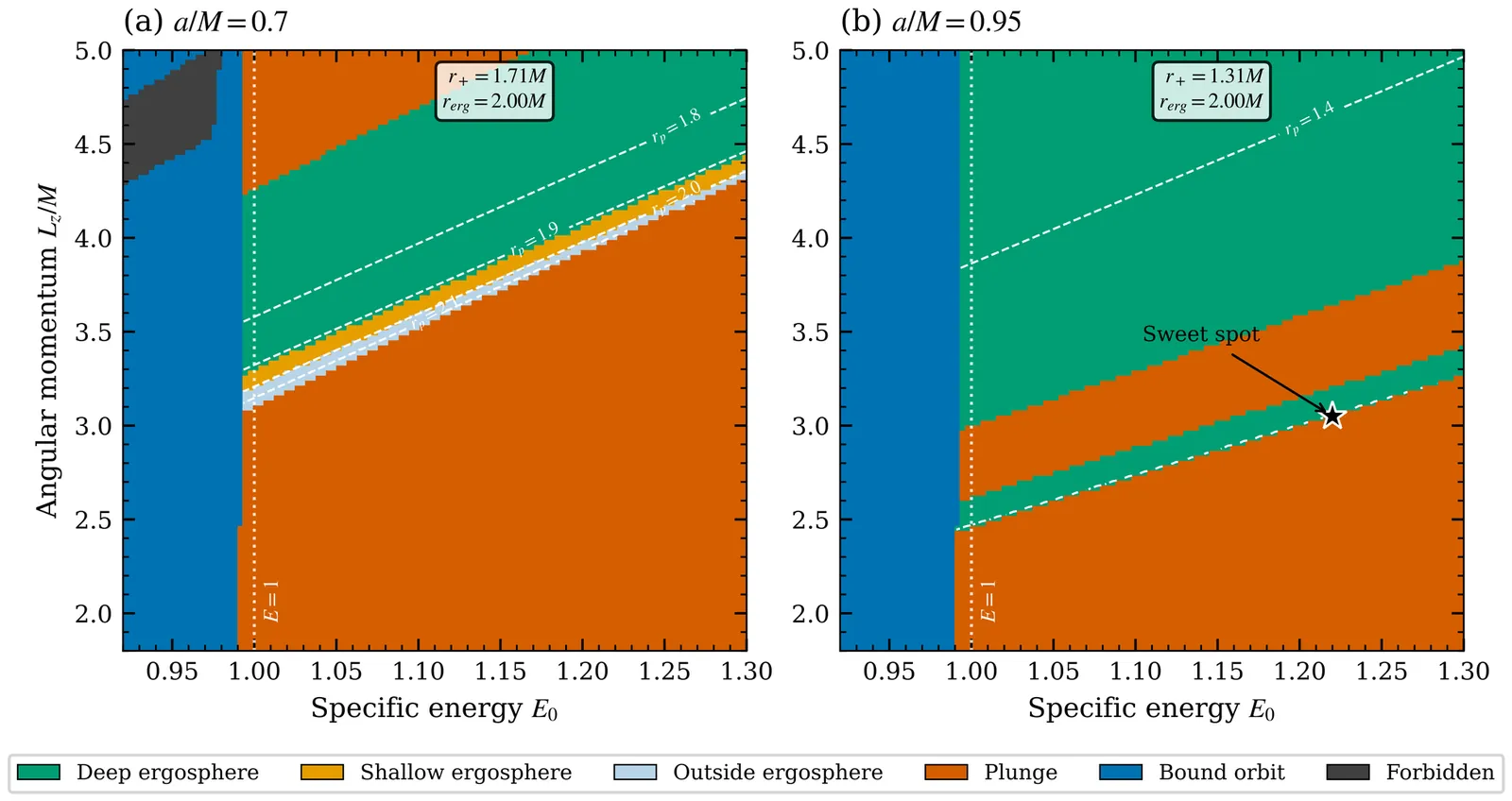
We present a Monte Carlo study of energy extraction from rotating (Kerr) black holes via the Penrose process using rocket propulsion. Through over 250,000 trajectory simulations, we establish sharp constraints on when Penrose extraction with escape to infinity succeeds. The mechanism requires that exhaust ejected inside the ergosphere carries negative Killing energy, which is kinematically accessible only via ultra-relativistic ejection deep within the ergosphere. We find that successful extraction with escape is statistically rare ($\sim$1% in broad parameter scans) and is governed by strict thresholds: it requires high black hole spin (empirically $a/M \gtrsim 0.89$) and ultra-relativistic exhaust velocity (onset at $v_e \approx 0.91c$). When conditions are highly tuned to a specific "sweet spot," success rates can reach 88.5%, representing a narrow extraction window rather than generic behavior. Furthermore, single-impulse thrust at periapsis achieves significantly higher cumulative efficiency ($η_{\rm cum} \approx 19\%$) compared to continuous thrust ($\sim$2--4%) due to path-averaging penalties. These constraints quantify the extreme fine-tuning required for material-based Penrose extraction, consistent with the astrophysical dominance of electromagnetic mechanisms. Simulation code is available at https://github.com/anindex/penrose_process.
2601.19616
Jan 2026High Energy Astrophysical Phenomena
Fuzzy dark matter soliton core hosting a supermassive black hole as a dense low-mass perturber in strong gravitational lensing
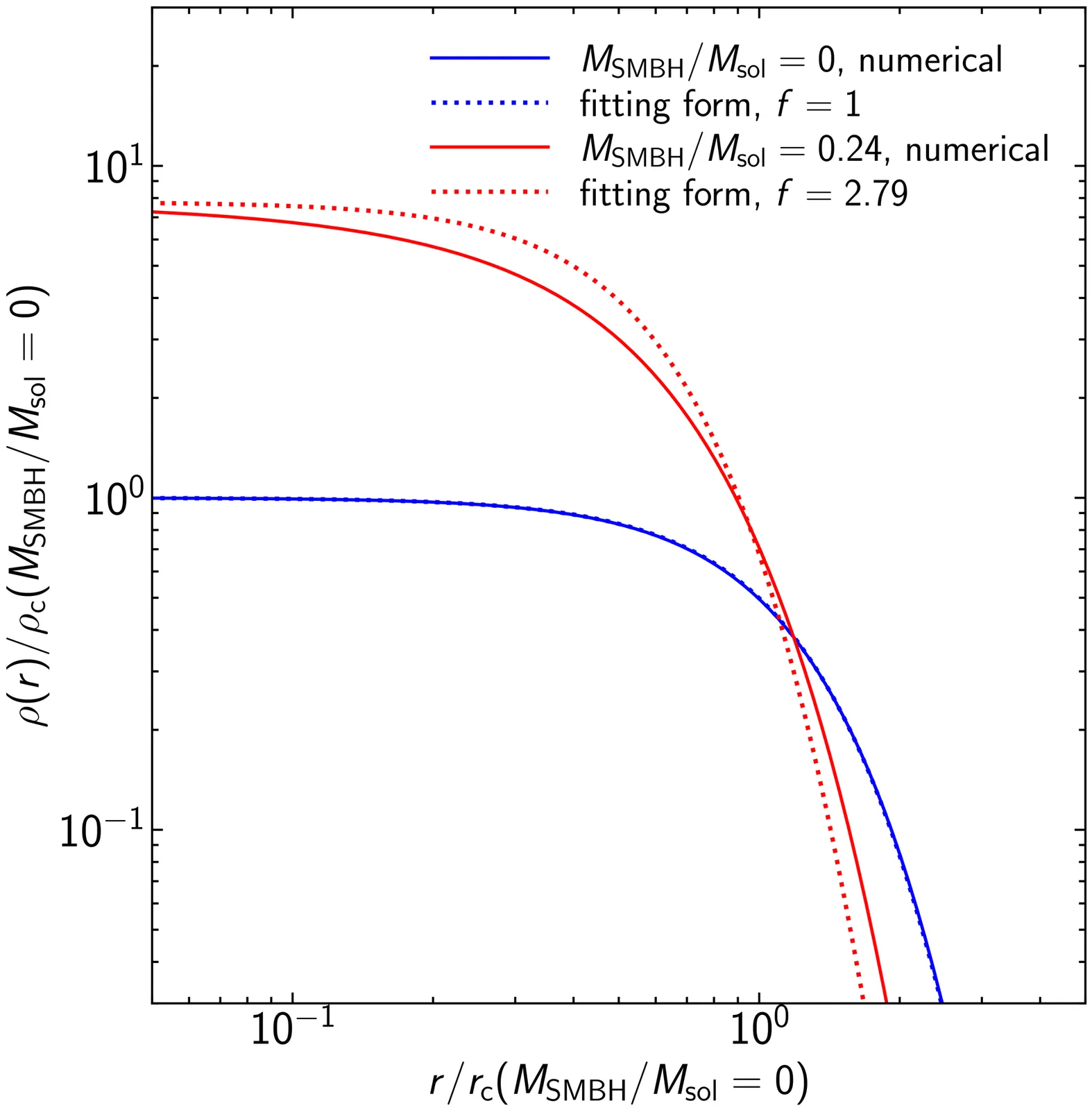
Recent high-resolution imaging observations of strong lens systems reveal dense low-mass perturbers. We propose a soliton core, whose central density is boosted by a supermassive black hole (SMBH), in the fuzzy dark matter (FDM) model as an efficient perturber in strong gravitational lensing. The higher central density makes it less efficient in the tidal mass loss, and leads to the higher impact in gravitational lensing. We show that the mass profile of a $\sim 10^6M_\odot$ perturber in JVAS B1938+666, which does not resemble any known astronomical object, can be wel explained by a soliton core in the FDM model with the mass of $4\times 10^{-21}$eV hosting an SMBH with the mass of $4\times 10^5M_\odot$. The high mass of the SMBH may be explained by several scenarios that predcit heavy SMBH seeds such as the direct collapse black hole formation and primordial black holes.
2601.15718
Jan 2026Cosmology and Nongalactic Astrophysics
Reanalyzing DESI DR1: 4. Percent-Level Cosmological Constraints from Combined Probes and Robust Evidence for the Normal Neutrino Mass Hierarchy
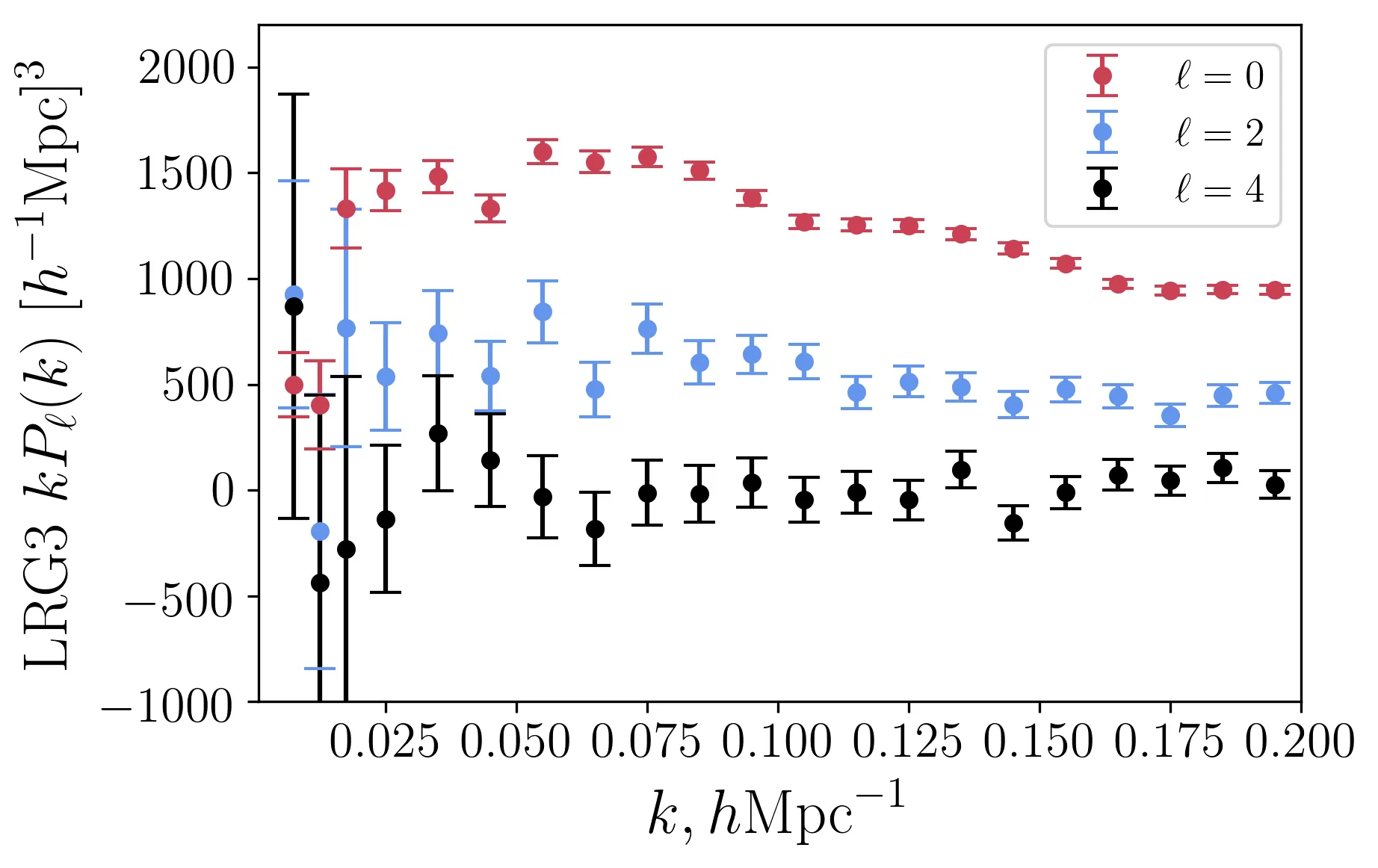
We present cosmological parameters measurements from the full combination of DESI DR1 galaxy clustering data described with large-scale structure effective field theory. By incorporating additional datasets (photometric galaxies and CMB lensing cross-correlations) and extending the bispectrum likelihood to smaller scales using a consistent one-loop theory computation, we achieve substantial gains in constraining power relative to previous analyses. Combining with the latest DESI baryon acoustic oscillation data and using cosmic microwave background (CMB) priors on the power spectrum tilt and baryon density, we obtain tight constraints on the $Λ$CDM model, finding the Hubble constant $H_0=69.08\pm 0.37~\mathrm{km}\,\mathrm{s}^{-1}\mathrm{Mpc}^{-1}$, the matter density fraction $Ω_m=0.2973\pm 0.0050$, and the mass fluctuation amplitude $σ_8 = 0.815\pm 0.016$ (or the lensing parameter $S_8\equivσ_8\sqrt{Ω_m/0.3}=0.811\pm 0.016$), corresponding to $0.6\%$, $1.7\%$, and $2\%$ precision respectively. Adding the Pantheon+ supernova sample (SNe), we find a preference of $2.6σ$ for the $w_0w_a$ dynamical dark energy model from low-redshift data alone, which increases to $2.8σ$ when exchanging the SNe with Planck CMB data. Combining full-shape data with BAO, CMB, and SNe likelihoods, we improve the dark energy figure-of-merit by $18\%$ and bound the sum of the neutrino masses to $M_ν<0.057$ eV in $Λ$CDM and $M_ν<0.095$ eV in the $w_0w_a$ dynamical dark energy model (both at 95\% CL). This represents an improvement of $25\%$ over the background expansion constraints and the strongest bound on neutrino masses in $w_0w_a$CDM to date. Our results suggest that the preference for the normal ordering of neutrino mass states holds regardless of the cosmological background model, and is robust in light of tensions between cosmological datasets.
2601.16165
Jan 2026Cosmology and Nongalactic Astrophysics
OmniSpectra: A Unified Foundation Model for Native Resolution Astronomical Spectra
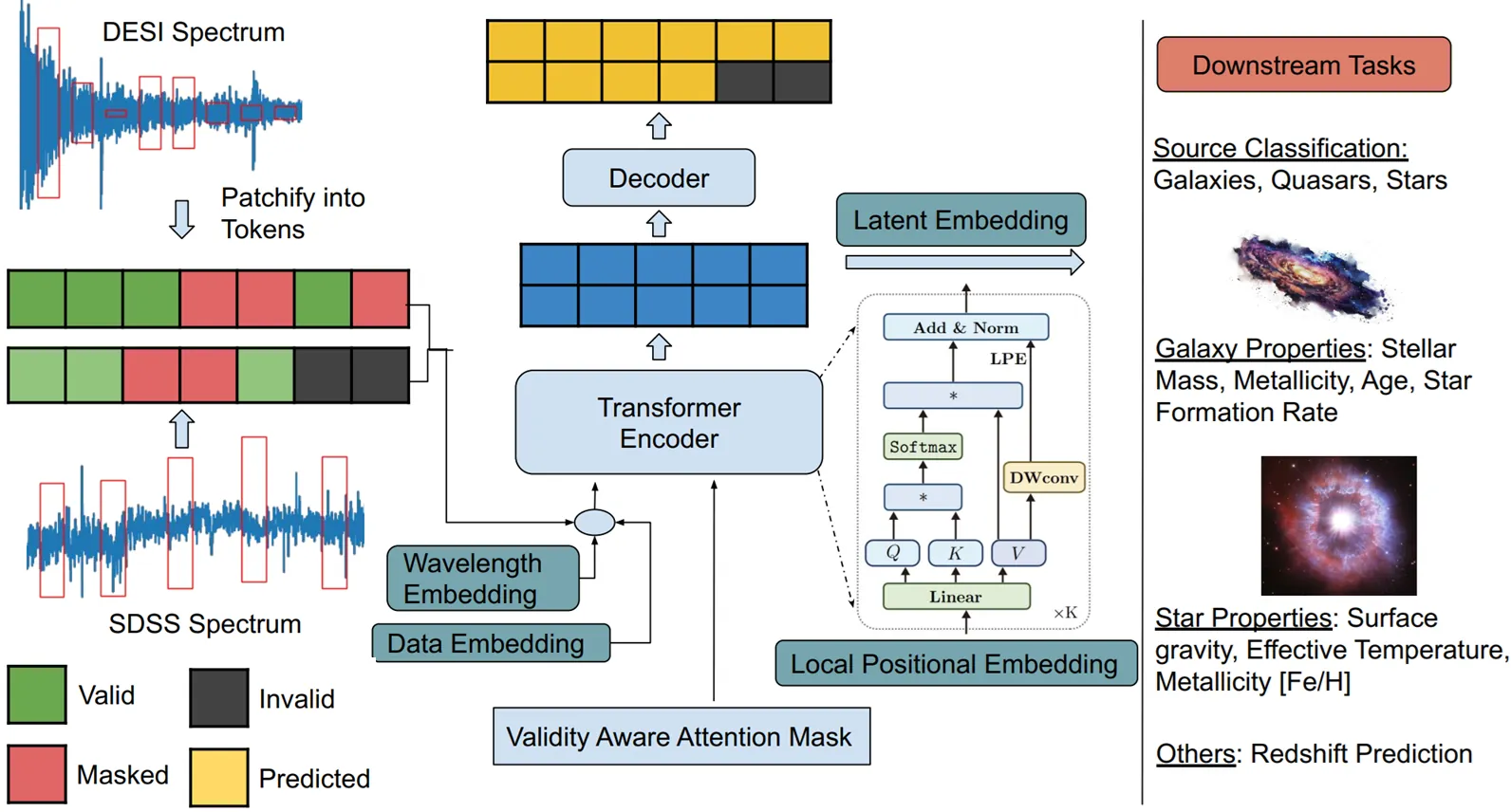
We present OmniSpectra, the first native-resolution foundation model for astronomy spectra. Unlike traditional models, which are limited to fixed-length input sizes or configurations, OmniSpectra handles spectra of any length at their original size, without resampling or interpolation. Despite the large-scale spectroscopic data from diverse surveys fueling the rapid growth of astronomy, existing foundation models are limited to a fixed wavelength range and specific instruments. OmniSpectra is the first foundation model to learn simultaneously from multiple real-world spectra surveys with different configurations at a large scale. We achieve this by designing a novel architecture with adaptive patching across variable lengths, sinusoidal global wavelength encoding, local positional embeddings through depthwise convolution, and validity-aware self-attention masks. Allowing us to learn multi-scale spatial patterns while skipping attention for invalid patches. Even with a limited training example, OmniSpectra demonstrates excellent zero-shot generalization compared to methods tailored for specific tasks. This transfer learning capability makes this model the state-of-the-art across various astronomy tasks, including source classification, redshift estimation, and properties prediction for stars and galaxies. OmniSpectra reduces the need for training individual models for different tasks from scratch, establishing itself as the next-generation astronomy foundation model.
2601.15351
Jan 2026Instrumentation and Methods for Astrophysics
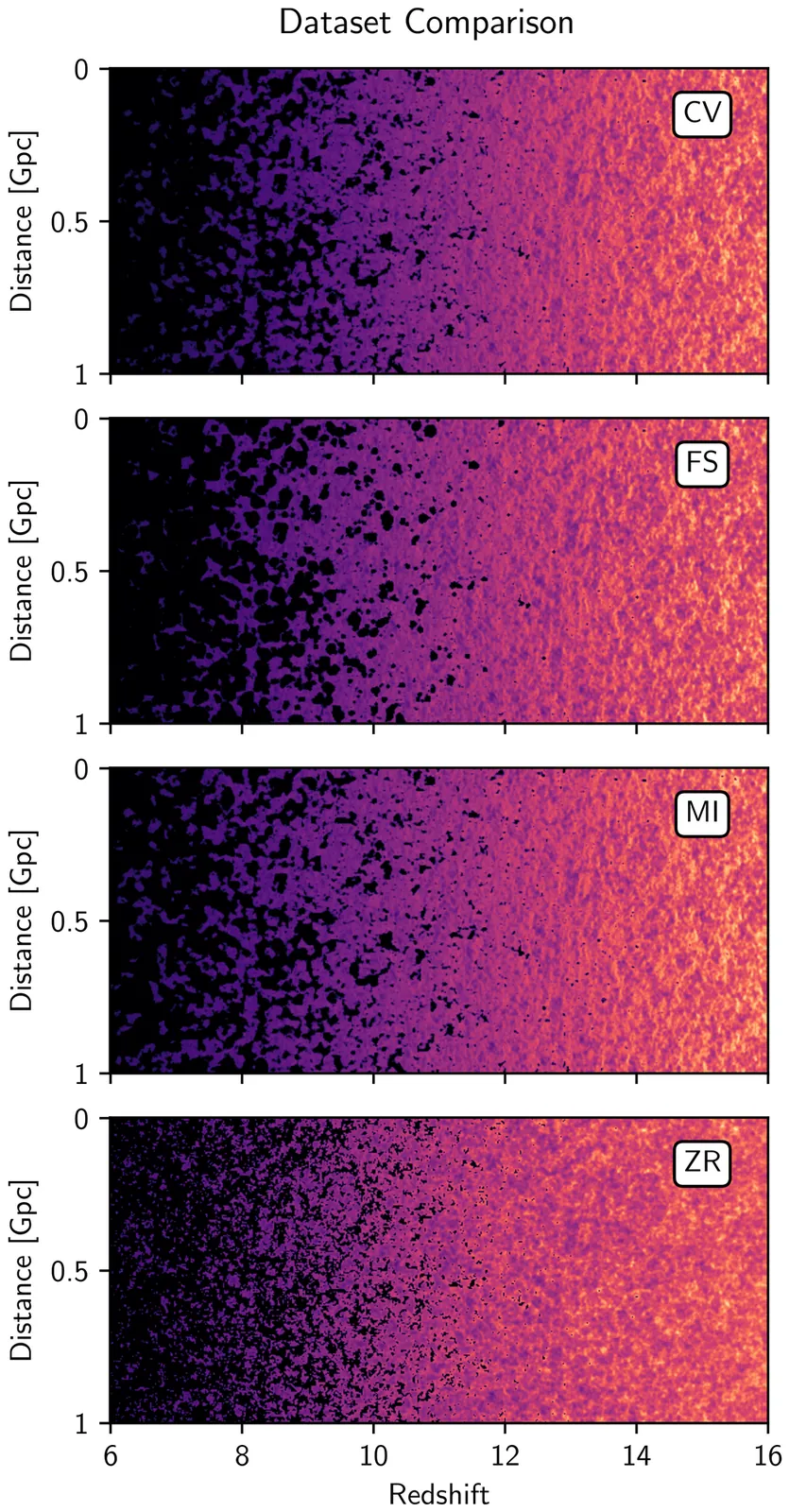
Mitigating Simulator Dependence in AI Parameter Inference for the Epoch of Reionization: The Importance of Simulation Diversity
The 21cm signal of neutral hydrogen contains a wealth of information about the poorly constrained era of cosmological history, the Epoch of Reionization (EoR). Recently, AI models trained on EoR simulations have gained significant attention as a powerful and flexible option for inferring parameters from 21cm observations. However, previous works show that AI models trained on data from one simulator fail to generalize to data from another, raising doubts about AI models' ability to accurately infer parameters from observation. We develop a new strategy for training AI models on cosmological simulations based on the principle that increasing the diversity of the training dataset improves model robustness by averaging out spurious and contradictory information. We train AI models on data from different combinations of four simulators, then compare the models' performance when predicting on data from held-out simulators acting as proxies for the real universe. We find that models trained on data from multiple simulators perform better on data from a held-out simulator than models trained on data from a single simulator, indicating that increasing the diversity of the training dataset improves a model's ability to generalize. This result suggests that future EoR parameter inference methods can mitigate simulator-specific bias by incorporating multiple simulation approaches into their analyses.
2601.05229
Jan 2026Cosmology and Nongalactic Astrophysics
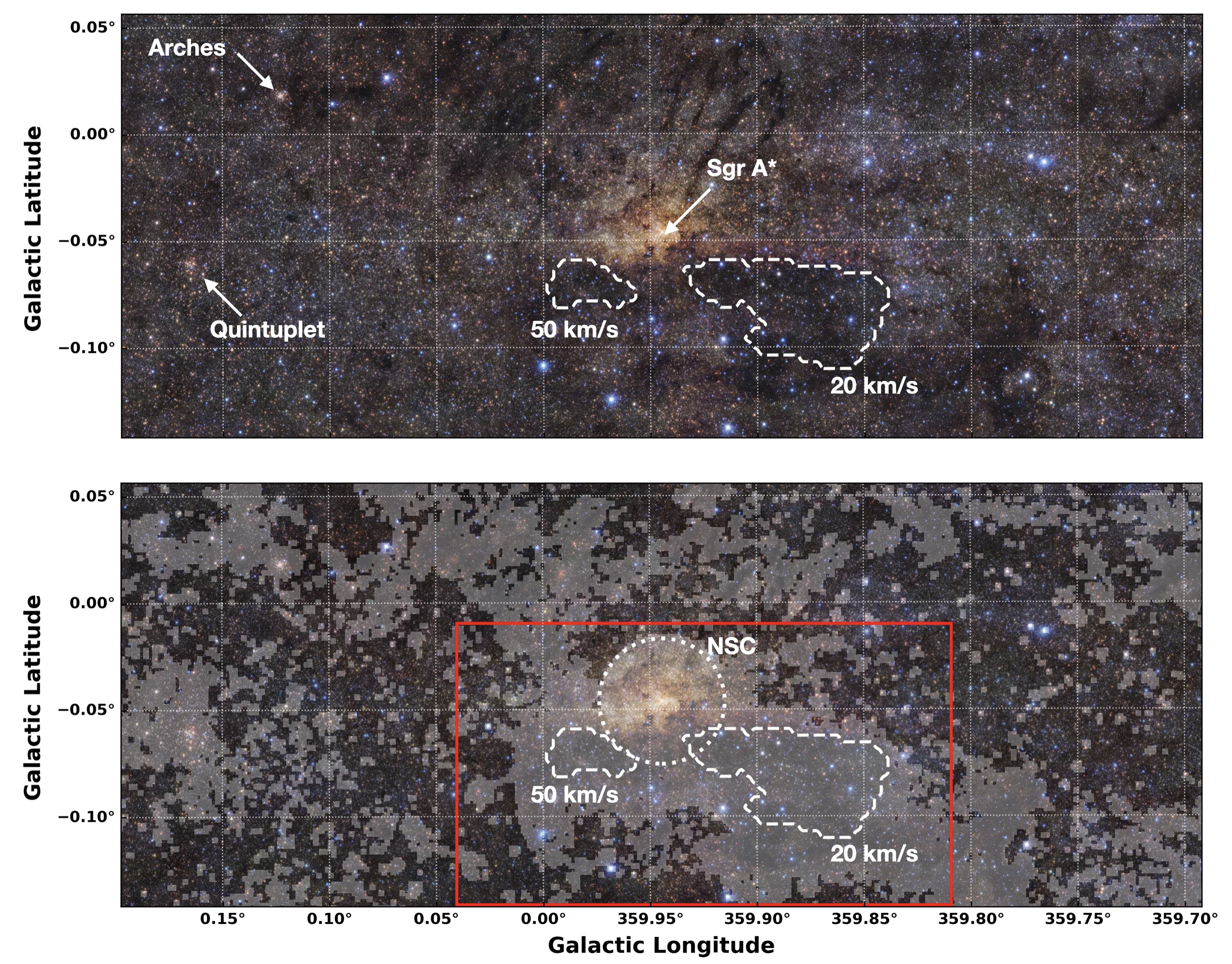
Unveiling the 3D structure of the central molecular zone from stellar kinematics and photometry: The 50 and 20 km/s clouds
The central molecular zone (CMZ), surrounding the Galactic centre, is the largest reservoir of dense molecular gas in the Galaxy. Despite its relative proximity, the 3D structure of the CMZ remains poorly constrained, primarily due to projection effects. We aim to constrain the line-of-sight location of two molecular clouds in the CMZ -- the 50 and 20 km/s clouds -- and to investigate their possible physical connection using stellar kinematics and photometry. This study serves as a pilot for future applications across the full CMZ. We estimated the line-of-sight position of the clouds by analysing stellar kinematics, stellar densities, and stellar populations towards the cloud regions and a control field. We find an absence of westward moving stars in the cloud regions, which indicates that they lie on the near side of the CMZ. This interpretation is supported by the stellar density distributions. The similar behaviour observed in the two clouds, as well as in the region between them (the ridge), suggests that they are located at comparable distances and are physically linked. We also identified an intermediate-age stellar population (2-7 Gyr) in both regions, consistent with that observed on the near side of the CMZ. We estimated the line-of-sight distances at which the clouds and the ridge become kinematically detectable (i.e. where the proper motion component parallel to the Galactic plane differs from that of the control field at the 3 sigma level) by converting their measured proper motions parallel to the Galactic plane using a theoretical model of the stellar distribution. We find that the 50 and 20 km/s clouds are located at $43\pm8$ pc and $56\pm11$ pc from Sgr A*, respectively, and that the ridge lies at $56\pm11$ pc; this supports the idea that the clouds are physically connected through the ridge.
2601.05252
Jan 2026Astrophysics of Galaxies
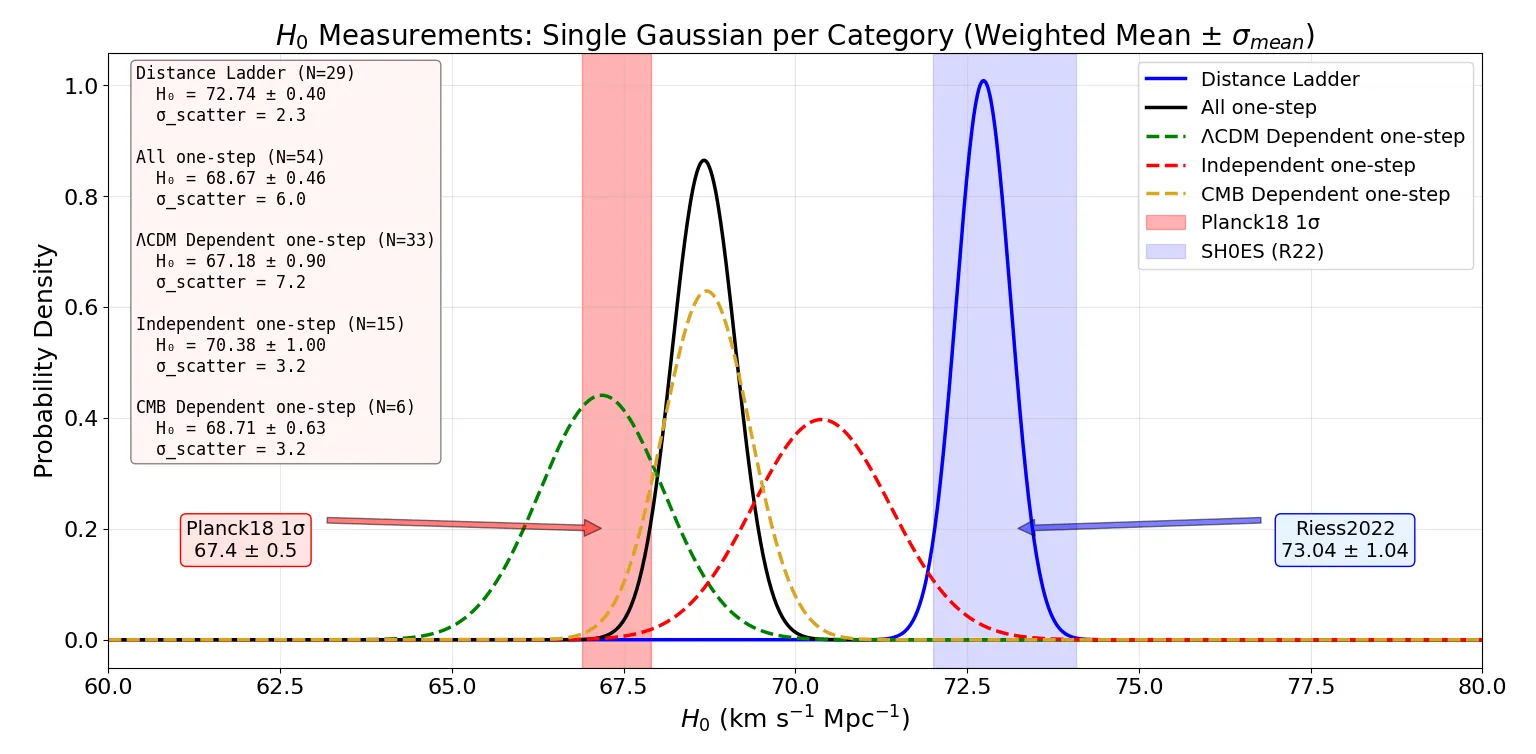
Dissecting the Hubble tension: Insights from a diverse set of Sound Horizon-free H0 measurements
The Hubble tension is commonly framed as a discrepancy between local, late-time measurements favoring $H_0 \approx 73$ km s$^{-1}$ Mpc$^{-1}$ and early-time, Sound-Horizon-based measurements favoring $H_0 \approx 67$ km s$^{-1}$ Mpc$^{-1}$. We challenge this viewpoint by analyzing 83 Sound-Horizon-independent $H_0$ measurements, categorized into four classes: Distance Ladder measurements using local calibrators; Local One-Step $Λ$CDM measurements assuming the standard expansion history; Pure Local One-Step measurements independent of $H(z)$ shape; and CMB Sound Horizon free measurements using CMB data without the Sound Horizon scale. We find that the 29 Distance Ladder measurements yield $H_0 = 72.74 \pm 0.40$ km s$^{-1}$ Mpc$^{-1}$ ($χ^2_ν\equiv χ^2/d.o.f= 0.74$), while the 54 One-Step measurements collectively yield $H_0 = 68.67 \pm 0.46$ km s$^{-1}$ Mpc$^{-1}$ ($χ^2_ν= 0.85$), a $6.7σ$ tension exceeding the Planck--SH0ES discrepancy. This tension remains significant at $4.5σ$ after accounting for correlations. Among One-Step categories, Local One-Step $Λ$CDM measurements favor the lowest value ($H_0 = 67.18 \pm 0.90$ km s$^{-1}$ Mpc$^{-1}$), Pure Local One-Step yield an intermediate value ($H_0 = 70.38 \pm 1.00$ km s$^{-1}$ Mpc$^{-1}$), and CMB Sound Horizon Free measurements give $H_0 = 68.71 \pm 0.63$ km s$^{-1}$ Mpc$^{-1}$. Thus, that the Hubble tension is better characterized as a discrepancy between the Distance Ladder and all other methodologies, rather than an early-vs-late-time split. We also identify a $2.4σ$ internal tension among One-Step measurements: analyses assuming $Λ$CDM systematically recover lower $H_0$ values by about 3.2 km s$^{-1}$ Mpc$^{-1}$ compared to model-independent methods. This suggests either unrecognized systematics/physics in the Distance Ladder or deviations from $Λ$CDM in the late-time Universe.
2601.00650
Jan 2026Cosmology and Nongalactic Astrophysics
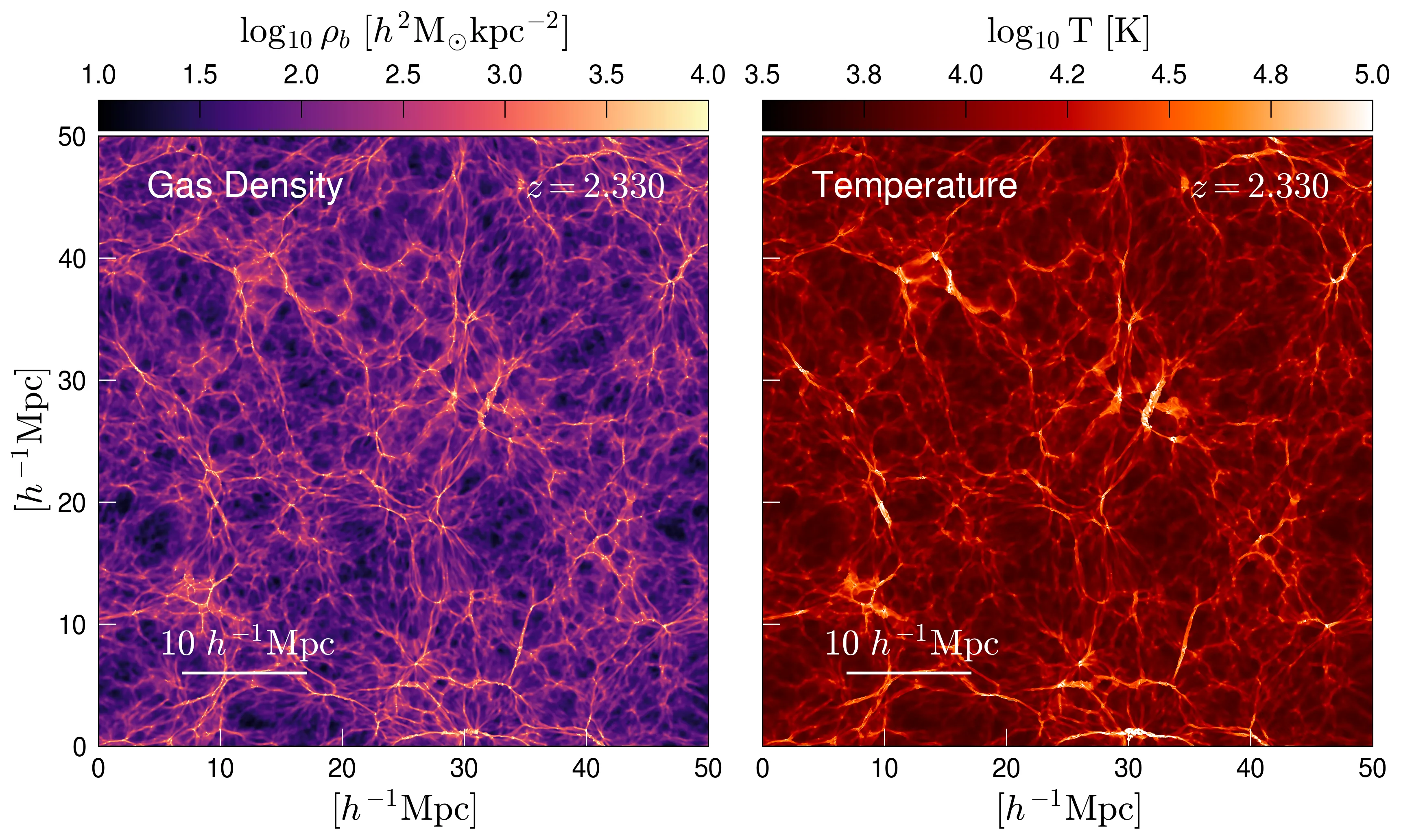
Dynamical Dark Energy Imprints in the Lyman-Alpha Forest
The nature of dark energy (DE) remains elusive, even though it constitutes the dominant energy-density component of the Universe and drives the late-time acceleration of cosmic expansion. By combining measurements of the expansion history from baryon acoustic oscillations, supernova surveys, and cosmic microwave background data, the Dark Energy Spectroscopic Instrument (DESI) Collaboration has inferred that the DE equation of state may evolve over time. The profound implications of a time-variable, ``dynamical" DE (DDE) that departs from a cosmological constant motivate the need for independent observational tests. In this work, we use cosmological hydrodynamical simulations of structure formation to investigate how DDE affects the properties of the Lyman-Alpha ``forest'' of absorption features produced by neutral hydrogen in the cosmic web. We find that DDE models consistent with the DESI constraints induce a spectral tilt in the forest transmitted flux power spectrum, imprinting a scale- and redshift-dependent signature relative to standard Lambda-CDM cosmologies. These models also yield higher intergalactic medium temperatures and reduced Lyman-Alpha opacity compared to Lambda-CDM. We discuss the observational implications of these trends as potential avenues for independent confirmation of DDE.
2601.00767
Jan 2026Cosmology and Nongalactic Astrophysics
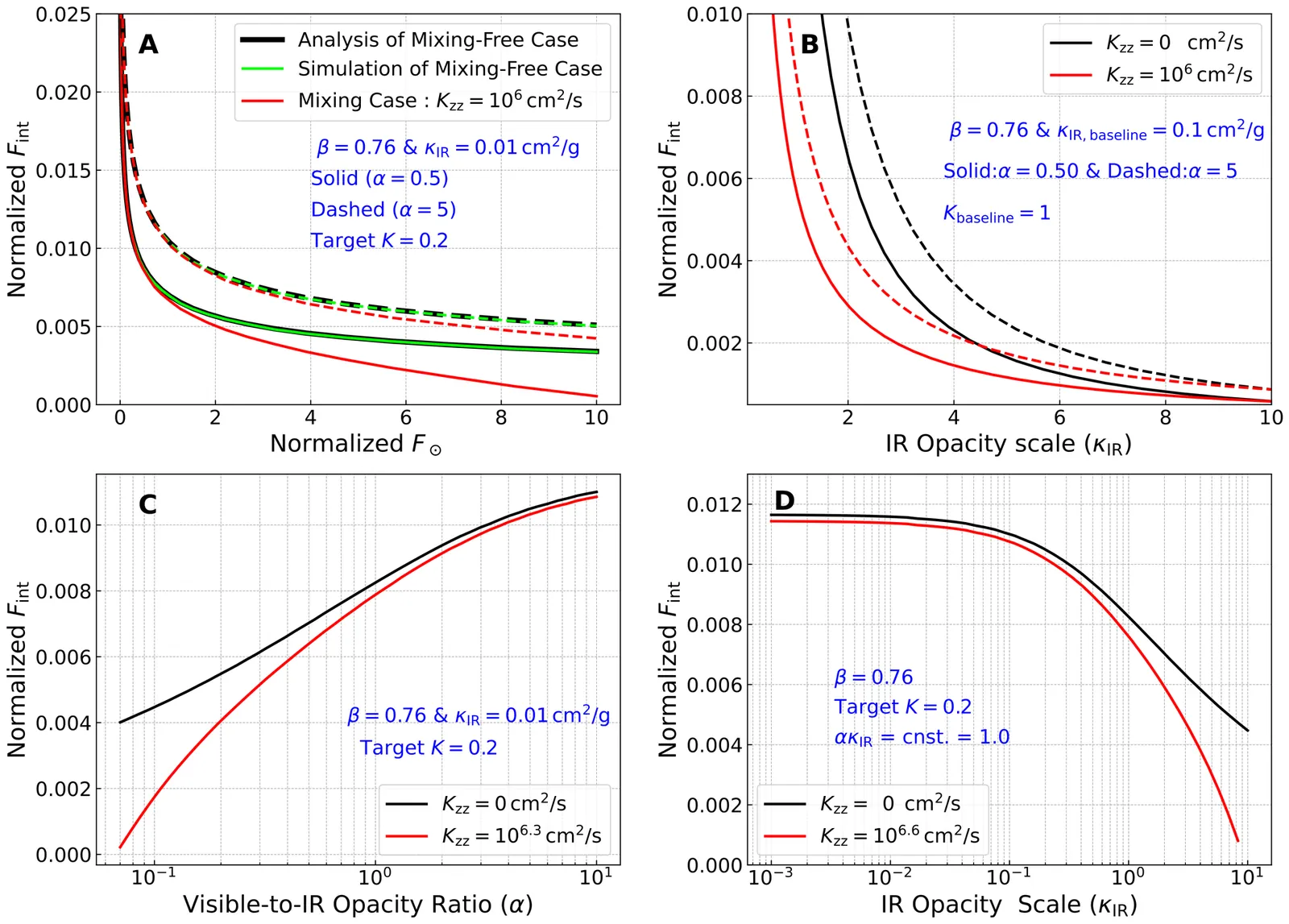
Irradiated Atmosphere V: Effects of Vertical-Mixing induced Energy Transport on the Inhomogeneity
Atmospheric variations over time and space boost planetary cooling, as outgoing internal flux responds to stellar radiation and opacity. Vertical mixing regulates this cooling. Our study examines how gravity waves or large-scale induced mixing interact with radiation transfer, affecting temperature inhomogeneity and internal flux. Through the radiative-convective-mixing equilibrium, mixing increases temperature inhomogeneity in the middle and lower atmospheres, redistributing internal flux. Stronger stellar radiation and mixing significantly reduce outgoing flux, slowing cooling. With constant infrared (IR) opacity, lower visible opacity and stronger mixing significantly reduce outgoing flux. Jensen's inequality implies that greater spatial disparities in stellar flux and opacity elevate the ratio of the average internal flux in inhomogeneous columns relative to that in homogeneous columns. This effect, particularly pronounced under high opacity contrasts, amplifies deep-layer temperature inhomogeneity and may enhance cooling. However, with mixing, overall cooling is weaker than without, as both the averaged internal flux of the inhomogeneous columns and that of the homogeneous column decline more sharply for the latter. Thus, while vertical mixing-induced inhomogeneity can enhance cooling, the overall cooling effect remains weaker than in the non-mixing case. Therefore, vertical mixing, by regulating atmospheric structure and flux, is key to understanding planetary cooling.
2601.00606
Jan 2026Earth and Planetary Astrophysics
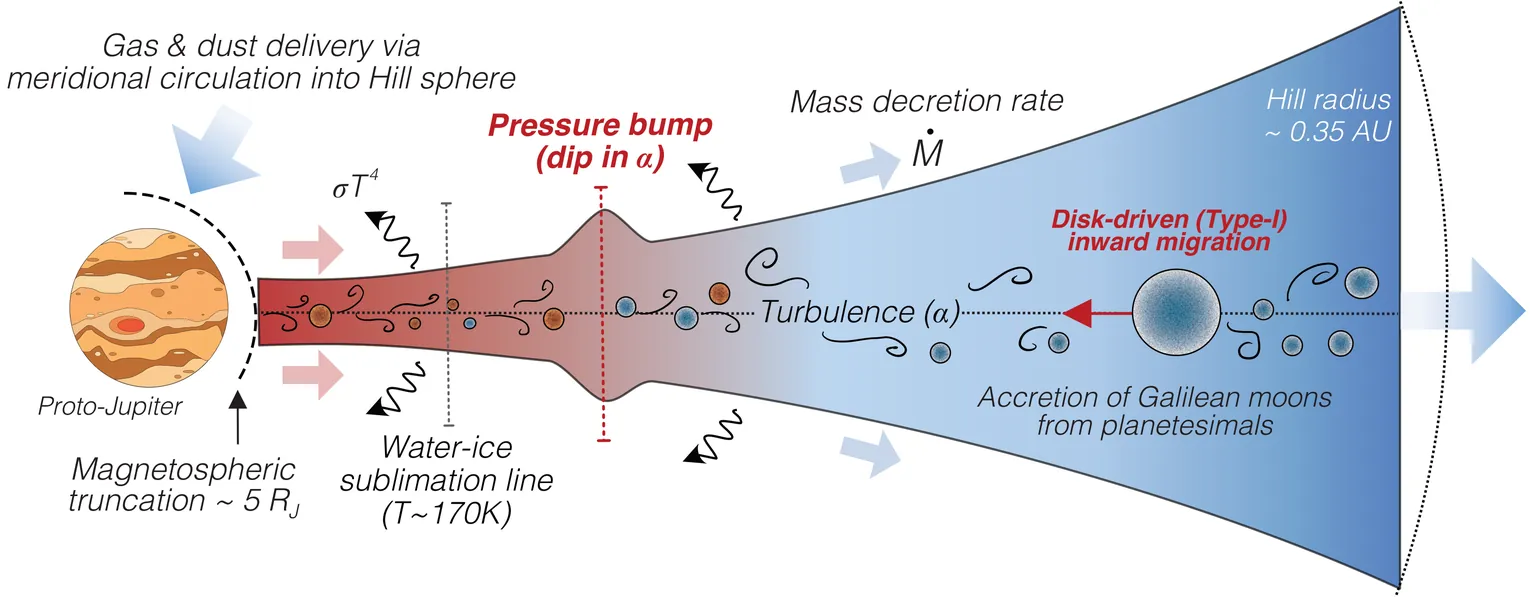
Callisto's Nonresonant Orbit as an Outcome of Circum-Jovian Disk Substructure
The Galilean moons of Io, Europa, and Ganymede exhibit a 4:2:1 commensurability in their mean motions, a configuration known as the Laplace resonance. The prevailing view for the origin of this three-body resonance involves the convergent migration of the moons, resulting from gas-driven torques in the circum-Jovian disk wherein they accreted. To account for Callisto's exclusion from the resonant chain, a late and/or slow accretion of the fourth and outermost Galilean moon is typically invoked, stalling its migration. Here, we consider an alternative scenario in which Callisto's nonresonant orbit is a consequence of disk substructure. Using a suite of N-body simulations that self-consistently account for satellite-disk interactions, we show that a pressure bump can function as a migration trap, isolating Callisto and alleviating constraints on its timing of accretion. Our simulations position the bump interior to the birthplaces of all four moons. In exploring the impact of bump structure on simulation outcomes, we find that it cannot be too sharp nor flat to yield the observed orbital architecture. In particular, a "Goldilocks" zone is mapped in parameter space, corresponding to a well-defined range in bump aspect ratio. Within this range, Io, Europa, and Ganymede are sequentially trapped at the bump, and ushered across it through resonant lockstep migration with their neighboring, exterior moon. The implications of our work are discussed in the context of uncertainties regarding Callisto's interior structure, arising from the possibility of non-hydrostatic contributions to its shape and gravity field, unresolved by the Galileo spacecraft.
2601.00786
Jan 2026Earth and Planetary Astrophysics