Distributed, Parallel, and Cluster Computing
arXiv:cs.DC
Covers fault-tolerance, distributed algorithms, stabilility, parallel computation, and cluster computing.
Looking for a broader view? This category is part of:
Covers fault-tolerance, distributed algorithms, stabilility, parallel computation, and cluster computing.
Looking for a broader view? This category is part of:
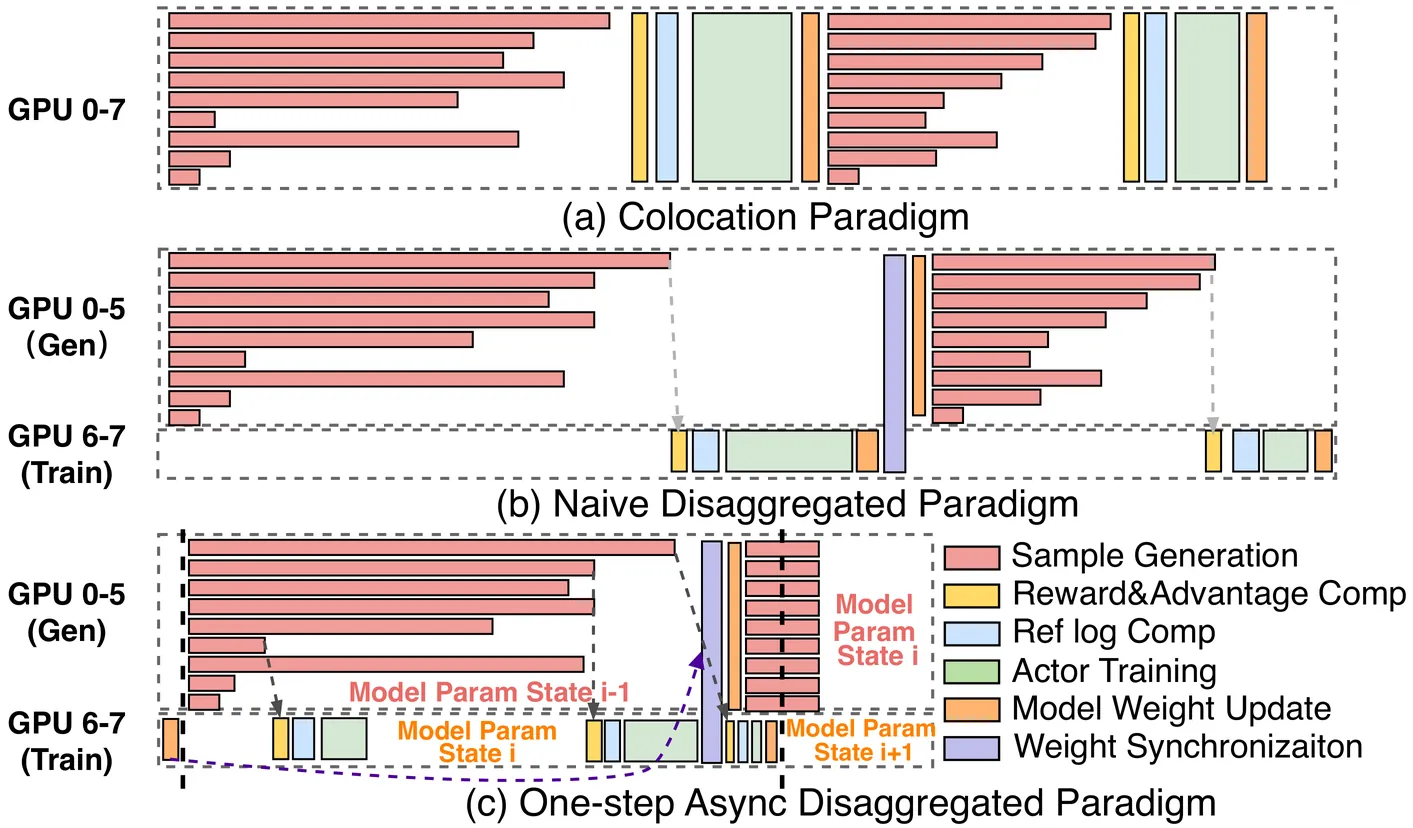
Post-training with reinforcement learning (RL) has greatly enhanced the capabilities of large language models. Disaggregating the generation and training stages in RL into a parallel, asynchronous pipeline offers the potential for flexible scaling and improved throughput. However, it still faces two critical challenges. First, the generation stage often becomes a bottleneck due to dynamic workload shifts and severe execution imbalances. Second, the decoupled stages result in diverse and dynamic network traffic patterns that overwhelm conventional network fabrics. This paper introduces OrchestrRL, an orchestration framework that dynamically manages compute and network rhythms in disaggregated RL. To improve generation efficiency, OrchestrRL employs an adaptive compute scheduler that dynamically adjusts parallelism to match workload characteristics within and across generation steps. This accelerates execution while continuously rebalancing requests to mitigate stragglers. To address the dynamic network demands inherent in disaggregated RL -- further intensified by parallelism switching -- we co-design RFabric, a reconfigurable hybrid optical-electrical fabric. RFabric leverages optical circuit switches at selected network tiers to reconfigure the topology in real time, enabling workload-aware circuits for (i) layer-wise collective communication during training iterations, (ii) generation under different parallelism configurations, and (iii) periodic inter-cluster weight synchronization. We evaluate OrchestrRL on a physical testbed with 48 H800 GPUs, demonstrating up to a 1.40x throughput improvement. Furthermore, we develop RLSim, a high-fidelity simulator, to evaluate RFabric at scale. Our results show that RFabric achieves superior performance-cost efficiency compared to static Fat-Tree networks, establishing it as a highly effective solution for large-scale RL workloads.
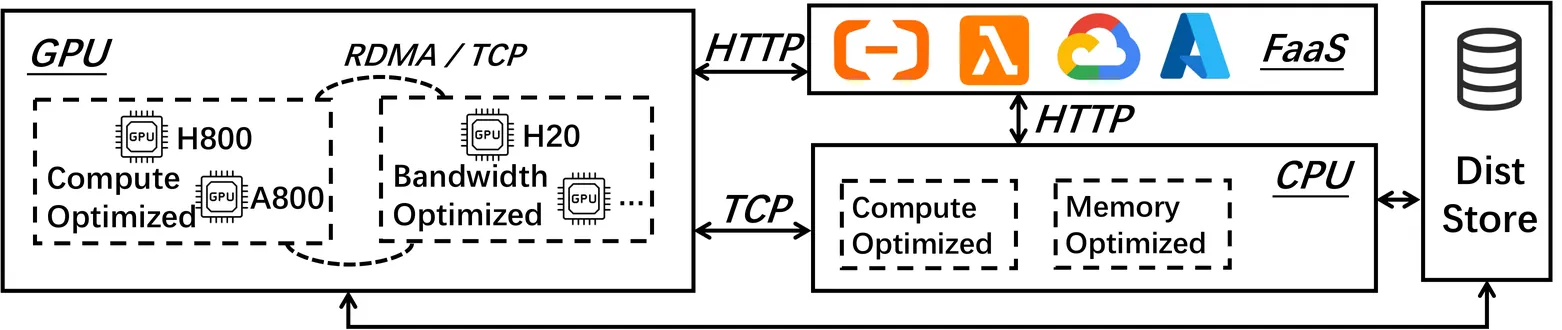
Agentic Reinforcement Learning (RL) enables Large Language Models (LLMs) to perform autonomous decision-making and long-term planning. Unlike standard LLM post-training, agentic RL workloads are highly heterogeneous, combining compute-intensive prefill phases, bandwidth-bound decoding, and stateful, CPU-heavy environment simulations. We argue that efficient agentic RL training requires disaggregated infrastructure to leverage specialized, best-fit hardware. However, naive disaggregation introduces substantial synchronization overhead and resource underutilization due to the complex dependencies between stages. We present RollArc, a distributed system designed to maximize throughput for multi-task agentic RL on disaggregated infrastructure. RollArc is built on three core principles: (1) hardware-affinity workload mapping, which routes compute-bound and bandwidth-bound tasks to bestfit GPU devices, (2) fine-grained asynchrony, which manages execution at the trajectory level to mitigate resource bubbles, and (3) statefulness-aware computation, which offloads stateless components (e.g., reward models) to serverless infrastructure for elastic scaling. Our results demonstrate that RollArc effectively improves training throughput and achieves 1.35-2.05\(\times\) end-to-end training time reduction compared to monolithic and synchronous baselines. We also evaluate RollArc by training a hundreds-of-billions-parameter MoE model for Qoder product on an Alibaba cluster with more than 3,000 GPUs, further demonstrating RollArc scalability and robustness. The code is available at https://github.com/alibaba/ROLL.

Recent advances in video analytics address real-time data drift by continuously retraining specialized, lightweight DNN models for individual cameras. However, the current practice of retraining a separate model for each camera suffers from high compute and communication costs, making it unscalable. We present ECCO, a new video analytics framework designed for resource-efficient continuous learning. The key insight is that the data drift, which necessitates model retraining, often shows temporal and spatial correlations across nearby cameras. By identifying cameras that experience similar drift and retraining a shared model for them, ECCO can substantially reduce the associated compute and communication costs. Specifically, ECCO introduces: (i) a lightweight grouping algorithm that dynamically forms and updates camera groups; (ii) a GPU allocator that dynamically assigns GPU resources across different groups to improve retraining accuracy and ensure fairness; and (iii) a transmission controller at each camera that configures frame sampling and coordinates bandwidth sharing with other cameras based on its assigned GPU resources. We conducted extensive evaluations on three distinctive datasets for two vision tasks. Compared to leading baselines, ECCO improves retraining accuracy by 6.7%-18.1% using the same compute and communication resources, or supports 3.3 times more concurrent cameras at the same accuracy.
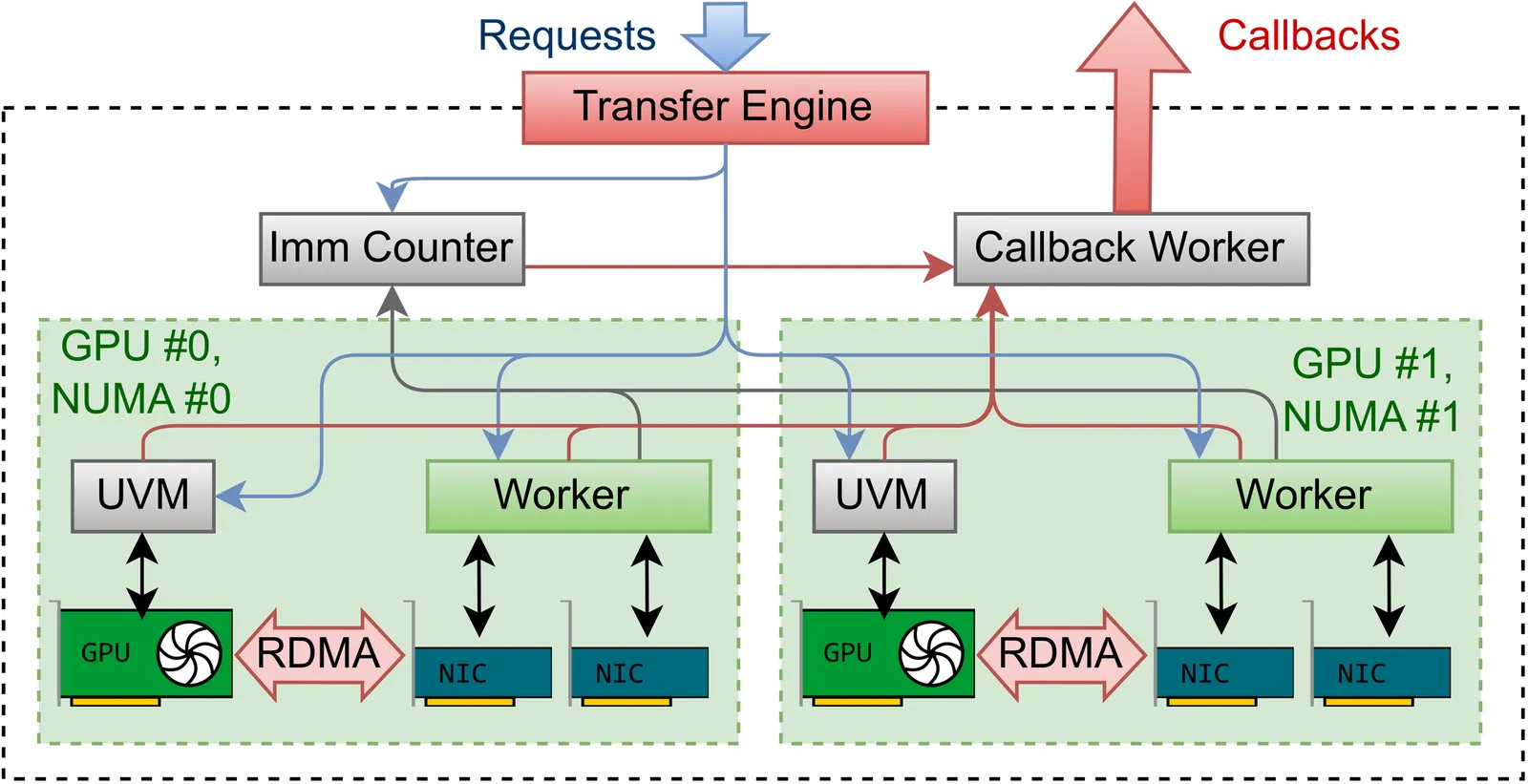
Emerging Large Language Model (LLM) system patterns, such as disaggregated inference, Mixture-of-Experts (MoE) routing, and asynchronous reinforcement fine-tuning, require flexible point-to-point communication beyond simple collectives. Existing implementations are locked to specific Network Interface Controllers (NICs), hindering integration into inference engines and portability across hardware providers. We present TransferEngine, which bridges the functionality of common NICs to expose a uniform interface. TransferEngine exposes one-sided WriteImm operations with a ImmCounter primitive for completion notification, without ordering assumptions of network transport, transparently managing multiple NICs per GPU. We demonstrate peak throughput of 400 Gbps on both NVIDIA ConnectX-7 and AWS Elastic Fabric Adapter (EFA). We showcase TransferEngine through three production systems: (1) KvCache transfer for disaggregated inference with dynamic scaling, (2) RL weight updates achieving 1.3 seconds for trillion-parameter models, and (3) MoE dispatch/combine implementation exceeding DeepEP decode latency on ConnectX-7, with the first viable latencies on EFA. We demonstrate that our portable point-to-point communication complements collectives while avoiding lock-in.

Deploying microservice-based applications (MSAs) on heterogeneous and dynamic Cloud-Edge infrastructures requires balancing conflicting objectives, such as failure resilience, performance, and environmental sustainability. In this article, we introduce the FREEDA toolchain, designed to automate the failure-resilient and carbon-efficient deployment of MSAs over the Cloud-Edge Continuum. The FREEDA toolchain continuously adapts deployment configurations to changing operational conditions, resource availability, and sustainability constraints, aiming to maintain the MSA quality and service continuity while reducing carbon emissions. We also introduce an experimental suite using diverse simulated and emulated scenarios to validate the effectiveness of the toolchain against real-world challenges, including resource exhaustion, node failures, and carbon intensity fluctuations. The results demonstrate FREEDA's capability to autonomously reconfigure deployments by migrating services, adjusting flavour selections, or rebalancing workloads, successfully achieving an optimal balance among resilience, efficiency, and environmental impact.
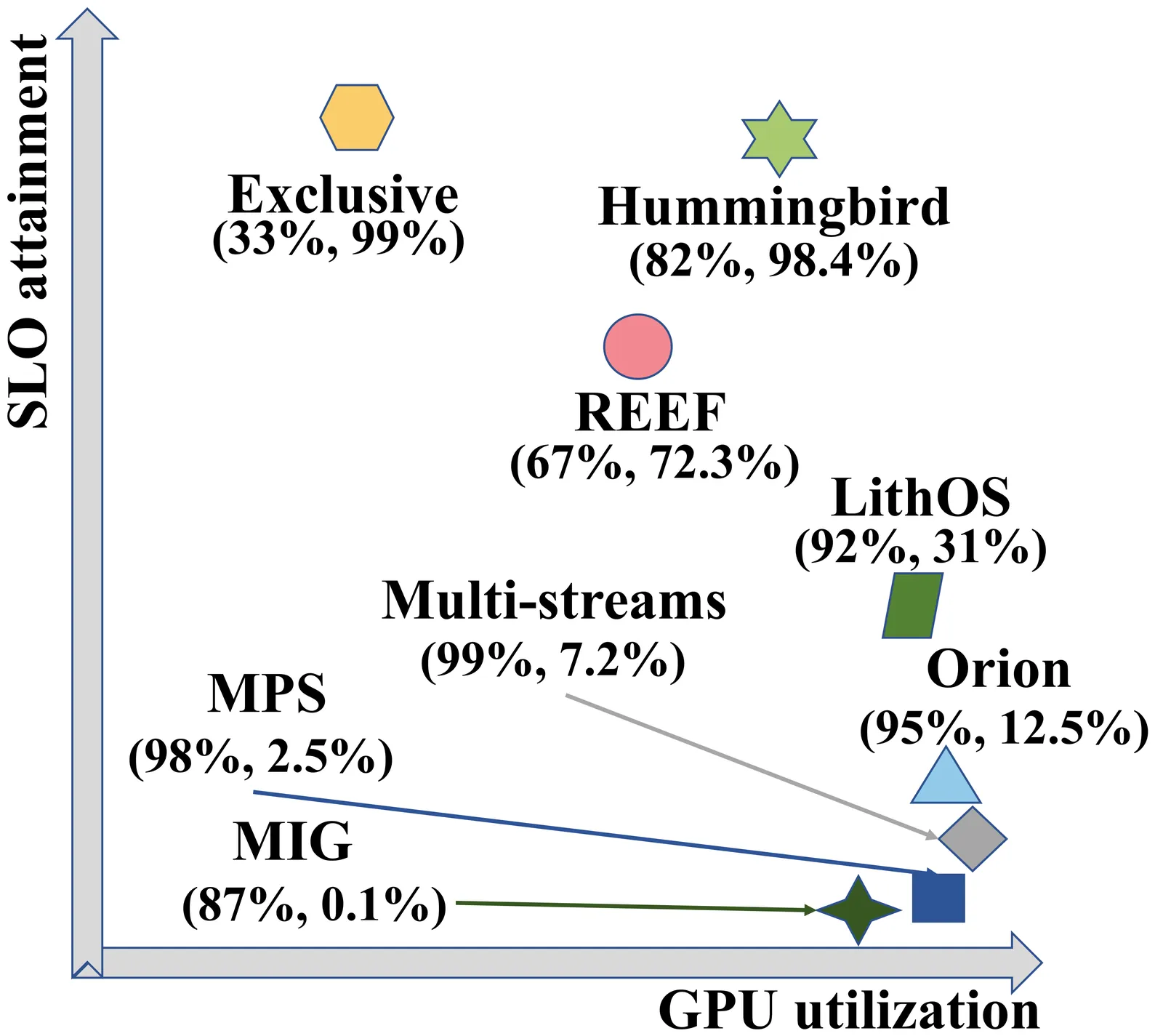
Existing GPU-sharing techniques, including spatial and temporal sharing, aim to improve utilization but face challenges in simultaneously ensuring SLO adherence and maximizing efficiency due to the lack of fine-grained task scheduling on closed-source GPUs. This paper presents Hummingbird, an SLO-oriented GPU scheduling system that overcomes these challenges by enabling microsecond-scale preemption on closed-source GPUs while effectively harvesting idle GPU time slices. Comprehensive evaluations across diverse GPU architectures reveal that Hummingbird improves the SLO attainment of high-priority tasks by 9.7x and 3.5x compared to the state-of-the-art spatial and temporal-sharing approaches. When compared to executing exclusively, the SLO attainment of the high-priority task, collocating with low-priority tasks on Hummingbird, only drops by less than 1%. Meanwhile, the throughput of the low-priority task outperforms the state-of-the-art temporal-sharing approaches by 2.4x. Hummingbird demonstrates significant effectiveness in ensuring the SLO while enhancing GPU utilization.
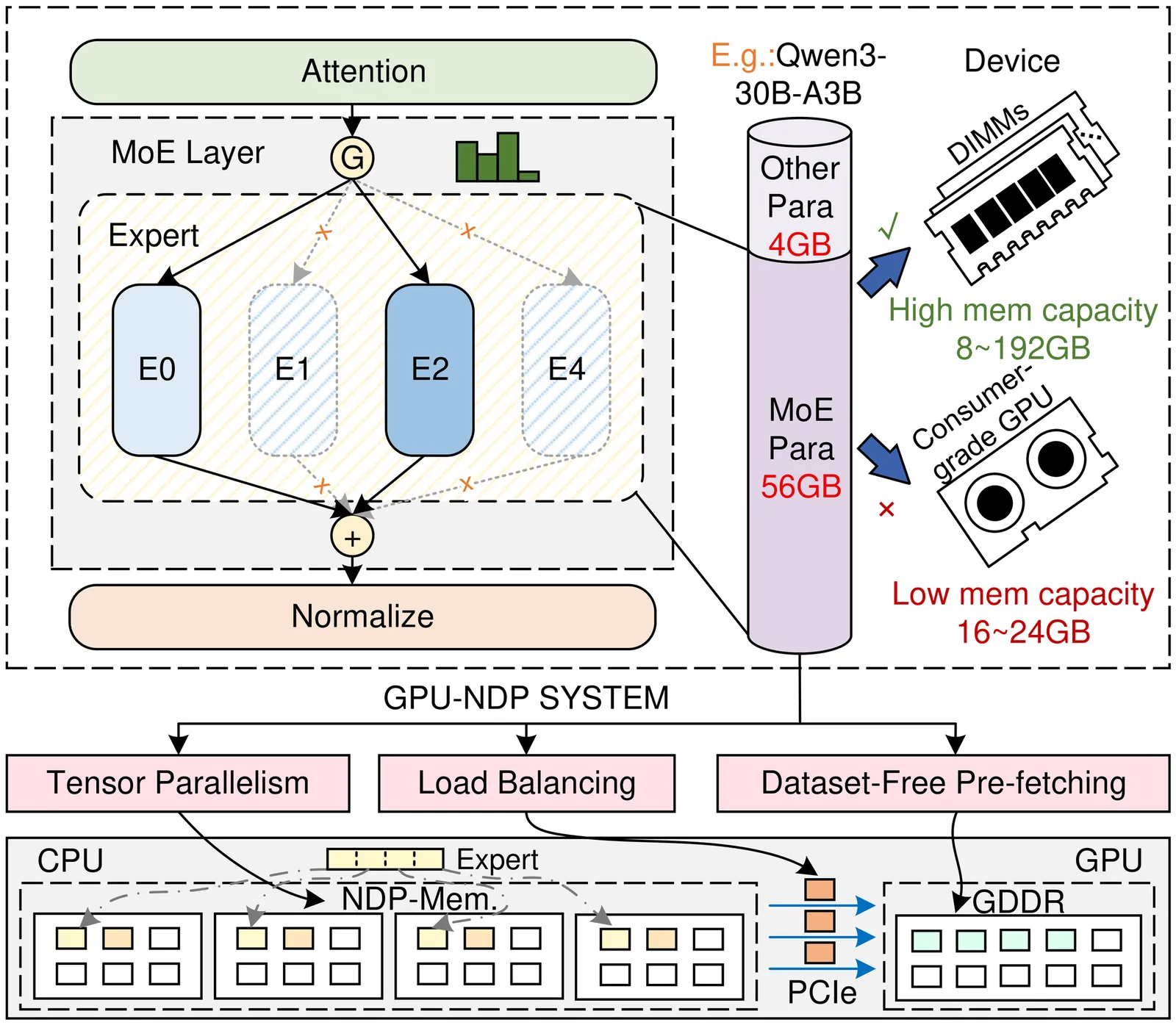
Mixture-of-Experts (MoE) models facilitate edge deployment by decoupling model capacity from active computation, yet their large memory footprint drives the need for GPU systems with near-data processing (NDP) capabilities that offload experts to dedicated processing units. However, deploying MoE models on such edge-based GPU-NDP systems faces three critical challenges: 1) severe load imbalance across NDP units due to non-uniform expert selection and expert parallelism, 2) insufficient GPU utilization during expert computation within NDP units, and 3) extensive data pre-profiling necessitated by unpredictable expert activation patterns for pre-fetching. To address these challenges, this paper proposes an efficient inference framework featuring three key optimizations. First, the underexplored tensor parallelism in MoE inference is exploited to partition and compute large expert parameters across multiple NDP units simultaneously towards edge low-batch scenarios. Second, a load-balancing-aware scheduling algorithm distributes expert computations across NDP units and GPU to maximize resource utilization. Third, a dataset-free pre-fetching strategy proactively loads frequently accessed experts to minimize activation delays. Experimental results show that our framework enables GPU-NDP systems to achieve 2.41x on average and up to 2.56x speedup in end-to-end latency compared to state-of-the-art approaches, significantly enhancing MoE inference efficiency in resource-constrained environments.
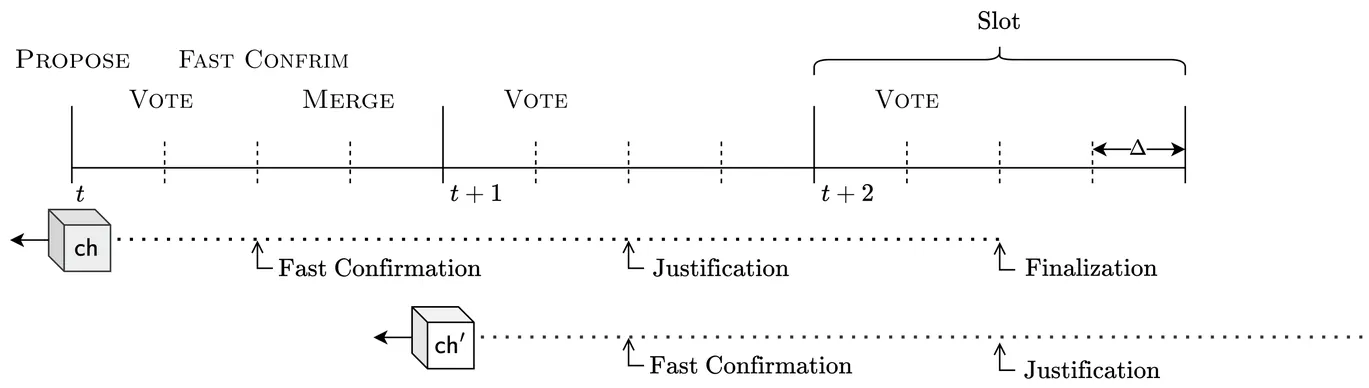
Dynamic availability is the ability of a consensus protocol to remain live despite honest participants going offline and later rejoining. A well-known limitation is that dynamically available protocols, on their own, cannot provide strong safety guarantees during network partitions or extended asynchrony. Ebb-and-flow protocols [SP21] address this by combining a dynamically available protocol with a partially synchronous finality protocol that irrevocably finalizes a prefix. We present Majorum, an ebb-and-flow construction whose dynamically available component builds on a quorum-based protocol (TOB-SVD). Under optimistic conditions, Majorum finalizes blocks in as few as three slots while requiring only a single voting phase per slot. In particular, when conditions remain favourable, each slot finalizes the next block extending the previously finalized one.
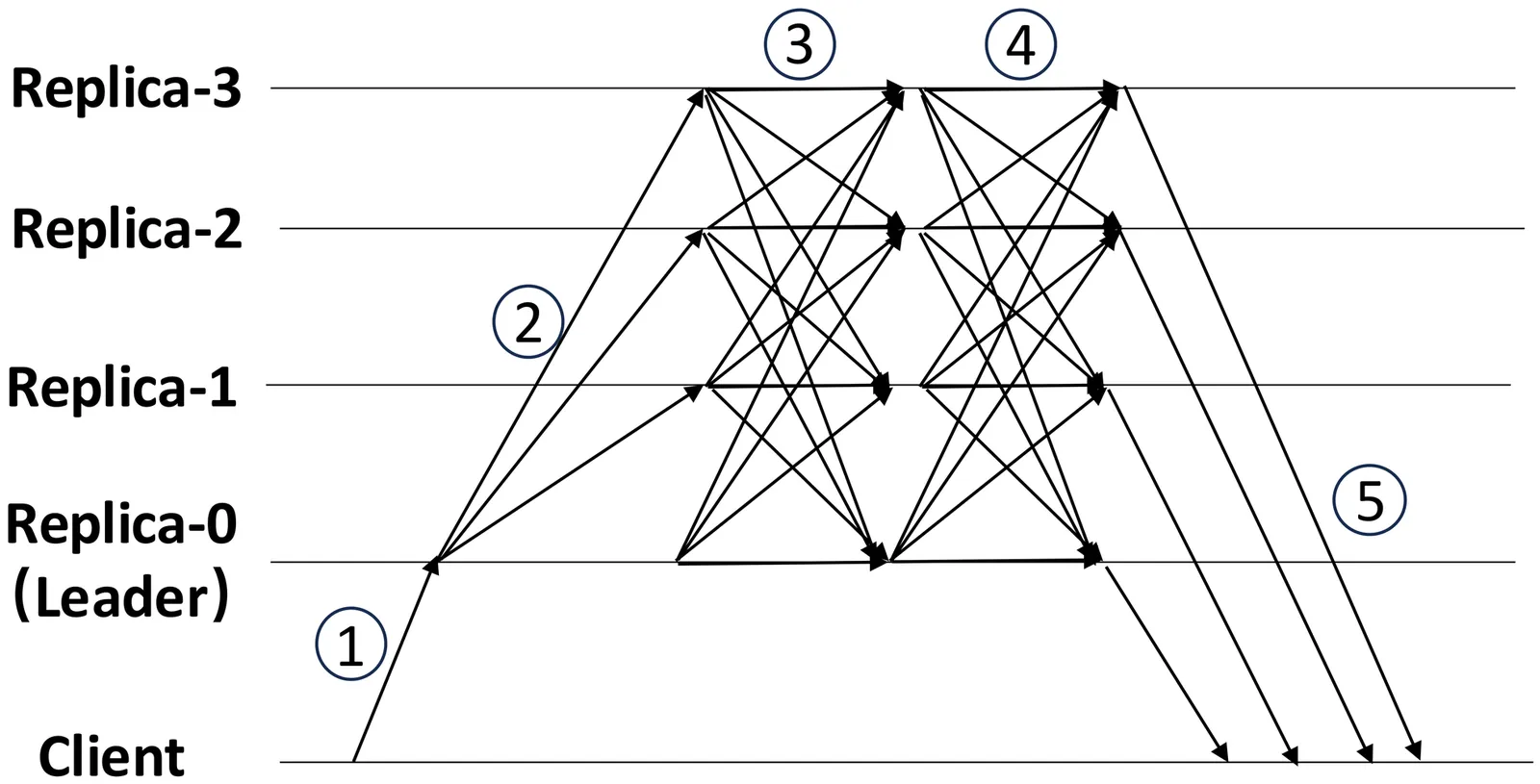
As Byzantine Fault Tolerant (BFT) protocols begin to be used in permissioned blockchains for user-facing applications such as payments, it is crucial that they provide low latency. In pursuit of low latency, some recently proposed BFT consensus protocols employ a leaderless optimistic fast path, in which clients broadcast their requests directly to replicas without first serializing requests at a leader, resulting in an end-to-end commit latency of 2 message delays ($2Δ$) during fault-free, synchronous periods. However, such a fast path only works if there is no contention: concurrent contending requests can cause replicas to diverge if they receive conflicting requests in different orders, triggering costly recovery procedures. In this work, we present Aspen, a leaderless BFT protocol that achieves a near-optimal latency of $2Δ+ \varepsilon$, where $\varepsilon$ indicates a short waiting delay. Aspen removes the no-contention condition by utilizing a best-effort sequencing layer based on loosely synchronized clocks and network delay estimates. Aspen requires $n = 3f + 2p + 1$ replicas to cope with up to $f$ Byzantine nodes. The $2p$ extra nodes allow Aspen's fast path to proceed even if up to $p$ replicas diverge due to unpredictable network delays. When its optimistic conditions do not hold, Aspen falls back to PBFT-style protocol, guaranteeing safety and liveness under partial synchrony. In experiments with wide-area distributed replicas, Aspen commits requests in less than 75 ms, a 1.2 to 3.3$\times$ improvement compared to previous protocols, while supporting 19,000 requests per second.

As multi-agent LLM pipelines grow in complexity, existing serving paradigms fail to adapt to the dynamic serving conditions. We argue that agentic serving systems should be programmable and system-aware, unlike existing serving which statically encode the parameters. In this work, we propose a new SDN-inspired agentic serving framework that helps control the key attributes of communication based on runtime state. This architecture enables serving-efficient, responsive agent systems and paves the way for high-level intent-driven agentic serving.

Training large language models requires distributing computation across many accelerators, yet practitioners select parallelism strategies (data, tensor, pipeline, ZeRO) through trial and error because no unified systematic framework predicts their behavior. We introduce placement semantics: each strategy is specified by how it places four training states (parameters, optimizer, gradients, activations) across devices using five modes (replicated, sharded, sharded-with-gather, materialized, offloaded). From placement alone, without implementation details, we derive memory consumption and communication volume. Our predictions match published results exactly: ZeRO-3 uses 8x less memory than data parallelism at 1.5x communication cost, as reported in the original paper. We prove two conditions (gradient integrity, state consistency) are necessary and sufficient for distributed training to match single-device results, and provide composition rules for combining strategies safely. The framework unifies ZeRO Stages 1-3, Fully Sharded Data Parallel (FSDP), tensor parallelism, and pipeline parallelism as instances with different placement choices.
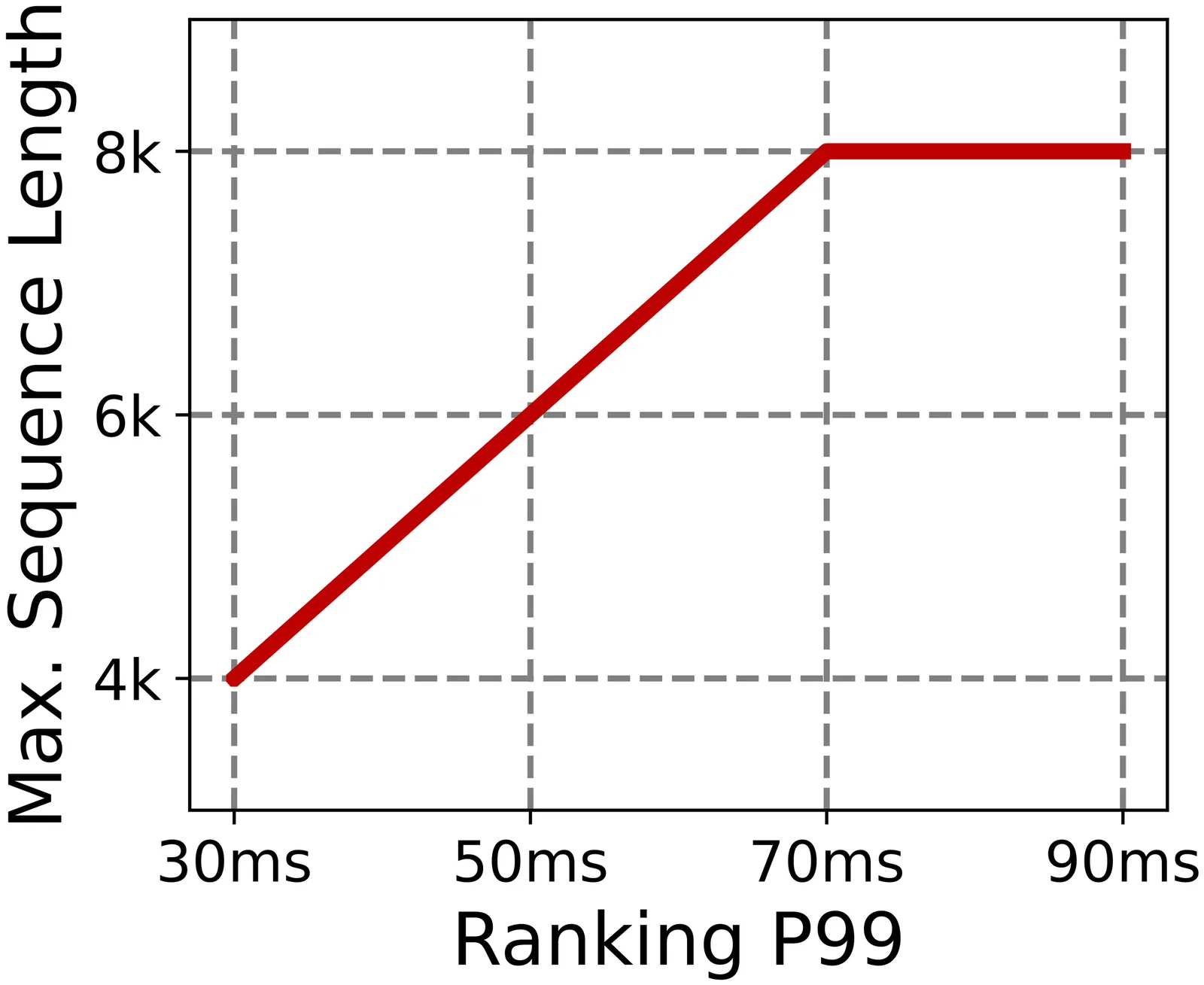
Real-time recommender systems execute multi-stage cascades (retrieval, pre-processing, fine-grained ranking) under strict tail-latency SLOs, leaving only tens of milliseconds for ranking. Generative recommendation (GR) models can improve quality by consuming long user-behavior sequences, but in production their online sequence length is tightly capped by the ranking-stage P99 budget. We observe that the majority of GR tokens encode user behaviors that are independent of the item candidates, suggesting an opportunity to pre-infer a user-behavior prefix once and reuse it during ranking rather than recomputing it on the critical path. Realizing this idea at industrial scale is non-trivial: the prefix cache must survive across multiple pipeline stages before the final ranking instance is determined, the user population implies cache footprints far beyond a single device, and indiscriminate pre-inference would overload shared resources under high QPS. We present RelayGR, a production system that enables in-HBM relay-race inference for GR. RelayGR selectively pre-infers long-term user prefixes, keeps their KV caches resident in HBM over the request lifecycle, and ensures the subsequent ranking can consume them without remote fetches. RelayGR combines three techniques: 1) a sequence-aware trigger that admits only at-risk requests under a bounded cache footprint and pre-inference load, 2) an affinity-aware router that co-locates cache production and consumption by routing both the auxiliary pre-infer signal and the ranking request to the same instance, and 3) a memory-aware expander that uses server-local DRAM to capture short-term cross-request reuse while avoiding redundant reloads. We implement RelayGR on Huawei Ascend NPUs and evaluate it with real queries. Under a fixed P99 SLO, RelayGR supports up to 1.5$\times$ longer sequences and improves SLO-compliant throughput by up to 3.6$\times$.
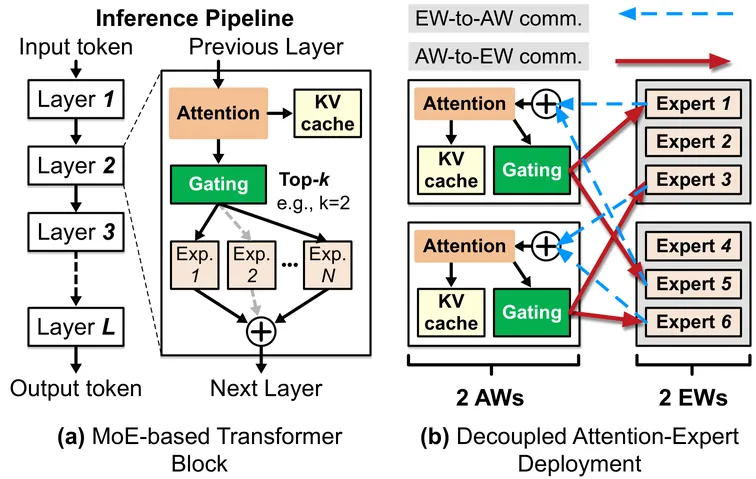
Mixture-of-Experts (MoE) models are increasingly used to serve LLMs at scale, but failures become common as deployment scale grows. Existing systems exhibit poor failure resilience: even a single worker failure triggers a coarse-grained, service-wide restart, discarding accumulated progress and halting the entire inference pipeline during recovery--an approach clearly ill-suited for latency-sensitive, LLM services. We present Tarragon, a resilient MoE inference framework that confines the failures impact to individual workers while allowing the rest of the pipeline to continue making forward progress. Tarragon exploits the natural separation between the attention and expert computation in MoE-based transformers, treating attention workers (AWs) and expert workers (EWs) as distinct failure domains. Tarragon introduces a reconfigurable datapath to mask failures by rerouting requests to healthy workers. On top of this datapath, Tarragon implements a self-healing mechanism that relaxes the tightly synchronized execution of existing MoE frameworks. For stateful AWs, Tarragon performs asynchronous, incremental KV cache checkpointing with per-request restoration, and for stateless EWs, it leverages residual GPU memory to deploy shadow experts. These together keep recovery cost and recomputation overhead extremely low. Our evaluation shows that, compared to state-of-the-art MegaScale-Infer, Tarragon reduces failure-induced stalls by 160-213x (from ~64 s down to 0.3-0.4 s) while preserving performance when no failures occur.
Post-training with reinforcement learning (RL) has greatly enhanced the capabilities of large language models. Disaggregating the generation and training stages in RL into a parallel, asynchronous pipeline offers the potential for flexible scaling and improved throughput. However, it still faces two critical challenges. First, the generation stage often becomes a bottleneck due to dynamic workload shifts and severe execution imbalances. Second, the decoupled stages result in diverse and dynamic network traffic patterns that overwhelm conventional network fabrics. This paper introduces OrchestrRL, an orchestration framework that dynamically manages compute and network rhythms in disaggregated RL. To improve generation efficiency, OrchestrRL employs an adaptive compute scheduler that dynamically adjusts parallelism to match workload characteristics within and across generation steps. This accelerates execution while continuously rebalancing requests to mitigate stragglers. To address the dynamic network demands inherent in disaggregated RL -- further intensified by parallelism switching -- we co-design RFabric, a reconfigurable hybrid optical-electrical fabric. RFabric leverages optical circuit switches at selected network tiers to reconfigure the topology in real time, enabling workload-aware circuits for (i) layer-wise collective communication during training iterations, (ii) generation under different parallelism configurations, and (iii) periodic inter-cluster weight synchronization. We evaluate OrchestrRL on a physical testbed with 48 H800 GPUs, demonstrating up to a 1.40x throughput improvement. Furthermore, we develop RLSim, a high-fidelity simulator, to evaluate RFabric at scale. Our results show that RFabric achieves superior performance-cost efficiency compared to static Fat-Tree networks, establishing it as a highly effective solution for large-scale RL workloads.
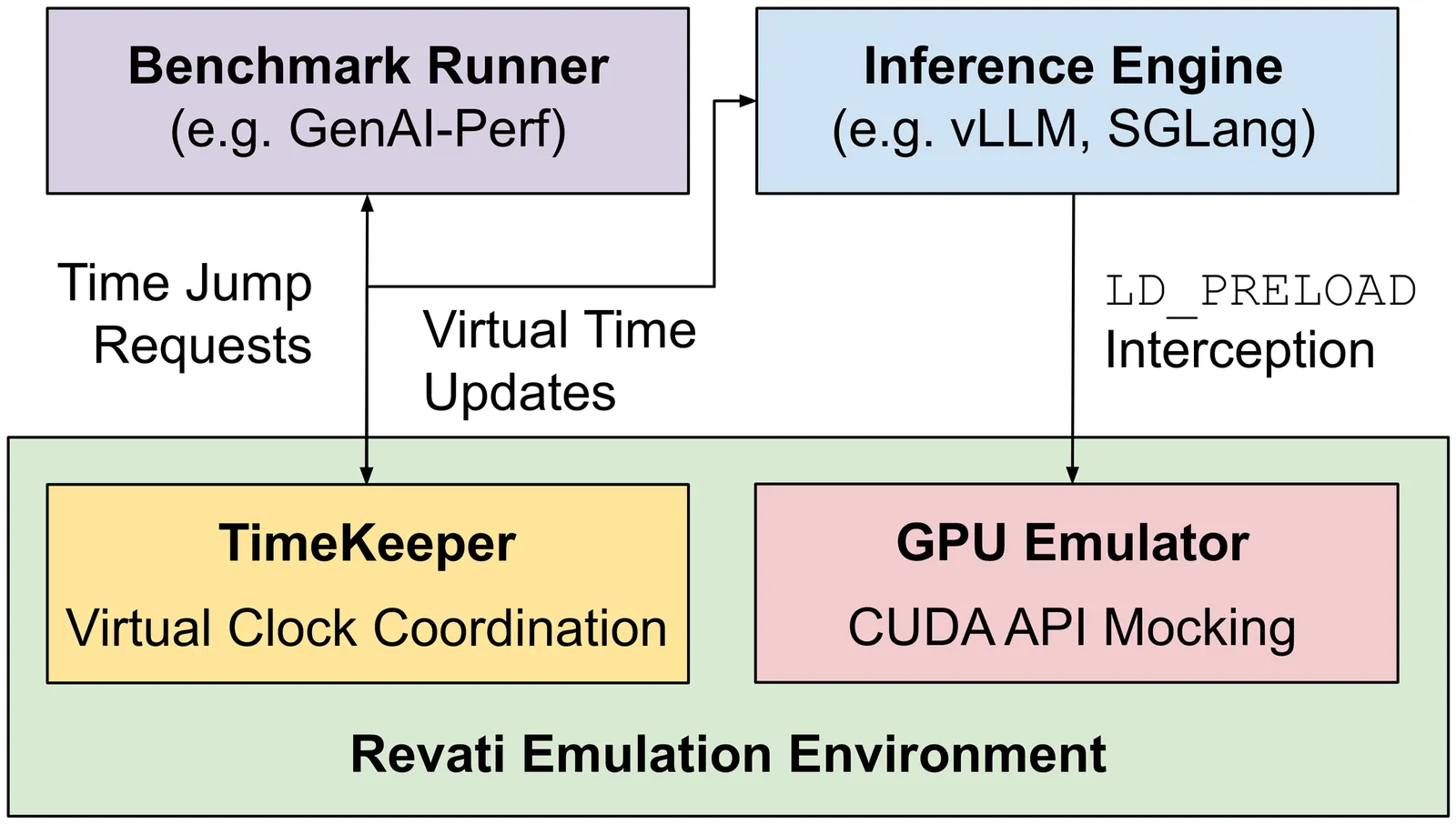
Deploying LLMs efficiently requires testing hundreds of serving configurations, but evaluating each one on a GPU cluster takes hours and costs thousands of dollars. Discrete-event simulators are faster and cheaper, but they require re-implementing the serving system's control logic -- a burden that compounds as frameworks evolve. We present Revati, a time-warp emulator that enables performance modeling by directly executing real serving system code at simulation-like speed. The system intercepts CUDA API calls to virtualize device management, allowing serving frameworks to run without physical GPUs. Instead of executing GPU kernels, it performs time jumps -- fast-forwarding virtual time by predicted kernel durations. We propose a coordination protocol that synchronizes these jumps across distributed processes while preserving causality. On vLLM and SGLang, Revati achieves less than 5% prediction error across multiple models and parallelism configurations, while running 5-17x faster than real GPU execution.
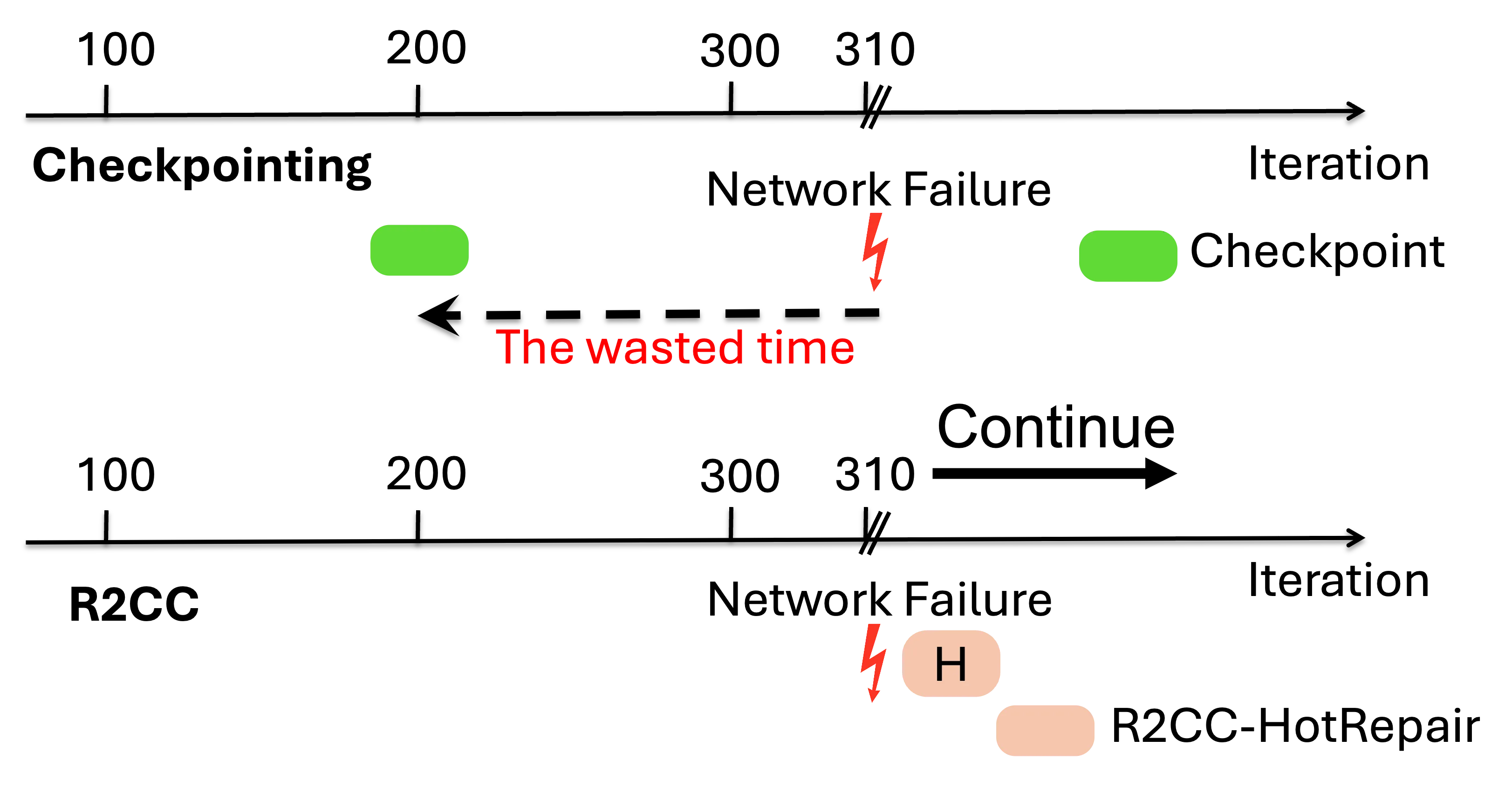
Modern ML training and inference now span tens to tens of thousands of GPUs, where network faults can waste 10--15\% of GPU hours due to slow recovery. Common network errors and link fluctuations trigger timeouts that often terminate entire jobs, forcing expensive checkpoint rollback during training and request reprocessing during inference. We present R$^2$CCL, a fault-tolerant communication library that provides lossless, low-overhead failover by exploiting multi-NIC hardware. R$^2$CCL performs rapid connection migration, bandwidth-aware load redistribution, and resilient collective algorithms to maintain progress under failures. We evaluate R$^2$CCL on two 8-GPU H100 InfiniBand servers and via large-scale ML simulators modeling hundreds of GPUs with diverse failure patterns. Experiments show that R$^2$CCL is highly robust to NIC failures, incurring less than 1\% training and less than 3\% inference overheads. R$^2$CCL outperforms baselines AdapCC and DejaVu by 12.18$\times$ and 47$\times$, respectively.
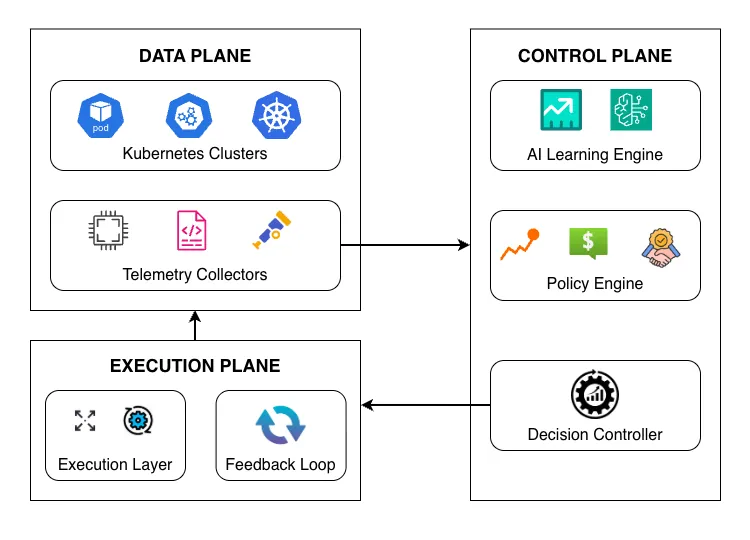
Modern cloud-native systems increasingly rely on multi-cluster deployments to support scalability, resilience, and geographic distribution. However, existing resource management approaches remain largely reactive and cluster-centric, limiting their ability to optimize system-wide behavior under dynamic workloads. These limitations result in inefficient resource utilization, delayed adaptation, and increased operational overhead across distributed environments. This paper presents an AI-driven framework for adaptive resource optimization in multi-cluster cloud systems. The proposed approach integrates predictive learning, policy-aware decision-making, and continuous feedback to enable proactive and coordinated resource management across clusters. By analyzing cross-cluster telemetry and historical execution patterns, the framework dynamically adjusts resource allocation to balance performance, cost, and reliability objectives. A prototype implementation demonstrates improved resource efficiency, faster stabilization during workload fluctuations, and reduced performance variability compared to conventional reactive approaches. The results highlight the effectiveness of intelligent, self-adaptive infrastructure management as a key enabler for scalable and resilient cloud platforms.
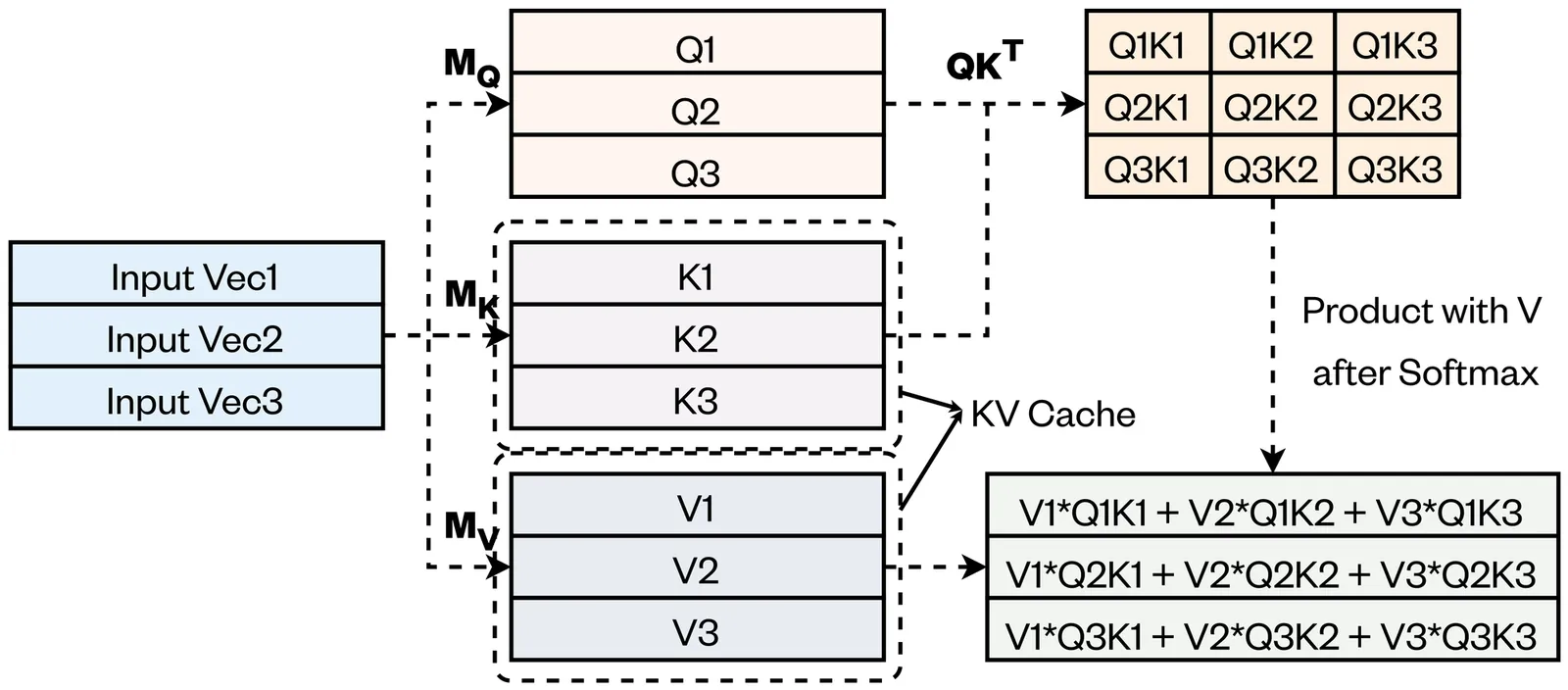
Transformer-based large language models (LLMs) have demonstrated remarkable potential across a wide range of practical applications. However, long-context inference remains a significant challenge due to the substantial memory requirements of the key-value (KV) cache, which can scale to several gigabytes as sequence length and batch size increase. In this paper, we present \textbf{PackKV}, a generic and efficient KV cache management framework optimized for long-context generation. %, which synergistically supports both latency-critical and throughput-critical inference scenarios. PackKV introduces novel lossy compression techniques specifically tailored to the characteristics of KV cache data, featuring a careful co-design of compression algorithms and system architecture. Our approach is compatible with the dynamically growing nature of the KV cache while preserving high computational efficiency. Experimental results show that, under the same and minimum accuracy drop as state-of-the-art quantization methods, PackKV achieves, on average, \textbf{153.2}\% higher memory reduction rate for the K cache and \textbf{179.6}\% for the V cache. Furthermore, PackKV delivers extremely high execution throughput, effectively eliminating decompression overhead and accelerating the matrix-vector multiplication operation. Specifically, PackKV achieves an average throughput improvement of \textbf{75.7}\% for K and \textbf{171.7}\% for V across A100 and RTX Pro 6000 GPUs, compared to cuBLAS matrix-vector multiplication kernels, while demanding less GPU memory bandwidth. Code available on https://github.com/BoJiang03/PackKV
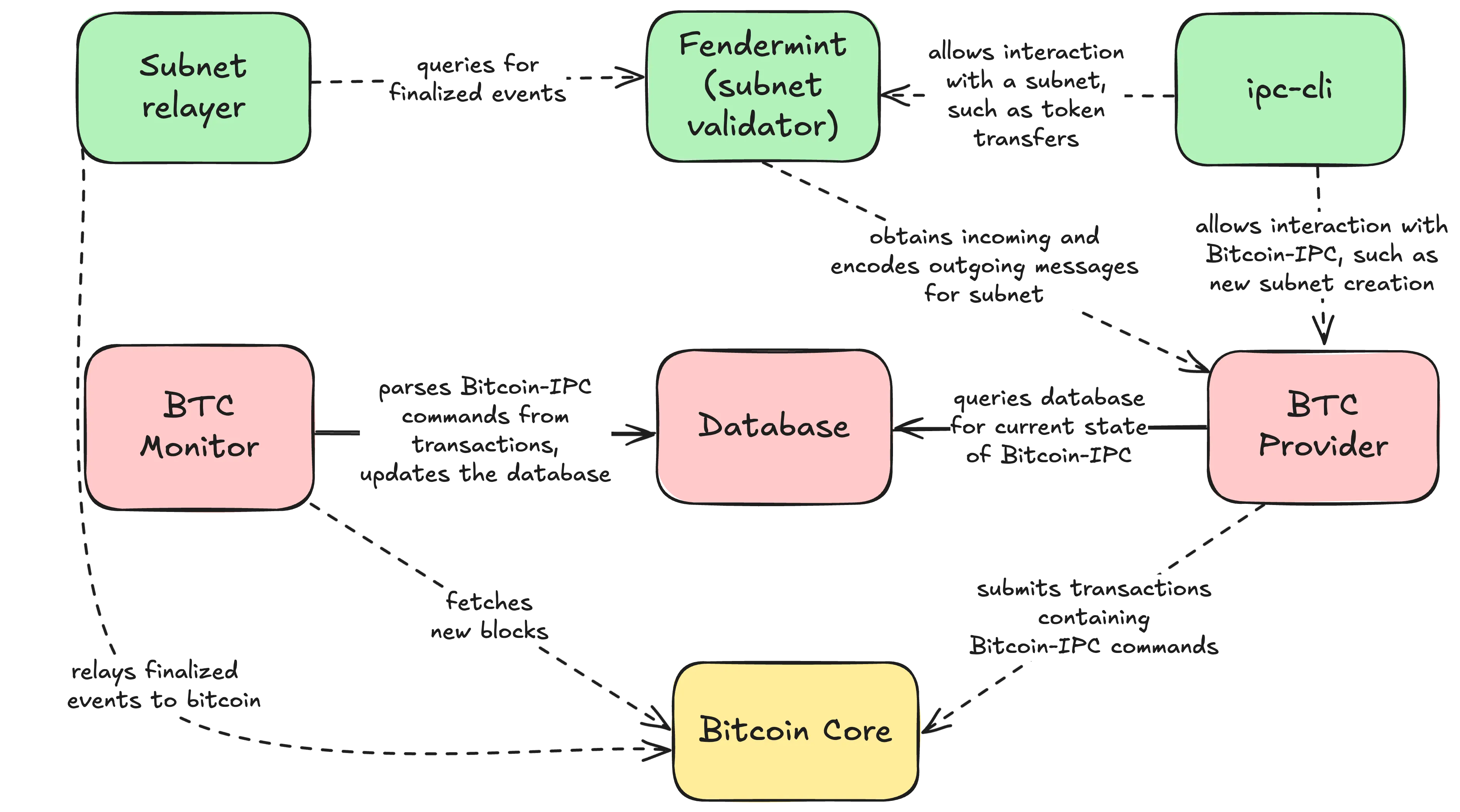
We introduce Bitcoin-IPC, a software stack and protocol that scales Bitcoin towards helping it become the universal Medium of Exchange (MoE) by enabling the permissionless creation of fully programmable Proof-of-Stake (PoS) Layer-2 chains, called subnets, whose stake is denominated in L1 BTC. Bitcoin-IPC subnets rely on Bitcoin L1 for the communication of critical information, settlement, and security. Our design, inspired by SWIFT messaging and embedded within Bitcoin's SegWit mechanism, enables seamless value transfer across L2 subnets, routed through Bitcoin L1. Uniquely, this mechanism reduces the virtual-byte cost per transaction (vB per tx) by up to 23x, compared to transacting natively on Bitcoin L1, effectively increasing monetary transaction throughput from 7 tps to over 160 tps, without requiring any modifications to Bitcoin L1.
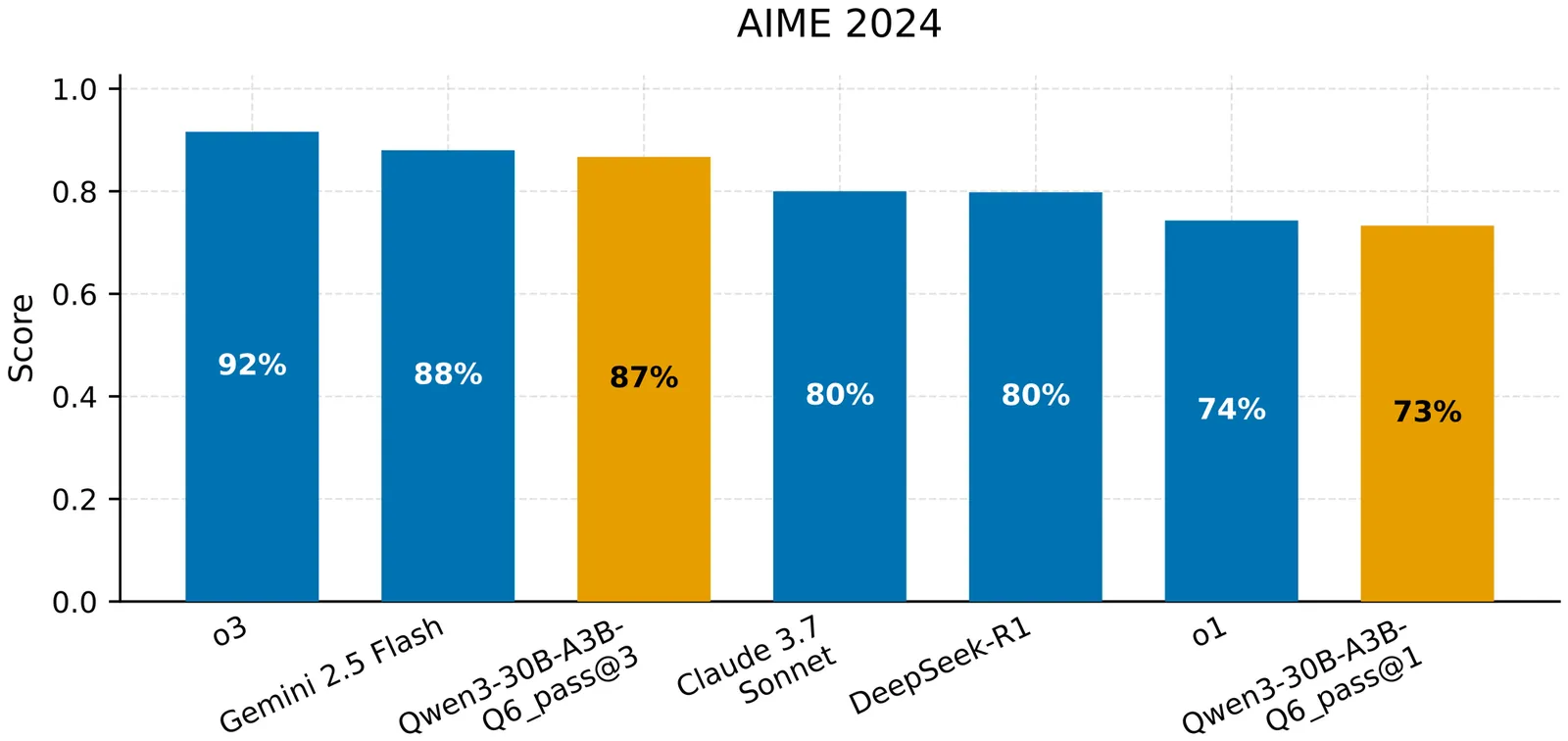
The proliferation of Large Language Models (LLMs) has been accompanied by a reliance on cloud-based, proprietary systems, raising significant concerns regarding data privacy, operational sovereignty, and escalating costs. This paper investigates the feasibility of deploying a high-performance, private LLM inference server at a cost accessible to Small and Medium Businesses (SMBs). We present a comprehensive benchmarking analysis of a locally hosted, quantized 30-billion parameter Mixture-of-Experts (MoE) model based on Qwen3, running on a consumer-grade server equipped with a next-generation NVIDIA GPU. Unlike cloud-based offerings, which are expensive and complex to integrate, our approach provides an affordable and private solution for SMBs. We evaluate two dimensions: the model's intrinsic capabilities and the server's performance under load. Model performance is benchmarked against academic and industry standards to quantify reasoning and knowledge relative to cloud services. Concurrently, we measure server efficiency through latency, tokens per second, and time to first token, analyzing scalability under increasing concurrent users. Our findings demonstrate that a carefully configured on-premises setup with emerging consumer hardware and a quantized open-source model can achieve performance comparable to cloud-based services, offering SMBs a viable pathway to deploy powerful LLMs without prohibitive costs or privacy compromises.
Agentic Reinforcement Learning (RL) enables Large Language Models (LLMs) to perform autonomous decision-making and long-term planning. Unlike standard LLM post-training, agentic RL workloads are highly heterogeneous, combining compute-intensive prefill phases, bandwidth-bound decoding, and stateful, CPU-heavy environment simulations. We argue that efficient agentic RL training requires disaggregated infrastructure to leverage specialized, best-fit hardware. However, naive disaggregation introduces substantial synchronization overhead and resource underutilization due to the complex dependencies between stages. We present RollArc, a distributed system designed to maximize throughput for multi-task agentic RL on disaggregated infrastructure. RollArc is built on three core principles: (1) hardware-affinity workload mapping, which routes compute-bound and bandwidth-bound tasks to bestfit GPU devices, (2) fine-grained asynchrony, which manages execution at the trajectory level to mitigate resource bubbles, and (3) statefulness-aware computation, which offloads stateless components (e.g., reward models) to serverless infrastructure for elastic scaling. Our results demonstrate that RollArc effectively improves training throughput and achieves 1.35-2.05\(\times\) end-to-end training time reduction compared to monolithic and synchronous baselines. We also evaluate RollArc by training a hundreds-of-billions-parameter MoE model for Qoder product on an Alibaba cluster with more than 3,000 GPUs, further demonstrating RollArc scalability and robustness. The code is available at https://github.com/alibaba/ROLL.
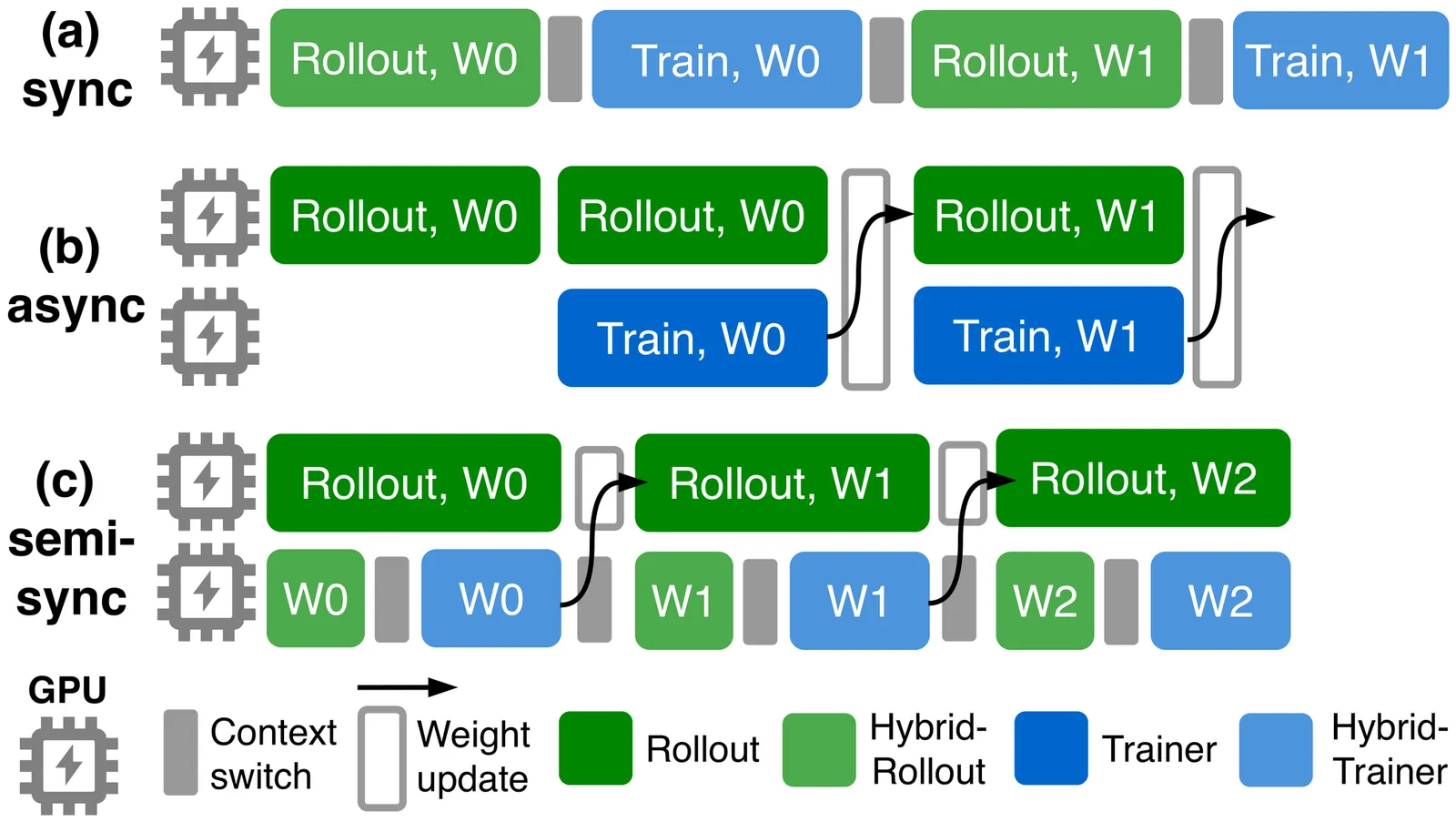
RL post-training for LLMs has been widely scaled to enhance reasoning and tool-using capabilities. However, RL post-training interleaves training and inference workloads, exposing the system to faults from both sides. Existing fault tolerance frameworks for LLMs target either training or inference, leaving the optimization potential in the asynchronous execution unexplored for RL. Our key insight is role-based fault isolation so the failure in one machine does not affect the others. We treat trainer, rollout, and other management roles in RL training as distinct distributed sub-tasks. Instead of restarting the entire RL task in ByteRobust, we recover only the failed role and reconnect it to living ones, thereby eliminating the full-restart overhead including rollout replay and initialization delay. We present RobustRL, the first comprehensive robust system to handle GPU machine errors for RL post-training Effective Training Time Ratio improvement. (1) \textit{Detect}. We implement role-aware monitoring to distinguish actual failures from role-specific behaviors to avoid the false positive and delayed detection. (2) \textit{Restart}. For trainers, we implement a non-disruptive recovery where rollouts persist state and continue trajectory generation, while the trainer is rapidly restored via rollout warm standbys. For rollout, we perform isolated machine replacement without interrupting the RL task. (3) \textit{Reconnect}. We replace static collective communication with dynamic, UCX-based (Unified Communication X) point-to-point communication, enabling immediate weight synchronization between recovered roles. In an RL training task on a 256-GPU cluster with Qwen3-8B-Math workload under 10\% failure injection frequency, RobustRL can achieve an ETTR of over 80\% compared with the 60\% in ByteRobust and achieves 8.4\%-17.4\% faster in end-to-end training time.
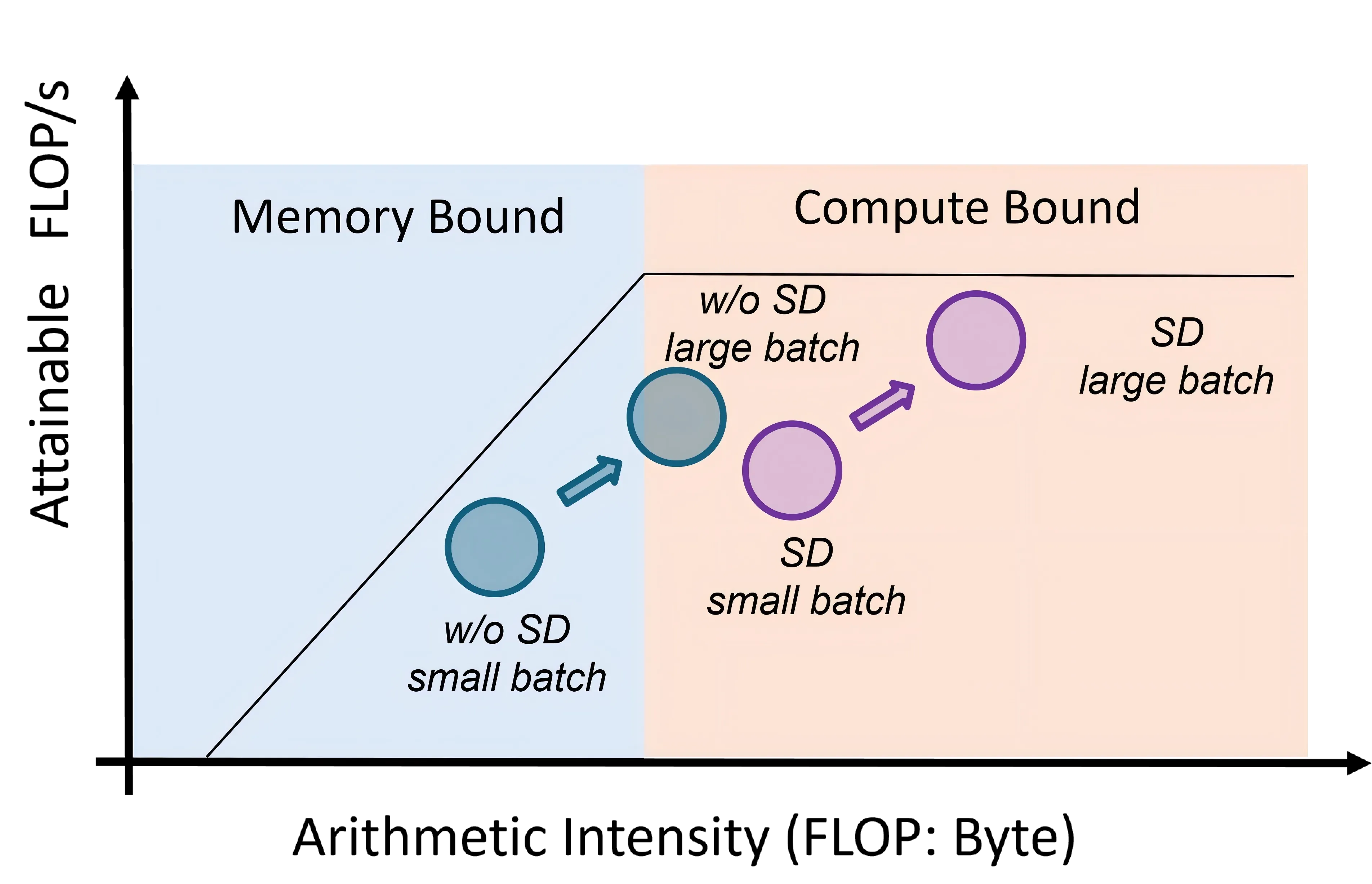
Speculative decoding (SD) accelerates LLM inference by verifying draft tokens in parallel. However, this method presents a critical trade-off: it improves throughput in low-load, memory-bound systems but degrades performance in high-load, compute-bound environments due to verification overhead. Current SD implementations use a fixed speculative length, failing to adapt to dynamic request rates and creating a significant performance bottleneck in real-world serving scenarios. To overcome this, we propose Nightjar, a novel learning-based algorithm for adaptive speculative inference that adjusts to request load by dynamically selecting the optimal speculative length for different batch sizes and even disabling speculative decoding when it provides no benefit. Experiments show that Nightjar achieves up to 14.8% higher throughput and 20.2% lower latency compared to standard speculative decoding, demonstrating robust efficiency for real-time serving.
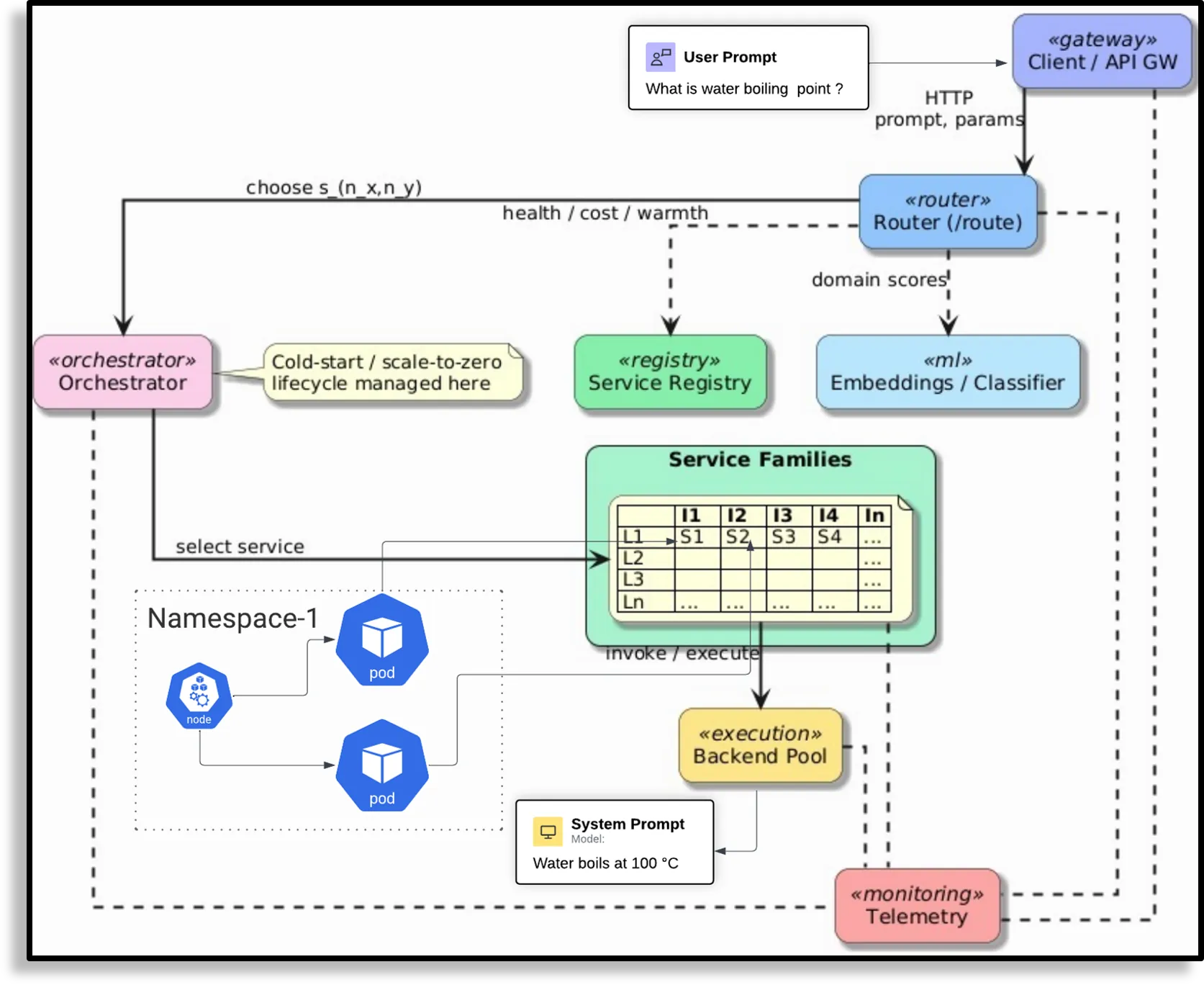
Self-hosting large language models (LLMs) is increasingly appealing for organizations seeking privacy, cost control, and customization. Yet deploying and maintaining in-house models poses challenges in GPU utilization, workload routing, and reliability. We introduce Pick and Spin, a practical framework that makes self-hosted LLM orchestration scalable and economical. Built on Kubernetes, it integrates a unified Helm-based deployment system, adaptive scale-to-zero automation, and a hybrid routing module that balances cost, latency, and accuracy using both keyword heuristics and a lightweight DistilBERT classifier. We evaluate four models, Llama-3 (90B), Gemma-3 (27B), Qwen-3 (235B), and DeepSeek-R1 (685B) across eight public benchmark datasets, with five inference strategies, and two routing variants encompassing 31,019 prompts and 163,720 inference runs. Pick and Spin achieves up to 21.6% higher success rates, 30% lower latency, and 33% lower GPU cost per query compared with static deployments of the same models.