Biographies, philosophy of mathematics, mathematics education, recreational mathematics, communication of mathematics, ethics in mathematics.
2604.04296We present, in detail and with rigour, the two title proofs. The Weak Jordan Theorem states that the complement of any topological circuit in the plane is disconnected.
2604.00934This paper asks what Brouwer might have replied to Dummett's interpretation of intuitionism. Complementing earlier literature, it treats Dummett's rejection of the ontological approach; the charge of psychologism and solipsism; indefinite extensibility; and predicativity. It is argued that Dummett's direct arguments against Brouwerian intuitionism do not settle the matter, and that, on the latter two themes,Dummett's position comes closer to Brouwer's than his own account suggests. The remaining philosophical distance, however, is substantial.
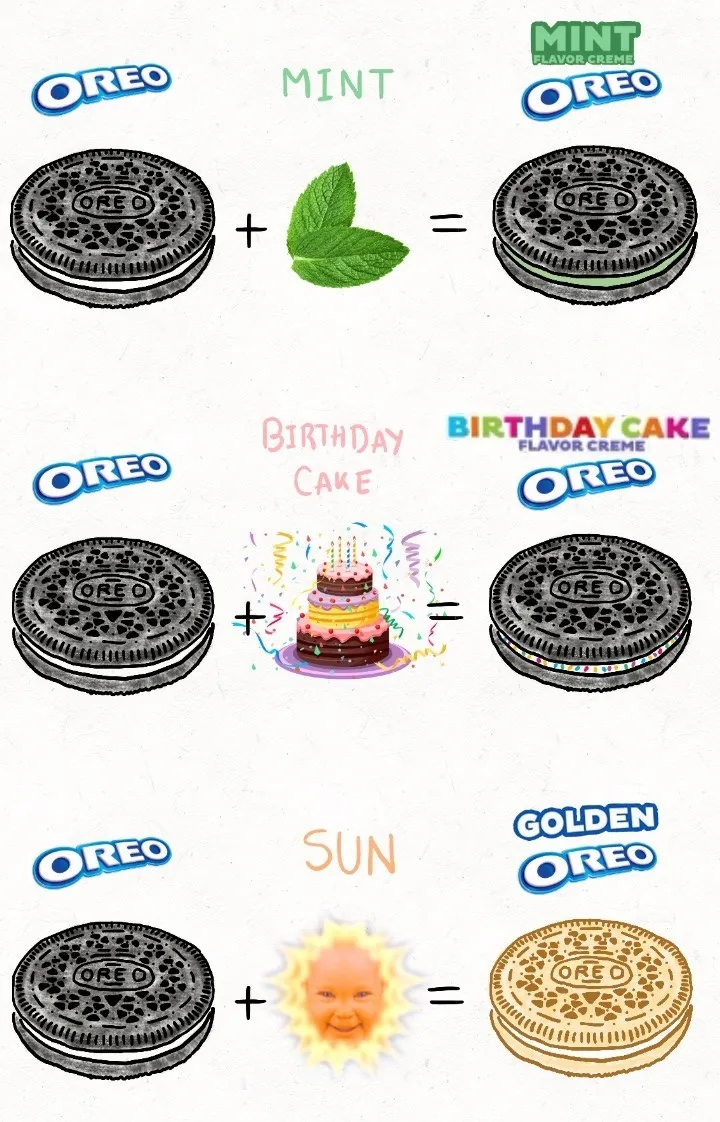
What happens when a food product contains a version of itself? The Oreo Loaded -- a cookie whose filling contains real Oreo cookie crumbs -- can be viewed as the result of mixing a Mega Stuf Oreo into a Mega Stuf Oreo. Iterating this process yields a sequence of increasingly self-referential cookies; taking the limit gives the $\infty$-Oreo. We model the iteration as an affine recurrence on the creme fraction of the filling, prove convergence, and compute the limit exactly: the stuf of the $\infty$-Oreo is approximately $95.8\%$~creme and $4.2\%$~wafer. We then extend the framework to pairs of foods that reference each other, deriving a coupled recursion whose fixed point defines a \emph{bi-$\infty$ food}, and illustrate the construction with M\&M Cookies and Crunchy Cookie M\&M's. Finally, we classify $\infty$-foods by the number of foods in the recursion and introduce \emph{homological foods}, whose recursive structure is governed by cycles in a directed graph of commercially available products. We close with a conjecture. All products used in this paper can be purchased at a supermarket.
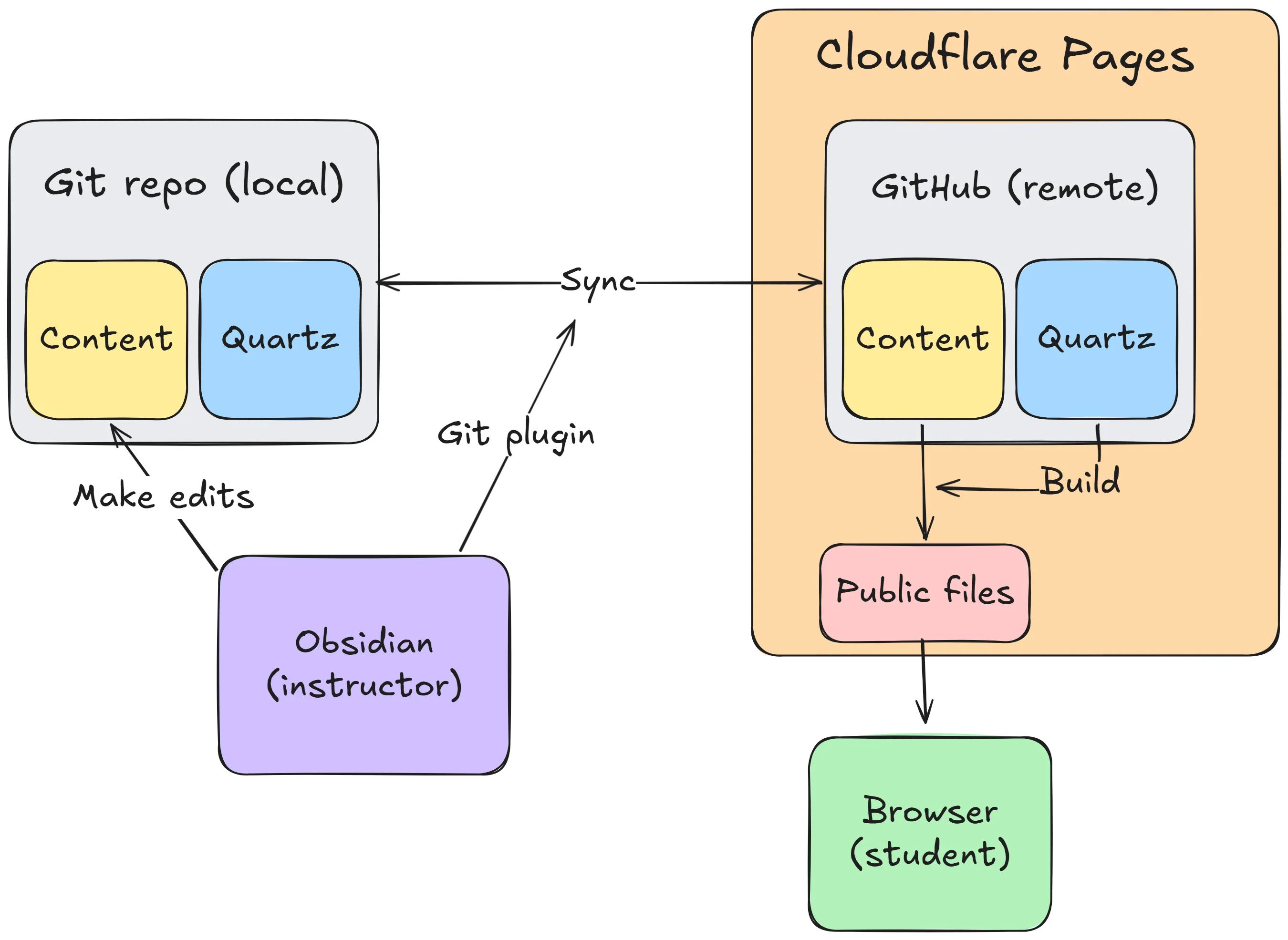
Public universities in the US must now meet digital accessibility (DA) standards under 2024 updates to Title II of the ADA. For math instructors, course materials must be screen-reader parsable, which standard LaTeX-to-PDF workflows cannot achieve. Despite MathML's availability as a web standard for accessible math, instructor adoption of DA-compliant workflows remains very low, creating a gap between available technology and classroom practice. This paper makes three contributions. First, we present a taxonomy of existing approaches to DA-compliant math content, organized by print (PDF) vs. web (HTML) output targets, analyzing tradeoffs for instructor adoption. Second, we describe a free workflow using Obsidian (Markdown-based content management), Quartz (static site generator), Git (collaboration and version control), and Cloudflare Pages (free hosting, private source files) that enables math instructors to create and publish DA-compliant course websites with MathML from TeX-based syntax. Setup takes approximately 1-2 hours; thereafter, site updates occur in minutes via a single command. A public setup tutorial is made available. Third, we present an empirical study of student outcomes across 31 sections of Calculus II over 6 semesters. Sections using the proposed system outperformed controls, with the treatment group reaching 2.4 standard deviations above the control mean in the final semester. Although all treatment sections were taught by one instructor, evidence such as acclimation trajectories of other new instructors suggests the system itself meaningfully contributes to performance gains. A student experience survey shows no statistically significant difference between groups, indicating no negative effect on experience. A proposed second study phase will assess barriers to adoption at other institutions.

2603.27867Inspired by the recent 90th anniversary of the Scottish Book we present some reflections about its impact. First we discuss new areas of mathematics it helped launch. Then we argue that it was actively used in stimulating the interests and results of junior mathematicians and students. Also, we summarize the progress during the decade that has passed since the publication of [55], which contained a review of solved problems from the Scottish Book. We also provide an overview of collections of open problems related in one way or another to the Scottish Book. All formulations of the Scottish Book problems in English are cited here from Mauldin, Richard Daniel (ed.) 2015: The Scottish Book. Mathematics from the Scottish Café. With selected problems from the New Scottish Book. 2nd updated and enlarged edition. Cham: Birkhäuser/Springer
2603.27466This is an English translation and digitisation of Frobenius' and Stickelberger's "On the theory of elliptic functions" first published in Journal fur die reine und angewandte Mathematik (Crelle's journal), 83, 175-179 (1877) with the title "Zur Theorie der elliptischen Functionen". The paper derives what is now known as the Frobenius and Stickelberger determinant formula for elliptic functions and generalises determinants derived by Hermite and Kiepert.
We propose an interpretation of, and approach to, Helly's theorem that can be included quite early in the undergraduate curriculum. At the same time, the approach connects with contemporary models of data privacy and with sampling methods used in epidemiology. The presentation is intended to be accessible to teachers and their students.
2603.26524Artificial intelligence (AI) is the name popularly given to a broad spectrum of computer tools designed to perform increasingly complex cognitive tasks, including many that used to solely be the province of humans. As these tools become exponentially sophisticated and pervasive, the justifications for their rapid development and integration into society are frequently called into question, particularly as they consume finite resources and pose existential risks to the livelihoods of those skilled individuals they appear to replace. In this paper, we consider the rapidly evolving impact of AI to the traditional questions of philosophy with an emphasis on its application in mathematics and on the broader real-world outcomes of its more general use. We assert that artificial intelligence is a natural evolution of human tools developed throughout history to facilitate the creation, organization, and dissemination of ideas, and argue that it is paramount that the development and application of AI remain fundamentally human-centered. With an eye toward innovating solutions to meet human needs, enhancing the human quality of life and expanding the capacity for human thought and understanding, we propose a pathway to integrating AI into our most challenging and intellectually rigorous fields to the benefit of all humankind.
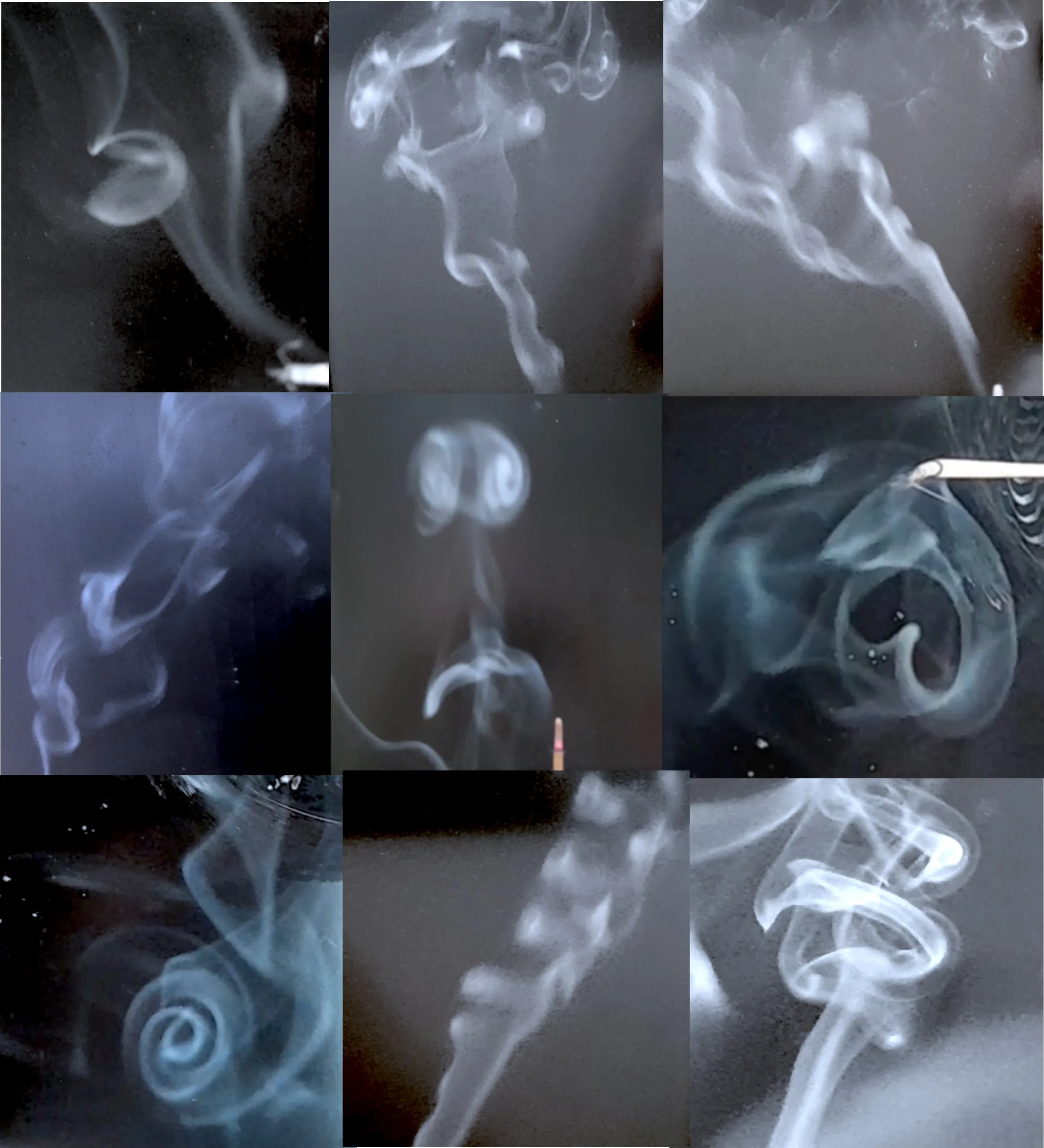
Mathematics curriculums at most universities tend to perpetuate a belief that higher mathematics is historically and culturally European. First Nations and minority students may not see their identities and cultures reflected in the discipline, yet university mathematics educators are keen to diversify and broaden the appeal of their courses. This article presents an investigation on the mathematics of smoke telegraphy, as a contribution to inlaying cross-cultural mathematical heritage in the curriculum. Across Indigenous societies of Australia the technology and practice of smoke telegraphy was developed to a sophisticated level over millennia to fill a need for long-distance communications. Through an original bibliographic and archival analysis, we show that smoke signalling and telegraphy used empirical mathematics of symmetries, frequency coding, and understanding of fluid dynamics. We juxtapose this applied mathematical knowledge, within context, against the timeline of Western understanding and development of these strands of mathematics.
2603.24914Artificial intelligence is transforming mathematics at a speed and scale that demand active engagement from the mathematical community. We examine five areas where this transformation is particularly pressing: values, practice, teaching, technology, and ethics. We offer recommendations on safeguarding our intellectual autonomy, rethinking our practice, broadening curricula, building academically oriented infrastructure, and developing shared ethical principles - with the aim of ensuring that the future of mathematics is shaped by the community itself.
2603.22196This paper re-evaluates Jozsef Sutak (1865-1954), a Hungarian scholar-priest and professor, as a grey eminence rather than a genius, offering a counter-narrative to the history of Hungarian university mathematics. By examining his career - including his 1897 Bolyai translation and his defense of set theory during the 1911 Grundlagenkrise - the study illuminates the overlooked substructure of the academic system. Key institutional moments, such as his 1912 appointment over Frigyes Riesz and Alfred Haar and his administrative role during the Numerus Clausus era, reveal a system prioritizing rigorous pedagogy and stability over avant-garde research. Sutak's legacy is the foundation and ethical commitment that enabled the next generation of Hungarian mathematical giants to emerge.
In this expository note we present an elementary direct rigorous definition and the simplest properties of the winding number. This definition is simpler than the one given in some textbooks. We show how to compute the winding number easily: using additivity or counting the (signed) intersection points. In the language of the winding number, we present an elementary formulation and proof of the low-dimensional case of the Borsuk--Ulam theorem. An English version is followed by a Russian version.
2603.22308We show that the field of complex numbers $\mathbb C$ contains non-zero infinitesimals by observing that $\mathbb C$ contains non-Archimedean subfields. Our observation is based on an old theorem in algebra due to E. Steinitz, discussed in the article in detail. The presence of infinitesimals in $\mathbb C$ was surprise to the author and might be surprise to the readers as well, since $\mathbb C$ is commonly defined in terms of the field of reals $\mathbb R$, which is Archimedean. An additional intrigue arises from the fact that $\mathbb R$ was historically introduced in 19-th century (by Dedekind, Cauchy and others) exactly to make infinitesimals in Leibniz-Newton infinitesimal calculus redundant. It seems that mathematics will never get rid of infinitesimals completely - they are all around us whether we like it or not. In the last section of the article we explain how our result fits to analysis, both standard and non-standard. With examples from history of calculus as well of first-class recent achievements in analysis we try to convince the reader that presence of infinitesimals in analysis simplifies its formal language and improves its efficiency. The motivations of our research is related to an attempt to simplify the properties of particular algebras of generalized functions of Colombeau's type, shortly discussed in the text.
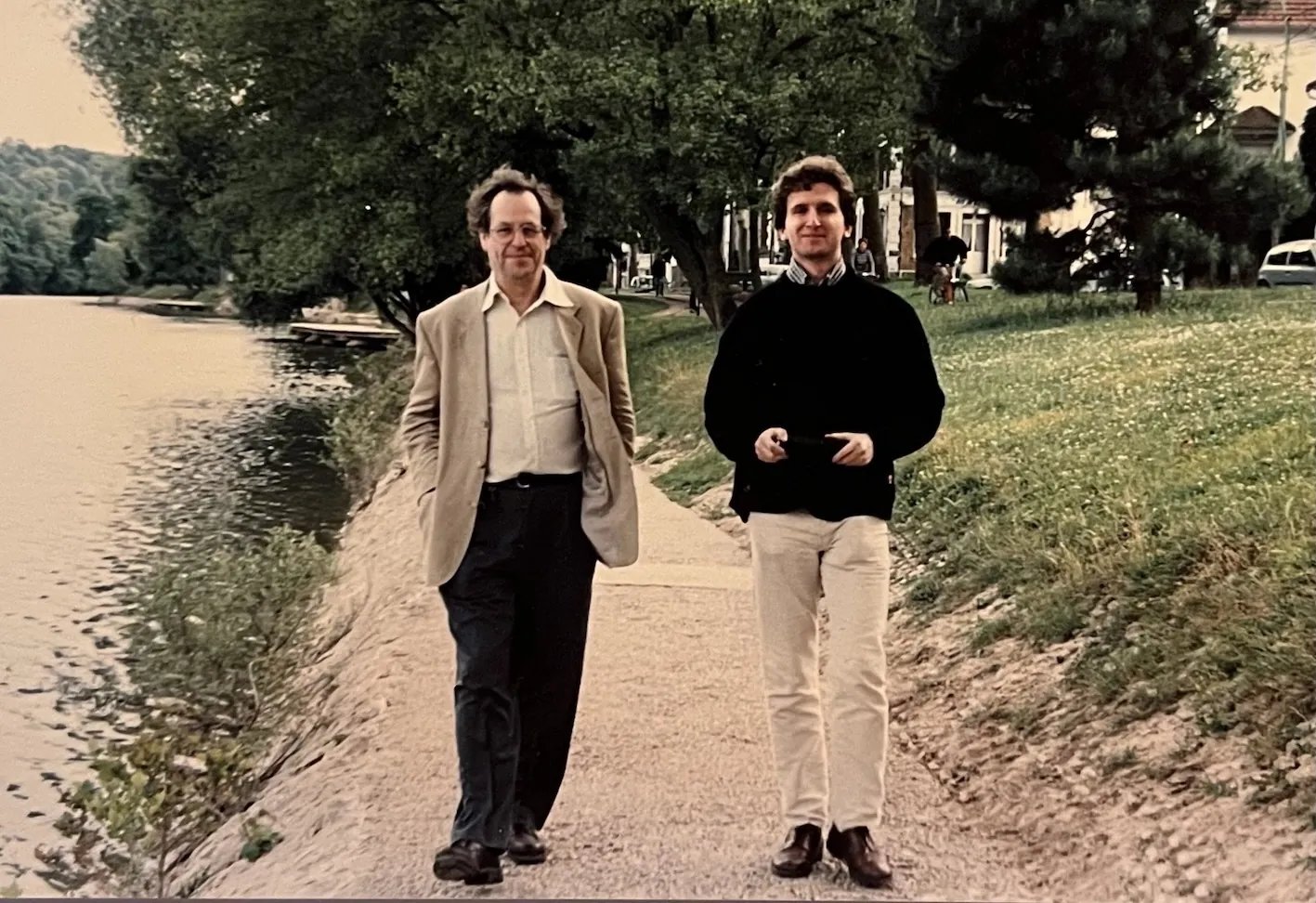
This text is a reworked version of a recorded interview with Bernard Teissier conducted in his house in Paris, on 28 and 29 September 2024.
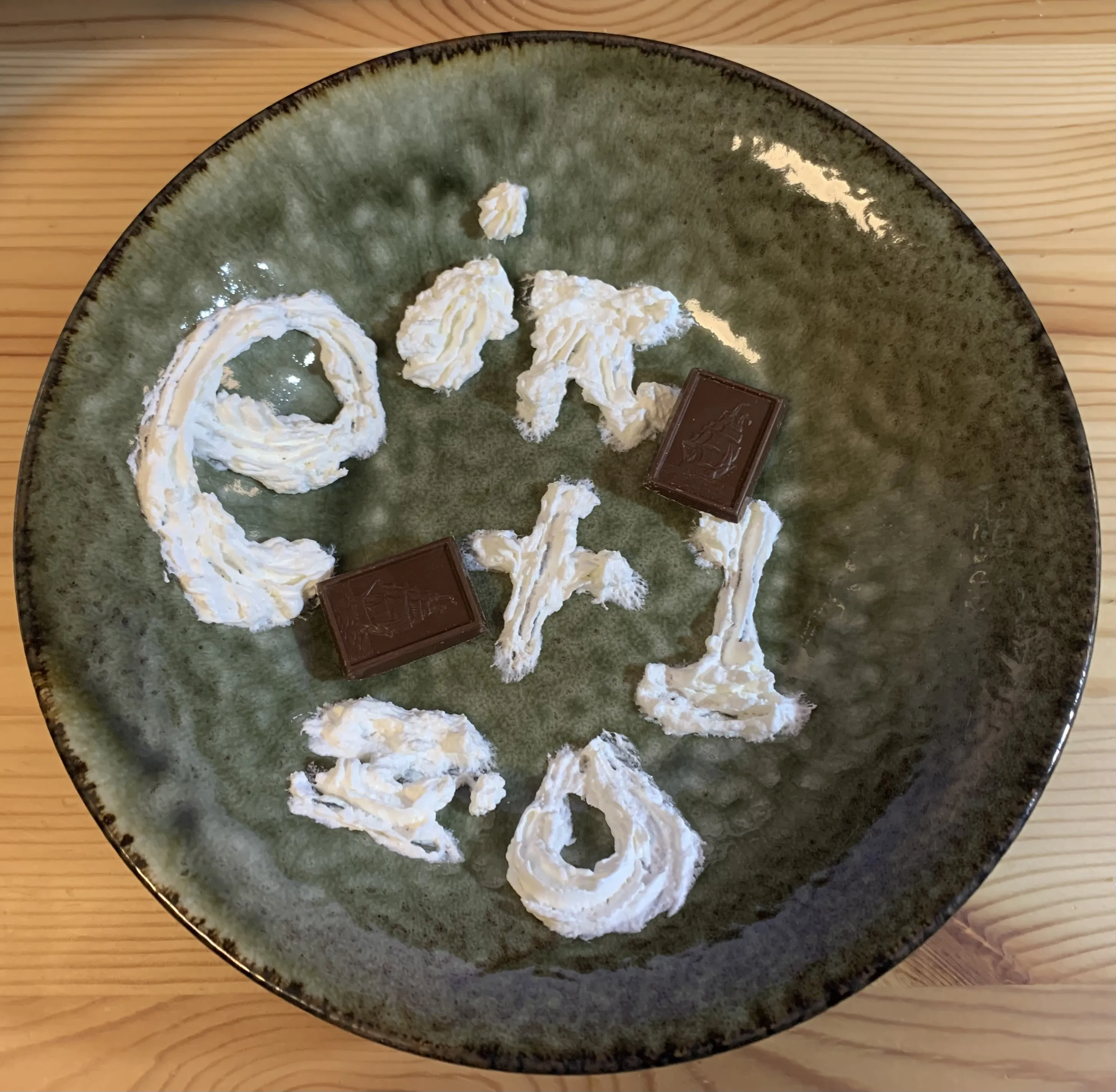
This short essay celebrates the mathematical meaning of Pi Day through Euler's formula \[ e^{ix}=\cos x+i\sin x, \] from which Euler's identity \[ e^{iπ}+1=0 \] follows immediately. We briefly note the historical background of the formula, usually traced to Euler's \emph{Introductio in analysin infinitorum} (1748), while also mentioning Roger Cotes's earlier precursor of 1714. We compare Euler's identity, in an explicitly analogical way, with several famous formulas in physics in order to highlight its remarkable compactness and conceptual richness. We then consider a number of joyful variations arising from the same Eulerian source, including the negative-angle case, prime-number multiples, the substitution $x=π/2$, and a functional-equation variation of the form \[ f(iπx)+1=0. \] This last variation leads naturally to a contrast between rigidity in the holomorphic setting and freedom in the discrete interpolation setting. The central aim is to organize these observations into two simple families of variations: geometric-angle variations and functional-equation variations. The earlier part of the exposition is intended to be accessible to motivated high-school students, while the later discussion points toward more advanced ideas from complex analysis.
2603.13680Mathematical proofs are often said to justify their conclusions by indicating the existence of a corresponding formal derivation. We argue that this widespread view relies on an under-examined notion of correspondence, or what it means for a particular derivation to ''correspond'' to a particular proof. Mere existence of a formalization is not enough, and a substantive account of the required correspondence resolves into two criteria -- adequate representation (of the original theorem) and tracking (of the steps in the original proof). An examination of the actually-existing formalization systems we have today shows the variety of quasi-empirical ways we establish these criteria, and points towards new burdens that may be placed on the future evolution of mathematics itself.
All men are created equal, proclaimed Jefferson in 1776 -- but some are more equal than others, added Orwell in Animal Farm in 1945. So what's the probability that two skaters are exactly equal, to the third decimal places, after four distances?
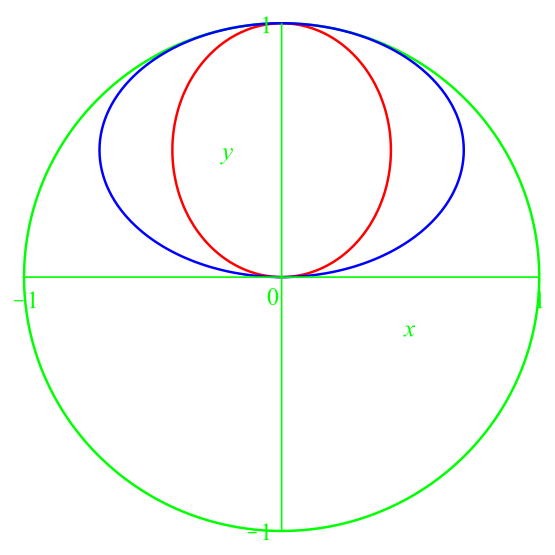
Hyperbolic elliptic parabolic disks can be described by the inequality $\frac{x^2}{C^2}+2y^2-2y\leq0$ ($0<C<1$) in the unit disk based Beltrami--Cayley--Klein model of the hyperbolic geometry, up to hyperbolic congruences. The hyperbolic elliptic parabolic disks considered above are sort of close to their supporting half distance bands given by the inequalities $\frac{x^2}{C^2}+ y^2-1\leq0$ and $y\geq0$. Here we consider what `close' might mean, and we look for even more precise approximations, in terms of area and circumference.
2603.07592The view that Peacock's principle of permanence has been invalidated by Hamilton's introduction of non-commutative algebras has always seemed rather odd, in light of Peacock's favorable reception of quaternions and the endorsement of his principle by Hamilton. But the view is not just odd; it is incorrect. In order to show this, I critically analyze Peacock's attempts to reject possible exceptions to his principle, like the factorial function and an infinite series due to Euler. Then I argue that the principle of permanence is best understood as an expression of a conservative strategy, philosophically grounded in Hume's conception of the laws of reasoning, which advocates their preservation to the furthest extent possible, thus allowing exceptions, i.e., violations of these laws. On this reading, non-commutative multiplication does not invalidate Peacock's principle, if the reasons for violating commutativity outweigh the reasons for its preservation. Finally, I show that Hamilton followed a conservative strategy of precisely this sort when he developed his quaternionic calculus.
2603.08756These Course Notes provide an introduction to mathematical proofs for undergraduate students transitioning from computational calculus to abstract mathematics. Topics include propositional logic, proof techniques, mathematical induction, fields, sets and relations, sequences and series, completeness of the real numbers, cardinality, and related foundational material. Numerous examples and exercises (with complete solutions) are included. The notes are designed for a one-semester proof course.