440 papers
 2604.00663
Invariant idempotent $\ast$-measures for generalized iterated function systems
The notion of $\ast$-measure on a compact Hausdorff space can be defined for arbitrary continuous triangular norm $\ast$. The well-known Hutchinson-Barnsley theory deals with the iterated function systems (IFSs) of probability measures and establishes existence and uniqueness of invariant measures. In the previous paper, IFSs of $\ast$-measures were considered. In the present paper we deal with generalized invariant function systems (GIFSs) of $\ast$-measures, which are counterparts of GIFSs in the sense of Mihail and Miculescu. The notion of invariant $\ast$-measure is introduced for such GIFSs and we prove existence and uniqueness of such elements.
2604.00663Apr 2026
View2604.00563The category of probabilistic metric spaces
The paper is devoted to a categorical study of the category of probabilistic metric spaces. The study is based on an isomorphic description of the category of probabilistic metric spaces. The isomorphic description was obtained in [3] and is in terms of objects that are sets endowed with a collection of distances, where the distances involved do not satisfy the triangle inequality but fulfil a mixed triangle condition instead. The morphisms are levelwise non-expansive maps. We show that the category of probabilistic metric spaces is a monotopological category over the category of sets. We describe the regular closure on a probabilistic space and prove that it coincides with the closure in the underlying strong topology. This enables us to characterize the class of all epimorphisms as the dense maps and the class of all regular monomorphisms as the closed embeddings in terms of the closure operator. We prove that the category of extended metric spaces with non-expansive maps is both coreflectively and reflectively embedded in the category of probabilistic metric spaces.
2604.00563Apr 2026
View2603.28165Pseudocomplementation in rings of continuous functions
We study rings of real-valued continuous functions in terms of pseudocomplementation conditions on various lattices attached to their prime spectrum. We fully characterize pseudocomplementation in all cases and have an almost complete characterization of relative pseudocomplementation.
2603.28165Mar 2026
View2603.28087Prime Density and Classification of Macías Spaces over Principal Ideal Domains
Recently, the Macías topology has been generalized over integral domains that are not fields, to furnish a topological proof of the infinitude of prime elements under the assumption that the set of units is finite or not open. In this article, we remove this cardinality assumption completely by using the Jacobson radical. We prove that in any semiprimitive integral domain, the group of units is not open in the Macías topology. Consequently, for a principal ideal domain, this gives an equivalence between the triviality of the Jacobson radical, the density of the set of prime elements, and the group of units not being open in the Macías topology. Furthermore, we completely characterize when Macías spaces over different infinite principal ideal domains are homeomorphic in terms of cardinalities of certain subsets of the domains. As an application we resolve an open problem concerning homeomorphism of Macías spaces over countably infinite semiprimitive principal ideal domains.
2603.28087Mar 2026
View2603.27330Continuity and openness of maps on locales by way of Galois adjunctions
We study four adjoint situations in pointfree topology that interchange images and preimages with closure and interior operators and establish with them a number of characterisations for meet-preserving maps, localic maps, open maps (in a broad sense) and open localic maps between locales. The principal and most attractive feature of these adjunctions is that they are all concerned with elementary ideas and basic concepts of localic topology: the use of the concrete language of sublocales and its technique simplifies the reasoning. We then revisit open localic maps in detail and present a new proof of Joyal-Tierney open mapping theorem. We end with a study of the interchange laws between preimages/images and closure/interior operators, making clear the similarities and differences with the classical realm.
2603.27330Mar 2026
View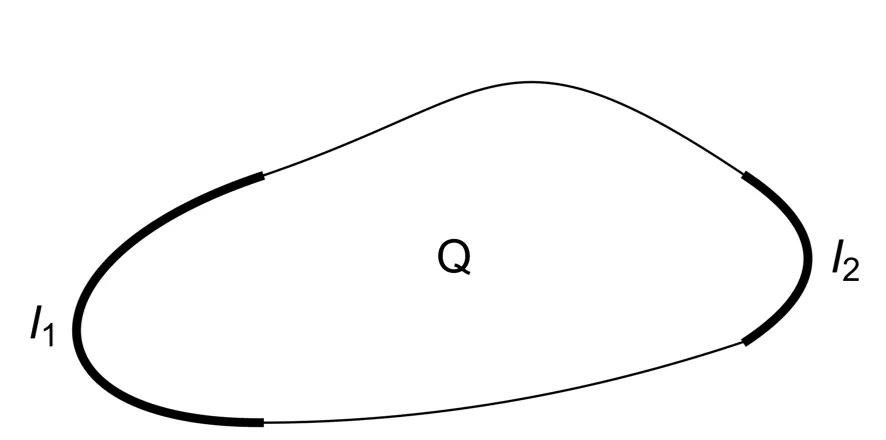
Atoms of Compacta on Closed Surfaces
For any compact set $K$ lying on a closed surface $\mathcal{S}$ we introduce a closed equivalence relation $\sim$, called the {\em Schönflies equivalence} on $K$. We show that every class $[x]_\sim$ of $\sim$ is a continuum and that the resulting quotient space $K\!/\!\sim$ is a {\em Peano compactum}. By definition, all components of a Peano compactum are locally connected and for any $\varepsilon>0$ only finitely many of them have diameter greater than $\varepsilon$. The decomposition $\mathcal{D}_K=\{[x]_\sim: x\in K\}$ refines every other upper semicontinuous decomposition of $K$ into subcontinua that has a Peano compactum as its quotient space. In other words, $\mathcal{D}_K$ is the {\em core decomposition of $K$} with Peano quotient. The elements of $\mathcal{D}_K$ are called {\em atoms} of $K$. We also show that for any branched covering $f: \mathcal{S}^*\rightarrow \mathcal{S}$ from a closed surface $\mathcal{S}^*$ to $\mathcal{S}$, every atom of $f^{-1}(K)$ is sent into an atom of $K$. If $f$ is even a covering, it sends every atom of $f^{-1}(K)$ onto an atom of $K$. We illustrate our theory with examples and show that it cannot be generalized to $n$-manifolds with $n\ge 3$ by providing a detailed counterexample in~$\mathbb{R}^3$.
2603.27054Mar 2026
View2603.21452A note on asymptotic behaviors and topological properties of two smooth real-valued functions and several graphs associated to them
This is a note on the graphs of two smooth real-valued functions in the plane with no intersection and the natural map onto the region surrounded by them with the canonical projection to the line composed, yielding its Reeb space. The Reeb space of a real-valued function on a topological space is the set of all connected components of all level sets and topologized naturally. Such spaces have been fundamental and strong tools in theory of Morse functions and its generalization and variants, since the former half of the 20th century. They are graphs for tame functions such as Morse(-Bott) functions. The author has launched and has been studying this problem since 2020s, interested in Reeb spaces of smooth or non-analytic non-proper functions. For smooth closed manifolds and nice compact spaces, topological properties and combinatorial ones on Reeb spaces have been investigated by Gelbukh, Saeki, and so on.
2603.21452Mar 2026
View2603.20478On exact and totally bounded capacities
We consider capacity (fuzzy measure, non-additive probability) on a compactum as a monotone cooperative normed game. We introduce topological analogues of well known classes of exact and totally balanced games and show that these classes form subfunctors of the capacity functor which lie between known subfunctors of convex capacities and balanced capacities. It is natural to consider probability measures as elements of core of such games. We describes exact capacities as a retraction of the convex closed sets of probability measures. Using such representation we prove openness of the functor of exact capacities.
2603.20478Mar 2026
View2603.18580Furtherness in finite topological spaces
In this paper, we introduce a novel distance-like notion of furtherness for finite topological spaces, demonstrating that every finite space can be viewed as an asymmetric pseudometric space. In particular, we show that every finite T0 space is asymmetric metric space. The topology induced by the forward balls coincides with the original topology of the space, while the backward balls induce the opposite topology. To capture essential information about each finite space, we construct a furtherness Matrix, which gives significant structural details of the finite space. As an application, we introduce the notion of center and radius of subsets of finite topological spaces.
2603.18580Mar 2026
View2603.15567Are scales Fréchet?
We continue the study of Dow spaces of a $\mathfrak{b}$-scale, originally introduced by Alan Dow in "$π$-Weight and the Fréchet-Urysohn property" (Topology and its Applications, Vol. 174, pp. 56-61). We prove that it is consistent that all such spaces are Fréchet, but it is also consistent that none of them is. We use these spaces to exhibit (consistently) a $\triangle_{2}^{1}$ ideal that does not satisfy the Category Dichotomy. Finally, we prove that the Category Dichotomy holds for all co-analytic ideals.
2603.15567Mar 2026
View2603.14404The Set-Self-Tietze Property
We introduce the set-self-Tietze property, an analogue of the self-Tietze property for upper semi-continuous set-valued functions. A topological space $X$ is self-Tietze, if for every closed $A \subseteq X$ and continuous function $f \colon A \to X$, there is a continuous extension $F \colon X \to X$ of $f$. A topological space $X$ is set-self-Tietze, if for every closed $A \subseteq X$ and upper semi-continuous set-valued function $f \colon A \to 2^X$, there exists an upper semi-continuous set-valued function $F \colon X \to 2^X$ such that $\left. F \right|_A = f$. We show every compact metric space is set-self-Tietze, and that the torus is not self-Tietze.
2603.14404Mar 2026
View2603.12101A Takahashi convexity structure on the Isbell-convex hull of an asymmetrically normed real vector space
Let $(X,\|\cdot\|)$ be an asymmetrically normed real vector space and let $\mathcal{E}(X,\|\cdot\|)$ denote its Isbell-convex (injective) hull viewed as a space of minimal ample function pairs. We introduce a canonical $T_{0}$-quasi-metric $q_{\mathcal{E}}$ on $\mathcal{E}(X,\|\cdot\|)$ of sup-difference type and show that the canonical embedding $i:X\to\mathcal{E}(X,\|\cdot\|)$ is isometric. Using the vector space operations on the hull, we define a barycentric map \[ \mathbb{W}(f,g,λ)=λf\oplus(1-λ)g,\qquad f,g\in\mathcal{E}(X,\|\cdot\|),\ λ\in[0,1], \] and prove that $(\mathcal{E}(X,\|\cdot\|),q_{\mathcal{E}},\mathbb{W})$ is a convex $T_{0}$-quasi-metric space in the sense of Künzi and Yildiz. For the standard affine convexity on $X$ we establish the equivariance $i(W(x,y,λ))=\mathbb{W}(i(x),i(y),λ)$, hence $i(X)$ is $\mathbb{W}$-convex in the hull. We further record stability properties of $W$-convex function pairs under hull operations and develop a Chebyshev-center/normal-structure framework on $\mathcal{E}(X,\|\cdot\|)$ yielding fixed point theorems for nonexpansive self-maps on bounded, doubly closed, $\mathbb{W}$-convex subsets of the hull.
2603.12101Mar 2026
View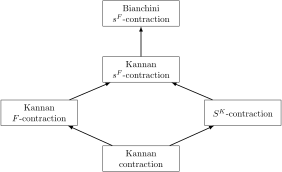
$F$-Contraction with an Auxiliary Function and Its Application to Terrain-Following Airplane Navigation
This paper aims to integrate the concepts of $F$-contraction and $S^B$-contraction within the context of super metric spaces. Specifically, we introduce the concepts of $S^F$-contraction and Bianchini $S^F$-contraction. We demonstrate that these new concepts are genuine generalizations of $S^B$- and $S^K$-contractions by providing nontrivial examples. Furthermore, we establish the existence and uniqueness of fixed points for mappings that satisfy these contractions. Lastly, we apply our findings to a model describing an airplane capable of automatically following a terrain.
2603.10556Mar 2026
View2603.04627Completeness of topological spaces: An induction-free review
Completeness for a (topological) space is often based on the existence of special structures (such as metrics, uniformities, proximities, convergences, etc) that explicitly induce the topology, making the completeness induction-dependent. However, in any given space $X=(X,τ)$, suppose we fix a base $\mathcal{B}$ of $τ$ that is \emph{graded}, in the sense it is partitioned as $\mathcal{B}=\bigcup_{\varepsilon\in \mathcal{E}}\mathcal{B}_\varepsilon$ into open covers $\mathcal{B}_\varepsilon$ of $X$, making $X=(X,τ,\mathcal{B})$ a \emph{(graded) base space}. If we now relax the notion of \emph{convergence of nets} to a notion of \emph{approach between nets} in $X$, then we obtain a more natural \emph{induction-free} notion of a \emph{cauchy net} in a base space, hence a corresponding \emph{induction-free} notion of \emph{completeness} for base spaces. We find that many classical concepts and results on completeness for uniform spaces carry over to completeness for a certain class of base spaces (named \emph{locally symmetric base spaces} or \emph{$lsb$-spaces}) that properly contains uniform spaces. The said classical results include characterization of compactness, Baire's theorem, existence of a completion, and completeness results for product and function $lsb$-spaces.
2603.04627Mar 2026
View2603.03228The Extended Real Line with Reentry: A Compact Quotient Space Separating US from KC
We construct the \emph{Extended Real Line with Reentry} (ERI), a quotient of $\overline{\mathbb{R}} = [-\infty,+\infty]$ obtained by collapsing $\{-\infty, 0, +\infty\}$ to a single point $\ast$ and imposing a density condition on neighborhoods of~$\ast$. ERI is compact, $T_1$, path-connected, US, and not~KC, providing an explicit, constructive example separating US from~KC in the Wilansky hierarchy. We give a complete convergence criterion at~$\ast$, identify the failure of first-countability as the mechanism enabling US without Hausdorff separation, and locate ERI in the refined hierarchy of Clontz~\cite{bib:clontz}: ERI is SC (sequentially closed) but not weakly Hausdorff. The construction generalizes to arbitrary compact Hausdorff spaces without isolated points, and the only continuous real-valued functions on ERI are the constants.
2603.03228Mar 2026
View2603.02791Reeb spaces of smooth functions associated to globally similar graphs of smooth functions
Previously, we have investigated a natural smooth map onto the region surrounded by the graphs of two smooth real-valued functions in the plane converging to a same value or diverges to $+\infty$ or $-\infty$ simultaneously, at each infinity, and topological properties and combinatorial ones of its composition with the canonical projection. Here, we consider smooth functions with congruent or globally similar graphs instead. Here, the Reeb space of a smooth function on a manifold with no boundary is fundamental and important. This is the naturally topologized quotient space of the manifold, consisting of all connected components (contours) of the function and is a graph under a certain nice situation. Related studies also related to the present study were started due to interest of the author in theory of Reeb spaces of non-proper functions. For proper functions, in 2020s related studies have developed mainly due to Gelbukh and Saeki.
2603.02791Mar 2026
View2603.02018Functional countability and exponential separability of product spaces and subspaces
We investigate the behavior of functional countability and exponential separability in products and subspaces of topological spaces. We solve a problem of Tkachuk by showing that the product of functionally countable pseudocompact spaces is itself functionally countable. Solving another problem of Tkachuk, we show that it is independent of ZFC whether regular spaces which have all their subspaces functionally countable are hereditarily Lindelöf. Finally, we prove that the $σ$-product of non-zero ordinals is exponentially separable, thereby extending a result of Kemoto and Szeptycki.
2603.02018Mar 2026
View2603.01114A new order for ideal sequential compactness
Let $\mathcal{I}$ be an ideal on $ω$ and $X$ be a topological space. A sequence $(x_n)_{n\in ω}$ in $X$ is $\mathcal{I}$-convergent if there is $x\in X$ such that $\{n\in ω:x_n\notin U\}\in\mathcal{I}$ for every open neighborhood $U$ of $x$. We examine the following variant of sequential compactness associated with $\I$: $X$ is $\mathrm{BW}(\mathcal{I})$ if for every sequence $(x_n)_{n\in ω}$ in $X$ there is $A\notin\mathcal{I}$ such that $(x_n)_{n\in A}$ is $\mathcal{I}$-convergent. We introduce a new preorder on ideals, denoted $\leq_{BW}$, such that $\mathcal{I}\leq_{BW}\mathcal{J}$ implies that every $\mathrm{BW}(\mathcal{J})$ space is $\mathrm{BW}(\mathcal{I})$. Our main result states that under CH the above implication can be reversed in the case of $\mathbf{F_σ}$ ideals $\I$ and $\J$. We compare $\leq_{BW}$ with the Katětov order and study the relation $\leq_{BW}$ among some well-known ideals (e.g. the van der Waerden ideal $\mathcal{W}$ consisting of all subsets of $ω$ that do not contain arbitrary long finite arithmetic progressions). As a consequence, we answer two open questions posed by Filipów and Tryba in [Top. App. {\textbf{178}} (2014), 438--452] concerning comparison of $\mathrm{BW}(\mathcal{W})$ with the class of sequentially compact spaces.
2603.01114Mar 2026
View2602.23617Automatic continuity for vector spaces with linear topology
In this paper we classify all topological vector spaces with linear topology with the property that all algebraic automorphisms are continuous. Moreover, we prove some properties of these spaces.
2602.23617Feb 2026
View2602.19106Soft Uniform Spaces and Soft Uniform Continuity: Induced Topologies, Separation, and Compactness-Type Results
Soft uniform structures provide a way to speak about uniform closeness in a parameterized setting. Working over a fixed parameter set, we treat entourages as soft relations and introduce a notion of \emph{soft uniformity} whose axioms parallel the classical entourage approach. Every soft uniformity induces a canonical soft topology; moreover, the uniformity is separated exactly when the induced topology is soft $T_1$, and the induced topology is soft regular. We then study soft uniformly continuous mappings and prove a soft Heine--Cantor type theorem: on a soft compact domain, soft continuity already forces soft uniform continuity. Finally, soft total boundedness and soft completeness are formulated via soft Cauchy filters, and we show that soft compactness implies both properties. Examples are included to relate the theory to uniformities generated from classical structures and to highlight the role played by parameters.
2602.19106Feb 2026
ViewPage 1 of 22