General Mathematics
arXiv:math.GM
Mathematical material of general interest, broadly accessible to all mathematicians.
Mathematical material of general interest, broadly accessible to all mathematicians.
 2512.20686
Divisor methods are well known to satisfy house monotonicity, which allows representative seats to be allocated sequentially. We focus on stationary divisor methods defined by a rounding cut point $c \in [0,1]$. For such methods with integer-valued votes, the resulting apportionment sequences are periodic. Restricting attention to two-party allocations, we characterize the set of possible sequences and establish a connection between the lexicographical ordering of these sequences and the parameter $c$. We then show how sequences for all pairs of parties can be systematically extended to the $n$-party setting. Further, we determine the number of distinct sequences in the $n$-party problem for all $c$. Our approach offers a refined perspective on large-party bias: rather than viewing large parties as simply receiving more seats, we show that they instead obtain their seats earlier in the apportionment sequence. Of particular interest is a new relationship we uncover between the sequences generated by the smallest divisors (Adams) and greatest divisors (d'Hondt or Jefferson) methods.
2512.01154Let $θ:[0,1]\rightarrow[-\infty,+\infty]$ be a function with both $θ(x^{-})$ and $θ(x^{+})$ existing for every $x\in [0,1]$ and $\vartheta:[-\infty,+\infty]\rightarrow[-\infty,+\infty]$ be a function. In this article we completely characterize the pair $(θ,\vartheta)$ for the bivariate function $O_{θ,\vartheta}: [0,1]^{2}\rightarrow[0,1]$ given by $$O_{θ,\vartheta}(x,y)=\vartheta(θ(x)+θ(y))$$ being an overlap function. In particular, we give analytical expressions of some transformations for the pair $(θ,\vartheta)$.
2512.03085We study a Fejer-type smoothing kernel on the finite cyclic group Z/NZ. For each smoothing radius we give explicit l1 and l2 norms, compute the discrete Fourier transform, and record bounds that are uniform in N. As an application we prove a smoothed discrepancy estimate with explicit constants that can be used in quantitative problems on finite cyclic groups. The arguments are elementary and the note is intended as a self contained reference.
2511.21776In this work, we consider four theorems that can be used to prove the irrationality of $π$. These theorems are related to nested radicals with roots of $2$ of kind $c_k = \sqrt{2 + c_{k - 1}} $ and $c_0 = 0$. Sample computations showing how the rational approximation tend to $π$ with increasing the integer $k$ are presented.
2511.21765Given l<s<m an upper bound on the s norm is given using l norm and m norm. The result is applied in bounding odd values of zeta function, binomial sums and gamma and beta functions.
We investigate a class of variable growth nonlocal differential equations of Kirchhoff-type having the general form \(-A\!\left(\int_0^1 b(1-s)\,\big(u(s)\big)^{p(s)}\,ds\right)\,u''(t) = λ\,f(t,u(t))\) for \(t\in(0,1)\), where \(A\) is a possibly sign-changing function. Our analysis is carried out in the variable-exponent Lebesgue space \(L^{p(\cdot)}([0,1])\) under the standing hypothesis \(p(t)>1\). We demonstrate that using the Luxemburg norm allows for a much sharper localisation of the solution to the nonlocal problem. Moreover, the conditions imposed on both \(λ\) and \(f\) are appreciably weakened when the problem is analysed within the Luxemburg norm framework. An example explicitly demonstrates both the qualitative and quantitative advantages over earlier techniques.
2512.00071This paper develops a Mellin-Laplace analytic framework for the fixed-shift prime correlation r_h(n) = Lambda(n) Lambda(n+h) for h not equal to 0. This sequence has no multiplicative structure, no Euler product, and no singularity at s = 1. For every compactly supported Mellin-Laplace admissible kernel W, the smoothed shifted sum S_{W,h}(N) admits an absolutely convergent Mellin representation that holds entirely in the half-plane Re(s) > 1, with no use of analytic continuation. The Mellin transform of W provides quantitative vertical decay, enabling full contour control on the boundary line Re(s) = 1 + eps. A Tauberian boundary analysis shows that both components of the boundary integral grow like N^{1+eps}, while the oscillatory part contributes an unavoidable N^{1+eps} (log N)^2 term. As a result, the boundary integral cannot be decomposed into a dominant main term plus a smaller error term, revealing a structural obstruction to main-term extraction for fixed-shift correlations. These results give a complete analytic description of shifted prime correlations in their natural domain of convergence and clarify the analytic difficulties underlying problems such as the twin prime conjecture.
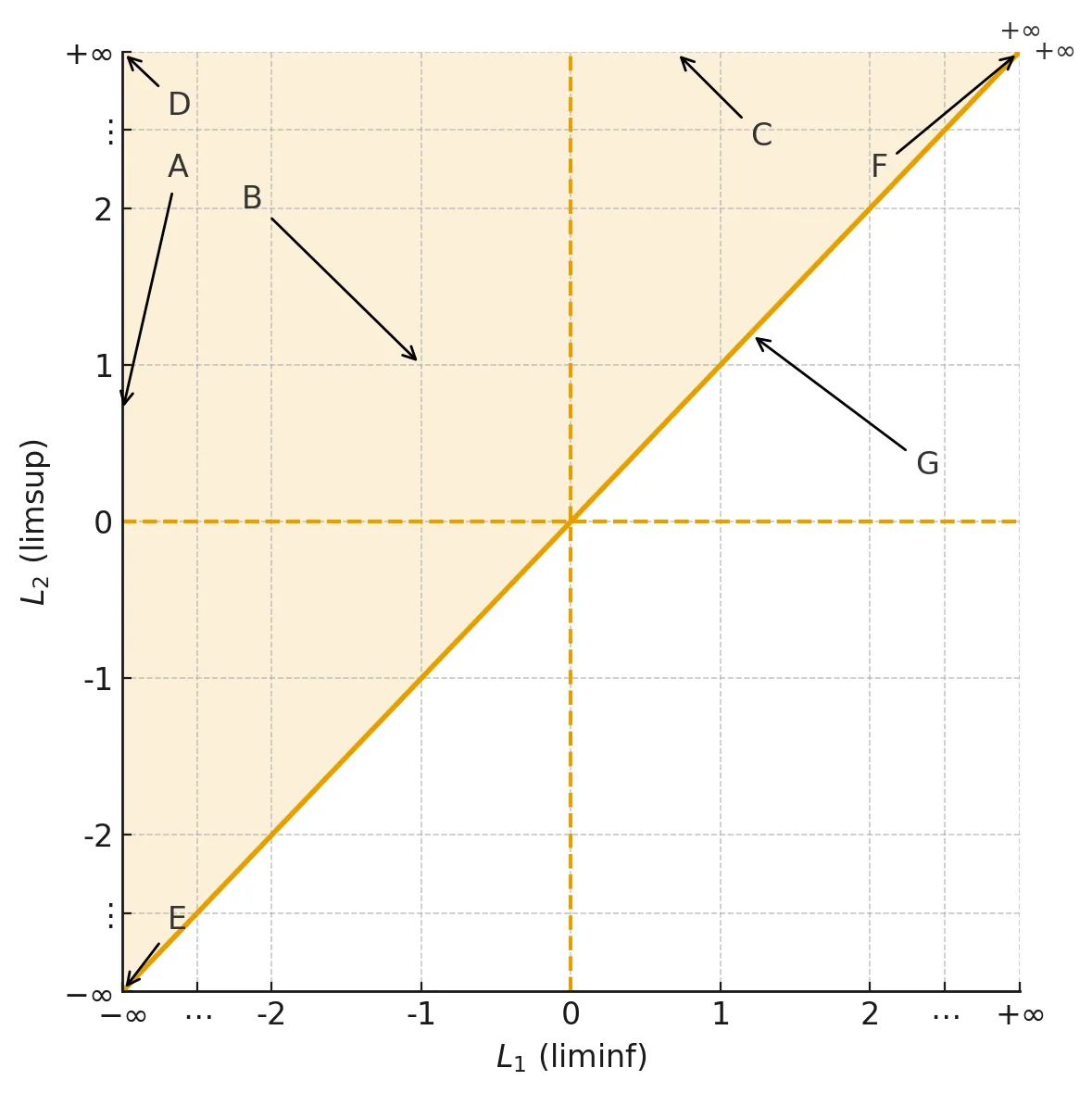
The sequence space of all real-valued sequences, denoted $Seq(\mathbb{R})$, is typically investigated through the lens of infinite-dimensional vector spaces, utilizing Banach space norms or Schauder bases. This work proposes a complementary, constructive classification based instead on the asymptotic limit profile encoded by the pair $(\liminf a_n, \limsup a_n)$. We demonstrate that this perspective naturally partitions $Seq(\mathbb{R})$ into seven mutually disjoint macroscale blocks, covering behaviors from finite convergence to bounded and unbounded oscillation. For each block, we provide explicit closed-form representative sequences and establish that every constituent class possesses the cardinality of the continuum. Furthermore, we investigate the structural relationships between these blocks at two distinct levels of granularity. At the macroscale, we employ injective mappings to define an idealized connectivity graph, while at the microscale, we introduce a connection relation governed by the Hadamard (pointwise) product. This dual analysis reveals a rich directed graph structure where the block of finite convergent sequences functions both as the only block subspace and as a global attractor with no outgoing connections. Statistical comparisons between the idealized and realized adjacency matrices indicate that the pointwise product structure realizes approximately two-thirds of the theoretically possible macroscale relations. Ultimately, this partition-based framework endows the seemingly chaotic space $Seq(\mathbb{R})$ with a transparent, geometrically interpretable internal structure.
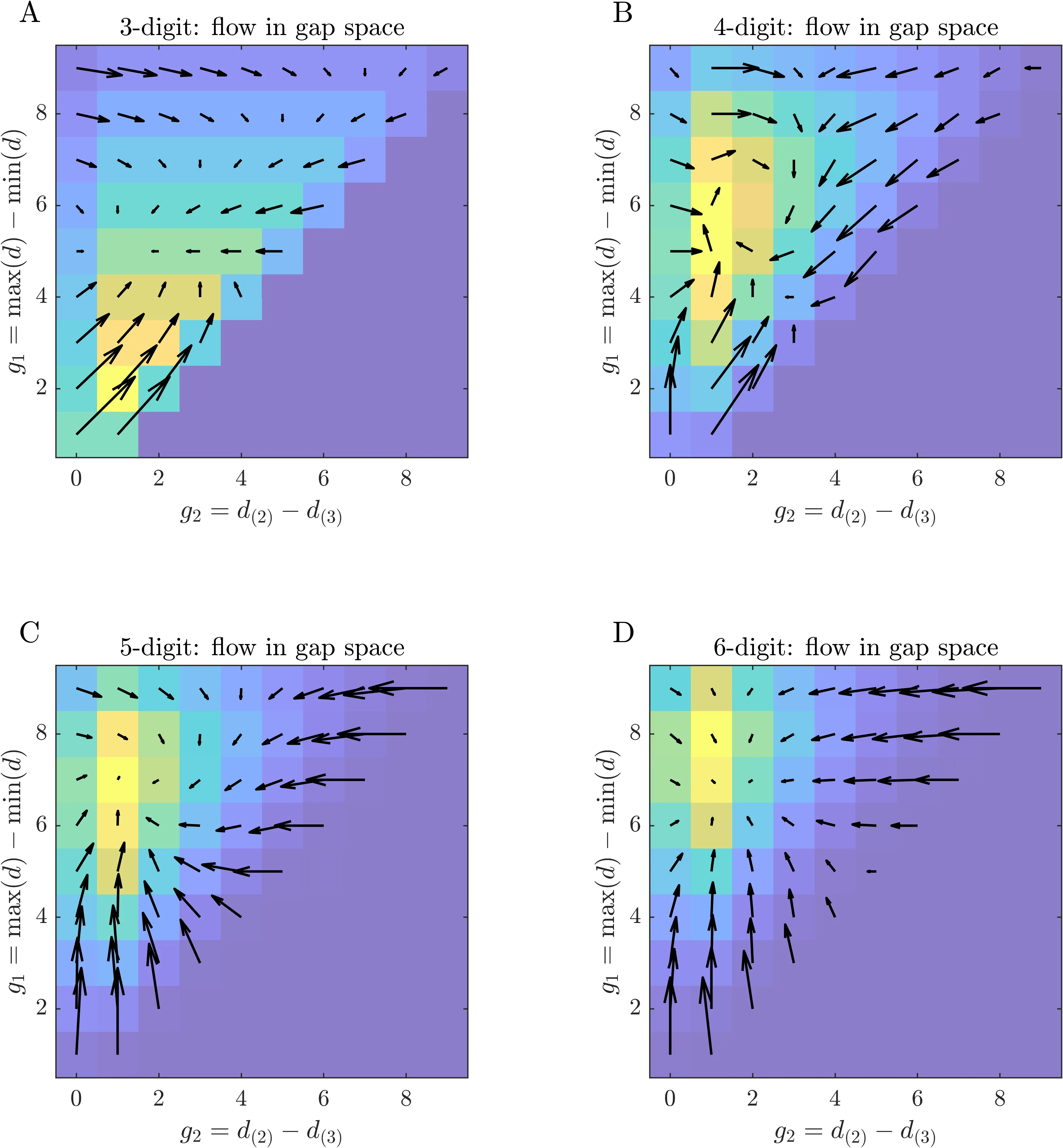
Kaprekar's routine, i.e., sorting the digits of an integer in ascending and descending order and subtracting the two, defines a finite deterministic map on the state space of fixed-length digit strings. While its attractors (such as 495 for D = 3 and 6174 for D = 4) are classical, the global information-theoretic structure of the induced dynamics and its dependence on the digit length D have received little attention. Here an exhaustive analysis is carried out for D in {3,4,5,6}. For each D, all states are enumerated, their attractors and convergence distances are obtained, and the induced distribution over attractors across iterations is used to construct "entropy funnels". Despite the combinatorial growth of the state space, average distances remain small and entropy decays rapidly before entering a slow tail. Permutation symmetry is then exploited by grouping states into digit multisets and, in a further reduction, into low-dimensional digit-gap features. On this gap space, Kaprekar's routine induces a first-order Markov approximation whose transition structure, stationary distribution and drift fields are characterised, showing that simple gap features strongly constrain the dynamics for D=3 but lose predictive power as D increases.
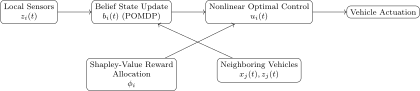
Multi-Agent Reinforcement Learning (MARL) has emerged as a powerfulparadigm for cooperative decision-making in connected autonomous vehicles(CAVs); however, existing approaches often fail to guarantee stability, optimality,and interpretability in systems characterized by nonlinear dynamics,partial observability, and complex inter-agent coupling. This study addressesthese foundational challenges by introducing MARL-CC, a unified MathematicalFramework for Multi-Agent Reinforcement Learning with Control Coordination.The proposed framework integrates differential geometric control, Bayesian inference,and Shapley-value-based credit assignment within a coherent optimizationarchitecture, ensuring bounded policy updates, decentralized belief estimation,and equitable reward distribution. Theoretical analyses establish convergence andstability guarantees under stochastic disturbances and communication delays.Empirical evaluations across simulation and real-world testbeds demonstrate upto a 40% improvement in convergence rate and enhanced cooperative efficiencyover leading baselines, including PPO, DDPG, and QMIX.These results signify a decisive advance in control-oriented reinforcement learning,bridging the gap between mathematical rigor and practical autonomy.The MARL-CC framework provides a scalable foundation for intelligent transportation,UAV coordination, and distributed robotics, paving the way toward interpretable, safe, and adaptive multi-agent systems. All codes and experimentalconfigurations are publicly available on GitHub to support reproducibilityand future research.
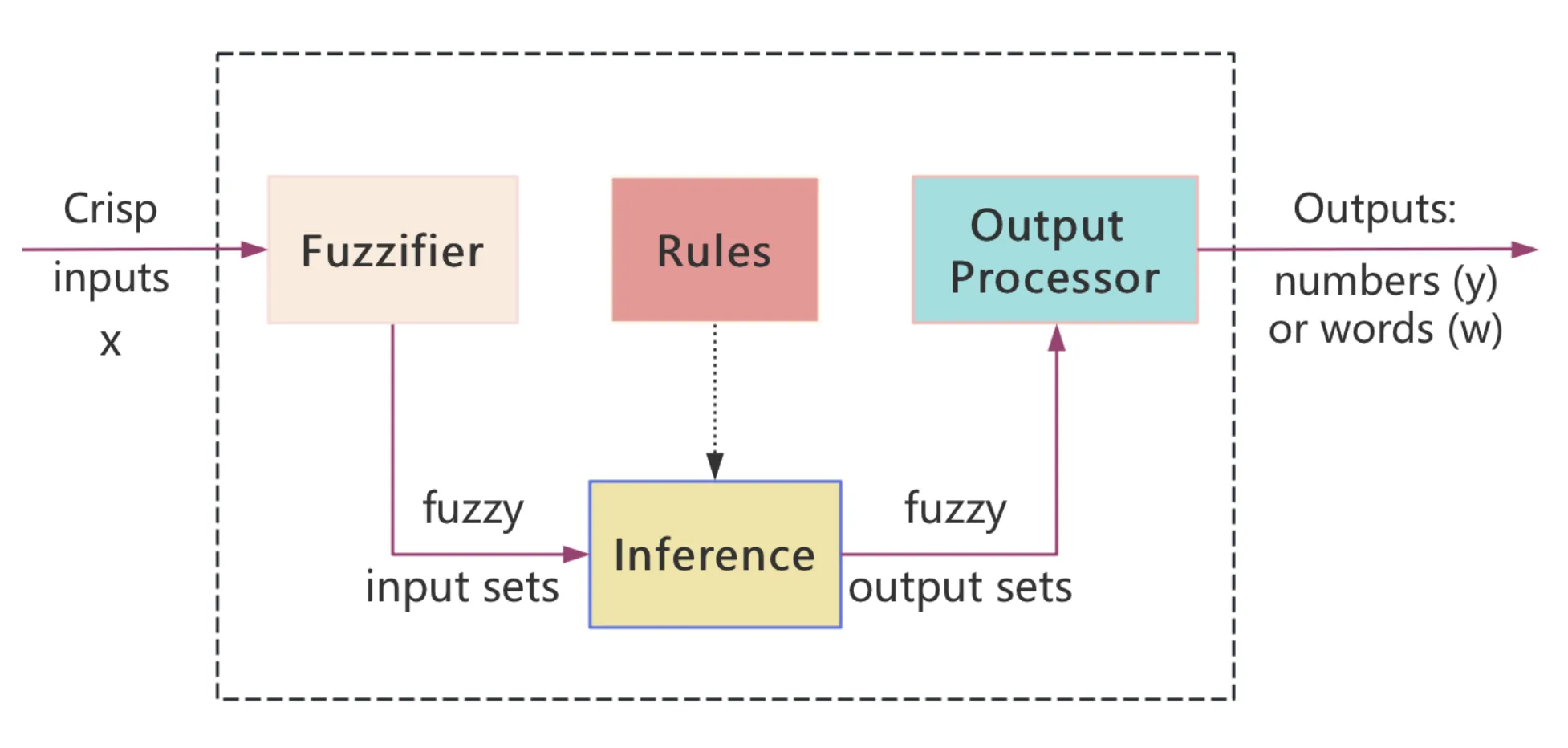
Type-2 fuzzy set (T2 FS) were introduced by Zadeh in 1965, and the membership degrees of T2 FSs are type-1 fuzzy sets (T1 FSs). Owing to the fuzziness of membership degrees, T2 FSs can better model the uncertainty of real life, and thus, type-2 rule-based fuzzy systems (T2 RFSs) become hot research topics in recent decades. In T2 RFS, the compositional rule of inference is based on triangular norms (t-norms) defined on complete lattice $(L,\sqsubseteq)$ ( L is the set of all convex normal functions from [0,1] to [0,1], and , $\sqsubseteq$ is the so-called convolution order). Hence, the choice of t-norm on $(L,\sqsubseteq)$ may influence the performance of T2 RFS. Therefore, it is significant to broad the set of t-norms among which domain experts can choose most suitable one. To construct t-norms on $(L,\sqsubseteq)$, the mainstream method is convolution which is induced by two operators on the unit interval [0,1]. A key problem appears naturally, when convolution is a t-norm on $(L,\sqsubseteq)$. This paper has solved this problem completely. Moreover, note that the computational complexity of operators prevent the application of T2 RFSs. This paper also provides one kind of convolutions which are t-norms on $(L,\sqsubseteq)$ and extremely easy to calculate.
2511.11774In this paper we develop a duality theory for all finite-dimensional near-vector spaces and introduce a notion of inner product tailored to the broad and natural class of strongly regular near-vector spaces. This generalized construction extends the classical inner product beyond the classical framework, yielding rich families of examples on multiplicative near-vector spaces. Within this setting, several familiar norms-such as those that fail to produce Hilbert spaces in the classical sense-emerge naturally as genuine inner-product-type norms. A further contribution is the extension of the theory of generalized (weighted) means to arbitrary complex datasets. This extension unifies and generalizes the classical power and geometric means, carrying them beyond the domain of positive reals.
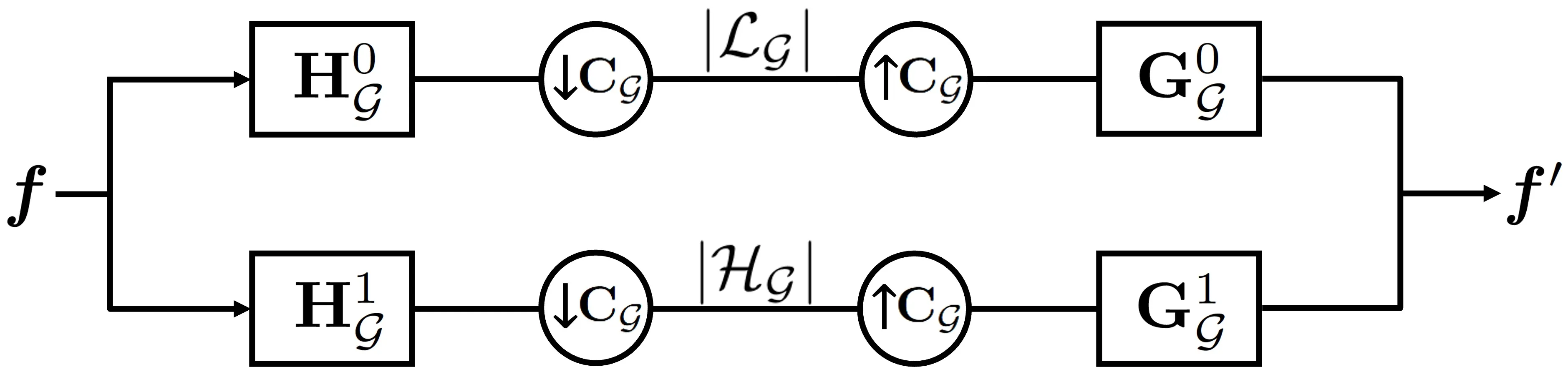
To address the limitations of conventional critically sampled graph filter banks in joint time-vertex signal processing, which require decomposing the joint graph into bipartite subgraphs and thus cannot fully exploit all temporal and spatial edges in a single-stage transform, we introduce the joint time-vertex oversampled graph Laplacian matrix. This operator enables the construction of bipartite extensions that preserve all edges of the original joint graph and supports redundant multiresolution representations. Based on this operator, we design two-channel joint time-vertex oversampled graph filter banks and develop efficient oversampling extensions using a $K$-coloring strategy. The proposed framework is applied to both graph signal and image/video denoising, modeling images as graph signals to leverage structural relationships. Extensive experiments demonstrate its effectiveness in decomposition, reconstruction, and denoising, achieving notable performance improvements over critically sampled and existing methods.
2511.11744These notes aim to provide a classical approach to solving some conformable differential equations based on prior knowledge of how to solve ordinary differential equations. That is, using the methods of separation of variables, homogeneous equations, linear, Bernoulli and exact. Representative examples are presented in all cases. Emphasis is placed on the new definitions and notations.
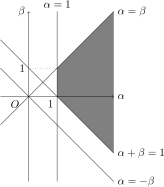
We describe some monotone properties of solutions to second order linear difference equations with real constant coefficients. As an application, we give a characterization of the Fibonacci numbers.
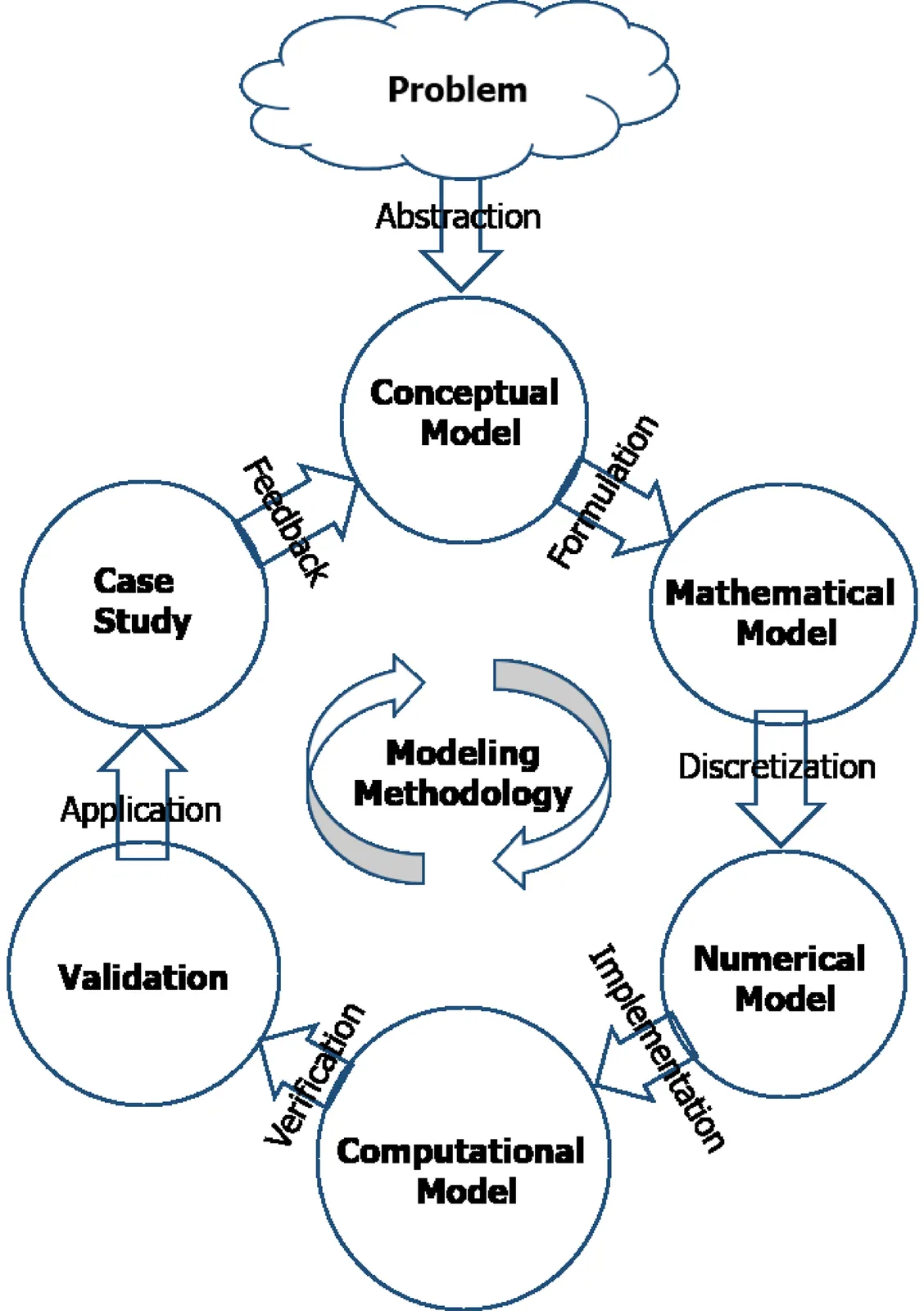
A general 3D flow-and-transport model in porous media is derived using an axiomatic continuum-mechanics approach and implemented with the finite element method to simulate microbial enhanced oil recovery (MEOR) at core scale under laboratory conditions. The development pipeline (conceptual -> mathematical -> numerical -> computational) is detailed. The model captures clogging/declogging from biomass, changes in interfacial tension due to biosurfactant, and the resulting impact on relative permeability, capillary pressure, and residual oil saturation via a trapping-number framework. The flow model is validated (Buckley-Leverett and coreflood benchmarks); transport (microbes/nutrients/surfactant) is validated against Hendry et al. 1997 breakthrough data. Finally, the model accurately predicts a Berea-core MEOR case study using field microbes and brine, matching recovery histories with small RMS error. Owing to its generality, the framework can be extended to other EOR scenarios and constitutive laws.
2511.09565In this paper, we derive a unified generalization of Ramanujan's transformation identities for the theta function $f(a,b)$, originally appearing in Ramanujan's Notebooks, Parts~III and IV. Using an approach based on residue-class dissections and modular substitutions, we obtain a closed transformation formula for $f(ζa, ζb)$, where $ζ$ is a primitive root of unity $m$. As special cases, we recover and systematically prove Ramanujan's classical results for $m=2,3,$ and $4$, including even odd dissections, cubic transformation and the compact quartic form involving complex coefficients.
2511.11657In this article, we will use elementary number theory techniques to investigate a sequence of integers defined by a sifting process called the lucky numbers. Ulam introduced lucky numbers as a sieve-based analogue of prime numbers. We derive an exact formula for the $n$th lucky number, providing a new tool for quantitative analysis. We formulate and prove a version of the Fundamental Theorem of Arithmetic for lucky numbers. This theorem provides an entirely new viewpoint on number theory. Building on the fundamental theorem, we introduce foundational definitions and analogues of arithmetical functions. Additionally, we prove an analogue of Bertrand's postulate for lucky numbers. Finally, we use the formula for the $n$th lucky number to prove a new result on the order of magnitude of the gaps between consecutive lucky numbers. We obtain an asymptotic bound that is much stronger than the best known bound for primes, and therefore obtain the first result that is known for lucky numbers but still conjectured to be true for primes. Together, these results establish a foundation for the arithmetic theory of lucky numbers and contribute to a broader understanding of sieve-generated sequences.
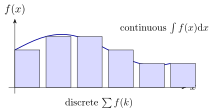
We construct a unified analytic framework connecting Bernoulli numbers, zeta-regularization, and Fredholm determinants associated with trigonometric selector kernels. Starting from the Bernoulli-Stirling algebra, Euler-Maclaurin corrections are reinterpreted as spectral traces of compact operators. This bridge transforms discrete combinatorial data into continuous spectral quantities, showing that their determinants interpolate between finite-rank projectors and the sine-kernel of random-matrix theory. In the continuum limit the Fredholm determinant becomes a Painleve-V~tau-function, revealing a hierarchy in which Bernoulli coefficients and zeta-constants jointly describe the local-global asymptotics of analytic regularization.
2511.11642Relying on recent generalizations of the Fraïssé theory to a broader category-theoretic context, we study the class of abstract finite games played between two players and show the existence of an infinitetly countable game which is ultrahomogeneous and universal with respect to said class. Certain peculiarities of our game categories which clash with the usual framework found in the literature then lead us to formulate weaker category-theoretic properties which still yield a universal and ultrahomogeneous Fraïssé limit, thus further generalizing the categorical framework for a Fraïssé theory.
A general 3D flow-and-transport model in porous media is derived using an axiomatic continuum-mechanics approach and implemented with the finite element method to simulate microbial enhanced oil recovery (MEOR) at core scale under laboratory conditions. The development pipeline (conceptual -> mathematical -> numerical -> computational) is detailed. The model captures clogging/declogging from biomass, changes in interfacial tension due to biosurfactant, and the resulting impact on relative permeability, capillary pressure, and residual oil saturation via a trapping-number framework. The flow model is validated (Buckley-Leverett and coreflood benchmarks); transport (microbes/nutrients/surfactant) is validated against Hendry et al. 1997 breakthrough data. Finally, the model accurately predicts a Berea-core MEOR case study using field microbes and brine, matching recovery histories with small RMS error. Owing to its generality, the framework can be extended to other EOR scenarios and constitutive laws.
2510.07643In this paper we consider the even monic degree-8 cuboid polynomial $P_{a,u}(t)$ with coprime integers $a\neq u>0$. We prove irreducibility over $\mathbb{Z}$ by excluding all degree-8 splittings. First, any putative $4{+}4$ factorization is shown to force a specific Diophantine constraint that has no integer solutions, via a short $2$- and $3$-adic analysis. Second, we exclude every $2{+}6$ factorization using an exact divisor criterion together with a discriminant obstruction. Finally, after ruling out $2{+}6$, the patterns $2{+}2{+}4$, $2{+}2{+}2{+}2$, and $3{+}3{+}2$ regroup trivially to $2{+}6$ and are therefore impossible. Consequently, $P_{a,u}(t)$ admits no nontrivial factorization in $\mathbb{Z}[t]$.
2510.15925Let $B$ be Banach algebra and $M$ be topological space. If there exists homeomorphism \[ f:M\rightarrow N \] of topological space $M$ into convex set $N$ of the space $B^n$, then homeomorphism $f$ is called chart of the set $M$. The set $M$ is called simple $B$-manifold of class $C^k$ if for any two charts \[ f_1:M\rightarrow N_1\subseteq B^n \] \[ f_2:M\rightarrow N_2\subseteq B^n \] there exists diffeomorphism \[ f: B^n\rightarrow B^n \] of class $C^k$ such that \[ f_1\circ f=f_2 \] Topological space $M$ is called differential $B$-manifold of class $C^k$ if topological space $M$ is a union of simple $B$-manifolds $M_i$, $i\in I$, and intersection $M_i\cap M_j$ of simple $B$-manifolds $M_i$, $M_j$ is also simple $B$-manifold. Differential $B$-manifold $G$ equipped with group structure such that map \[ (f,g)\rightarrow fg^{-1} \] is differentiable is called Lie group. Module $T_eG$ equipped with product \[ [v,w]^c= R_{Ljm}^c\circ(v^m,w^j) -R_{Lmj}^c\circ(w^j,v^m) \in T_eG \] is Lie algebra $g_L$ of Lie group $G$.
2510.15916The construction of numerical value scales (or priority values) is a recurrent topic in decision-aiding research. However, in real contexts, uncertainty and limited cognitive precision often lead decision-makers to provide interval judgments rather than exact values. In this scenario, even though obtaining a numerical value scale from interval preferences could be feasible, it implies a loss of information and an oversimplification of the input information. This paper proposes a general framework for deriving interval-valued value scales from interval-valued pairwise comparisons. This implies addressing fundamental challenges regarding the elicitation, the determination of representative value functions, and the preservation of properties such as monotonicity and interpretability. We start by presenting a new definition for the consistency of an interval-valued preference relation. We show that when consistency holds, interval-valued value functions can be determined, and we establish conditions for their uniqueness. Furthermore, we show that our proposal extends and unifies classical models such as fuzzy preference relations, Saaty's preference relations, and the Deck of Cards Method. Methodologically, we develop optimization models that provide procedures to guide decision-makers towards consistency when contradictions arise. The framework provides a coherent and interpretable foundation for constructing monotonic interval value functions, bridging classical and interval-valued preference models, and enhancing robustness in decision-making.
2510.00025We present a dual-basis framework for analytic Bernoulli functions. On the Hurwitz side, even zeta values arise, while on the Clausen side, odd zeta values appear. Both bases are generated by the same Heisenberg--Weyl ladder and are linked by the Poisson--Lerch transform, which plays the role of a Fourier bridge. The resulting orthogonality relations isolate $ζ(2m)$ and $β(2m{+}1)$ in strictly separated channels. Low-degree examples confirm the rational evaluations, and appendices connect the picture with selector kernels, Poisson summation, and oscillator analogies.
2509.25221In this work, we obtain an iterative formula that can be used for computing digits of $π$ and nested radicals of kind $c_n/\sqrt{2 - c_{n - 1}}$, where $c_0 = 0$ and $c_n = \sqrt{2 + c_{n - 1}}$. We also show how with the help of this iterative formula, the two-term Machin-like formulas for $π$ can be generated and approximated. Some examples with Mathematica codes are presented.
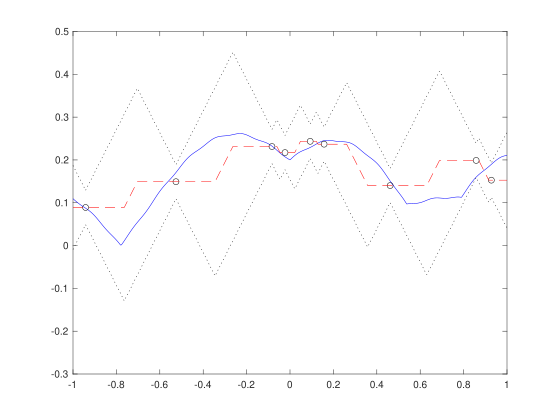
Within the theoretical framework of Optimal Recovery, one determines in this article the {\em best} procedures to learn a quantity of interest depending on a Hölder function acquired via inexact point evaluations at fixed datasites. {\em Best} here refers to procedures minimizing worst-case errors. The elementary arguments hint at the possibility of tackling nonlinear quantities of interest, with a particular focus on the function maximum. In a local setting, i.e., for a fixed data vector, the optimal procedure (outputting the so-called Chebyshev center) is precisely described relatively to a general model of inexact evaluations. Relatively to a slightly more restricted model and in a global setting, i.e., uniformly over all data vectors, another optimal procedure is put forward, showing how to correct the natural underestimate that simply returns the data vector maximum. Jitterred data are also briefly discussed as a side product of evaluating the minimal worst-case error optimized over the datasites.
2503.16555We establish a categorical framework relating two canonical model constructions in first-order logic: the Henkin construction and compactness-based constructions via ultraproducts or saturation. By introducing a globally fixed set of Henkin witness constants, we define two functors from the category of consistent first-order theories to the category of models with elementary embeddings. The first functor assigns to each theory its Henkin term model in an expanded language, while the second assigns the Skolem closure generated by the witness constants within a fixed ultraproduct or saturated model. We construct a natural transformation such that each component is an isomorphism between the corresponding models. The key insight is that both constructions utilize the same global Henkin expansion scheme, ensuring functoriality and allowing the canonical interpretation map to be surjective onto the Skolem closure. We clarify that without the Skolem closure restriction, the map would only be an elementary embedding rather than an isomorphism, as an arbitrary saturated model may contain non-standard elements outside the range of the term model. For special classes of theories, including aleph-zero-categorical theories and atomic complete theories, the construction simplifies due to uniqueness properties of their countable models. We also correct previous claims regarding rigidity of natural transformations, noting that uniform permutations of Henkin constants yield non-trivial natural automorphisms. This work provides structural insight into the relationship between syntactic proof-theoretic and semantic model-theoretic approaches to first-order logic, with potential applications in automated theorem proving and formal verification.
2503.12144This paper develops a categorical framework to clarify the relationship between the completeness and compactness theorems in classical first-order logic. Rather than claiming that different model constructions yield naturally isomorphic results-a statement that generally fails without strong assumptions-we focus on a precise and provable reformulation. Specifically, we show that the model obtained via the Henkin construction satisfies a universal property: it serves as an initial object in an appropriate category of models. From this perspective, any other model of the extended theory admits a unique structure-preserving map from the Henkin model. We formalize this insight using the language of categories and functors, defining a rigorous correspondence between logical theories and their models. This universal characterization explains the power and generality of the completeness theorem while avoiding problematic claims of isomorphism. The framework we present offers a structured and conceptually transparent understanding of model existence in logic and sets the stage for further categorical analyses in related domains.
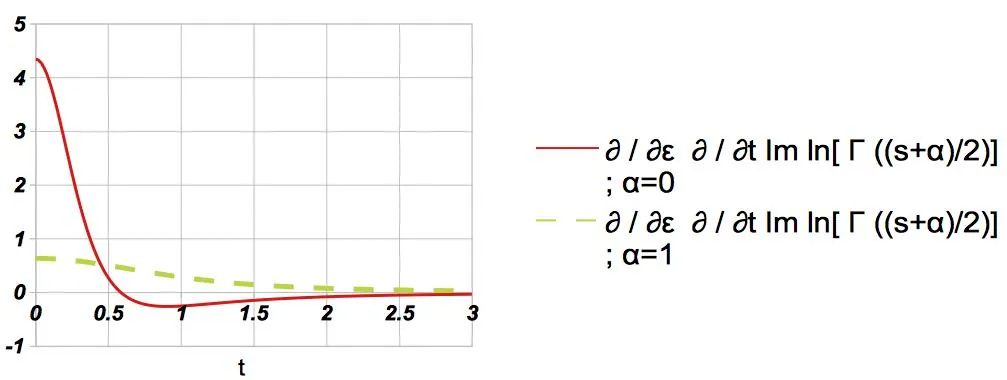
We try to apply a known equivalence, for RH about Riemann Z function, to Dirichlet L functions with primitive characters. The aim is to give a small contribution to the proof of the generalized version of Riemann Hypothesis (RH).
2412.05284In the work "Generalized approximation spaces generation from $\mathbb{I}_{j}$-neighborhoods and ideals with application to Chikungunya disease, published in \emph{AIMS Mathematics}, \textbf{9}(4) (2024), 10050$-$10077," Al-Shami and Hosny introduced a novel approach for generating generalized neighborhoods through $\mathbb{I}_{j}$-neighborhoods with ideals, subsequently deriving new methods for generalized approximations based on these neighborhoods. However, several errors have been identified in their results, concepts, and methods, along with significant inaccuracies in the provided examples and comparison tables. This paper aims to address and correct these errors, providing counterexamples to illustrate the inaccuracies in the proposed results. Furthermore, we correct several flawed proofs and present the revised formulations of these results and concepts. Additionally, we offer properties and clarifications to enhance the understanding of these concepts.
2412.0270110 is the smallest positive integer which is whether solitary or friendly is still an open question in mathematics. In this paper, we provide upper bounds for each of the prime divisors of a friend of 10. This paper is precisely a generalization of a recent paper [4] in which necessary upper bounds for the 2nd, 3rd, and 4th smallest prime divisors of a friend of 10 have been proved. Further, we establish better upper bounds for the 3rd, and 4th smallest prime divisors of a friend of 10 than the bounds given in [4].
2409.02941Associativity of a two-place function $T: [0,1]^2\rightarrow [0,1]$ defined by $T(x,y)=f^{(-1)}(F(f(x),f(y)))$ where $F:[0,\infty]^2\rightarrow[0,\infty]$ is an associative function, $f: [0,1]\rightarrow [0,\infty]$ is a monotone function which satisfies either $f(x)=f(x^{+})$ when $f(x^{+})\in \mbox{Ran}(f)$ or $f(x)\neq f(y)$ for any $y\neq x$ when $f(x^{+})\notin \mbox{Ran}(f)$ for all $x\in[0,1]$ and $f^{(-1)}:[0,\infty]\rightarrow[0,1]$ is a pseudo-inverse of $f$ depends only on properties of the range of $f$. The necessary and sufficient conditions for the $T$ to be associative are presented by applying the properties of the monotone function $f$.
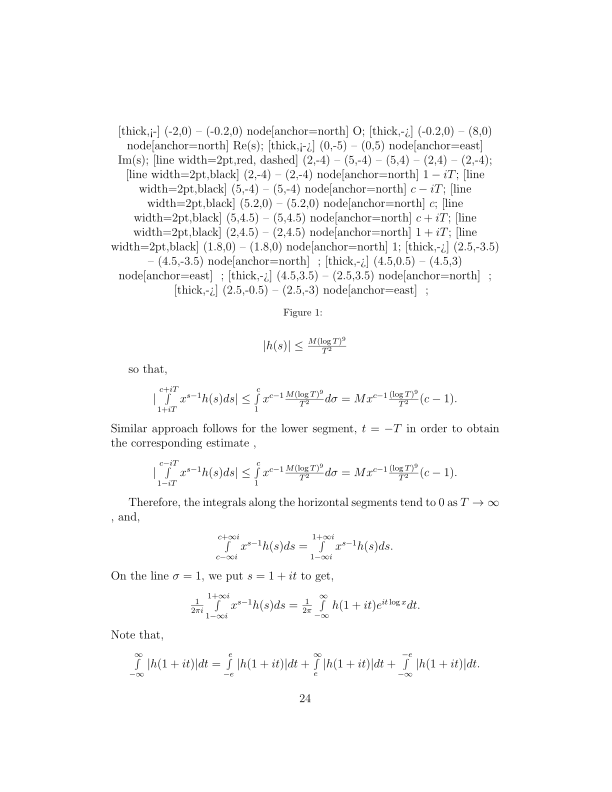
This article provides a proof of the famous \textit{Prime Number Theorem} by establishing an analogous statement of the same in terms of the second \textit{Chebyshev Function} $ψ(x)$. We shall be extensively using complex analytic techniques in addition to certain meromorphic properties of the \textit{Reimann Zeta Function} $ζ(s)$ and its \textit{Analytic Continuation Property} a priori using Riemann's Functional Equation in order to establish our desired result.
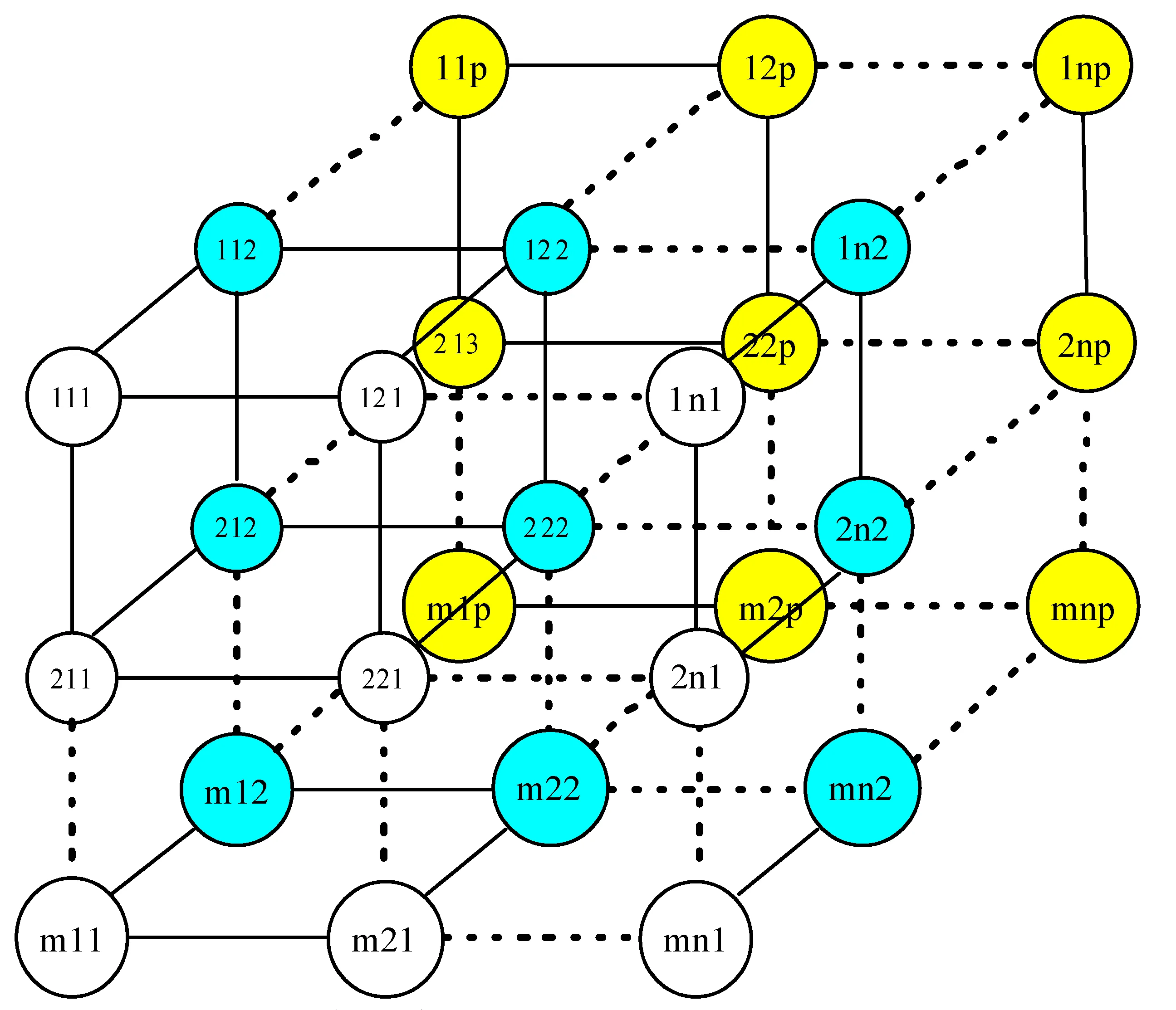
In this paper, in continuation of our work, on the determinants of cubic -matrix of order 2 and order 3, we have analyzed the possibilities of developing the concept of determinant of cubic-matrix with three indexes, studying the possibility of their calculation according the Laplace expansion method's. We have noted that the concept of permutation expansion which is used for square determinants, as well as the concept of Laplace expansion method used for square and rectangular determinants, also can be utilized to be used for this new concept of 3D Determinants. In this paper we proved that the Laplace expansion method's is also valid for cubic-matrix of order 2 and order 3, these results are given clearly and with detailed proofs, they are also accompanied by illustrative examples. We also give an algorithmic presentation for the Laplace expansion method's.
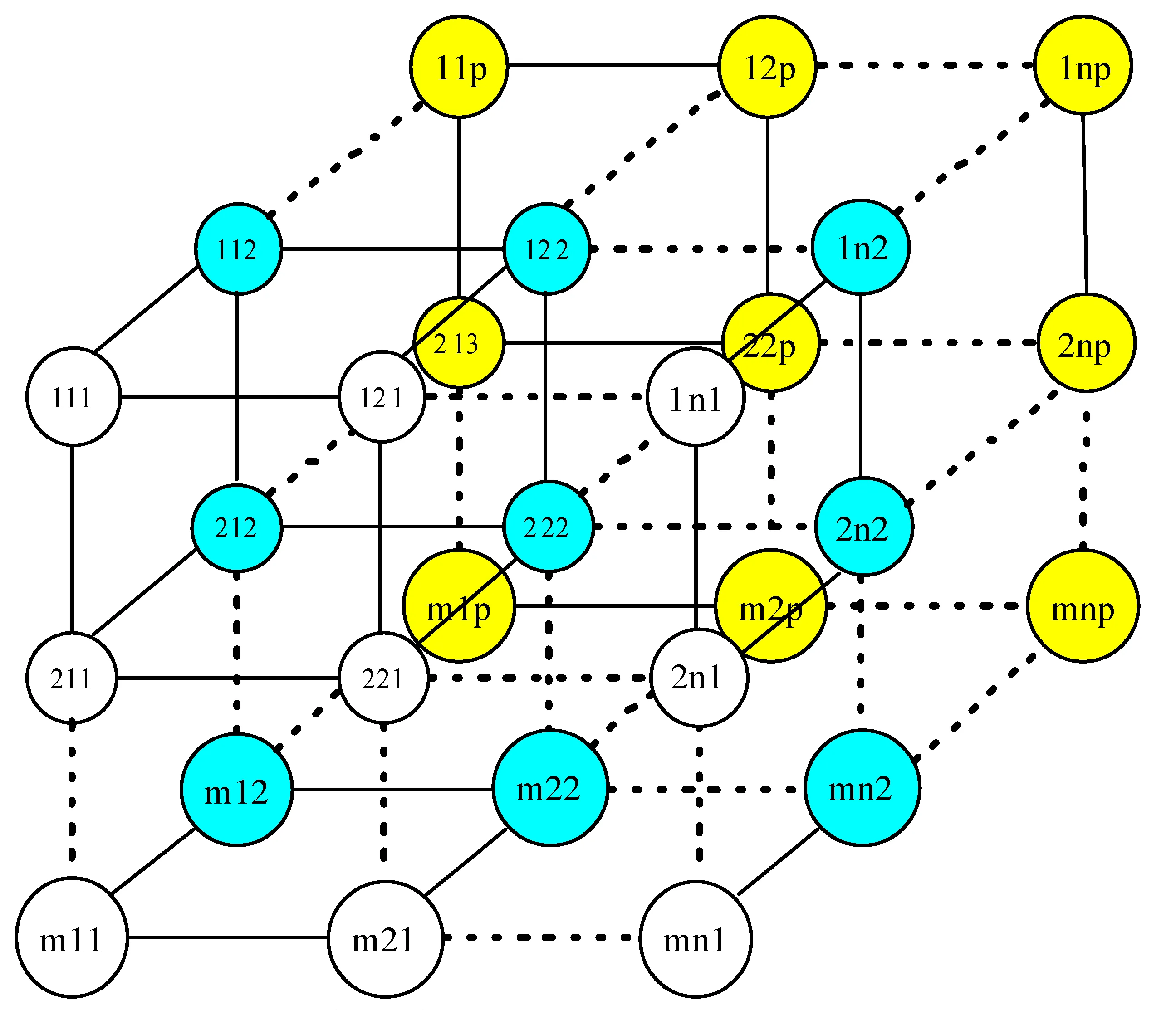
Based on geometric intuition, in this paper we are trying to give an idea and visualize the meaning of the determinants for the cubic-matrix. In this paper we have analyzed the possibilities of developing the concept of determinant of matrices with three indexed 3D Matrices. We define the concept of determinant for cubic-matrix of order 2 and order 3, study and prove some basic properties for calculations of determinants of cubic-matrix of order 2 and 3. Furthermore we have also tested several square determinant properties and noted that these properties also are applicable on this concept of 3D Determinants.
2304.14148In this paper we consider the question of smoothness of slowly varying functions satisfying the modern definition that, in the last two decades, gained prevalence in the applications concerning function spaces and interpolation. We show, that every slowly varying function of this type is equivalent to a slowly varying function that has continuous classical derivatives of all orders.

The power operation of continuous Archimedean triangular norms (t-norms) is fundamental for generalizing the multiplication and power operations of intuitionistic fuzzy sets (IFSs) within the framework of continuous Archimedean t-norms. However, due to the lack of systematic research on the power operation of general continuous t-norms in theory, it greatly limits the further generalization of the multiplication and power operations for IFSs via general continuous t-norms. This paper aims to investigate the power operation of continuous t-norms and develop some IF information aggregation methods. In theory, it is proved that a continuous t-norm is power stable if and only if every point is a power stable point, and if and only if it is the minimum t-norm, or it is strict, or it is an ordinal sum of strict t-norms. Moreover, the representation theorem of continuous t-norms is used to obtain the computational formula for the power of continuous t-norms. Based on the power operation of t-norms, four fundamental operations induced by a continuous t-norm for the IFSs are introduced. Furthermore, various IF aggregation operators based on these four fundamental operations, namely the IF weighted average (IFWA), IF weighted geometric (IFWG), and IF mean weighted average and geometric (IFMWAG) operators, are defined, and their properties are analyzed. In application, a new decision-making algorithm is designed based on the IFMWAG operator, which can remove the hindrance of indiscernibility on the boundaries of some classical aggregation operators. The practical applicability, comparative analysis, and advantages of the study with other decision-making methods are furnished to ascertain the efficacy of the designed method.
This paper introduces advances in the geometry of the cross ratio of four co-linear points in in the Desargues affine plane. The cross-ratio of co-linear points of a skew field in the Desargues affine plane. The results given here have a clean rendition, based on Desargues affine plane axiomatics, skew field properties and the addition and multiplication of planar co-linear points.
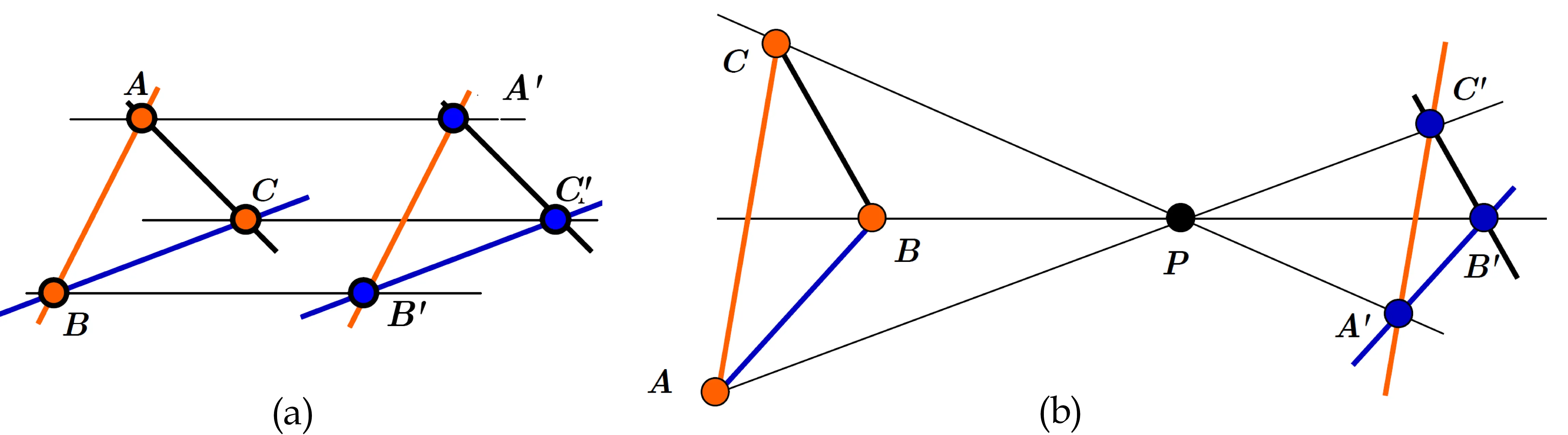
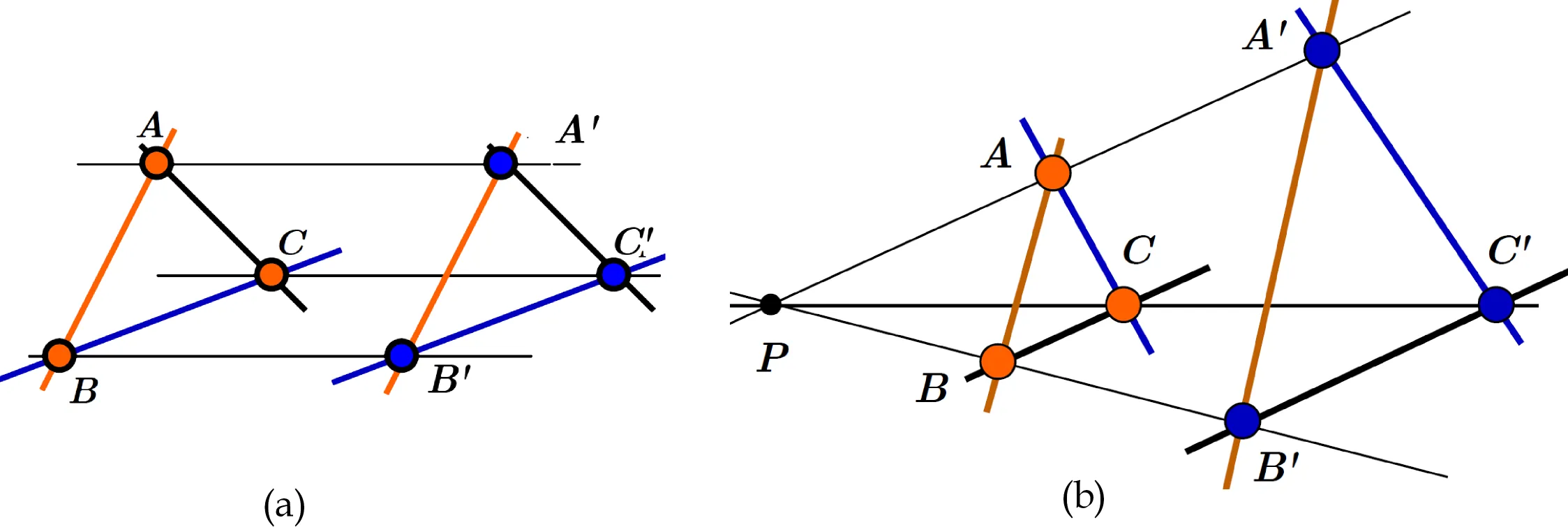
This paper introduces invariant transforms that preserve the ratio of either two or three co-linear points in the Desargues affine plane skew field. The results given here have a clean, geometric presentation based based Desargues affine plan axiomatic and definitions with skew field properties. The main results in this paper, are (1) ratio of two and three points is \emph{Invariant} under transforms: Inversion, Natural Translation, Natural dilatation, Mobiüs Transform, in a line of Desargues affine plane. (2) parallel projection of a pair of lines in the Desargues affine plane preserves the ratio of two and three points, (3) translations in the Desargues affine plane preserve the ratio of 2 and 3 points and (4) dilatation in the Desargues affine plane preserve the ratio of 2 and 3 points.