29 papers
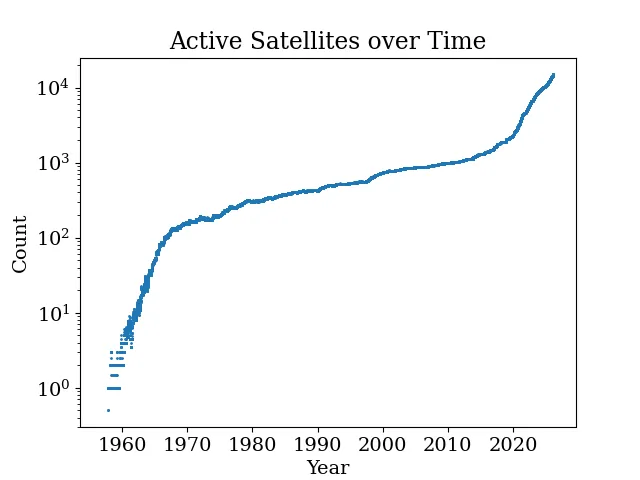
Lots of Shade on Satellite Constellations
The high frequency of satellite launches, particularly over the last few years, has been a subject of significant concern, particularly relating to the future of observational astronomy, the stability of low Earth orbits, and environmental impacts. We call attention to the insufficiently-addressed silver lining of this looming satellite cloud. If the high rates of satellites continue as we model, we can expect the solar flux received by the Earth to significantly decrease in the relatively near future. We address how this decrease in flux could provide a solution for another major problem, anthropogenic climate change. This would allow us to solve one problem with another problem as early as late March 2031.
2603.29212Mar 2026
View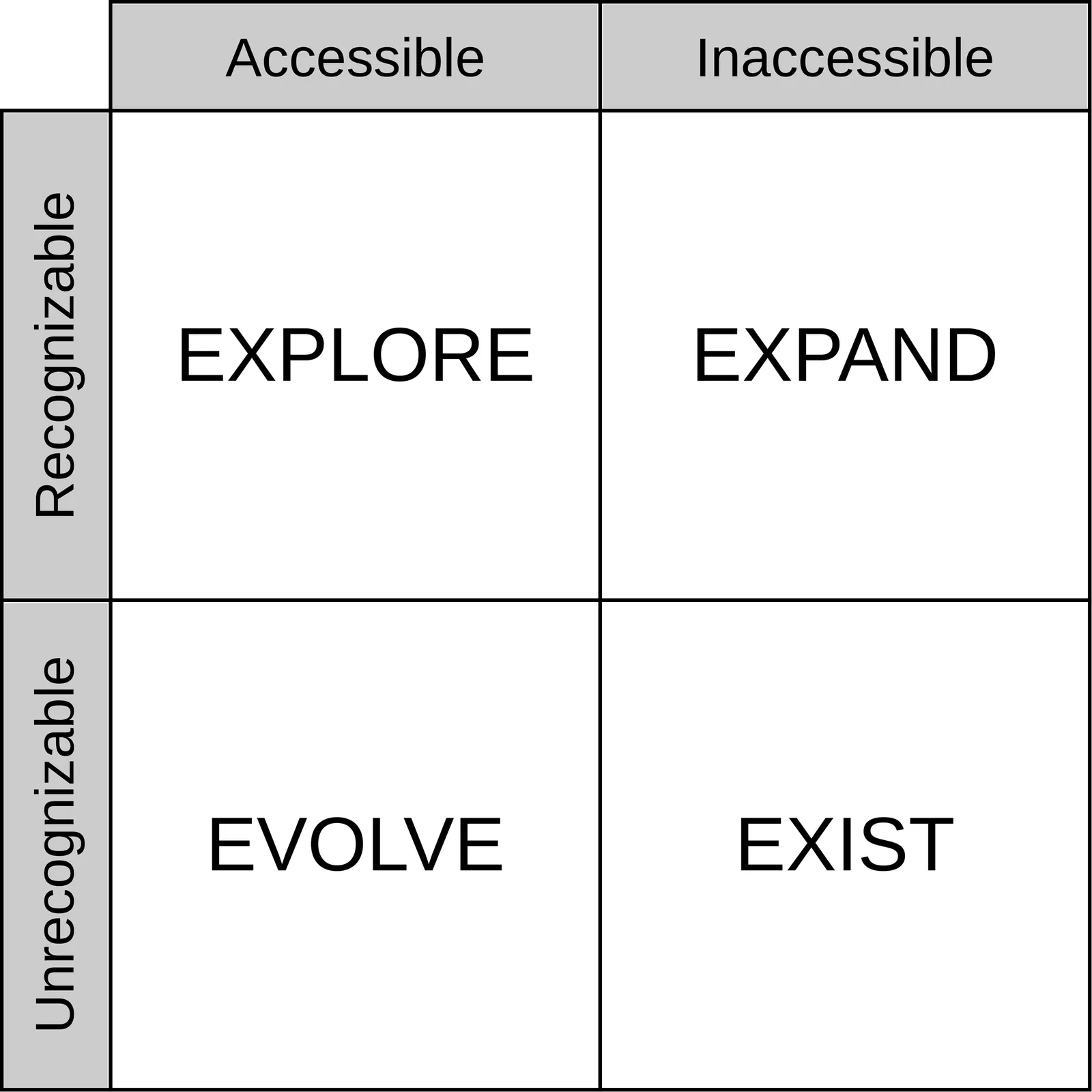
Framing the Possibility Space for Technosignature Searches
This paper develops a two-parameter matrix that can be used to describe four general strategies in the search for technosignatures. The first parameter is domain accessibility: can the technosignature be accessed within the spatial domain accessible to us today? The second parameter is recognizability: would the technosignature be recognizable to us if discovered today? This yields a matrix with four options that each comprise different search strategies. "Exploration" is the strategy for technosignatures that are accessible within our domain and recognizable, which includes radio and optical signals that have reached Earth and any artifacts that might be identifiable within the solar system. "Expansion" is the strategy for technosignatures that are recognizable but beyond our spatial domain, which includes diffuse technology elements that may exist in nearby systems but could not be remotely observed from Earth. "Evolution" is the strategy for technosignatures that are accessible within our domain but unrecognizable; this would require advances in sensory perception, technological or biological, before such technosignatures could be discovered. Finally, "Existence" is the strategy for technosignatures that are neither within our domain nor recognizable. The implications of these four options are discussed with relevance to the Fermi paradox and strategies for searching for technosignatures.
2603.17741Mar 2026
View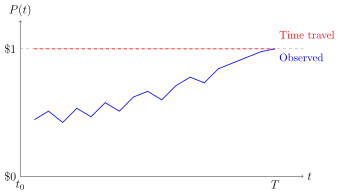
Why the Future Is Not Trading: Causally Inert Events as a Test for Time Travelers
We present an empirical argument against the existence of single timeline backward time travel using the price behavior of prediction markets. If rational agents could travel backward in time, binary prediction contracts would converge to degenerate prices (0 or 1) immediately upon market formation. We observe no such behavior across large datasets of resolved contracts. This yields a directly falsifiable prediction and sharpens prior economic arguments while avoiding reliance on physical experimentation. The argument requires only the existence of a single profit motivated agent in the future capable of interacting with markets along a closed timelike curve intersecting the market's spacetime location. We further argue that such agents would have no incentive to conceal trades in causally inert events, where outcomes are independent of market prices, implying that any such activity would be visible in aggregate price behavior. While many worlds interpretations evade this test, we argue that only single timeline models are empirically falsifiable, and prediction market evidence is inconsistent with their existence.
2603.17446Mar 2026
View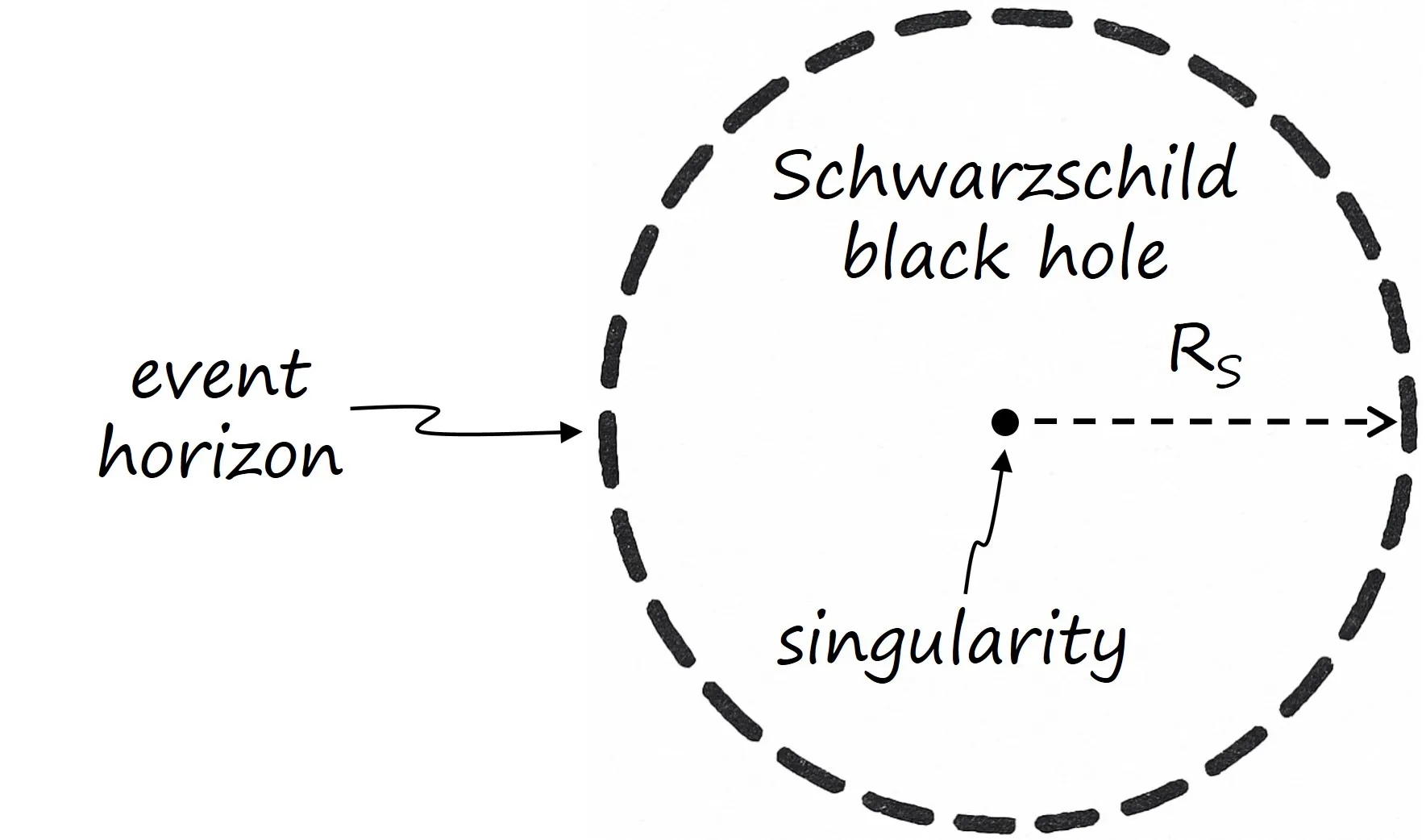
Black holes and bits: A simple path to Bekenstein-Hawking entropy
In the early 1970s, Jacob Bekenstein discovered that black holes have entropy, which became one of the greatest scientific revolutions of the second half of the 20th century. The objective of this paper is to present a simple derivation -- partly heuristic and partly geometric -- of the equation for the entropy of a black hole, which we now know as the Bekenstein-Hawking entropy. We will also briefly explore the physical implications of this equation and its relationship to the work of Stephen Hawking.
2602.22245Feb 2026
View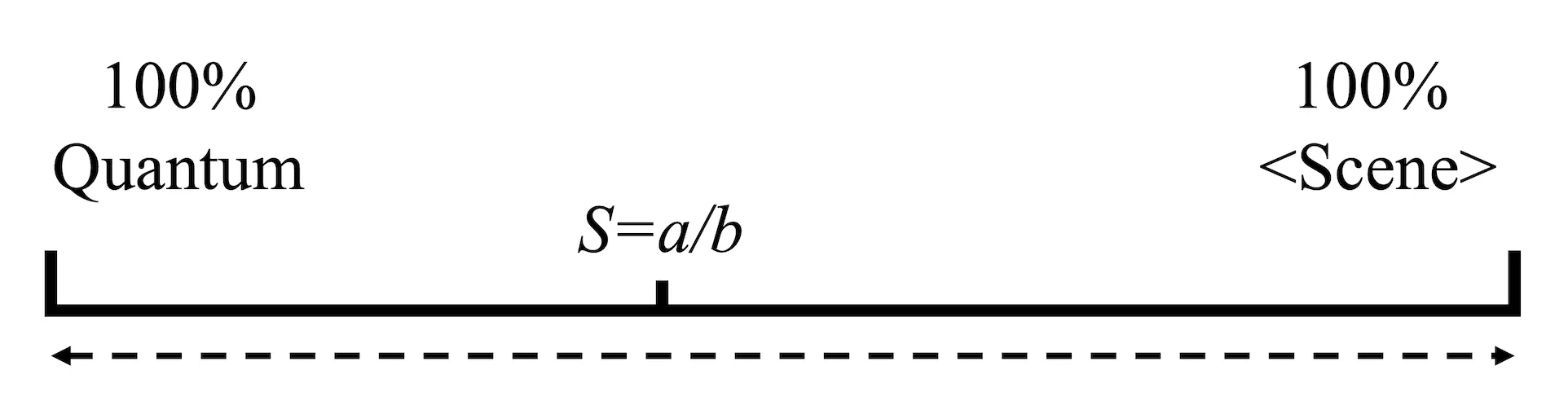
Roadmap to Quantum Aesthetics
Quantum mechanics occupies a central position in contemporary science while remaining largely inaccessible to direct sensory experience. This paper proposes a roadmap to quantum aesthetics that examines how quantum concepts become aesthetic phenomena through artistic mediation rather than direct representation. Two complementary and orthogonal approaches are articulated. The first, a pioneering top-down approach, employs text-prompt-based generative AI to probe quantum aesthetics as a collective cultural construct embedded in large-scale training data. By systematically modulating the linguistic weight of the term "quantum," generative models are used as experimental environments to reveal how quantum imaginaries circulate within contemporary visual culture. The second, a bottom-up approach, derives aesthetic form directly from quantum-mechanical structures through the visualization of quantum-generated data, exemplified here by hydrogen atomic orbitals calculated from the Schrödinger equation. These approaches are framed not as competing methods but as intersecting paths within a navigable field of artistic research. They position quantum aesthetics as an emergent field of artistic research shaped by cultural imagination, computational mediation, and physical law, opening new directions for artistic practice and pedagogy at the intersection of art, data, artificial intelligence and quantum science.
2602.08363Feb 2026
View
World without Viscosity
Viscosity, the internal friction of fluids, is among the most consequential yet underappreciated properties in physics. This paper explores what would happen if viscosity vanished from all fluids while other material properties remained unchanged. The consequences are catastrophic and universal. Aircraft cannot generate lift because circulation around wings requires viscous action. Rotating machinery seizes without lubricating fluid films. Cardiovascular systems lose the resistance necessary for pressure regulation. Rivers become violent torrents, aquifers drain in hours, and storms persist indefinitely without frictional dissipation. The pedagogical value lies in illuminating viscosity's role providing resistance, damping, and control across all scales - from cellular interiors to planetary atmospheres. Evolution, engineering, and climate have exploited viscous dissipation for billions of years; its absence would render complex life impossible and Earth uninhabitable. By imagining a world without viscosity, we better understand the viscous world we inhabit.
2602.09062Feb 2026
View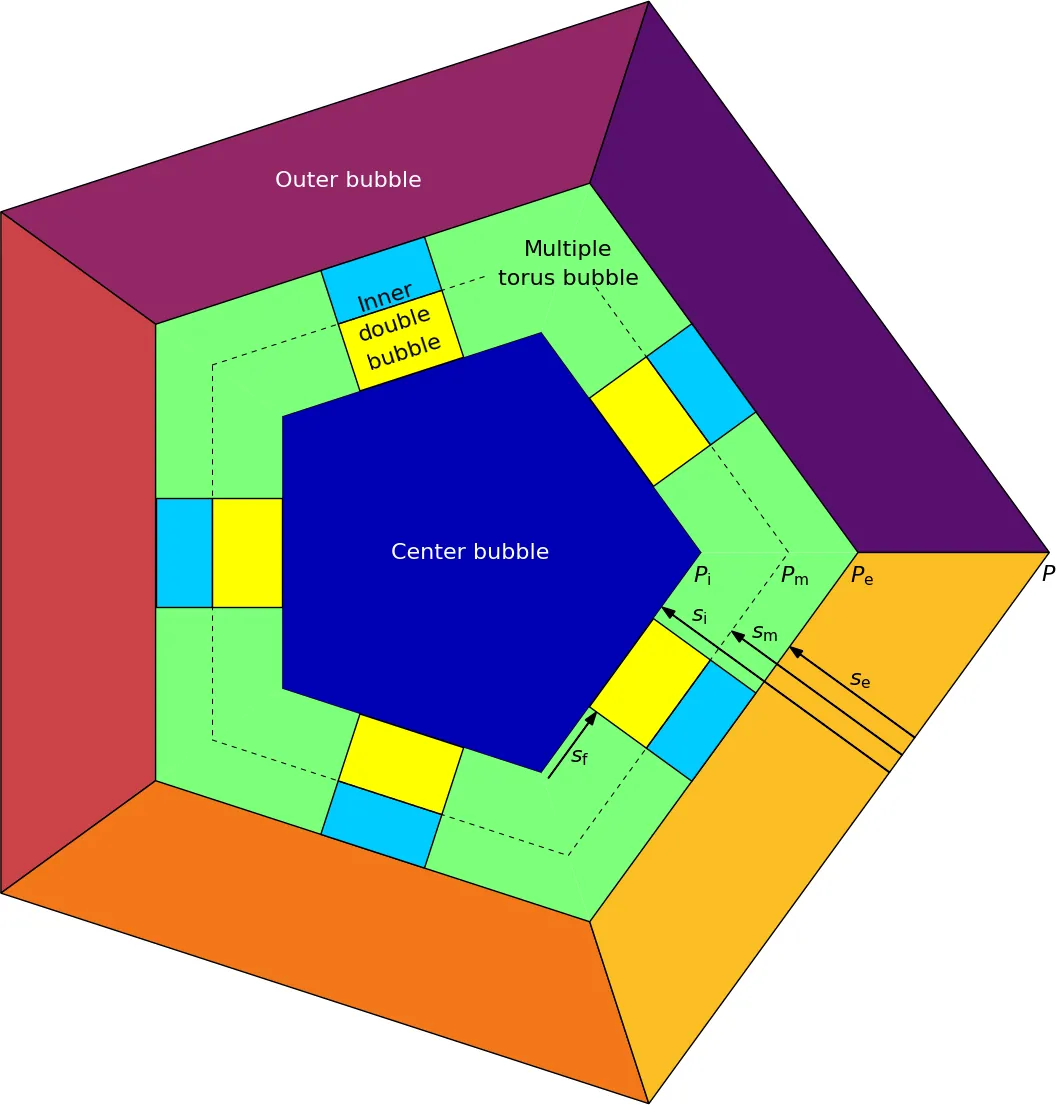
Stable soap bubble clusters with multiple torus bubbles: getting a bit more exotic
Recently, numerical examples of stable soap bubble clusters with multiple torus bubbles have been presented. The geometry of these clusters is based on the Platonic solids whose vertices have valence $3$ (in order to fulfill Plateau's laws): the tetrahedron, the cube, the dodecahedron. The clusters respectively contain a bubble of genus $3, 5, 11$. The construction is quite generic and can be used with any convex polyhedron. If stable, the cluster obtained using a polyhedron with $n$ faces has $3n+2$ bubbles and one of these bubbles has genus $n-1$. We propose here to show that is it possible to get stable soap bubble clusters with multiple torus bubbles using a geometry based on prisms and Archimedean solids as well.
2602.02580Jan 2026
View 2601.06592
Matière noire et (ou) gravitation modifiée : une approche historique et épistémologique
The current standard model of cosmology assumes that the majority of matter in the Universe is made of dark matter, and that the latter is fundamentally different from ordinary matter. Dark matter can in principle explain the rotation of galaxies, the gravitational lensing from galaxy clusters or the appearance of the cosmic microwave background, the oldest light in the Universe. But does dark matter really exist? Here, we review the history of this concept and its implications for the formation and evolution of galaxies. We also consider the questions that remain, the limitations of the model, and present alternative theories, in particular modifications to the gravitional law that would -- perhaps -- make it possible to do without it.
2601.06592Jan 2026
View2601.00037Causality in Physics: From Galileo to Einstein, and Beyond
Causality is one of the most fundamental -- and yet elusive -- concepts in physics. From its intuitive role in everyday experience to its formal and often implicit role in scientific theories, causality has challenged philosophers and physicists alike. In what follows, we take a brief historical and conceptual journey through classical and modern physics, tracing how causality has been treated, questioned, or protected in successive physical frameworks -- from Galilean mechanics to Newtonian dynamics, from Lagrangian and Hamiltonian formulations to special and general relativity, and finally to quantum mechanics and statistical physics. Our aim is to show how the notion of causality has repeatedly receded into the background of our most successful theories, even when it appears to be central to our everyday understanding of the world.
2601.00037Dec 2025
View2512.21355The Universe in four letters: a bedtime history
One evening, a father tells his three daughters, Lucía, Inés, and Ana, a bedtime story unlike any other. It is a tale of four silent architects ($c$, $\hbar$, $G$, and $Λ$) whose presence or absence shapes the very fabric of reality. By imagining worlds where each constant is removed, they explore realms from the quantum gravity of the Planck scale to the stretching cosmos of de Sitter space, from the mass of the observable Universe to the surprising link with the proton's whisper. Woven with the insights of great scientists, this narrative reveals how these fundamental constants write the story of everything, from the smallest particle to the vast cosmic horizon, suggesting a beautiful and hidden unity in the architecture of our world.
2512.21355Dec 2025
View2512.09970The Eschatian Hypothesis
The history of astronomical discovery shows that many of the most detectable phenomena, especially detection firsts, are not typical members of their broader class, but rather rare, extreme cases with disproportionately large observational signatures. Motivated by this, we propose the Eschatian Hypothesis: that the first confirmed detection of an extraterrestrial technological civilization is most likely to be an atypical example, one that is unusually "loud" (i.e., producing an anomalously strong technosignature), and plausibly in a transitory, unstable, or even terminal phase. Using a toy model, we derive conditions under which such loud civilizations dominate detections, finding for example that if a society is loud for only $10^{-6}$ of its lifetime, it must emit ${\gtrsim}1$% of its total observable energy budget during that phase to outrun quieter populations. The hypothesis naturally motivates agnostic anomaly searches in wide-field, multi-channel, continuous surveys as a practical strategy for a first detection of extraterrestrial technology.
2512.09970Dec 2025
View2512.04126Physical Analysis of a Reported Missile -- "Orb" Interaction in 2024: Momentum Constraints, Atmospheric Drag, Sensor Artifacts, and Theoretical Caution
A widely circulated infrared video from 2024 appears to show an air-to-surface missile engaging a small luminous "orb"-like object, producing debris and an apparent deflection of the missile's trajectory. This paper presents a comprehensive physics-based analysis of the event. Using classical mechanics, fluid dynamics, and imaging-system geometry, we examine momentum transfer, debris behavior, gimbal-induced optical distortions, and the physical plausibility of various interpretations. A balloon-like object remains the most conservative explanation compatible with known physics. However, modern physics is incomplete: the extreme weakness of gravity relative to the gauge forces, the existence of dark matter, dark energy, neutrino masses, and the possibility of extra spatial dimensions indicate that the Standard Model is not the final description of nature. For this reason, anomalous observations should not be dismissed outright as "impossible". Nevertheless, extraordinary claims require extraordinary evidence, and the present video lacks the multi-sensor, verified, and calibrated data required to support exotic interpretations. The aim is a balanced scientific evaluation based on current knowledge while maintaining appropriate theoretical humility.
2512.04126Dec 2025
View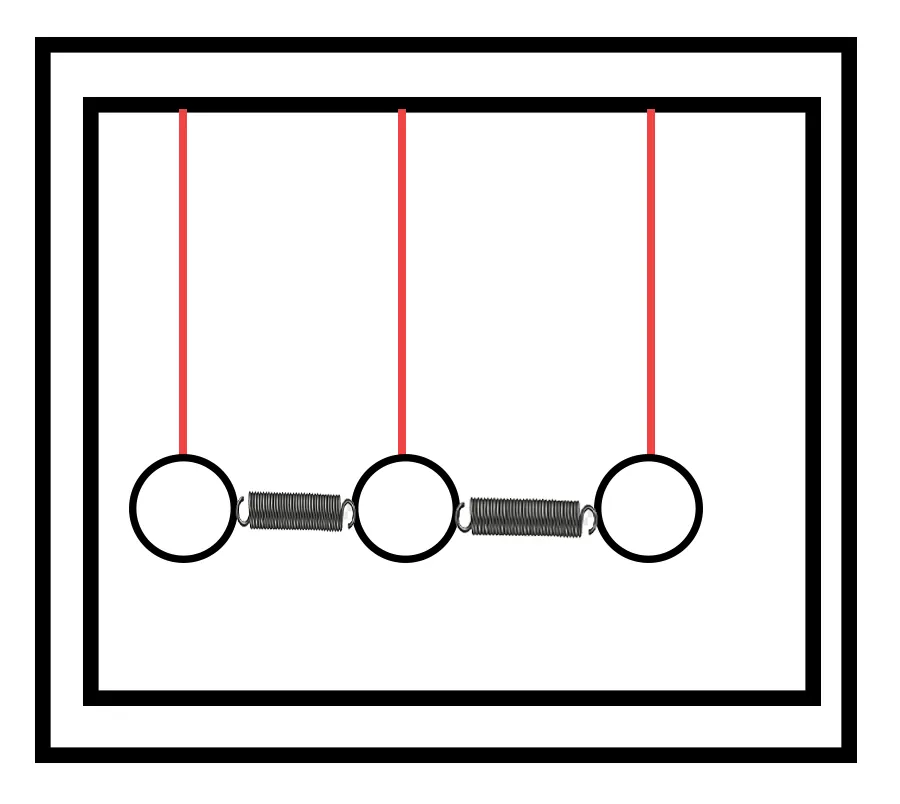
Classical Reconstruction of the PMNS Matrix Using a Mechanical Neutrino Oscillator
Neutrino oscillations arise from quantum interference between neutrino mass eigenstates and are governed by the PMNS matrix. Although this is an intrinsically quantum phenomenon, its mathematical structure is analogous to systems of coupled classical oscillators. In this work, a three--pendulum system connected by springs is constructed as a classical analog of three--flavor neutrino oscillations. Measurements of amplitude transfer, normal--mode structure, and beat frequencies are used to extract a mechanical mixing matrix, which is compared with the structure of the PMNS matrix under the assumption of zero CP violation. A scaling relation linking mechanical time evolution to the neutrino \(L/E\) behavior is derived, clarifying the scope and limitations of the analogy. The experiment demonstrates how abstract concepts of neutrino mixing can be visualized using simple and accessible classical systems, offering both pedagogical value and a qualitative understanding of flavor oscillation dynamics.
2512.01851Dec 2025
View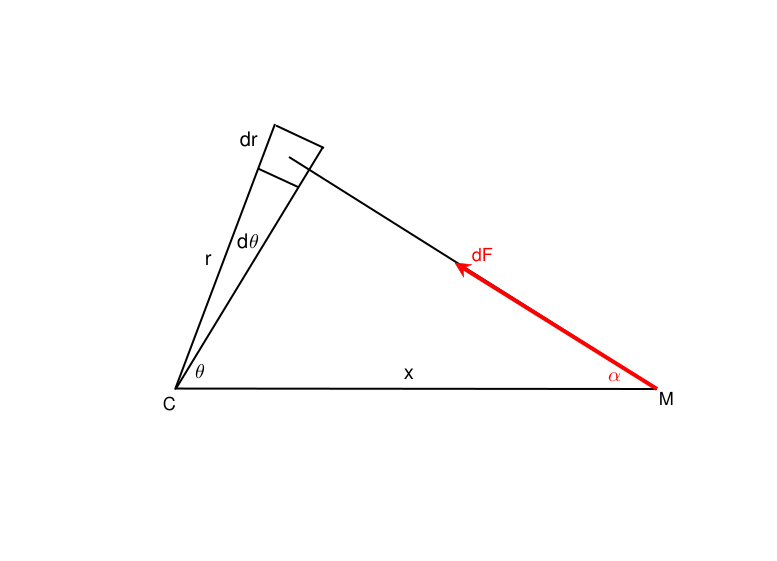
Megastructures of type-III civilizations orbiting galaxies
The article discusses the possibility of a Type-III extraterrestrial civilization constructing megastructures around a galaxy in regions where the galactic radiation becomes indistinguishable from the CMB radiation. For a Milky Way-like galaxy, we estimated the corresponding distance from its center at which a solar mass megastructure would need to be placed. We also showed that, from an energetic standpoint, placing such a massive object into orbit poses no fundamental difficulties. The detectability of the megastructure was also addressed.
2511.22748Nov 2025
View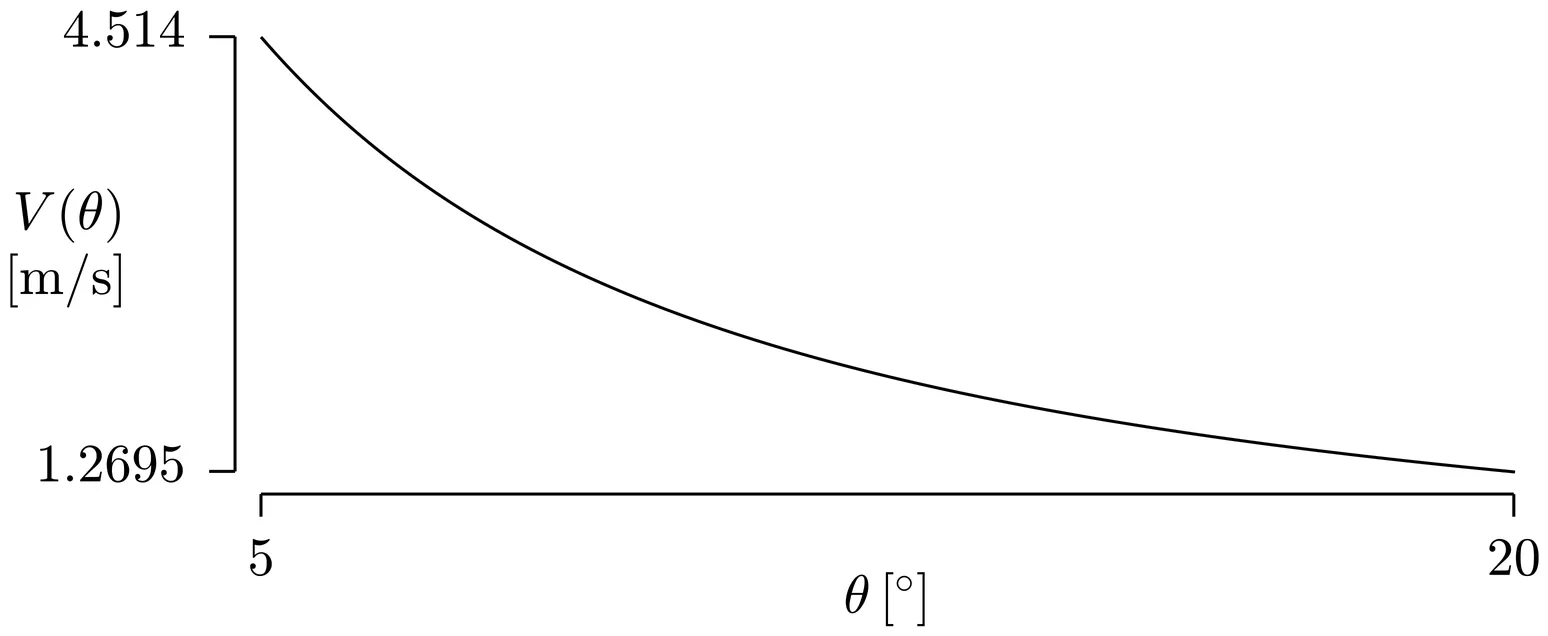
On the brachistochrone problem for cycling ascents
VAM (velocità ascensionale media) is a measurement that quantifies a cyclist's climbing ability. We show that -- to minimize the time to attain a given height gain, which is tantamount to maximizing VAM -- a cyclist should climb as steep a constant-grade hill as possible. The limit of steepness is imposed, among others, by such factors as the efficiency of pedalling, which is related -- among others -- to feasible cadence, maintaining balance and preventing skidding of the rear wheel. This article, however, is focused on the primary issue of power available to the cyclist, which can be viewed as a necessary condition to examine other aspects of climbing strategy. We show that -- for given start and end points, and for any fixed average-power constraint -- the brachistochrone, which is the trajectory of minimum ascent time, is the straight line connecting these points, covered with a constant speed, which along such a line is equivalent to a constant power. This is in contrast to the classical solution of a descent brachistochrone under gravity, which is a cycloid along which the speed is not constant.
2511.13509Nov 2025
View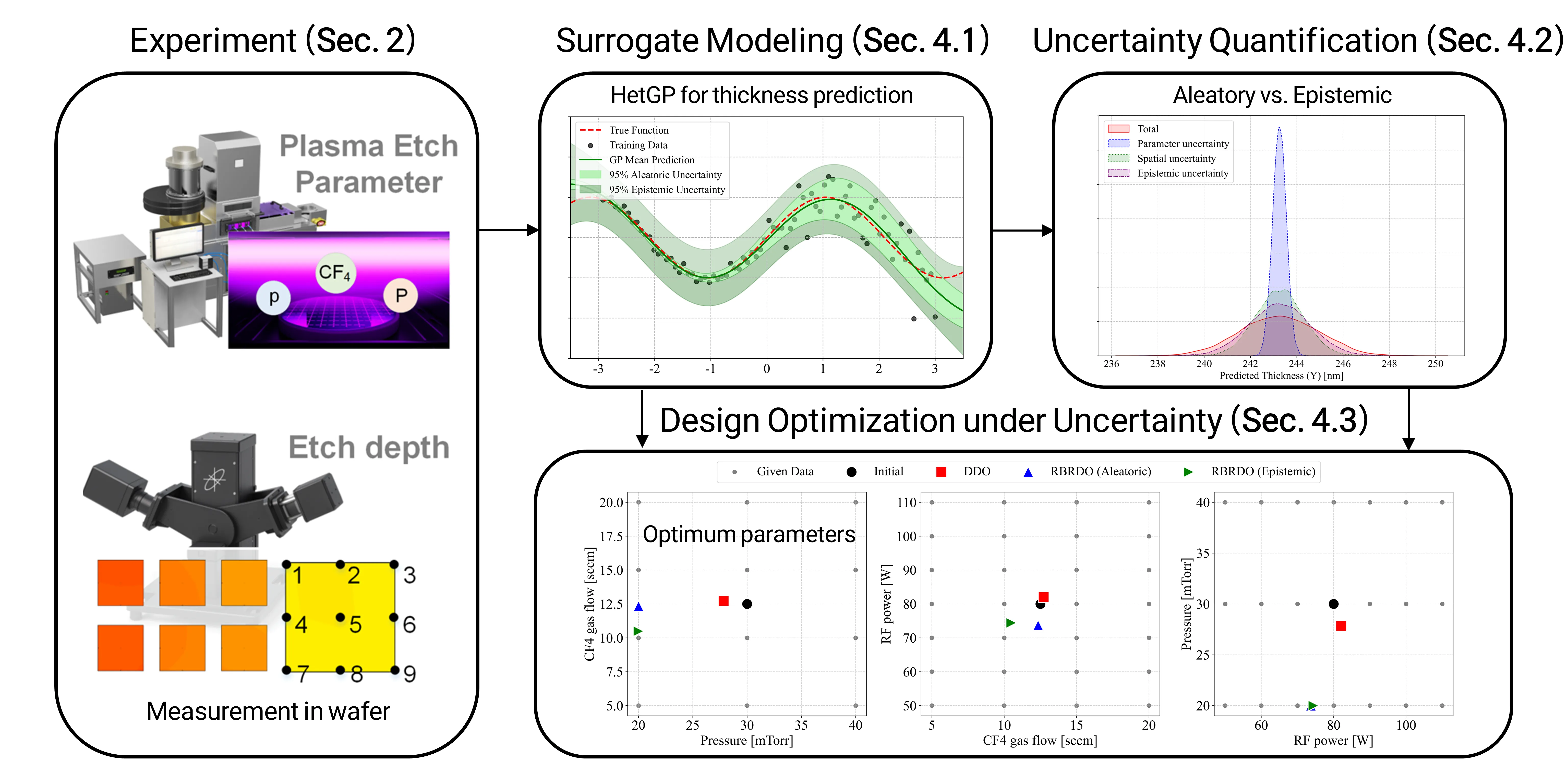
Uncertainty quantification and parameter optimization of plasma etching process using heteroscedastic Gaussian process
This study presents a comprehensive framework for uncertainty quantification (UQ) and design optimization of plasma etching in semiconductor manufacturing. The framework is demonstrated using experimental measurements of etched depth collected at nine wafer locations under various plasma conditions. A heteroscedastic Gaussian process (hetGP) surrogate model is employed to capture the complex uncertainty structure in the data, enabling distinct quantification of (a) spatial variability across the wafer and (b) process-related uncertainty arising from variations in chamber pressure, gas flow rate, and RF power. Epistemic uncertainty due to sparse data is further quantified and incorporated into a reliability-based design optimization (RBDO) scheme. The proposed method identifies optimal process parameters that minimize spatial variability of etch depth while maintaining reliability under both aleatory and epistemic uncertainties. The results demonstrate that this framework effectively integrates data-driven surrogate modeling with robust optimization, enhancing predictive accuracy and process reliability. Moreover, the proposed approach is generalizable to other semiconductor processes, such as photolithography, where performance is highly sensitive to multifaceted uncertainties.
2511.04990Nov 2025
View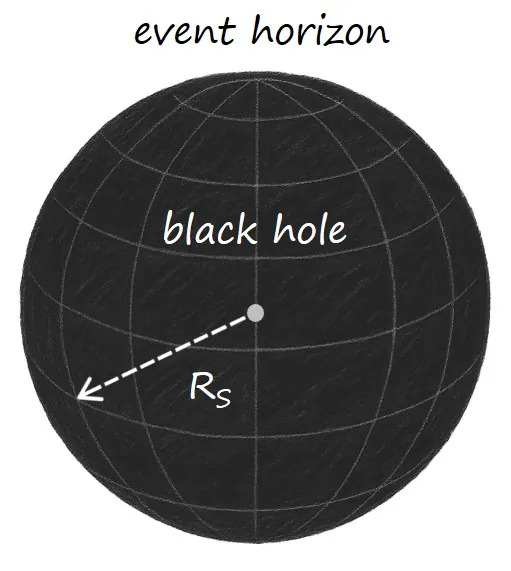
Hawking in a thousand words
British physicist Stephen Hawkings most important discovery was that black holes are not so black, as they possess a temperature and emit thermal radiation. In his popular science texts, Hawking offered a detailed explanation of this phenomenon. The aim of this work is to translate that explanation into mathematical language accessible to an advanced high school student, all within a thousand words.
2510.21790Oct 2025
View2510.21777Wind Power as a Technosignature on M-dwarf Planets
We suggest that the large-scale deployment of wind turbines on an M-dwarf planet could produce observable technosignatures. Motivated by observations of hypersonic wind velocities on WASP-127 b, we note that the atmospheres of such planets could serve as vast reservoirs of energy for an extraterrestrial civilization. A large-scale deployment of wind turbines in a hypersonic environment would produce heated shock waves in the hypersonic stream, cause strong frictional heating from the rotation of the blades, and be a source of infrared radiation. We mention possible scenarios that could lead to the deployment of wind turbines on a gas giant and also note that similar features could exist on terrestrial M-dwarf planets. The idea that aerodynamic peculiarities could be a technosignature is worth keeping in mind as ground- and space-based exoplanet observations continue to improve.
2510.21777Oct 2025
View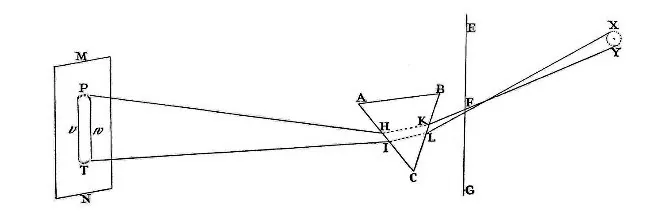
The origin of the dark bands found in the Solar Spectra and its consequences
This paper discusses the history of Fraunhofer's puzzling discovery of the fixed lines in various spectra (most notably of the sun) and the implications of these spectral "imperfections". Moreover, the developments in spectroscopy by Kirchhoff, Bunsen, et al. in the 19th century and its effects on our understanding of the atomic structure are discussed.
2510.21747Oct 2025
View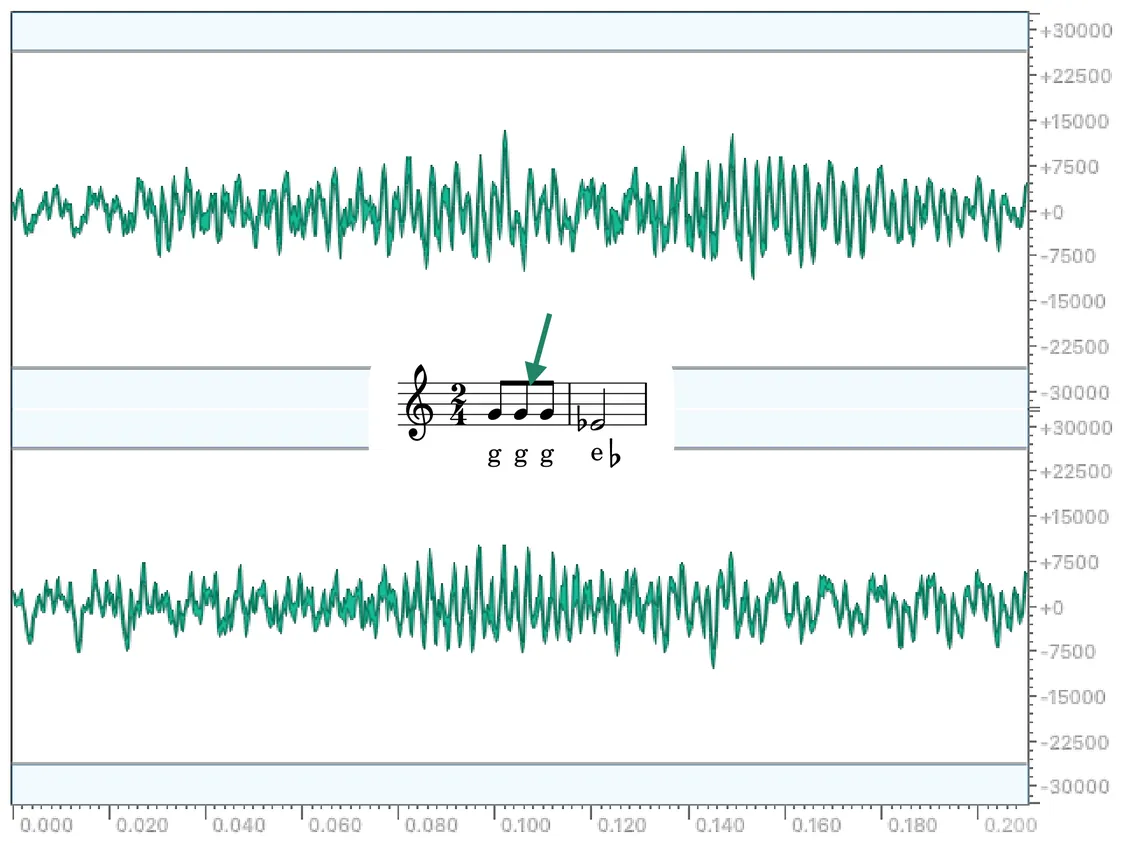
Quantum Listenings -- Amateur Sonification of Vacuum and other Noises
The sensory perceptions of vision and sound may be considered as complementary doorways towards interpreting and understanding physical phenomena. We provide a few selected samples where scientific data of systems usually not directly accessible to humans may be listened to. The examples are chosen close to the regime where quantum mechanics is applicable. Visual and auditory renderings are compared with some connections to music, illustrating in particular a kind of fractal complexity along the time axis.
2507.08813Jun 2025
ViewPage 1 of 2