510 papers
Optimization and vectorization of a Mz-type optically-pumped Rubidium magnetometer
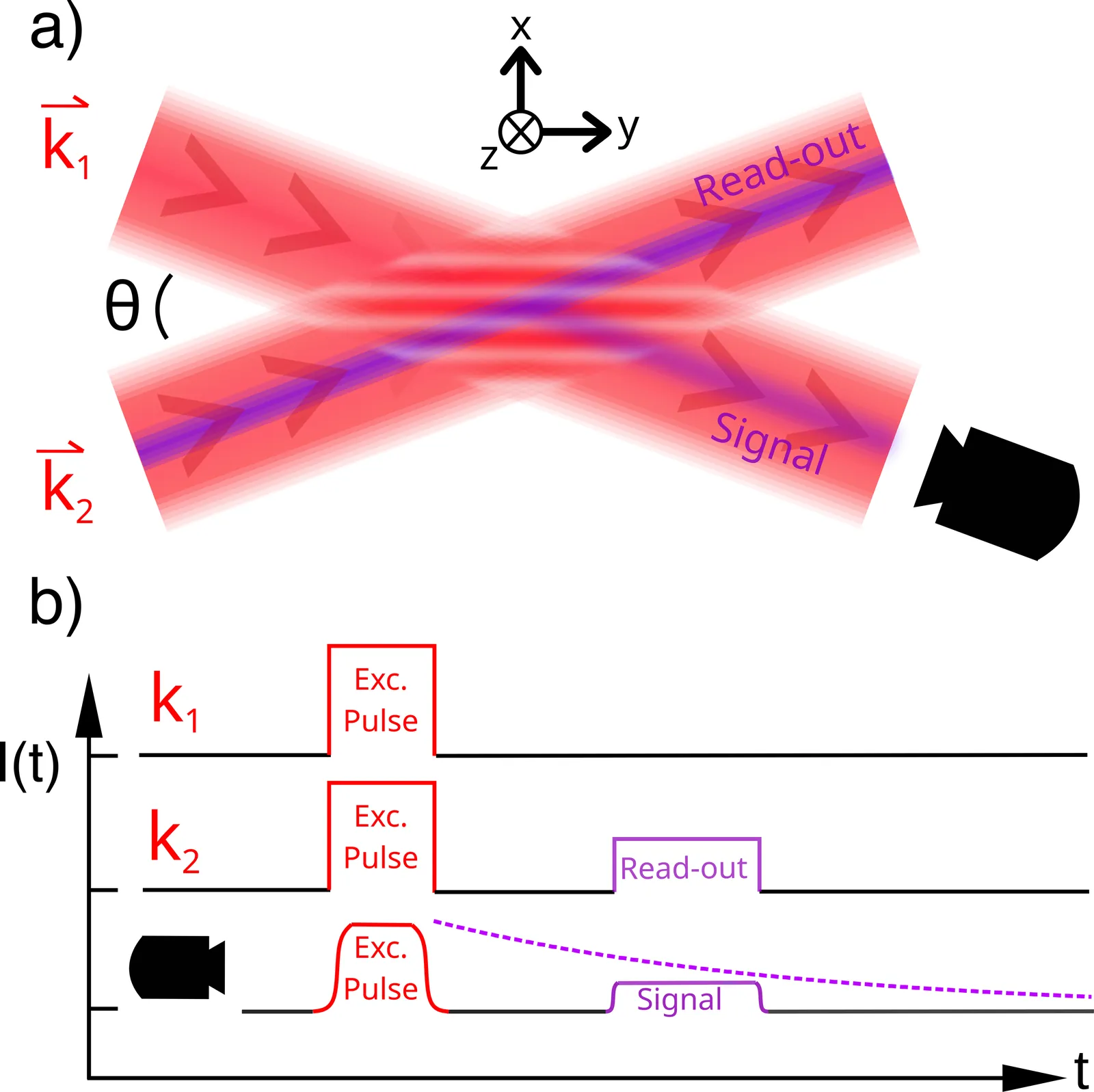
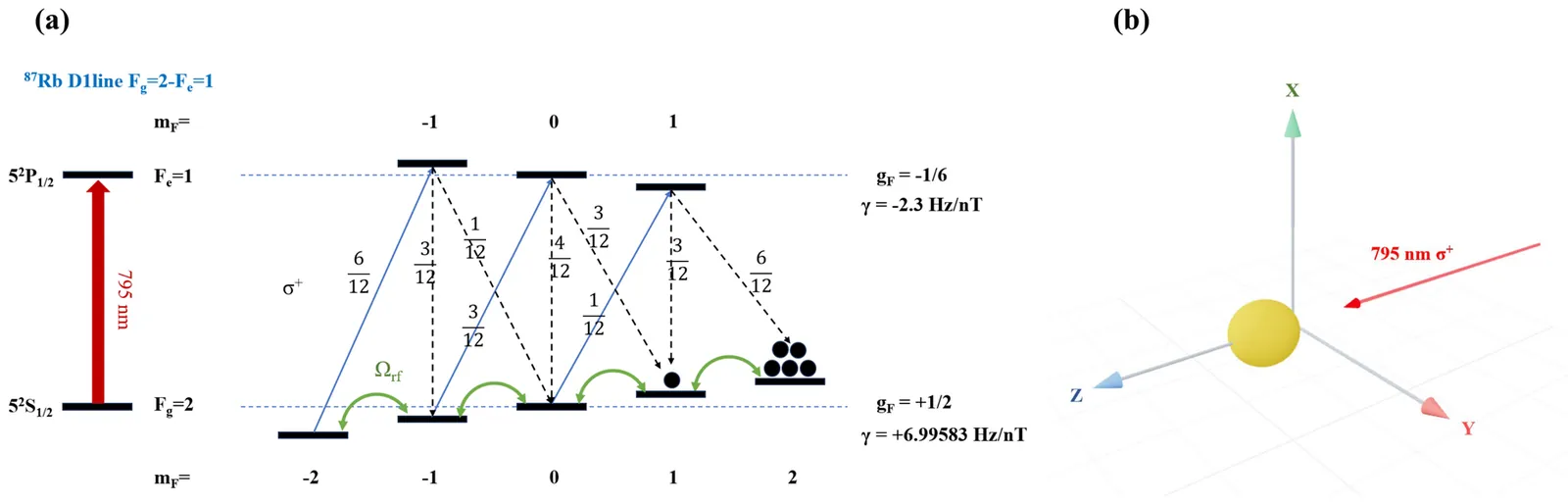
Optically pumped magnetometers (OPMs) have demonstrated significant potential in weak magnetic field detection due to their high sensitivity. In this study, we developed an Mz-type optically pumped rubidium magnetometer using a paraffin-coated anti-relaxation vapor cell. The system optimization and performance characterization were conducted inside a magnetic shield. Specifically, the pump light intensity and radio-frequency (RF) magnetic field were jointly optimized by using the linewidth-amplitude ratio as the core metric. Based on the frequency-domain noise spectrum, the sensitivity in open-loop mode was measured to be approximately 30.8 pT/Hz^{1/2}. Furthermore, a closed-loop feedback locking technique was applied, reducing the measured noise floor under the tested conditions and improving the sensitivity to 22.9 pT/Hz^{1/2}, with a measured -3 dB bandwidth of 123 Hz. The dynamic characteristics were evaluated via magnetic-field step response, showing that the system could track magnetic-field changes stably under closed-loop operation. Finally, by using tri-axial modulation and frequency-domain demodulation, we overcame the scalar measurement limitation of traditional Mz magnetometers. This work realizes vector magnetic field detection and provides a technical basis for applications such as geomagnetic navigation and magnetic anomaly detection.
2604.02884Apr 2026
View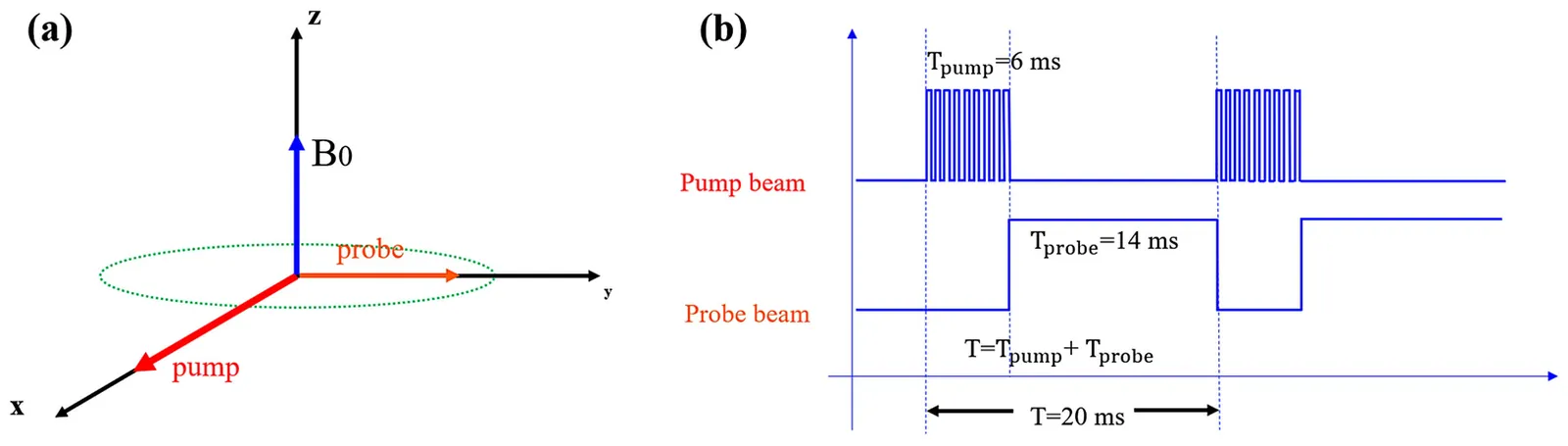
The Bell-Bloom-type optically-pumped FID Rubidium atomic magnetometer with a multi-passing probe beam and two counter-propagating pump beams
The Bell-Bloom-type optically pumped atomic magnetometers are well suited for weak geomagnetic field detection. However, conventional single-beam pumping introduces an atomic spin polarization gradient, which limits the measurement accuracy and sensitivity. To address this issue, this paper proposes and experimentally demonstrates a Bell-Bloom-type rubidium FID magnetometer scheme integrating orthogonally polarized counter-propagating pumping and multi-pass probe detection. This design homogenizes the atomic spin polarization distribution and suppresses light shifts and power broadening effects induced by the pump beam. Meanwhile, the five-pass probe configuration significantly enhances the signal amplitude. Experimental results reveal that, compared with the traditional single-beam pumping and single-pass detection scheme, the proposed magnetometer achieves a remarkable improvement in magnetic field measurement accuracy, and the magnetic field sensitivity is improved from 18.9 pT/\sqrt{Hz} to 3.1 pT/\sqrt{Hz}. This work provides an effective technical approach and reference for optimizing the performance of atomic magnetometers and extending their applications in integrated arrays.
2604.02865Apr 2026
View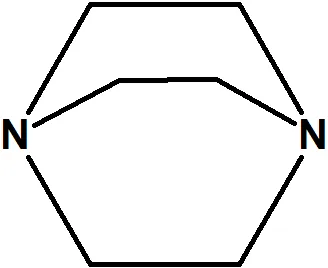
Angle-resolved photoelectron spectroscopy of the DABCO molecule probed with VUV radiation
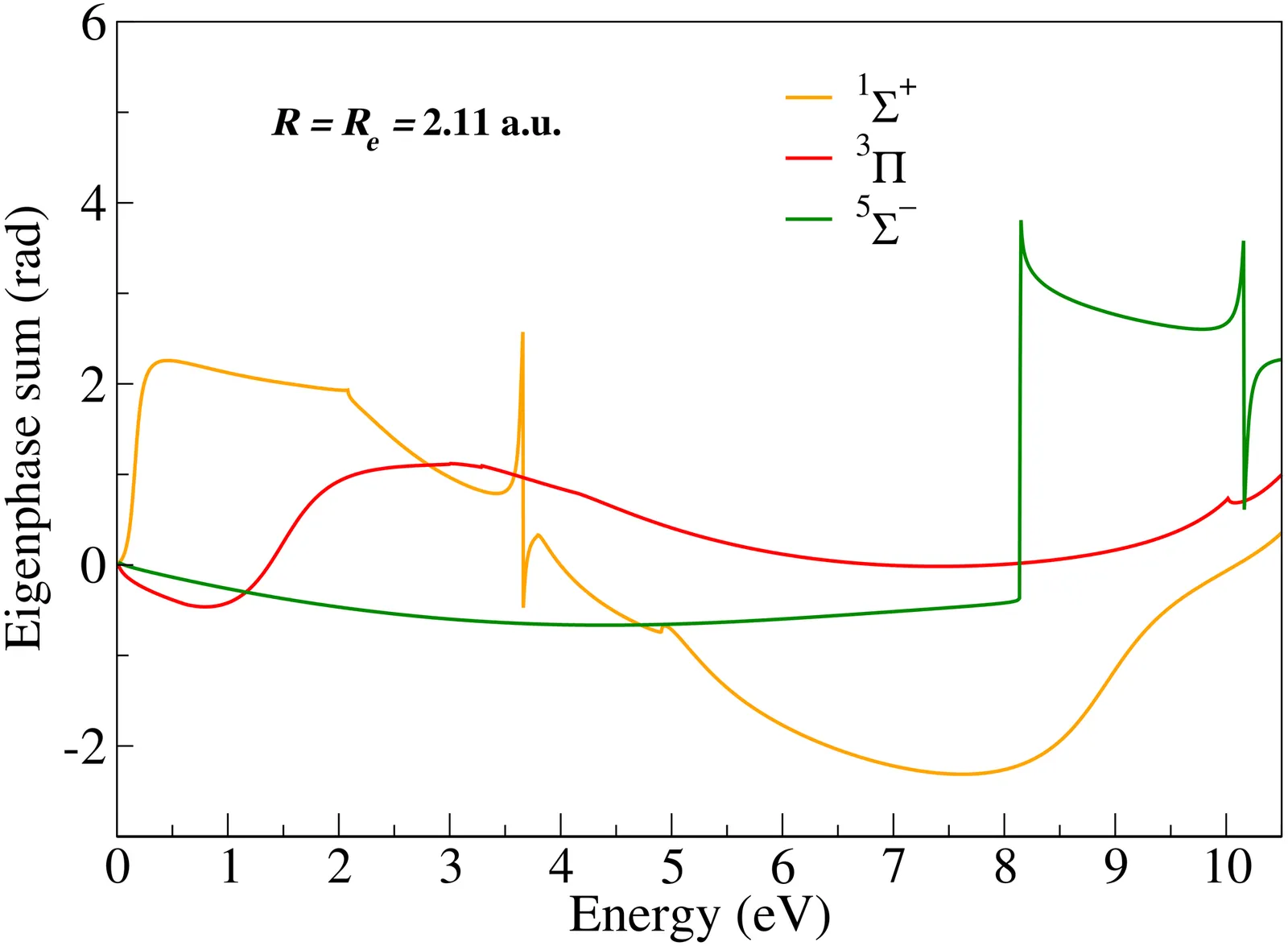
We report a study of the diazabicyclo[2.2.2]octane (DABCO) molecule photoionized using VUV synchrotron radiation in combination with an ion--electron coincidence spectrometer. We determine accurately the adiabatic ionization energy to $7.199\pm0.006$~eV. Two vibrational progressions of DABCO cation ground state are resolved at $847~\text{cm}^{-1}\pm27~\text{cm}^{-1}$ and $1257~\text{cm}^{-1}\pm67~\text{cm}^{-1}$, which we assign to modes of $e'$ symmetry. Analysis of the photoelectron angular distribution shows that the anisotropy parameter depends on the vibrational excitation. This dependence of the $β$ parameter with the vibrational excitation is attributed to the scattering of the outgoing wavefunction mediated by high-lying Rydberg states.
2604.02534Apr 2026
View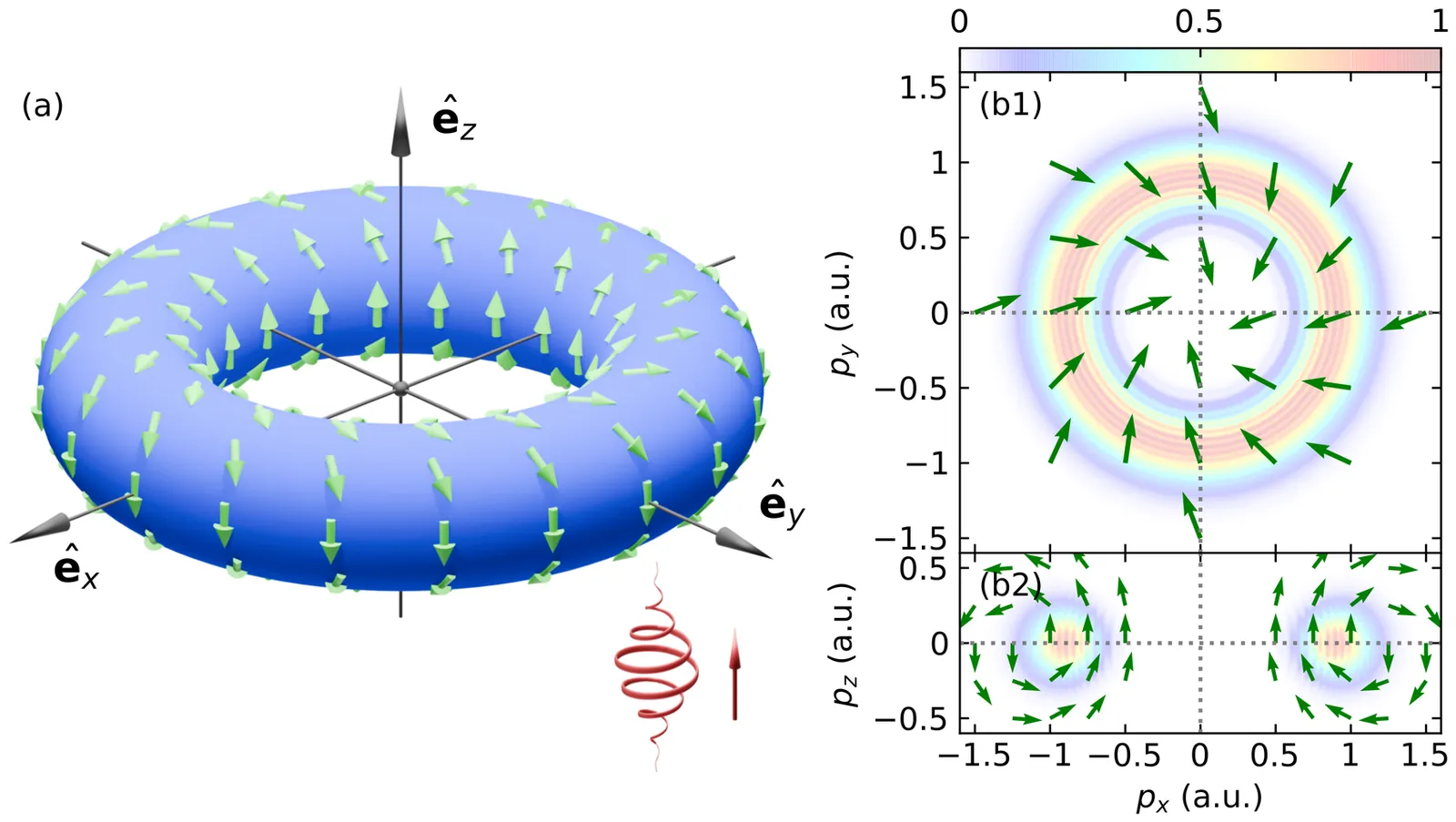
Ultrafast Ionization Dynamics Encoded in a Photoelectron Spin Torus
We demonstrate that strong-field ionization of atoms in circularly polarized laser fields generates a photoelectron spin texture with toroidal topology in momentum space. Using time-dependent Schrödinger equation simulations, spin-resolved classical-trajectory Monte Carlo calculations, and an extended spin-resolved strong-field approximation including intermediate excitation pathways, we show that the rotation angle of this spin torus provides access to attosecond relative time delays associated with photoelectron wave packets released by tunneling from the counter-rotating and co-rotating \(p\)-orbital channels. When intermediate-state dynamics become significant, the torus develops a clear splitting. These results establish photoelectron spin textures as a complementary source of dynamical information beyond conventional momentum spectroscopy, and identify spin polarization as a robust internal degree of freedom for self-referenced attosecond metrology.
2604.02062Apr 2026
View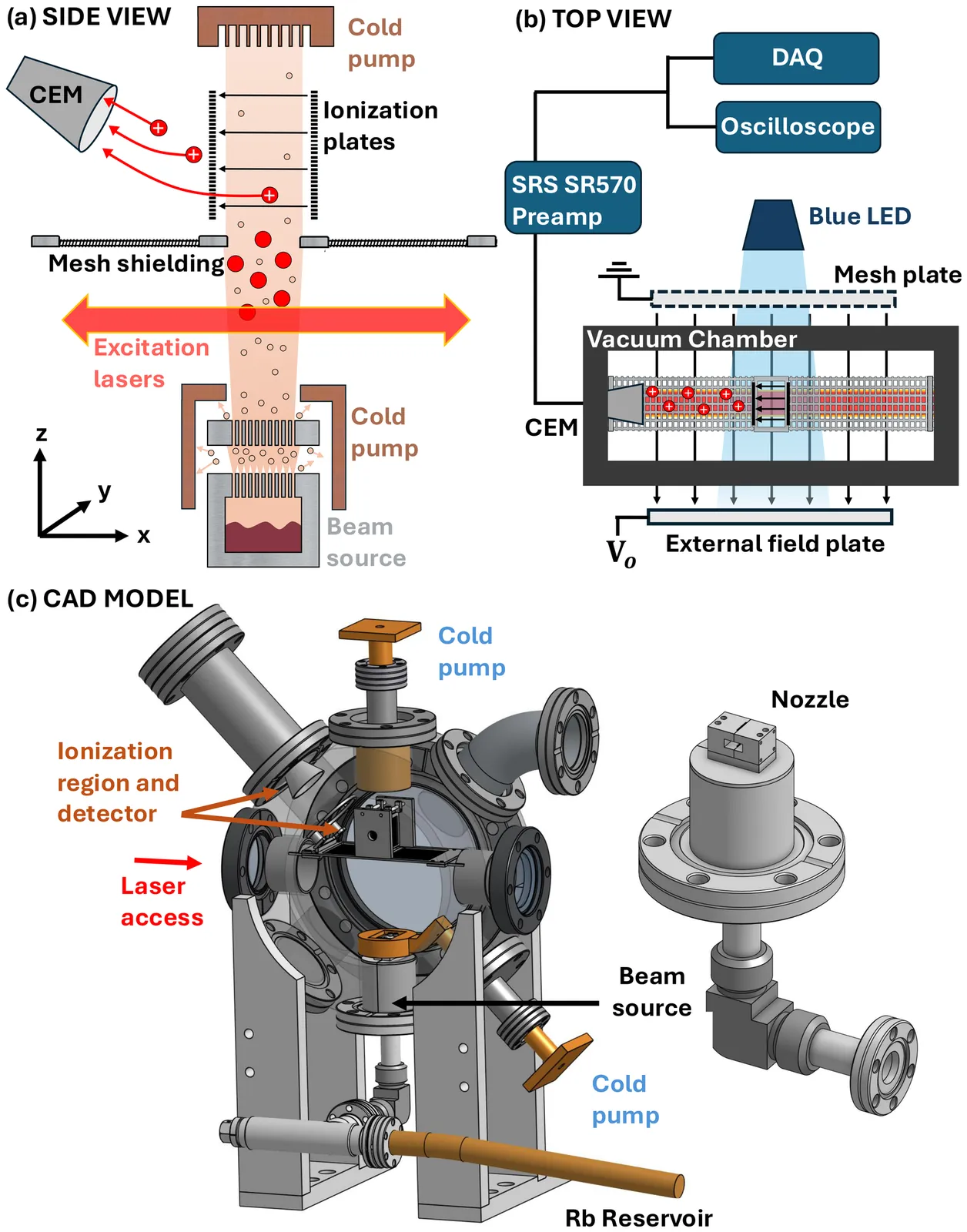
Low frequency electric field sensing with a Rydberg beam
We present a method for performing low frequency electric field sensing via ionization detection of Rydberg atoms in a collimated atomic beam. A collimated beam avoids much of the electric field screening effects that are common in warm vapor cells due to the accumulation of alkali-metal atoms on glass surfaces. Further, a beam facilitates a spatially separated region for high signal-to-noise readout via ionization detection. Using this approach, we measure DC Stark shifts from external fields with frequencies as low as 1 Hz. The sensor demonstrates a sensitivity of better than 1 mV/m$\sqrt{\rm {Hz}}$ for frequencies above 20 Hz and $0.14(4)$ mV/m$\sqrt{\rm {Hz}}$ above 500 Hz with a linear dynamic range of over 50 dB.
2604.01513Apr 2026
View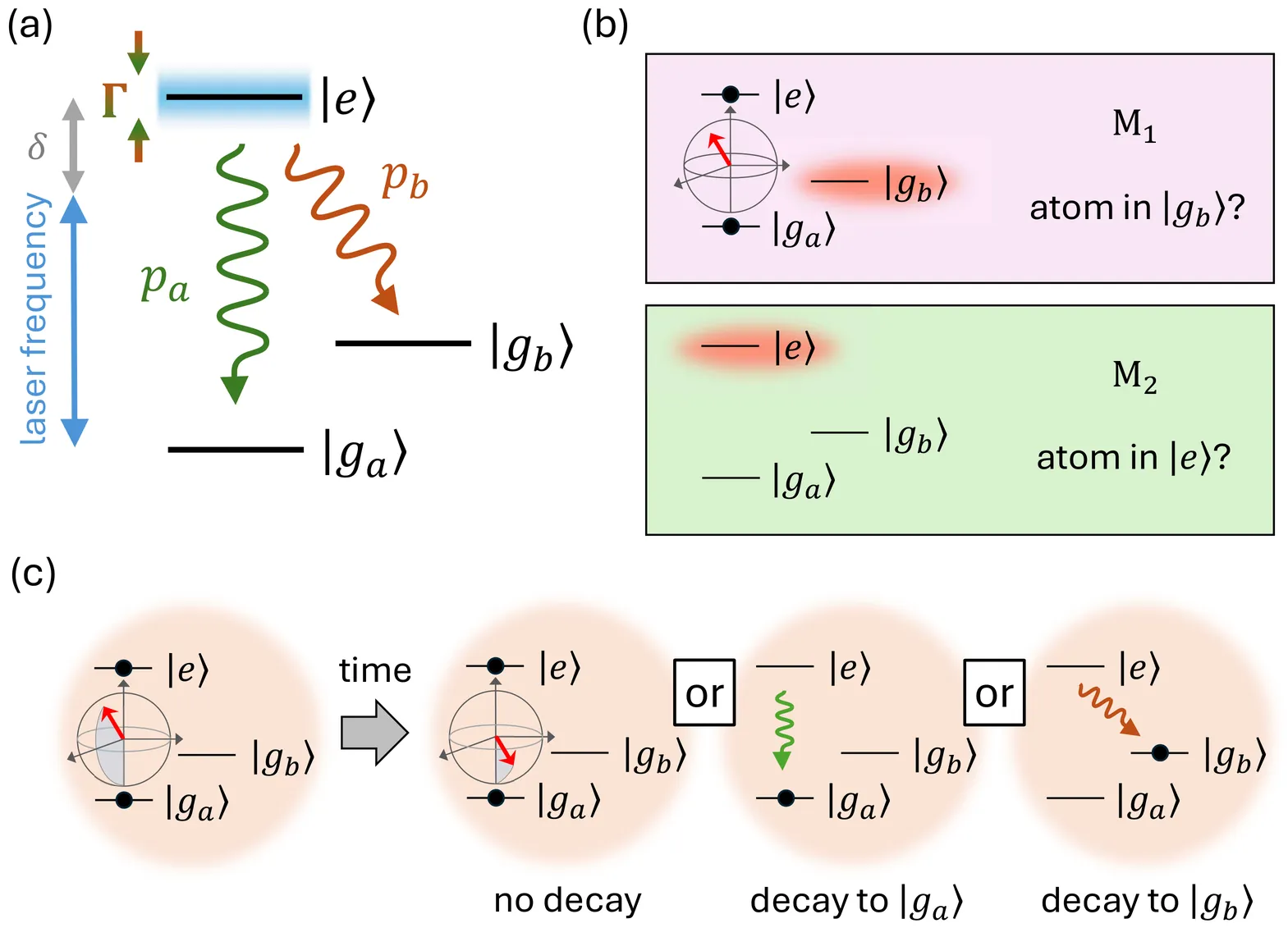
Extending the fundamental limit of atomic clock stability
Optical atomic clocks have been rapidly developing in recent decades, resulting in major improvements in both precision and accuracy. As a result, they have become instrumental in multiple areas of applied and fundamental research. Despite all atomic frequency references having more than two energy-levels, the commonly used model for evaluating their ultimate limits assumes a two-level atom. This leads to frequency interrogation protocols and theoretical stability bounds that are suboptimal for a true multi-level atom. The most fundamental stability bound assumes two noise sources - quantum projection noise and spontaneous decay from the excited state. In this work, we analyze a model that includes these noise types and is generalized beyond the two-level assumption, where spontaneous decay can branch to more than a single ground state. This model allows for detection and exclusion of atomic frequency interrogations in which the atom decayed, leading to a frequency stability improvement of up to $\approx 4.5 \text{ dB}$ compared with the two-level model. Furthermore, we identify an even greater stability enhancement of $\approx 5.4 \text{ dB}$ for frequency comparisons between atoms in an odd parity Bell state. These enhancements are particularly relevant for the numerous trapped-ion optical clock species that operate close to lifetime-limited stability. We calculate new stability limits for those cases and provide a detailed experimental protocol for frequency interrogation with an $^{27}\text{Al}^{+}$ optical ion clock.
2604.01099Apr 2026
View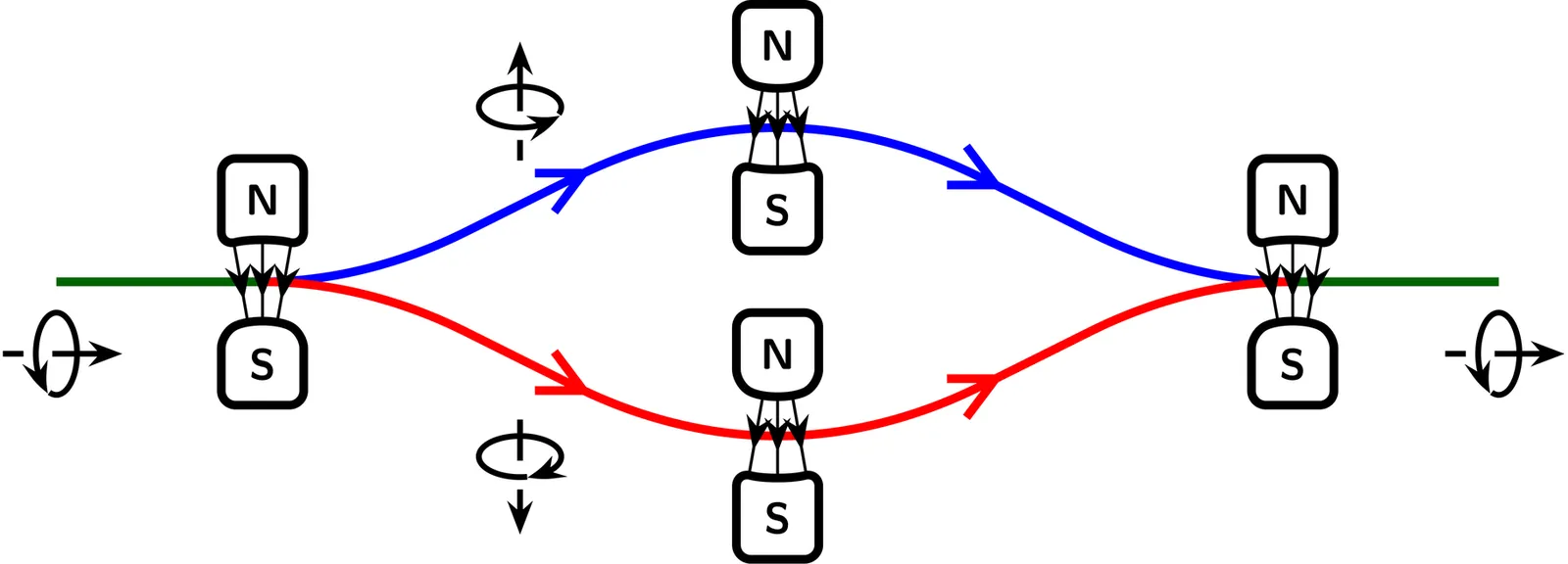
Stern-Gerlach interferometry in three dimensions: the role of transverse fields
We show that superficially similar implementations of Stern-Gerlach Interferometers (SGIs) are expected to differ dramatically in their sensitivity to fields transverse to the primary acceleration direction. These transverse fields unavoidably accompany any static magnetic or electric field gradients, and have been shown by Comparat [Phys. Rev. A 101, 023606 (2020)] to limit the precision application of SGIs. As a concrete example, we consider SGIs with ultracold Rb Rydberg atoms accelerated by spatially-varying electric fields. We find that the deleterious effect of transverse fields imply that only some implementations (sequences of field gradients, internal state swaps, and so-on) may exhibit fringes with high visibility.
2604.00807Apr 2026
View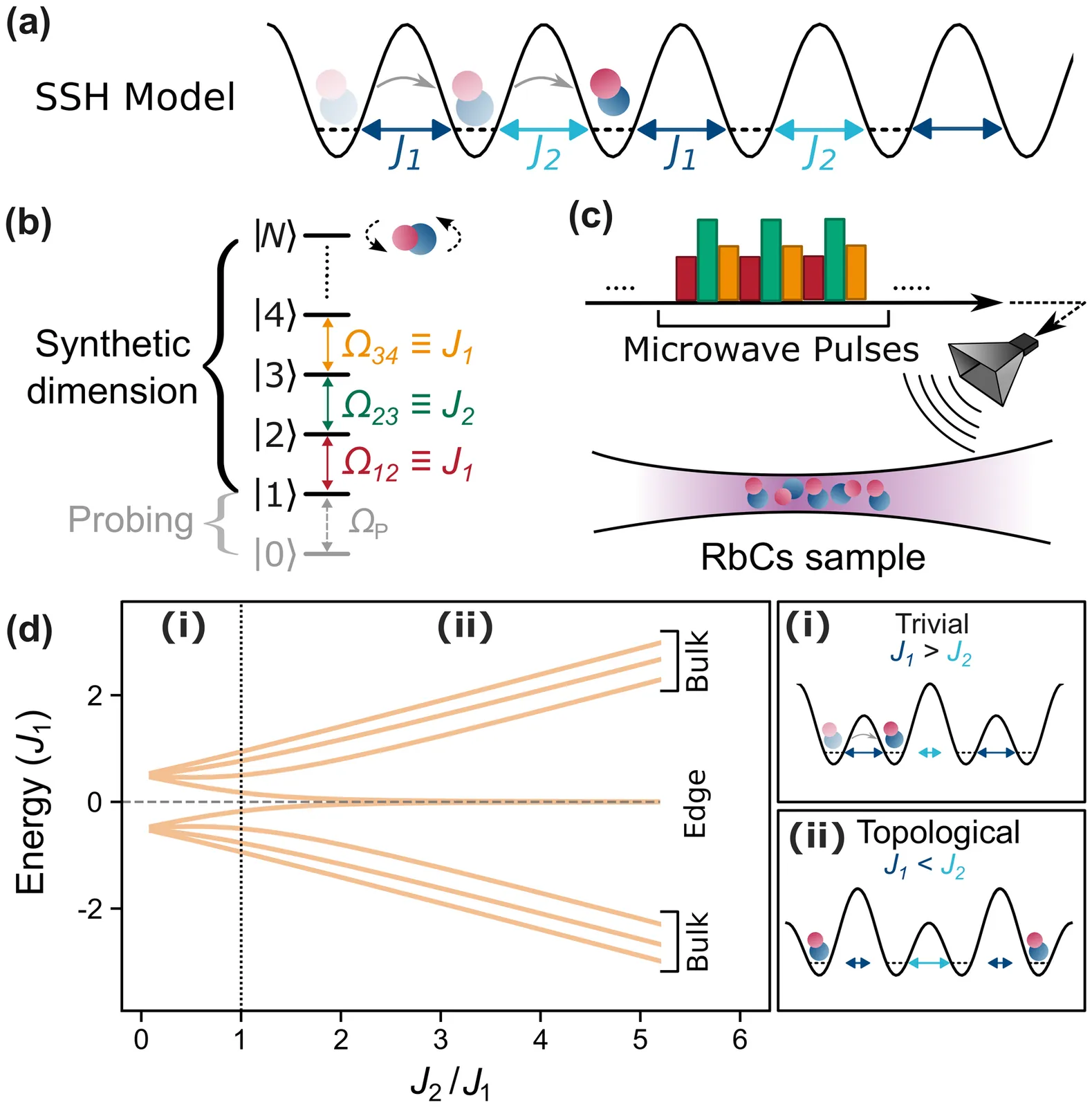
Probing topological edge states in a molecular synthetic dimension
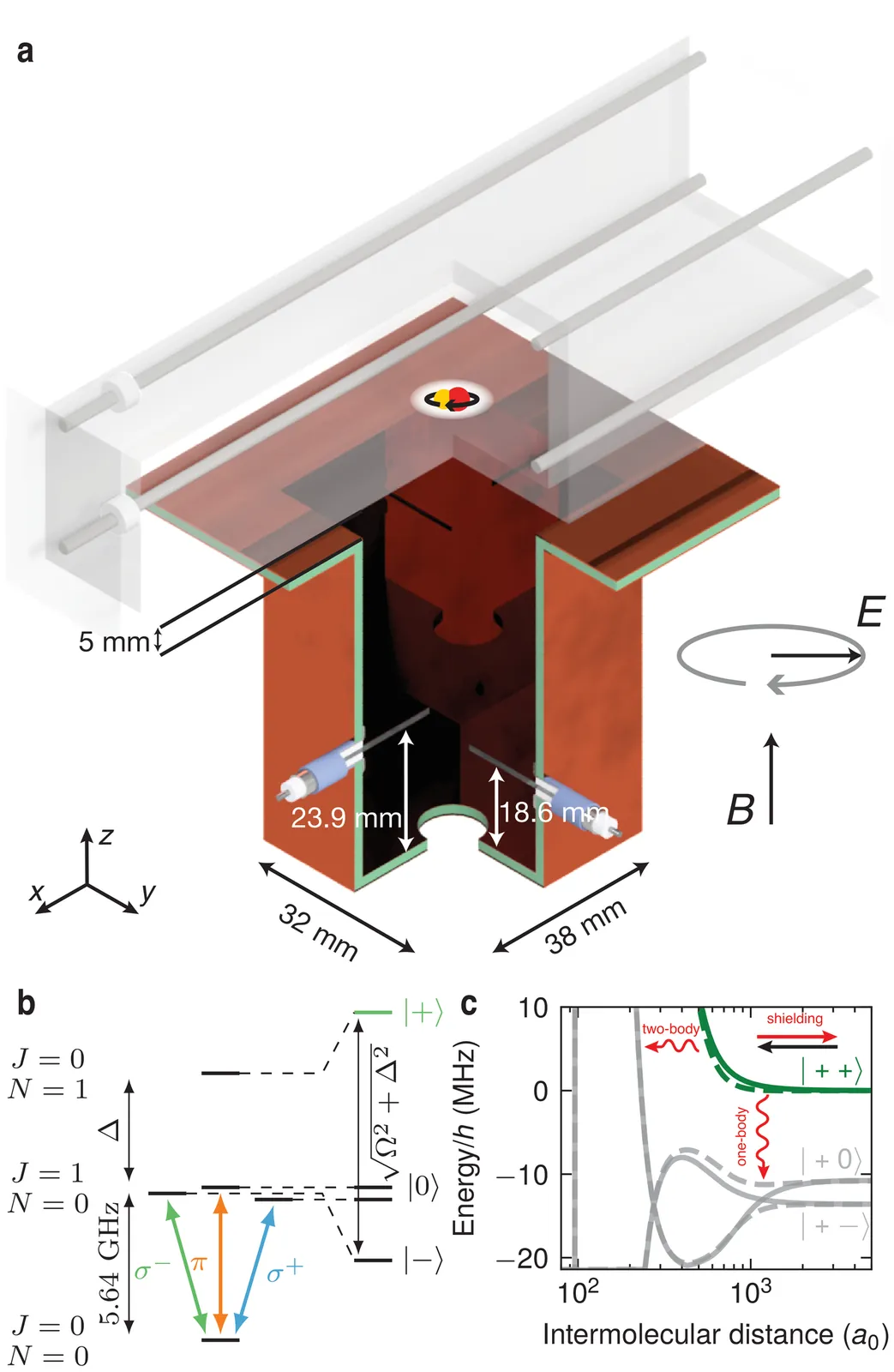
Engineering synthetic dimensions, where the physics of additional spatial dimensions is simulated within the internal states of a quantum system, allows the realisation of phenomena not otherwise accessible in experiments. Ultracold ground-state polar molecules are an ideal platform to encode synthetic dimensions, offering access to large Hilbert spaces of long-lived internal states associated with the rotational and hyperfine degrees of freedom, that can be coupled together with microwave fields to simulate tunnelling. Here, to benchmark the advantages of ultracold molecules, we encode a 1D synthetic lattice in the rotational states of ultracold RbCs molecules and use it to investigate the well-known Su-Schrieffer-Heeger (SSH) model, a minimal model displaying topological properties. To probe the system, we perform spectroscopy using an auxiliary rotational state and study the time dynamics after deterministic state preparation. We demonstrate long coherence times, typically ~500 times the lattice tunnelling period, even for a synthetic lattice using 8 rotational states. Observations of dynamics at long times with full site-resolved readout of the synthetic dimension allow us to test the effects of chiral and non-chiral perturbations on the topologically protected edge states. Our work lays the foundation for further quantum simulations using the rich internal structure of molecules, including dipolar string phases in interacting samples of molecules, and adiabatic state preparation of many-body Hamiltonians.
2604.00745Apr 2026
View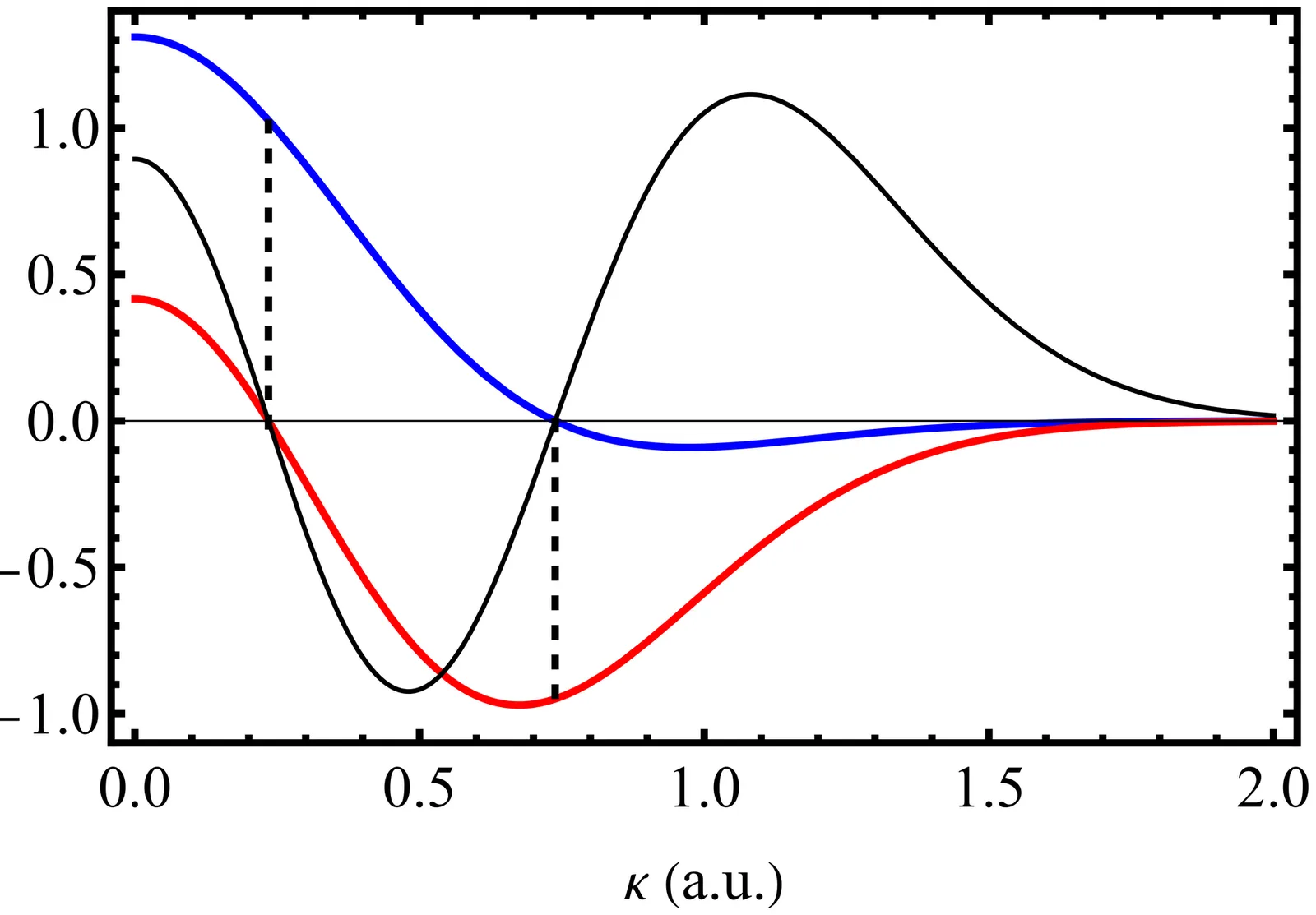
A criterion for an effective discretization of a continuous Schrödinger spectrum using a pseudostate basis
We consider a Hamiltonian $\hat H$ with a (partially) continuous spectrum and examine the zero-overlap condition which involves the projection onto exact continuum eigenstates of a set of pseudostates obtained from the diagonalization of $\hat H$ in a finite basis of square-integrable functions. For each projected pseudostate the condition implies the occurrence of zeros at all energies that correspond to the pseudo-continuum matrix eigenvalues, except for the eigenenergy associated with that pseudostate. This feature was observed for the Coulomb continuum represented in a Laguerre basis [M. McGovern et al., Phys. Rev. A 79, 042707 (2009)] and later explained using special properties of the Laguerre functions [I. B. Abdurakhmanov et al., J. Phys. B 44, 075204 (2011)]. We establish that a sufficient condition for the zero-overlap condition to occur is that the image space of the operator $\hat Q \hat H \hat P$, where $\hat P$ is the projection operator onto the subspace spanned by the basis and $\hat Q = \hat 1 - \hat P$ its complement, has dimension one. We show that the condition is met for the one-dimensional free-particle problem by a basis of harmonic oscillator eigenstates and for the Coulomb problem by a Laguerre basis, thus offering an alternative proof for the latter case. The zero-overlap condition ensures that in, e.g., an ionizing collision or laser-atom interaction process, transition probabilities obtained from the projection of a time-propagated pseudostate-expanded system wave function onto eigenstates of $ \hat H $ are asymptotically stable.
2603.29750Mar 2026
View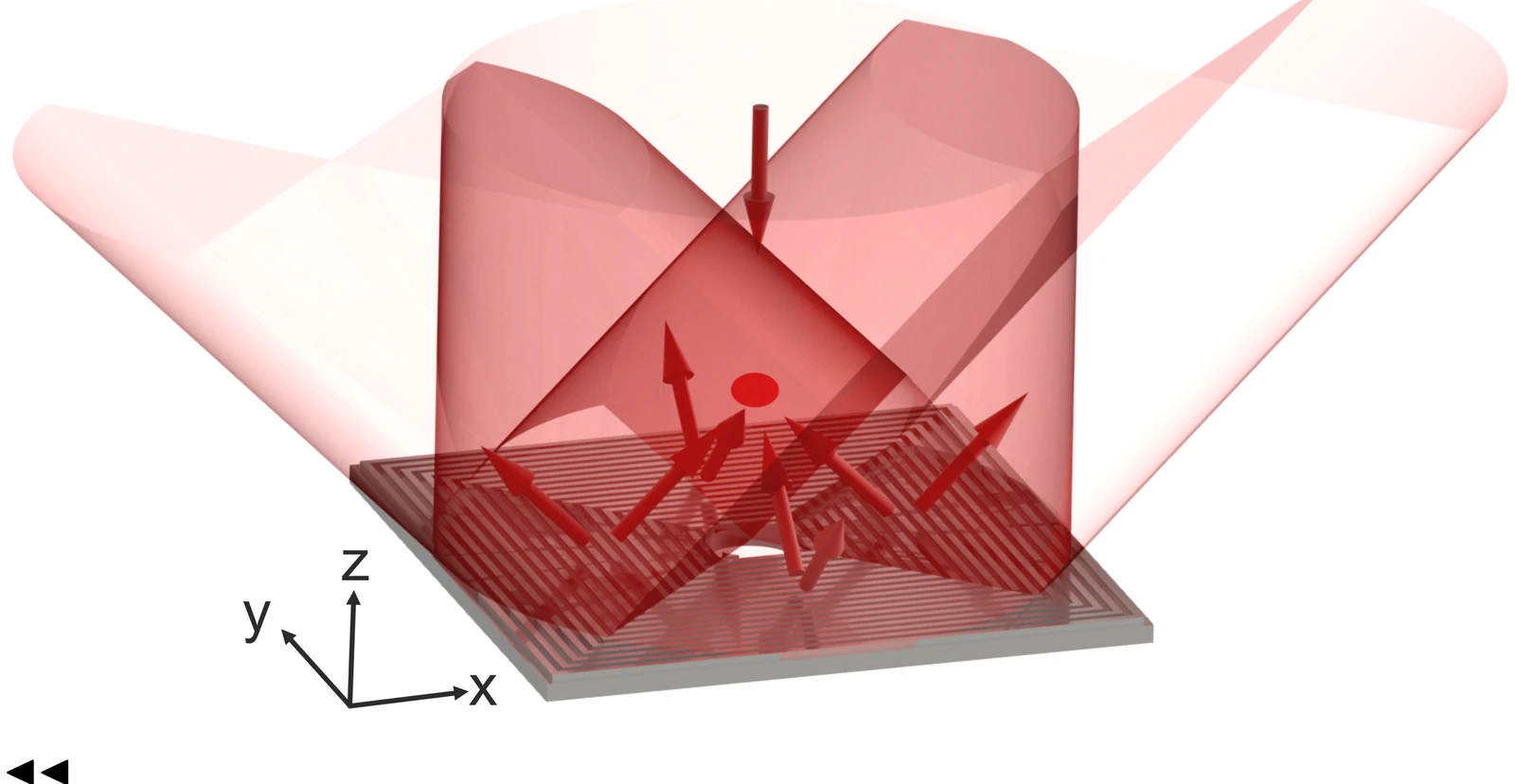
Rapid axial loading of a grating MOT with a cold-atom beam
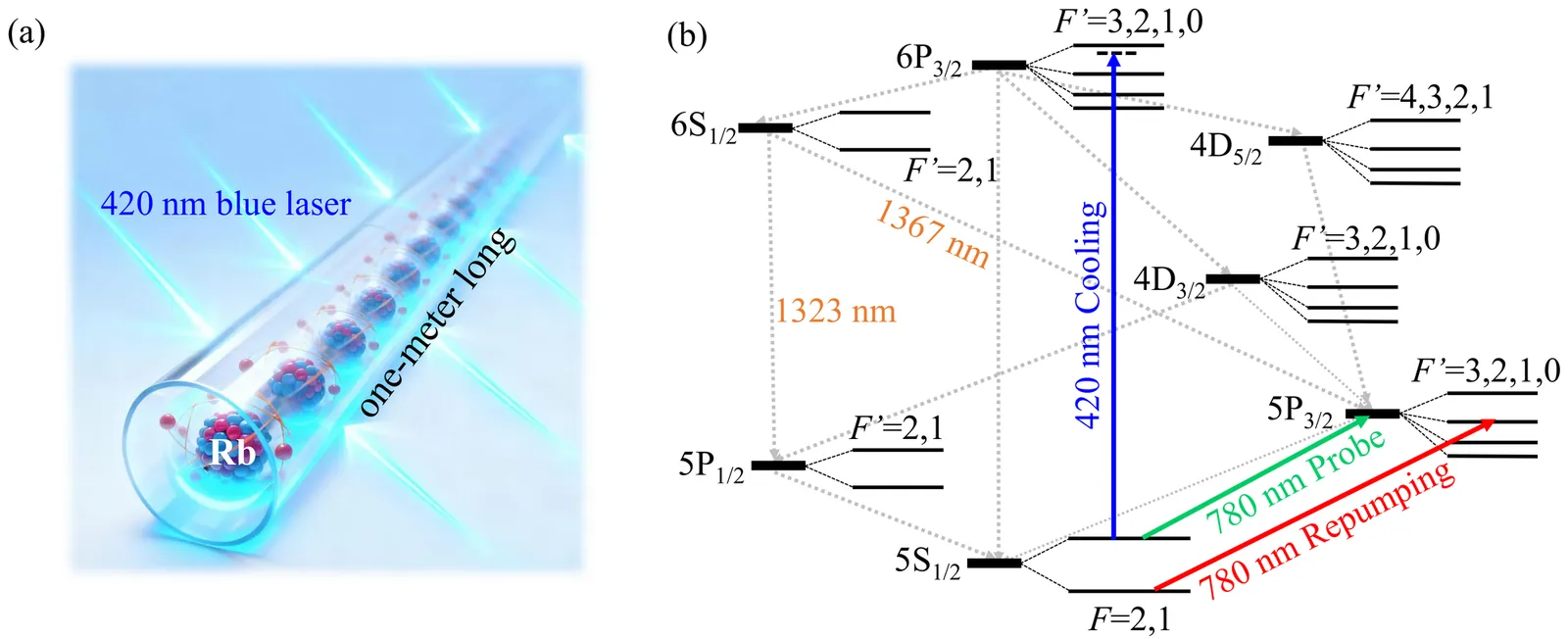
Laser-cooled atoms are increasingly being used to realise practical quantum devices, motivating the development of compact and robust atom sources. Grating magneto-optical traps (gMOTs) simplify the cold-atom source architecture but are typically vapour-loaded and provide limited atomic flux. Here we explore the loading of gMOTs from cold-atom beams. We numerically simulate loading to show that unbalanced diffracted beams deflect incoming atoms away from the trap centre, thereby strongly constraining radial loading. In contrast, axial loading injects atoms directly into the trapping volume and largely avoids these effects. We experimentally demonstrate rapid axial loading of a gMOT, achieving loading rates of $2.1 \times 10^9$ atoms~s$^{-1}$ using a moving optical molasses to transfer atoms from a 2D MOT into the gMOT. These results establish axial loading as a robust route to high-flux gMOT operation for portable cold-atom systems.
2603.29580Mar 2026
View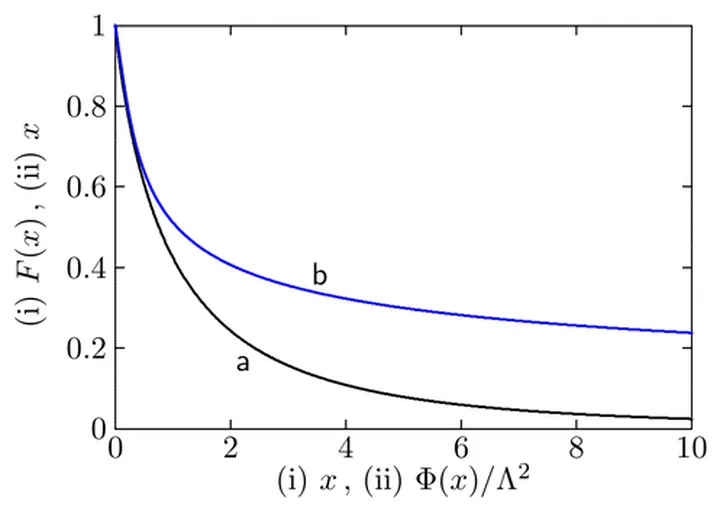
Thomas-Fermi equation revisited: A variation on a theme by Majorana
Majorana found a way to exploit the scaling properties of the Thomas-Fermi equation for converting this second-order differential equation into one of first order. We explore his method for the familiar neutral-atom solution and extend it to the solution that is relevant for weakly ionized atoms. Various integrals and other quantities with importance for atomic physics are recalculated and their values compared with the ones obtained in the 1980s by more tedious numerical procedures.
2603.29482Mar 2026
View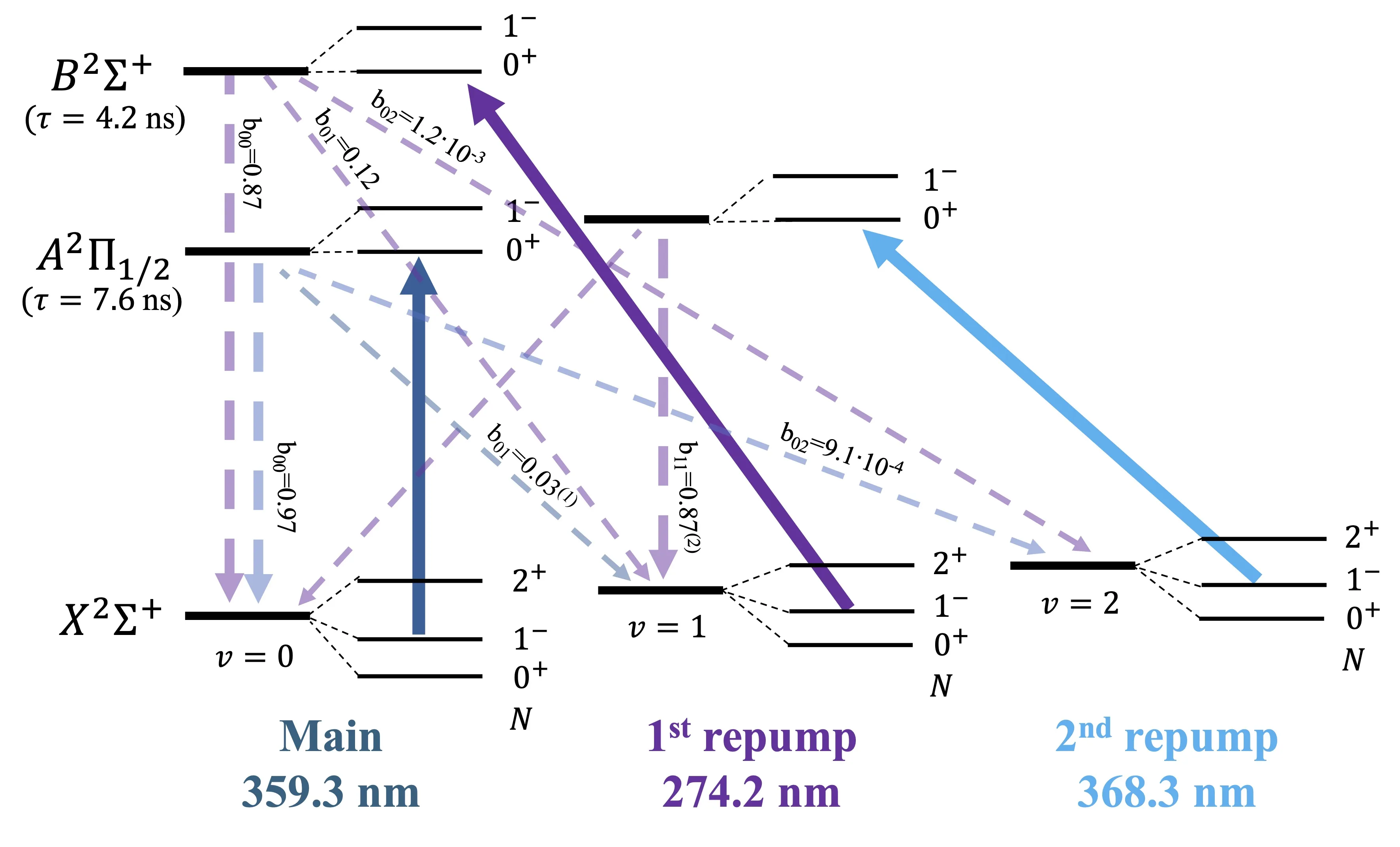
Spectroscopy of the $\mathbf{X^2Σ^+(v=2) \rightarrow A^2Π_{1/2}(v=1)}$ Transition in MgF: Hyperfine Structures and Spectroscopic Constants
We report spectroscopic results of the \(X^2Σ^+(v=2) \rightarrow A^2Π_{1/2}(v=1)\) transition in magnesium monofluoride (MgF). Using Doppler-free Laser-Induced Fluorescence (LIF) spectroscopy on the \(X^2Σ^+(v=2) \rightarrow A^2Π_{1/2}(v=1)\) transition, we resolved 47 hyperfine components distributed over 11 transition lines in X and A states. An effective Hamiltonian -- comprising contributions from vibrational, rotational, \(Λ\)-doubling, and hyperfine interactions -- was presented to model the energy structure of the \(A^2Π_{1/2}(v=1)\) state. The spectroscopic parameters, including the rotational constant, the \(Λ\)-doubling parameter, and the hyperfine interaction constants, were extracted using a least-square fitting and Markov Chain Monte Carlo (MCMC) procedure. Our study reveals that the spectroscopic constants show subtle changes compared to the \(A^2Π_{1/2}(v=0)\) state. These results provide critical spectroscopic benchmarks for optimizing optical cycling schemes in MgF, thereby advancing optical cycling efficiency in the magneto-optical trapping of MgF.
2603.29309Mar 2026
View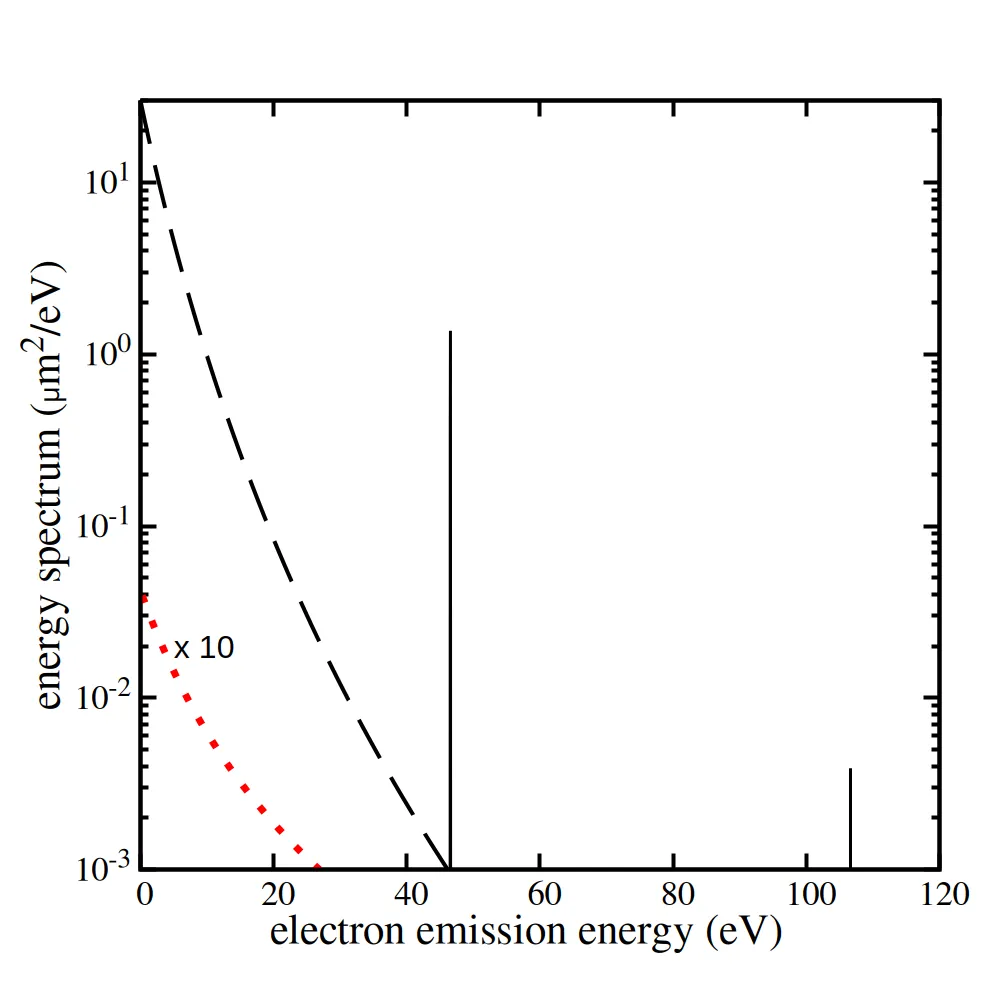
Probing atoms by periodically modulated electron bunches
When passing through an undulator in a Free Electron Laser, dense bunches of relativistic electrons split into micro-bunches, attaining a periodic space-time structure. We show that the field of such periodically modulated bunches is tremendously influenced by coherence effects, resulting in a novel type of beam-atom interaction. Our results indicate that employing such bunches (alone or in combinations with the radiation they emit) offers a multitude of new opportunities for exploring atomic dynamics on a femtosecond time scale.
2603.28899Mar 2026
View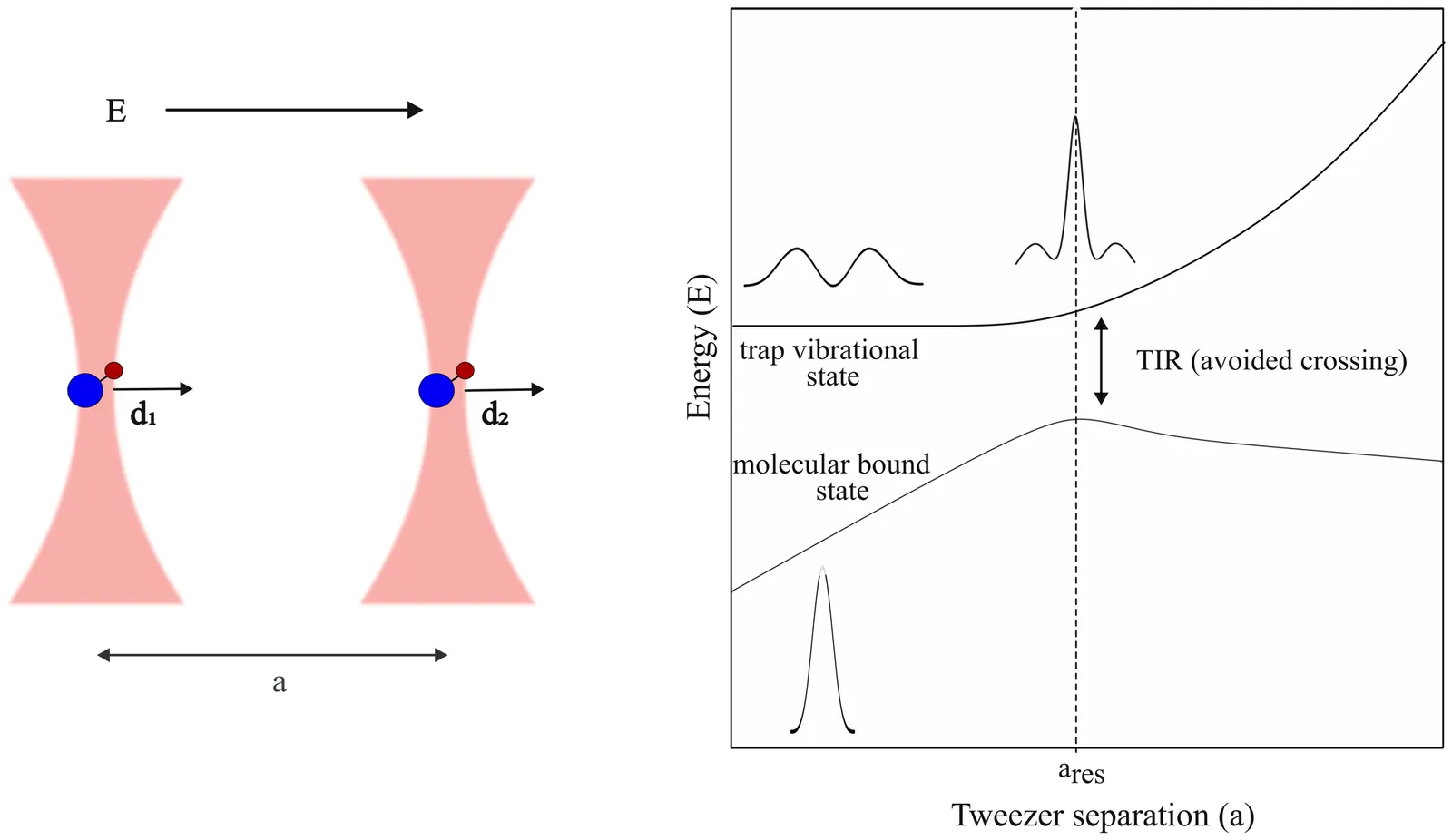
Quantum engineering with ultracold polar molecules using trap-induced resonances
Polar molecules represent a promising platform for quantum simulation and computation protocols. Highly controllable arrays of optical tweezers are now accessible in experiments, allowing for unprecedented control of individual molecules. Motional dephasing is typically seen as an obstacle in quantum computing scenarios. Here, we instead consider using the trap structure as a resource for implementing efficient quantum gates. By numerically solving the two-body problem of dipoles trapped in separate tweezers, we identify trap-induced resonances that can serve as the mechanism for achieving state-dependent dynamics and can be further utilized for quantum sensing.
2603.28270Mar 2026
View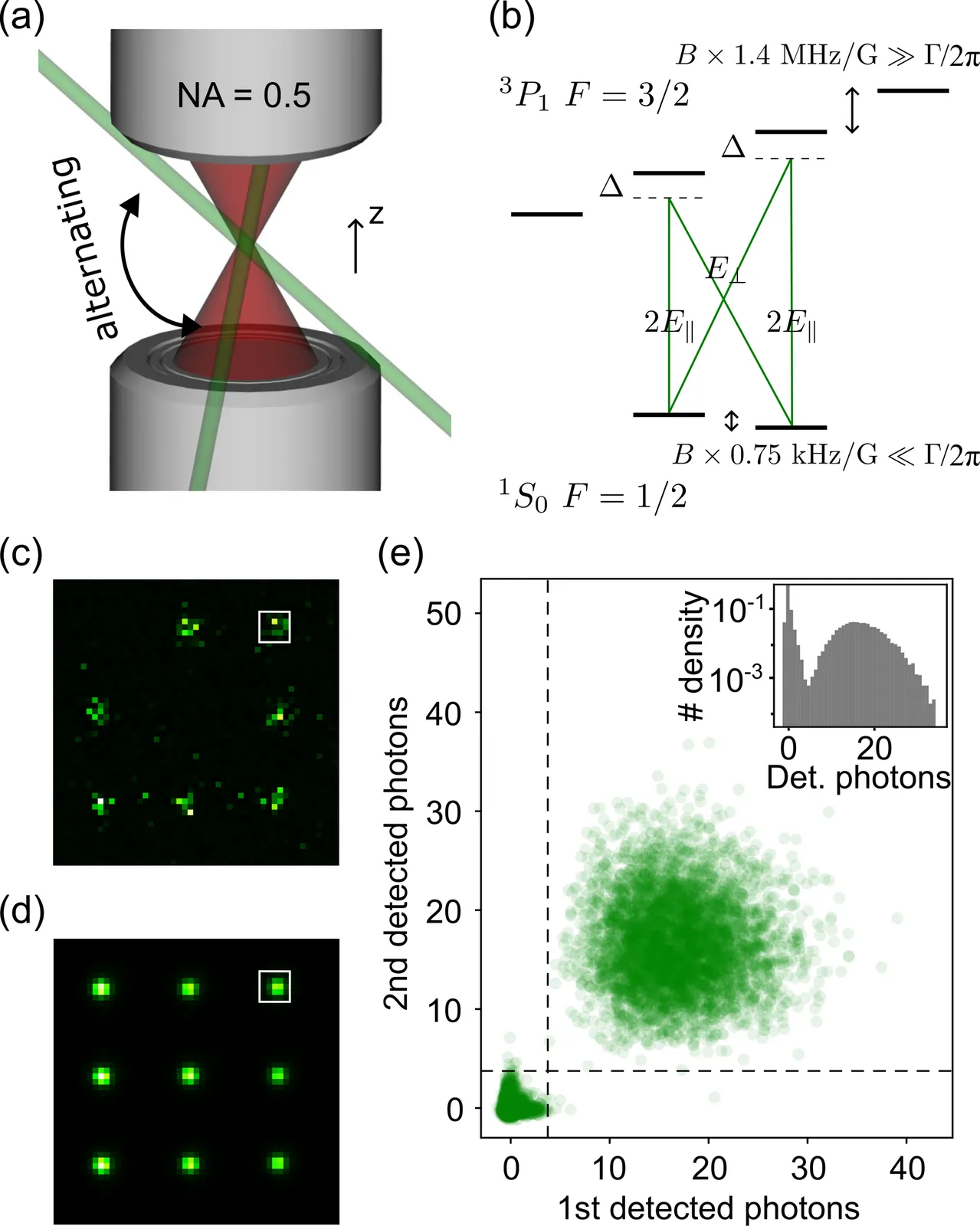
High performance imaging of $^{171}$Yb atom in shallow clock-magic tweezer by alternating dual-tone narrowline cooling
We demonstrate imaging $^{171}$Yb single atoms in clock-magic tweezers of 759.4 nm wavelength, with above 99.9% fidelity and survival. We use alternating dual-tone narrowline imaging for more efficient three-dimensional cooling in tweezers, allowing several-millisecond imaging in 200 $μ$K trap depth, which is half of typical depth used for imaging in clock-magic tweezers. Accordingly, even without repumping, imaging survival is still close to 99.9% with the high fidelity, which can enable high performance nondestructive qubit measurements based on metastable shelving. Moreover, our simulation predicts that more optimal configuration could further reduce the trap depth, as improving the imaging performance. This imaging capability in shallow traps opens high performance imaging for more general trap wavelength, and lays the foundation for large scale systems over 1,000 qubits, and highly repeatable tweezer clocks.
2603.27498Mar 2026
View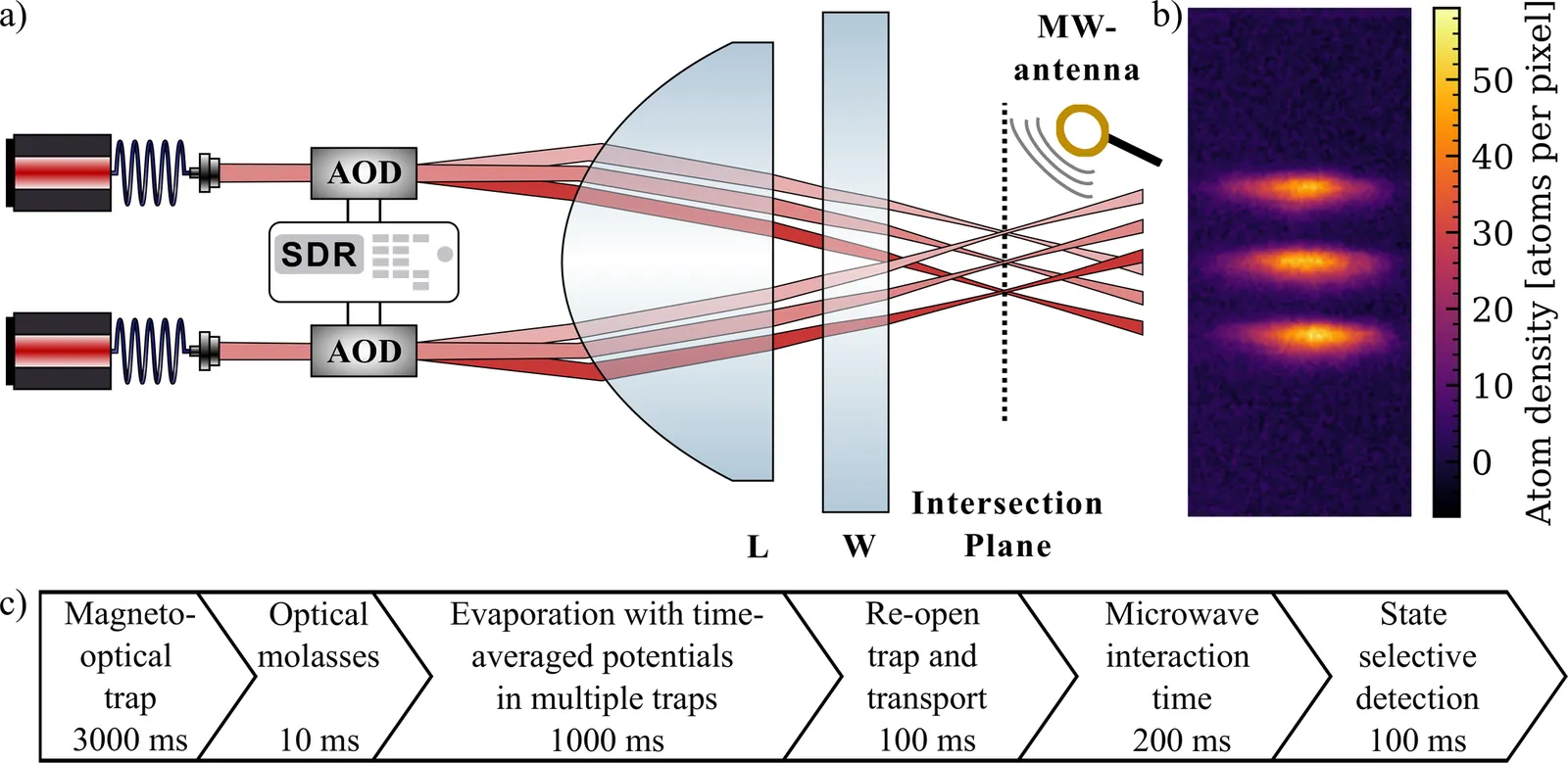
In-Situ Differential-Light-Shift Cancellation for Trapped-Atom Clocks
Differential light shifts (DLS) induced by optical trapping fields fundamentally limit the stability and accuracy of trapped-atom microwave clocks. We demonstrate an in-situ method to cancel DLS by simultaneously interrogating multiple spatially separated atomic ensembles at different trap intensities generated from a common light source. By operating the ensembles at set intensity ratios and performing Ramsey spectroscopy, the intensity-dependent frequency shifts are measured within each experimental cycle and extrapolated to the zero-intensity limit. This approach effectively enables shot-to-shot determination of a DLS-free frequency without requiring magic wavelengths or species-specific cancellation schemes. We validate the method for Rb atoms trapped in time-averaged potentials by introducing controlled variations of the total trap power and show that the extrapolated frequency remains insensitive to these fluctuations. The technique is general and can be extended to other systematic shifts, providing a scalable route toward improved stability and accuracy in compact trapped-atom clocks and related quantum sensors relying on optical dipole traps
2603.26398Mar 2026
View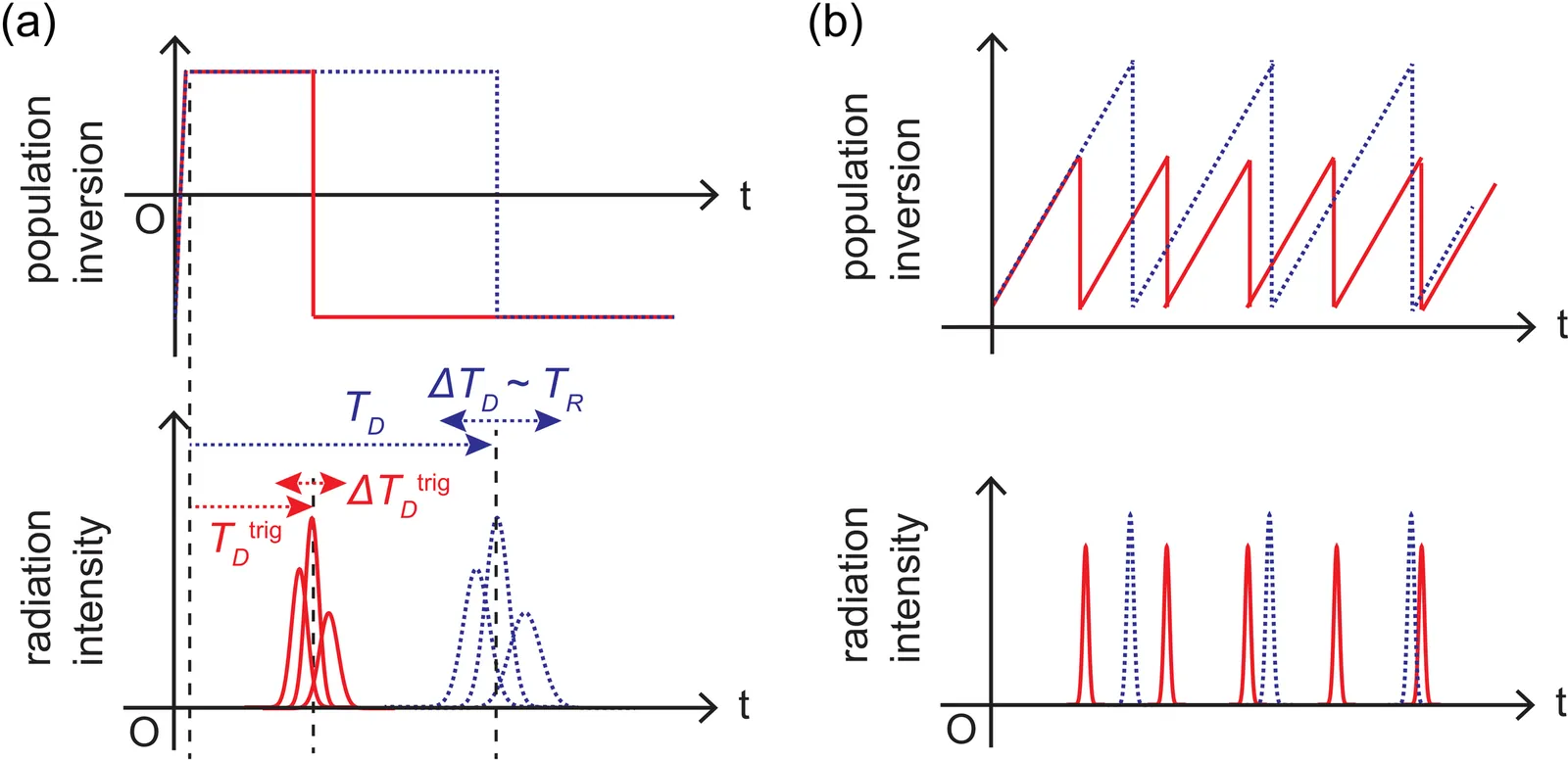
Control of emission interval and timing in triggered periodic superradiance
To achieve more controllable development of coherence in solids, we investigated the effect of a trigger laser tuned to the superradiance transition wavelength on periodic superradiance observed in an Er:YSO crystal. For period control, applying the trigger laser reduced both the superradiance period and its variance, demonstrating enhanced controllability of coherence development dynamics. As the trigger laser power increased, both the period and the number of emitted superradiance photons decreased while maintaining a proportional relationship. This behavior is explained by a reduced superradiance threshold under a constant excitation rate and is reproduced by numerical simulations based on the Maxwell-Bloch equations. For timing control, we found that superradiance could be triggered even when the excitation laser alone was insufficient. This enabled us to control the emission timing of superradiance using short trigger pulses and provided a device capable of generating superradiance at desired timing.
2603.26103Mar 2026
View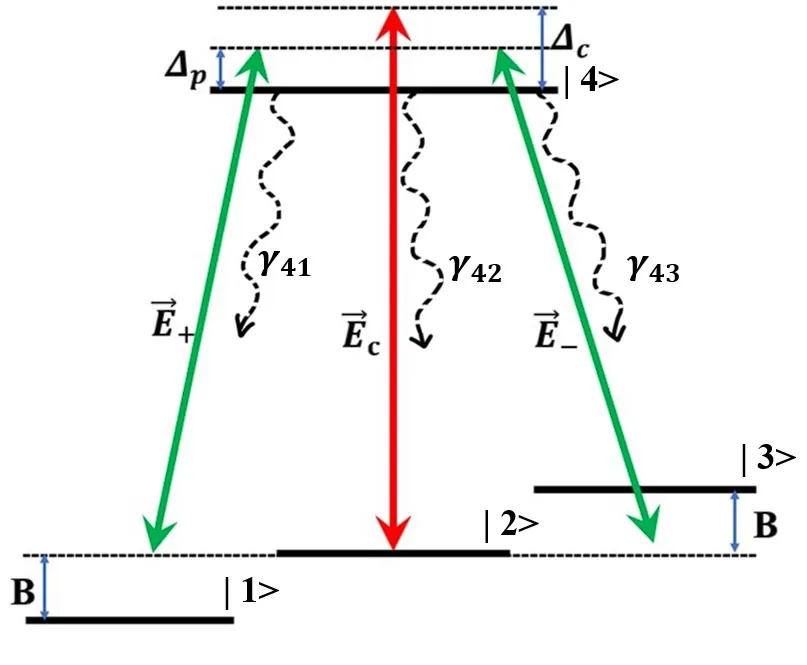
Structured-Light Magnetometry in a Coherently Controlled Atomic Medium
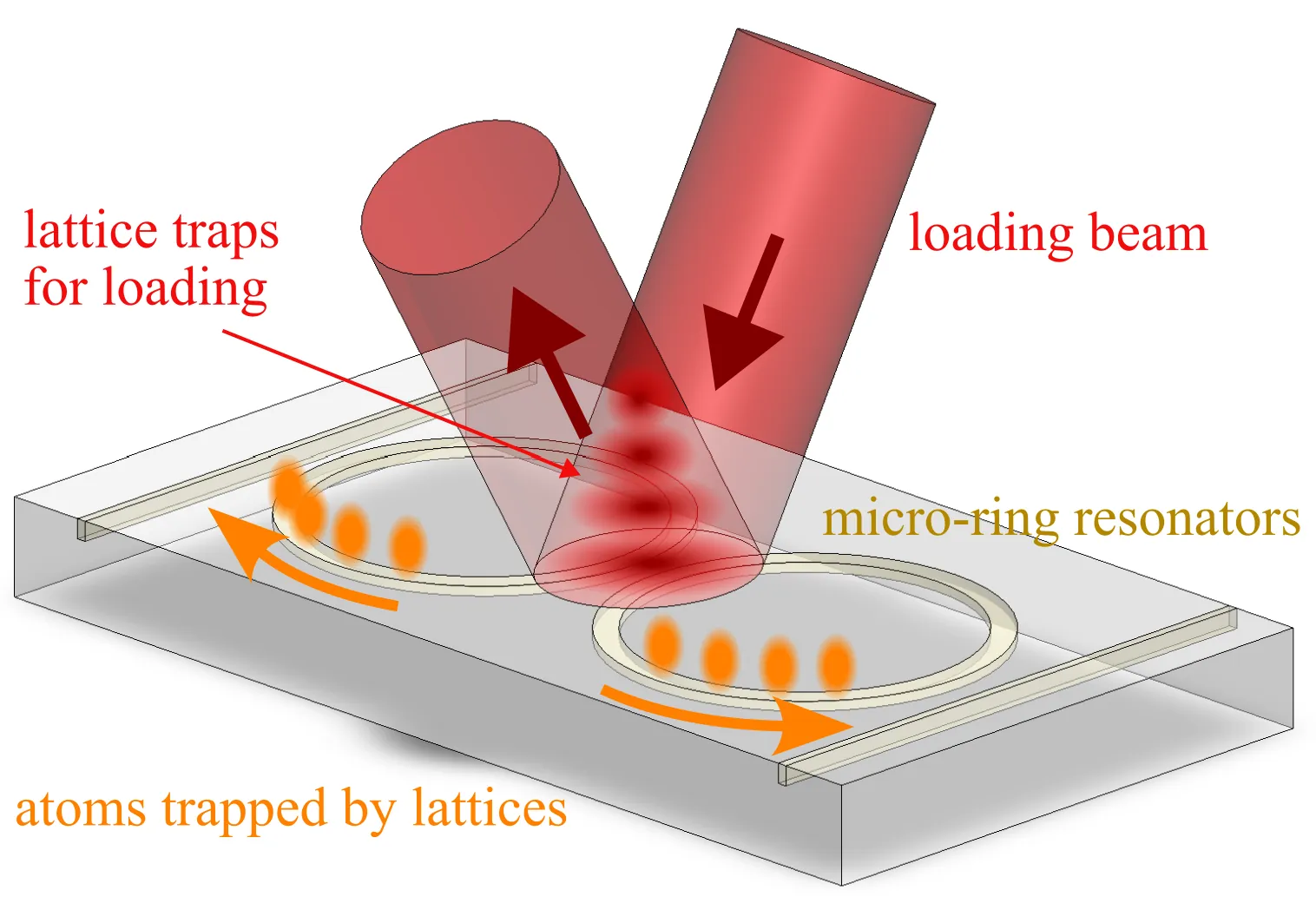
A structured-light-based approach for detecting magneto-optical rotation is presented, in which polarization rotation is mapped onto a directly observable spatial degree of freedom. A radially polarized Laguerre-Gaussian beam interacts with cold $^{87}\mathrm{Rb}$ atoms in the presence of a longitudinal magnetic field, where magnetically induced circular birefringence introduces a relative phase shift between the $σ_+$ and $σ_-$ components of the field, manifesting as a rotation of the interference pattern. The MOR angle is extracted directly from the angular displacement of the petal-shaped intensity distribution, eliminating the need for polarizers or Stokes-parameter analysis. This method converts conventional polarization-based magnetometry into a topology-based spatial readout, enabling spatially resolved magnetic-field sensing with potential applications in optical magnetometry and quantum sensing.
2603.25781Mar 2026
View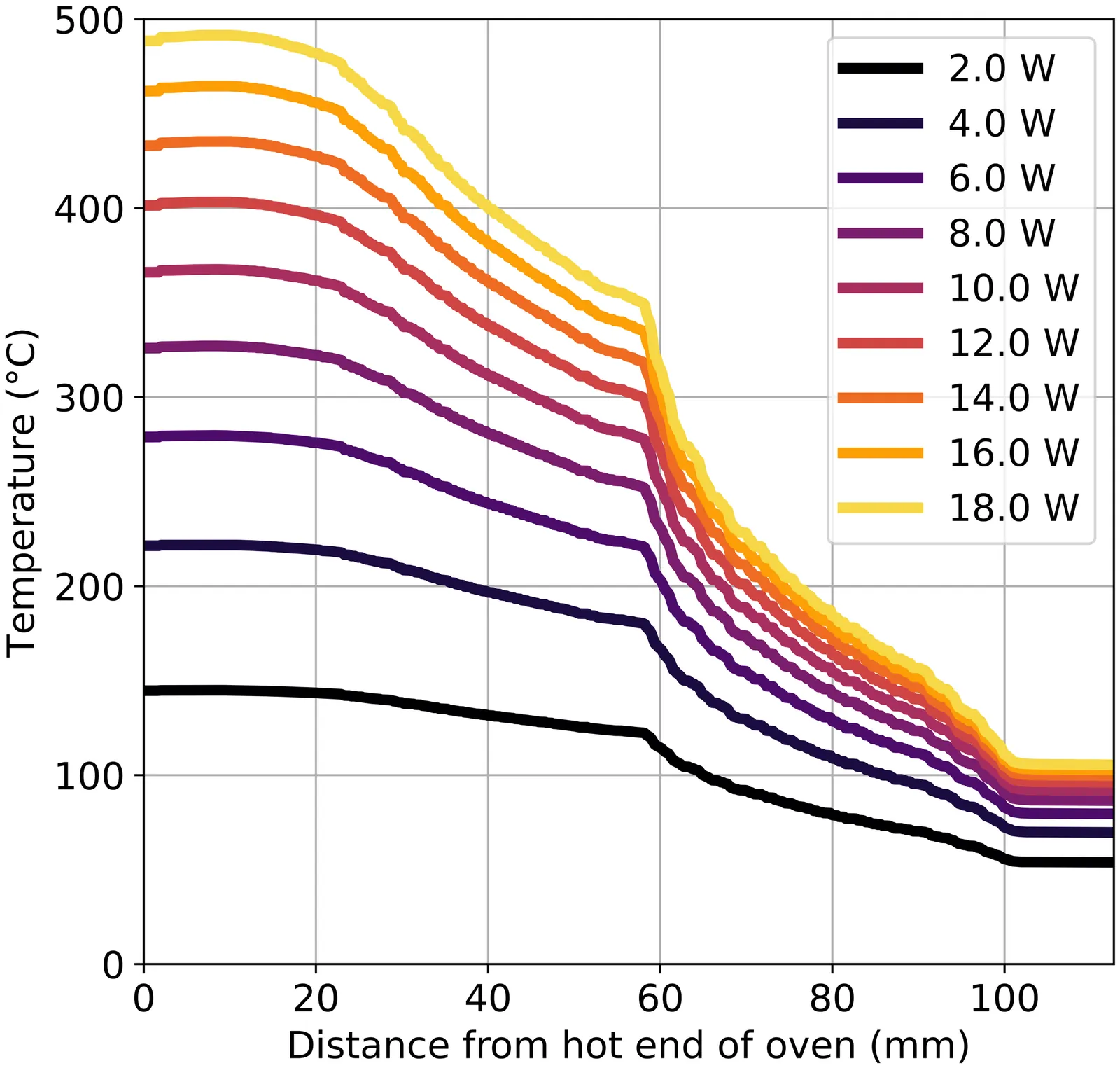
A high-flux atomic strontium oven with light-driven flux modulation
A high-flux source of strontium atoms is required for cold atom quantum technology applications. We present a re-entrant oven design that avoids the need for any vacuum feed-throughs and has an inherent temperature gradient to guard against clogging of the nozzle. The nozzle is fabricated by micro-machining of fused silica using selective laser etching; this specialised technique is capable of making many thousands of fine microchannels and is suitable for batch production. Operating with only electrical heating, using <20W of electrical power, a total flux of $8(1)\times 10^{14}$ atoms/s is achieved at an oven temperature of 475°C, of which we estimate $1.8(2)\times 10^{13}$ atoms/s could be captured. A heated in-vacuum sapphire window grants optical access directly opposite the oven, and can be cleared of metallization without breaking vacuum. We used this optical access to modulate the flux of the atomic beam by direct illumination of the nozzle and the strontium metal with high-power laser light. Heating by laser light increased the useful flux by a factor of up to 16(3) on a timescale of 40s, and a factor of 2.5(5) on a timescale of 1s. This flux modulation serves to increase the operating lifetime of the oven. We report experimental measurements of the performance of the oven in long-term operation over many months.
2603.25567Mar 2026
View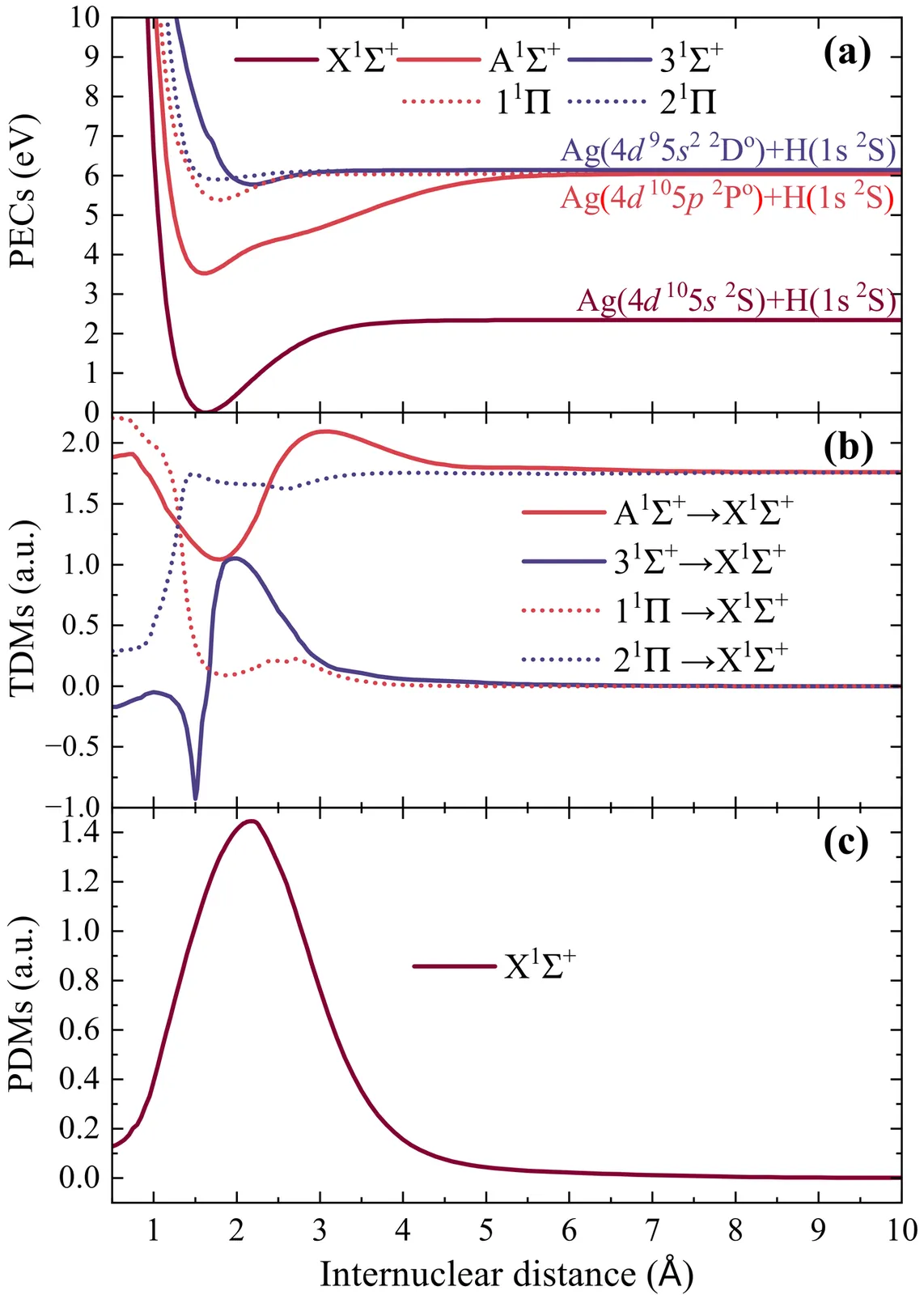
Radiative Association of Ag and H: Formation of AgH from Ab Initio Calculations
Radiative association processes leading to the formation of AgH in cold astrophysical environments are investigated for the first time using full quantum scattering theory. High accuracy potential energy curves and transition dipole moments for the low-lying electronic states (X$^1Σ^+$, A$^1Σ^+$, $1^1Π$, $3^1Σ^+$, $2^1Π$) are computed employing the internally contracted multireference configuration interaction method with Davidson correction. Vibrationally and rotationally resolved radiative association cross sections are calculated for transitions from these initial states to the ground X$^1Σ^+$ state. Prominent shape resonances arising from quasi-bound rovibrational levels behind centrifugal barriers are identified, with the $2^1Π\to$ X$^1Σ^+$ channel exhibiting the strongest contribution at low collision energies. Stimulated radiative association under blackbody radiation fields (up to $T = 20\,000$ K) produces modest enhancements, predominantly in the ground-state channel. Thermal rate coefficients computed over 10$^{-1}$--$10^4$~K reveal a general decreasing trend with temperature for all channels. The results provide essential kinetic data for astrochemical models of transition-metal hydride formation in low-temperature interstellar and circumstellar environments.
2603.25297Mar 2026
ViewPage 1 of 26