112 papers
 2603.28538
From Hole Theory to Quantum Field Theory: Relativistic Fermions and the Role of Ettore Majorana (1933-1937)
Between 1933 and 1937, the treatment of relativistic spin-1/2 particles, initially rooted in Hole theory, evolved into the modern framework of quantum field theory. This paper reconstructs the crucial stages of that transition by examining the formal and physical progress of the numerous authors who shaped the field's modern formalism. This historical study traces the development of fermionic field theory in full, beginning with the foundational work of the 1920s, focussing on the results of the 1930s, and concluding with the influential synthesis of Wolfgang Pauli in 1941, the content of which has shaped the subsequent tradition. Within this framework, particular emphasis is given to Ettore Majorana's 1937 quantisation procedure and argument for anti-commuting fermionic quantum fields. This study demonstrates that Majorana's work was not merely a technical variant, but the definitive rejection of the concept of negative energy solutions, whose conceptual clarity and educational value remain vital today.
2603.28538Mar 2026
View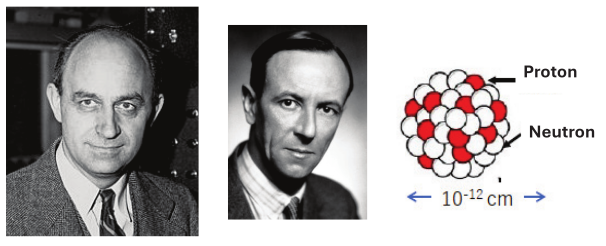
The atomic bomb: its history and the struggles of scientists
In this article, I trace the early historical developments that ultimately led to the creation of the atomic bomb. Even after the completion of weapons, many scientists continued to argue that nuclear armaments were indispensable for maintaining the global balance of political power [1]. This study focuses on several scientists who confronted profound moral dilemmas concerning the use of bombs against Japan. Some openly opposed its deployment. Others sought to warn a Japanese physicist in the hope of averting further devastation. Still, others expressed deep remorse in its aftermath. In addition, the experience of an individual directly affected by the bombing is discussed. By examining these episodes, this article aims to contribute to the ongoing discourse on how scientific research should be guided by ethical principles in the future.
2603.26230Mar 2026
View2603.23410Henri Poincare Saint Louis Lecture of 1904: Early Publication and International Dissemination
Henri Poincare Saint Louis lecture, delivered on 24 September 1904 at the International Congress of Arts and Science, occupies a distinctive place in the pre history of twentieth century theoretical physics. In this text, Poincare formulated the principle of relativity in explicit and general terms, not as a narrow empirical rule limited to electrodynamics, but as one of the major guiding principles of mathematical physics. The lecture also offered a principle based conception of theory centered on invariance, least action, and general theoretical coherence. Although the conceptual importance of the Saint Louis lecture has long been recognized in the historiography of relativity, far less attention has been devoted to the material conditions under which it entered international circulation. This article examines the editorial, commercial, and institutional pathways through which the lecture was disseminated between late 1904 and early 1905. It reconstructs the three principal early publication channels of the text: its first printed appearance in La Revue des idees in November 1904, which inserted it into a commercially organized and interdisciplinary intellectual review; its republication in the Bulletin des sciences mathematiques in December 1904, which brought it into a widely distributed specialized mathematical network and later provided the standard reference most often used by historians; and its English translation in The Monist in January 1905, which extended its reach into a transatlantic forum devoted to philosophy, science, and the foundations of knowledge.
2603.23410Mar 2026
View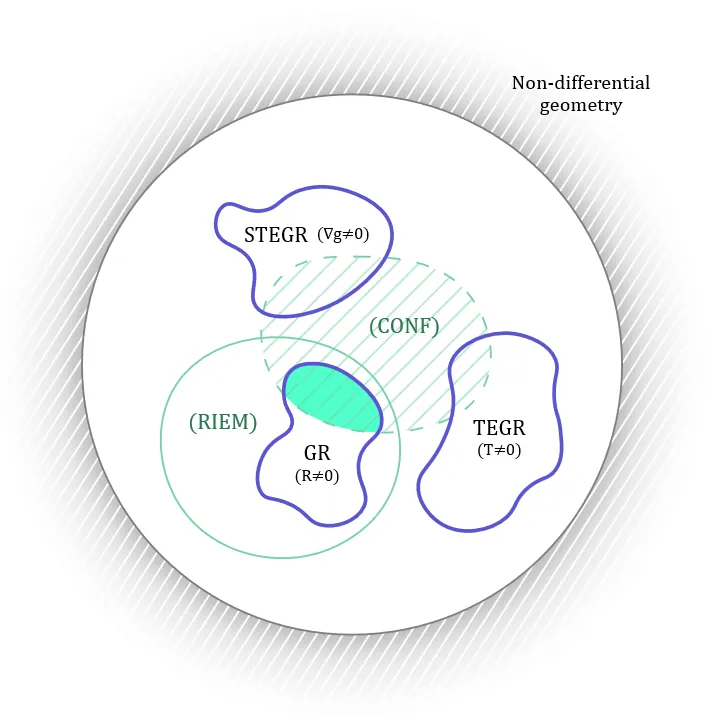
Conventionalism in general relativity?: formal existence proofs and Reichenbach's theorem θ in context
Weatherall and Manchak (2014) show that, under reasonable assumptions, Reichenbachean universal effects, constrained to a rank-2 tensor field representation in the geodesic equation, always exist in non-relativistic gravity but not so for relativistic spacetimes. Thus general relativity is less susceptible to underdetermination than its Newtonian predecessor. Dürr and Ben-Menahem (2022) argue these assumptions are exploitable as loopholes, effectively establishing a (rich) no-go theorem. I disambiguate between two targets of the proof, which have previously been conflated: the existence claim of at least one alternative geometry to a given one and Reichenbach's (in)famous ``theorem theta", which amounts to a universality claim that any geometry can function as an alternative to any other. I show there is no (rich) no-go theorem to save theorem theta. I illustrate this by explicitly breaking one of the assumptions and generalising the proof to torsionful spacetimes. Finally, I suggest a programmatic attitude: rather than undermining the proof one can use it to systematically and rigorously articulate stronger propositions to be proved, thereby systematically exploring the space of alternative spacetime theories.
2603.24608Mar 2026
View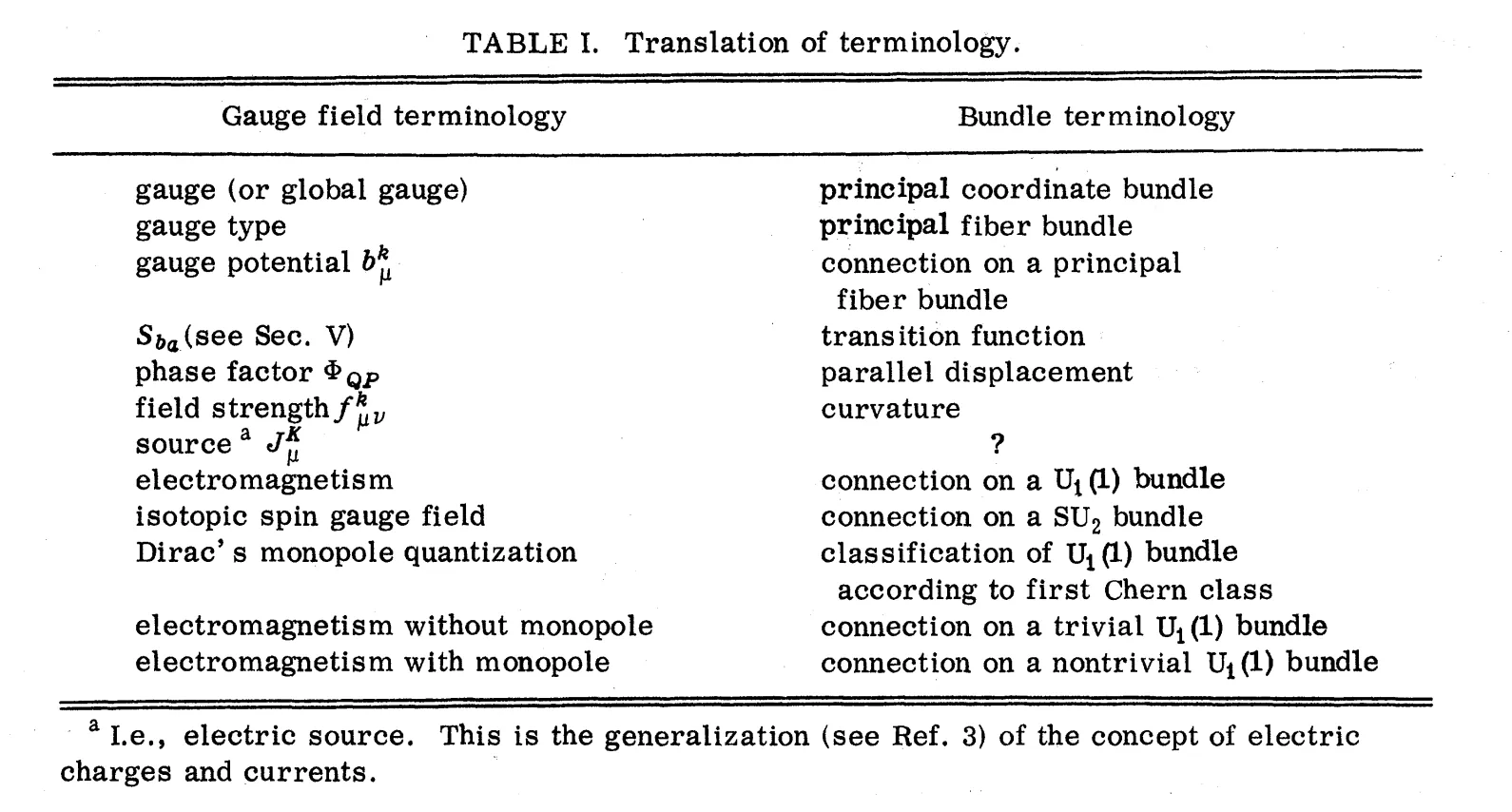
Ceci n'est pas un gluon
We discuss and then resolve a tension between how physicists treat gauge bosons and the celebrated "Wu-Yang dictionary", which identifies particle physics terminology with that of principal bundles and principal connections. We show how this tension leads to an interpretative choice that is not widely discussed in the physics literature. We then show how the same considerations present a dilemma for a recent "particle-first" approach to Yang-Mills theory due to Henrique Gomes. Either the particle-first approach has surplus structure as compared to principal-bundle-based approaches, or gauge bosons are not sections of vector bundles.
2603.19518Mar 2026
View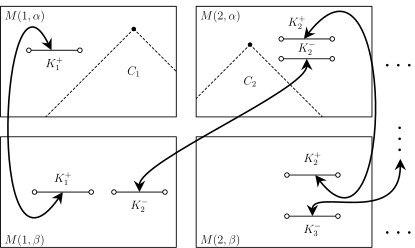
Observational Indistinguishability and the Beginning of the Universe
Can we infer whether all of physical reality began to exist? Several novel results are offered suggesting a negative verdict. First, a common strategy for defending a cosmic beginning involves showing that individual beginningless cosmological models are implausible. This strategy is shown to make an elementary error in confirmation theory. Second, two necessary (but not necessarily sufficient) conditions are offered for a cosmic beginning. Third, three extensions are offered to the Malament-Manchak theorems. The three extensions show that in almost all classical spacetimes, observers cannot collect sufficient data to determine whether the application conditions for the classic singularity theorems are satisfied or whether their spacetime satisfies the two necessary conditions for a cosmic beginning. Lastly, a reply is offered to the objection that the skeptical consequences of the three extensions can be overcome with induction. Importantly, all past singular dust FLRW spacetimes have observationally indistinguishable counterparts which, while sharing a number of important local properties, either do not include a singularity to the past of every point or else do not have the sort of time ordering intuitively required for a cosmic beginning.
2603.04159Mar 2026
View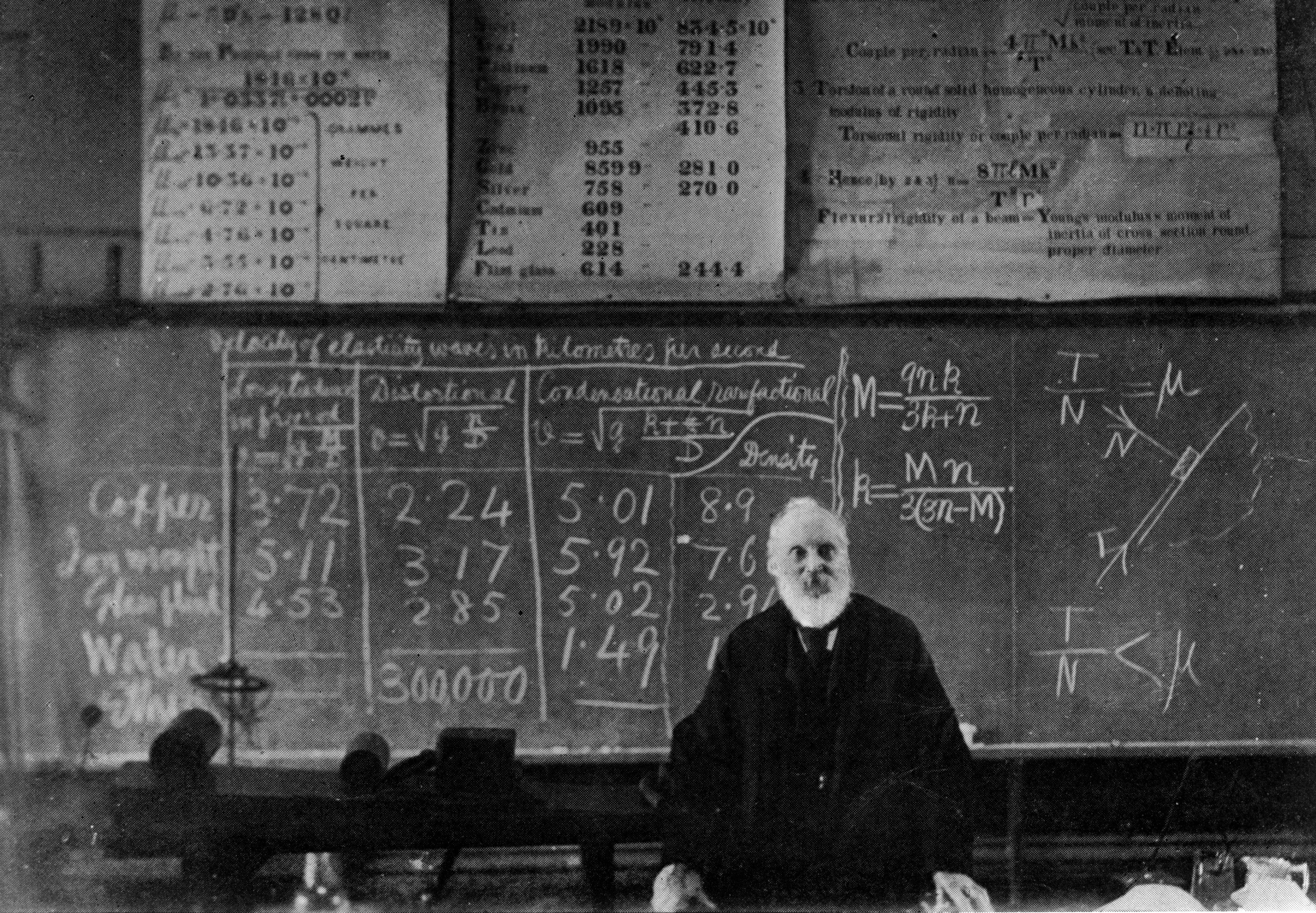
Lord Kelvin's Second Cloud
On April 27, 1900, William Thomson, better known as Lord Kelvin, delivered a visionary speech before the Royal Institution of Great Britain. In it, he presented two unresolved problems which, to him, appeared fundamental and unavoidable at the turn of the 20th century. He compared them to two clouds obscuring our understanding of physics. Dissipating these two clouds would eventually require the development of special relativity and quantum mechanics. This article revisits the second cloud which, contrary to what is often claimed in the literature, did not concern black-body radiation, but rather the specific heat of polyatomic molecules. To clarify this, the article aims to place Kelvin's speech within the historical context of the time and to situate it within the sequence of developments, from Kirchhoff to the first Solvay Conference in 1911, that marked the path of the extraordinary intellectual adventure that led to the birth of quantum mechanics. It will also be shown that Max Planck's initial motivation was not to solve the problem of the so-called "ultraviolet catastrophe."
2603.16902Mar 2026
View2603.03478A dimensional analysis path to $h$ and the Bohr atom structure
Traditionally, the Planck constant $h$ makes its debut appearance in quantum physics textbooks in the context of the blackbody radiation law and subsequently as a fundamental ingredient of the physics of the photoelectric effect and the Bohr atom. In this paper we consider an alternative timeline path (which could have taken place several years before the proposal of the Bohr atom) where a classical physics hydrogen atom is studied with dimensional analysis techniques in combination with empirical laws of blackbody radiation. The outcome of this ``classical physicist's'' approach is the identification of the correct fundamental Planck constant and the reconstruction of the energy and size scales of the Bohr atom.
2603.03478Mar 2026
View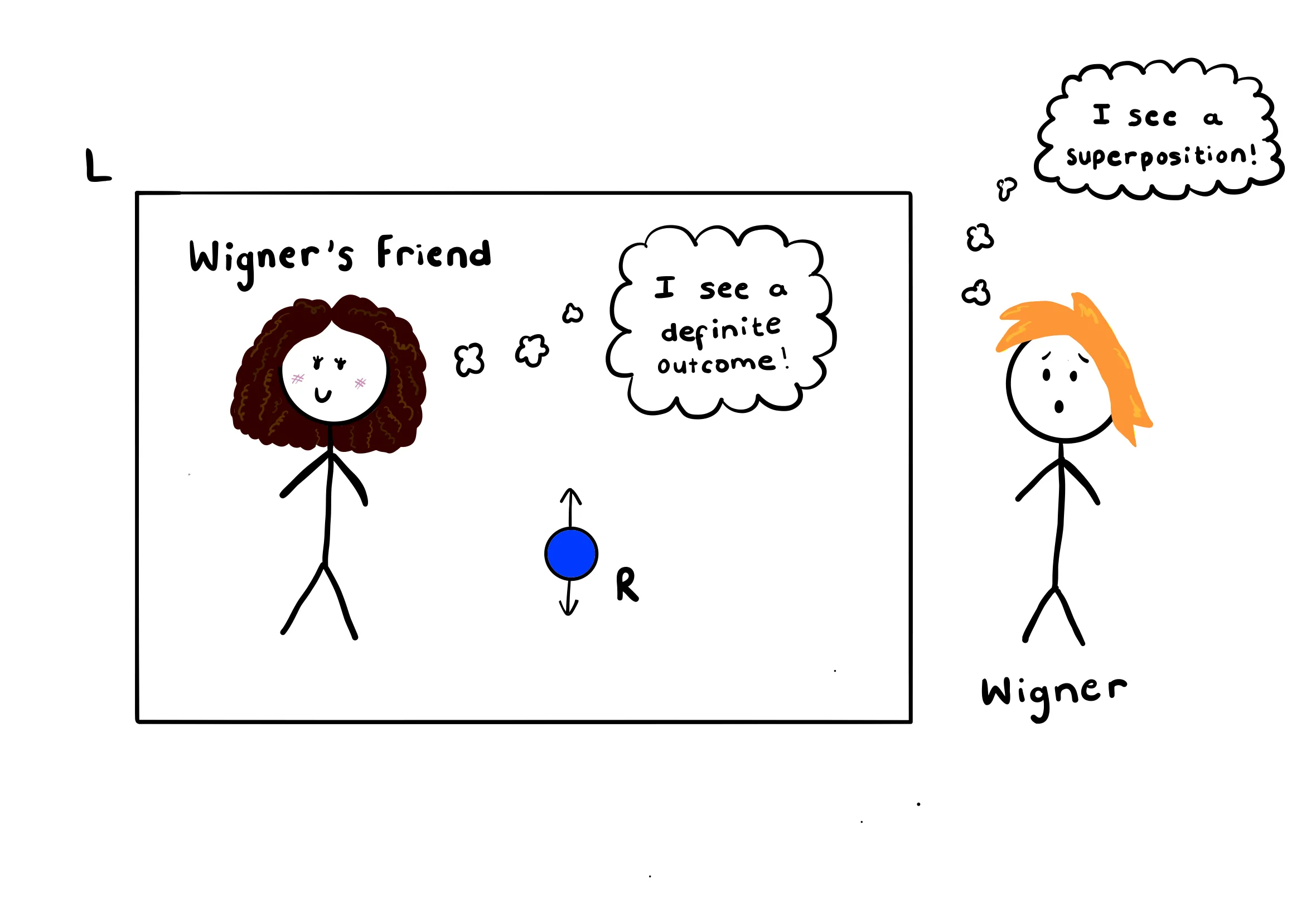
The informational observer in Relational Quantum Mechanics
Relational Quantum Mechanics (RQM) treats quantum states as observer-dependent facts rather than absolute properties. While this relational stance is conceptually attractive, it raises concerns about empirical confirmation, particularly in multi-observer scenarios. Existing responses within RQM focus on securing agreement between observers by strengthening the status, stability, or accessibility of recorded outcomes. However, they leave open a more basic question: what grounds the persistence of an observer across time? Scientific observation presupposes stable records and the capacity to relate outcomes across successive measurements. We argue that the minimal definition of the observer in RQM as a merely interacting physical system is insufficient to support this requirement. We propose a complementary account of the observer that distinguishes physical interaction from informational coherence, and show how this distinction supports empirical confirmation in Wigner's friend-type scenarios.
2603.02978Mar 2026
View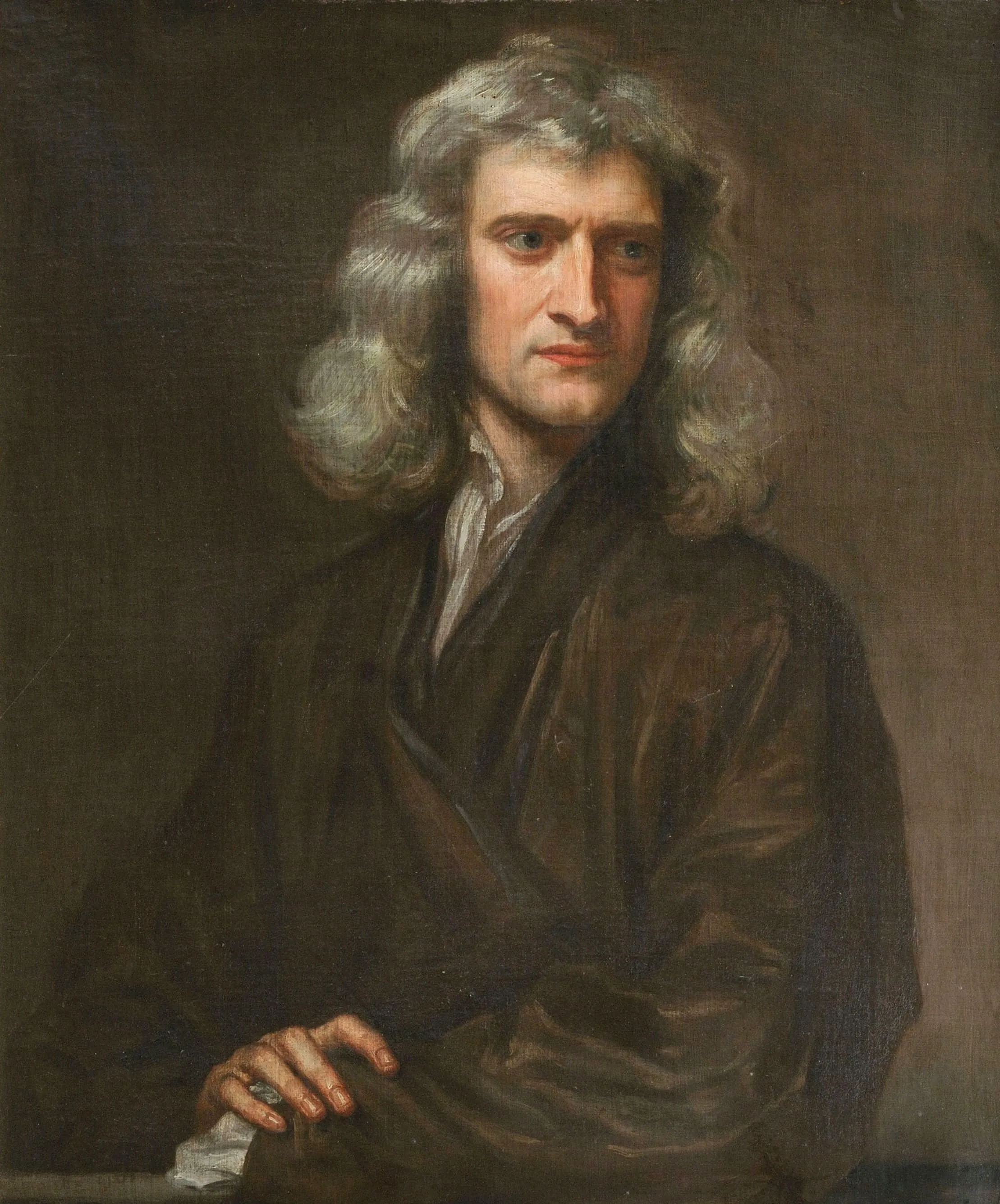
Portrait of the mathematician as a young man: Revisiting Trinity's Tayler picture
A 17th-century oil painting by an unknown artist, once owned by the Tayler family and now in the collection of Trinity College, Cambridge, is currently identified as a portrait of a young Isaac Barrow. The sitter is shown pointing to a proposition in Barrow's 1655 edition of Euclid's Elements, but the portrait bears little resemblance to other depictions of Barrow. Moreover, Barrow is unlikely to have posed with that book, which appeared in print eight months after he had left England on a four-year tour of the Continent. Plausible alternatives are that the portrait is of Francis Willughby or Isaac Newton, both of whom resembled the man pictured and may be characterized as disciples of Barrow. If the Tayler were Newton's portrait, it could shed light on the patronage that allowed him to rise from undergraduate servant ("subsizar") to Lucasian Professor of Mathematics in only five and half years.
2603.01280Mar 2026
View2603.15638The Birth of Quantum Mechanics and the Dirac Equation
This paper commemorates the 100th anniversary of quantum mechanics as a theoretical model of atomic phenomena. We discuss briefly the foundational contributions of Werner Heisenberg, Wolfgang Pauli, Erwin Shrodinger, and Paul Dirac to the development of quantum theory. Special attention is given to the often-overlooked contributions of Charles Galton Darwin and Hendrik Anthony Kramers. We examine the three periods of quantum theory development: foundation, development, and the modern era connected with information science. The paper also highlights current challenges facing quantum theory, including the quantum-classical boundary, quantum gravity, and the mysteries of dark matter and dark energy. One of the goals of this article is to extend the recent review in J. Phys. A: Math. Theor. 58 (2025) 053001 primarily by a a more detailed consideration of the period of formation of quantum mechanics.
2603.15638Feb 2026
View2602.21324De-Idealizing De-Idealization: Beyond Full Reversal
There is a question of whether de-idealization is needed for justified use of -- for 'checking' -- idealizations. We argue that the standard philosophical account of de-idealization has become too idealized, but that this does not preclude the possibility of justificatory practices which show how models can be used to make inferences about the world. In turn, motivated by examples in physics, we provide a more expansive and practice-driven account of de-idealization by relaxing the standards for closeness to more realistic theoretical items, identifying at least three kinds of procedures for de-idealization: intra-model, inter-model, and measurement de-idealizations. These examples highlight how idealizations can be -- and indeed have been -- scrutinized within physics without appealing to the philosopher's idealized notion of de-idealization.
2602.21324Feb 2026
View2602.14601The road of quantum entanglement: from Einstein to 2022 Nobel Prize in Physics
We explain the achievements that were awarded 2022 Nobel Prize in Physics, as well as the preceding and the later developments. The main notions and historic cornerstones of Bell inequalities, the related researches on quantum entanglement are reviewed, and the key physical ideas are emphasized. Among the early work, C. S. Wu's contributions using polarization-entangled photons from electron-positron annihilation are introduced.
2602.146014Feb 2026
View2602.14059A Huygens-Leibniz-Lange framework for classical mechanics
I discuss the physical basis of classical mechanics, such as expressed commonly using the framework of Newton's Principia. Newton's formulation of the laws of motion is seen to have quite a few ambiguities and shortcomings. Therefore I offer an alternative set of laws, based in particular on ideas of his contemporaries Huygens and Leibniz with a crucial addition by Ludwig Lange, which avoids the problems with Newton's formulation. It is shown that from these laws of motion all the usual results of classical mechanics, as it concerns the motion of idealized point masses, can be rederived. The application of these principles to relativistic point particles is discussed.
2602.14059Feb 2026
View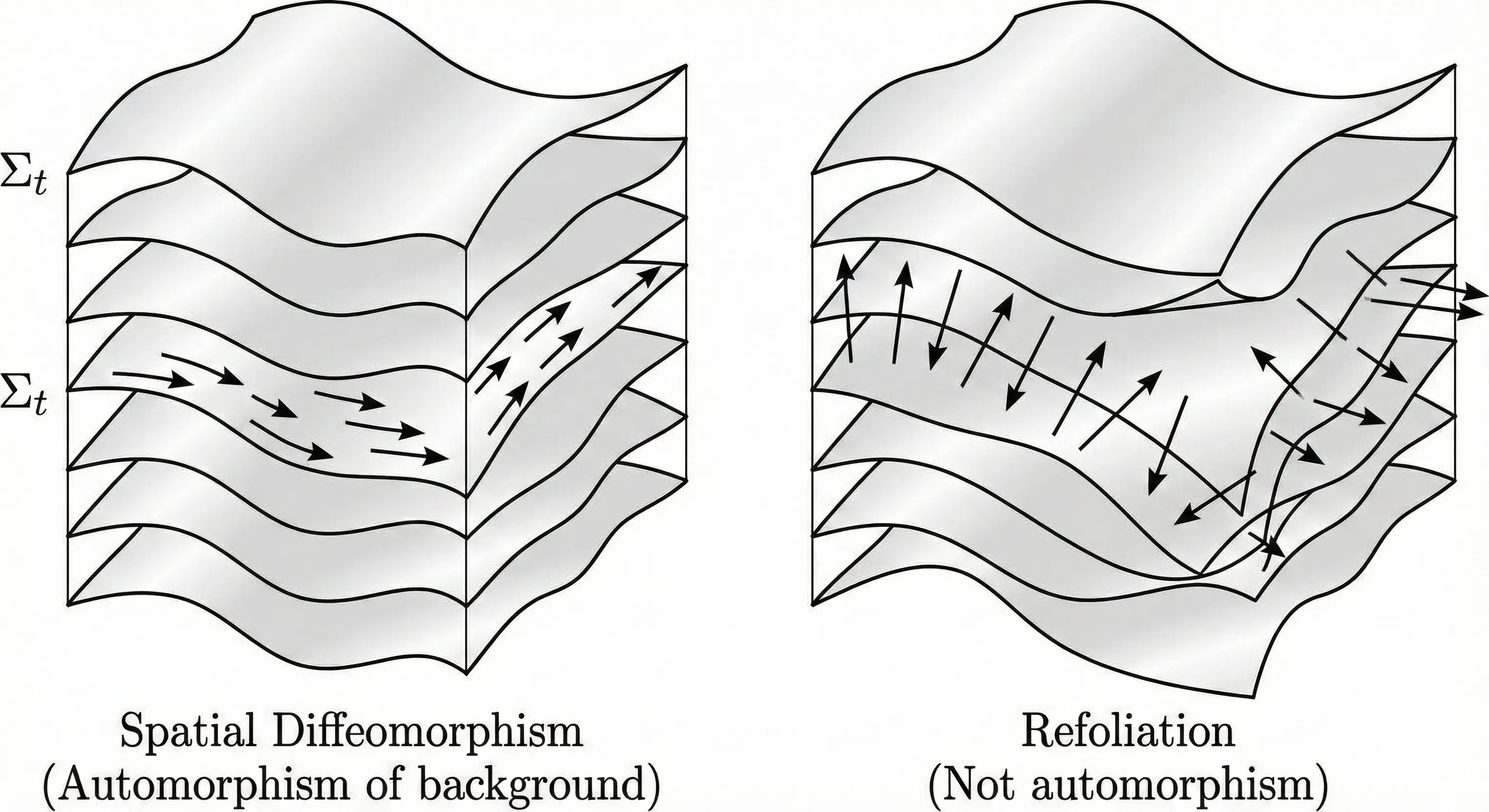
Making Symmetry Explicit: The Limits of Sophistication
Symmetry is often treated in philosophy of physics as an interpretive problem. A particularly lively dispute concerns local symmetries: do they indicate surplus structure that ought to be expunged, or are they merely a harmless redundancy? One influential response favours the second option for certain theories -- those dubbed internally sophisticated. And indeed, in much of physics practice, local symmetries are left implicit: one simply works "up to isomorphism'' without pausing over invariance. But not always. In some settings, local symmetry and invariance become pressing practical concerns for physicists. Yet philosophical discussions of sophistication have paid little sustained attention to when, and why, this happens. Surveying textbook general relativity (GR) and gauge theory, I identify the settings in which diffeomorphism invariance or gauge invariance must be handled explicitly. (Here a setting is a choice of representational framework or background assumptions within which one formulates and uses the theory -- for instance, linearisation, an initial-value formulation, or a Hamiltonian $3+1$ formalism.) I propose an operational criterion -- background-relative sophistication (BRS) -- and argue that it accounts well for the pattern: it marks just where symmetry can stay implicit and where it must be made explicit. Quantum and subsystem settings raise a further difficulty: there, certain tasks (superposition and gluing) force symmetry into view even for theories that are BRS.
2602.13708Feb 2026
View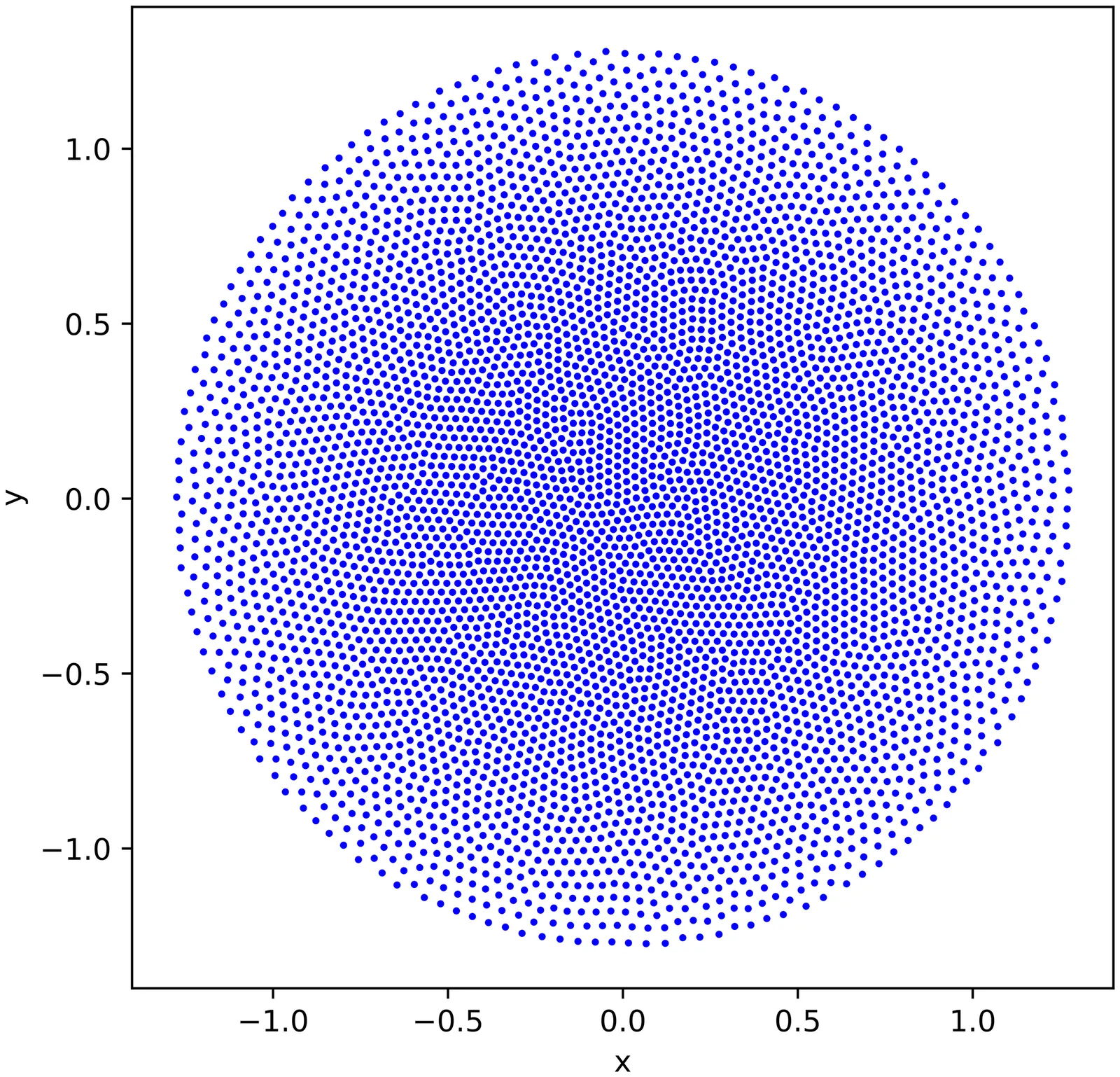
Scale Invariance, Variety and Central Configurations
Scale invariance has received very little attention in physics. Nevertheless, it provides a natural conceptual foundation for a relational understanding of the universe, where absolute size loses meaning and only dimensionless ratios retain physical significance. We formalize this idea through the $N$-body problem, introducing a scale-invariant function--the variety, $V$--built from the square root of the center-of-mass moment of inertia and the Newtonian potential. Critical points of $V$, known as central configurations, correspond to special particle arrangements that preserve their shape under homothetic collapse or expansion. Numerical exploration of these critical points reveals that even slight deviations from the absolute minimum of $V$, which corresponds to a remarkably uniform configuration, lead to the spontaneous formation of filaments, loops, voids and other patterns reminiscent of the cosmic web. This behavior is a consequence of the intrinsic structure of shape space--the space of configurations modulo translations, rotations and dilatations--in which regions of higher variety act as attractors. Our results suggest that scale-invariant dynamics not only captures the relational nature of physical laws but also naturally generates organized patterns, offering a novel perspective on the formation of cosmic structures and on the emergence of a gravitational arrow of time from scale-invariant, relational dynamics.
2602.11225Feb 2026
View
Between equilibrium and fluctuation: Einstein's heuristic argument and Boltzmann's principle
We critically revisit Einstein's 1905 heuristic argument for lightquanta, considering its internal coherence and the scope of its applicability. We argue that Einstein's reasoning, often celebrated for its originality, is ambiguous because it can be understood as a fluctuation or as a comparison between equilibrium states. A historical and conceptual analysis of Einstein's use of Boltzmann's principle in those years reveals his evolving stance on its meaning and the role of probability, as well as his persistent doubts about the nature of radiation. We use our analysis to examine the limitations of extending the notion of Einstein's lightquanta across the electromagnetic spectrum: the relevant parameter is not the frequency, but the occupancy number.
2602.10738Feb 2026
View2602.09397Historical Debates over the Physical Reality of the Wave Function
This paper provides a detailed historical account of early debates over wave-function realism, the modern term for the view that the wave function of quantum theory is physically real. As this paper will show, the idea of physical waves associated with particles had its roots in work by Einstein and de Broglie, who both originally thought of these waves as propagating in three-dimensional physical space. De Broglie quickly turned this wave-particle duality into an early pilot-wave theory, on which a particle's associated phase wave piloted or guided the particle along its trajectory. Schrödinger built on de Broglie's phase-wave hypothesis to provide a comprehensive account of the nascent quantum theory. However, Schrödinger's new undulatory mechanics came at the cost of replacing de Broglie's phase waves propagating in physical space with a wave function propagating in a system's abstract configuration space. The present work will argue that this move from three-dimensional physical space to a many-dimensional configuration space was a key reason why the founders of quantum theory uniformly abandoned the physical reality of the wave function. This paper will further clarify that de Broglie introduced two distinct pilot-wave theories, and will then argue that it was Bohm's rediscovery of the second of these two pilot-wave theories over two decades later, as well as Bohm's vociferous defense of wave-function realism, that were responsible for resurrecting the idea of an ontological wave function. This idea ended up playing a central role in Everett's development of the many-worlds interpretation.
2602.093971Feb 2026
View2602.08931Spacetime singularities and incompleteness: epistemic and ontological remarks
I argue that spacetime singularities entail no ontological commitment to material entities. First, I show that Penrose's singularity theorem is best understood as a theorem of incompleteness, it demonstrates the failure of specific spacetime models within General Relativity (or any theory incorporating the Raychaudhuri equation) under certain general conditions. Although this has been done before, I adopt a novel approach based on differentiating between physical and purely formal assumptions in the axiomatic foundation of general relativity. Next, I compare Penrose's result with Gödel's incompleteness theorem, highlighting key similarities and differences. Finally, I draw philosophical conclusions regarding the limits and prospects of our epistemic reconstructions of the physical world.
2602.08931Feb 2026
View
From Florence to Fermions: a historical reconstruction of the origins of Fermi's statistics one hundred years later
Aim of this paper is to retrace the path that led the young Enrico Fermi to write his paper on the statistics of an ideal monatomic gas. This discovery originated in his interest, which he had shown since his formative years, in the absolute entropy constant and in the problems he highlighted in Sommerfeld's quantization in the case of identical particle systems. The fundamental step taken by Fermi in writing his work on statistics was to apply the Exclusion Principle, formulated for electrons in an atom and which could therefore have been a pure effect due to dynamics, to a system of non-interacting particles.
2602.04484Feb 2026
ViewPage 1 of 6