164 papers
A Schrödinger-like equation for the Thermodynamics of a particle in a box
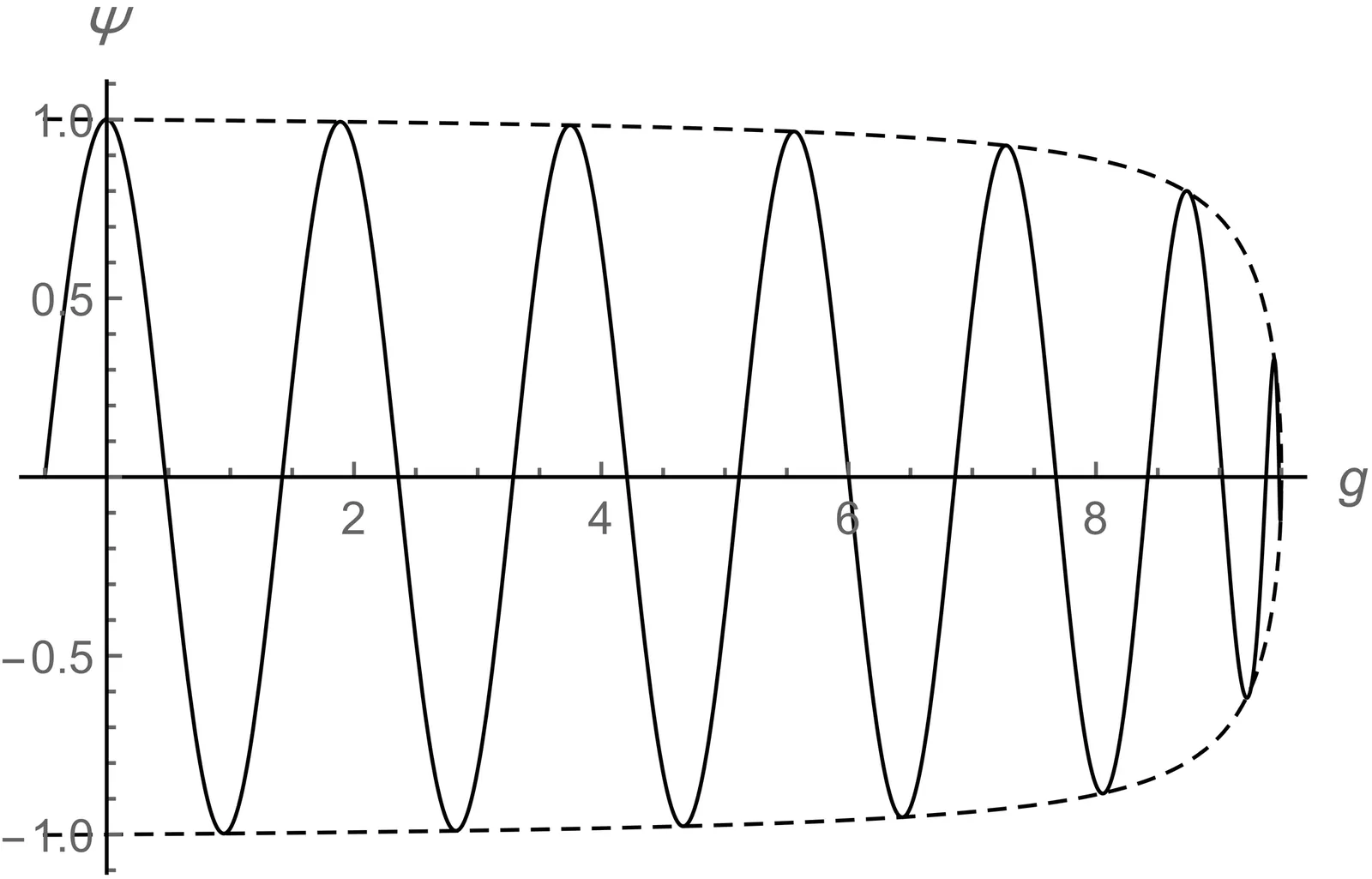
The particle in an expanding/contracting 1-dimension box is revisited in action-angle like variables with direct thermodynamic interpretation. An angle dependent potential is proposed accurately describing the mechanical behavior while also capturing thermodynamic evolution -- entropy production -- within a canonical Hamiltonian framework. Heat transfer at constant volume is analyzed, and the derived thermal conductance matches the universal quantum of heat conductance $G_{Q}$ in the quantum limit. Having a Hamiltonian scheme interpretable in thermodynamic terms, a Schrödinger-like wave equation is formulated whose wavefunction solutions contain the information about the entropy evolution. The results show exact agreement with 'classical' results for non abrupt changes. Finally, comparisons with a pure quantum mechanical treatment of the wave function in an expanding box confirm consistency in quasi-static regimes and reveal adiabaticity breakdown under far-from-equilibrium conditions.
2603.28820Mar 2026
View 2603.28819
Analytic solutions for the longitudinal and the transverse components of the vector potential in the Lorenz gauge
We derive analytic solutions for the longitudinal and the transverse components of the vector potential in the Lorenz gauge for an arbitrary time-dependent charge-current distribution.
2603.28819Mar 2026
View2603.25323A note on Gurzadyan theorem
The issue and proof of Gurzadyan theorem are presented concisely, avoiding tedious and unnecessary calculations that would mask what is essential. The goal is to provide a good mathematical and physical understanding of the theorem, making you want to learn more about its use in cosmology.
2603.25323Mar 2026
View2603.24406Criterion for the Thermal Radiation Spectrum in Classical Physics
Two criteria for the spectra of relativistic waves are proposed. Zero-point radiation provides the identity representation of the conformal group in Minkowski spacetime. Thermal radiation provides the irreducible representation of the conformal group in Minkowski spacetime which involves exactly one scaling parameter (the temperature) which is also time-stationary in a Rindler frame. Zero-point radiation is the limit of thermal radiation as the temperature goes to zero. Crucially, both zero-point radiation and thermal radiation take basically the same functional form in a Rindler frame. For relativistic scalar waves, a full derivation of the Planck spectrum including zero-point radiation is obtained with the classical theory.
2603.24406Mar 2026
View2603.21333Contractions of the relativistic quantum LCT group and the emergence of spacetime symmetries
Advances in the study of relativistic quantum phase space have established the set of Linear Canonical Transformations (LCTs) as a candidate for the fundamental symmetry group associated with relativistic quantum physics. In this framework, for a spacetime of signature $(N_+,N_-)$, the symmetry of the relativistic quantum phase space is described by the LCT group, isomorphic to the symplectic Lie group $Sp(2N_+,2N_-)$, which preserves the canonical commutation relations (CCRs) and treats spacetime coordinates and momenta operators on an equal footing. In this work, we investigate the contraction structure of the Lie algebra associated with the LCT group for signature $(1,4)$, clarifying how familiar spacetime symmetry groups emerge from this more fundamental quantum phase space symmetry.Using the Inönü-Wigner group contraction formalism, we examine each limit case corresponding to the possible combinations of asymptotic values of two fundamental length scale parameters associated with the theory, namely a minimum length $\ell$ and a maximum length $L$, which may be identified respectively with the Planck length and the de Sitter radius. We explicitly analyze how contractions of the LCT Lie algebra lead to the physically relevant de Sitter algebra $\mathfrak{so}(1,4)$ and, in the flat-curvature limit, to the Poincaré algebra $\mathfrak{iso}(1,3)$ of four-dimensional spacetime. This provides an explicit mechanism through which relativistic spacetime symmetry can emerge from a deeper quantum symplectic structure of phase space.
2603.21333Mar 2026
View2603.14429Self-Force of a Dirac String: An Explicit Calculation
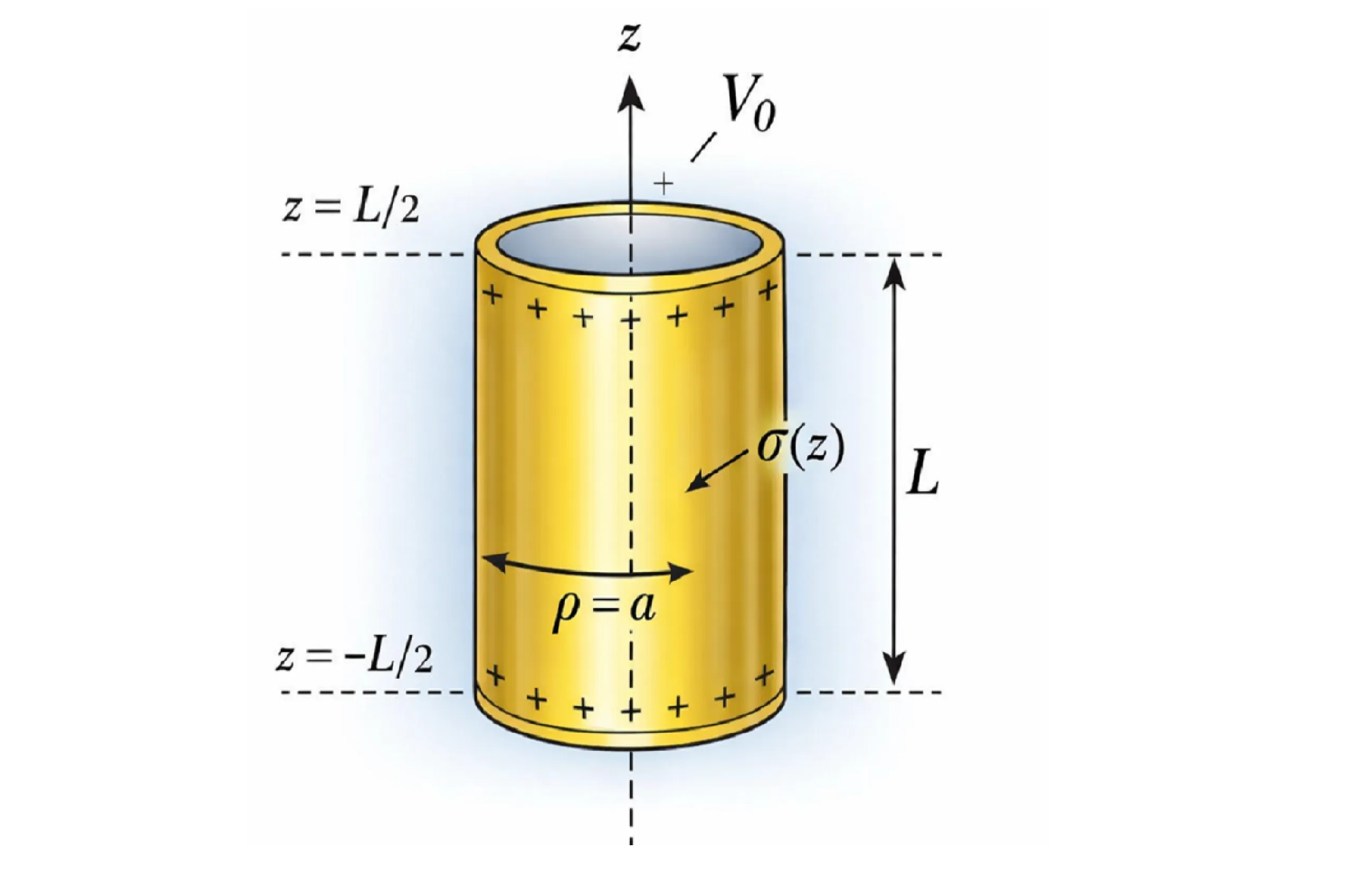
A Dirac string can be modeled as a semi-infinite solenoid carrying a fixed magnetic flux. Dirac pointed out that such a string should experience a nonvanishing and divergent self-force, but explicit calculations are rarely shown. Motivated by a recent comment by McDonald, we present a direct and elementary derivation of this self-force. Treating the string as a stack of current loops, we compute the axial force produced by the radial magnetic field generated by the rest of the solenoid. The resulting force, $F=Φ^2/(2πμ_0 a^2)$, diverges as the solenoid radius $a\to0$ with flux $Φ$ fixed, making explicit the singular nature of the Dirac string.
2603.14429Mar 2026
View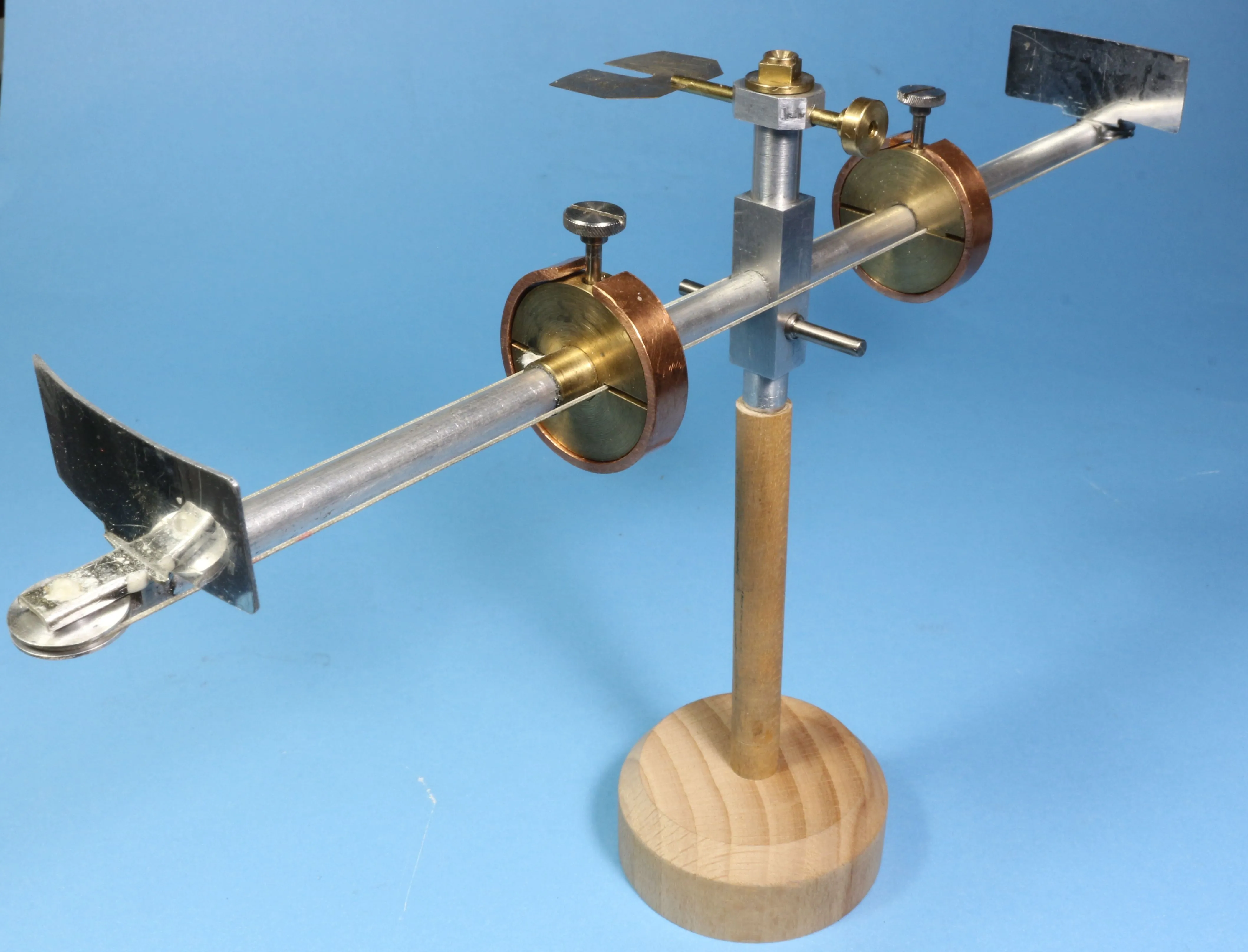
About the dissipative Newton equation
The thermodynamic basis of classical mechanics is presented. In this framework, ideal Newtonian mechanics emerges as the zero-dissipation limit of a more general, dissipative theory. The thermodynamic approach predicts a novel dissipative contribution to the momentum that depends on the applied force, leading to a damping coefficient with a specific, experimentally testable dependence on the inertial mass and the spring constant. A torsion balance experiment with variable moment of inertia has been designed to measure this effect. Several known equations, including a thermodynamic version of the Eliezer-Ford-O'Connell equation of radiation reaction, are recovered as special cases.
2603.13989Mar 2026
View2603.13449Zeeman effect in hydrogen treated in classical physics with classical zero-point radiation
The Zeeman effect for the low resonant energy states of hydrogen is treated with classical electrodynamics including classical zero-point radiation. The electron is regarded as a classical charged particle in a Coulomb potential. The "space quantization" of old quantum theory, the Sommerfeld relativistic result, and the Stern-Gerlach experiment are all considered.
2603.13449Mar 2026
View2603.13448Relativistic hydrogen in classical electrodynamics with classical zero-point radiation
Classical electrodynamics including classical electromagnetic zero-point radiation leads to a ground state and resonant excited states for a charged particle in a Coulomb potential. These resonant states correspond to integer values of the action variables analogous to those appearing in the Bohr-Sommerfeld theory of the hydrogen atom. The work on classical zero-point radiation reported here is a continuation of the analysis reported in 1975, but with the addition of the ideas of relativity and resonance between the charged-particle orbit and classical zero-point radiation.
2603.13448Mar 2026
View2603.13446Classical linear oscillator in classical electrodynamics with classical zero-point radiation
A classical linear oscillator is treated in the small amplitude limit so that it will be approximately relativistic. The oscillator involves a charge particle in a linear potential in classical zero-point radiation. It is found that the ground state is energy balanced with the power lost in radiation emission equal to the average power gained from resonance with the classical zero-point radiation. Also the oscillator is found to have resonant excited states where the energy emitted as dipole radiation is balanced on average by the energy gained from the zero-point radiation when the action variable of the mechanical system is given by J=(n+1/2)(h/2pi).
2603.13446Mar 2026
View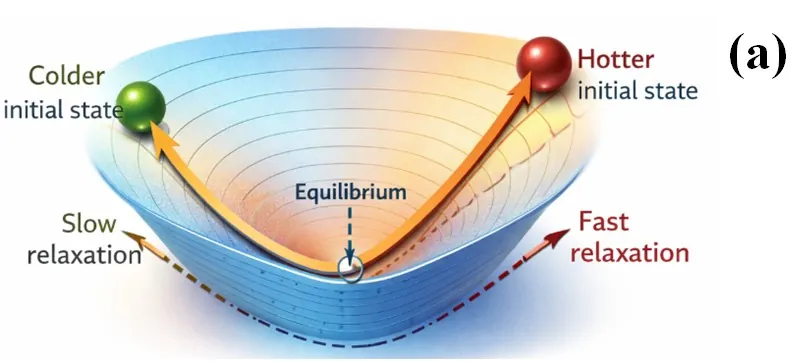
Mpemba Effect in Many-Body Systems Near Equilibrium
The Mpemba effect, in which a system initially farther from equilibrium relaxes faster than a closer one, is often associated with nonlinear or far-from-equilibrium dynamics. We show that this effect can arise entirely within the linear-response regime of many-body systems. In reciprocal systems, a uniform Mpemba effect emerges for three or more degrees of freedom via spectral separation of fast and slow modes. Breaking reciprocity renders the relaxation operator non-normal, enabling a strict componentwise Mpemba effect, with the hotter state relaxing faster even in every individual degree of freedom.
2603.11707Mar 2026
View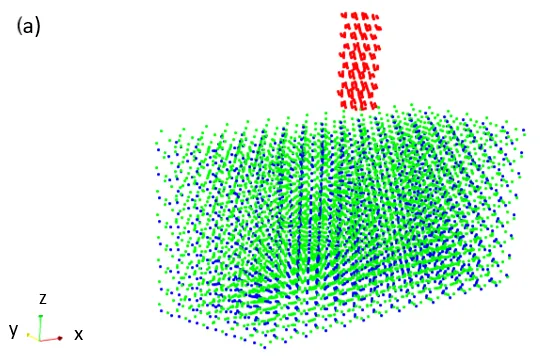
Nonlinear potential field in contact electrification
The cause of electron transfer in contact electrification is one of the most hotly debated physical problems today. In this study, the electron transfer is hypothesized to be partly driven by the surface dipole induced potential during contact. This phenomena is demonstrated by a combination of atomistic field theory (AFT) and molecular dynamics (MD) simulation. A representative contact system of carbon and silicon dioxide was chosen for its excellent tribo-tunneling power output performance. The results reveal the existence of a nonlinear potential field as well as the existence of a separation dependent potential barrier at the contact interface. Possible scenarios of triboelectric charge transfer are discussed in light of these results. These results are critical to the fundamental understanding of contact electrification.
2603.11144Mar 2026
View2603.08456Physical properties of elementary particles: Inertia and Interaction
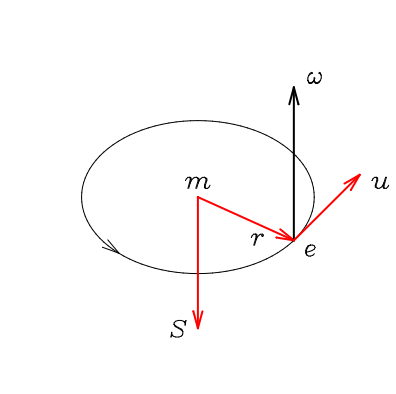
Matter has two physical properties: Inertia and interaction. If we define the center of mass of an elementary particle in relation to its inertia, and a center of interaction in relation to its interactive properties, there are only two possibilities to describe this elementary particle: that both points are the same or that they are different. If they are the same, what we describe is the point particle model, while if we consider them to be different, what we obtain is the description of an elementary spinning particle. If the center of interaction or center of charge is moving at the speed of light, completely determines also the dynamics of the center of mass, and when quantizing this model satisfies Dirac's equation. We obtain the classical description of the spinning Dirac particle.
2603.08456Mar 2026
View2603.05533Universal Displacements in Linear Strain-Gradient Elasticity
We study universal displacement fields in three-dimensional linear strain-gradient elasticity within the Toupin-Mindlin first strain-gradient theory. Building on the approach of Yavari (2020), we derive, for each material symmetry class, the universality PDEs obtained by requiring the equilibrium equations (in the absence of body forces) to hold for any material in that class, and we determine the complete set of universal displacements. Using the full symmetry classification together with compact matrix representations of the elasticity tensors, we provide explicit characterizations for all 48 strain-gradient symmetry classes, including centrosymmetric and chiral classes. For several high-symmetry classes, the strain-gradient universality PDEs impose no additional restrictions beyond the classical ones, so the universal displacement families coincide with those of classical linear elasticity (for example, the isotropic classes SO(3) and O(3)). For lower symmetry classes, the strain-gradient universality PDEs can be stricter than their classical counterparts, so the universal displacements form proper subsets of the classical universal displacement families due to additional higher-order differential conditions.
2603.05533Mar 2026
View2603.02350Hamilton Revised: The Action Principle for Initial Value Problems
We present the variational action principle for initial value problems in classical, conservative-force point particle mechanics. We rigorously derive this formulation by taking the classical limit of the Schwinger-Keldysh expression for the time dependence of the expectation value for operators in quantum mechanics. We clarify the connection between the variation of the position and the variation of the velocity of a particle when implementing Hamilton's Principle in deriving the Euler-Lagrange Equations. We show that both the plus and minus Keldysh paths (of the average and difference of the forward/backward paths) have classical paths and fluctuations -- unlike the common perception that the minus path provides the fluctuations around the single classical solution given by the plus path -- and that the fluctuations of both paths are crucial for the correct normalization of the classical limit. The classical limit yields "initial conditions" and equations of motion for the minus paths such that the unique classical solution for the minus paths is that they are identically zero, and, fascinatingly, that the minus paths' solution propagates backwards in time; thus one does not need to set the minus paths to zero by hand when taking the classical limit of the Schwinger-Keldysh formalism. We note implications for the classical and quantum mechanics of non-holonomic constraints and quantum field theories with gauges dependent on the derivatives of the fields.
2603.02350Mar 2026
View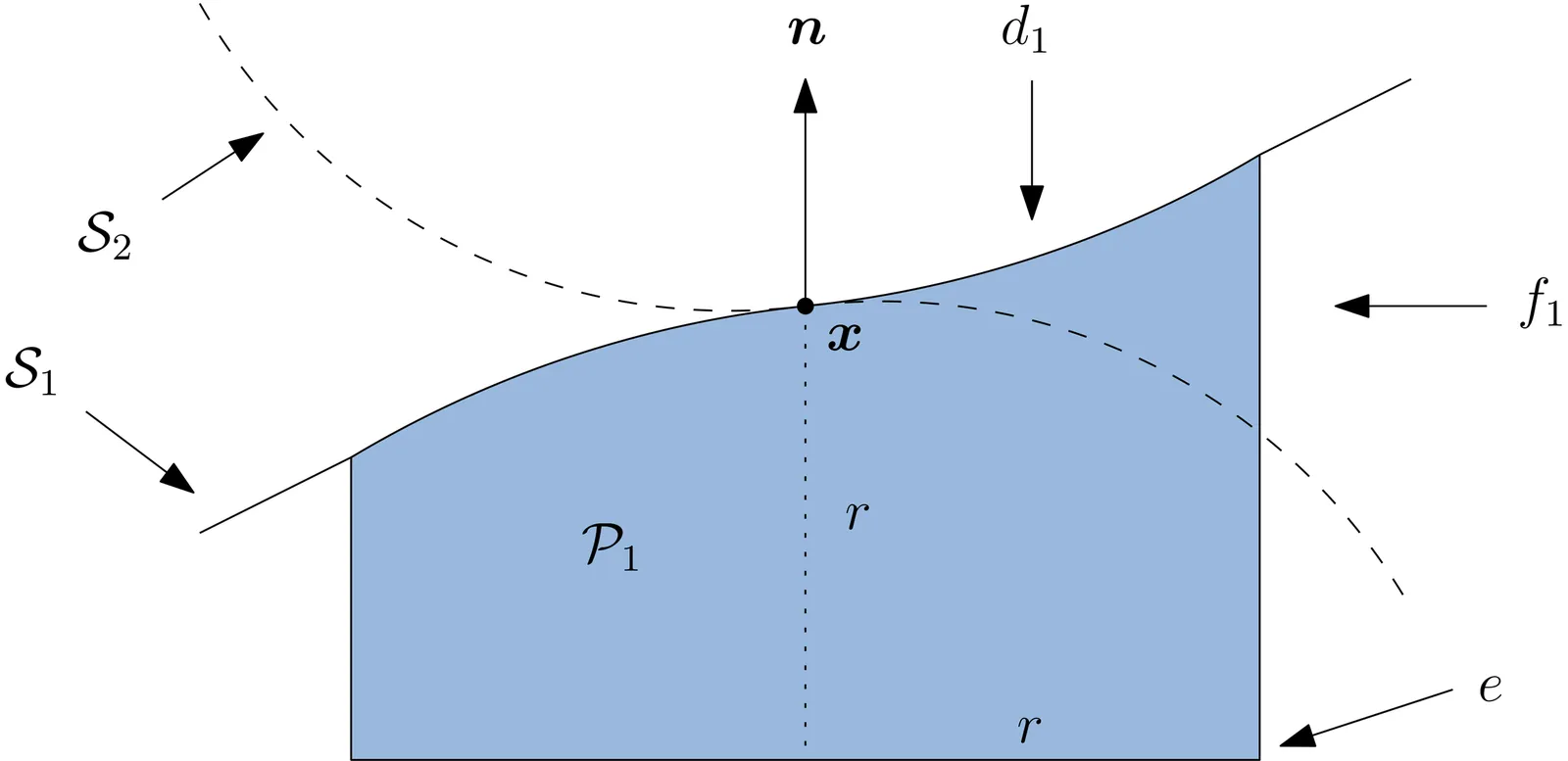
Balance laws versus the Principle of Virtual Work and the limited scope of Noll's theorem
The relationship between balance laws and the Principle of Virtual Work as well as the structure of contact interactions in continua remain foundational issues in Mechanics. In this work, we revisit these issues within the distributional framework emphasized by Paul Germain. We show that while the Principle of Virtual Work implies balance of forces and moments for $n$th-gradient continua, balance laws alone do not suffice to characterize equilibrium for $n \geq 2$. We then reexamine Noll's classical theorem asserting that surface contact forces depend solely on the unit normal to the surface and identify the precise role of his additional assumptions, namely the absence of edge and wedge contact interactions and the boundedness of the surface contact density on the space of oriented surfaces. We demonstrate that these hypotheses fail for general higher-gradient continua. Consequently, the presence of curvature-dependent surface contact forces in such materials does not conflict with Noll's theorem and refutes his claim of their nonexistence.
2603.00327Feb 2026
View2603.00219Still The New Classical Relativistic Equation of Charge Motion in an Electromagnetic Field
The non-relativistic Goedecke equation (1975), which describes the motion of a point charge taking into account the radiation reaction, has no "runaway" solutions. A "physical" method of covariant generalization of this equation is proposed, a special case of which is based on the Lorentz transformations in a coordinate--free covariant representation. Two equivalent forms of a new classical relativistic equation of motion of a point charge are obtained. It is shown that the Abraham--Lorentz--Dirac (ALD) and the Mo--Papas (MP) equations are approximate consequences of the presented theory.
2603.00219Feb 2026
View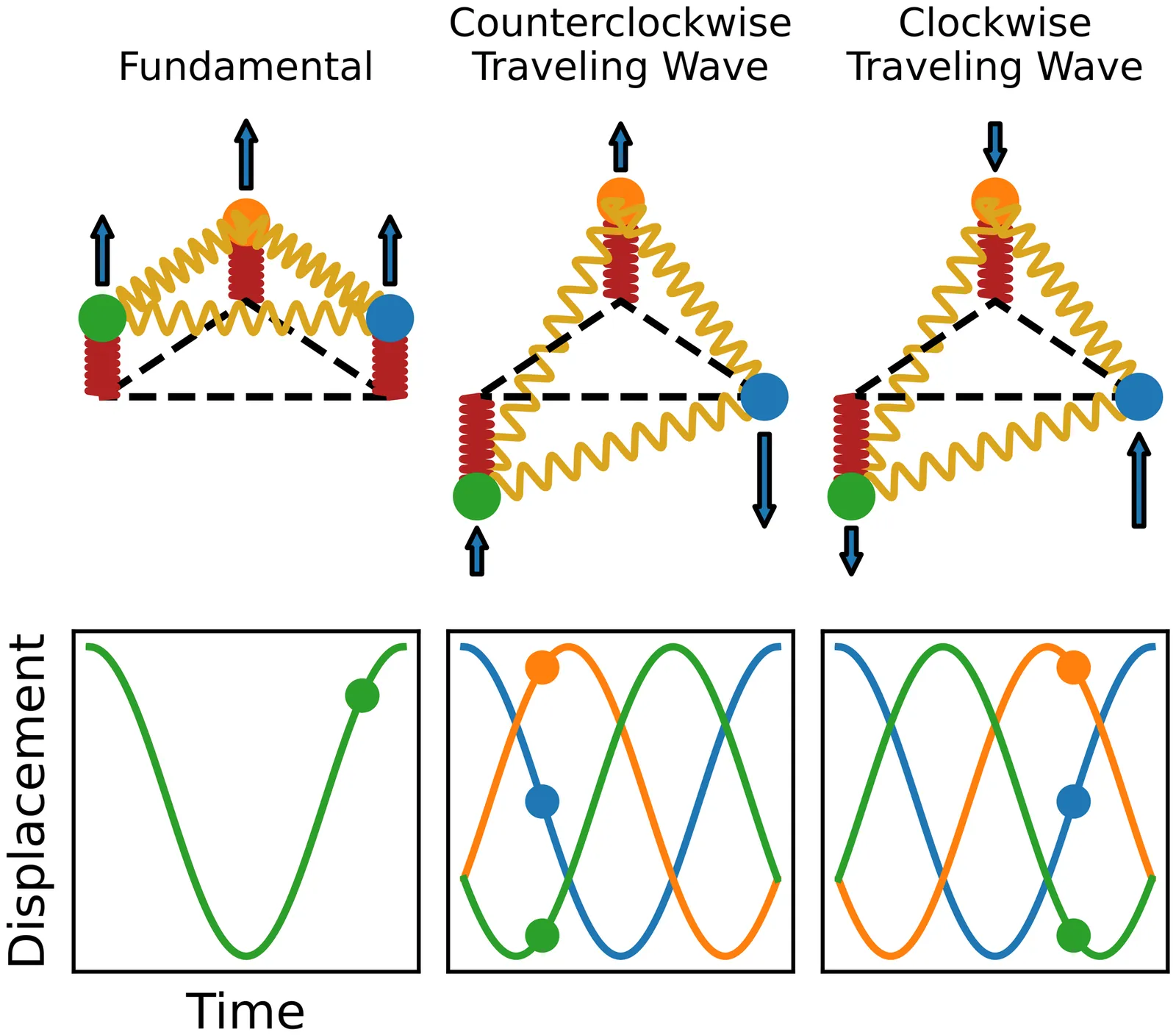
Nonlinear stabilization of chiral modes in space-time modulated parametric oscillators
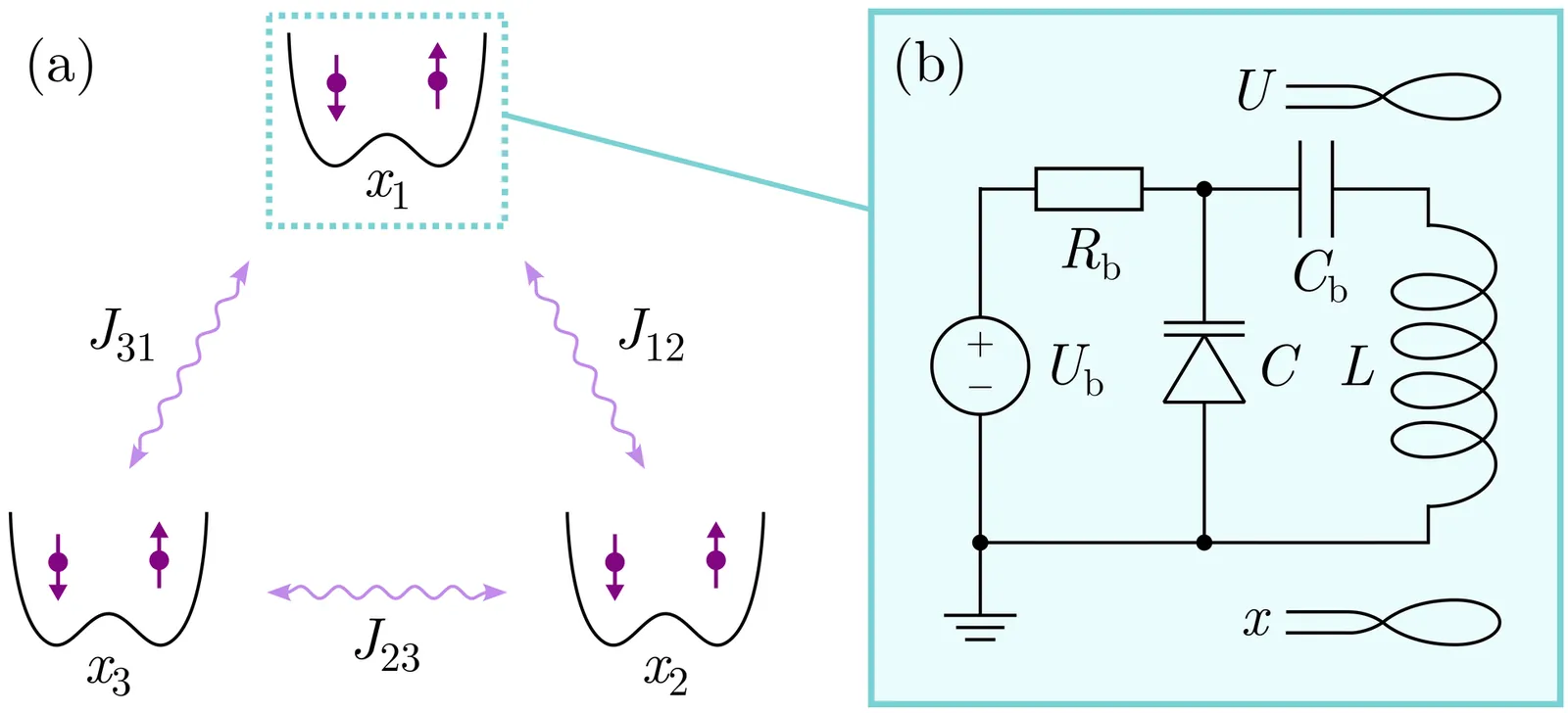
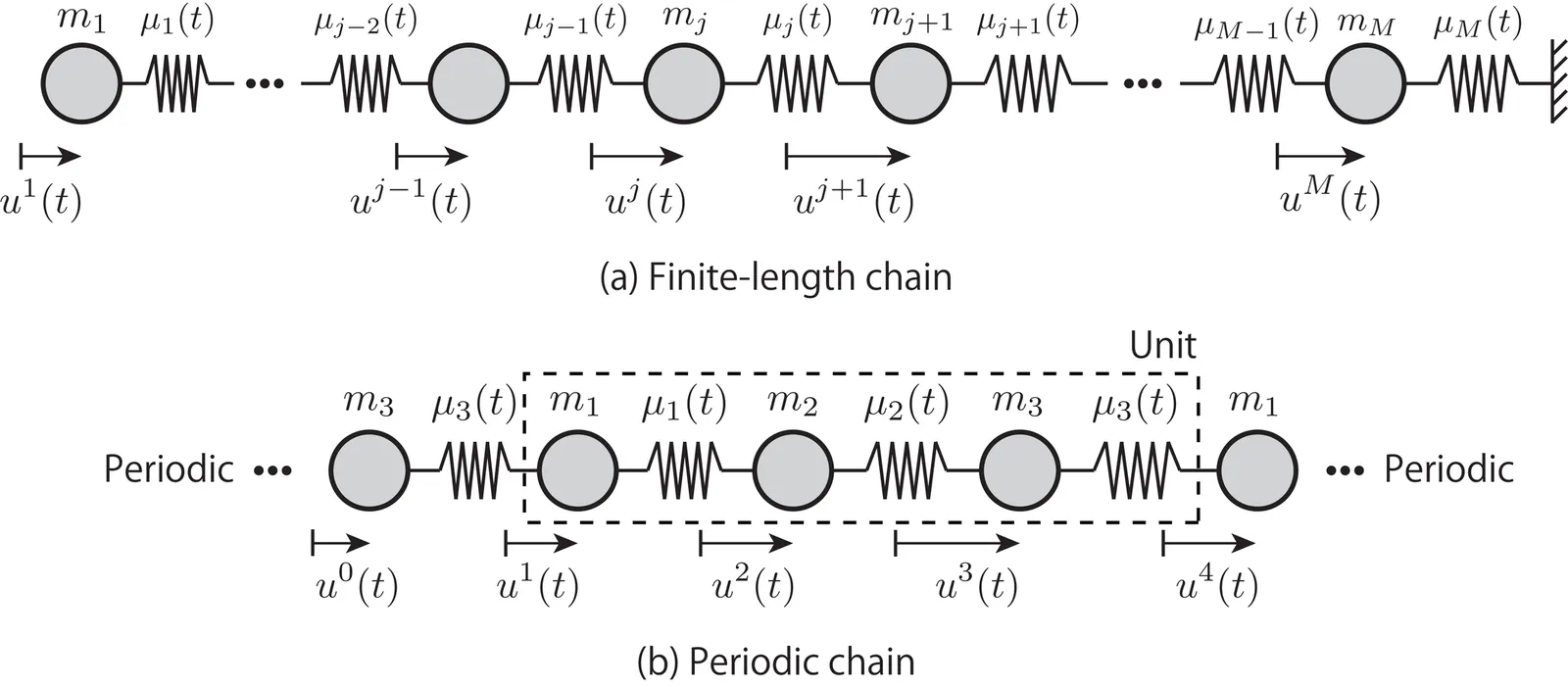
Phase control of parametric modulation in coupled oscillator networks enables sculpting of dynamical states with desired spatiotemporal symmetries. Symmetry-aware Floquet analysis successfully predicts such states in linear systems, but whether their symmetry properties persist under nonlinearity remains largely unexplored. Here, we establish the existence of nonlinear chiral steady states in a trio of coupled parametric oscillators with modulation phases chosen to selectively amplify a circulating mode in the linearized system. We find that a cubic nonlinearity arrests exponential growth of the amplified mode, producing a steady finite-amplitude motion that retains the expected chirality. By exploiting space-time symmetry, we reduce the dynamics to a single averaged equation that quantitatively predicts nonlinear trajectories, steady-state amplitudes, and characteristic time scales. The chiral steady states possess finite basins of attraction and are accessible from wide ranges of initial conditions and system parameters. Finite-element simulations of elastic plate resonators quantitatively reproduce these features, establishing the relevance of the reduced model to realistic continuum systems. Our results demonstrate that desirable properties of linear time-modulated systems, such as chirality and directional amplification, persist into strongly nonlinear regimes, opening pathways to robust nonreciprocal signal routing and amplification in parametrically driven platforms.
2602.22513Feb 2026
View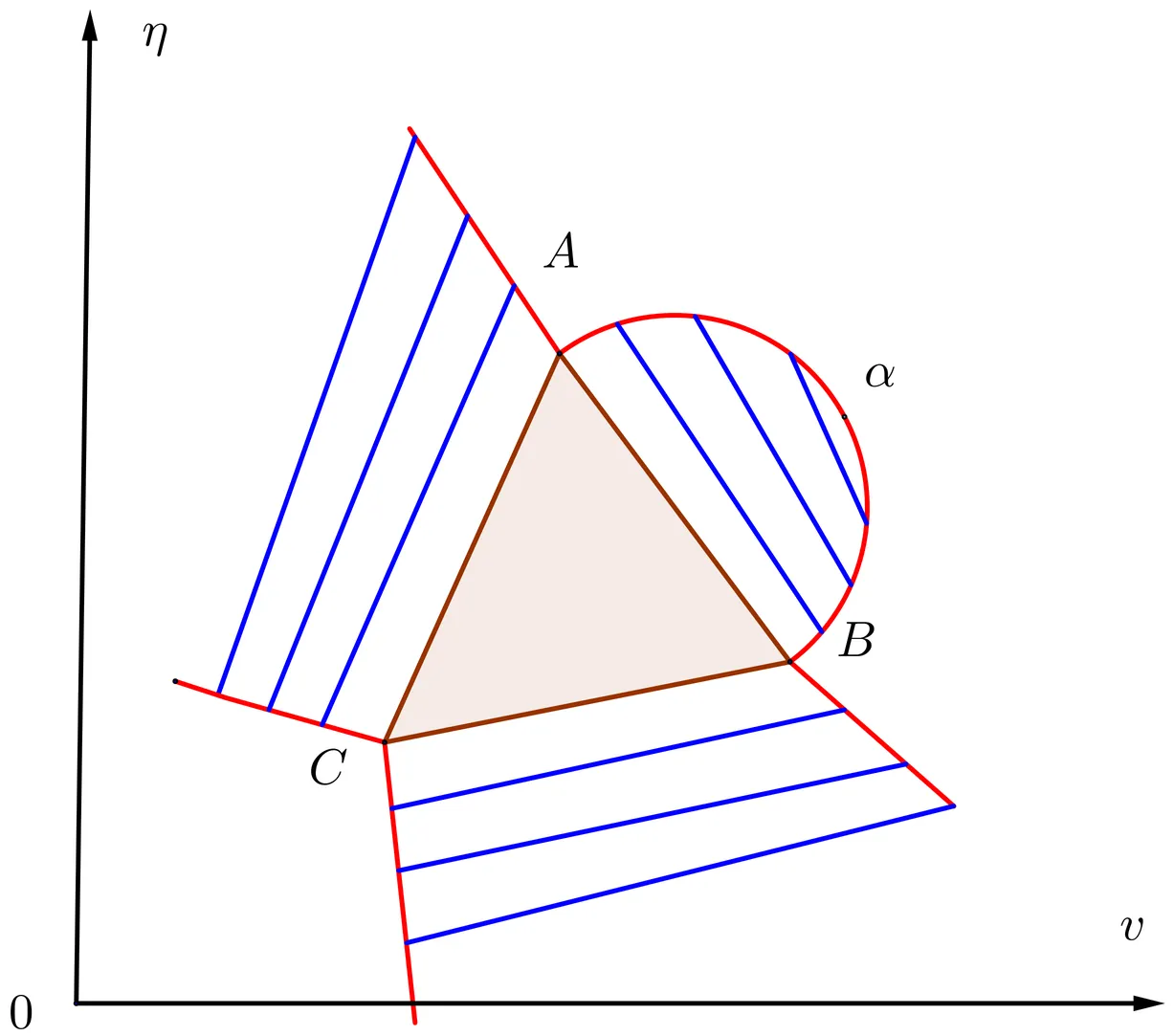
Mechanics and thermodynamics: A link between the two theories
In this note, we analyze the relationships that should govern the use of thermodynamics in fluid mechanics in a way that we believe is understandable to mathematicians. We also aim to better define the reasons why mechanics and thermodynamics must be correctly linked by showing that the principle of virtual work expressed using a specific internal energy is perfectly suited to fluid mechanics problems, provided that a well-chosen internal energy is proposed.
2602.21649Feb 2026
View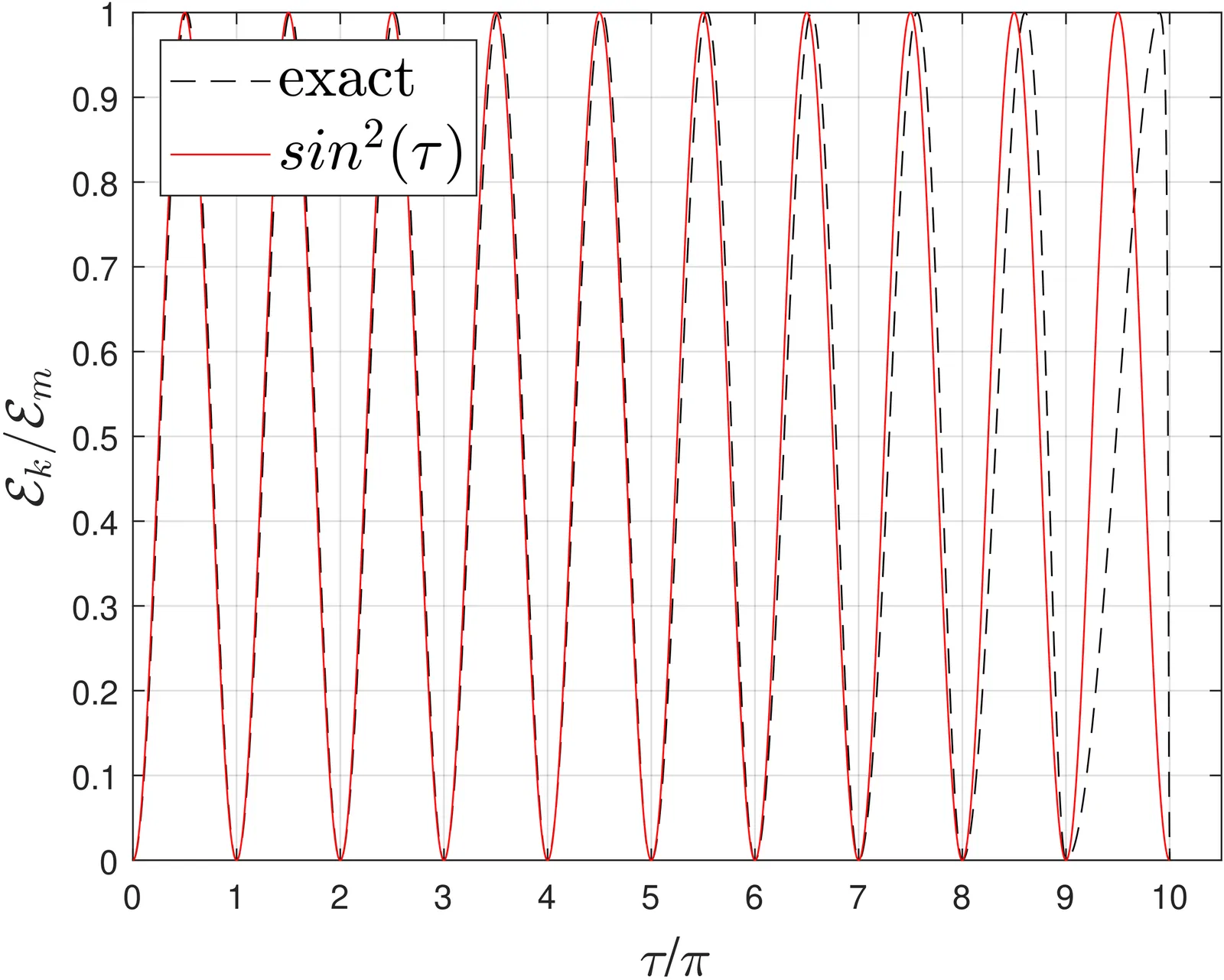
Damped harmonic oscillator revisited: a new approach to energy decay in the case of Coulomb, Stokes, and Newton damping
Approximate formulas are derived to describe energy loss in a harmonic oscillator that experiences three distinct damping mechanisms: constant-magnitude (Coulomb), velocity-proportional (Stokes), and velocity-squared (Newton), using fundamental mathematical methods and physical insight. Our methodology leverages an understanding of the free harmonic oscillator and the inherent link between energy dissipation rates and the power exerted by damping forces. We establish a direct analytical framework for assessing the energy of a damped harmonic oscillator, obviating the need for amplitude-based equations. The simplicity of our findings is accompanied by their remarkable accuracy when validated against exact or computational simulations. In addition to an excellent approximate description of the energy decay, we also show how to derive an exact solution in the case of Stokes damping without relying on the standard procedure for solving second-order differential equations. The theoretical underpinnings and mathematical strategies employed are well-suited for undergraduate-level or advanced high school physics instruction.
2602.19725Feb 2026
ViewPage 1 of 9