148 papers
Bright Fractional Single and Multi-Solitons in a Prototypical Nonlinear Schr{ö}dinger Paradigm: Existence, Stability and Dynamics
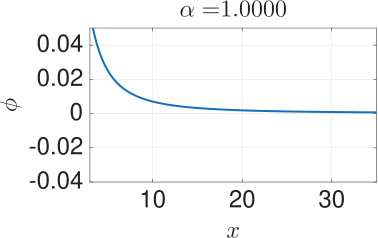
In the present work we explore features of single and pairs of solitary waves in a fractional variant of the nonlinear Schr{ö}dinger equation. Motivated by the recent experimental realization of arbitrary fractional exponents, upon quantifying the tail properties of such coherent structures, we detail their destabilization when the fractional exponent $α$ acquires values $α<1$ and showcase how the relevant destabilization is associated with collapse type phenomena. We then turn to in- and out-of-phase pairs of such waveforms and illustrate how they generically exist for arbitrary $α$ when we cross the harmonic limit, i.e., for $α>2$. Importantly, we use the parameter $α$ as a ``bifurcation parameter'' in order to connect the harmonic ($α=2$) and biharmonic ($α=4$) limits. Remarkably, not only do we retrieve the instability of all solitonic pairs in the biharmonic case, but showcase a stabilization feature of particular branches of such multipulses that is {\it unique} to the fractional case and does not arise -- to our knowledge -- for integer multi-pulse settings. We explain systematically this stabilization via spectral analysis and expand upon the implications of our results for the potential observability of fractional multipulse solitary waves.
2602.17175Feb 2026
View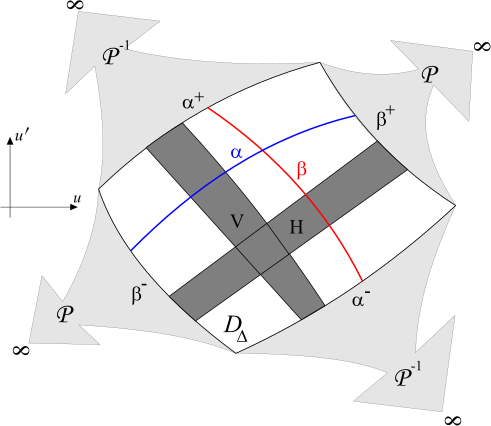
Towards the complete description of stationary states of a Bose-Einstein condensate in a one-dimensional quasiperiodic lattice: A coding approach
We consider stationary states of an effectively one-dimensional Bose-Einstein condensate in a quasiperiodic lattice. We formulate sufficient conditions for a one-to-one correspondence between the stationary states with a fixed chemical potential and the set of bi-infinite sequences over a finite alphabet. These conditions can be checked numerically. A bi-infinite sequence can be interpreted as a code of the corresponding solution. A numerical example demonstrates the coding approach using an alphabet of three symbols.
2602.17172Feb 2026
View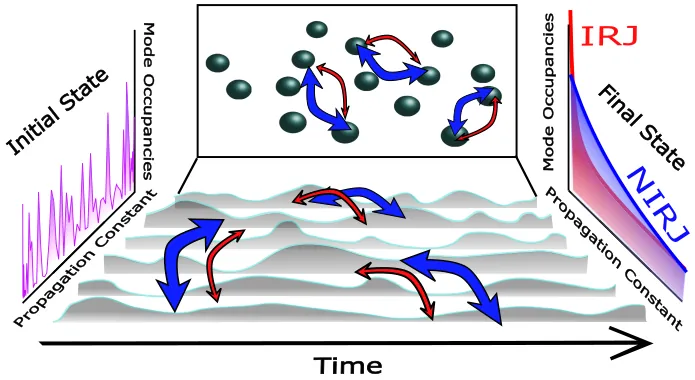
Optical Thermodynamics Beyond the Weak Nonlinearity Limit
Optical thermodynamics has recently emerged as a theoretical framework describing a Rayleigh-Jeans (RJ) modal power distribution of multimoded nonlinear photonic circuits. However, its applicability is constrained to systems exhibiting weak nonlinear mode-mode interactions. Here, by employing a Transfer Integral Operator, we circumvent this limitation and establish a steady-state interacting RJ modal distribution -- referred to as non-ideal RJ (NIRJ) -- with renormalized temperature and optical chemical potential. This also builds a natural bridge with earlier work on grand-canonical statistical-mechanical formulations of discrete nonlinear systems. The theory derives the optical analogue of the compressibility factor, which controls the transition from an ideal, non-interacting equation of state (EoS) to a van der Waals-like interacting EoS.
2602.13161Feb 2026
View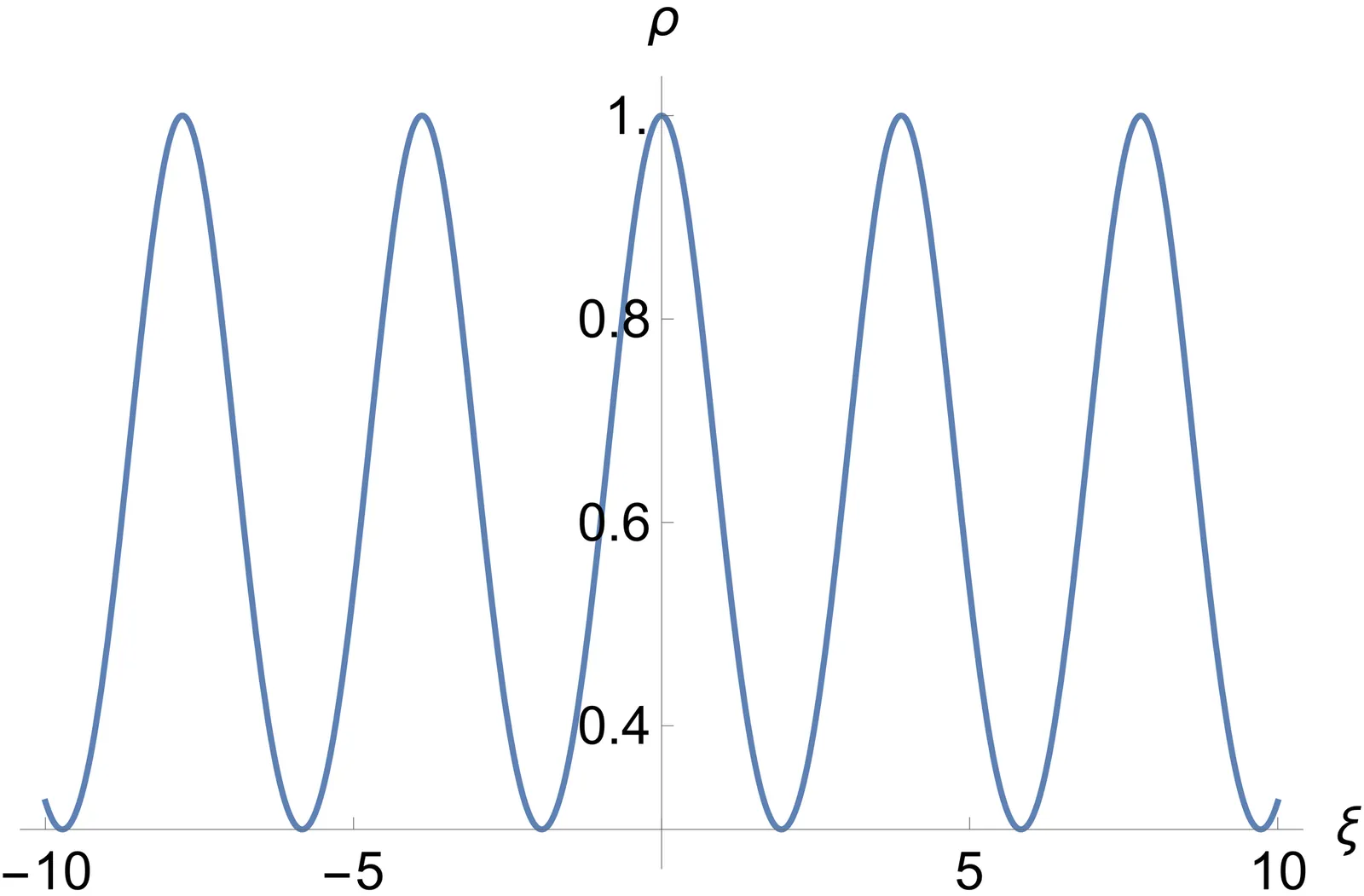
A Nonlinear $q$-Deformed Schrödinger Equation
We construct a new nonlinear deformed Schrödinger structure using a nonlinear derivative operator which depends on a parameter $q$. This operator recovers Newton derivative when $q \rightarrow 1$. Using this operator we propose a deformed Lagrangian which gives us a deformed nonlinear Schrödinger equation with a nonlinear kinetic energy term and a standard potential $V(\vec{x})$. We analytically solve the nonlinear deformed Schrödinger equation for $V(\vec{x}) = 0$ and $q \simeq1$. This model has a continuity equation, the energy is conserved, as well as the momentum and also interacts with electromagnetic field. Planck relation remains valid and in all steps we easily recover the undeformed quantities when the deformation parameter goes to 1. Finally, we numerically solve the equation of motion for the free particle in any spatial dimension, which shows a solitonic pattern when the space is equal to one for particular values of $q$.
2602.11312Feb 2026
View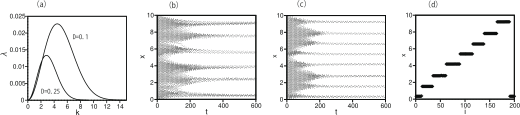
Spatially-Periodic Cluster Pattern of Coupled Forced Oscillators
We propose a simple model for periodic clustering of particles under forced oscillation. Effective viscosity is assumed to increase owing to neighboring particles by analogy with the Einstein viscosity law. The linear stability analysis and numerical simulations show that the uniform distribution is unstable, and spatially-periodic and stripe patterns appear respectively in one and two dimensions.
2602.10426Feb 2026
View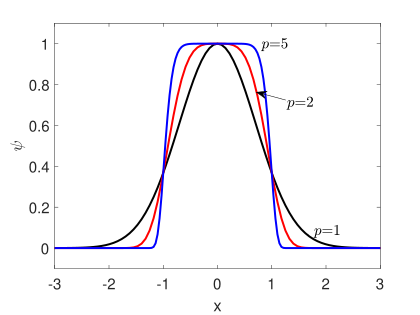
New logarithmic power nonlinear Schrödinger equations with super-Gaussons
We introduce a new class of nonlinear Schrödinger equations with a logarithmic-power nonlinearity that admits exact localized solutions of super-Gaussian form. The resulting stationary states possess flat-top profiles with sharp edges and are referred to as super-Gaussons, in analogy with the Gaussian Gaussons of the classical logarithmic NLS (log-NLS). The model, which we call the logarithmic-power NLS (logp-NLS), is parameterized by an exponent $p\geq1$ that controls the degree of flatness of the soliton core and the sharpness of its decay. Mathematically, $p$ interpolates between the standard log-NLS ($p=1$) and increasingly flat-top profiles as $p$ increases, while physically it governs the stiffness of an underlying logarithmic-power compressibility law. The proposed equation is constructed so as to admit super-Gaussian stationary states and can be interpreted a posteriori within a generalized pressure-law framework, thereby extending the log-NLS. We investigate the dynamics of super-Gaussons in one spatial dimension through numerical simulations for various values of $p$, demonstrating how this parameter regulates both the internal structure of the soliton and its collision dynamics. The logp-NLS thus generalizes the standard log-NLS by admitting a broader family of localized states with distinctive structural and dynamical properties, suggesting its relevance for flat-top solitons in nonlinear optics, Bose-Einstein condensates, and related nonlinear media.
2602.10263Feb 2026
View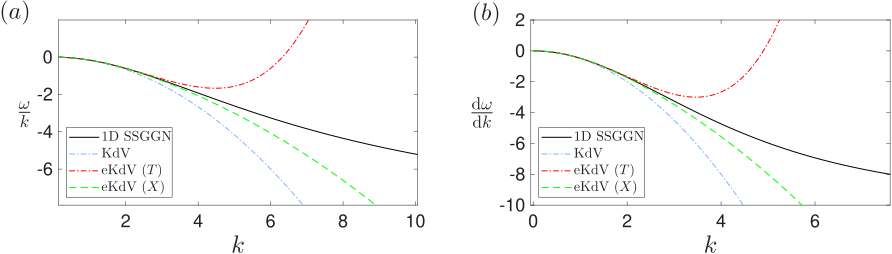
Solitary waves of moderate amplitude in the SSGGN equations: the extended KdV-Whitham approximation
We consider the extended Korteweg-de Vries (eKdV) equation as a model for long moderately nonlinear surface water waves. In the slow time formulation this equation generates fast propagating resonant radiation due to the non-convexity of its linear dispersion curve, which is not present in the strongly nonlinear Serre-Su-Gardner-Green-Naghdi (SSGGN) parent system. We show that the extended KdV-Whitham approximation and the slow space formulation of the eKdV equation are suitable regularisations of the eKdV equation in several cases of interest, and even for moderate amplitudes. Numerical comparisons are made between the SSGGN system and the respective reduced models, where simulations are initiated with an approximate soliton solution of the eKdV equation, constructed by use of Kodama-Fokas-Liu near-identity transformation to the KdV equation.
2602.09266Feb 2026
View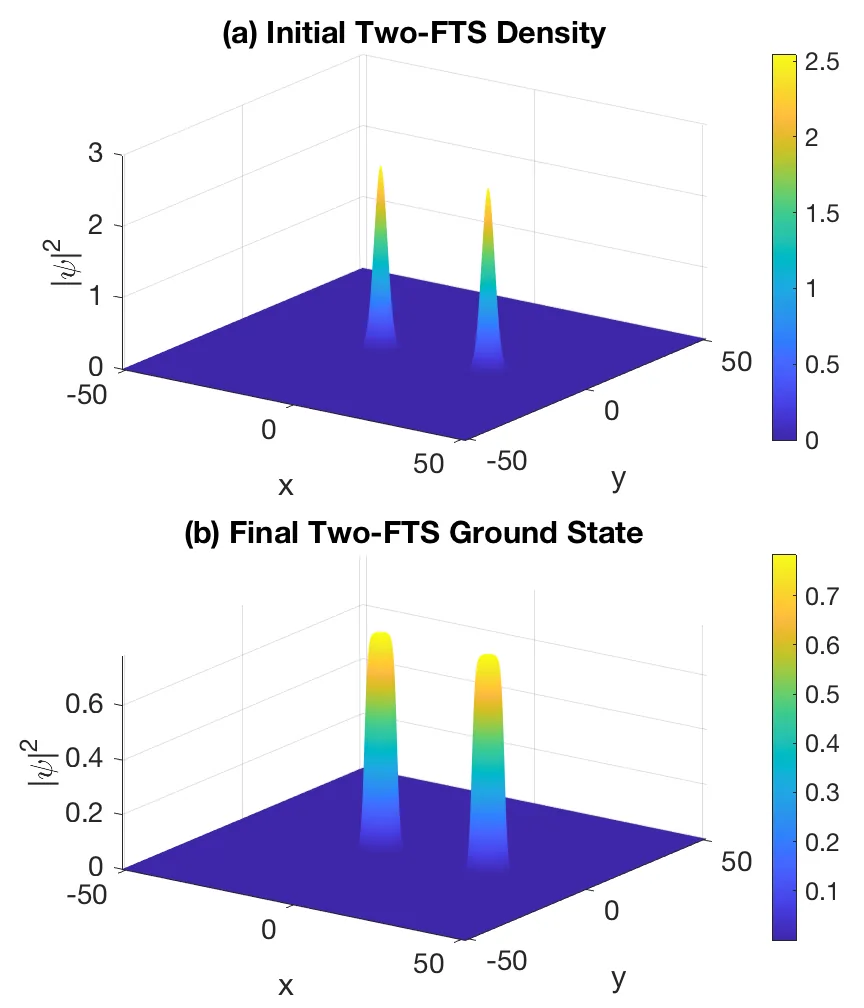
Phase-controlled elastic, inelastic, and coalescent collisions of two-dimensional flat-top solitons
We investigate elastic, inelastic, and coalescent collisions between two-dimensional flat-top solitons supported by the cubic-quintic nonlinear Schrödinger equation. Numerical simulations reveal distinct collision regimes ranging from nearly elastic scattering to strongly inelastic interactions leading to long-lived merged states. We demonstrate that the transition between these regimes is primarily controlled by the relative phase of the solitons at the collision point, with out-of-phase collisions suppressing overlap and in-phase collisions promoting strong interaction. Kinetic-energy diagnostics are introduced to quantitatively characterize collision outcomes and to identify phase- and separation-dependent windows of elasticity. To interpret the observed dynamics, we extract effective phase-dependent interaction potentials from collision trajectories, providing a mechanical picture of attraction and repulsion between flat-top solitons. The stability of merged states formed after strongly inelastic collisions is explained by their lower energetic cost, arising from interfacial energetics, where a balance between internal pressure and edge tension plays a central role. A variational analysis based on direct energy minimization supports this picture by revealing robust energetic minima associated with stationary two-dimensional flat-top solitons.
2602.07762Feb 2026
View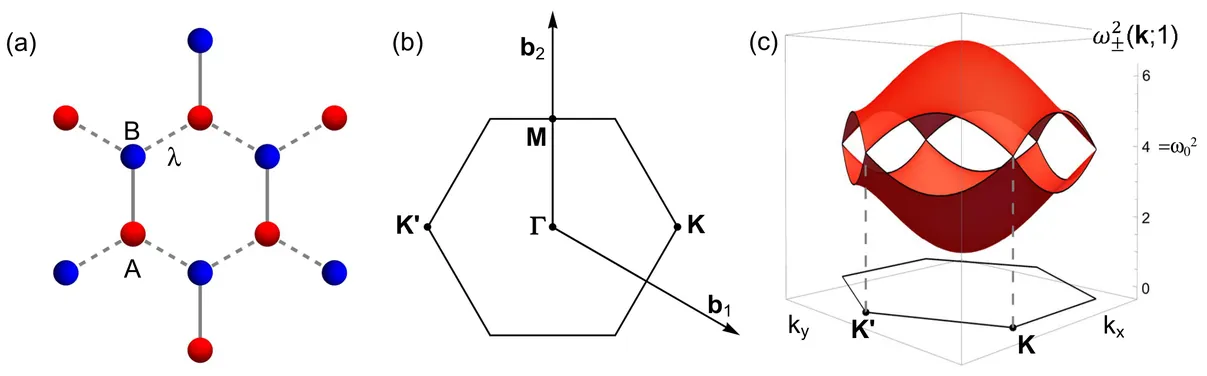
Discrete Breathers in a Honeycomb Lattice Near a Semi-Dirac Point
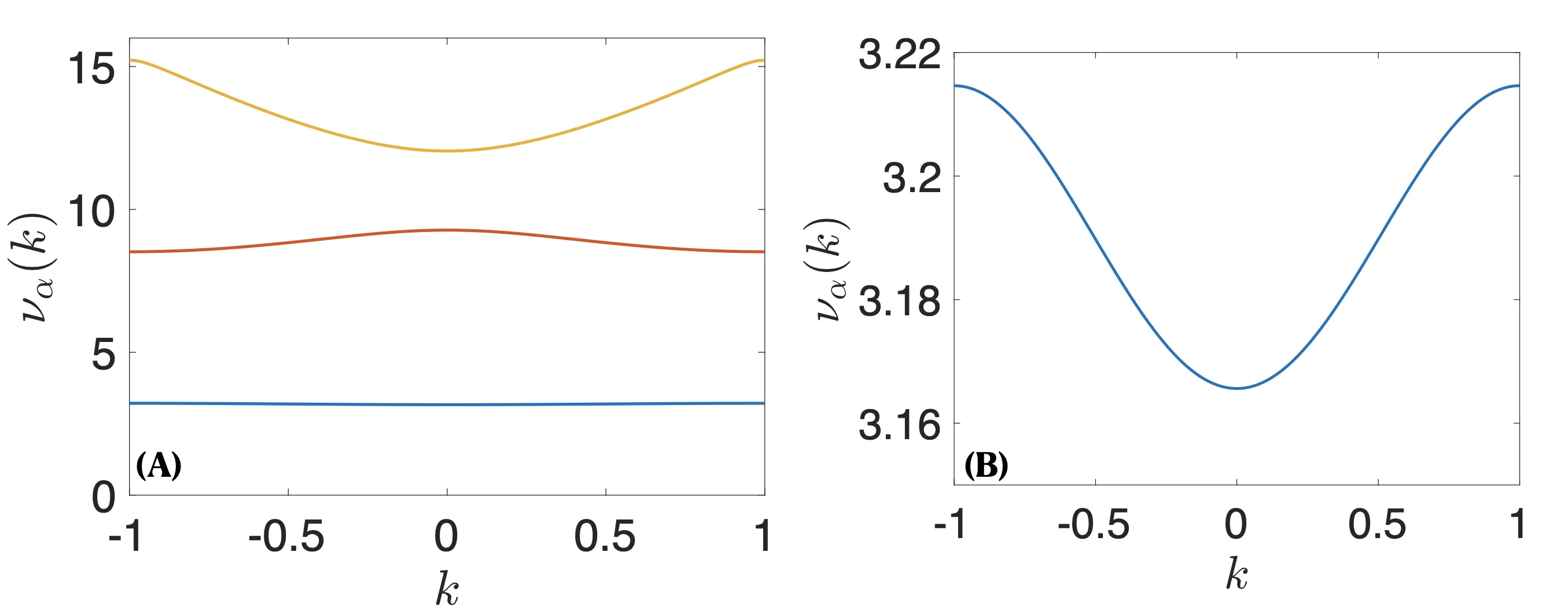
We study the dynamics of discrete breathers -- spatially localized and time-periodic solutions -- inside the bandgap of a nonlinear honeycomb lattice where the dispersion landscape approaches a so-called semi-Dirac point in which the bands cross linearly in one direction and quadratically in the orthogonal direction. By studying breather dynamics in two opposing asymptotic regimes, near the continuum and anti-continuum limits, we capture the features of hybrid coherent structures on the lattice that are highly discrete at the breather's central peak and have tails well approximated by exact separable solutions to an effective long-wave PDE theory at spatial infinity. We find that breathers are dynamically stable over a wide range of parameters and locate an instability transition. Finally, we analyze the Floquet stability of spatially extended nonlinear plane waves bifurcating from the zero solution at the edges of the gap and how they shape breather profiles inside the gap.
2602.07655Feb 2026
View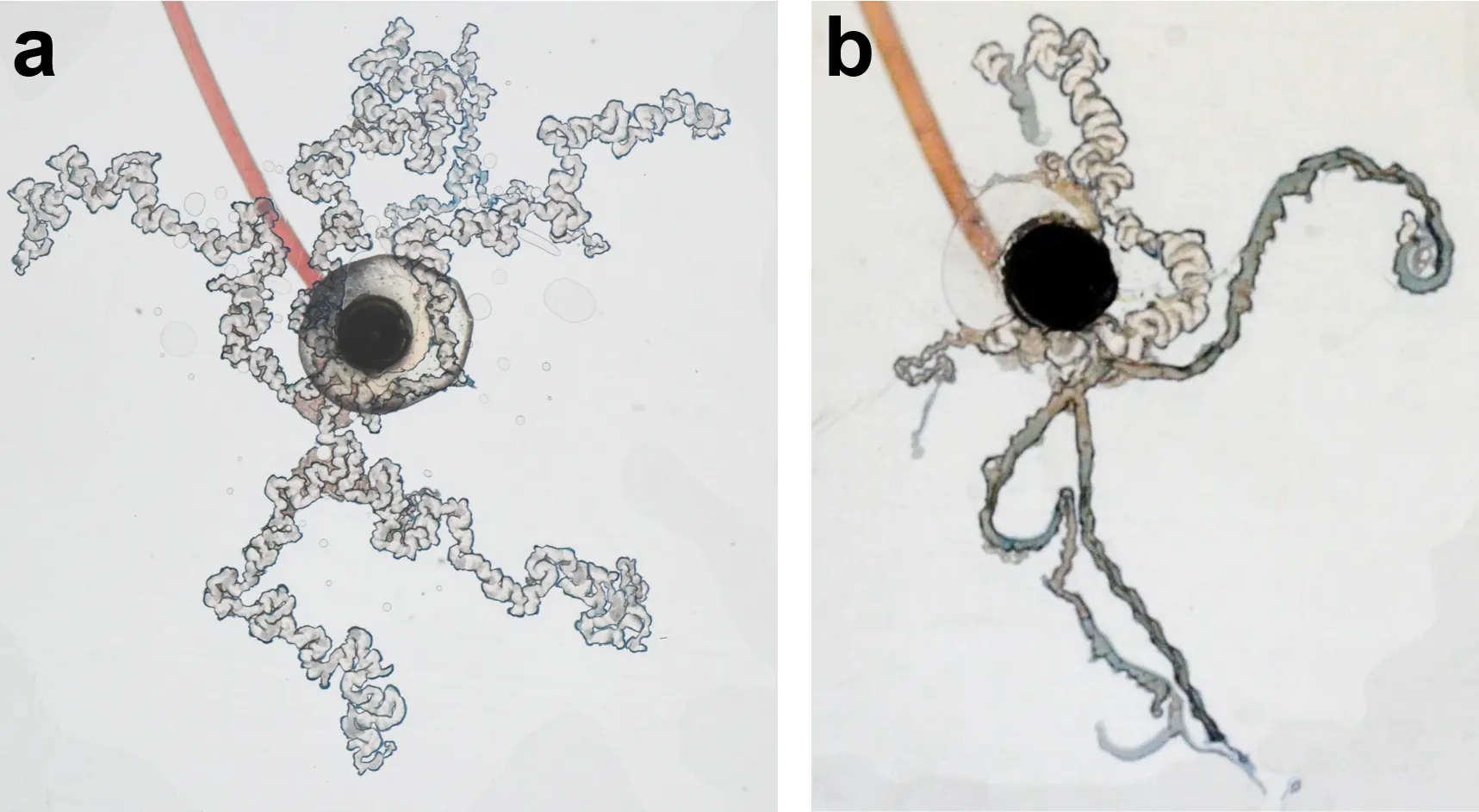
Stretched-Exponential Aging Governs Nonequilibrium Precipitate Patterns
Localized growth in driven materials is often governed by intermittent failure, yet how a material's history biases failure sites remains poorly understood. Using pause-restart experiments on chemical precipitate membranes, we quantify the probability of age-dependent breaching. We show that the kinetics follow a stretched-exponential aging law with parameters that obey one-parameter scaling. As the system approaches a critical concentration, the stretching exponent $β$ tends to zero, signaling a crossover to scale-free, power-law behavior. A stochastic cellular automaton based on this aging rule reproduces the emergent filaments and their concentration-dependent thickening. Our findings identify aging-controlled failure with long-lived but decaying memory as a general route to pattern formation in far-from-equilibrium systems.
2602.07183Feb 2026
View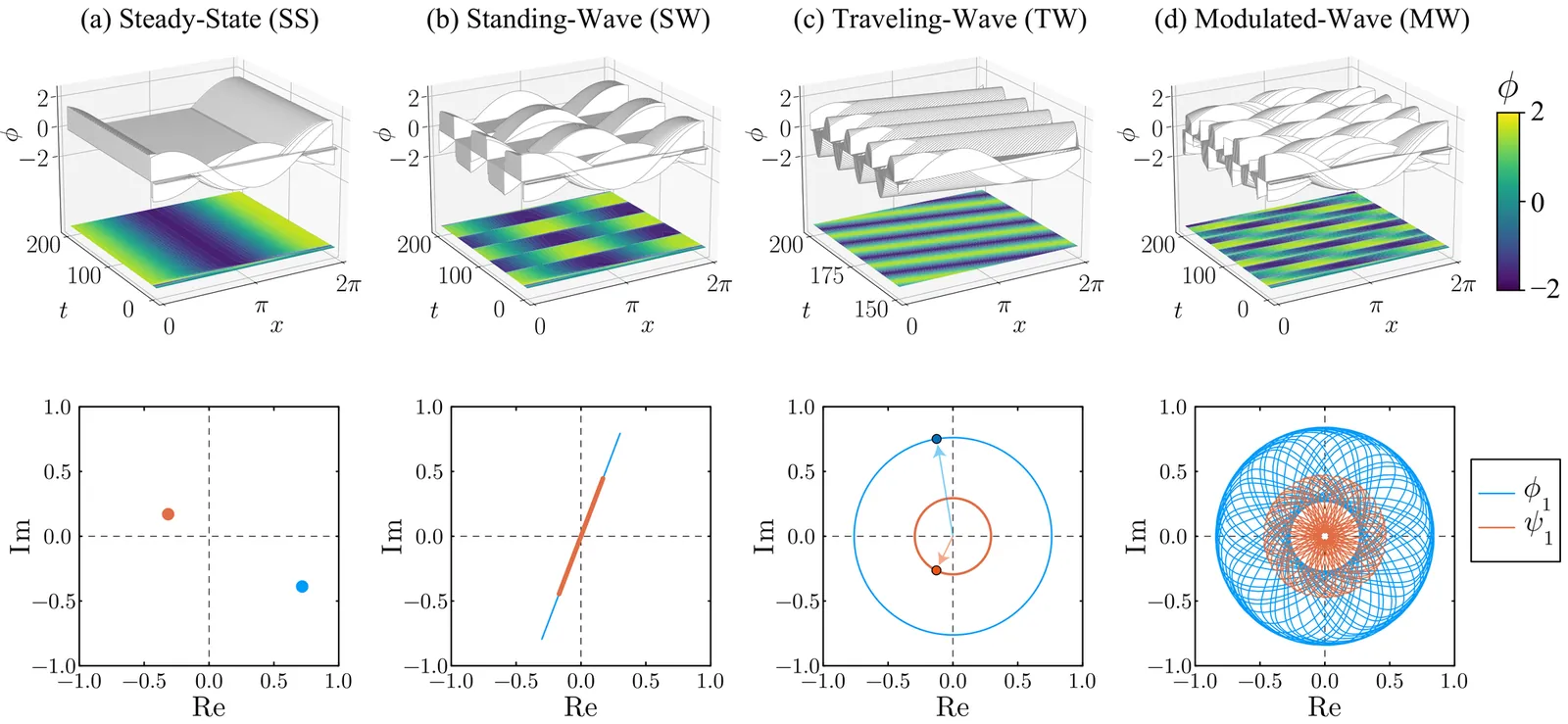
Higher-codimension points as organizing centers in nonreciprocal pattern-forming systems with O(2)-symmetry
Focusing on a two-field Swift-Hohenberg model with linear nonreciprocal interactions, this study investigates how emerging higher-codimension points act as organizing centers for the nonequilibrium phase diagram that features various steady and dynamic phases. Complementing the numerical analysis of the field equations with time simulations and path continuation techniques, we derive a reduced dynamical system corresponding to a one-mode approximation for the critical-wavenumber modes. Furthermore, we derive the normal form equations that are valid in the vicinity of the Takens-Bogdanov bifurcation with O(2)-symmetry, which allows us to draw on corresponding literature results. Comparing results obtained on the different levels of description, we discuss the bifurcation structure relating trivial uniform and inhomogeneous steady states as well as traveling, standing and modulated waves. We also contextualize the relevance of recently highlighted features of the linear mode structure, i.e., of the dispersion relations, termed "critical exceptional points" for the transitions between the nonequilibrium phases.
2602.04325Feb 2026
View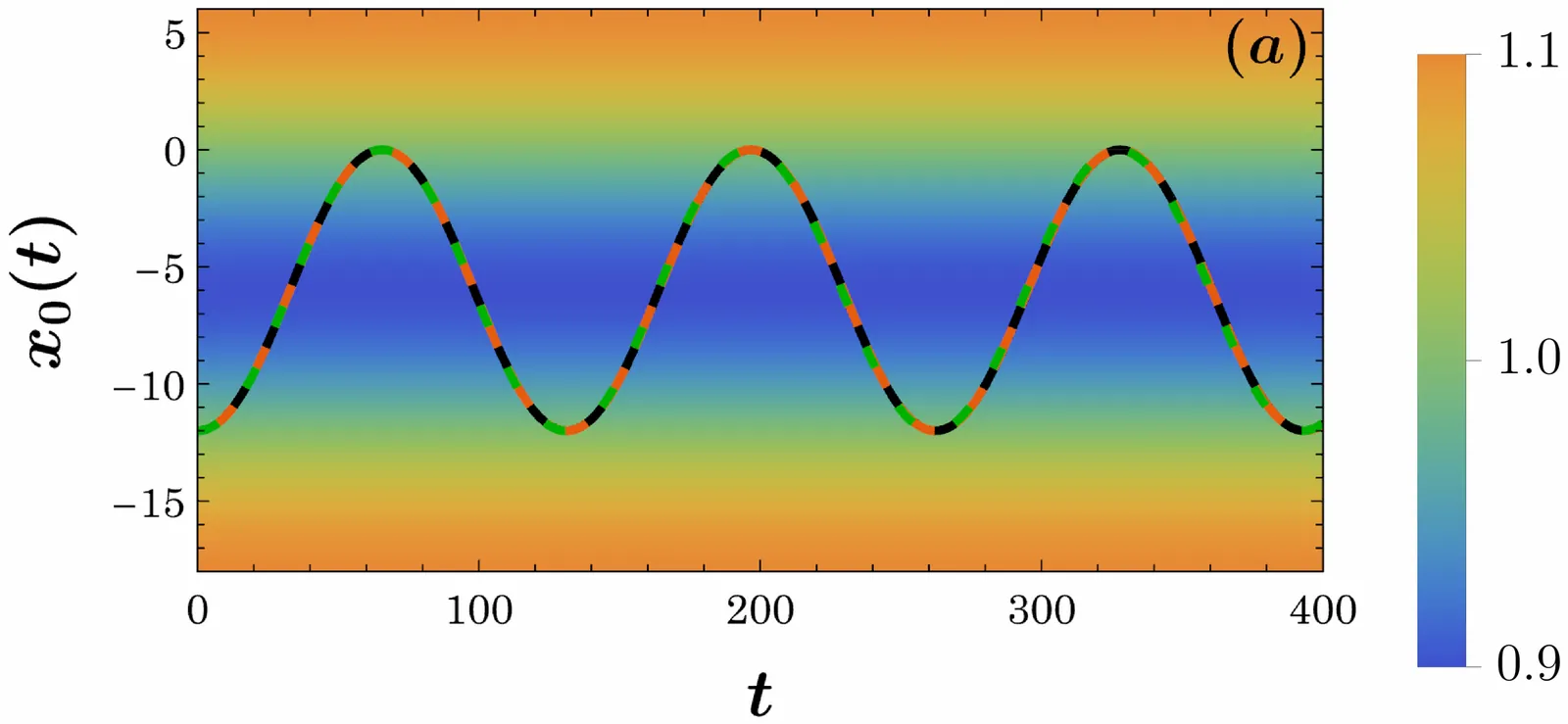
Collective coordinate descriptions of a kink in a driven-damped $φ^4$ model
Extending a recent effective theory formulation for the dynamics of kinks in the sine-Gordon model [1], we propose an analogous effective description of $φ^4$ kinks. Three different reduced models based on the kink position, width and internal mode amplitude are introduced and compared systematically with the numerical solution of the equation with space- and time-dependent perturbations. In all cases considered, the model based on the kink position and width agrees the best with the full numerical solution. As long as the external driving frequency of the perturbation remains moderate, it captures with remarkable accuracy the intricate dynamical processes taking place in the system.
2601.18940Jan 2026
View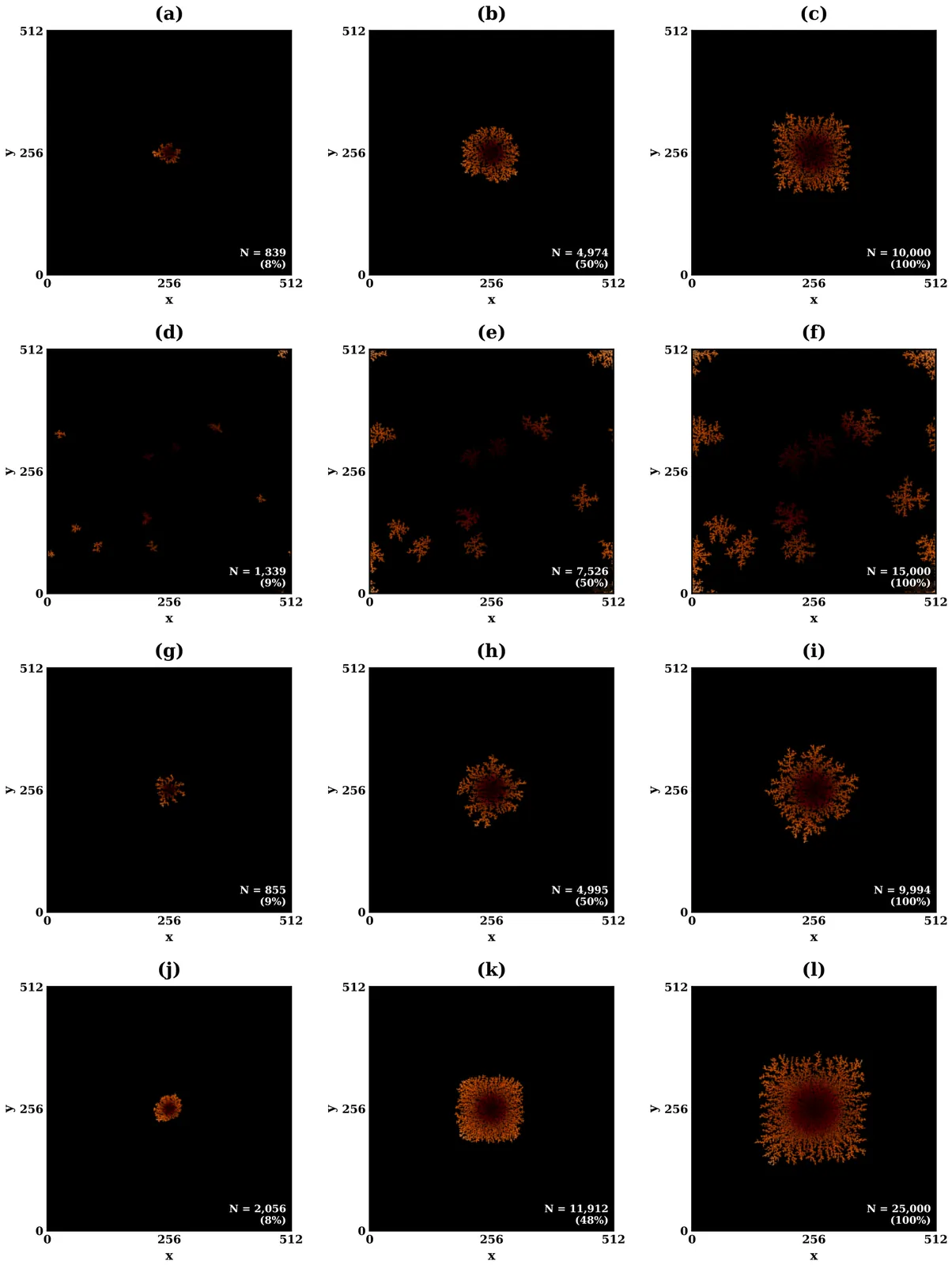
Numba-Accelerated 2D Diffusion-Limited Aggregation: Implementation and Fractal Characterization
We present dla-ideal-solver, a high-performance framework for simulating two-dimensional Diffusion-Limited Aggregation (DLA) using Numba-accelerated Python. By leveraging just-in-time (JIT) compilation, we achieve computational throughput comparable to legacy static implementations while retaining high-level flexibility. We investigate the Laplacian growth instability across varying injection geometries and walker concentrations. Our analysis confirms the robustness of the standard fractal dimension $D_f \approx 1.71$ for dilute regimes, consistent with the Witten-Sander universality class. However, we report a distinct crossover to Eden-like compact growth ($D_f \approx 1.87$) in high-density environments, attributed to the saturation of the screening length. Beyond standard mass-radius scaling, we employ generalized Rényi dimensions and lacunarity metrics to quantify the monofractal character and spatial heterogeneity of the aggregates. This work establishes a reproducible, open-source testbed for exploring phase transitions in non-equilibrium statistical mechanics.
2601.15440Jan 2026
View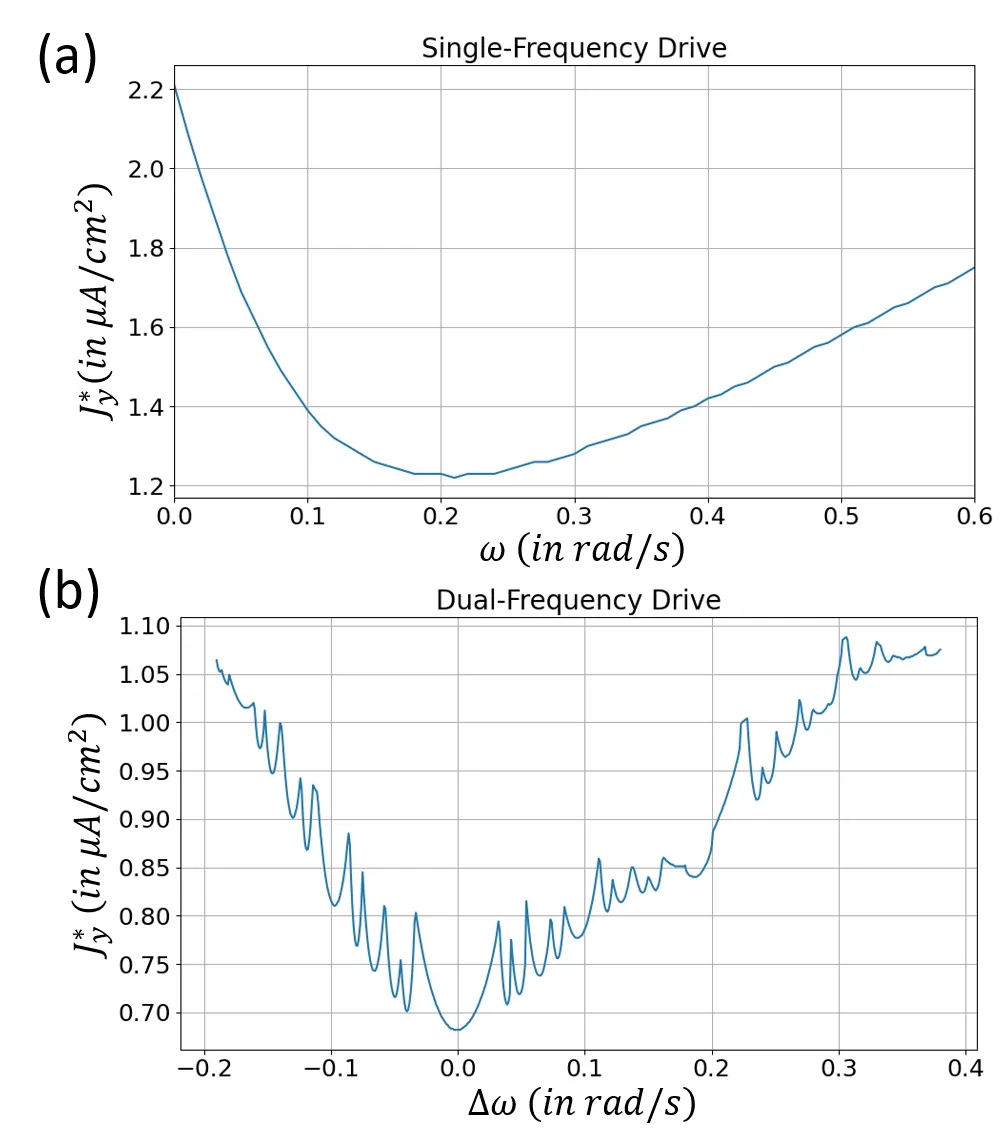
Multi-Tongue Frequency Fractal Dynamics in Hodgkin-Huxley Neurons Induced by Temporal Interference Stimulation
We investigate neuronal excitability in the Hodgkin-Huxley model under temporal interference (TI) stimulation in a previously unexplored sub-Hz resonant regime and uncover a striking nonlinear response that we term 'multi-tongue frequency fractals'. Unlike single-frequency driving, which yields a smooth resonant valley, dual-frequency excitation fragments this response into a hierarchy of sharply modulated tongues whose number and structure grow with observation time, revealing clear self-similar architecture. These features emerge from transitions between non-cascaded and cascaded high-harmonic and sub-harmonic generation as detuning varies, and are maximized near the intrinsic ionic timescale at omega ~ 0.2 rad/s. Parameter sweeps show that the fractal count is higher for higher potassium conductances, lower sodium conductances and lower leak conductances. These results demonstrate that TI stimulation can elicit rich, hierarchically organized frequency responses even in classical excitable membranes, revealing fractal organization in Hodgkin-Huxley dynamics.
2601.14135Jan 2026
View 2601.13783
Soliton dynamics in the ABS nonlinear spinor model with external fields
We consider the novel nonlinear model in (1 + 1)-dimensions for Dirac spinors recently introduced by Alexeeva, Barashenkov, and Saxena [1] (ABS model), which admits an exact explicit solitary-wave (soliton for short) solution. The charge, the momentum, and the energy of this solution are conserved. We investigate the dynamics of the soliton subjected to several potentials: a ramp, a harmonic, and a periodic potential. We develop a Collective Coordinates Theory by making an ansatz for a moving soliton where the position, rapidity, and momentum, are functions of time. We insert the ansatz into the Lagrangian density of the model, integrate over space and obtain a Lagrangian as a function of the collective coordinates. This Lagrangian differs only in the charge and mass with the Lagrangian of a collective coordinates theory for the Gross-Neveu equation. Thus the soliton dynamics in the ABS spinor model is qualitatively the same as in the Gross-Neveu equation, but quantitatively it differs. These results of the collective coordinates theory are confirmed by simulations, i.e., by numerical solutions for solitons of the ABS spinor model, subjected to the above potentials.
2601.137832Jan 2026
View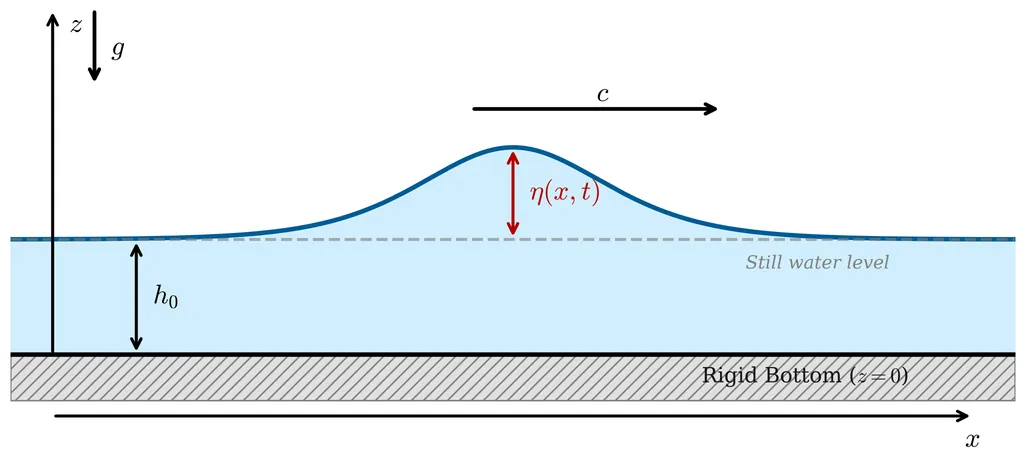
sangkuriang: A pseudo-spectral Python library for Korteweg-de Vries soliton simulation
The Korteweg-de Vries (KdV) equation serves as a foundational model in nonlinear wave physics, describing the balance between dispersive spreading and nonlinear steepening that gives rise to solitons. This article introduces sangkuriang, an open-source Python library for solving this equation using Fourier pseudo-spectral spatial discretization coupled with adaptive high-order time integration. The implementation leverages just-in-time (JIT) compilation for computational efficiency while maintaining accessibility for instructional purposes. Validation encompasses progressively complex scenarios including isolated soliton propagation, symmetric two-wave configurations, overtaking collisions between waves of differing amplitudes, and three-body interactions. Conservation of the classical invariants is monitored throughout, with deviations remaining small across all test cases. Measured soliton velocities conform closely to theoretical predictions based on the amplitude-velocity relationship characteristic of integrable systems. Complementary diagnostics drawn from information theory and recurrence analysis confirm that computed solutions preserve the regular phase-space structure expected for completely integrable dynamics. The solver outputs data in standard scientific formats compatible with common analysis tools and generates visualizations of spatiotemporal wave evolution. By combining numerical accuracy with practical accessibility on modest computational resources, sangkuriang offers a platform suitable for both classroom demonstrations of nonlinear wave phenomena and exploratory research into soliton dynamics.
2601.12029Jan 2026
View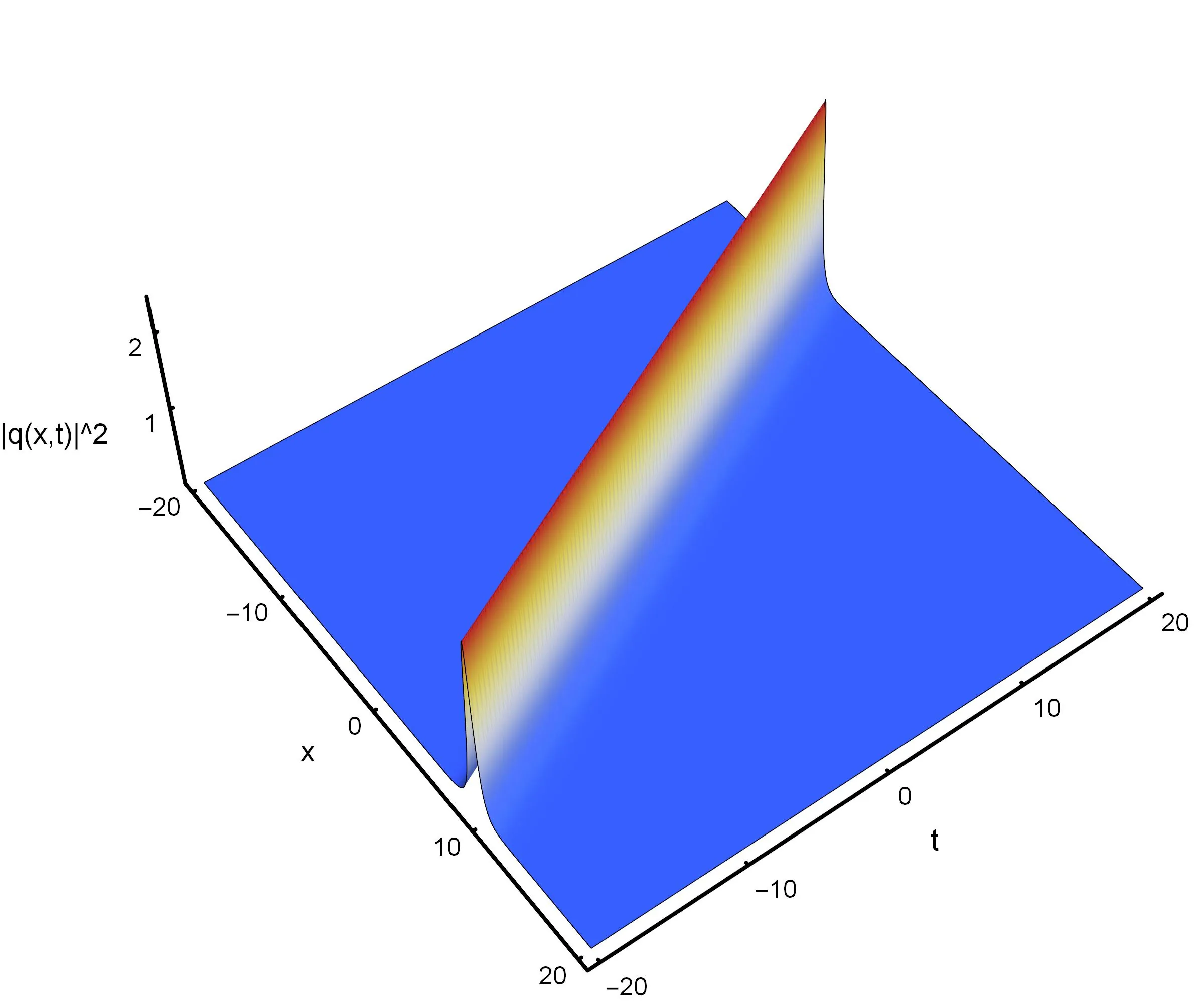
Bright soliton interactions in the variable coefficient Fokas-Lenells equation, Conservation laws, Modulation instability and Soliton tunneling
We present here a study of the bright soliton dynamics in an inhomogeneous fibre by means of variable coefficient Fokas-Lenells equation with time varying dispersion, nonlinearity and gain/loss parameter. At first, we propose our system that governs the propagation of ultrashort pulses in an inhomogeneous fibre. Secondly, under a suitable gauge transformation, we transform the system into a simplified form of variable coefficient Fokas-Lenells equation. The Lax integrability and conservation laws are exhibited. We also study the stability of the generalised plane wave against small amplitude perturbations. Thereafter, by using a nonstandard Hirota bilinearization method with the help of a suitable auxiliary function, we obtain the bright one soliton, two soliton and provide a scheme for obtaining N-bright soliton solutions. The elastic collision dynamics of the two solitons is studied using asymptotic analysis. We also investigate the soliton acceleration/retardation under a suitable choice of dispersion and nonlinearity coefficients. Finally, the dramatic effect of the nonlinear tunnelling of the bright one and two-soliton is also studied under some Gaussian dispersion or nonlinearity.
2601.09514Jan 2026
View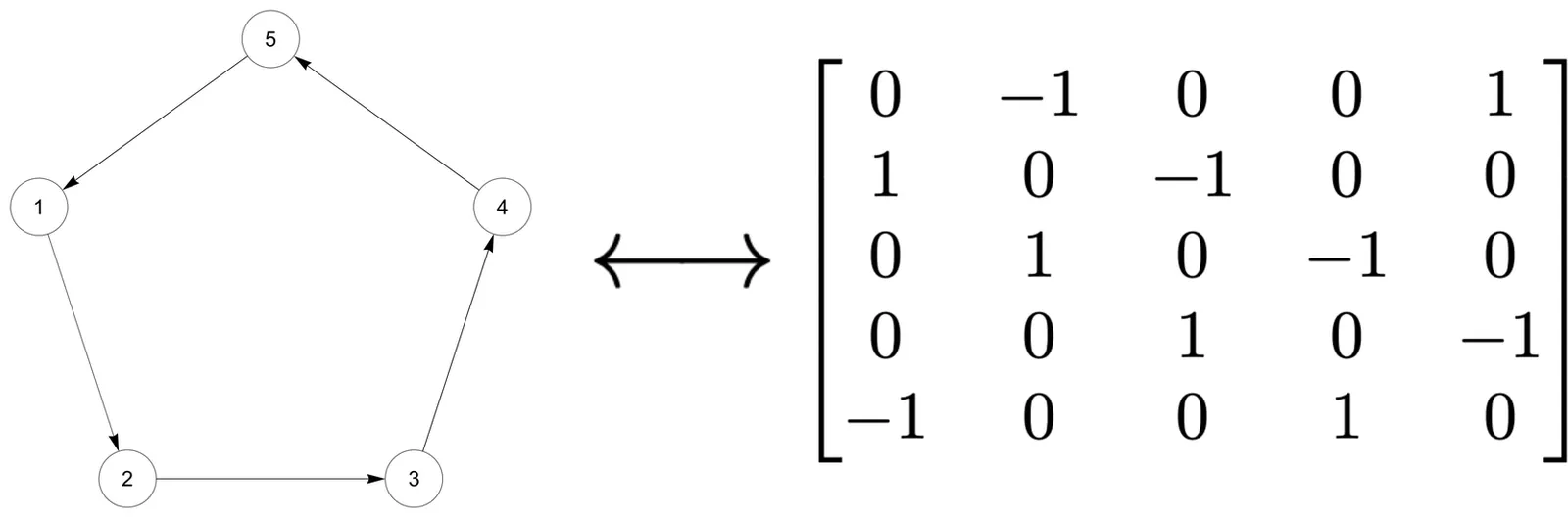
Coherent Structures and Travelling Waves in Spatial Replicators from a Biased Volterra Lattice
The Volterra lattice is a well-known integrable family that is also a special class of replicator dynamics and whose members can be put in one-to-one correspondence with the directed cycle graphs. In this paper, we study a variation of the Volterra lattice by introducing a bias term in the replicator interaction matrix. The resulting system can still be put into one-to-one correspondence with the directed cycles, and the dynamics offer one generalisation of the classic rock-paper-scissors evolutionary game. We study the resulting spatial dynamics of this family, showing that travelling wave solutions are present in those dynamics corresponding to the directed 5- and 6-cycles, but not the 4-cycle. Instead, the 4-cycle exhibits a set of stationary solutions that we call `frozen waves' that are similar to but distinct from Turing patterns. This type of solution is also found in the dynamics generated from the directed 6- and 8-cycles. We discuss how these stationary solutions can represent naturally emergent ecological niches in these systems, and offer generalizing conjectures for the existence of both travelling wave solutions and frozen wave solutions in this family of dynamics as a potential program of future investigation.
2601.06314Jan 2026
View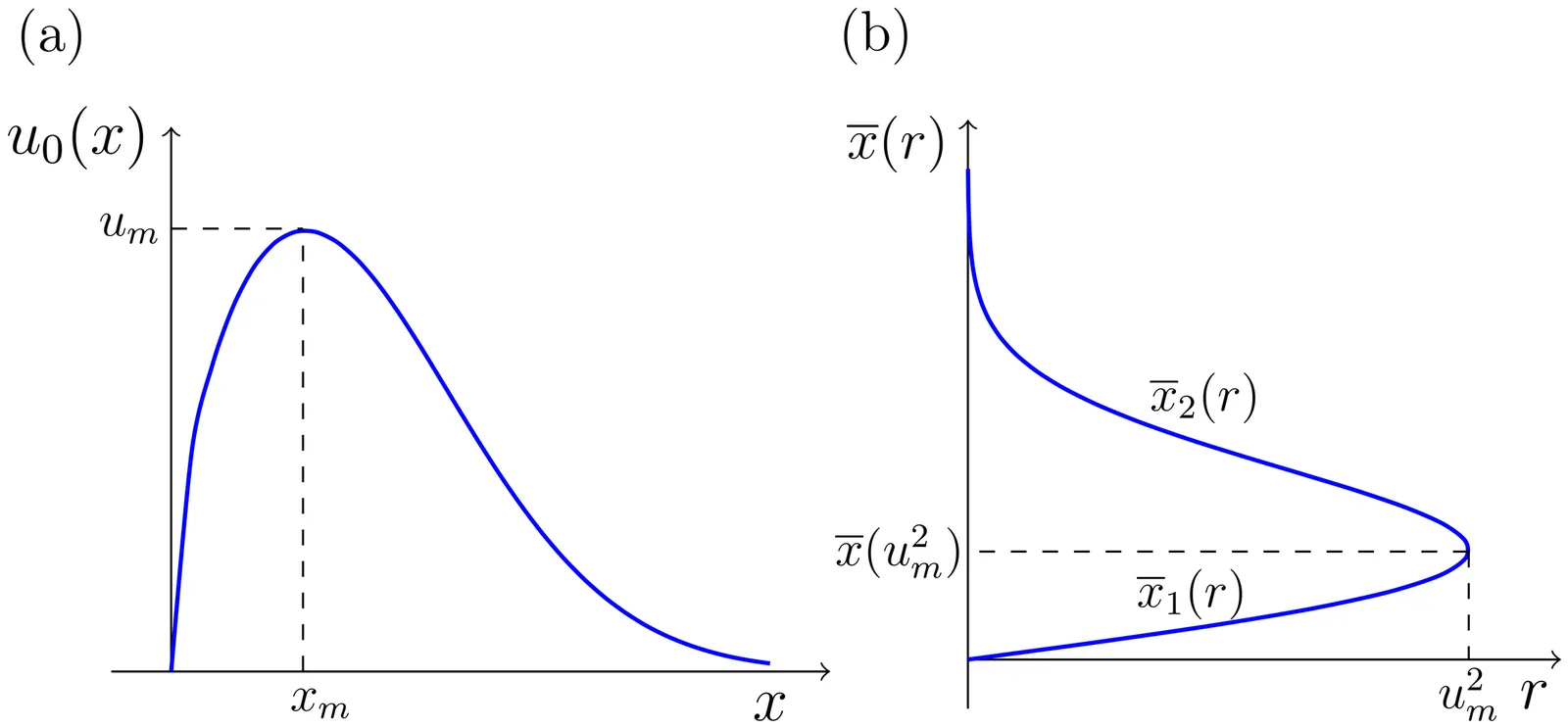
Evolution of localized pulses in the defocusing modified Korteweg-de Vries equation theory
In this work, we develop, in the Gurevich-Pitaevskii framework, an analytic theory for the evolution of localized pulses in the defocusing modified Korteweg-de Vries equation theory for situations when a dispersive shock does not eventually transform into a sequence of well-separated solitons. We found solutions to the Whitham modulation equations for the corresponding so-called "quasi-simple" dispersive shock waves and illustrated this solution with concrete examples of an initial pulse. Comparison of the analytical solution with direct numerical simulations showed that the modulation theory provides a very accurate description of the wave pattern even at one wavelength scale.
2601.05938Jan 2026
View
Soliton Thouless pumping engineered by inter-site nonlinearities
We study soliton Thouless pumping in an extended diagonal Aubry-André-Harper model with on-site nonlinearities and inter-site nonlinearities. We show that the inter-site nonlinearities can make solitons acquire anomalous transport distances far beyond the ones predicted by the linear bands, and the quantized displacements can be engineered well. We uncover that nonlinear instabilities require lower limits on sweeping rates for soliton pumping, challenging the common notion that slower modulation enables a more favorable realization of topological transport. The nonlinear interactions between solitons make multi-soliton pumping generally lack the robustness characteristic of Thouless pumping as linear systems. Our results provide many possibilities to engineer topological pumping by nonlinearities, and further make a step for applications of soliton pumping.
2601.01355Jan 2026
ViewPage 1 of 8