37 papers
Inefficiency of the block approximation in diploid Probabilistic Cellular Automata
We study a probabilistic cellular automaton obtained as a mixture of the additive elementary rules 60 and 102. We prove that, for any finite periodic lattice and for mixing parameter $λ=1/2$, the system almost surely reaches the absorbing all-zero configuration in finitely many steps. In addition, Monte Carlo simulations indicate as well the presence of a zero-density stationary state in a finite interval around $λ=1/2$. Despite this absorbing behavior, both mean-field and block approximation schemes predict a stationary state with non-zero density. This failure, traced to the additive and mirror symmetries of the deterministic components, highlights a fundamental limitation of finite-block approximation in capturing the global dynamics of probabilistic cellular automata.
2602.13839Feb 2026
View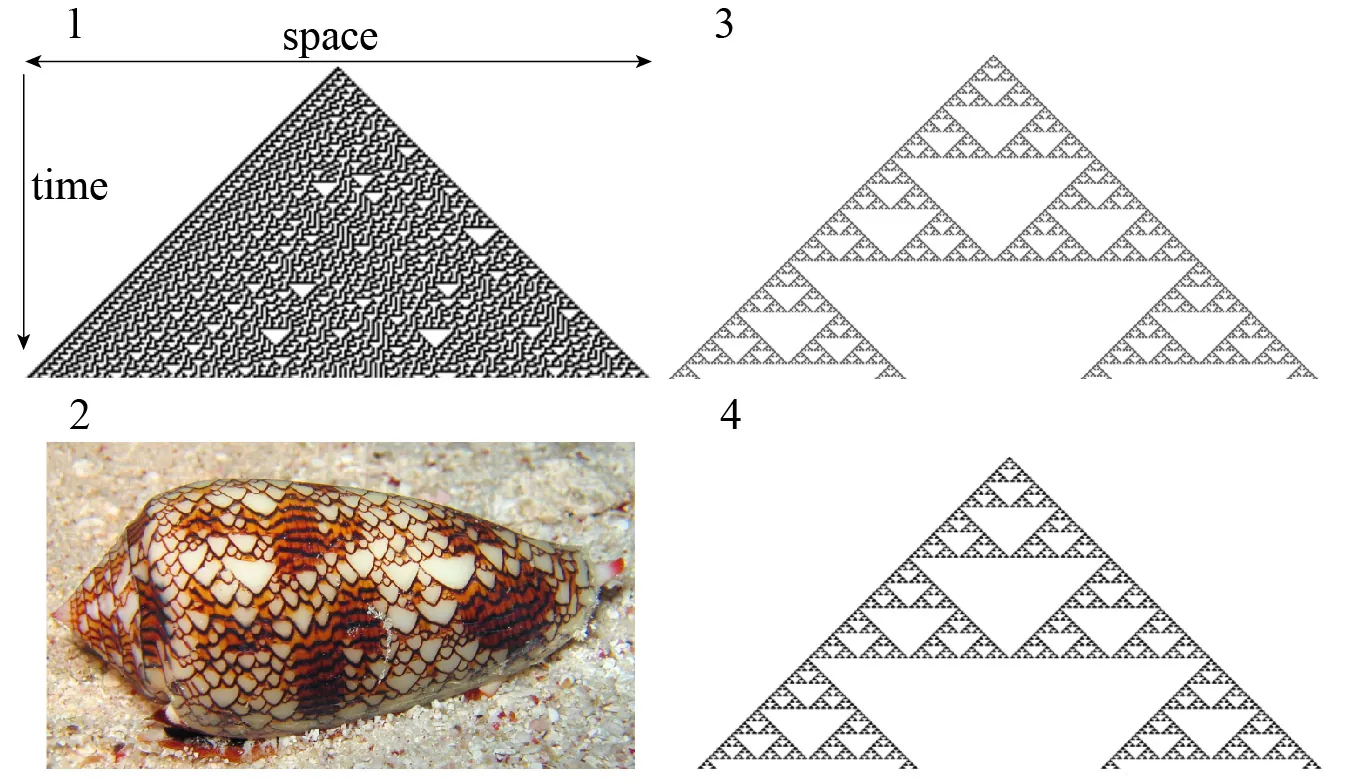
Revealing Latent Self-Similarity in Cellular Automata via Recursive Gradient Profiling
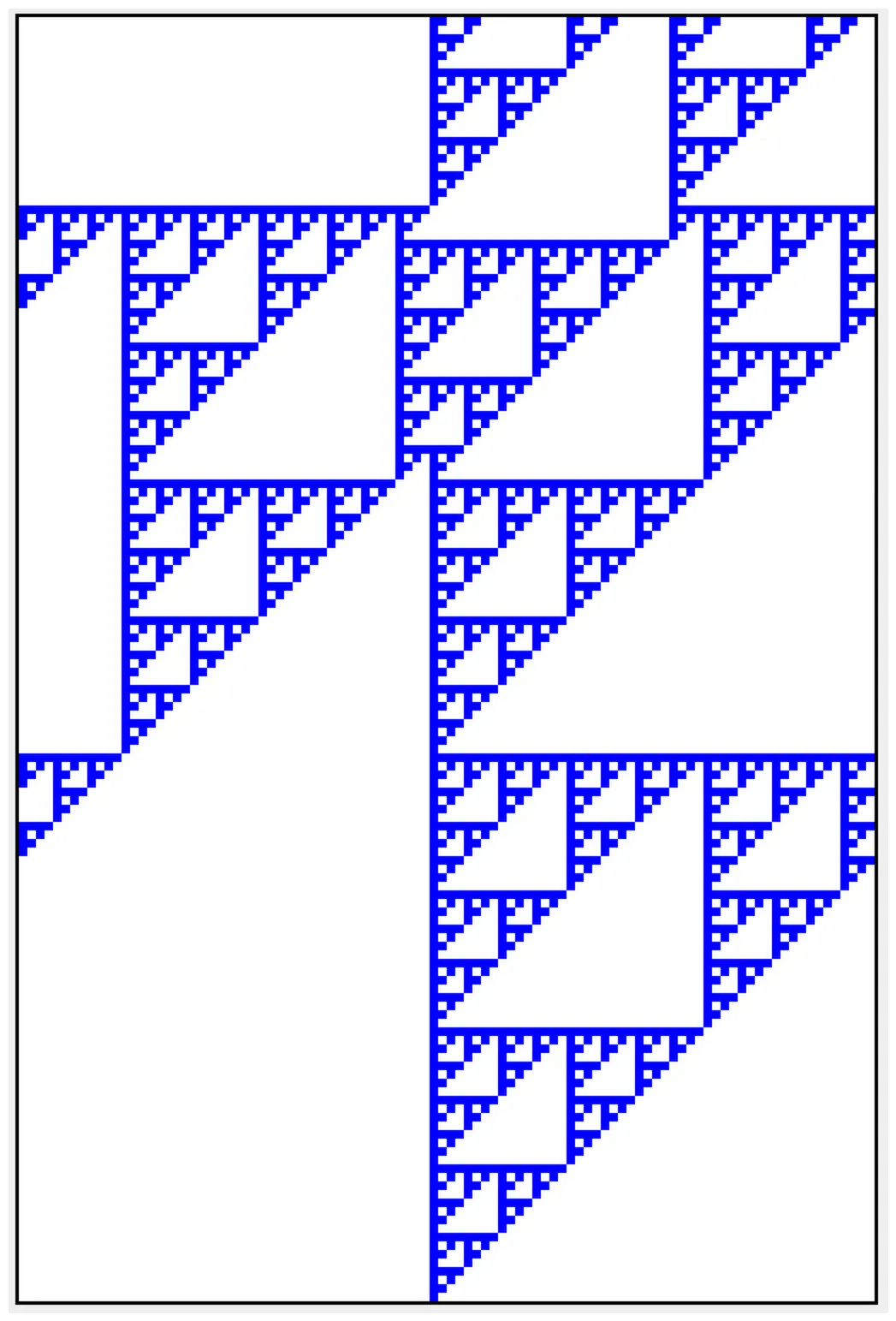
Cellular automata (CA), originally developed as computational models of natural processes, have become a central subject in the study of complex systems and generative visual forms. Among them, the Ulam-Warburton Cellular Automaton (UWCA) exhibits recursive growth and fractal-like characteristics in its spatial evolution. However, exact self-similar fractal structures are typically observable only at specific generations and remain visually obscured in conventional binary renderings. This study introduces a Recursive Gradient Profile Function (RGPF) that assigns grayscale values to newly activated cells according to their generation index, enabling latent self-similar structures to emerge cumulatively in spatial visualizations. Through this gradient-based mapping, recursive geometric patterns become perceptible across scales, revealing fractal properties that are not apparent in standard representations. We further extend this approach to UWCA variants with alternative neighborhood configurations, demonstrating that these rules also produce distinct yet consistently fractal visual patterns when visualized using recursive gradient profile. Beyond computational analysis, the resulting generative forms resonate with optical and cultural phenomena such as infinity mirrors, video feedback, and mise en abyme in European art history, as well as fractal motifs found in religious architecture. These visual correspondences suggest a broader connection between complexity science, computational visualization, and cultural art and design.
2601.17361Jan 2026
View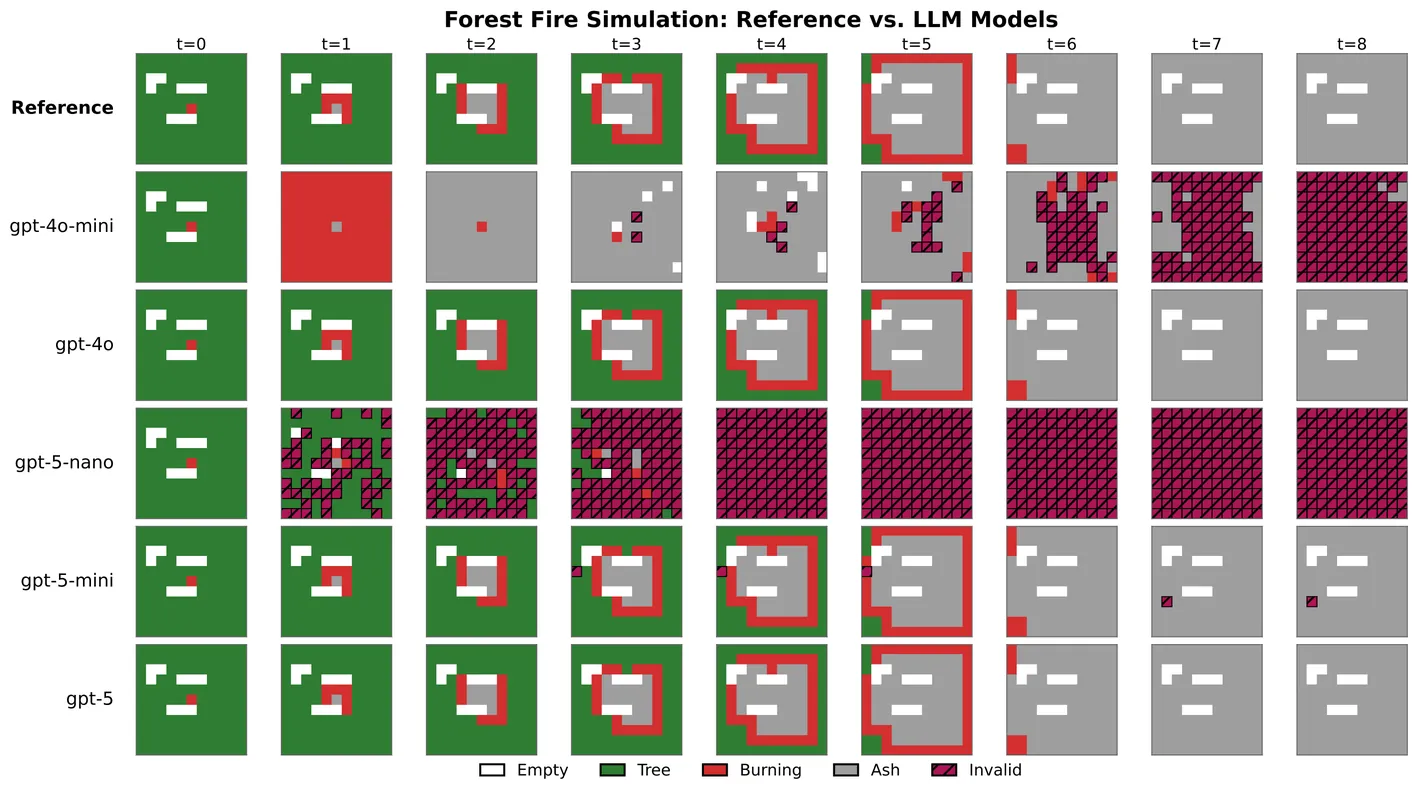
LOGOS-CA: A Cellular Automaton Using Natural Language as State and Rule
Large Language Models (LLMs), trained solely on massive text data, have achieved high performance on the Winograd Schema Challenge (WSC), a benchmark proposed to measure commonsense knowledge and reasoning abilities about the real world. This suggests that the language produced by humanity describes a significant portion of the world with considerable nuance. In this study, we attempt to harness the high expressive power of language within cellular automata. Specifically, we express cell states and rules in natural language and delegate their updates to an LLM. Through this approach, cellular automata can transcend the constraints of merely numerical states and fixed rules, providing us with a richer platform for simulation. Here, we propose LOGOS-CA (Language Oriented Grid Of Statements - Cellular Automaton) as a natural framework to achieve this and examine its capabilities. We confirmed that LOGOS-CA successfully performs simple forest fire simulations and also serves as an intriguing subject for investigation from an Artificial Life (ALife) perspective. In this paper, we report the results of these experiments and discuss directions for future research using LOGOS-CA.
2602.00036Jan 2026
View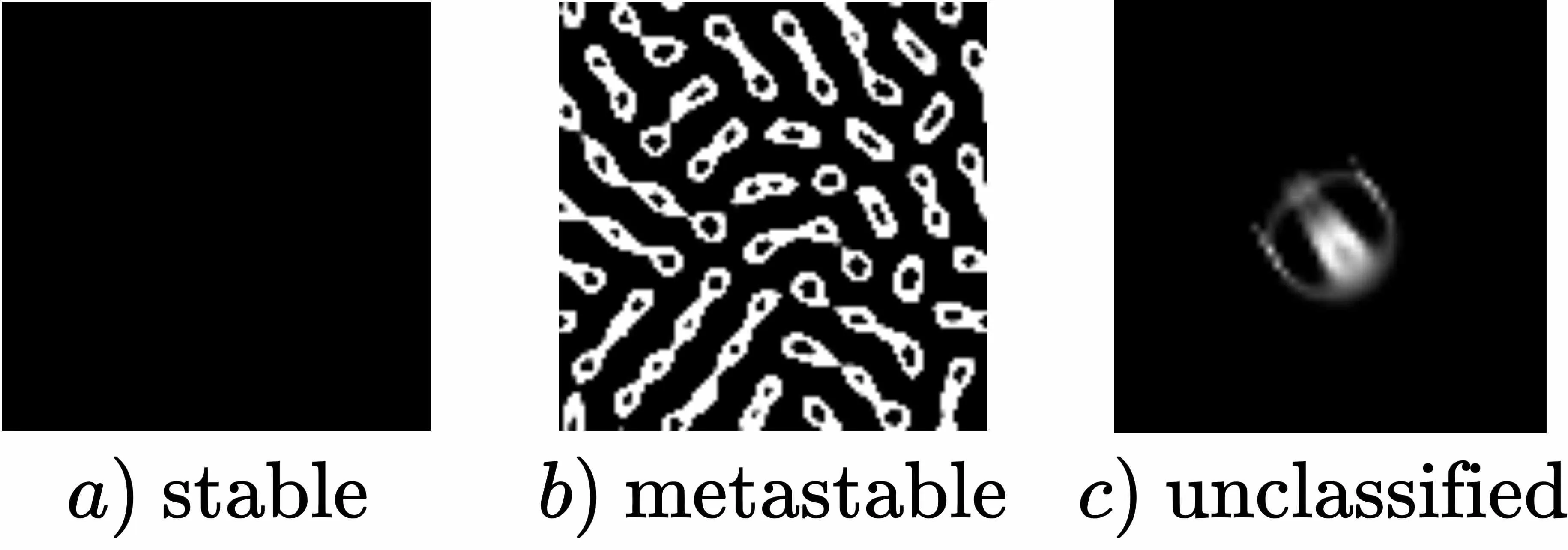
Visualizing the Structure of Lenia Parameter Space
Continuous cellular automata are rocketing in popularity, yet developing a theoretical understanding of their behaviour remains a challenge. In the case of Lenia, a few fundamental open problems include determining what exactly constitutes a soliton, what is the overall structure of the parameter space, and where do the solitons occur in it. In this abstract, we present a new method to automatically classify Lenia systems into four qualitatively different dynamical classes. This allows us to detect moving solitons, and to provide an interactive visualization of Lenia's parameter space structure on our website https://lenia-explorer.vercel.app/. The results shed new light on the above-mentioned questions and lead to several observations: the existence of new soliton families for parameters where they were not believed to exist, or the universality of the phase space structure across various kernels.
2601.01932Jan 2026
View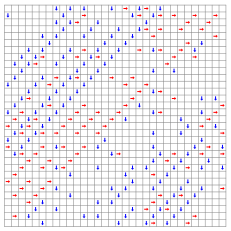
Structure and dynamics in the low-density phase of a two-dimensional cellular automaton model of traffic flow
We analyze the structure and dynamics in the low-density phase of the deterministic two-dimensional cellular automaton model of traffic flow introduced in [O. Biham, A.A. Middleton and D. Levine, Phys. Rev. A 46, R6124 (1992)]. The model consists of horizontally-oriented (H) cars that move to the right and vertically-oriented (V) cars that move downward, on a square lattice of size $L$ with periodic boundary conditions. Starting from a random initial state of density $p$, which is equally divided between the H and V-cars, the model exhibits a phase transition at a critical density $p_c$. For $p<p_c$ it evolves toward a free-flowing periodic (FFP) state, while for $p>p_c$ it evolves toward a fully-jammed state or to an intermediate state of congested traffic. In the FFP states, the H and V-cars segregate into homogeneous diagonal bands, in which they move freely without obstruction. To analyze the convergence toward the FFP states we introduce a configuration-space distance measure $D(t)=D_{\parallel}(t)+D_{\perp}(t)$ between the state of the system at time $t$ and the set of FFP states. The $D_{\parallel}(t)$ term accounts for the interactions between homotypic pairs of H (or V) cars, while $D_{\perp}(t)$ accounts for the interactions between heterotypic pairs of H and V-cars. We show that in the FFP states $D(t)=0$, while in all the other states $D(t)>0$. As the system evolves toward the FFP states, there is a separation of time scales, where $D_{\parallel}(t)$ decays very fast while $D_{\perp}(t)$ decays much more slowly. Moreover, the time dependence of $D_{\perp}(t)$ is well fitted by an exponentially truncated power-law decay of the form $D_{\perp}(t)\sim t^{-γ} \exp(-t/τ_{\perp})$, where $τ_{\perp}$ depends on $L$ and $p$. The power-law decay suggests avalanche-like dynamics with no characteristic scale, while the exponential cutoff is imposed by the finite lattice size.
2601.01180Jan 2026
View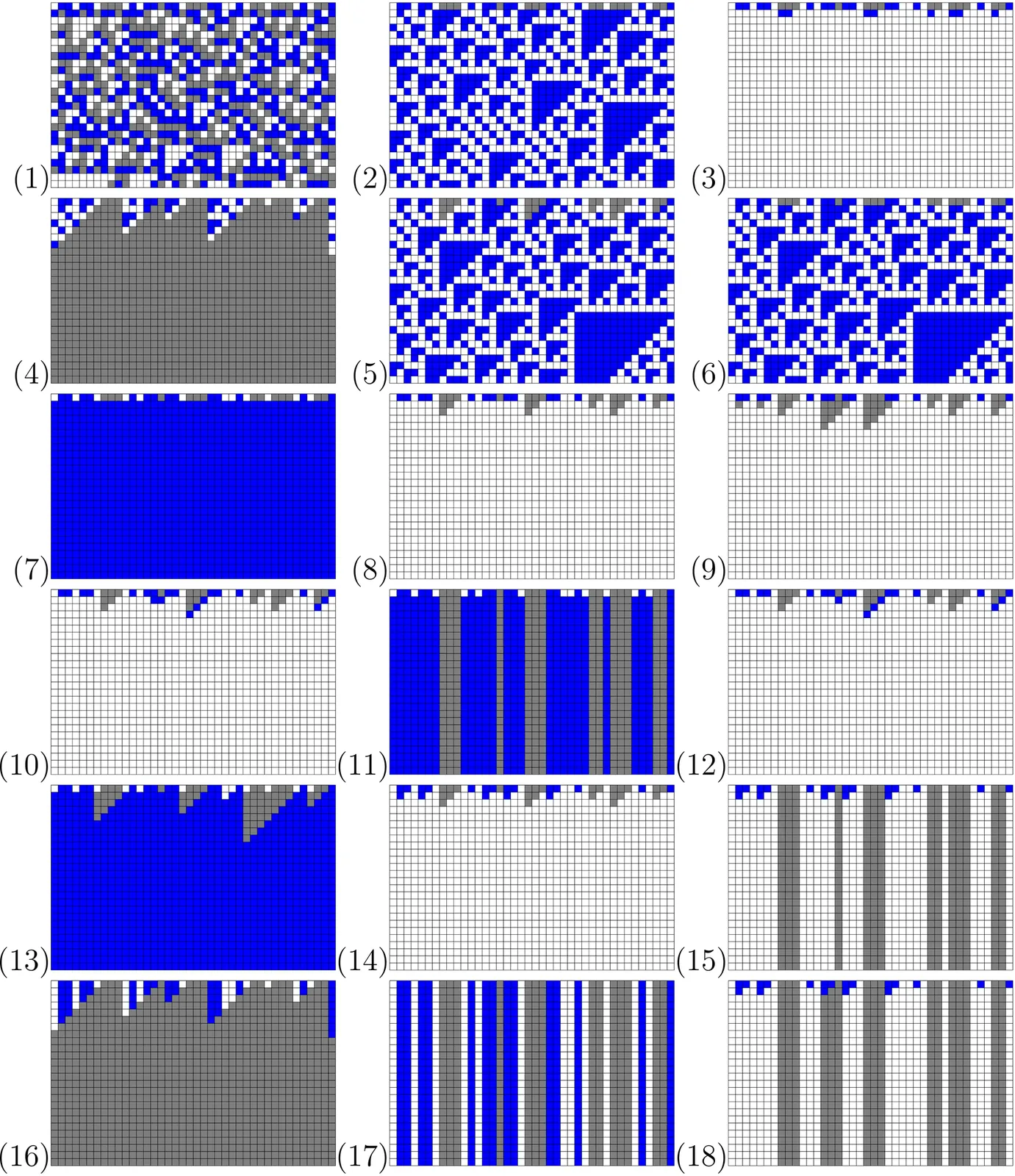
Ternary cellular automata induced by semigroups of order 3 are solvable
The minimal number of inputs in the local function of a non-trivial cellular automaton is two. Such a function can be viewed as as a kind of binary operation. If this operation is associative, it forms, together with the set of states, a semigroup. There are 18 semigroups of order 3 up to equivalence, and they define 18 cellular automata rules with three states. We investigate these rules with respect to solvability and show that all of them are solvable, meaning that the state of a given cell after $n$ iterations can be expressed by an explicit formula. We derive the relevant formulae for all 18 rules using some additional properties possessed by particular semigroups of order 3, such as commutativity and idempotence.
2601.00486Jan 2026
View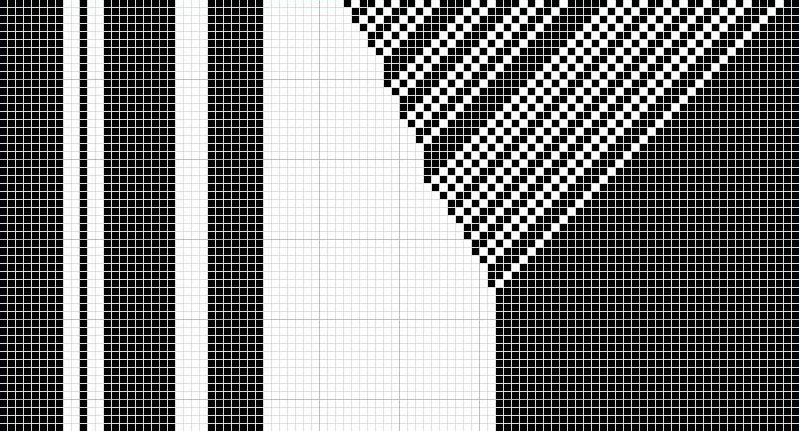
Approximating dynamics of a number-conserving cellular automaton by a finite-dimensional dynamical system
The local structure theory for cellular automata (CA) can be viewed as an finite-dimensional approximation of infinitely-dimensional system. While it is well known that this approximation works surprisingly well for some cellular automata, it is still not clear why it is the case, and which CA rules have this property. In order to shed some light on this problem, we present an example of a four input CA for which probabilities of occurrence of short blocks of symbols can be computed exactly. This rule is number conserving and possesses a blocking word. Its local structure approximation correctly predicts steady-state probabilities of small length blocks, and we present a rigorous proof of this fact, without resorting to numerical simulations. We conjecture that the number-conserving property together with the existence of the blocking word are responsible for the observed perfect agreement between the finite-dimensional approximation and the actual infinite-dimensional dynamical system.
2601.004791Jan 2026
View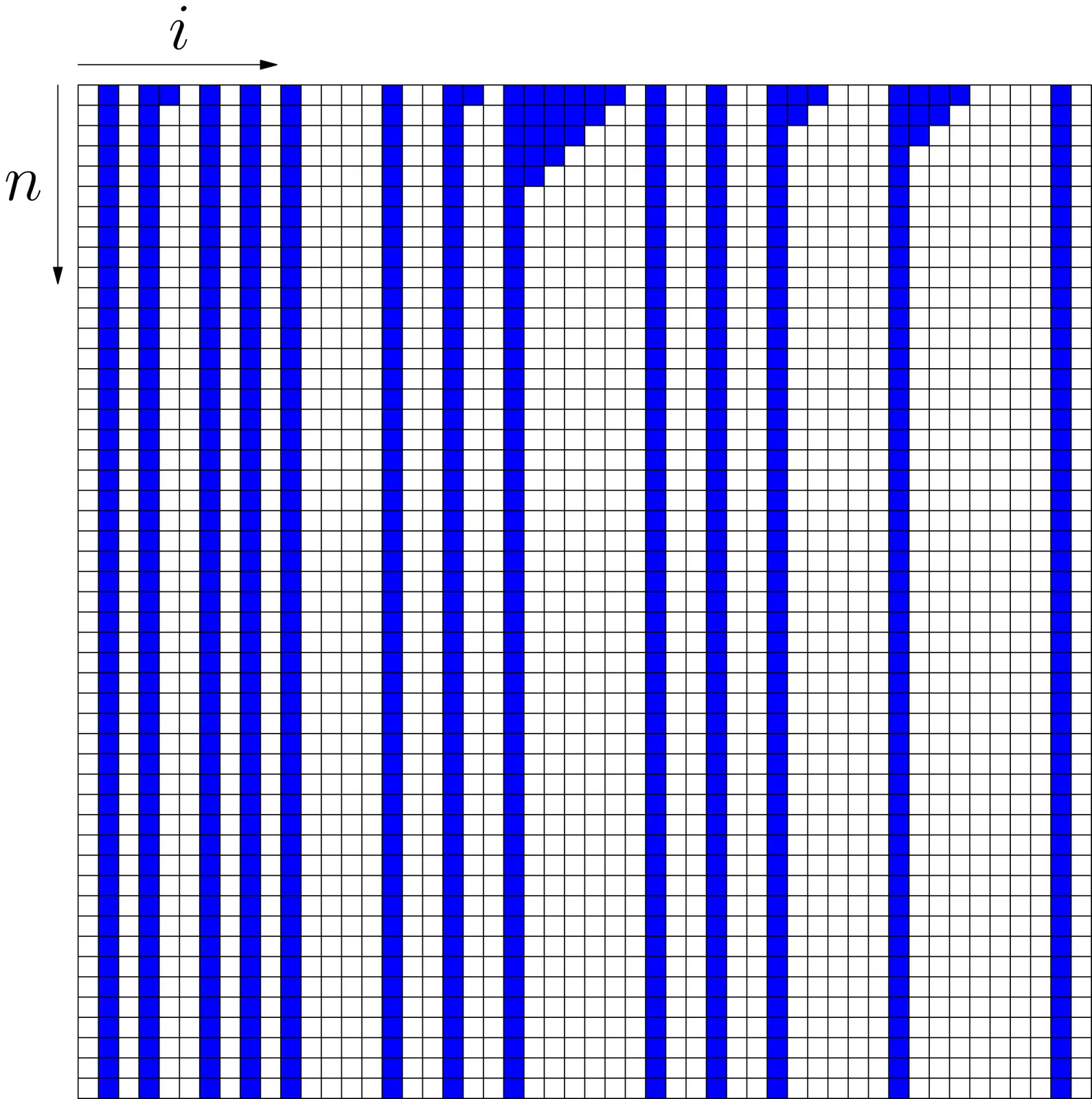
Solving the initial value problem for cellular automata by pattern decomposition
For many cellular automata, it is possible to express the state of a given cell after $n$ iterations as an explicit function of the initial configuration. We say that for such rules the solution of the initial value problem can be obtained. In some cases, one can construct the solution formula for the initial value problem by analyzing the spatiotemporal pattern generated by the rule and decomposing it into simpler segments which one can then describe algebraically. We show an example of a rule when such approach is successful, namely elementary rule 156. Solution of the initial value problem for this rule is constructed and then used to compute the density of ones after $n$ iterations, starting from a random initial condition. We also show how to obtain probabilities of occurrence of longer blocks of symbols.
2512.24337Dec 2025
View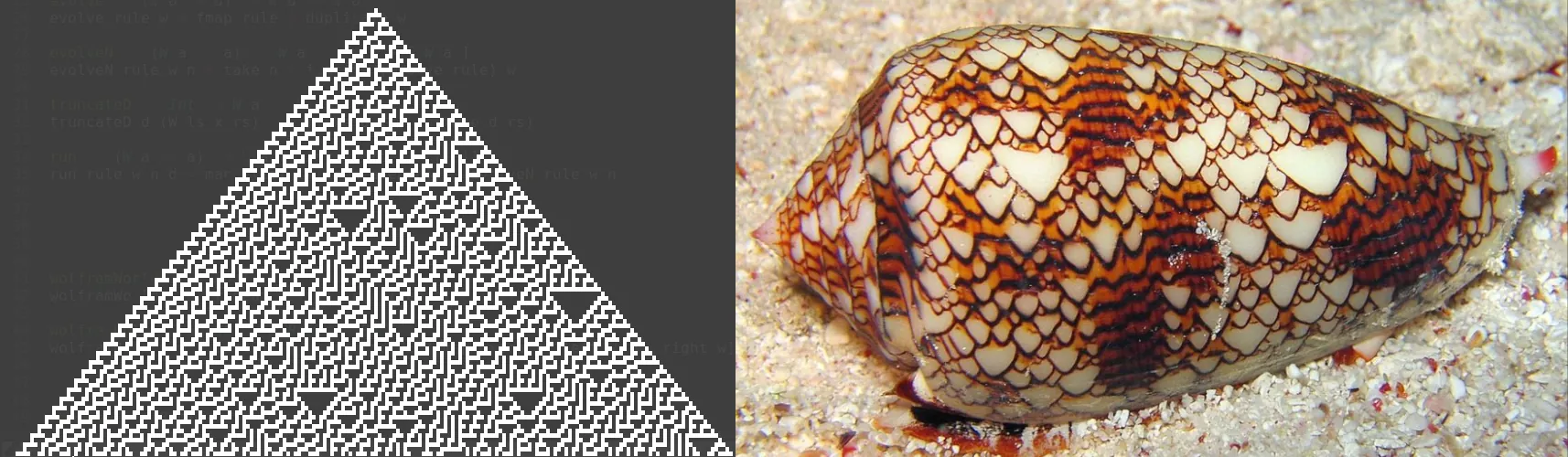
Random state comonads encode cellular automata evaluation
Cellular automata (CA) are quintessential ALife and ubiquitous in many studies of collective behaviour and emergence, from morphogenesis to social dynamics and even brain modelling. Recently, there has been an increased interest in formalising CA, theoretically through category theory and practically in terms of a functional programming paradigm. Unfortunately, these remain either in the realm of simple implementations lacking important practical features, or too abstract and conceptually inaccessible to be useful to the ALife community at large. In this paper, we present a brief and accessible introduction to a category-theoretical model of CA computation through a practical implementation in Haskell. We instantiate arrays as comonads with state and random generators, allowing stochastic behaviour not currently supported in other known implementations. We also emphasise the importance of functional implementations for complex systems: thanks to the Curry-Howard-Lambek isomorphism, functional programs facilitate a mapping between simulation, system rules or semantics, and categorical descriptions, which may advance our understanding and development of generalised theories of emergent behaviour. Using this implementation, we show case studies of four famous CA models: first Wolfram's CA in 1D, then Conway's game of life, Greenberg-Hasings excitable cells, and the stochastic Forest Fire model in 2D, and present directions for an extension to N dimensions. Finally, we suggest that the comonadic model can encode arbitrary topologies and propose future directions for a comonadic network.
2512.22067Dec 2025
View 2512.08117
Irreducible Rules and Equivalence Classes of One-dimensional Cellular Automata
One-dimensional cellular automata are discrete dynamical systems that operate on an infinite lattice of sites and are characterized by the locality and uniformity of their update rule. Permutations of the state set and isometric transformations of the lattice induce symmetry transformations on the set of local rules and the set of global maps of cellular automata, resulting in a partitioning of the set of cellular automata into equivalence classes. The concept of an irreducible local rule that depends on all its coordinates is used to analyse the equivalence classes and results on the number of equivalence classes of irreducible binary local rules and binary global maps are presented. Finally, another symmetry operator based on the scaling of neighbourhoods is introduced and the change in the number of equivalence classes is analysed.
2512.08117Dec 2025
View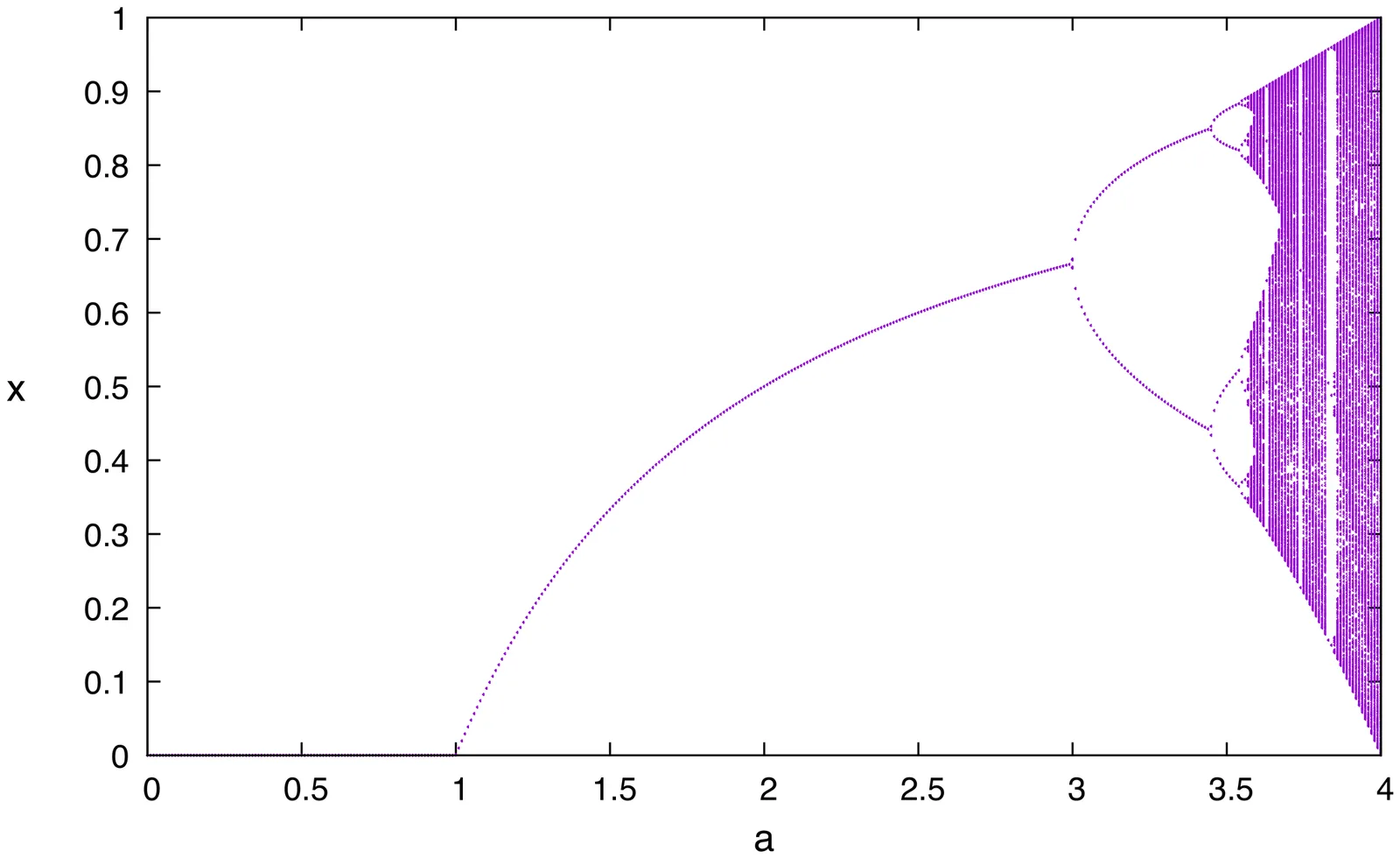
Emulating the logistic map with totalistic cellular automata
We investigate the conditions under which the mean-field formulation of a totalistic cellular automaton can approximate the logistic equation. We obtain that this can be obtained only for infinite-range neighborhood. We then performed simulation of one-dimensional cellular automata, showing that this mean-field approximation is clearly obtained by shuffling the configuration or choosing at random the neighbors, but also rewiring a fraction of links, in the spirit of the small-world mechanism. We show that it is possible to obtain a good approximation of the logistic behavior with a fraction of rewiring link of 50% or more.
2512.04140Dec 2025
View
Frobenius Revivals in Laplacian Cellular Automata: Chaos, Replication, and Reversible Encoding
We investigate Frobenius-driven revivals in prime-modulus Laplacian cellular automata, a phenomenon in which long chaotic transients collapse into exact, multi-tile replicas of an initial seed at algebraically prescribed times $t=p^m$. The mechanism follows directly from the Frobenius identity $(I+B)^{p^m}=I+B^{p^m}$, which eliminates all mixed binomial terms and enforces deterministic reappearance of the seed after dispersion. We provide a detailed numerical and analytical characterisation of these revivals across several moduli, examining entropy dynamics, spatial organisation, and local stability under perturbations. The revival structure yields several useful features: predictable transitions between chaotic and ordered phases, intrinsic spatial redundancy, and robust reconstruction via replica consensus in the presence of weak additive noise. We further show that composing Laplacian operators modulo multiple primes generates significantly extended periodic orbits while preserving exact reversibility. Building on these observations, we propose an explicit reversible encoding scheme based on chaotic transients and Frobenius returns, together with practical separation conditions and noise-tolerance estimates. Potential applications include reversible steganography, structured pseudorandomness, error-tolerant information representation, and procedural pattern synthesis. The results highlight an interplay between algebraic combinatorics and cellular-automaton dynamics, suggesting further avenues for theoretical and applied development.
2511.17389Nov 2025
View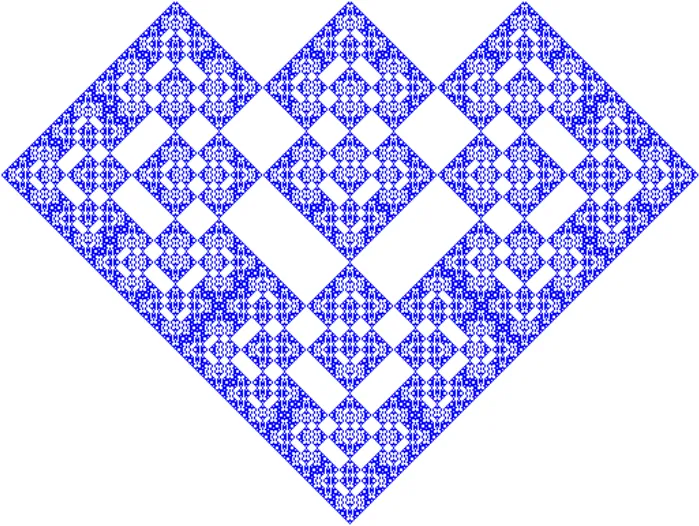
Lights Out Puzzle in p Colors: Evolution of Quiet Patterns
The Lights Out Puzzle represents a cellular automaton based on a grid of squares where clicking a square changes its state and the states of surrounding squares. A "quiet pattern" is a way to click such that in the end, no change is effected. We introduce a way to "evolve" quiet patterns in smaller grids into ones in $p$ times larger grids when the number of possible states of a square is a prime $p$. Using elliptic curves, we also find that an inverse "de-evolution" exists for most $p$. We also describe the only ways to click a grid of squares such that only 5 (the minimum) number of squares have a nonzero state.
2510.23677Oct 2025
View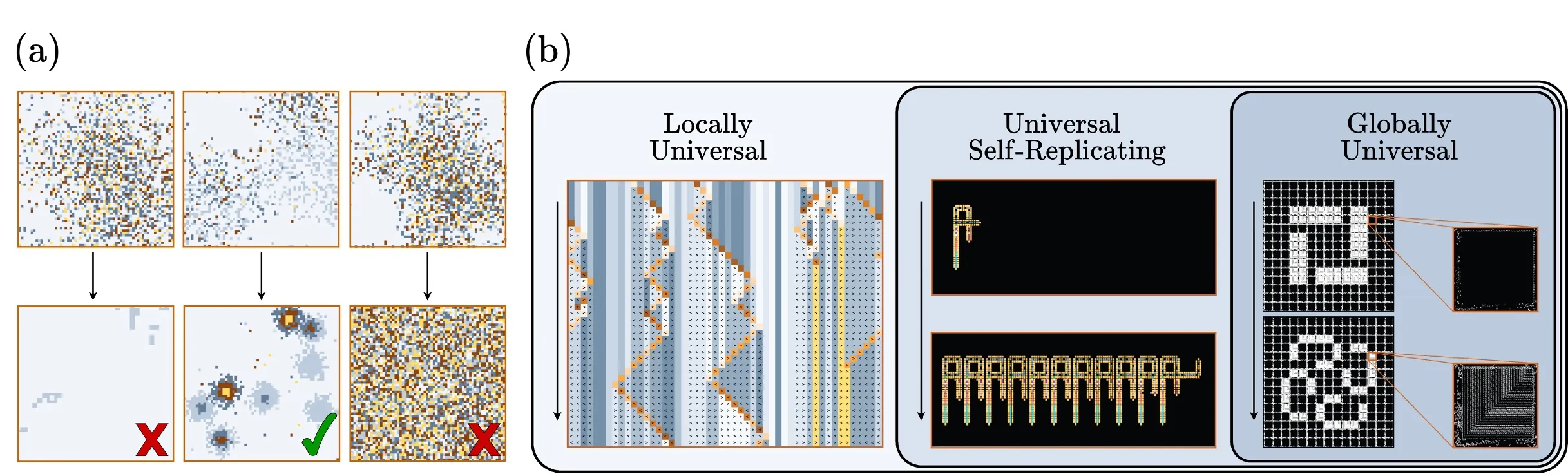
Self-replication and Computational Universality
Self-replication is central to all life, and yet how it dynamically emerges in physical, non-equilibrium systems remains poorly understood. Von Neumann's pioneering work in the 1940s and subsequent developments suggest a natural hypothesis: that any physical system capable of Turing-universal computation can support self-replicating objects. In this work, we challenge this hypothesis by clarifying what computational universality means for physical systems and constructing a cellular automaton that is Turing-universal but cannot sustain non-trivial self-replication. By analogy with biology, such dynamics manifest transcription and translation but cannot instantiate replication. More broadly, our work emphasizes that the computational complexity of translating between physical dynamics and symbolic computation is inseparable from any claim of universality (exemplified by our analysis of Rule 110) and builds mathematical foundations for identifying self-replicating behavior. Our approach enables the formulation of necessary dynamical and computational conditions for a physical system to constitute a living organism.
2510.08342Oct 2025
View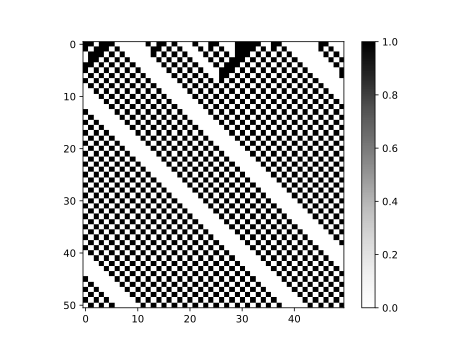
Pattern formation of generalized fuzzy elementary cellular automaton
We propose a general method for constructing a fuzzy cellular automaton from a given cellular automaton. Unlike previous approaches that use fuzzy distinctive normal form, whose update function is restricted to third-order polynomials, our method accommodates a wide range of fuzzification functions, enabling the generation of diverse and complex time-evolution patterns that are unattainable with simpler heuristic models. We demonstrate that phase transitions in pattern formation can be observed by changing the parameters of the fuzzification function or the mixing ratio between two distinct evolution rules of elementary cellular automata. Remarkably, the resulting generalized fuzzy elementary cellular automata exhibit rich dynamical properties, including stable manifolds and chaos, even in minimal systems composed of just three cells.
2510.01629Oct 2025
View
Essential metrics for Life on graphs
We present a strong theoretical foundation that frames a well-defined family of outer-totalistic network automaton models as a topological generalisation of binary outer-totalistic cellular automata, of which the Game of Life is one notable particular case. These "Life-like network automata" are quantitatively described by expressing their genotype (the mean field curve and Derrida curve) and phenotype (the evolution of the state and defect averages). After demonstrating that the genotype and phenotype are correlated, we illustrate the utility of these essential metrics by tackling the firing squad synchronisation problem in a bottom-up fashion, with results that exceed a 90% success rate.
2506.21226Jun 2025
View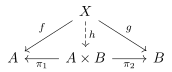
Categorical products of cellular automata
We study two categories of cellular automata. First, for any group $G$, we consider the category $\mathcal{CA}(G)$ whose objects are configuration spaces of the form $A^G$, where $A$ is a set, and whose morphisms are cellular automata of the form $τ: A_1^G \to A_2^G$. We prove that the categorical product of two configuration spaces $A_1^G$ and $A_2^G$ in $\mathcal{CA}(G)$ is the configuration space $(A_1 \times A_2)^G$. Then, we consider the category of generalized cellular automata $\mathcal{GCA}$, whose objects are configuration spaces of the form $A^G$, where $A$ is a set and $G$ is a group, and whose morphisms are $φ$-cellular automata of the form $\mathcal{T} : A_1^{G_1} \to A_2^{G_2}$, where $φ: G_2 \to G_1$ is a group homomorphism. We prove that a categorical weak product of two configuration spaces $A_1^{G_1}$ and $A_2^{G_2}$ in $\mathcal{GCA}$ is the configuration space $(A_1 \times A_2)^{G_1 \ast G_2}$, where $G_1 \ast G_2$ is the free product of $G_1$ and $G_2$. The previous results allow us to naturally define the product of two cellular automata in $\mathcal{CA}(G)$ and the weak product of two generalized cellular automata in $\mathcal{GCA}$.
2503.21567Mar 2025
View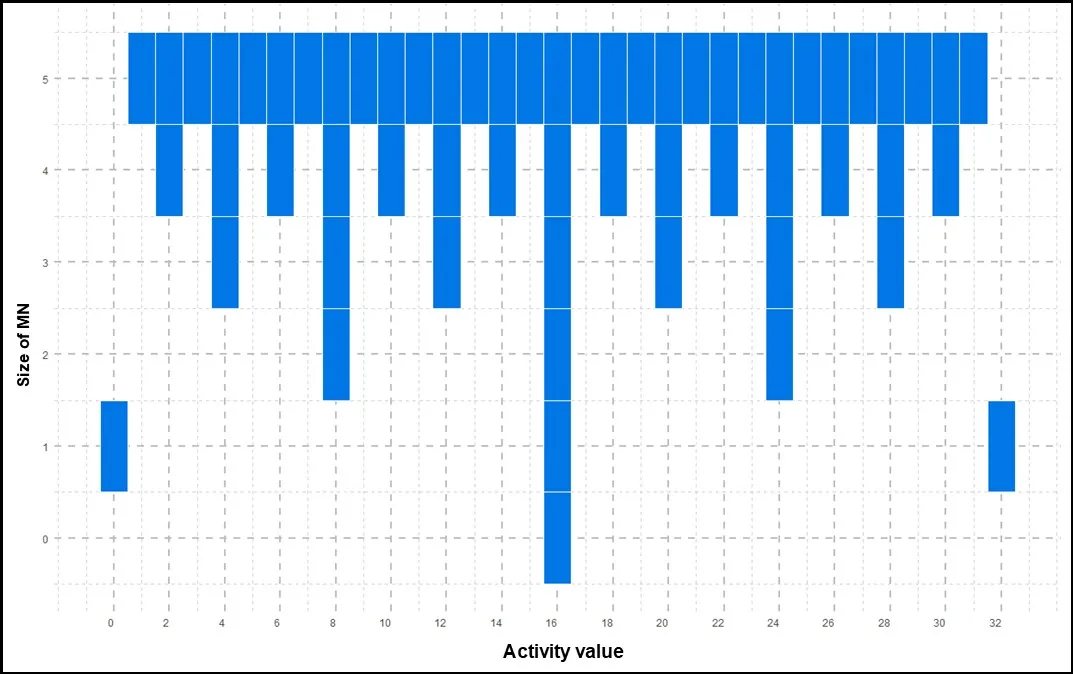
Connections between the minimal neighborhood and the activity value of cellular automata
For a group $G$ and a finite set $A$, a cellular automaton is a transformation of the configuration space $A^G$ defined via a finite neighborhood and a local map. Although neighborhoods are not unique, every CA admits a unique minimal neighborhood, which consists on all the essential cells in $G$ that affect the behavior of the local map. An active transition of a cellular automaton is a pattern that produces a change on the current state of a cell when the local map is applied. In this paper, we study the links between the minimal neighborhood and the number of active transitions, known as the activity value, of cellular automata. Our main results state that the activity value usually imposes several restrictions on the size of the minimal neighborhood of local maps.
2503.17881Mar 2025
View2503.15086Cellular Automata on Probability Measures
Classical Cellular Automata (CCAs) are a powerful computational framework widely used to model complex systems driven by local interactions. Their simplicity lies in the use of a finite set of states and a uniform local rule, yet this simplicity leads to rich and diverse dynamical behaviors. CCAs have found applications in numerous scientific fields, including quantum computing, biology, social sciences, and cryptography. However, traditional CCAs assume complete certainty in the state of all cells, which limits their ability to model systems with inherent uncertainty. This paper introduces a novel generalization of CCAs, termed Cellular Automata on Measures (CAMs), which extends the classical framework to incorporate probabilistic uncertainty. In this setting, the state of each cell is described by a probability measure, and the local rule operates on configurations of such measures. This generalization encompasses the traditional Bernoulli measure framework of CCAs and enables the study of more complex systems, including those with spatially varying probabilities. We provide a rigorous mathematical foundation for CAMs, demonstrate their applicability through concrete examples, and explore their potential to model the dynamics of random graphs. Additionally, we establish connections between CAMs and symbolic dynamics, presenting new avenues for research in random graph theory. This study lays the groundwork for future exploration of CAMs, offering a flexible and robust framework for modeling uncertainty in cellular automata and opening new directions for both theoretical analysis and practical applications.
2503.15086Mar 2025
View
Extended Cellular Automata
In this work, the one-dimensional Cellular Automaton is extended to one that involves two sets of symbols and two global rules. As a main result, the Extended Curtis-Hedlund-Lyndon Theorem is demonstrated. Such constructions can be useful in studying complex systems involving two related phenomena and provide a way to their co-study.
2502.17065Feb 2025
ViewPage 1 of 2