Mathematical optimization, convex analysis, and control theory
We study physics-informed neural networks (PINNs) as numerical tools for the optimal control of semilinear partial differential equations. We first recall the classical direct and indirect viewpoints for optimal control of PDEs, and then present two PINN formulations: a direct formulation based on minimizing the objective under the state constraint, and an indirect formulation based on the first-order optimality system. For a class of semilinear parabolic equations, we derive the state equation, the adjoint equation, and the stationarity condition in a form consistent with continuous-time Pontryagin-type optimality conditions. We then specialize the framework to an Allen-Cahn control problem and compare three numerical approaches: (i) a discretize-then-optimize adjoint method, (ii) a direct PINN, and (iii) an indirect PINN. Numerical results show that the PINN parameterization has an implicit regularizing effect, in the sense that it tends to produce smoother control profiles. They also indicate that the indirect PINN more faithfully preserves the PDE contraint and optimality structure and yields a more accurate neural approximation than the direct PINN.
Gradient normalization is central in deep-learning optimization because it stabilizes training and reduces sensitivity to scale. For deep architectures, parameters are naturally grouped into matrices or blocks, so spectral normalizations are often more faithful than coordinatewise Euclidean ones; Muon is the main motivating example of this paper. More broadly, we study a family of spectral normalization rules, ranging from ordinary gradient descent to Muon and intermediate Schatten-type schemes, in a mean-field regime where parameters are modeled by probability measures. We introduce a family of Spectral Wasserstein distances indexed by a norm gamma on positive semidefinite matrices. The trace norm recovers the classical quadratic Wasserstein distance, the operator norm recovers the Muon geometry, and intermediate Schatten norms interpolate between them. We develop the static Kantorovich formulation, prove comparison bounds with W2, derive a max-min representation, and obtain a conditional Brenier theorem. For Gaussian marginals, the problem reduces to a constrained optimization on covariance matrices, extending the Bures formula and yielding a closed form for commuting covariances in the Schatten family. For monotone norms, including all Schatten cases, we prove the equivalence between the static and dynamic Benamou-Brenier formulations, deduce that the resulting transport cost is a genuine metric equivalent to W2 in fixed dimension, and show that the induced Gaussian covariance cost is also a metric. We then interpret the associated normalized continuity equation as a Spectral Wasserstein gradient flow, identify its exact finite-particle counterpart as a normalized matrix flow, obtain first geodesic-convexity results, and show how positively homogeneous mean-field models induce a spectral unbalanced transport on the sphere.
Integer Quadratic Programming (IQP), $\min\{x^T Q x + c^T x : Ax \le b,\, x\in\Z^n\}$, is a fundamental problem in combinatorial optimization. While the convex and concave special cases admit polynomial-time algorithms for fixed~$n$, the general indefinite case is considerably harder: it was only recently shown to lie in NP, and the FPT algorithm, due to Lokshtanov, establishes fixed-parameter tractability parameterized by $n$ and the largest coefficient~$L$ without giving an explicit running time. We give the first single-exponential algorithm for IQP, solving it in time $ \bigl(n\,L^n_A\,Δ(A)\,L_Q\bigr)^{O(n)}\cdot\mathrm{poly}(\varphi), $ which is $(nL)^{O(n^2)}\cdot\mathrm{poly}(\varphi)$ in general using the same parameterization. We achieve improvements for structured cases like total unimodularity and further state explicit complexity results for a number of FPT algorithms and optimization problems. The single-exponential bound is achieved via curvature batching: we classify kernel directions by the sign of their quadratic curvature and observe that when no negative-curvature direction exists, all gradient constraints can be imposed simultaneously in a single batch. This replaces the chain of determinant squarings inherent in sequential branching with a single polynomial inflation, after which the remaining problem is an ILP. As a secondary contribution, we give an explicit bound for concave integer minimization over a polytope $\{Ax \le b\} \cap \Z^n$ whose parametric complexity depends only on the constraint matrix~$A$ and is independent of the right-hand side~$b$.
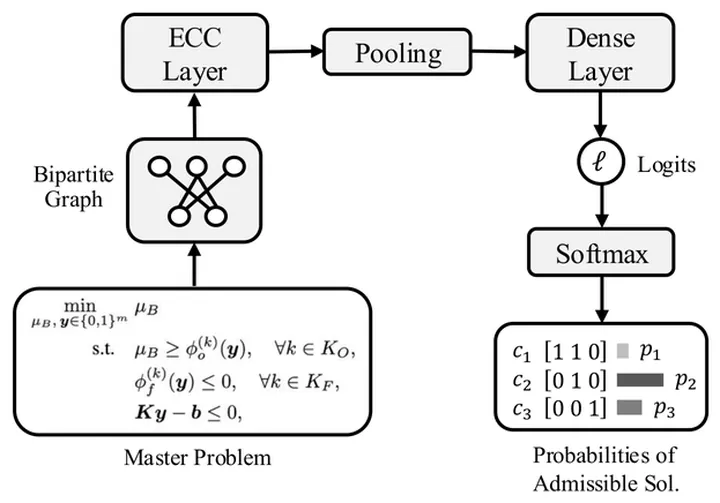
Mixed-integer optimization problems arise in a wide range of control applications. Benders decomposition is a widely used algorithm for solving such problems by decomposing them into a mixed-integer master problem and a continuous subproblem. A key computational bottleneck is the repeated solution of increasingly complex master problems across iterations. In this paper, we propose a feasibility-aware imitation learning framework that predicts the values of the integer variables of the master problem at each iteration while accounting for feasibility with respect to constraints governing admissible integer assignments and the accumulated Benders feasibility cuts. The agent is trained using a two-stage procedure that combines behavioral cloning with a feasibility-based logit adjustment to bias predictions toward assignments that satisfy the evolving cut set. The agent is deployed within an agent-based Benders decomposition framework that combines explicit feasibility checks with a time-limited solver computation of a valid lower bound. The proposed approach retains finite convergence properties, as the lower bound is certified at each iteration. Application to a prototypical case study shows that the proposed method improves solution time relative to existing imitation learning approaches for accelerating Benders decomposition, while preserving solution accuracy.
2604.04795We present an elementary state augmentation method for a class of static risk measure applied to the total cost for both Markov decision processes and stochastic optimal control, such that dynamic programming equations can be derived on the augmented space. Through this we discuss the sample complexities of these two problems for both finite-horizon and infinite-horizon settings. We demonstrate the application of the proposed approach through studying distributionally robust functional generated by $φ$-divergences including conditional value-at-risk.
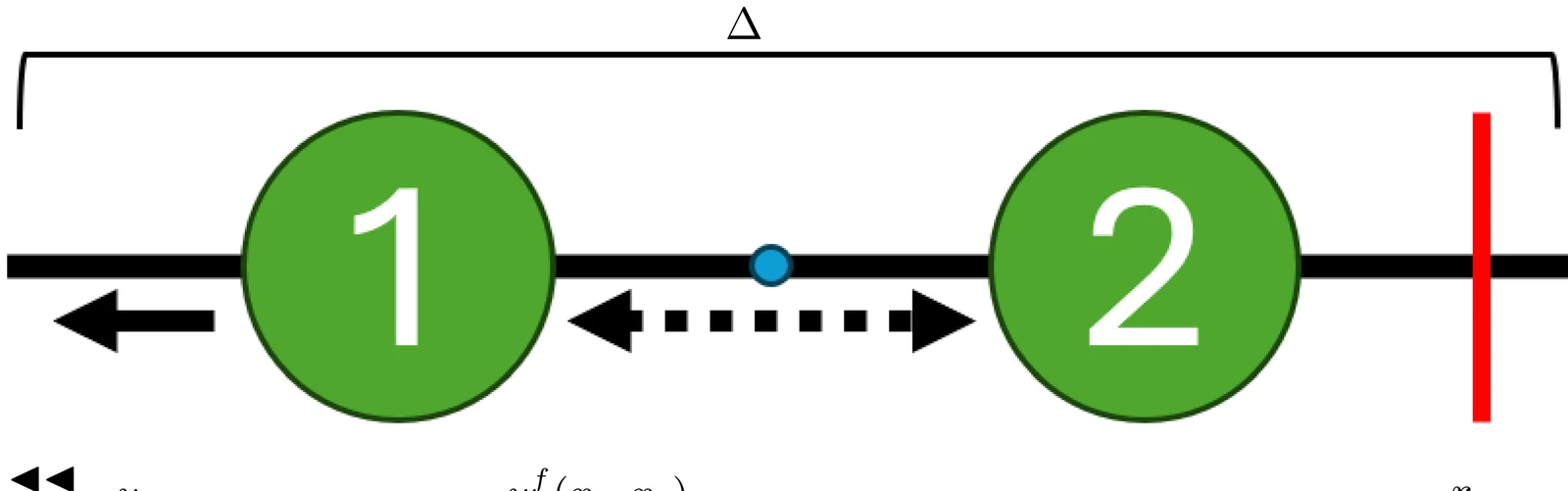
This paper presents a novel framework for ensuring safety in dynamically coupled multi-agent systems through collaborative control. Drawing inspiration from ecological models of altruism, we develop collaborative control barrier functions that allow agents to cooperatively enforce individual safety constraints under coupling dynamics. We introduce an altruistic safety condition based on the so-called Hamilton's rule, enabling agents to trade off their own safety to support higher-priority neighbors. By incorporating these conditions into a distributed optimization framework, we demonstrate increased feasibility and robustness in maintaining system-wide safety. The effectiveness of the proposed approach is illustrated through simulation in a simplified formation control scenario.
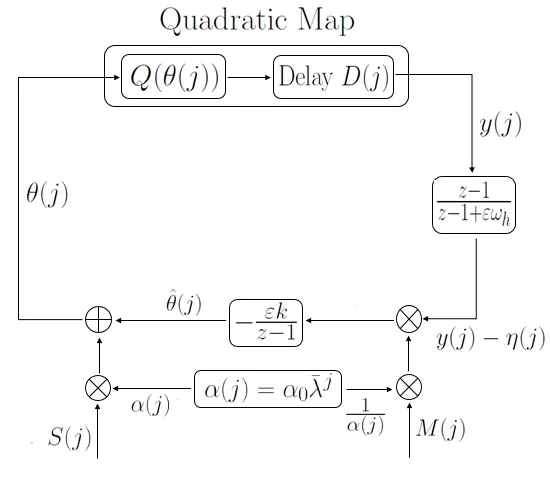
In this paper, we present the discrete-time unbiased extremum seeking (ES) algorithm for n-dimensional (nD) static quadratic maps in the presence of unknown time-varying measurement delays bounded by known constants which can be large. The existing ES results in the presence of large delays are usually confined to known constant or slowly-varying delays, which is restrictive. We provide the first ES algorithm, which is robust with respect to unknown large time-varying delays. Moreover, we achieve the unbiased exponential convergence. We manage with such delays by choosing dithers with frequencies of the order of \sqrtε, where the small parameter ε > 0 appears in the dynamics of the real-time estimator. As expected, larger delays lead to a slower convergence. We provide qualitative and quantitative results based on the averaging analysis via delay-free transformation. For the quantitative bounds on the controller parameters that ensure the exponential unbiased convergence of the ES system, we assume that the Hessian of the map is uncertain and lies within a known range. Differently from its continuous-time counterpart, the small parameter in the discrete-time case defines the decay rate of the estimation error system, making a quantitative bound on this parameter particularly important. We present also constructive conditions for the practical stability of the classical ES system. Our results are semi-global for globally quadratic maps, while for locally quadratic static maps, we provide a bound on the region of convergence. Our analysis shows that appropriate ES parameters can be found for any large unknown time-varying bounded delay. A numerical example highlights the efficiency of the method.
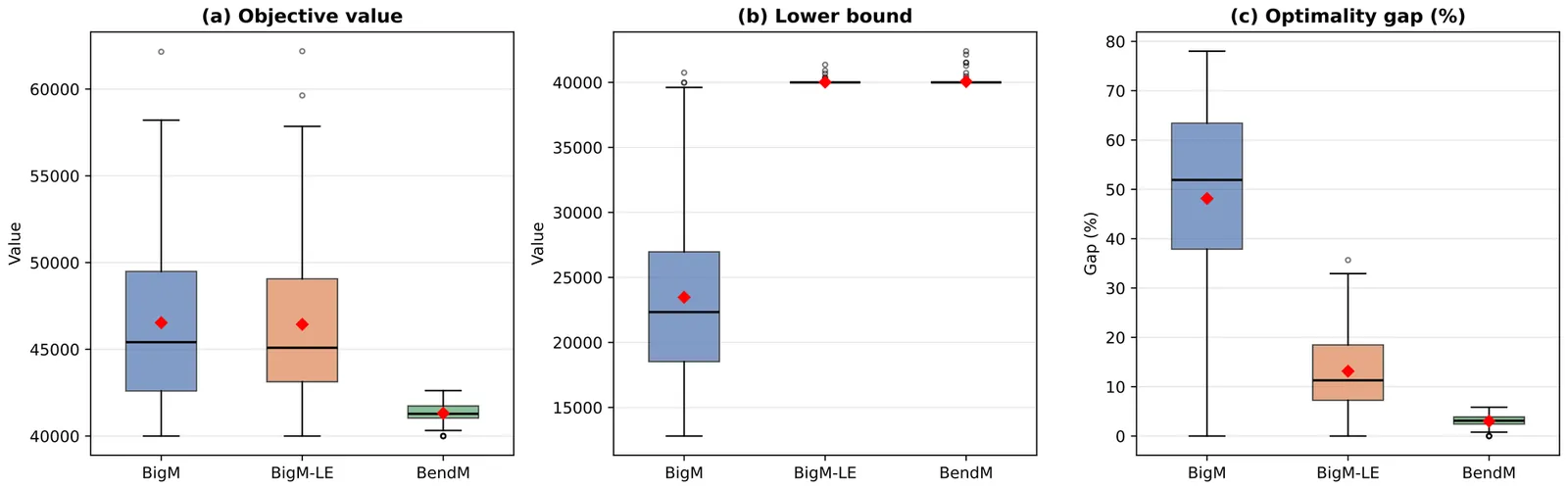
We study the Generalized Multiple Strip Packing Problem (GMSPP) with heterogeneous per-unit-area costs, in which rectangular items of fixed dimensions must be packed without overlap into multiple open-ended strips of different widths, each incurring a cost proportional to the area used. This cost-weighted area objective is introduced here for the first time and unifies several objectives studied separately in the literature, including total area, total height for identical strips, and makespan. We propose two exact integer programming formulations for this problem: a big-M formulation adapted from recent work, and a normal-position formulation extending an earlier single-strip approach to multiple heterogeneous strips. For the normal-position formulation, we develop an exact Benders decomposition algorithm, called BendM (Benders' Method for Multiple strips). Comprehensive computational experiments on 180 instances derived from standard strip-packing benchmarks compare both formulations and demonstrate the effectiveness of BendM across three cost structures.
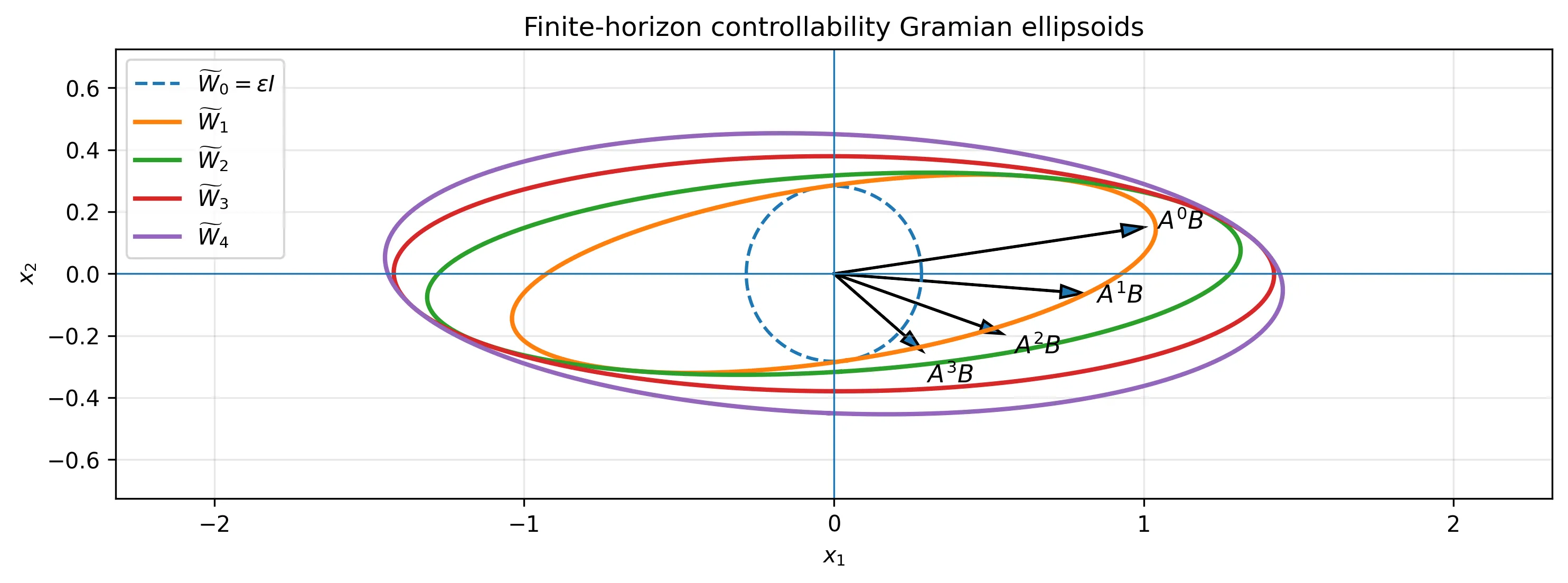
This paper develops a unified analytical framework for determinant identities under finite-rank perturbations of square matrices that remains valid without invertibility assumptions. In contrast to classical inverse-based formulations, the approach is based on an adjugate-driven additive representation, which extends naturally to singular matrices and yields explicit, non-asymptotic formulas. Building on this representation, we derive recursive and multiplicative expressions describing the evolution of determinant and log-determinant quantities under successive rank-one updates. These results reveal a structural interpretation in which determinant-based quantities evolve as cumulative measures of independent directions, providing a precise decomposition of incremental contributions. To address the singular case, we develop a systematic extension based on the Drazin inverse and the pseudodeterminant, leading to closed-form identities that isolate the contribution of the nonzero spectrum. In particular, we obtain a generalized determinant formula that can be viewed as a singular counterpart of the matrix determinant lemma. The spectral impact of low-rank perturbations is analyzed, yielding explicit conditions governing eigenvalue shifts and stability preservation. The proposed framework establishes a direct analytical link between matrix perturbation theory and system-theoretic concepts. In particular, we show that the pseudodeterminant of controllability Gramians admits a multiplicative decomposition that explicitly quantifies the incremental expansion of the reachable subspace under successive inputs. This leads to a unified interpretation of information accumulation, uncertainty reduction, and reachability in both full-rank and rank-deficient linear systems.
2604.04641We consider an optimal dividend payout problem for an insurance company whose surplus follows the classical Cramér-Lundberg model. The dividend rate is subject to a ratcheting constraint (i.e., it must be nondecreasing over time), and the company may inject capital at a proportional cost to avoid ruin. This problem gives rise to a stochastic control problem with a self-path-dependent control constraint, costly capital injections, and jump-diffusion dynamics. The associated Hamilton-Jacobi-Bellman (HJB) equation is a partial integro-differential variational inequality featuring both a nonlocal integral term and a gradient constraint. We develop a systematic probabilistic and PDE-based approach to solve this HJB equation. By discretizing the space of admissible dividend rates, we construct a sequence of approximating regime-switching systems of ordinary integro-differential equations. Through careful a priori estimates and a limiting argument, we prove the existence and uniqueness of a \emph{strong solution} in a suitable space. This regularity result is fundamental: it allows us to characterize the optimal dividend policy via a switching free boundary and to construct an explicit optimal feedback control strategy. To the best of our knowledge, this is the first complete solution -- comprising both the value function and an implementable optimal strategy -- for a dividend ratcheting problem with capital injection under the Cramér-Lundberg model. Our work advances the mathematical theory of optimal stochastic control beyond the standard viscosity solution framework, providing a rigorous foundation for dividend policy design in economics.
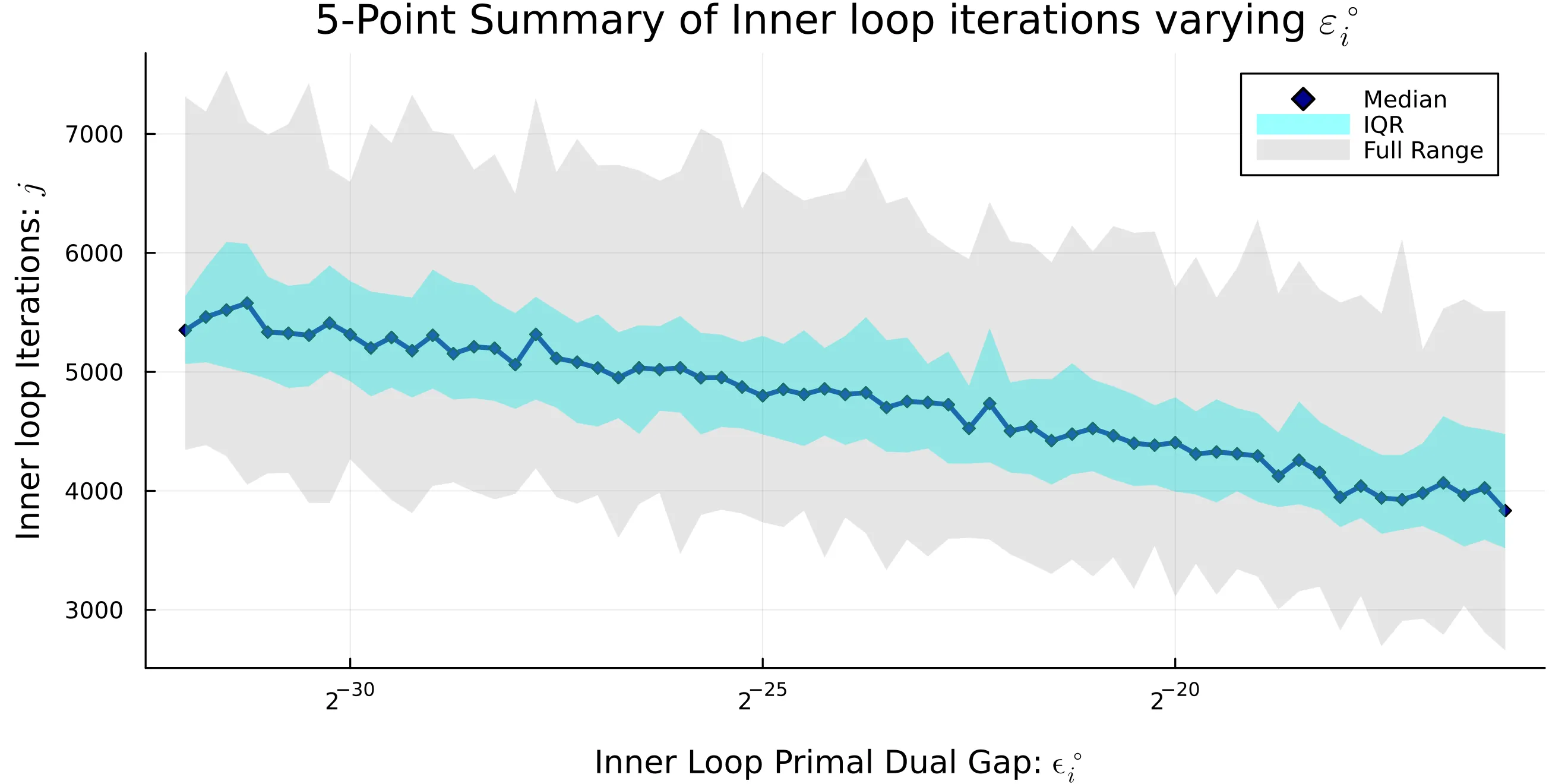
We consider the optimization problem $\min_{x\in \mathbb R^n}{F(x):=f(x)+ω(Ax)}$, where $f$ is an $L$-Lipschitz smooth function, and $ω$ is a proper, lower semicontinuous, and convex function. We prove in this paper that when $ω$ is a conic polyhedral function, the inexact accelerated proximal gradient method (IAPG), employed in a double-loop structure, achieves a total complexity of $\mathcal O(\ln(1/\varepsilon)/\sqrt{\varepsilon})$ measured by the total number of calls to the proximal operator of the convex conjugate $ω^\star$ and the gradient of $f$ to achieve $\varepsilon$-optimality in function value. To the best of our knowledge, this improves upon the best-known complexity for IAPG. The key theoretical ingredient is a quadratic growth condition on the dual of the inexact proximal problem, which arises from the conic polyhedral structure of $ω$ and implies linear convergence of the inner proximal gradient loop. To validate these findings, we conduct numerical experiments on a robust TV-$\ell_2$ signal recovery problem, demonstrating fast convergence.
2604.04478This paper studies discrete-time two-person nonzero-sum linear quadratic stochastic games with random coefficients. Using convex variational analysis, we derive necessary and sufficient conditions for the existence of open-loop Nash equilibria. When weighting matrices are indefinite, the classical first-order conditions are no longer sufficient for optimality; we introduce a global nonnegativity condition to restore sufficiency, which becomes a cornerstone of the subsequent analysis. To characterize the equilibria explicitly, we develop fully coupled forward-backward stochastic difference equations and a system of non-symmetric stochastic Riccati equations (FBS$Δ$Es) with constraints. that decouple the stochastic Hamiltonian system. A key technical contribution is the provision of sufficient conditions -- positive semidefiniteness of the Riccati matrices operators and structural non-degeneracy -- that guarantee the invertibility of a related operator, ensuring the well-posedness of the closed-loop feedback representation of the open-loop Nash equilibrium strategies. A distinctive feature of this work is the presence of fully random coefficients, which leads to fully nonlinear higher-order backward stochastic difference equations in the Riccati framework, in contrast to the algebraic Riccati equations in the deterministic setting.
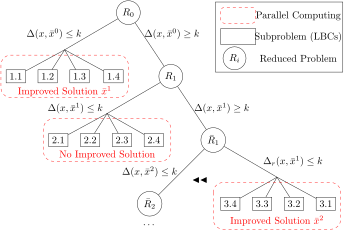
We develop a novel primal heuristic for nonconvex Mixed-Integer Quadratically Constrained Quadratic Programs (MIQCQPs). The method is built around a convex approximation that is dynamically adjusted within a feasibility-pump-style alternating heuristic. Approximations are adjusted based on the structure of the MIQCQP instance. Additionally, parallelized local branching is incorporated to further refine detected solutions. This paper builds upon the second-place finalist submission in the 2025 Land-Doig MIP Computational Competition. Our results are validated with computational experiments on instances from QPLIB, finding feasible solutions for three previously unsolved cases and improving the best-known solutions for fifteen instances within five minutes of runtime.
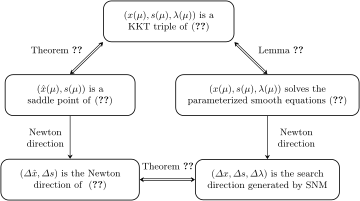
Whether polynomial iteration complexity can be established for smoothing Newton methods (SNMs) in symmetric cone programming (SCP) remains a long-standing open problem. A key difficulty lies in the lack of an analogue of the self-concordant convex framework in interior-point methods (IPMs). In this paper, we answer this question affirmatively. We introduce a reduced smoothing barrier augmented Lagrangian (SBAL) function and prove that it is self-concordant convex-concave, which extends the classical self-concordant theory beyond the convex setting. Furthermore, we show that the parameterized smooth equations associated with SNMs are equivalent to the first-order optimality conditions of a minimax problem whose objective is the reduced SBAL function. Motivated by this equivalence, we propose a path-following smoothing Newton method (PFSNM). The reduced SBAL function induces a central path and an associated neighborhood, which provide estimates of the Newton decrement needed for the path-following analysis. As a result, the method is proven to achieve an iteration complexity of $\mathcal{O}( \sqrtν \ln(1/\varepsilon) )$, matching the best-known short-step bound for IPMs. Numerical results on standard benchmarks show that PFSNM is competitive with several well-known interior-point solvers, providing computational support for the polynomial iteration complexity.
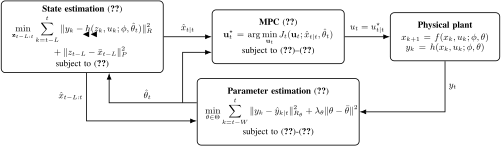
We consider the problem of simultaneous control and parameter estimation when the model is available only as a differentiable physics simulator. We propose a receding-horizon control framework in which a model predictive control (MPC) objective is optimized using gradients obtained by differentiating through the simulator, while physical parameters are updated online using measurement data. Unlike classical MPC, which relies on explicit algebraic models, our approach treats the dynamics as a computational object and performs simulation-based optimization using automatic differentiation. A shared differentiable model enables joint, real-time optimization of control inputs and physical parameters. We present two preliminary examples to demonstrate the proposed framework on two challenging applications: a fluid flow problem and a particle accelerator.
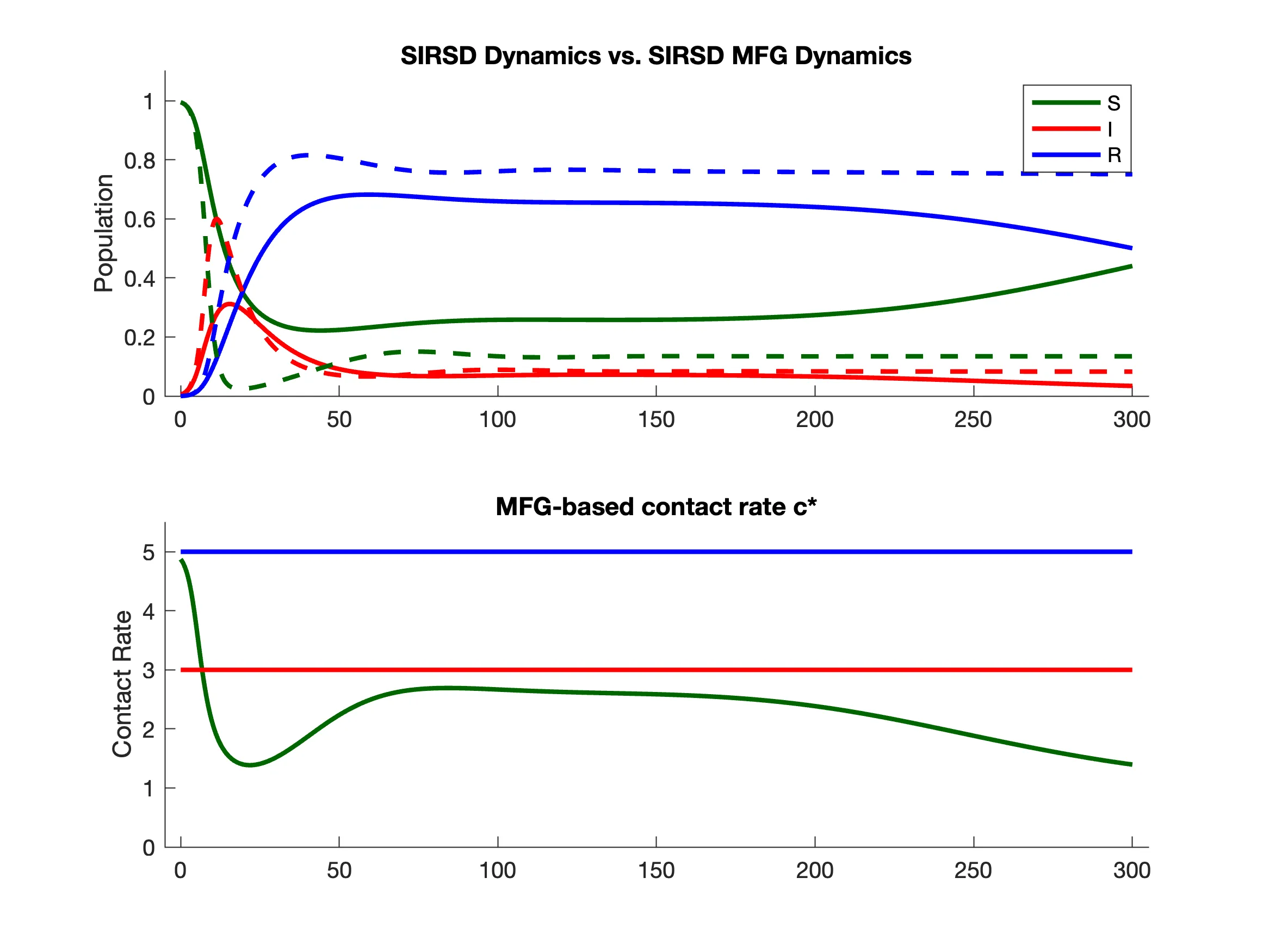
We introduce Mean-Field Game (MFG) epidemiological models, in which immunity either wanes with time in a fully observable way or disappears instantaneously with no direct observation (making a previously recovered individual fully susceptible again without realizing it). Both interpretations create computational challenges for rational noninfected individuals deciding on their contact rates based on their personal current immunity state and the changing epidemiological situation. Both require solving a forward-backward MFG system that includes PDEs (an advection-reaction equation for the immunity-structured population and a Hamilton-Jacobi-Bellman equation for the corresponding value function). We show how this can be done efficiently by solving a two-point boundary value problem for a system of approximating ODEs. We also show how the same approach can be extended to handle an initial uncertainty in the planning horizon.
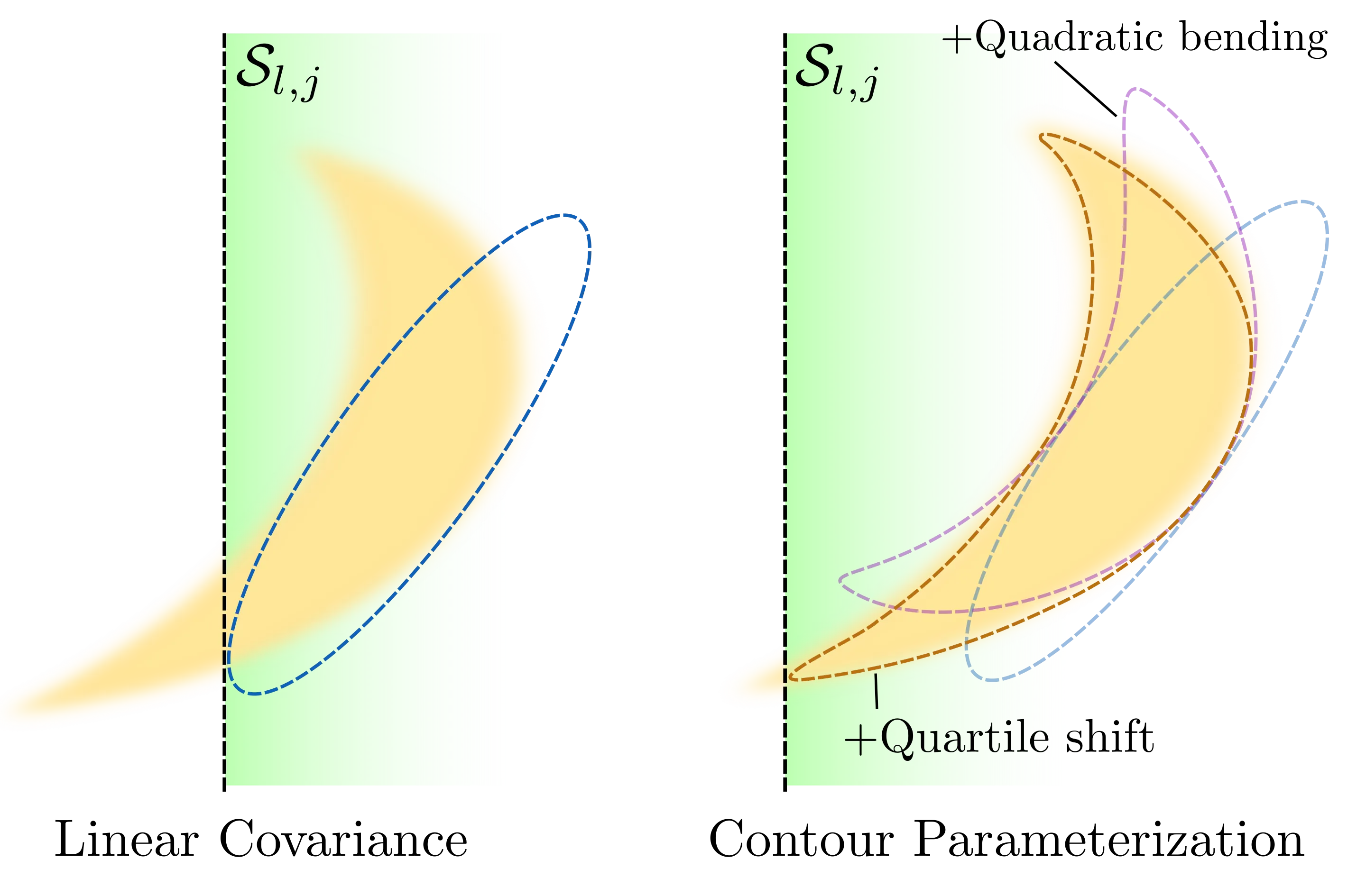
Standard chance constrained control algorithms typically rely on the assumption that uncertainties in vehicle states obey Gaussian statistics. Highly nonlinear systems tend to disrupt Gaussianity, challenging standard chance-constrained control methods. This paper develops a non-Gaussian confidence boundary parameterization technique for such cases where the problem departs appreciably from the Gaussian assumption. The approach is to consider the true confidence boundary as a perturbation of the one predicted from covariance, deriving perturbed boundary geometry from computed higher-order statistical moments. Applying this technique to so-called "banana-shaped distributions" (found e.g. in orbital mechanics problems) enables a simple parameterization of the confidence boundary using the skew and kurtosis tensors. The method is then applied to an impulsive stochastic spacecraft maneuver targeting problem in two-body dynamics. An algorithmic implementation outperforms a standard linear covariance-based approach in computing control parameters satisfying certain probabilistic bounds on the non-Gaussian distribution.
2604.04301We investigate regularity properties of generalized conjugate functions induced by a general coupling function and the associated generalized proximal mapping. Our main results provide verifiable conditions ensuring local single-valuedness, continuity, Lipschitz continuity, and differentiability of the generalized proximal mapping, and transfer these properties to generalized conjugates providing explicit derivative formulas. These results are based on a nonsmooth implicit function theorem for generalized equations, relying on graphical localizations and second-order variational tools. Beyond first-order regularity, we also derive conditions under which generalized conjugates are strictly twice differentiable.
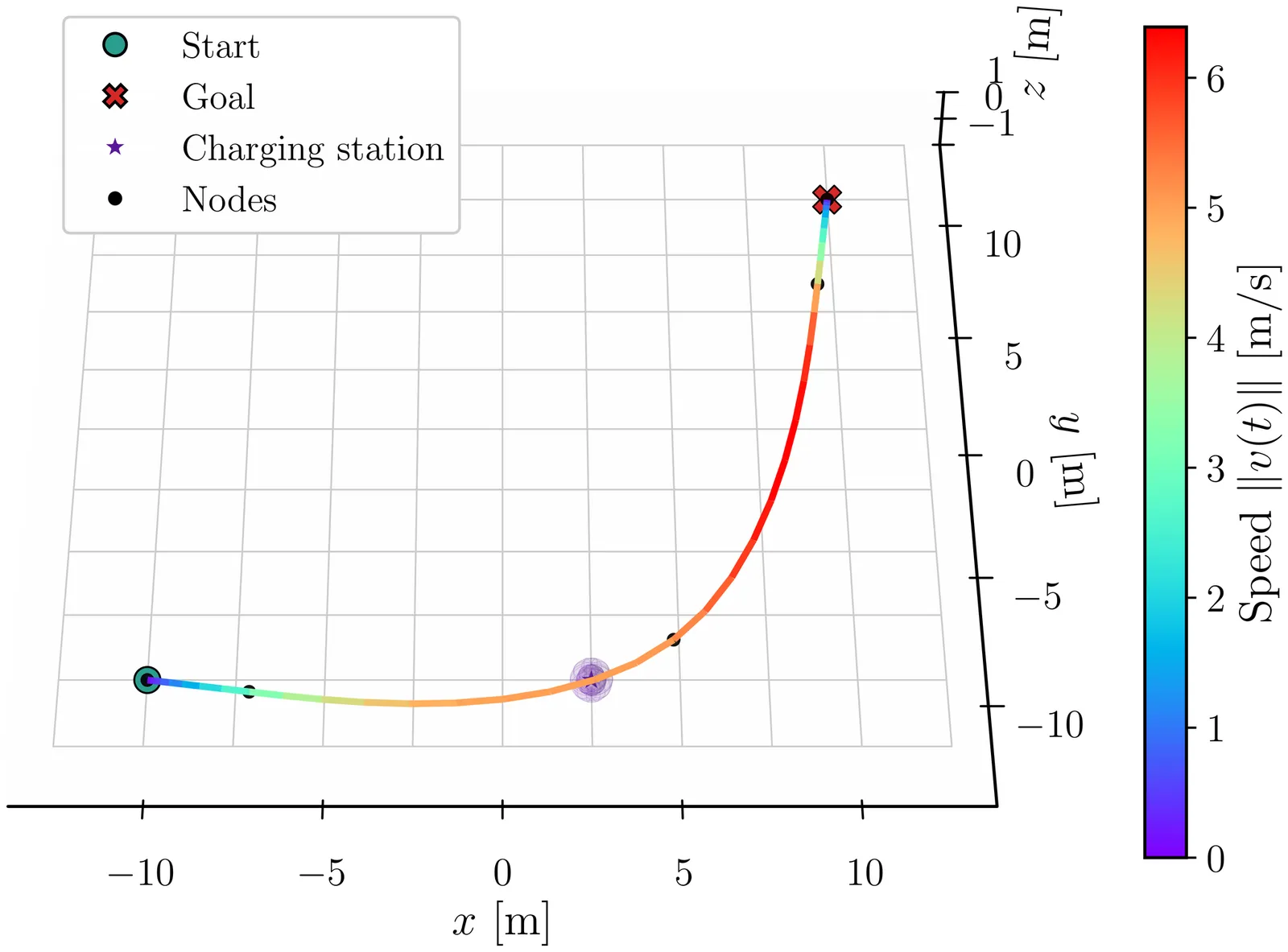
This paper presents a smooth parameterization of continuous-time Signal Temporal Logic (CT-STL) specifications for nonconvex trajectory optimization that is sound and complete up to the accuracy of the underlying numerical integration scheme. CT-STL provides a natural framework for encoding rich temporal and logical task requirements, but existing trajectory-optimization formulations typically enforce such specifications only at discrete sampling nodes. In contrast, the proposed method evaluates specifications in dense time, thereby guaranteeing continuous-time satisfaction of always predicates, which is critical for path constraints such as obstacle avoidance, while eliminating the node-induced conservatism of eventually predicates by allowing satisfaction at any time within the prescribed interval. These two dense-time constructions also serve as the main building blocks for handling more general CT-STL formulas, including complex until specifications. Furthermore, the proposed parameterization resolves the locality and gradient-masking issues inherent in standard quantitative semantics, yielding a more favorable landscape for gradient-based solvers. Although dense-time evaluation introduces additional function evaluations during discretization, it also permits substantially coarser temporal grids without sacrificing safety or logical fidelity. This, in turn, reduces the dimension of the resulting nonconvex program, which is often the dominant factor in trajectory-generation cost. The numerical effectiveness and semantic exactness of the proposed framework are demonstrated on an agile quadrotor flight problem subject to a complex continuous-time until specification. The implementation is available at https:// github.com/UW-ACL/TrajOpt_CT-STL
In this paper, we investigate the behavior of the family of graph-based splitting algorithms specialized to the problem of finding a point in the intersection of linear subspaces. The algorithms in this family, which encompasses several classical methods such as the Douglas-Rachford algorithm, are defined by a connected graph and a subgraph. Our main result establishes that when the graph and subgraph coincide, the optimal relaxation parameter is exactly $1$, thereby extending known results for the Douglas-Rachford algorithm to a much broader class of methods. Our analysis hinges on some properties of iso-averaged linear operators, which are defined as the average of an isometry and the identity, and are characterized by a specific symmetry of the norm of their relaxation.