Trending in Information Retrieval
LitXBench: A Benchmark for Extracting Experiments from Scientific Literature
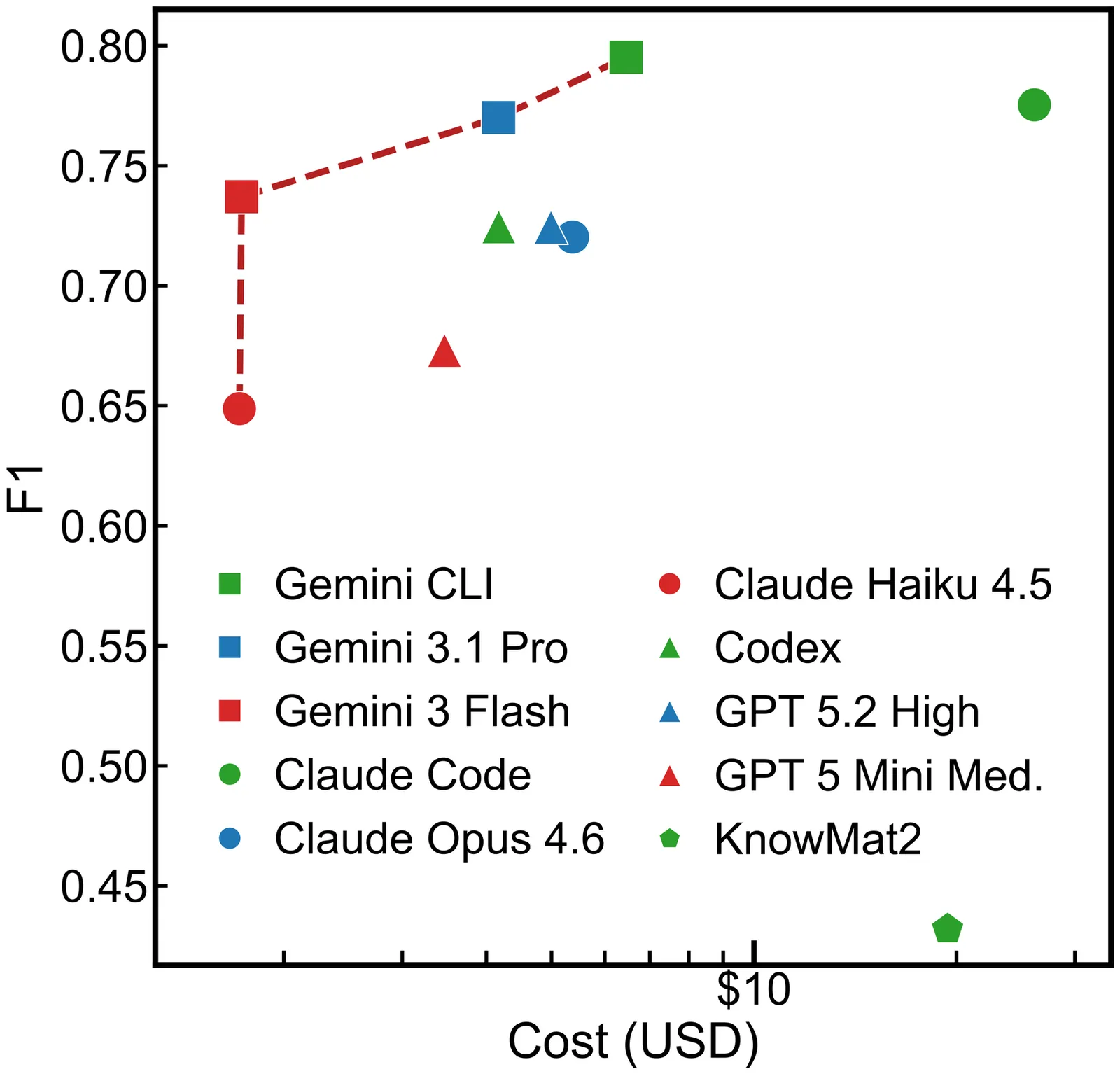
Aggregating experimental data from papers enables materials scientists to build better property prediction models and to facilitate scientific discovery. Recently, interest has grown in extracting not only single material properties but also entire experimental measurements. To support this shift, we introduce LitXBench, a framework for benchmarking methods that extract experiments from literature. We also present LitXAlloy, a dense benchmark comprising 1426 total measurements from 19 alloy papers. By storing the benchmark's entries as Python objects, rather than text-based formats such as CSV or JSON, we improve auditability and enable programmatic data validation. We find that frontier language models, such as Gemini 3.1 Pro Preview, outperform existing multi-turn extraction pipelines by up to 0.37 F1. Our results suggest that this performance gap arises because extraction pipelines associate measurements with compositions rather than the processing steps that define a material.
2604.07649
Apr 2026Information Retrieval
RecThinker: An Agentic Framework for Tool-Augmented Reasoning in Recommendation
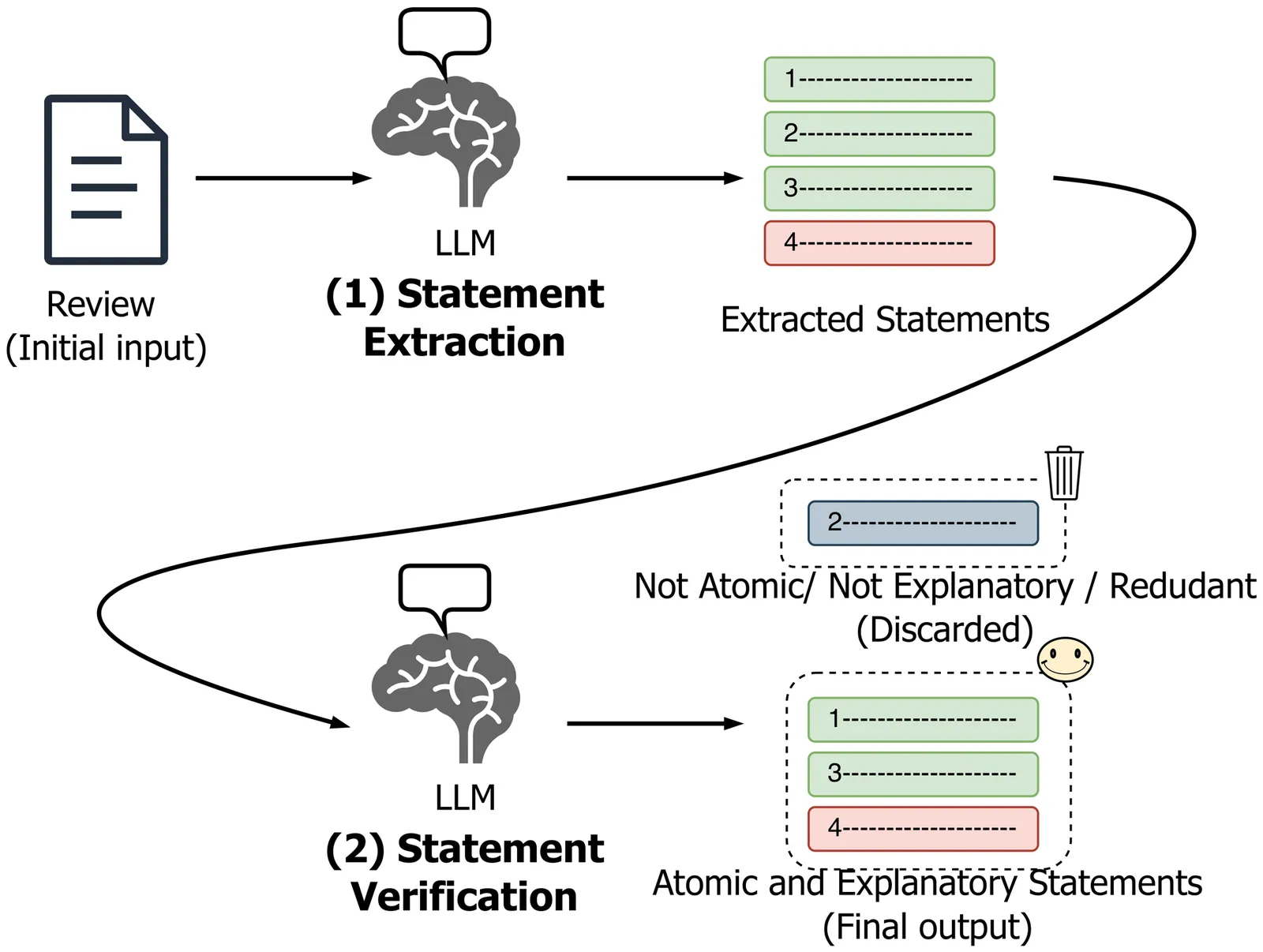
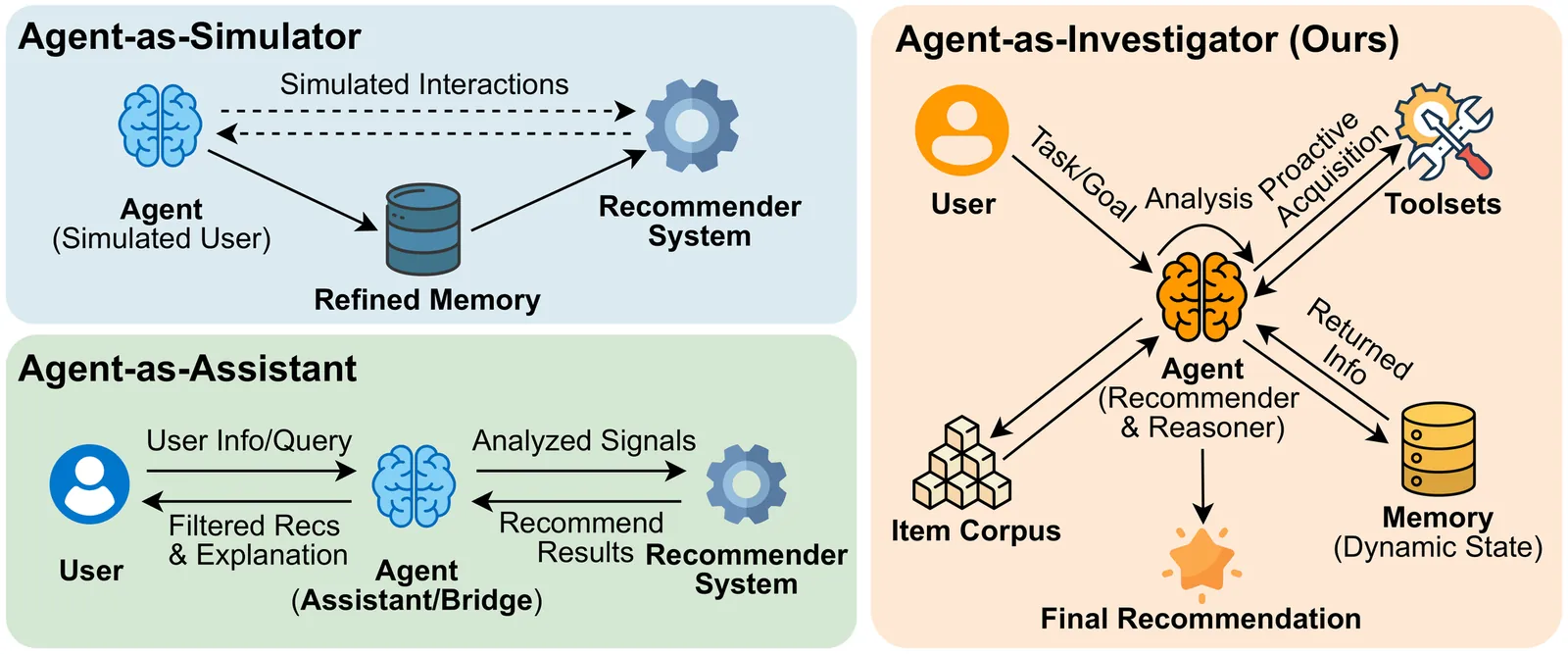
Large Language Models (LLMs) have revolutionized recommendation agents by providing superior reasoning and flexible decision-making capabilities. However, existing methods mainly follow a passive information acquisition paradigm, where agents either rely on static pre-defined workflows or perform reasoning with constrained information. It limits the agent's ability to identify information sufficiency, often leading to suboptimal recommendations when faced with fragmented user profiles or sparse item metadata. To address these limitations, we propose RecThinker, an agentic framework for tool-augmented reasoning in recommendation, which shifts recommendation from passive processing to autonomous investigation by dynamically planning reasoning paths and proactively acquiring essential information via autonomous tool-use. Specifically, RecThinker adopts an Analyze-Plan-Act paradigm, which first analyzes the sufficiency of user-item information and autonomously invokes tool-calling sequences to bridge information gaps between available knowledge and reasoning requirements. We develop a suite of specialized tools for RecThinker, enabling the model to acquire user-side, item-side, and collaborative information for better reasoning and user-item matching. Furthermore, we introduce a self-augmented training pipeline, comprising a Supervised Fine-Tuning (SFT) stage to internalize high-quality reasoning trajectories and a Reinforcement Learning (RL) stage to optimize for decision accuracy and tool-use efficiency. Extensive experiments on multiple benchmark datasets demonstrate that RecThinker consistently outperforms strong baselines in the recommendation scenario.
2603.09843
Mar 2026Information Retrieval
OneRanker: Unified Generation and Ranking with One Model in Industrial Advertising Recommendation
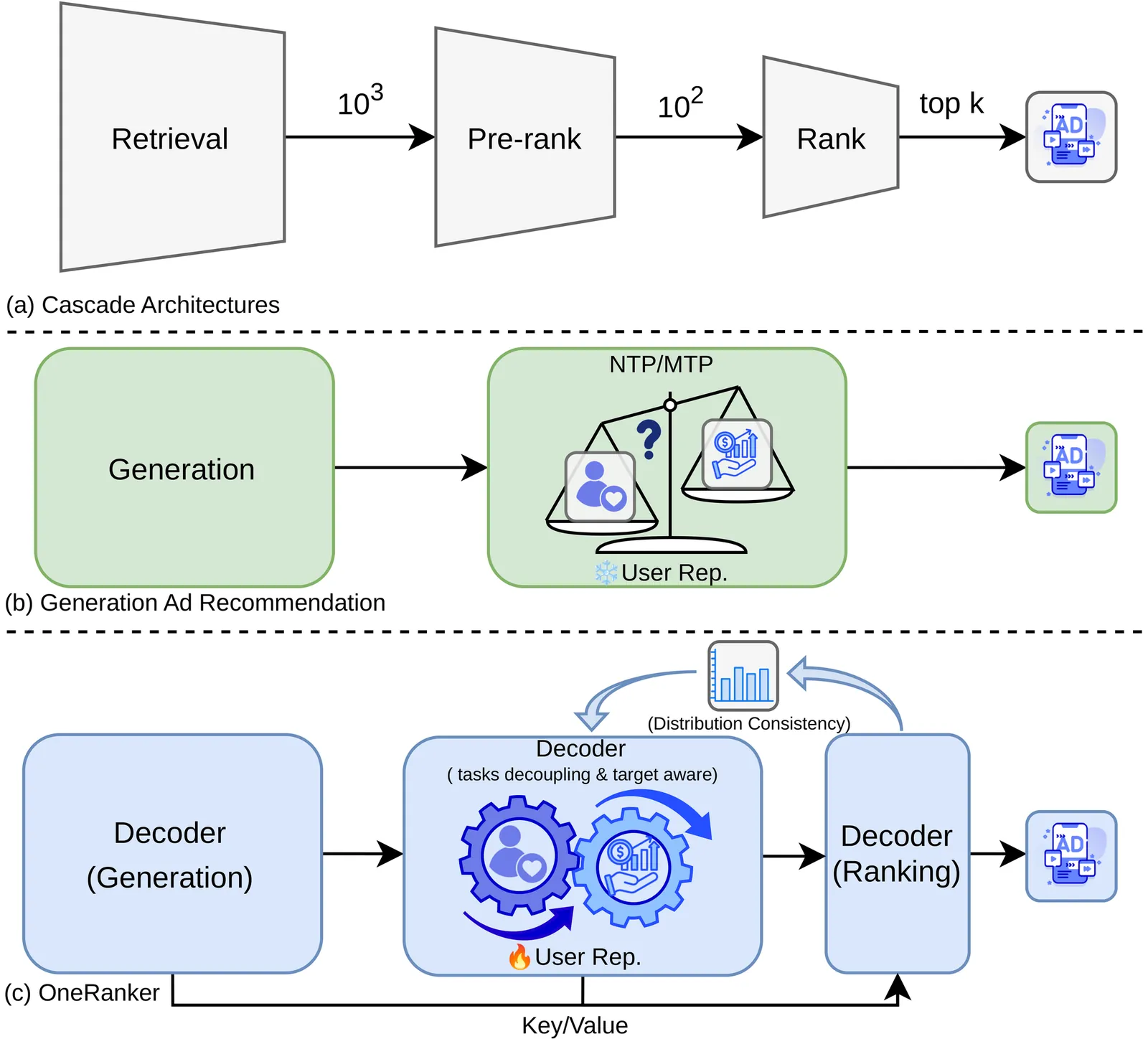
The end-to-end generative paradigm is revolutionizing advertising recommendation systems, driving a shift from traditional cascaded architectures towards unified modeling. However, practical deployment faces three core challenges: the misalignment between interest objectives and business value, the target-agnostic limitation of generative processes, and the disconnection between generation and ranking stages. Existing solutions often fall into a dilemma where single-stage fusion induces optimization tension, while stage decoupling causes irreversible information loss. To address this, we propose OneRanker, achieving architectural-level deep integration of generation and ranking. First, we design a value-aware multi-task decoupling architecture. By leveraging task token sequences and causal mask, we separate interest coverage and value optimization spaces within shared representations, effectively alleviating target conflicts. Second, we construct a coarse-to-fine collaborative target awareness mechanism, utilizing Fake Item Tokens for implicit awareness during generation and a ranking decoder for explicit value alignment at the candidate level. Finally, we propose input-output dual-side consistency guarantees. Through Key/Value pass-through mechanisms and Distribution Consistency (DC) Constraint Loss, we achieve end-to-end collaborative optimization between generation and ranking. The full deployment on Tencent's WeiXin channels advertising system has shown a significant improvement in key business metrics (GMV - Normal +1.34\%), providing a new paradigm with industrial feasibility for generative advertising recommendations.
2603.02999
Mar 2026Information Retrieval
APAO: Adaptive Prefix-Aware Optimization for Generative Recommendation
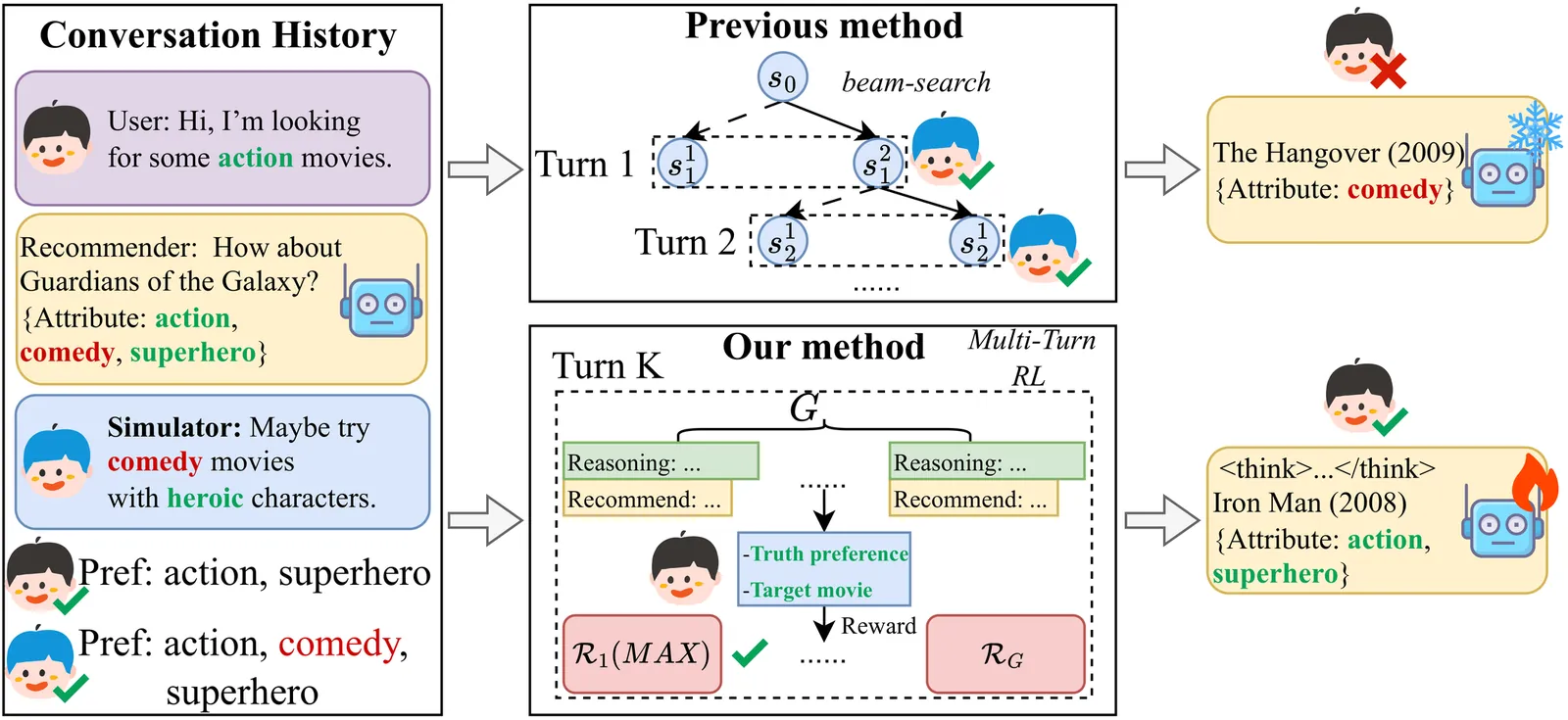
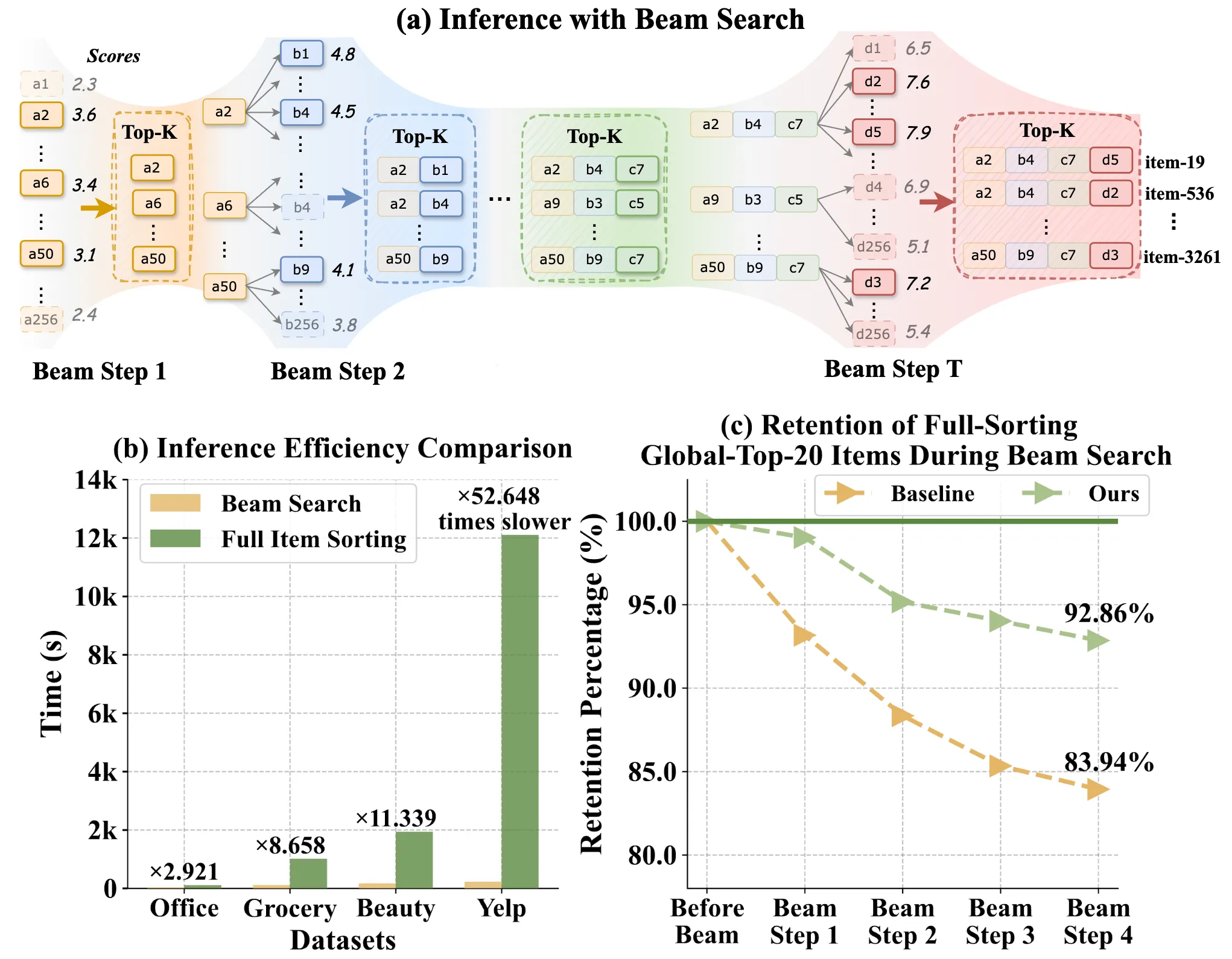
Generative recommendation has recently emerged as a promising paradigm in sequential recommendation. It formulates the task as an autoregressive generation process, predicting discrete tokens of the next item conditioned on user interaction histories. Existing generative recommendation models are typically trained with token-level likelihood objectives, such as cross-entropy loss, while employing multi-step beam search during inference to generate ranked item candidates. However, this leads to a fundamental training-inference inconsistency: standard training assumes ground-truth history is always available, ignoring the fact that beam search prunes low-probability branches during inference. Consequently, the correct item may be prematurely discarded simply because its initial tokens (prefixes) have low scores. To address this issue, we propose the Adaptive Prefix-Aware Optimization (APAO) framework, which introduces prefix-level optimization losses to better align the training objective with the inference setting. Furthermore, we design an adaptive worst-prefix optimization strategy that dynamically focuses on the most vulnerable prefixes during training, thereby enhancing the model's ability to retain correct candidates under beam search constraints. We provide theoretical analyses to demonstrate the effectiveness and efficiency of our framework. Extensive experiments on multiple datasets further show that APAO consistently alleviates the training-inference inconsistency and improves performance across various generative recommendation backbones. Our codes are publicly available at https://github.com/yuyq18/APAO.
2603.02730
Mar 2026Information Retrieval
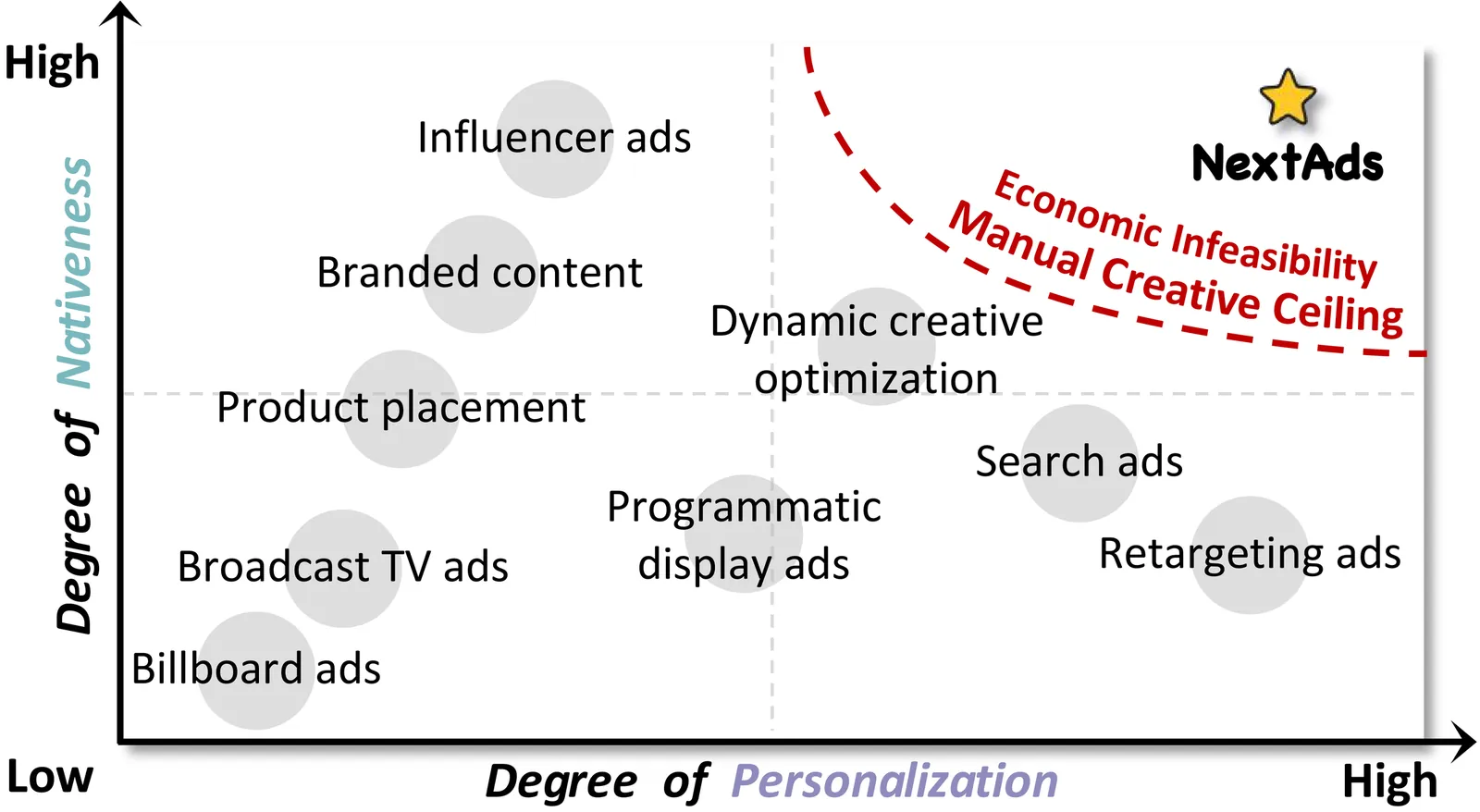
NextAds: Towards Next-generation Personalized Video Advertising
With the rapid growth of online video consumption, video advertising has become increasingly dominant in the digital advertising landscape. Yet diverse users and viewing contexts makes one-size-fits-all ad creatives insufficient for consistent effectiveness, underlining the importance of personalization. In practice, most personalized video advertising systems follow a retrieval-based paradigm, selecting the optimal one from a small set of professionally pre-produced creatives for each user. Such static and finite inventories limits both the granularity and the timeliness of personalization, and prevents the creatives from being continuously refined based on online user feedback. Recent advances in generative AI make it possible to move beyond retrieval toward optimizing video creatives in a continuous space at serving time. In this light, we propose NextAds, a generation-based paradigm for next-generation personalized video advertising, and conceptualize NextAds with four core components. To enable comparable research progress, we formulate two representative tasks: personalized creative generation and personalized creative integration, and introduce corresponding lightweight benchmarks. To assess feasibility, we instantiate end-to-end pipelines for both tasks and conduct initial exploratory experiments, demonstrating that GenAI can generate and integrate personalized creatives with encouraging performance. Moreover, we discuss the key challenges and opportunities under this paradigm, aiming to provide actionable insights for both researchers and practitioners and to catalyze progress in personalized video advertising.
2603.02137
Mar 2026Information Retrieval
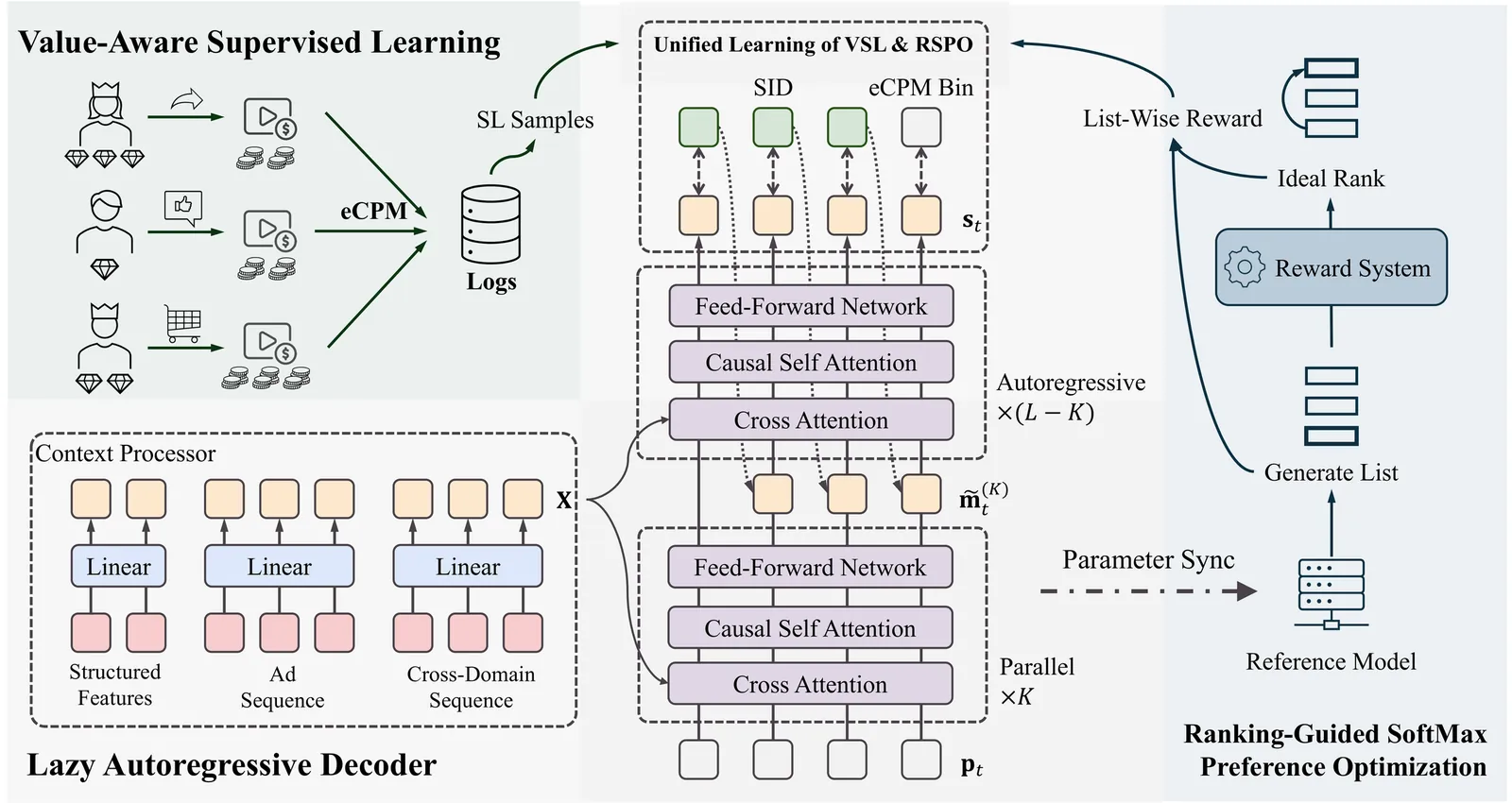
Generative Recommendation for Large-Scale Advertising
Generative recommendation has recently attracted widespread attention in industry due to its potential for scaling and stronger model capacity. However, deploying real-time generative recommendation in large-scale advertising requires designs beyond large-language-model (LLM)-style training and serving recipes. We present a production-oriented generative recommender co-designed across architecture, learning, and serving, named GR4AD (Generative Recommendation for ADdvertising). As for tokenization, GR4AD proposes UA-SID (Unified Advertisement Semantic ID) to capture complicated business information. Furthermore, GR4AD introduces LazyAR, a lazy autoregressive decoder that relaxes layer-wise dependencies for short, multi-candidate generation, preserving effectiveness while reducing inference cost, which facilitates scaling under fixed serving budgets. To align optimization with business value, GR4AD employs VSL (Value-Aware Supervised Learning) and proposes RSPO (Ranking-Guided Softmax Preference Optimization), a ranking-aware, list-wise reinforcement learning algorithm that optimizes value-based rewards under list-level metrics for continual online updates. For online inference, we further propose dynamic beam serving, which adapts beam width across generation levels and online load to control compute. Large-scale online A/B tests show up to 4.2% ad revenue improvement over an existing DLRM-based stack, with consistent gains from both model scaling and inference-time scaling. GR4AD has been fully deployed in Kuaishou advertising system with over 400 million users and achieves high-throughput real-time serving.
2602.22732
Feb 2026Information Retrieval
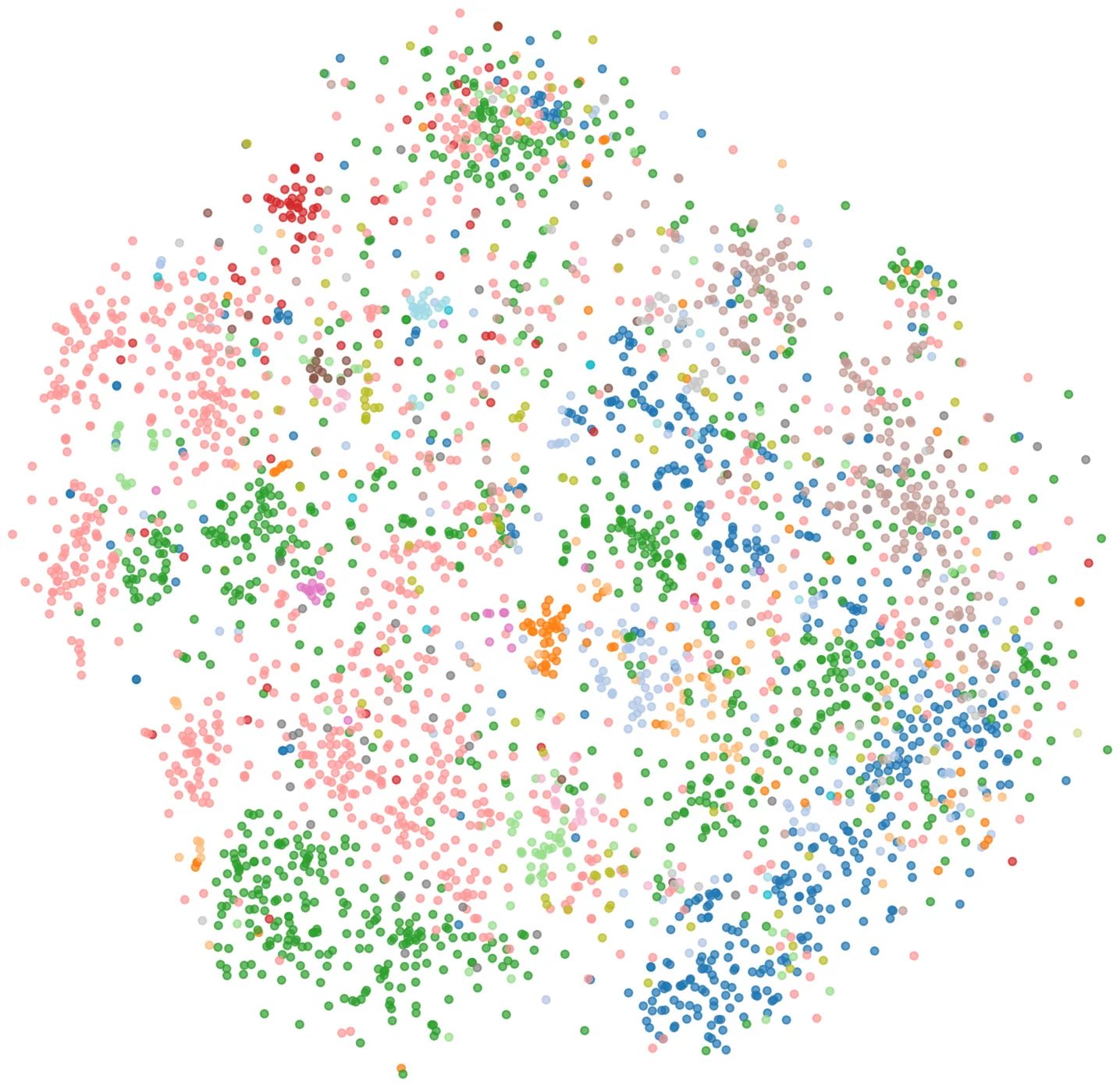
IDProxy: Cold-Start CTR Prediction for Ads and Recommendation at Xiaohongshu with Multimodal LLMs
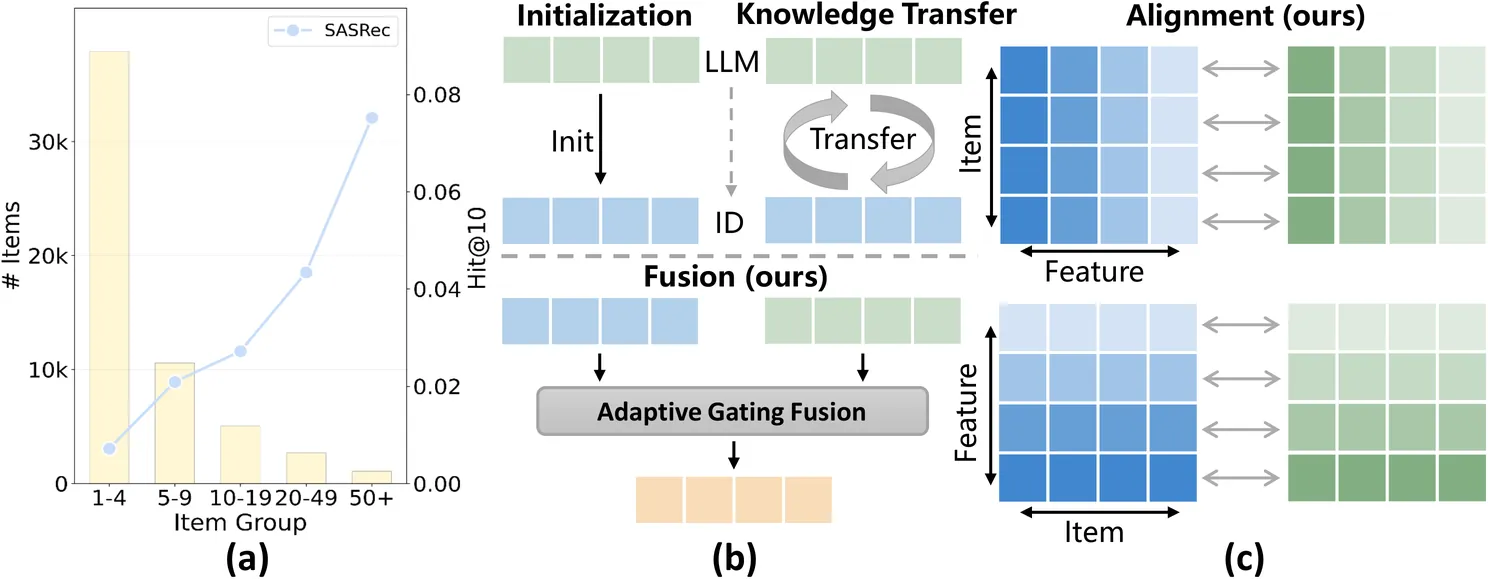
Click-through rate (CTR) models in advertising and recommendation systems rely heavily on item ID embeddings, which struggle in item cold-start settings. We present IDProxy, a solution that leverages multimodal large language models (MLLMs) to generate proxy embeddings from rich content signals, enabling effective CTR prediction for new items without usage data. These proxies are explicitly aligned with the existing ID embedding space and are optimized end-to-end under CTR objectives together with the ranking model, allowing seamless integration into existing large-scale ranking pipelines. Offline experiments and online A/B tests demonstrate the effectiveness of IDProxy, which has been successfully deployed in both Content Feed and Display Ads features of Xiaohongshu's Explore Feed, serving hundreds of millions of users daily.
2603.01590
Mar 2026Information Retrieval
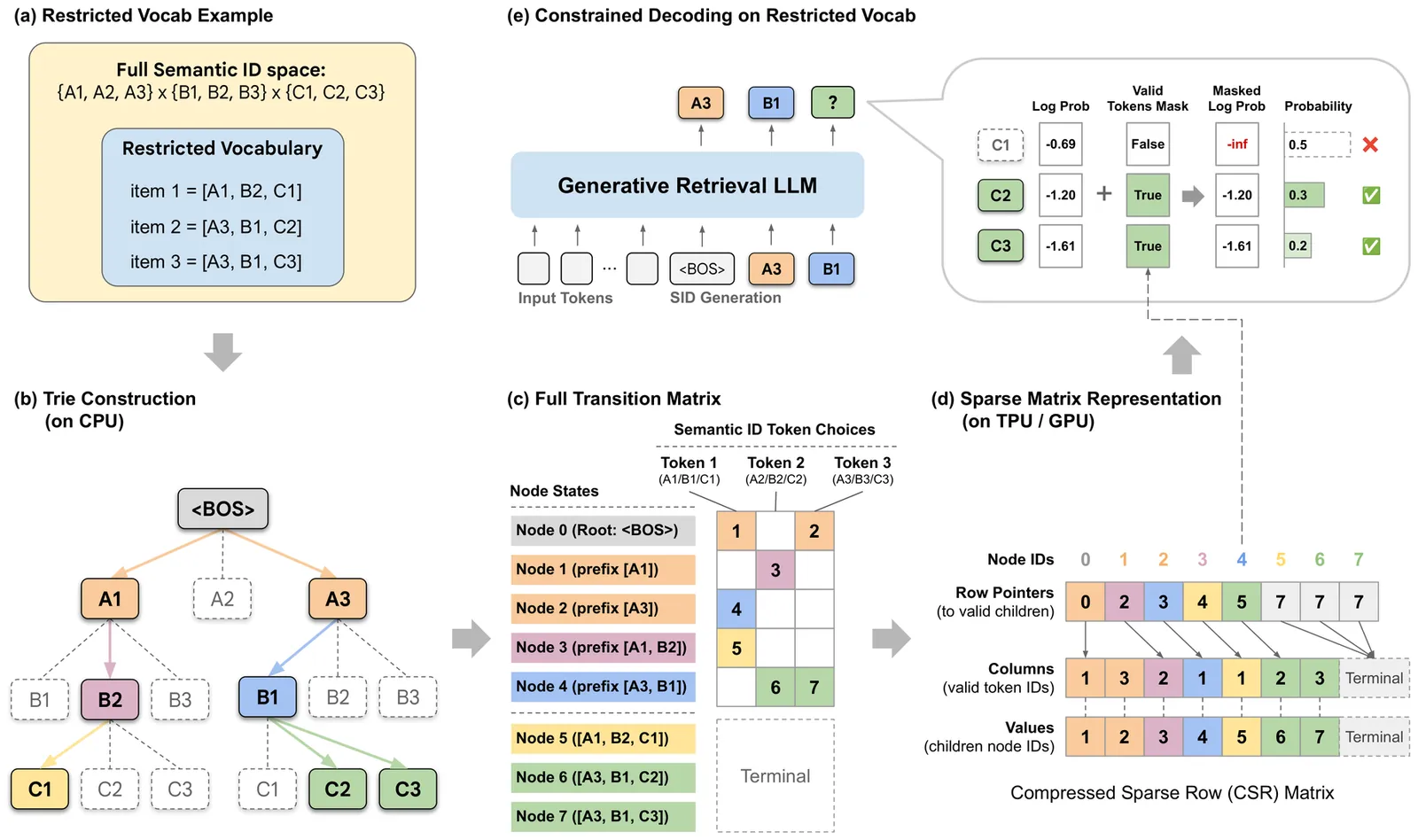
Vectorizing the Trie: Efficient Constrained Decoding for LLM-based Generative Retrieval on Accelerators
Generative retrieval has emerged as a powerful paradigm for LLM-based recommendation. However, industrial recommender systems often benefit from restricting the output space to a constrained subset of items based on business logic (e.g. enforcing content freshness or product category), which standard autoregressive decoding cannot natively support. Moreover, existing constrained decoding methods that make use of prefix trees (Tries) incur severe latency penalties on hardware accelerators (TPUs/GPUs). In this work, we introduce STATIC (Sparse Transition Matrix-Accelerated Trie Index for Constrained Decoding), an efficient and scalable constrained decoding technique designed specifically for high-throughput LLM-based generative retrieval on TPUs/GPUs. By flattening the prefix tree into a static Compressed Sparse Row (CSR) matrix, we transform irregular tree traversals into fully vectorized sparse matrix operations, unlocking massive efficiency gains on hardware accelerators. We deploy STATIC on a large-scale industrial video recommendation platform serving billions of users. STATIC produces significant product metric impact with minimal latency overhead (0.033 ms per step and 0.25% of inference time), achieving a 948x speedup over a CPU trie implementation and a 47-1033x speedup over a hardware-accelerated binary-search baseline. Furthermore, the runtime overhead of STATIC remains extremely low across a wide range of practical configurations. To the best of our knowledge, STATIC enables the first production-scale deployment of strictly constrained generative retrieval. In addition, evaluation on academic benchmarks demonstrates that STATIC can considerably improve cold-start performance for generative retrieval. Our code is available at https://github.com/youtube/static-constraint-decoding.
2602.22647
Feb 2026Information Retrieval
Revisiting Text Ranking in Deep Research
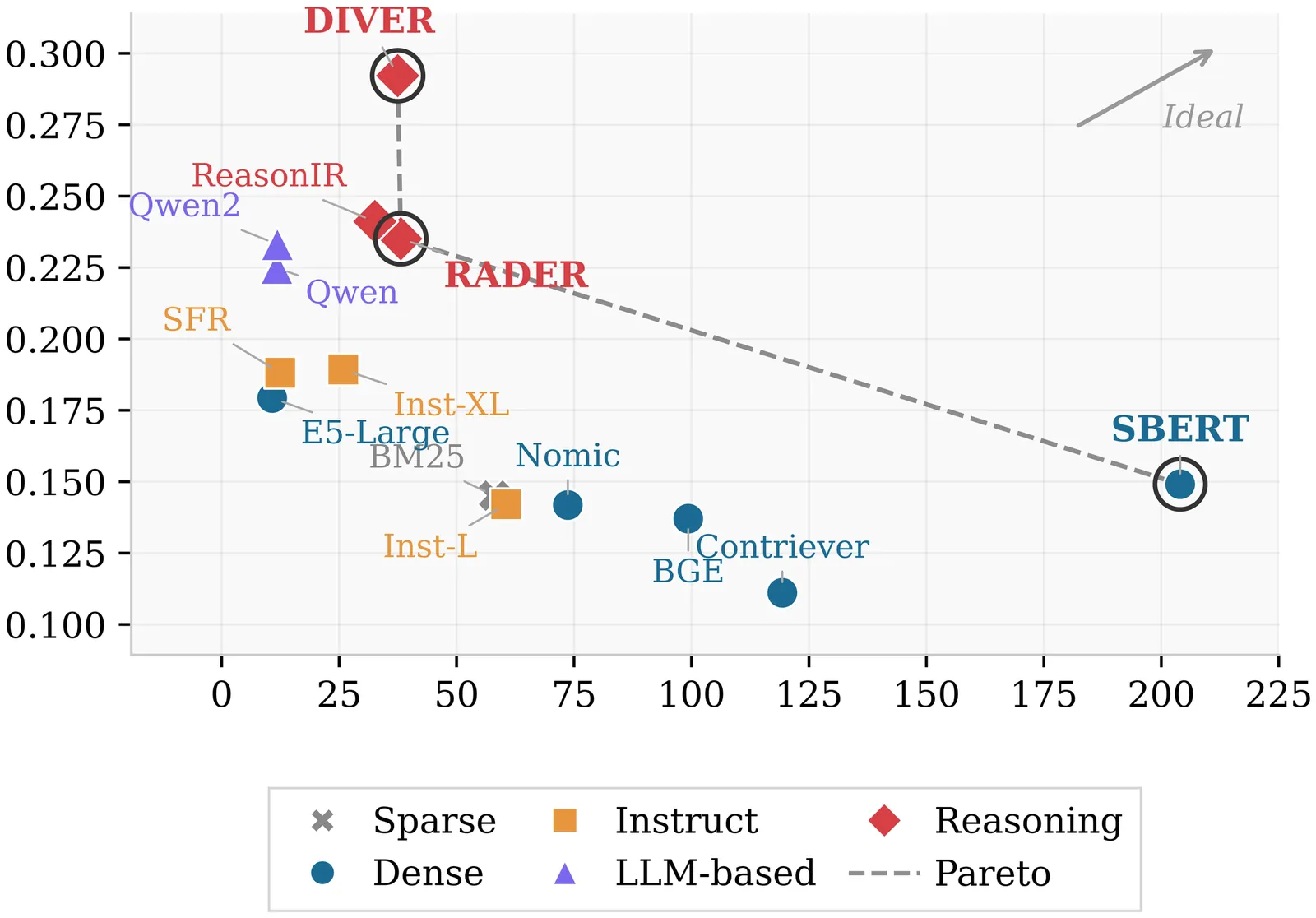
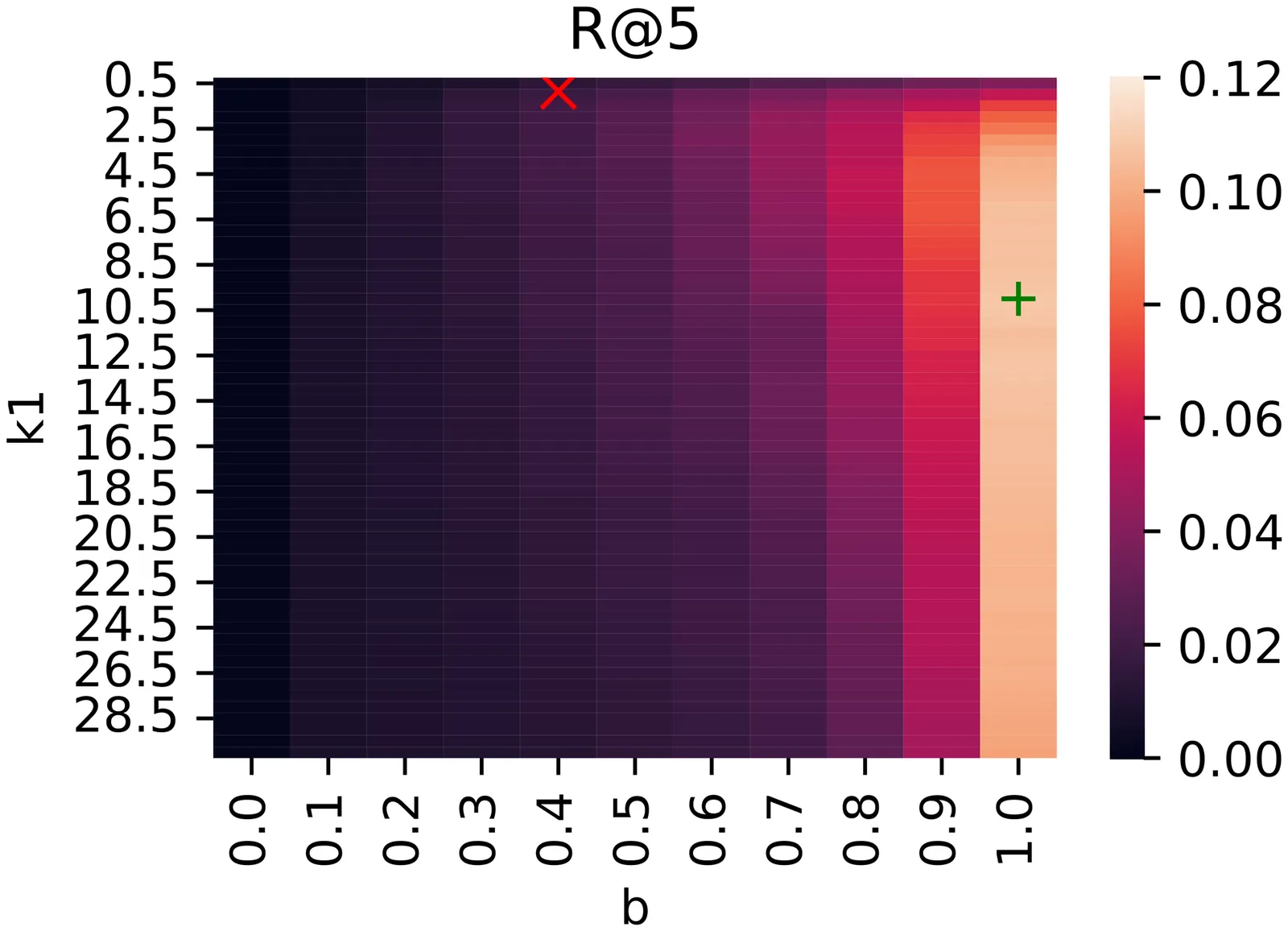
Deep research has emerged as an important task that aims to address hard queries through extensive open-web exploration. To tackle it, most prior work equips large language model (LLM)-based agents with opaque web search APIs, enabling agents to iteratively issue search queries, retrieve external evidence, and reason over it. Despite search's essential role in deep research, black-box web search APIs hinder systematic analysis of search components, leaving the behaviour of established text ranking methods in deep research largely unclear. To fill this gap, we reproduce a selection of key findings and best practices for IR text ranking methods in the deep research setting. In particular, we examine their effectiveness from three perspectives: (i) retrieval units (documents vs. passages), (ii) pipeline configurations (different retrievers, re-rankers, and re-ranking depths), and (iii) query characteristics (the mismatch between agent-issued queries and the training queries of text rankers). We perform experiments on BrowseComp-Plus, a deep research dataset with a fixed corpus, evaluating 2 open-source agents, 5 retrievers, and 3 re-rankers across diverse setups. We find that agent-issued queries typically follow web-search-style syntax (e.g., quoted exact matches), favouring lexical, learned sparse, and multi-vector retrievers; passage-level units are more efficient under limited context windows, and avoid the difficulties of document length normalisation in lexical retrieval; re-ranking is highly effective; translating agent-issued queries into natural-language questions significantly bridges the query mismatch.
2602.21456
Feb 2026Information Retrieval
AttentionRetriever: Attention Layers are Secretly Long Document Retrievers
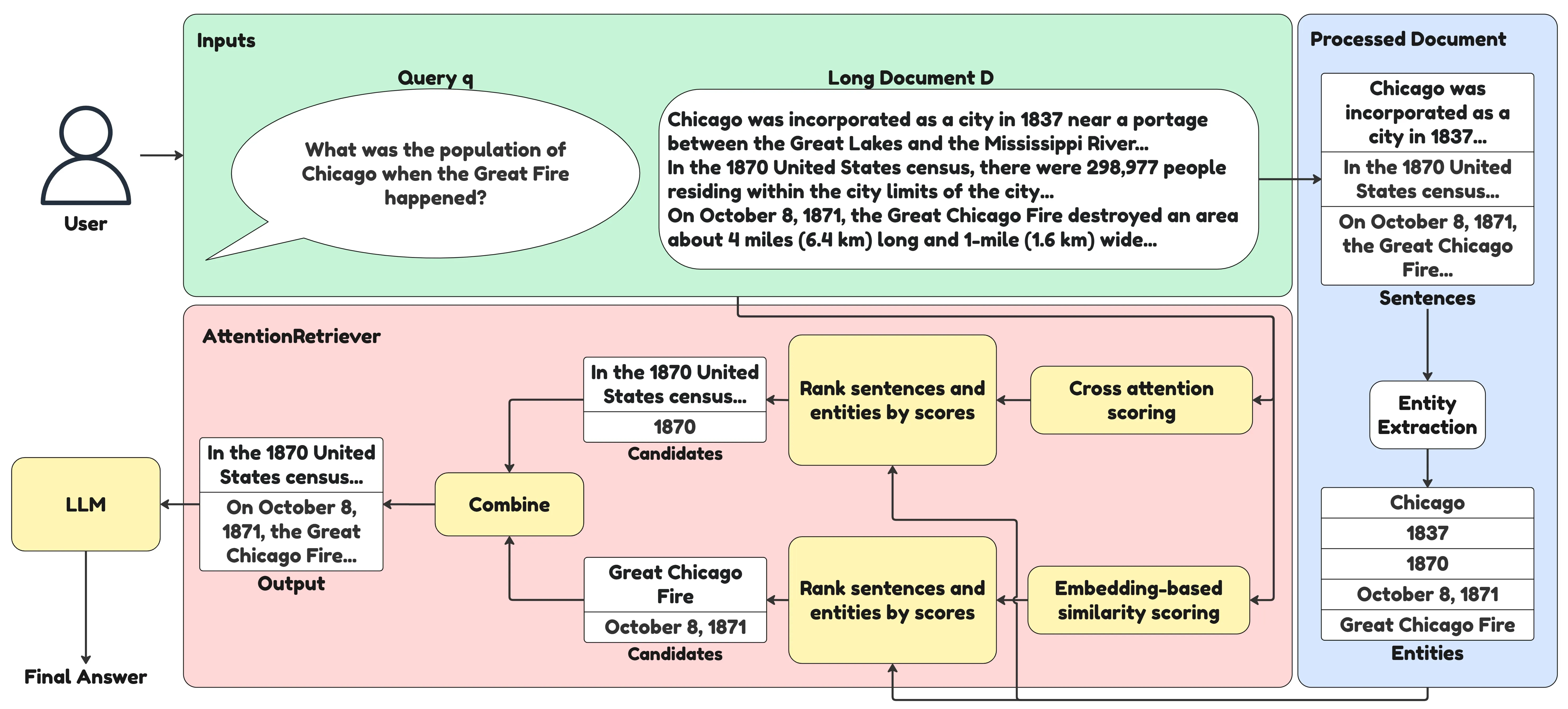
Retrieval augmented generation (RAG) has been widely adopted to help Large Language Models (LLMs) to process tasks involving long documents. However, existing retrieval models are not designed for long document retrieval and fail to address several key challenges of long document retrieval, including context-awareness, causal dependence, and scope of retrieval. In this paper, we proposed AttentionRetriever, a novel long document retrieval model that leverages attention mechanism and entity-based retrieval to build context-aware embeddings for long document and determine the scope of retrieval. With extensive experiments, we found AttentionRetriever is able to outperform existing retrieval models on long document retrieval datasets by a large margin while remaining as efficient as dense retrieval models.
2602.12278
Feb 2026Information Retrieval
AMEM4Rec: Leveraging Cross-User Similarity for Memory Evolution in Agentic LLM Recommenders
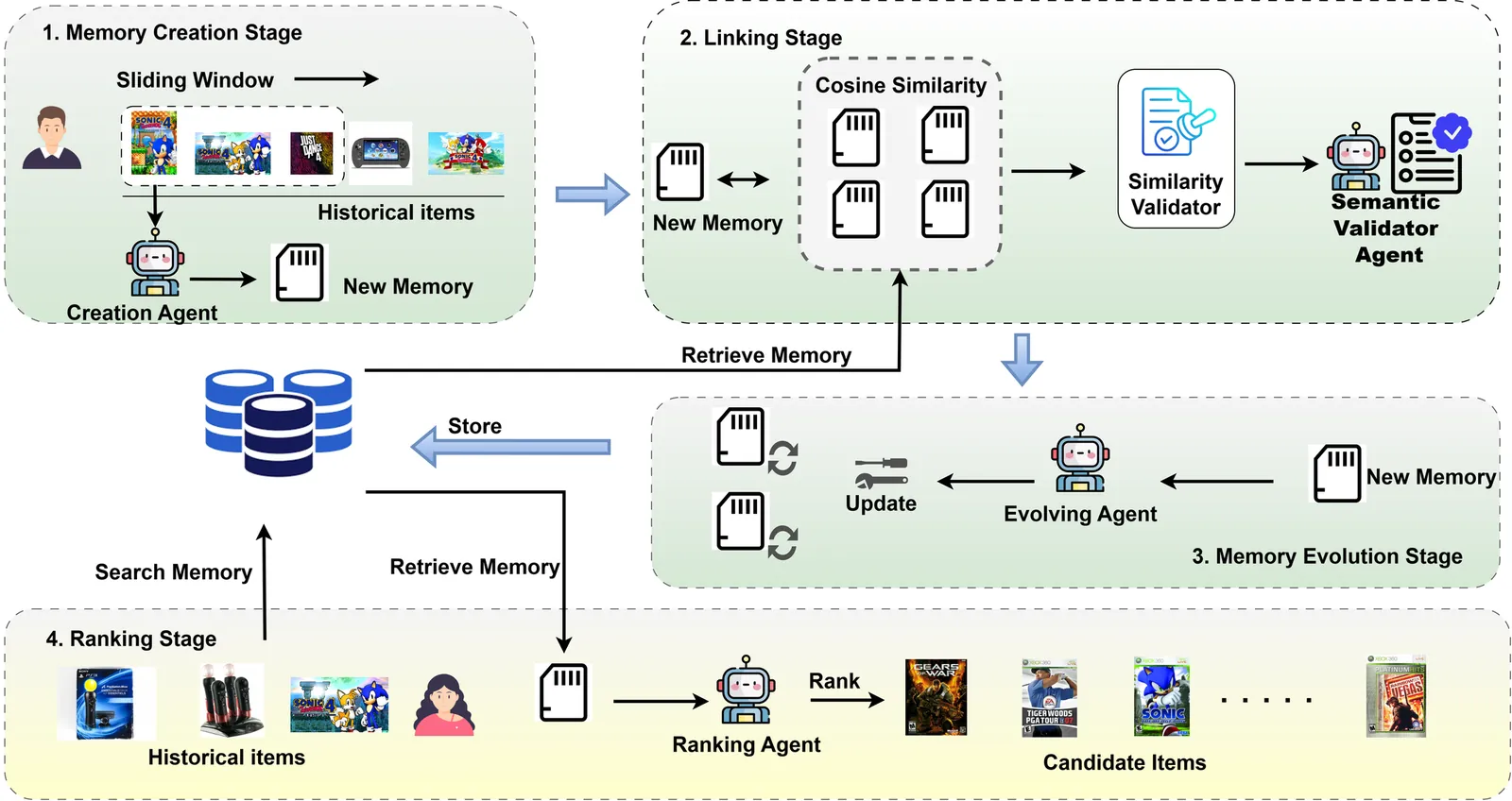
Agentic systems powered by Large Language Models (LLMs) have shown strong potential in recommender systems but remain hindered by several challenges. Fine-tuning LLMs is parameter-inefficient, and prompt-based agentic reasoning is limited by context length and hallucination risk. Moreover, existing agentic recommendation systems predominantly leverages semantic knowledge while neglecting the collaborative filtering (CF) signals essential for implicit preference modeling. To address these limitations, we propose AMEM4Rec, an agentic LLM-based recommender that learns collaborative signals in an end-to-end manner through cross-user memory evolution. AMEM4Rec stores abstract user behavior patterns from user histories in a global memory pool. Within this pool, memories are linked to similar existing ones and iteratively evolved to reinforce shared cross-user patterns, enabling the system to become aware of CF signals without relying on a pre-trained CF model. Extensive experiments on Amazon and MIND datasets show that AMEM4Rec consistently outperforms state-of-the-art LLM-based recommenders, demonstrating the effectiveness of evolving memory-guided collaborative filtering.
2602.08837
Feb 2026Information Retrieval
Generative Reasoning Re-ranker
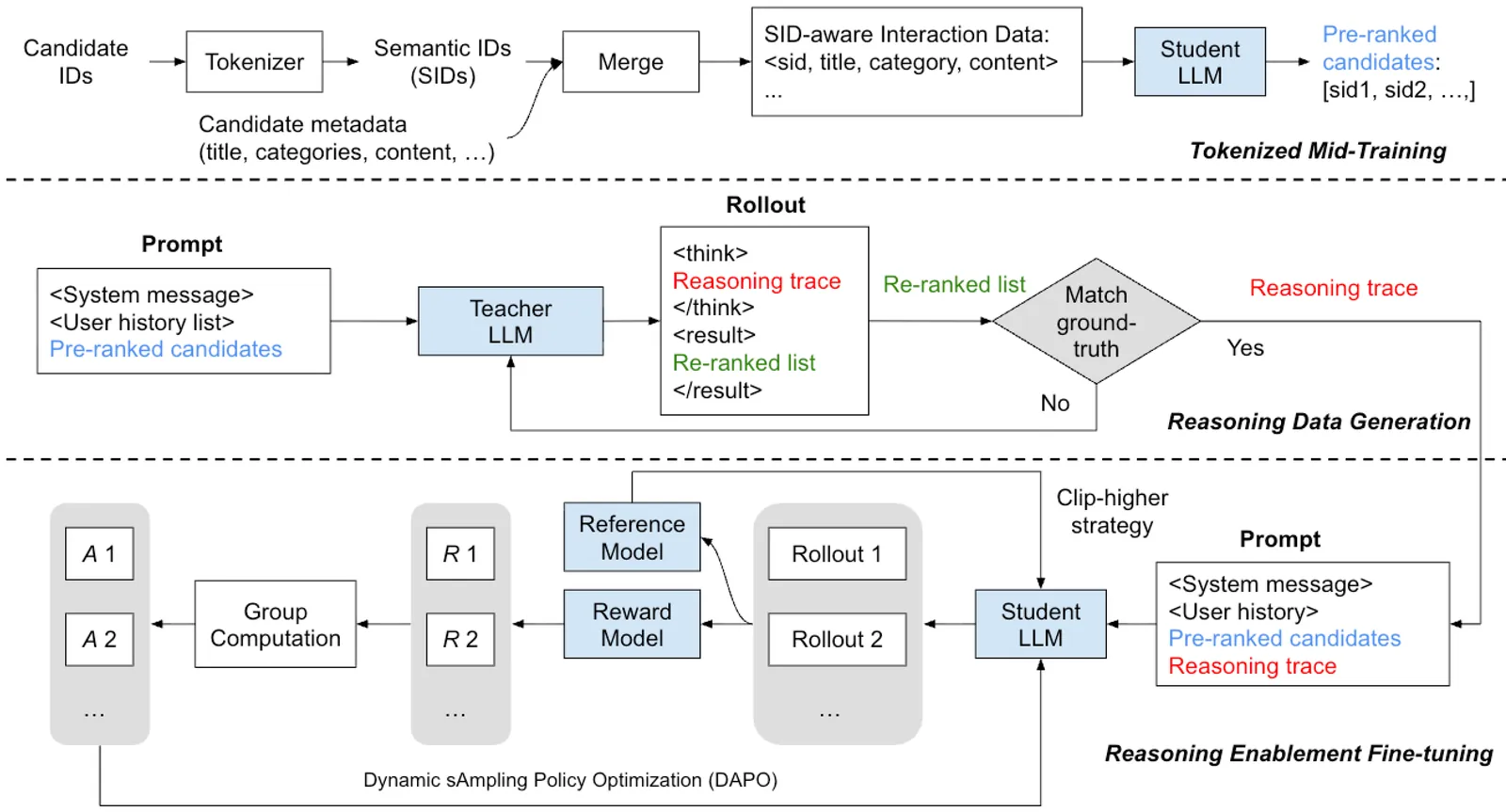
Recent studies increasingly explore Large Language Models (LLMs) as a new paradigm for recommendation systems due to their scalability and world knowledge. However, existing work has three key limitations: (1) most efforts focus on retrieval and ranking, while the reranking phase, critical for refining final recommendations, is largely overlooked; (2) LLMs are typically used in zero-shot or supervised fine-tuning settings, leaving their reasoning abilities, especially those enhanced through reinforcement learning (RL) and high-quality reasoning data, underexploited; (3) items are commonly represented by non-semantic IDs, creating major scalability challenges in industrial systems with billions of identifiers. To address these gaps, we propose the Generative Reasoning Reranker (GR2), an end-to-end framework with a three-stage training pipeline tailored for reranking. First, a pretrained LLM is mid-trained on semantic IDs encoded from non-semantic IDs via a tokenizer achieving $\ge$99% uniqueness. Next, a stronger larger-scale LLM generates high-quality reasoning traces through carefully designed prompting and rejection sampling, which are used for supervised fine-tuning to impart foundational reasoning skills. Finally, we apply Decoupled Clip and Dynamic sAmpling Policy Optimization (DAPO), enabling scalable RL supervision with verifiable rewards designed specifically for reranking. Experiments on two real-world datasets demonstrate GR2's effectiveness: it surpasses the state-of-the-art OneRec-Think by 2.4% in Recall@5 and 1.3% in NDCG@5. Ablations confirm that advanced reasoning traces yield substantial gains across metrics. We further find that RL reward design is crucial in reranking: LLMs tend to exploit reward hacking by preserving item order, motivating conditional verifiable rewards to mitigate this behavior and optimize reranking performance.
2602.07774
Feb 2026Information Retrieval
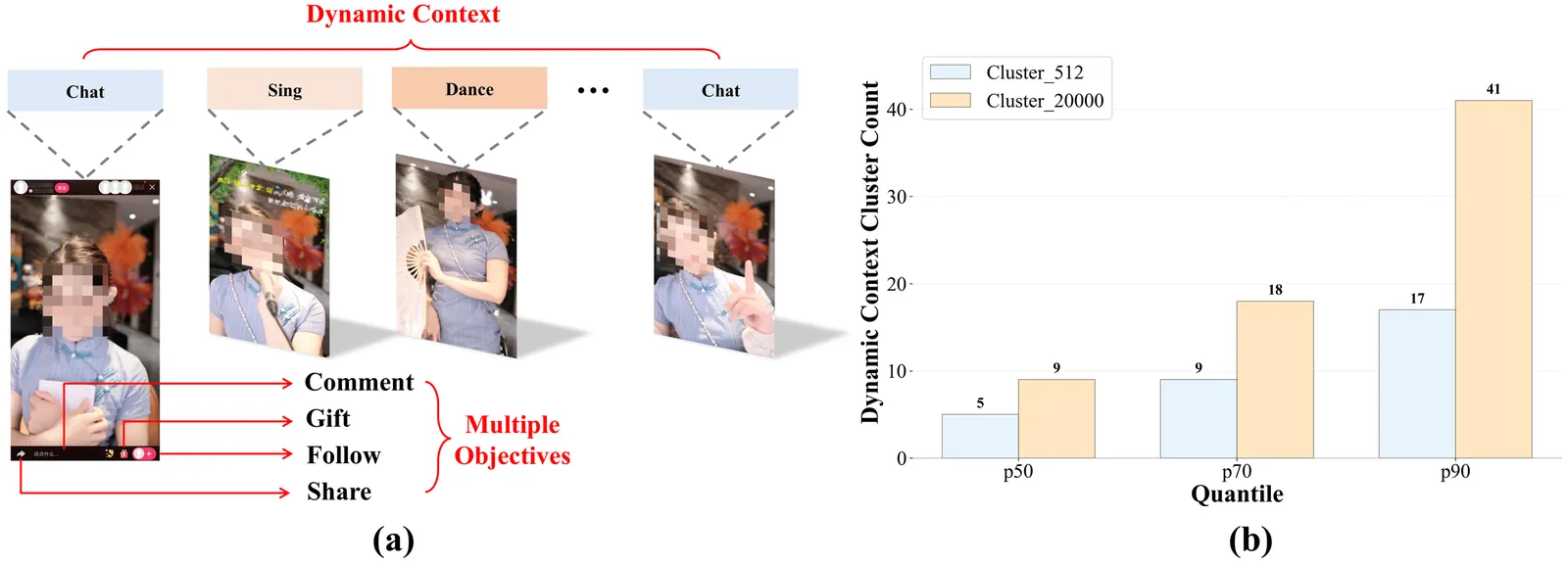
OneLive: Dynamically Unified Generative Framework for Live-Streaming Recommendation
Live-streaming recommender system serves as critical infrastructure that bridges the patterns of real-time interactions between users and authors. Similar to traditional industrial recommender systems, live-streaming recommendation also relies on cascade architectures to support large-scale concurrency. Recent advances in generative recommendation unify the multi-stage recommendation process with Transformer-based architectures, offering improved scalability and higher computational efficiency. However, the inherent complexity of live-streaming prevents the direct transfer of these methods to live-streaming scenario, where continuously evolving content, limited lifecycles, strict real-time constraints, and heterogeneous multi-objectives introduce unique challenges that invalidate static tokenization and conventional model framework. To address these issues, we propose OneLive, a dynamically unified generative recommendation framework tailored for live-streaming scenario. OneLive integrates four key components: (i) A Dynamic Tokenizer that continuously encodes evolving real-time live content fused with behavior signal through residual quantization; (ii) A Time-Aware Gated Attention mechanism that explicitly models temporal dynamics for timely decision making; (iii) An efficient decoder-only generative architecture enhanced with Sequential MTP and QK Norm for stable training and accelerated inference; (iv) A Unified Multi-Objective Alignment Framework reinforces policy optimization for personalized preferences.
2602.08612
Feb 2026Information Retrieval
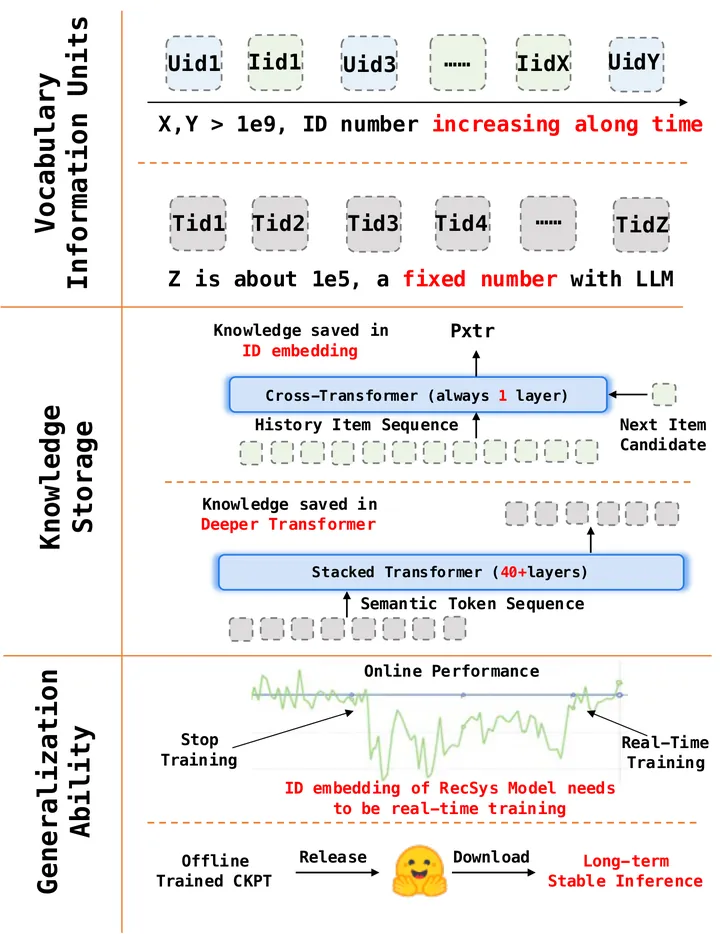
QARM V2: Quantitative Alignment Multi-Modal Recommendation for Reasoning User Sequence Modeling
With the evolution of large language models (LLMs), there is growing interest in leveraging their rich semantic understanding to enhance industrial recommendation systems (RecSys). Traditional RecSys relies on ID-based embeddings for user sequence modeling in the General Search Unit (GSU) and Exact Search Unit (ESU) paradigm, which suffers from low information density, knowledge isolation, and weak generalization ability. While LLMs offer complementary strengths with dense semantic representations and strong generalization, directly applying LLM embeddings to RecSys faces critical challenges: representation unmatch with business objectives and representation unlearning end-to-end with downstream tasks. In this paper, we present QARM V2, a unified framework that bridges LLM semantic understanding with RecSys business requirements for user sequence modeling.
2602.08559
Feb 2026Information Retrieval
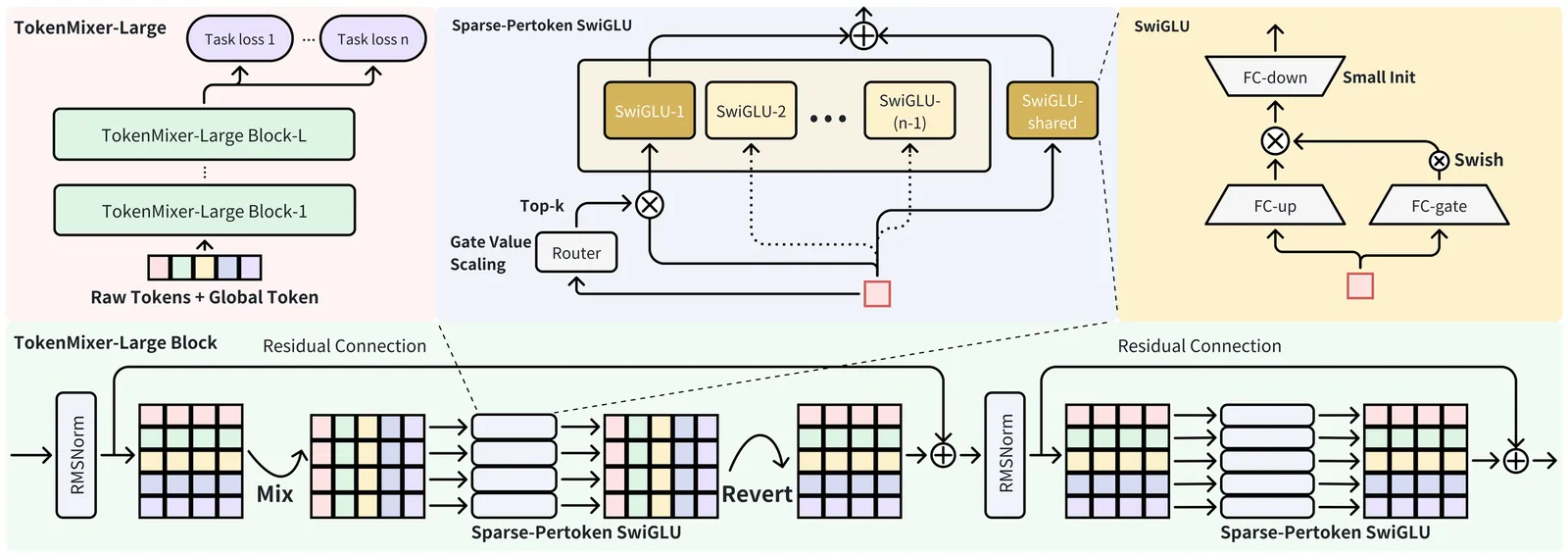
TokenMixer-Large: Scaling Up Large Ranking Models in Industrial Recommenders
While scaling laws for recommendation models have gained significant traction, existing architectures such as Wukong, HiFormer and DHEN, often struggle with sub-optimal designs and hardware under-utilization, limiting their practical scalability. Our previous TokenMixer architecture (introduced in RankMixer paper) addressed effectiveness and efficiency by replacing self-attention with a ightweight token-mixing operator; however, it faced critical bottlenecks in deeper configurations, including sub-optimal residual paths, vanishing gradients, incomplete MoE sparsification and constrained scalability. In this paper, we propose TokenMixer-Large, a systematically evolved architecture designed for extreme-scale recommendation. By introducing a mixing-and-reverting operation, inter-layer residuals and the auxiliary loss, we ensure stable gradient propagation even as model depth increases. Furthermore, we incorporate a Sparse Per-token MoE to enable efficient parameter expansion. TokenMixer-Large successfully scales its parameters to 7-billion and 15-billion on online traffic and offline experiments, respectively. Currently deployed in multiple scenarios at ByteDance, TokenMixer-Large has achieved significant offline and online performance gains, delivering an increase of +1.66\% in orders and +2.98\% in per-capita preview payment GMV for e-commerce, improving ADSS by +2.0\% in advertising and achieving a +1.4\% revenue growth for live streaming.
2602.06563
Feb 2026Information Retrieval
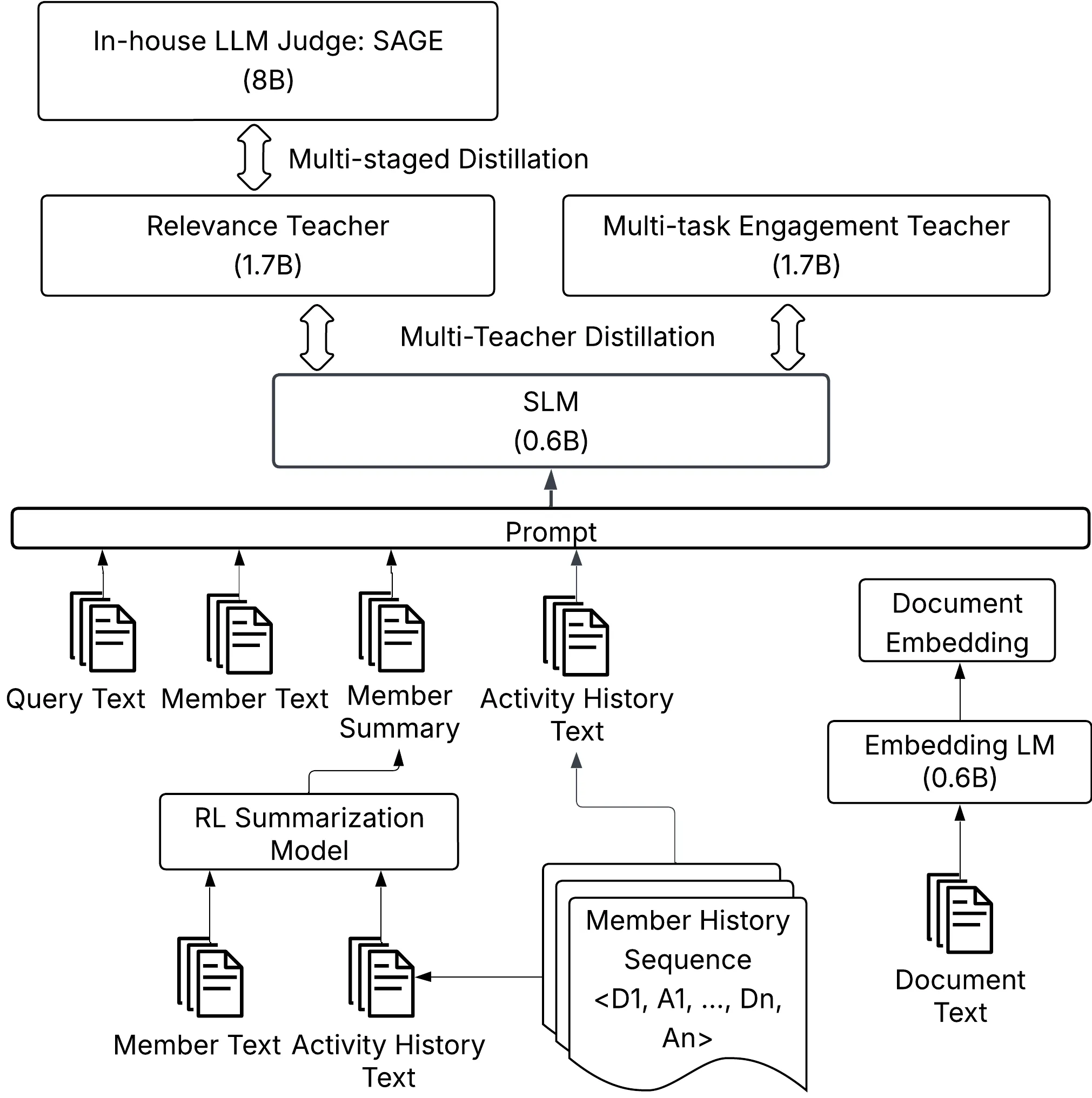
Semantic Search At LinkedIn
Semantic search with large language models (LLMs) enables retrieval by meaning rather than keyword overlap, but scaling it requires major inference efficiency advances. We present LinkedIn's LLM-based semantic search framework for AI Job Search and AI People Search, combining an LLM relevance judge, embedding-based retrieval, and a compact Small Language Model trained via multi-teacher distillation to jointly optimize relevance and engagement. A prefill-oriented inference architecture co-designed with model pruning, context compression, and text-embedding hybrid interactions boosts ranking throughput by over 75x under a fixed latency constraint while preserving near-teacher-level NDCG, enabling one of the first production LLM-based ranking systems with efficiency comparable to traditional approaches and delivering significant gains in quality and user engagement.
2602.07309
Feb 2026Information Retrieval
RankGR: Rank-Enhanced Generative Retrieval with Listwise Direct Preference Optimization in Recommendation
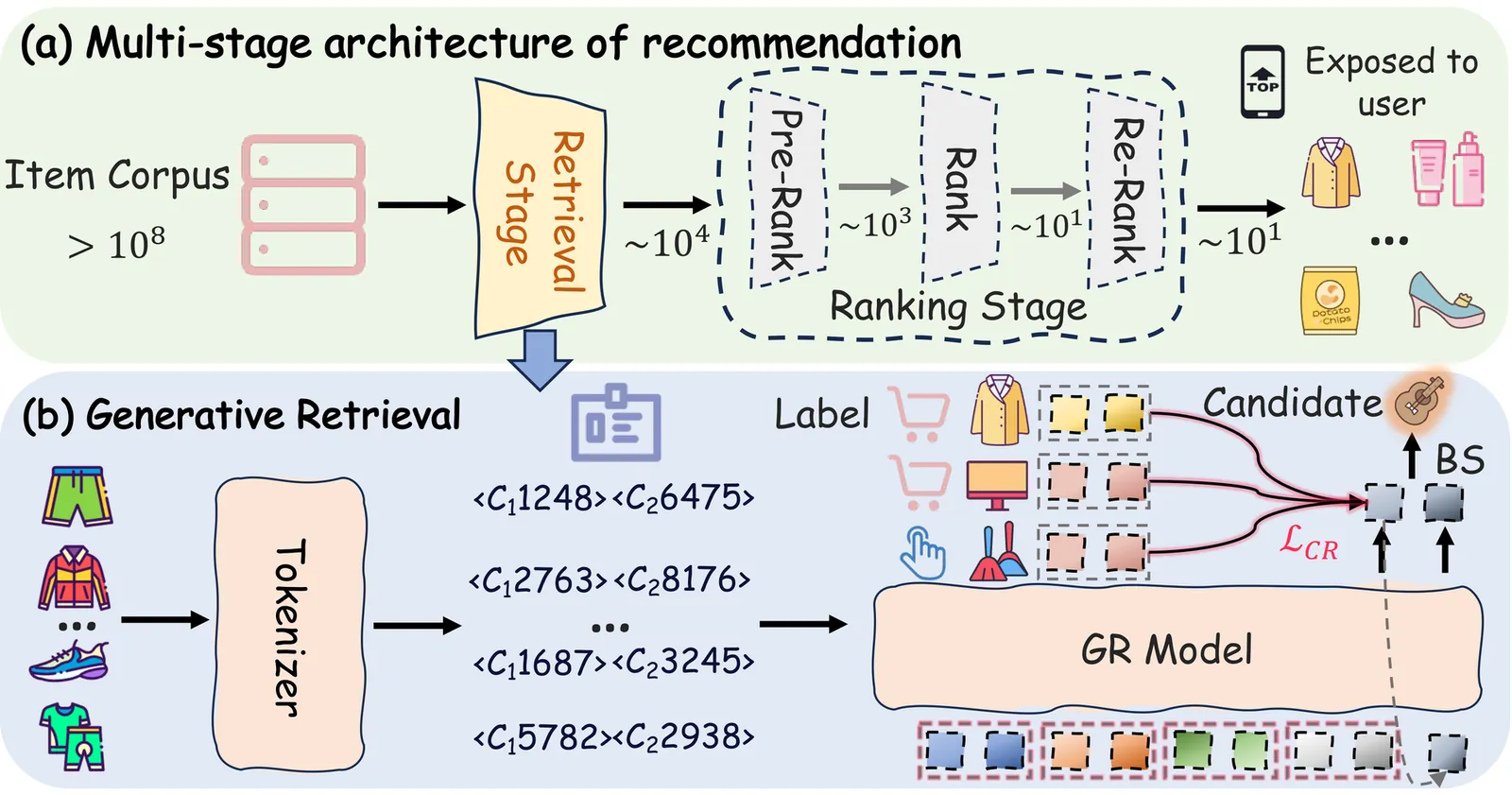
Generative retrieval (GR) has emerged as a promising paradigm in recommendation systems by autoregressively decoding identifiers of target items. Despite its potential, current approaches typically rely on the next-token prediction schema, which treats each token of the next interacted items as the sole target. This narrow focus 1) limits their ability to capture the nuanced structure of user preferences, and 2) overlooks the deep interaction between decoded identifiers and user behavior sequences. In response to these challenges, we propose RankGR, a Rank-enhanced Generative Retrieval method that incorporates listwise direct preference optimization for recommendation. RankGR decomposes the retrieval process into two complementary stages: the Initial Assessment Phase (IAP) and the Refined Scoring Phase (RSP). In IAP, we incorporate a novel listwise direct preference optimization strategy into GR, thus facilitating a more comprehensive understanding of the hierarchical user preferences and more effective partial-order modeling. The RSP then refines the top-λ candidates generated by IAP with interactions towards input sequences using a lightweight scoring module, leading to more precise candidate evaluation. Both phases are jointly optimized under a unified GR model, ensuring consistency and efficiency. Additionally, we implement several practical improvements in training and deployment, ultimately achieving a real-time system capable of handling nearly ten thousand requests per second. Extensive offline performance on both research and industrial datasets, as well as the online gains on the "Guess You Like" section of Taobao, validate the effectiveness and scalability of RankGR.
2602.08575
Feb 2026Information Retrieval
Differentiable Semantic ID for Generative Recommendation
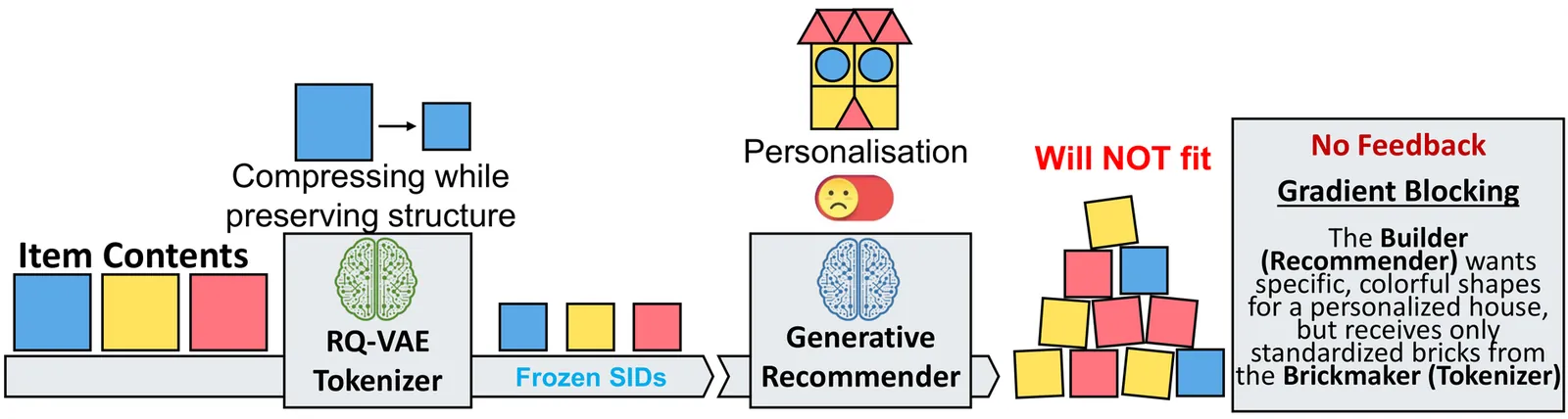
Generative recommendation provides a novel paradigm in which each item is represented by a discrete semantic ID (SID) learned from rich content. Most existing methods treat SIDs as predefined and train recommenders under static indexing. In practice, SIDs are typically optimized only for content reconstruction rather than recommendation accuracy. This leads to an objective mismatch: the system optimizes an indexing loss to learn the SID and a recommendation loss for interaction prediction, but because the tokenizer is trained independently, the recommendation loss cannot update it. A natural approach is to make semantic indexing differentiable so that recommendation gradients can directly influence SID learning, but this often causes codebook collapse, where only a few codes are used. We attribute this issue to early deterministic assignments that limit codebook exploration, resulting in imbalance and unstable optimization. In this paper, we propose DIGER (Differentiable Semantic ID for Generative Recommendation), a first step toward effective differentiable semantic IDs for generative recommendation. DIGER introduces Gumbel noise to explicitly encourage early-stage exploration over codes, mitigating codebook collapse and improving code utilization. To balance exploration and convergence, we further design two uncertainty decay strategies that gradually reduce the Gumbel noise, enabling a smooth transition from early exploration to exploitation of learned SIDs. Extensive experiments on multiple public datasets demonstrate consistent improvements from differentiable semantic IDs. These results confirm the effectiveness of aligning indexing and recommendation objectives through differentiable SIDs and highlight differentiable semantic indexing as a promising research direction.
2601.19711
Jan 2026Information Retrieval
XR: Cross-Modal Agents for Composed Image Retrieval
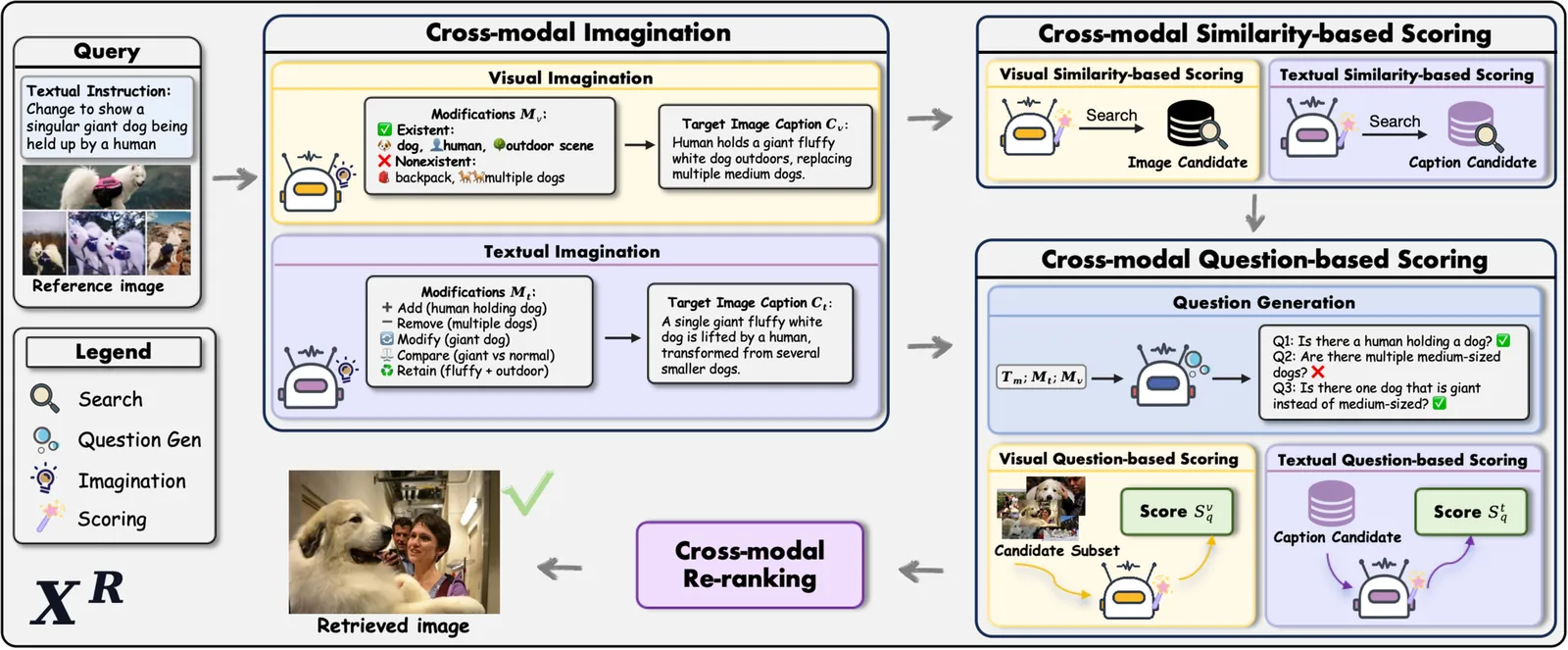
Retrieval is being redefined by agentic AI, demanding multimodal reasoning beyond conventional similarity-based paradigms. Composed Image Retrieval (CIR) exemplifies this shift as each query combines a reference image with textual modifications, requiring compositional understanding across modalities. While embedding-based CIR methods have achieved progress, they remain narrow in perspective, capturing limited cross-modal cues and lacking semantic reasoning. To address these limitations, we introduce XR, a training-free multi-agent framework that reframes retrieval as a progressively coordinated reasoning process. It orchestrates three specialized types of agents: imagination agents synthesize target representations through cross-modal generation, similarity agents perform coarse filtering via hybrid matching, and question agents verify factual consistency through targeted reasoning for fine filtering. Through progressive multi-agent coordination, XR iteratively refines retrieval to meet both semantic and visual query constraints, achieving up to a 38% gain over strong training-free and training-based baselines on FashionIQ, CIRR, and CIRCO, while ablations show each agent is essential. Code is available: https://01yzzyu.github.io/xr.github.io/.
2601.14245
Jan 2026Information Retrieval
MemRec: Collaborative Memory-Augmented Agentic Recommender System
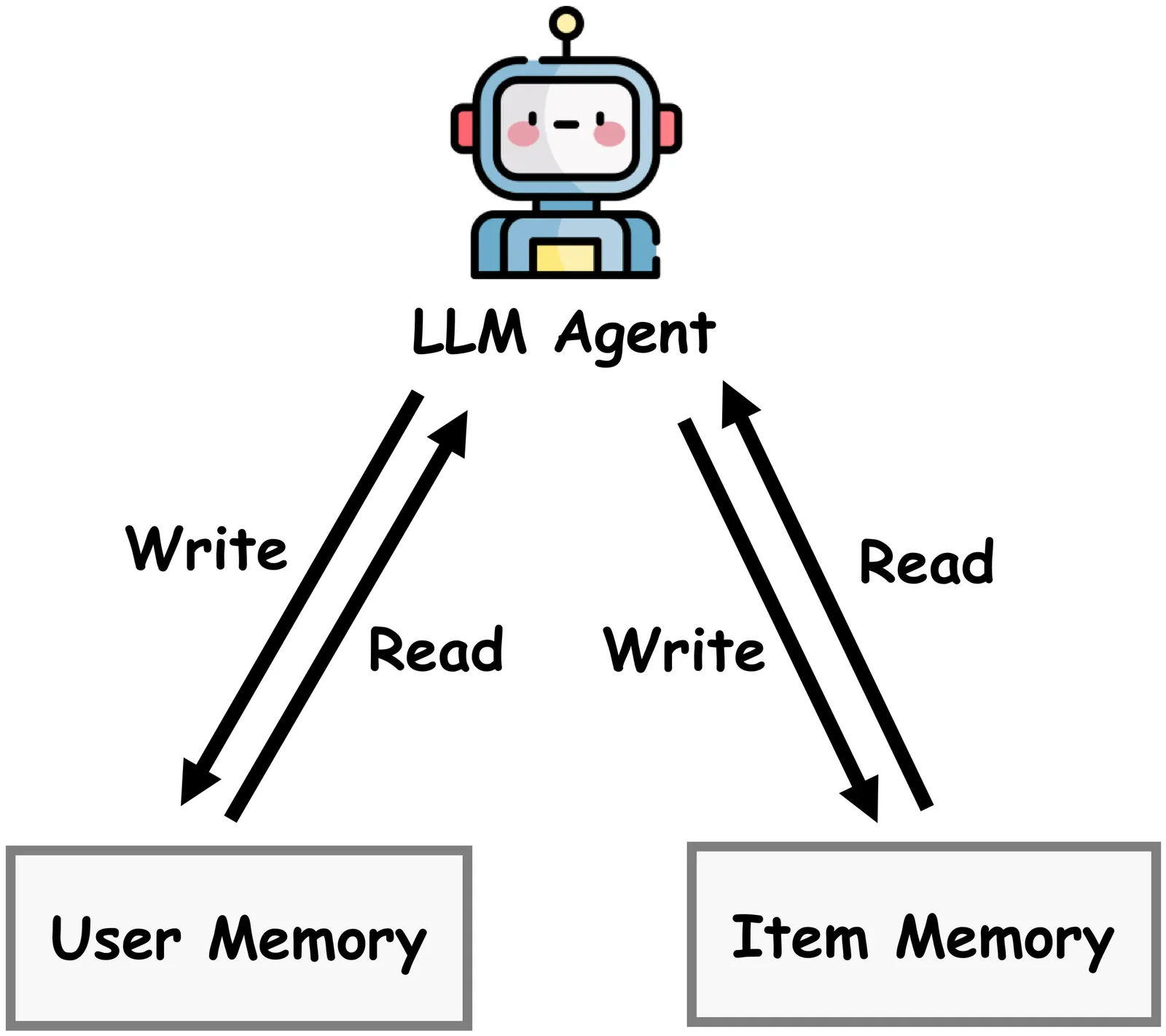
The evolution of recommender systems has shifted preference storage from rating matrices and dense embeddings to semantic memory in the agentic era. Yet existing agents rely on isolated memory, overlooking crucial collaborative signals. Bridging this gap is hindered by the dual challenges of distilling vast graph contexts without overwhelming reasoning agents with cognitive load, and evolving the collaborative memory efficiently without incurring prohibitive computational costs. To address this, we propose MemRec, a framework that architecturally decouples reasoning from memory management to enable efficient collaborative augmentation. MemRec introduces a dedicated, cost-effective LM_Mem to manage a dynamic collaborative memory graph, serving synthesized, high-signal context to a downstream LLM_Rec. The framework operates via a practical pipeline featuring efficient retrieval and cost-effective asynchronous graph propagation that evolves memory in the background. Extensive experiments on four benchmarks demonstrate that MemRec achieves state-of-the-art performance. Furthermore, architectural analysis confirms its flexibility, establishing a new Pareto frontier that balances reasoning quality, cost, and privacy through support for diverse deployments, including local open-source models. Code:https://github.com/rutgerswiselab/memrec and Homepage: https://memrec.weixinchen.com
2601.08816
Jan 2026Information Retrieval