Combinatorics
Discrete mathematics, graph theory, and enumerative combinatorics
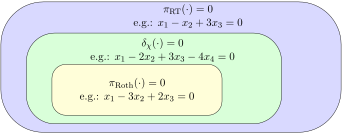
2601.04182The saturation property for Littlewood--Richardson coefficients was established by Knutson and Tao in 1999. In 2004, Kirillov conjectured that the saturation property extends to Schubert coefficients. We disprove this conjecture in a strong form, by showing that it fails for a large family of instances. We also refute the saturation property for Schubert coefficients under bit scaling and discuss computational complexity implications.
2601.04125Let ${\mathbb F}$ be a (not necessarily finite) field. A subspace of the vector space ${\mathbb F}^n$ is called {\it non-degenerate} if it is not contained in a coordinate hyperplane. We show that the Grassmann graph of $k$-dimensional subspaces of ${\mathbb F}^n$, $1<k<n-1$, can be recovered from the subgraph of non-degenerate subspaces if $|{\mathbb F}|>n-k$. In the case when ${\mathbb F}={\mathbb F}_q$ is the field of $q$ elements, this subgraph is known as the graph of non-degenerate linear $[n,k]_q$ codes.
2601.04084Let $F$ be a $k\times \ell$ (0,1)-matrix. A matrix is simple if it is a (0,1)-matrix with no repeated columns. A (0,1)-matrix $A$ is said to have a $F$ as a configuration if there is a submatrix of $A$ which is a row and column permutation of $F$. In the language of sets, a configuration is a trace. Let $\mathrm{Avoid}(m,F)$ be all simple $m$-rowed matrices $A$ with no configuration $F$. Define $\mathrm{forb}(m,F)$ as the maximum number of columns of any matrix in $\mathrm{Avoid}(m,F)$. The $2\times (p+1)$ (0,1)-matrix $F(0,p,1,0)$ consists of a row of $p$ 1's and a row of one 1 in the remaining column. The paper determines $\mathrm{forb}(m,F(0,p,1,0))$ for $1\le p\le 9$ and the extremal matrices are characterized. A construction may be extremal for all $p$.
We study pattern densities in binary sequences, finding optimal limit sequences with fixed pattern densities.
2601.04040We study the trade-off between (average) spread and width in tree decompositions, answering several questions from Wood [arXiv:2509.01140]. The spread of a vertex $v$ in a tree decomposition is the number of bags that contain $v$. Wood asked for which $c>0$, there exists $c'$ such that each graph $G$ has a tree decomposition of width $c\cdot tw(G)$ in which each vertex $v$ has spread at most $c'(d(v)+1)$. We show that $c\geq 2$ is necessary and that $c>3$ is sufficient. Moreover, we answer a second question fully by showing that near-optimal average spread can be achieved simultaneously with width $O(tw(G))$.
The Schur multiple zeta function was defined as a multivariable function by Nakasuji-Phuksuwan-Yamasaki. Inspired by the product formula of Schur functions, the products of Schur multiple zeta functions have been studied. While the product of two Schur functions expands as a linear combination of Schur functions, it is known that a similar expansion for the product of Schur multiple zeta functions can be obtained by symmetrizing, i.e., by taking the summation over all permutations of the variables. In this paper, we present a more refined formula by restricting the summation from the full symmetric group to its specific subgroup.
We study the expansions of permutation statistics in the basis of functions counting occurrences of a fixed pattern in a permutation. We show the finiteness of these pattern expansions for a class of permutation statistics including the higher moment statistics, generalizing a result of Berman and Tenner. We also give a combinatorial criterion for the positivity of pattern expansions. Using this criterion, we show that the pattern expansion of the number of reduced words of a permutation is positive and give an enumerative interpretation for the coefficients.
This paper introduces and studies the stability of the strong domination number of a graph, denoted $\operatorname{st}_{γ_{st}}(G)$, defined as the minimum number of vertices whose removal changes the strong domination number $γ_{st}(G)$. We determine exact values of this stability parameter for several fundamental graph classes, including paths, cycles, wheels, complete bipartite graphs, friendship graphs, book graphs, and balanced complete multipartite graphs. General bounds on $\operatorname{st}_{γ_{st}}(G)$ are established, along with a Nordhaus Gaddum type inequality. The behavior of stability under graph operations such as join, corona, and Cartesian product is also investigated. Structural characterizations of graphs with given stability values are provided, and several open problems and directions for future research are outlined.
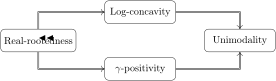
2601.03809The celebrated Mason's conjecture states that the sequence of independent set numbers of any matroid is log-concave, and even ultra log-concave. The strong form of Mason's conjecture was independently solved by Anari, Liu, Oveis Gharan and Vinzant, and by Brändén and Huh. The weak form of Mason's conjecture was also generalized to a polynomial version by Dowling in 1980 by considering certain polynomial analogue of independent set numbers. In this paper we completely solve Dowling's polynomial conjecture by using the theory of Lorentzian polynomials.
We discuss the question whether the existence of perfect matchings in a cubic graph can be seen from the spectrum of its adjacency matrix. For regular graphs in general and for three edge-disjoint perfect matchings in a cubic graph (that is, an edge colouring with three colors) the answer is known to be negative. In the latter case, a few counter examples (found by computer) are known. Here we show that these counter examples can be extended to an infinite family by use of truncation. Thus we obtain infinitely many pairs of cospectral cubic graphs with different edge-chromatic number. For all these pairs both graphs have a perfect matching, and the mentioned question is still open. But we do find a new sufficient condition for a perfect matching in a cubic graphs in terms of its spectrum. In addition we obtain a few more results concerning spectral characterizations of cubic graphs.
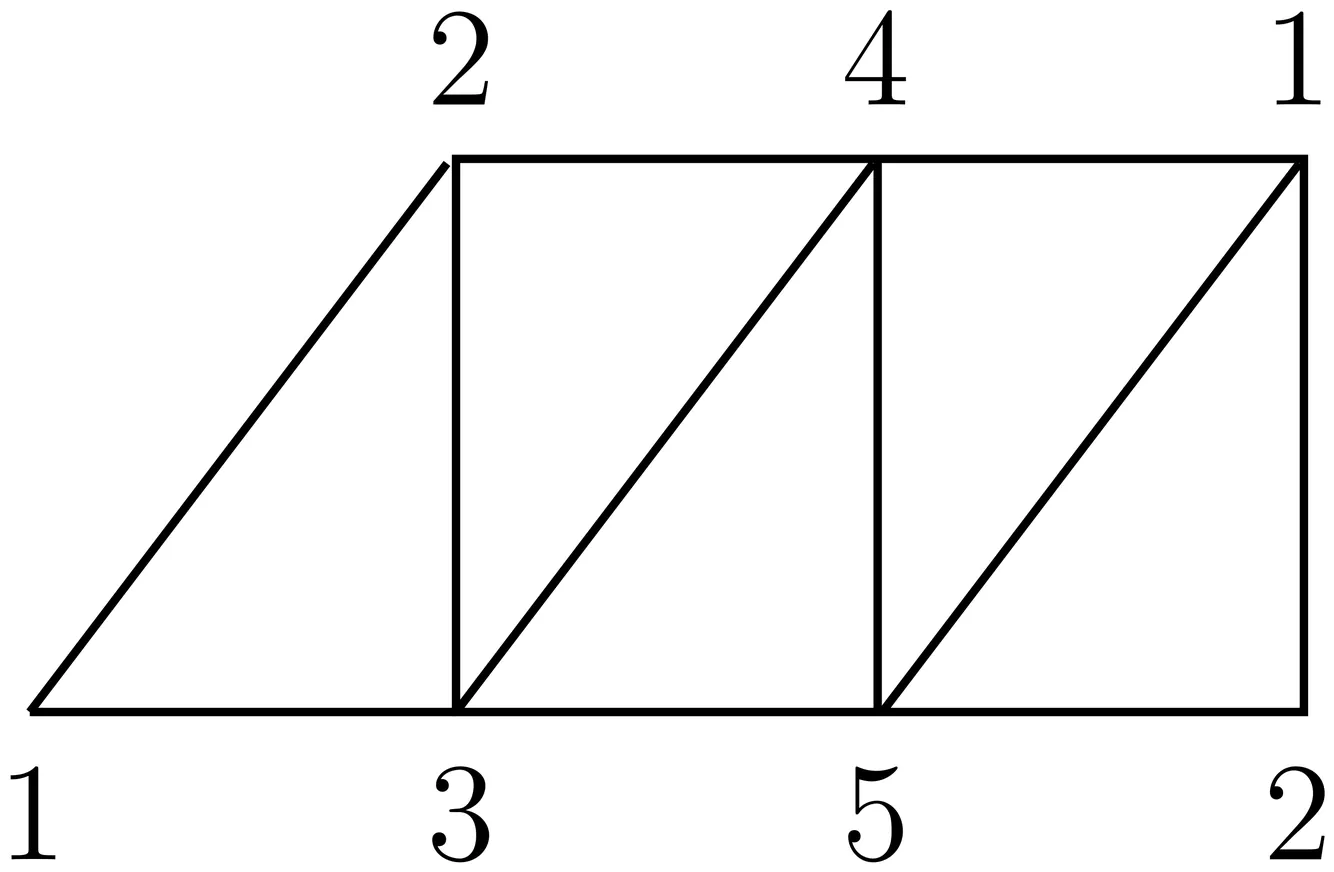
2601.03592This paper presents three main results on coloring discrete $d$-pseudomanifolds: $(1)$ the general chromatic bounds $d+1 \leq X(K) \leq 2d+2$ for any $d$-pseudomanifold $K$; $(2)$ an improved bound $X(K) \leq 2d+1$ for pseudomanifolds expressible as a Zykov join $K = S^k + K'$; $(3)$ the optimal bound $X(K)\leq\lceil 3(d+1)/2\rceil$ under the additional assumptions that the spherical join factor $S^k$ is built from even-cycles and its dimension $k$ is close to $d$.
The Ramsey number $R(s, t)$ is the smallest positive integer $n$ such that every graph on $n$ vertices contains either a clique of size $s$ or an independent set of size $t$. An $R(s,t)$-critical graph is a graph on $R(s,t)-1$ vertices that contains neither a clique of size $s$ nor an independent set of size $t$. It is known that $40\leq R(3, 10)\leq 42$. We study the structure of a $R(3,10)$-critical graphs by assuming $R(3, 10)=42$. We show that if such a graph exists then its minimum degree and vertex connectivity are the same and is $6, 7$ or $8$. Then we find all the possible degree sequences of such graphs. Further, we show that if such a graph exists, then its diameter is either $2$ or $3$, and if it has diameter $2$ and minimum degree $6$, then it has only $21$ choices for its degree sequence.
Let G_n = C_n square P_2 denote the prism (circular ladder) graph on 2n vertices. By encoding column configurations as cyclic words, domination is reduced to local Boolean constraints on adjacent factors. This framework yields explicit formulas for the dominion zeta(G_n), stratified by n mod 4, with the exceptional cases n in {3, 6} confirmed computationally. Together with the known domination numbers gamma(G_n), these results expose distinct arithmetic regimes governing optimal domination, ranging from rigid forcing to substantial enumerative flexibility, and motivate quantitative parameters for assessing structural robustness in parametric graph families.
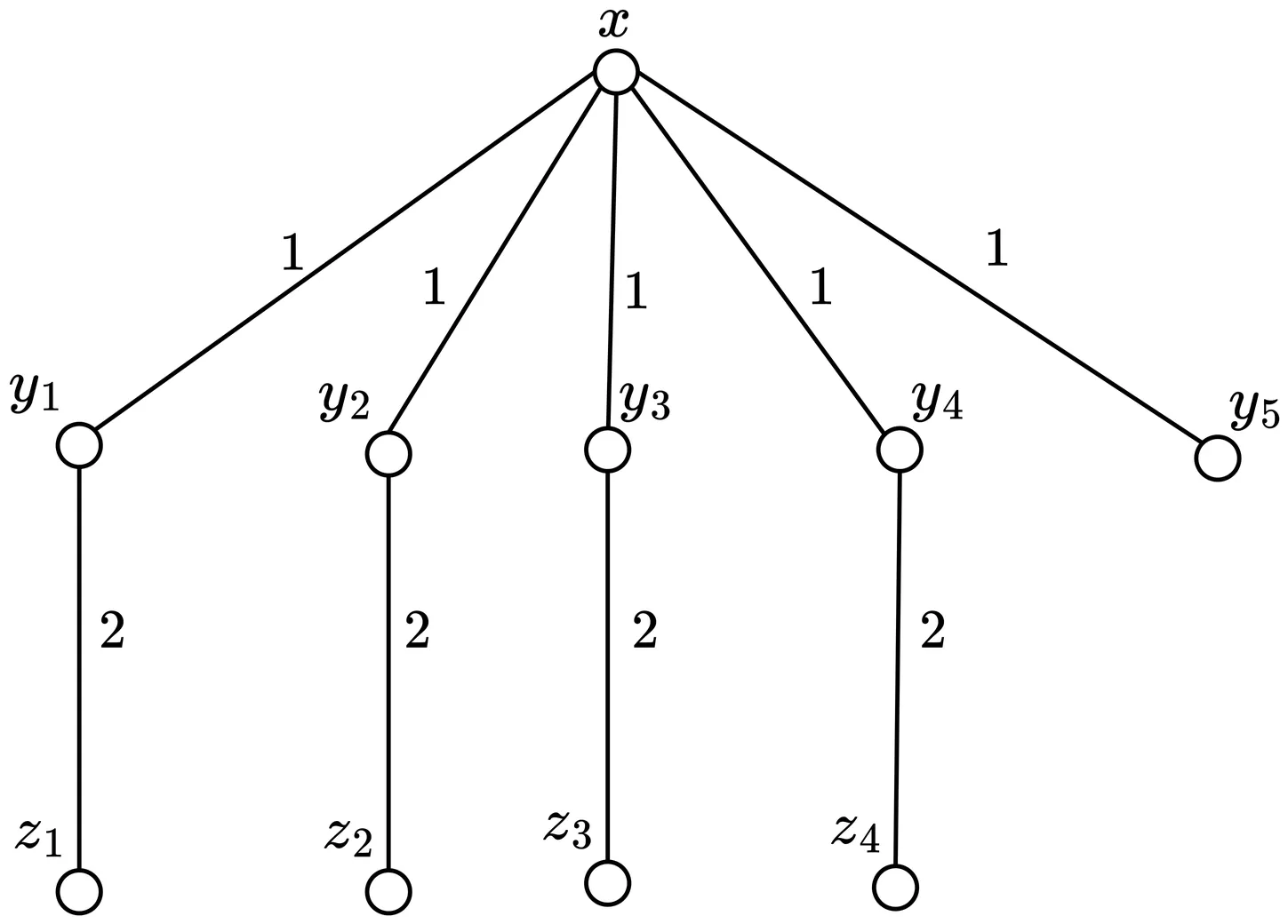
We study the dominion zeta(G), defined as the number of minimum dominating sets of a graph G, and analyze how local forcing and boundary effects control the flexibility of optimal domination in trees. For path-based pendant constructions, we identify a sharp forcing threshold: attaching a single pendant vertex to each path vertex yields complete independence with zeta = 2^gamma, whereas attaching two or more pendant vertices forces a unique minimum dominating set. Between these extremes, sparse pendant patterns produce intermediate behavior: removing endpoint pendants gives zeta = 2^(gamma - 2), while alternating pendant attachments induce Fibonacci growth zeta asymptotic to phi^gamma, where phi is the golden ratio. For complete binary trees T_h, we establish a rigid period-3 law zeta(T_h) in {1, 3} despite exponential growth in |V(T_h)|. We further prove a sharp stability bound under leaf deletions, zeta(T_h - X) <= 2^{m_1(X)} zeta(T_h), where m_1(X) counts parents that lose exactly one child; in particular, deleting a single leaf preserves the domination number and exactly doubles the dominion.
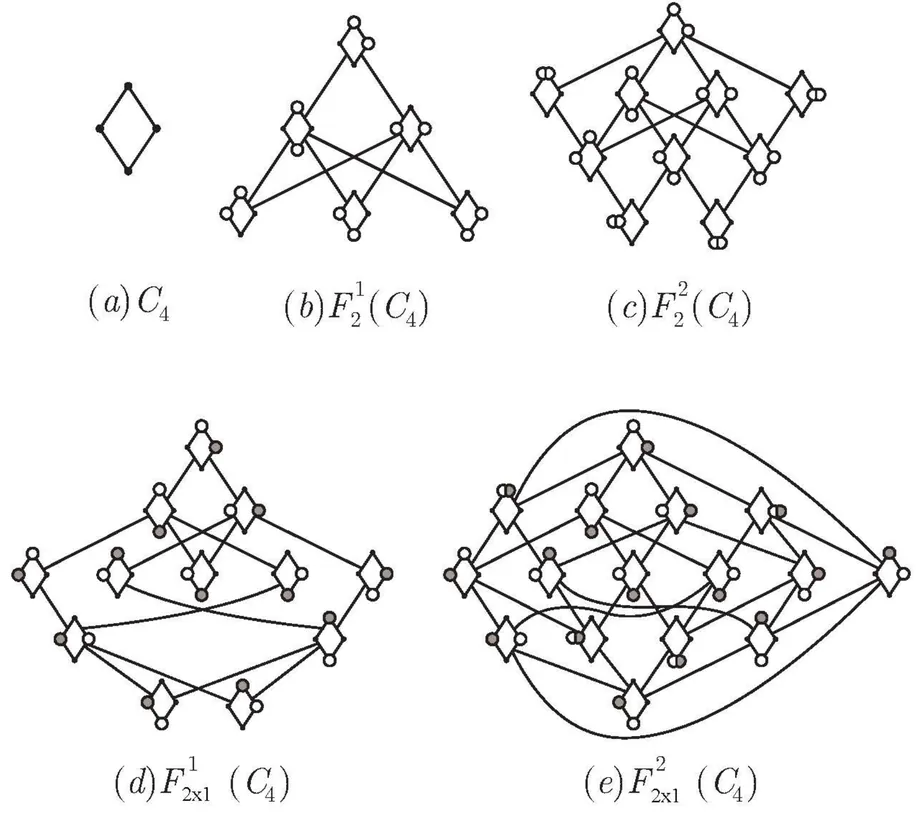
In this paper, we extend the study of the quantum $k$-Bruhat order initiated in the work of Benedetti, Bergeron, Colmenarejo, Saliola, and Sottile concerning the quantum Murnaghan-Nakayama rule. Specifically, identifying maximal chains in intervals of the quantum $k$-Bruhat order with sequences of transpositions, we investigate a naturally associated free monoid $F_n^{\mathbf{q}}$ with an action on a $q$-extension of $S_n$, denoted $S_n[\mathbf{q}]$, which encodes the chain structure of the quantum $k$-Bruhat order. Aside from numerous structural results, our main contribution is an identification of a large family of equivalences satisfied by the elements of $F_n^{\mathbf{q}}$ as operators on $S_n[\mathbf{q}]$. In fact, we conjecture that our list of equivalences is complete. As a consequence of the quantum Monk's rule, a complete understanding of such equivalences can be used to gain information about the multiplicative structure of quantum Schubert polynomials.
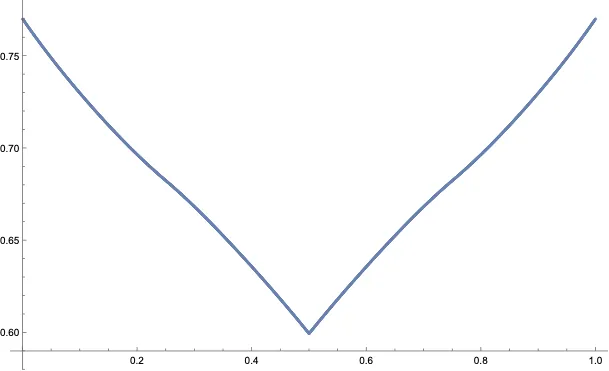
Let $H$ be a fixed graph whose edges are colored red and blue and let $β\in [0,1]$. Let $I(H, β)$ be the (asymptotically normalized) maximum number of copies of $H$ in a large red/blue edge-colored complete graph $G$, where the density of red edges in $G$ is $β$. This refines the problem of determining the semi-inducibility of $H$, which is itself a generalization of the classical question of determining the inducibility of $H$. The function $I(H, β)$ for $β\in [0,1]$ was not known for any graph $H$ on more than three vertices, except when $H$ is a monochromatic clique (Kruskal-Katona) or a monochromatic star (Reiher-Wagner). We obtain sharp results for some four and five vertex graphs, addressing several recent questions posed by various authors. We also obtain some general results for trees and stars. Many open problems remain.
2601.03363The total isolation game is played on a graph $G$ by two players who take turns playing a vertex such that if $S$ is the set of already played vertices, then a vertex can be selected only if it is adjacent to a vertex that belongs to a (nontrivial) component of the graph $G - N_G(S)$ of order at least $2$ or a vertex that is isolated in $G - N_G(S)$ and belongs to the set $S$, where $N_G(S)$ is the set of vertices adjacent to a vertex in $S$. Dominator wishes to finish the game with the minimum number of played vertices, while Staller has the opposite goal. The game total isolation number $ι_{\rm gt}(G)$ is the number of moves in the Dominator-start game where both players play optimally. We prove that if $G$ is a connected graph of order $n \ge 3$, then $ι_{\rm gt}(G) < \frac{5}{6}n$. Furthermore if $G$ has minimum degree at least $2$, then we prove that $ι_{\rm gt}(G) \le \frac{3}{4}n$. More generally, if $G$ is a connected graph of order $n \ge 3$ with minimum degree $δ$ where $δ\ge 2$, then we prove that $ι_{\rm gt}(G) \le \left( \frac{2δ-1}{3δ-2} \right) n$. Among other results it is proved that if $G$ is a graph of order $n$ with diameter $2$, then $ι_{\rm gt}(G) \le \frac{2}{3}n$.
2601.03176We revisit a classical theme of (general or translation invariant) valuations on convex polyhedra. Our setting generalizes the classical one, in a ``dual'' direction to previously considered generalizations: while previous research was mostly concerned with variations of ground fields/rings, over which the vertices of polytopes are defined, we consider more general collections of defining hyperplanes. No algebraic structures are imposed on these collections. This setting allows us to uncover a close relationship between scissors congruence problems on the one hand and finite hyperplane arrangements on the other hand: there are many parallel results in these fields, for which the parallelism seems to have gone unnoticed. In particular, certain properties of the Varchenko--Gelfand algebras for arrangements translate to properties of polytope rings or valuations. Studying these properties is possible in a general topological setting, that is, in the context of the so-called topological arrangements, where hyperplanes do not have to be straight and may even have nontrivial topology.
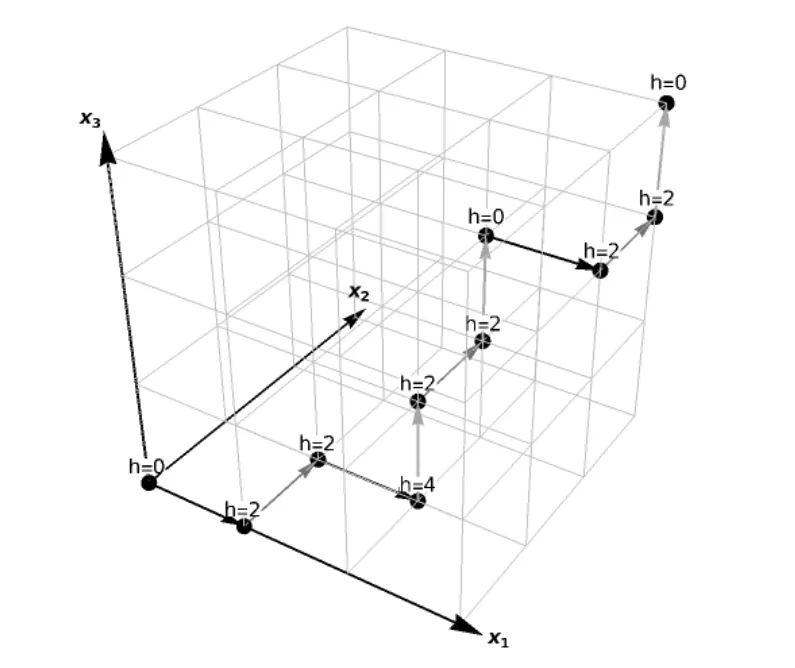
2601.03145In this paper, we examine an analogue of the recently solved spectrum conjecture by Fujita in the setting of Fine polyhedral adjunction theory. We present computational results for lower-dimensional polytopes, which lead to a complete classification of the highest numbers of this Fine spectrum in any dimension. Moreover, we present a classification of the Fine spectrum in dimensions one, two and (almost) three, while providing a framework for general classification results in any dimension.
2601.03082We confirm a recent conjecture by Xin and Zhang, which establishes a simple product formula for the characteristic polynomial of an $(n-1) \times (n-1)$ tridiagonal matrix $C$. This characteristic polynomial arises from a recurrence relation that enumerates $n \times n$ nonnegative integer matrices with all row and column sums equal to $t$, also called the Ehrhart polynomial of the $n$th Birkhoff polytope. The proof relies on an unexpected observation: shifting $C$ by a scalar multiple of the identity matrix yields a matrix similar to a lower triangular matrix. In triangular form, the characteristic polynomial reduces to the product of the diagonal entries, leading to the desired closed-form expression. Moreover, we extend this method to broader families of tridiagonal matrices. This provides a new approach for deriving exact enumeration formulas.